

Selecting the right textile testing standard is critical for B2B apparel manufacturers to ensure product quality, compliance, and smooth international trade. This guide explains the differences between ISO and ASTM methods, highlights practical applications for casual and performance apparel, and provides strategies for integrating both standards into pre-production and bulk quality control.
Understanding these standards helps brands reduce test failures, meet buyer requirements in multiple markets, and maintain consistent product performance across global orders.
Use ISO Testing for Global Compliance
ISO (International Organization for Standardization) develops globally recognized testing standards used across multiple industries and countries. In textile testing, ISO standards are known for:- High consistency and repeatability
- Strong alignment with international trade requirements
- Broad acceptance across Europe, Asia, and global markets
Common ISO textile tests include:
- Color fastness (e.g., ISO 105)
- Dimensional stability
- Fabric tensile strength

Validate Performance Fabrics with ASTM Methods
ASTM International provides application-focused testing standards, widely used in North America. These methods are designed to simulate real-world product performance and are often more detailed in execution. Key characteristics include:- Highly specific and application-driven methods
- Focus on end-use performance
- Strong recognition in the U.S. market
Common ASTM textile tests include:
- Abrasion resistance (e.g., ASTM D4966)
- Pilling resistance
- Moisture management and performance testing
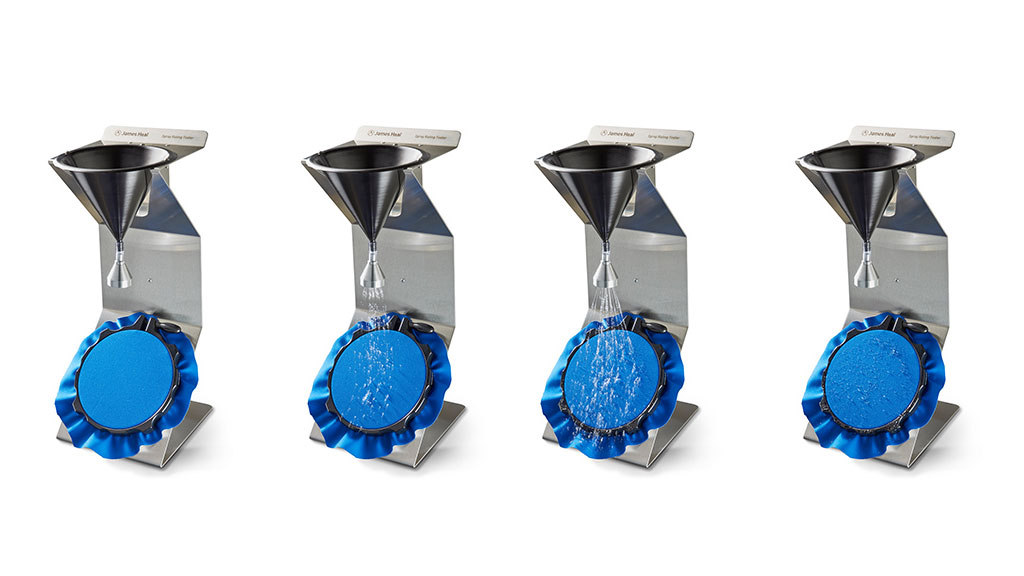
Understand Key Differences to Reduce Test Failures That Impact Your Business
Criteria | ISO | ASTM | Business Impact | Action/Notes |
Scope | Global | US-focused | Determines export compatibility | Choose ISO for EU/Asia, ASTM for US |
Approach | Standardized | Application-driven | Test interpretation | Integrate both if exporting globally |
Method Detail | General | Specific | Pass/fail results | Confirm lab methods and calibration |
Market Recognition | International trade | North America | Buyer acceptance | Match buyer expectations per market |
Update Frequency | Stable | More frequent | Long-term consistency | Review standards before production |
💡 Insight:
The same fabric may pass ISO testing but fail ASTM due to stricter or more application-specific criteria—especially in performance apparel.
Align Testing Standard to Market and Product Type
Choosing between ISO and ASTM should be based on three key factors:- Target Market
- Global / EU / Asia → ISO is typically required
- United States → ASTM is often expected
- Product Type
- Basic apparel (T-shirts, casualwear) → ISO is usually sufficient
- Performance apparel (outdoor, activewear) → ASTM is preferred
- Buyer Requirements
- Brand buyers → Often specify ASTM standards
- Bulk exporters → Commonly rely on ISO standards
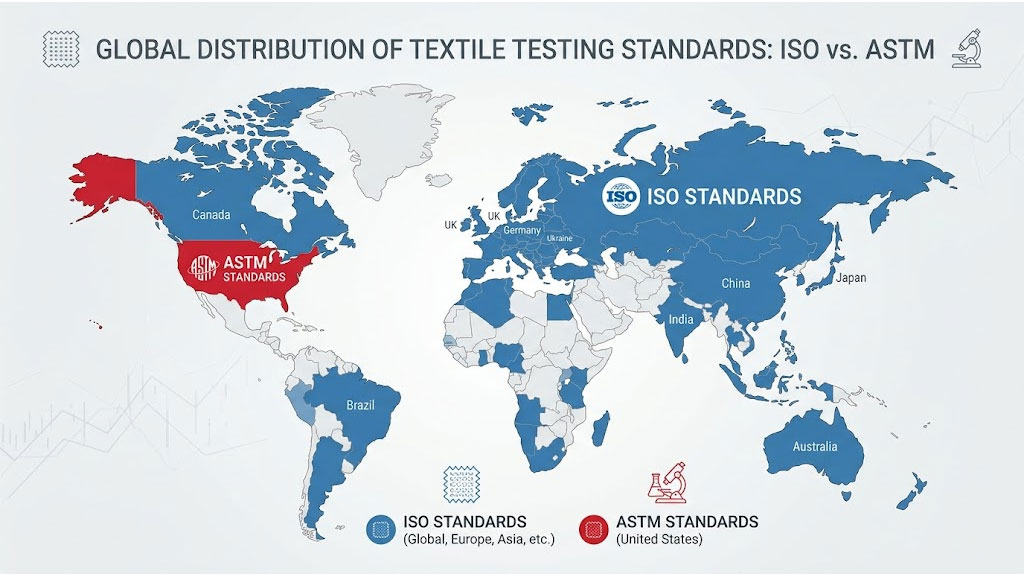
Integrate ISO and ASTM for Maximum B2B Flexibility
Instead of choosing one over the other, leading apparel manufacturers integrate both ISO and ASTM into their quality control workflow.Why this works:
- Ensures compliance with different market requirements
- Reduces risk of failed tests during buyer inspections
- Improves flexibility when handling diverse orders
- Use ISO for baseline compliance
- Use ASTM for performance validation
Practical Example (Real-World Scenario)
A performance jacket fabric may:- Pass ISO color fastness testing
- Fail ASTM abrasion or moisture testing
- Approved for general export
- Rejected by U.S. performance apparel buyers
Implement Dual Testing Workflow for Efficient Production
To minimize risk and improve efficiency, manufacturers should:- Align testing standards with target markets early
- Confirm buyer requirements before sampling
- Coordinate with third-party labs for dual-standard testing
- Integrate testing into pre-production and bulk QC stages
FAQ: ISO vs ASTM Textile Testing
1.Can ISO and ASTM standards be used interchangeably?
Not entirely. While they may test similar properties, methods and evaluation criteria can differ significantly.2.Which standard should I use if the client doesn’t specify?
ISO is generally safer due to global acceptance.3.Are ASTM standards required for performance fabrics?
Not mandatory, but highly recommended for functional validation.4.Is ASTM testing more expensive?
In some cases, yes—due to more detailed procedures and equipment requirements.5.What documents should OEMs provide for ISO/ASTM validation?
- Accredited lab test reports (ISO / ASTM methods clearly stated)
- Valid certification copies (if applicable)
- Test method standards referenced (e.g., ISO 811, ASTM D737)
- Batch/lot traceability records matching tested samples to production
- Quality control (QC) reports and inspection records
- Declaration of conformity (Doc) or compliance statement
6.Can a fabric pass ISO but fail ASTM for the same property?
Yes. Different test methods, conditions, and performance thresholds can lead to different results, even for the same property (e.g., waterproofness, breathability, abrasion).7.How often should dual-standard tests be repeated for bulk orders?
- At least once per bulk production batch (per color or fabric lot)
- When raw material suppliers or specs change
- After process changes (coating, lamination, finishing)
- Periodically for long-term programs (e.g., every 3–6 months)
- Pre-shipment random verification for high-risk or high-value orders
Conclusion
Understanding ISO and ASTM textile testing standards is essential for apparel manufacturers working in global B2B markets. By selecting the right standard—or combining both—you can:- Reduce compliance risks
- Improve product performance validation
- Meet buyer expectations across different markets
- Avoid costly delays and rejected shipments
Need guidance on selecting ISO or ASTM testing standards for your apparel?
Contact our team to integrate lab coordination and compliance workflows into your production process.
Written by the Simmerui Textile Testing Team. We help B2B apparel brands implement ISO and ASTM textile testing strategies, including RSL alignment, supplier certification review, third-party lab coordination, and incoming material inspections—ensuring consistent quality and compliance across global orders.