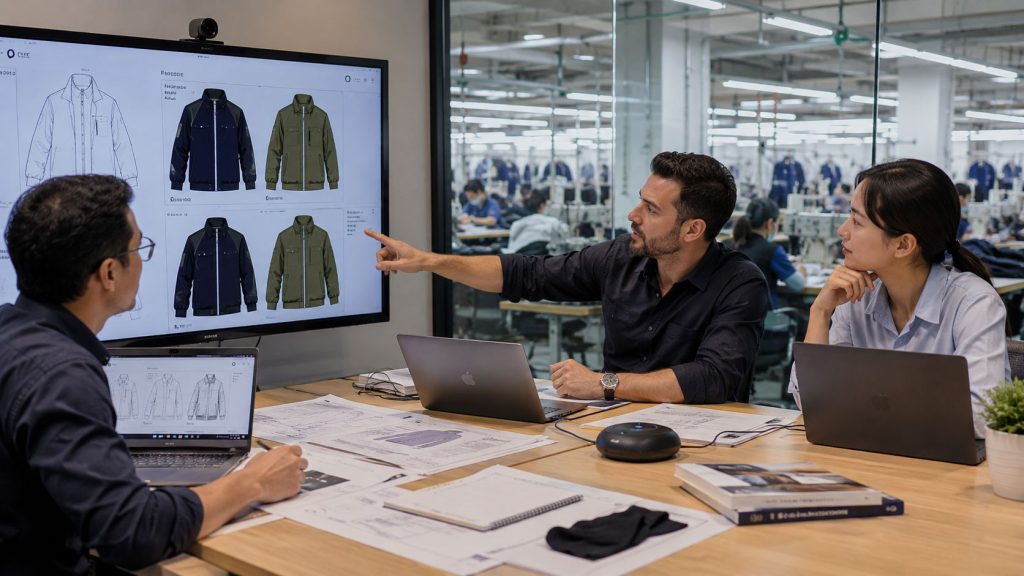
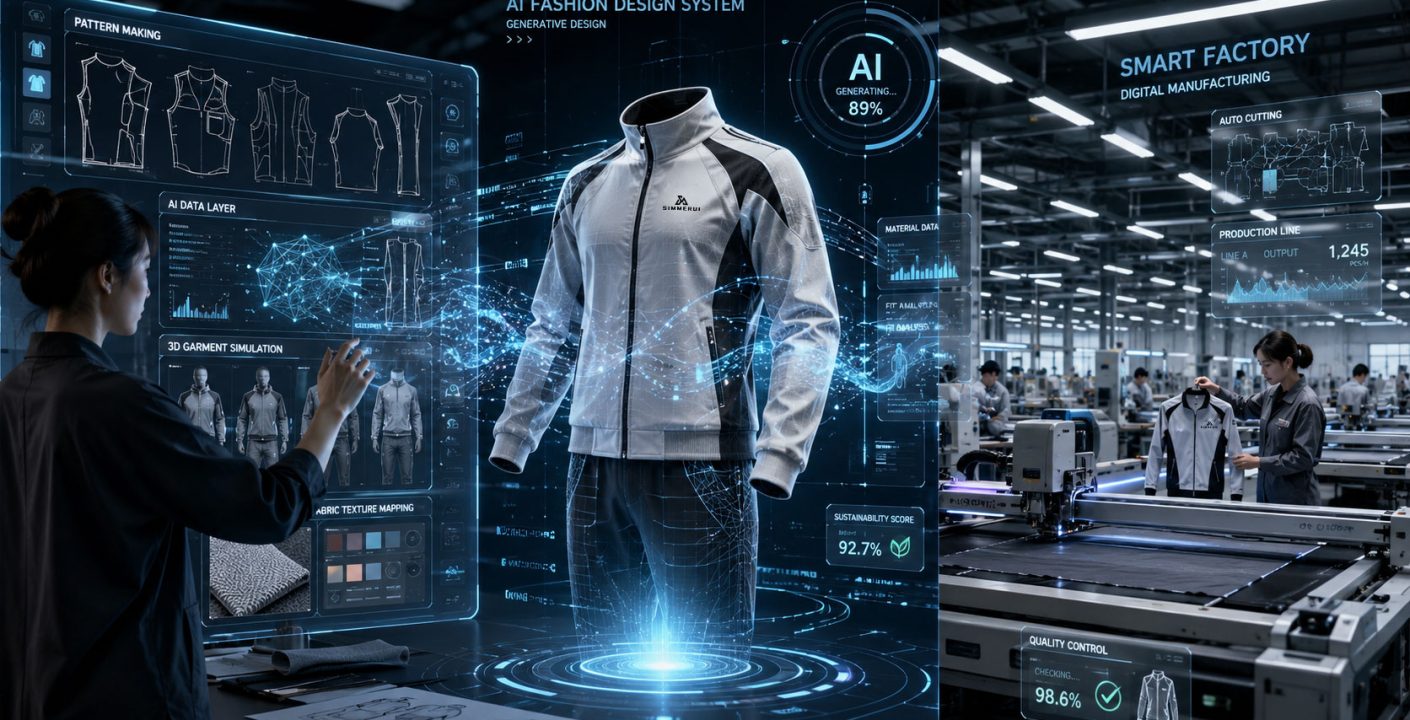
AI and digital technology are reshaping B2B apparel manufacturing—from trend forecasting and marker optimization to 3D virtual sampling and data-driven production planning. This guide explains how OEM and private label suppliers use tools like CLO 3D, AI demand prediction, and digital QC data to reduce sampling cycles, cut material waste, improve communication, and support low-MOQ customization.
You’ll also learn practical workflows, common implementation challenges, and how brands can choose digitally enabled manufacturing partners for faster, more reliable bulk production.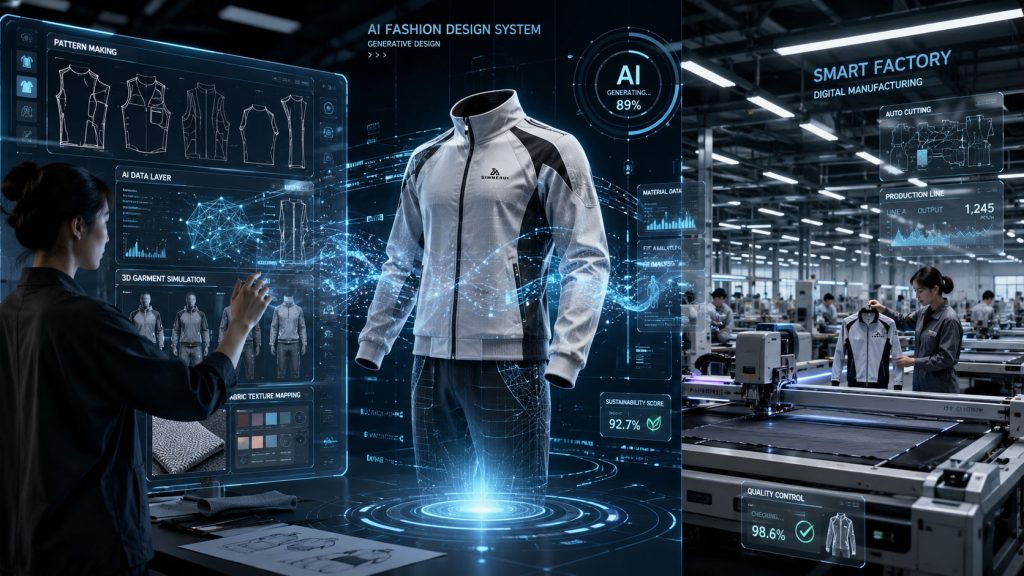
Switch to Digital Development to Cut Sampling Cycles
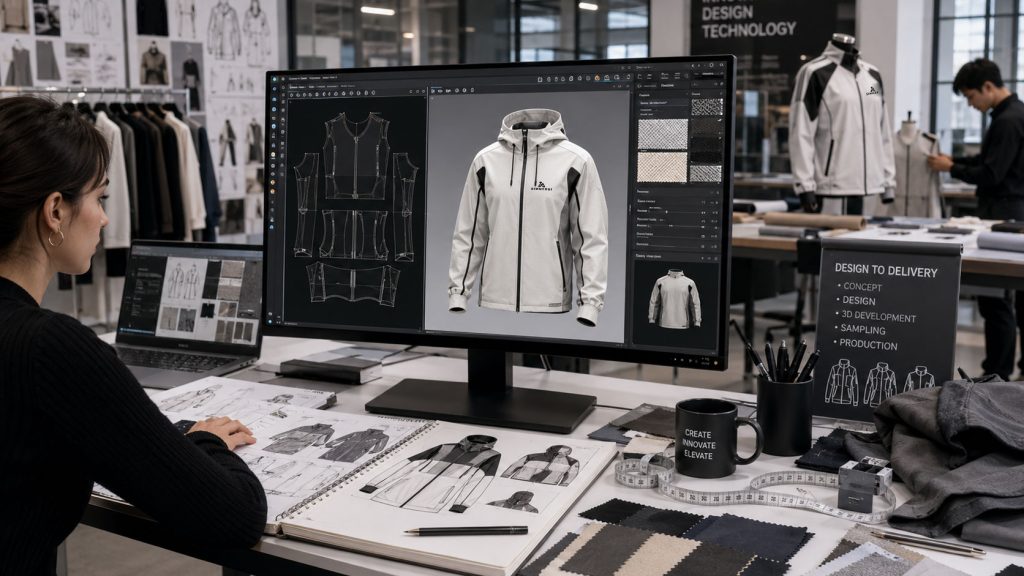
In the past, apparel development relied heavily on physical sketches, multiple sample revisions, and long approval cycles. Every design adjustment required additional labor, fabric, shipping, and communication time. Today, digital apparel development tools such as CLO 3D, Browzwear, and virtual garment simulation systems allow brands and manufacturers to streamline the entire workflow. Modern digital design systems help teams:- Visualize garments in realistic 3D environments
- Test fit and drape before physical sampling
- Adjust measurements digitally
- Simulate fabric behavior and garment movement
- Share revisions instantly between buyers and factories
- Reduce development delays across global supply chains
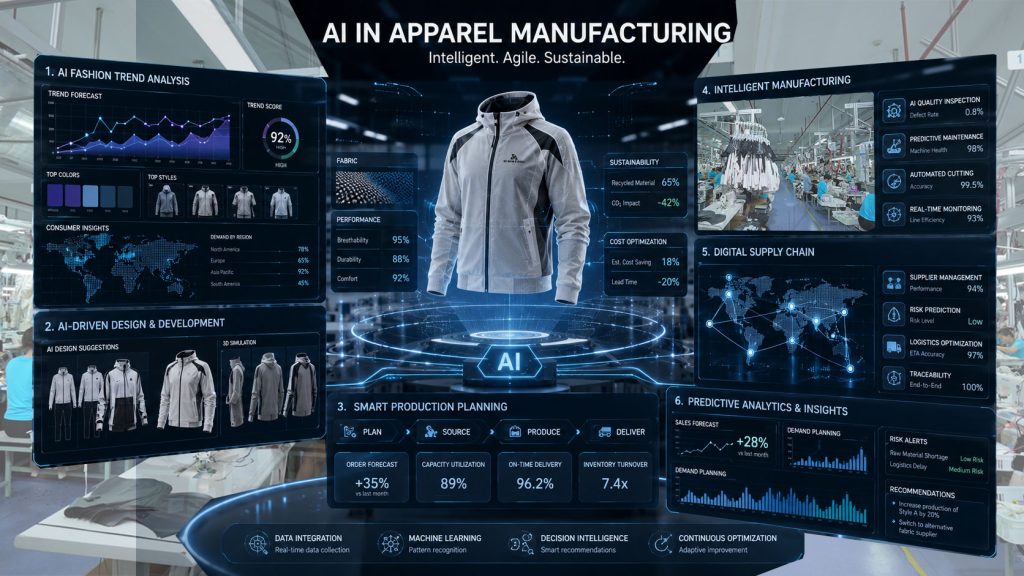
Use AI to Improve Forecasting, Design Speed, and Efficiency
Artificial intelligence is becoming an important support tool throughout the apparel manufacturing process. Rather than replacing designers or production teams, AI improves speed, forecasting, and operational efficiency.1. AI Trend Forecasting
Fashion brands traditionally relied on runway shows, seasonal reports, and intuition to predict trends. Today, AI systems analyze large datasets from:- Social media platforms
- E-commerce behavior
- Consumer search trends
- Historical sales performance
- Regional buying patterns
2. AI-Assisted Design Development
AI design tools can generate:- Color palette suggestions
- Print concepts
- Pattern inspirations
- Product variations
- Style combinations
- Activewear
- Streetwear
- Fashion basics
- Outdoor apparel
- Seasonal collections
3. Pattern Optimization and Fabric Efficiency
One of the most valuable applications of AI in apparel manufacturing is marker optimization. AI-assisted pattern layout systems can help:- Reduce fabric waste
- Improve cutting efficiency
- Optimize fabric utilization
- Lower material costs during bulk production
4. AI Demand Prediction
Demand forecasting is one of the biggest challenges in fashion manufacturing. AI systems can analyze:- Historical order data
- Seasonal demand fluctuations
- Regional product performance
- Inventory turnover rates
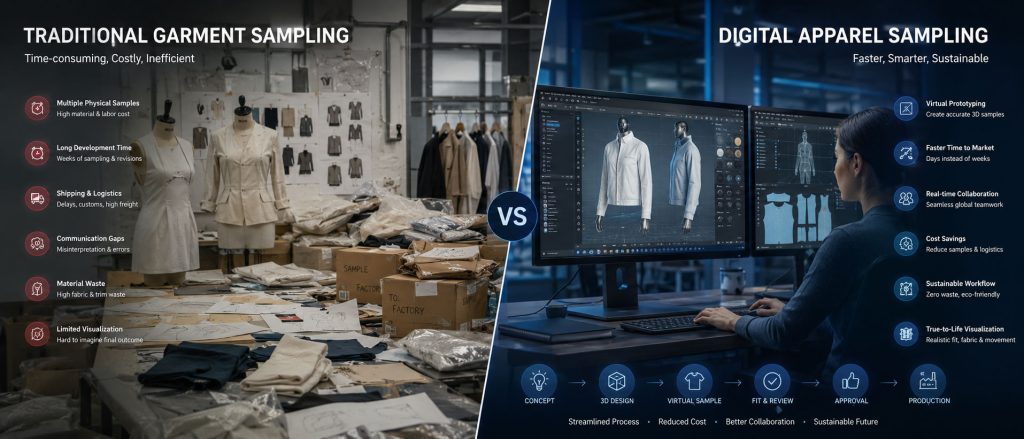
Reduce Sampling Cost and Time with 3D Virtual Prototyping
Sampling has traditionally been one of the slowest and most expensive parts of apparel development. Physical sample revisions often require:- Additional fabric sourcing
- Re-cutting patterns
- International shipping
- Multiple approval rounds
- Repeated communication between factories and buyers
Traditional Sampling | Digital Sampling |
Multiple physical prototypes | Virtual garment simulations |
Long shipping timelines | Instant digital sharing |
Higher material waste | Lower sampling waste |
Slower revisions | Faster design adjustments |
Limited visualization | Realistic 3D previews |
Many apparel brands now use virtual sampling during early-stage development before requesting final pre-production samples.
This helps reduce development cycles, lower costs, and accelerate time-to-market.
How Digital Workflows Improve OEM Apparel Production
Digital transformation is changing the role of apparel factories. Modern OEM and ODM suppliers are no longer expected to provide only manufacturing capacity. Buyers increasingly look for suppliers that can support:- 3D apparel development
- Digital sampling workflows
- Technical design collaboration
- Faster product revisions
- Flexible customization
- Transparent communication
- Low MOQ production
- Sustainable manufacturing solutions
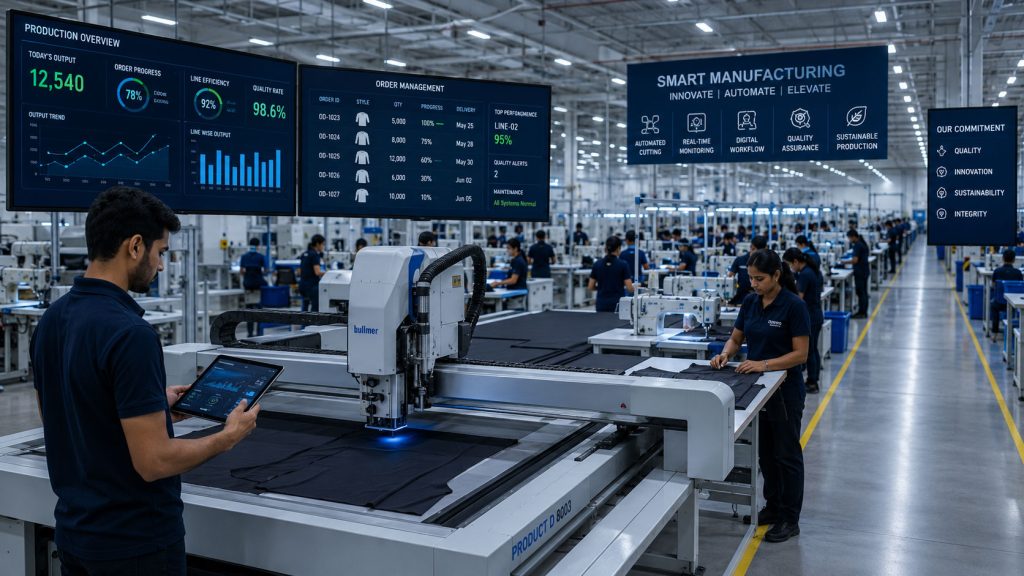
Personalization at Scale in Modern Apparel Manufacturing
One of the biggest advantages of digital production systems is scalable customization. In traditional manufacturing, customization often increased costs and slowed production. Today, AI-driven workflows make personalized apparel production more efficient. Manufacturers can now support:- Multi-color variations
- Customized trims and labels
- Regional sizing adjustments
- Small-batch production
- Flexible logo applications
- On-demand apparel development
Use Production Data to Reduce Defects and Improve Reorders
Data now plays a central role in modern apparel production. B2B apparel manufacturers increasingly track:- Fabric performance metrics
- Production efficiency rates
- Return and defect data
- Buyer reorder patterns
- Quality control reports
- Delivery performance
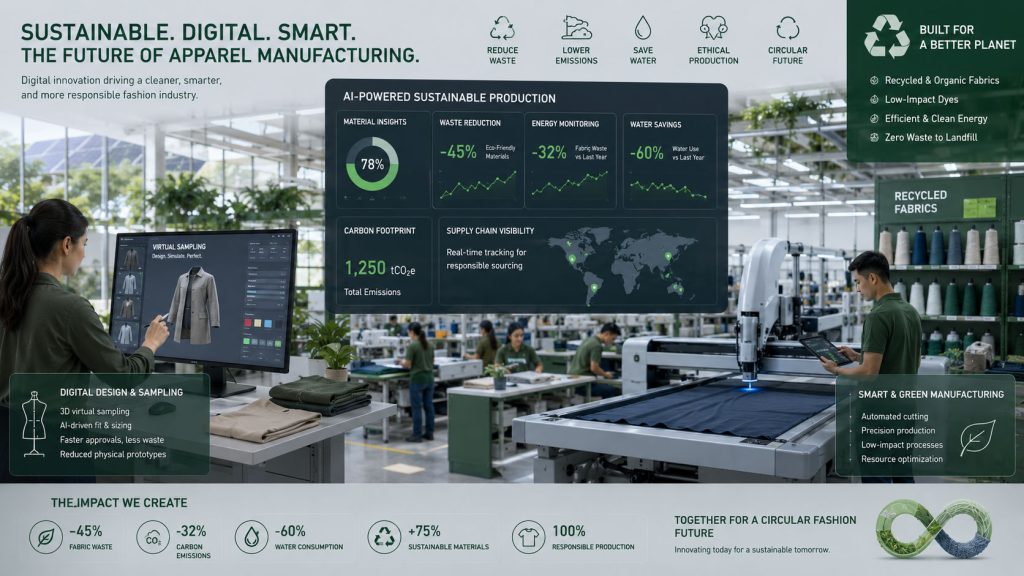
Reduce Waste and Overproduction with Digital Workflows
Sustainability is becoming a major requirement in global apparel sourcing. Digital workflows help manufacturers reduce environmental impact in several practical ways:- Lower fabric waste through digital marker optimization
- Reduced physical sampling
- Fewer international sample shipments
- Improved demand forecasting
- Reduced overproduction
- Better production planning efficiency
Real-World Example: Faster Sampling Through 3D Development
Many apparel brands are already seeing measurable improvements from digital workflows. For example, some startup activewear brands have reduced sample development timelines from several weeks to less than two weeks by using 3D virtual prototyping before physical production. Instead of approving multiple physical revisions, buyers can evaluate:- Fit
- Color placement
- Logo positioning
- Fabric appearance
- Garment proportions
Stage | Tool / Technology | Output | KPI Impact |
Design | CLO 3D | Virtual sample | Sample rounds ↓ |
Trend Research | AI trend analysis | Consumer insights report | Trend accuracy ↑ |
Planning | AI forecasting | Volume plan | Overproduction ↓ |
Fabric Sourcing | Digital fabric library | Faster material selection | Lead time ↓ |
Pattern Making | CAD pattern system | Digital pattern file | Development speed ↑ |
Sampling | 3D prototyping | Fit simulation | Sampling cost ↓ |
Cutting | Marker optimization | Optimized fabric layout | Fabric usage ↑ / Waste ↓ |
Production | MES production tracking | Real-time workflow visibility | Efficiency ↑ |
Sewing | Smart sewing equipment | Consistent stitching quality | Defect rate ↓ |
QC / Data | BI dashboards | Defect trend analysis | Returns ↓ |
Inventory | RFID tracking | Real-time stock visibility | Inventory accuracy ↑ |
Logistics | Supply chain platform | Shipment tracking | Delivery delays ↓ |
Sustainability | Carbon tracking software | Emission monitoring report | Carbon footprint ↓ |
Customer Service | AI chatbot | Automated inquiry handling | Response time ↓ |
Sales | CRM analytics | Customer purchase insights | Repeat orders ↑ |
Challenges of AI and Digital Technology in Fashion Manufacturing
Despite the benefits, digital transformation also introduces new challenges. Common concerns include:- Learning curves for traditional factories
- High software implementation costs
- Data quality limitations
- Over-reliance on automated recommendations
- Balancing speed with craftsmanship
Why Brands Prefer Digitally Enabled OEM Suppliers
Today’s apparel buyers increasingly prefer manufacturing partners that offer:- Digital-first product development
- Faster sample turnaround
- Better communication efficiency
- Virtual fitting support
- Transparent production updates
- Flexible order quantities
- Sustainable production processes
- Sportswear
- Streetwear
- Outdoor apparel
- Private label fashion
- Performance apparel
How Our Factory Supports Digital Apparel Development
As a B2B apparel manufacturer, we support brands with modern digital product development solutions, including:- OEM and ODM apparel manufacturing
- 3D sampling support
- Tech pack collaboration
- Flexible MOQ production
- Custom fabric sourcing
- Digital development workflows
- Quality control management
- Bulk production planning
- Private label apparel customization
FAQ
1.How does AI improve apparel manufacturing efficiency?
AI improves apparel manufacturing by helping brands and factories optimize production planning, reduce fabric waste, improve demand forecasting, and accelerate product development workflows.2.Can 3D sampling reduce apparel development costs?
Yes. Virtual sampling reduces the number of physical prototypes required during development, which lowers material, labor, and shipping costs.3.Is digital garment sampling accurate for bulk production?
Modern 3D garment simulation tools can provide highly accurate visualizations for fit, drape, and garment proportions before physical production begins.4.What are the benefits of AI in OEM apparel manufacturing?
AI helps OEM apparel manufacturers improve forecasting accuracy, optimize fabric utilization, reduce production waste, and support faster development cycles.5.Why do apparel brands prefer digitally enabled suppliers?
Digitally enabled suppliers typically offer faster communication, shorter sampling timelines, better customization flexibility, and more transparent production workflows.6.What data/files should brands prepare for 3D sampling (tech pack, fabric data)?
Brands should prepare a complete tech pack including flat sketches, measurement specs, construction details, and grading rules. Fabric data should include composition, GSM, stretch %, color references, and physical swatches or digital fabric maps. Trims, labels, and stitch details are also important for realistic 3D simulation.7.How accurate is 3D sampling for fit approval before PPS?
3D sampling is highly accurate for visual design, proportion, and basic fit validation, especially for standard body blocks. However, it cannot fully replace physical sampling for complex fabrics, stretch behavior, or comfort testing. It is best used to reduce sample rounds before PPS, not eliminate them.8.How to choose between PLM/ERP/3D tools for a small team?
- 3D tools (e.g., CLO-based) for faster design validation and reduced sampling cost
- PLM for managing tech packs, revisions, and collaboration
- ERP only if production, inventory, and finance need integration
Final Thoughts
AI and digital technology are transforming every stage of apparel manufacturing—from design and sampling to forecasting and bulk production. For B2B apparel brands, digital workflows create faster timelines, improved efficiency, scalable customization, and more sustainable production models. However, technology alone is not enough. The most successful apparel manufacturers combine digital systems with strong product development expertise, fabric knowledge, and reliable production management. As the apparel industry continues evolving, digitally enabled OEM and ODM suppliers will play an increasingly important role in helping brands compete in a faster and more data-driven market.Looking for a Digital-First Apparel Manufacturing Partner?
Need support with: Share your target MOQ, timeline, and product category—we’ll propose a digital-first sampling + bulk plan.