
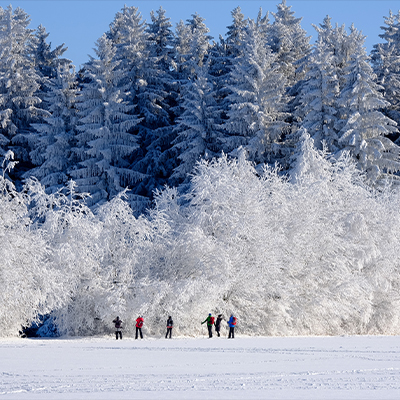
A cold climate field test evaluates outdoor jacket performance under real environmental stress rather than controlled lab conditions. At -15°C with wind speeds up to 30 km/h, multi-layer insulated jackets are worn during extended physical activity to measure thermal retention, windproof efficiency, breathability, and moisture management. Data from wearable sensors and user feedback are analyzed to validate insulation systems, membrane performance, and heat balance stability, ensuring technical outerwear meets real-world cold-weather protection requirements for outdoor brands and OEM development.
Real-World Cold Weather Testing Environment
When temperatures drop below freezing, laboratory simulations are no longer sufficient to evaluate performance. In this field test conducted by Simmerui Lab, prototype jackets were tested in northern China’s cold climate region under the following conditions:- Ambient temperature: -15°C
- Wind speed: up to 30 km/h
- Duration: 6 hours continuous outdoor activity
- Activity type: walking, lifting, manual workload simulation
Jacket System Performance Evaluation
Multiple prototype jackets with different insulation configurations were tested simultaneously.Key performance systems evaluated:
- Windproof outer membrane blocking cold air penetration
- Lightweight thermal insulation layers for heat retention
- Reflective inner lining for heat redistribution
- Moisture management under sweat and movement
Observed results:
- Stable core body temperature during extended activity
- No condensation buildup inside layers
- No measurable heat collapse during motion cycles
- High breathability under perspiration conditions
Sensor Data + User Feedback Correlation
Beyond subjective comfort feedback, the test relied on embedded sensor tracking:- Skin temperature fluctuation stability
- Internal humidity variation
- Heat retention decay rate over time
Engineering Insights for Next-Generation Jackets
Post-test analysis revealed key optimization directions:- Improved balance between insulation weight and breathability
- Enhanced membrane stability under motion stress
- Reduced micro-condensation in high activity phases
Why Field Testing Matters for OEM/ODM Development
Controlled lab tests validate materials. Field tests validate real product behavior. For B2B apparel development, this ensures:- More accurate sample approval cycles
- Reduced production rework risk
- Higher performance consistency across bulk orders
FAQ
Q1: Why is cold climate field testing necessary for jackets?
Because real environmental stress (wind, movement, sweat) cannot be fully replicated in laboratory simulations.Q2: What temperature is used in cold weather jacket testing?
Typically between -10°C to -25°C depending on target market and product category.Q3: What does field testing measure in technical jackets?
Wind resistance, thermal retention, breathability, moisture control, and structural stability under motion.