
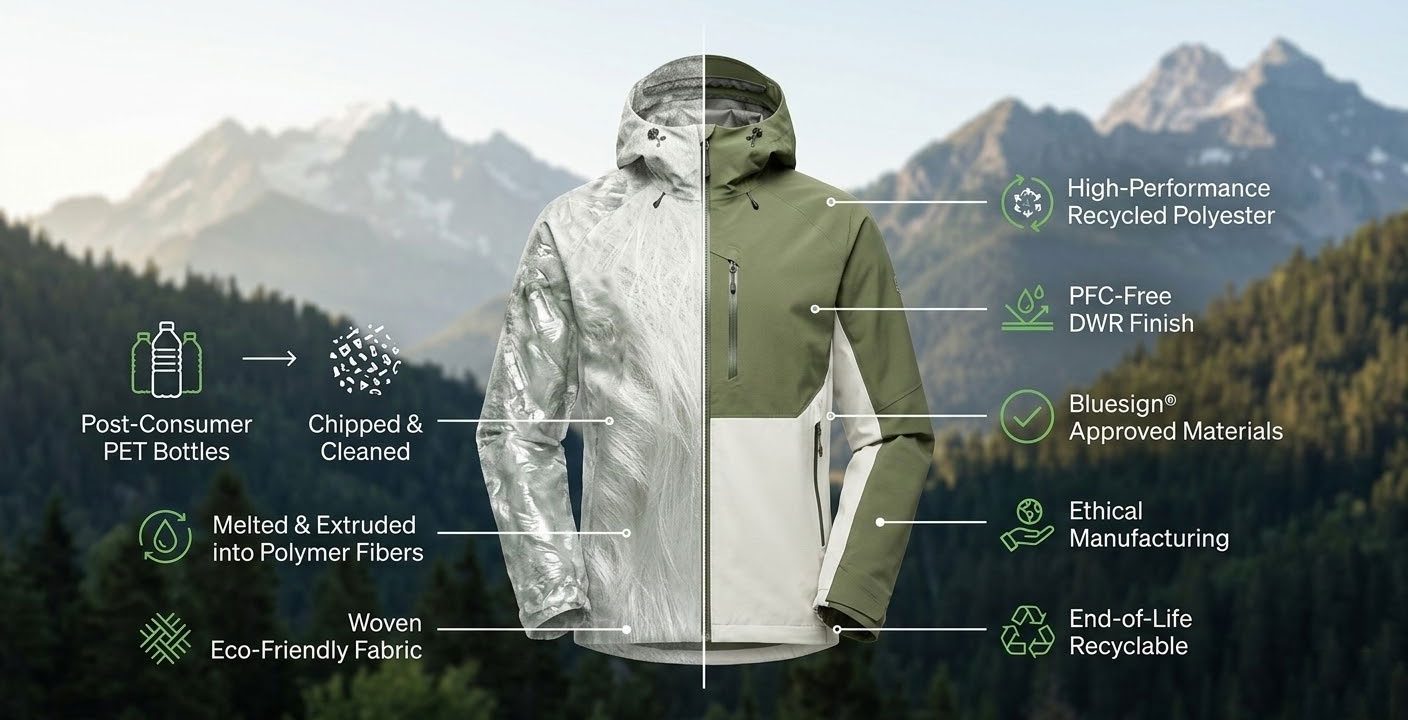
Sustainability is transforming outdoor apparel from a marketing message into a product and supply-chain strategy. For B2B brands and buyers, the shift is driven by recycled and certified materials, cleaner production processes, and durability-focused design that reduces lifecycle impact.
This guide explains the key trends reshaping sustainable outdoor clothing—materials, manufacturing upgrades, certification requirements, and emerging circular models—plus practical ways to adapt while maintaining technical performance, cost control, and reliable delivery.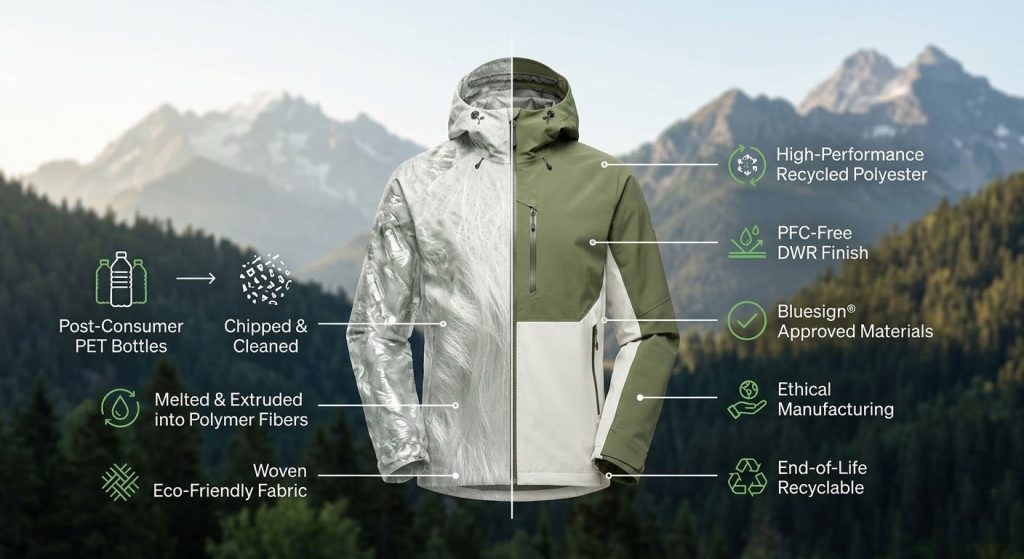
For outdoor brands and B2B buyers, sustainability is no longer just a marketing message—it has become a core strategy for product development and supply chain decisions.
At Simmerui,we working with brands to integrate sustainable materials, efficient production processes, and durable garment construction into outdoor collections.In this article, we explore the key sustainability trends transforming the outdoor apparel market and how brands can adapt to this evolving landscape.
1. Respond to Consumer Demand Without Sacrificing Performance for Sustainable Outdoor Apparel
- Increased demand for recycled materials
- Preference for durable, long-lasting garments
- Growing interest in transparent supply chains
- Support for brands with ethical manufacturing practices
This shift is pushing outdoor brands to rethink how products are designed and manufactured.
Many brands are now partnering with experienced manufacturers our team to develop sustainable product lines while maintaining technical performance and competitive pricing.
Brands that adapt quickly to this demand often gain stronger customer loyalty and long-term market positioning.
2. Adopt Sustainable Materials That Still Meet Technical Specs Are Becoming Industry Standards
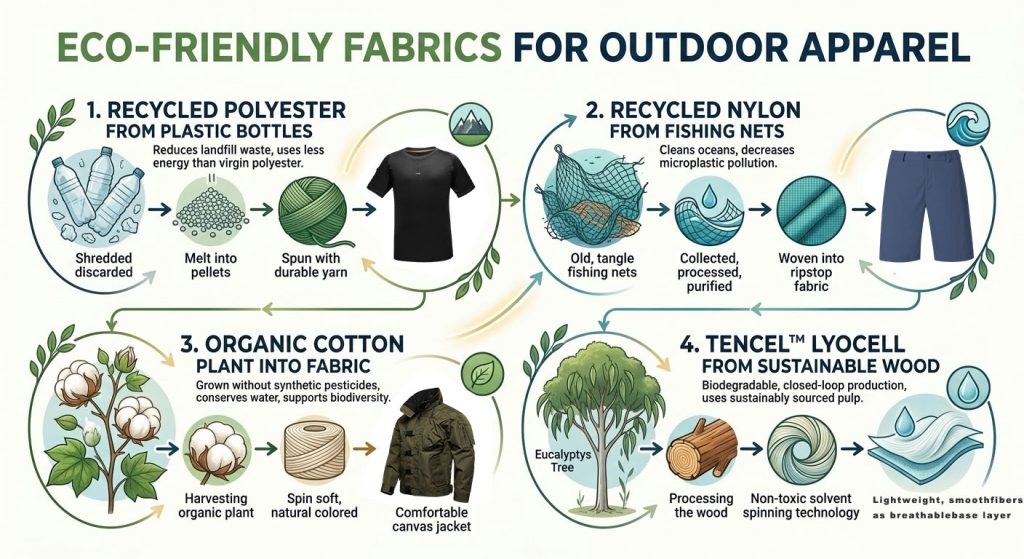
Recycled Polyester
Recycled polyester made from plastic bottles significantly reduces waste while maintaining the durability and weather resistance required for outdoor gear.
Recycled Nylon
Recycled nylon, often sourced from discarded fishing nets or industrial waste, offers excellent strength and abrasion resistance while reducing environmental impact.
Organic Cotton
Organic cotton eliminates harmful pesticides and requires less water compared to conventional cotton, making it a popular choice for outdoor lifestyle apparel.
Manufacturers that specialize in technical apparel—We can help brands integrate these materials into products like waterproof shells, softshell jackets, and insulated outerwear.
For example, sustainable materials can be applied to performance garments such as technical softshell jackets like our Men’s Lightweight Softshell Jacket.
3. Reduce Impact Through Cleaner, More Efficient Production Processes
Sustainability in apparel production goes far beyond materials. Manufacturing processes themselves play a critical role in reducing environmental impact.
Leading outdoor apparel manufacturers are adopting greener production technologies, including:
- Water-saving dyeing systems
- Energy-efficient production equipment
- Reduced chemical usage
- Fabric waste recycling programs
Our Factories that integrate modern production systems can improve both sustainability and efficiency.
For brands looking to scale production responsibly, working with an experienced manufacturer our production team helps ensure that sustainability goals are supported by real manufacturing capabilities.
Our production team typically documents material traceability, batch inspection, and delivery milestones for seasonal programs. large-scale garment manufacturing while maintaining consistent quality and delivery timelines.

4. Design for Durability to Lower Lifecycle Footprint: A Core Element of Sustainable Design
In outdoor apparel, durability is one of the most overlooked sustainability factors.
Garments designed for extreme environments must withstand wind, rain, abrasion, and temperature changes. When products last longer, they reduce the need for frequent replacements—ultimately lowering environmental impact.
Key design features that improve durability include:
- Reinforced stitching and seam construction
- Tear-resistant fabrics
- Weather-resistant coatings
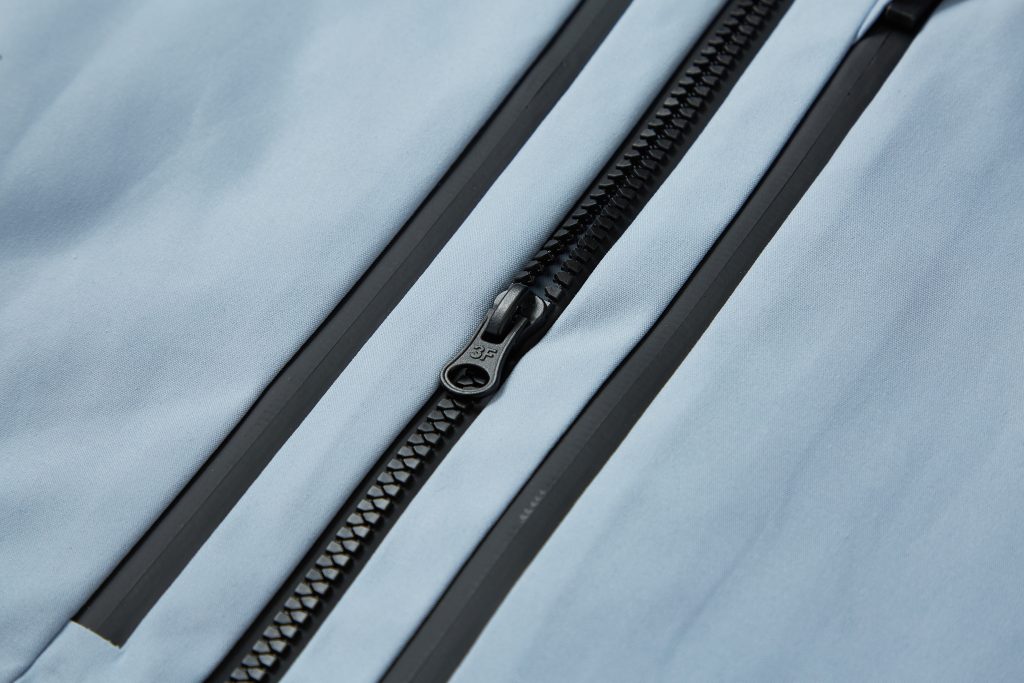
- High-quality zippers and trims
Many outdoor brands now prioritize durability as a key part of their sustainability strategy.
Manufacturers with strong R&D and product development capabilities—we often help brands optimize garment structures to balance performance, longevity, and cost efficiency.
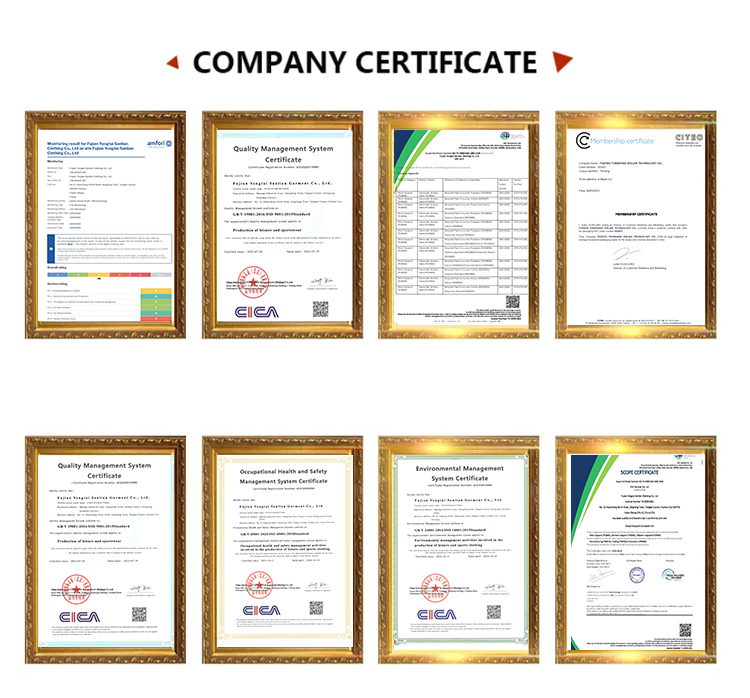
5. Sustainability Use Certifications to Prove Claims and Reduce B2B Risk Are Becoming Essential
As sustainability claims become more common, certifications play a crucial role in verifying environmental standards.
Some widely recognized certifications in the outdoor apparel industry include:
- Global Recycled Standard (GRS)
- OEKO-TEX® Standard 100
- Bluesign® certification
- Fair Trade Certified
These certifications help brands demonstrate credibility and transparency to consumers and retail partners.
For B2B buyers, working with certified manufacturers can reduce supply chain risks while strengthening brand trust in international markets.
6. Challenges of Sustainable Outdoor Apparel Production
- Higher material costs
- Limited availability of eco-friendly fabrics
- Certification complexity
- Supply chain transparency requirements
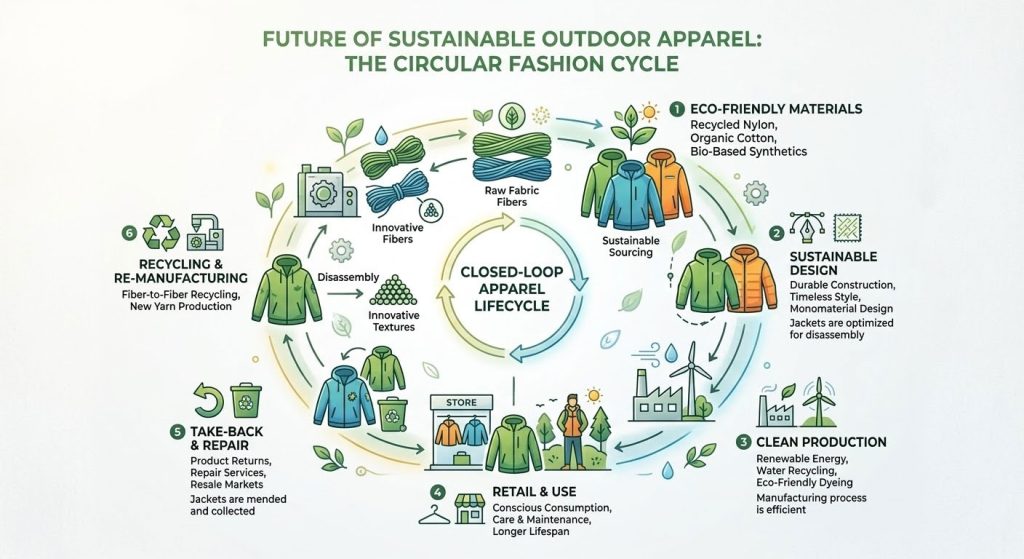
7. The Future of Sustainable Outdoor Apparel
Sustainability will continue to shape the outdoor apparel industry in the coming years.
Emerging trends include:
- Circular fashion and garment recycling
- Bio-based performance fabrics
- Carbon-neutral manufacturing
- Modular outdoor garment design
Brands that integrate sustainability early into their product strategy will gain a competitive advantage as environmental regulations and consumer expectations continue to rise.
Partnering with experienced outdoor apparel manufacturers our team can help brands develop sustainable collections while maintaining product performance and manufacturing efficiency.
FAQ: Sustainable Outdoor Apparel Manufacturing
1What makes outdoor apparel sustainable?
Sustainable outdoor apparel uses eco-friendly materials, responsible manufacturing processes, and durable garment construction to reduce environmental impact throughout the product lifecycle.2.Why is sustainability important for outdoor brands?
Outdoor consumers often value environmental protection, making sustainability a key factor in brand reputation and purchasing decisions.3.How can brands develop sustainable outdoor clothing?
Brands can work with experienced manufacturers to source recycled materials, improve production efficiency, and design long-lasting products that reduce environmental impact.4.What certifications matter most for sustainable outdoor apparel sourcing?
| Certification | Focus Area | Best For |
| bluesign® | Input Stream Management | Hardshells, DWR coatings |
| GRS | Recycled Content | Fleece, Recycled Nylon/Poly |
| RDS / RWS | Animal Welfare | Insulated jackets, Merino base layers |
| GOTS | Organic Integrity | Cotton hoodies, natural fiber blends |
5.How do you verify recycled content and material traceability at scale?
| Method | Reliability | Scalability |
| GRS/RCS TCs | High (Industry Standard) | High (Paper-based/Digital) |
| Blockchain | Very High (Data Integrity) | Moderate (Requires tech adoption) |
| Fiber Tracers | Highest (Physical Proof) | Lower (Higher cost per unit) |
Written by the Simmerui product development team. We support B2B outdoor apparel programs by validating sustainable materials against performance targets, documenting sourcing and certification requirements, and applying repeatable construction and QC controls for stable bulk production. Our team works with brands on material alternatives, durability engineering, and production planning to reduce risk across seasonal deliveries and long-term reorders.