
OEKO-TEX and GOTS are two major textile certifications used in apparel manufacturing. OEKO-TEX focuses on testing finished textiles for harmful substances, ensuring product safety and skin compatibility. GOTS certifies the entire organic textile supply chain, from raw fiber to finished garment, with strict environmental and social standards. OEKO-TEX is widely used for mainstream compliance and faster market access, while GOTS is preferred for sustainable and premium brand positioning.
Many global apparel brands combine both to balance safety compliance and sustainability credibility.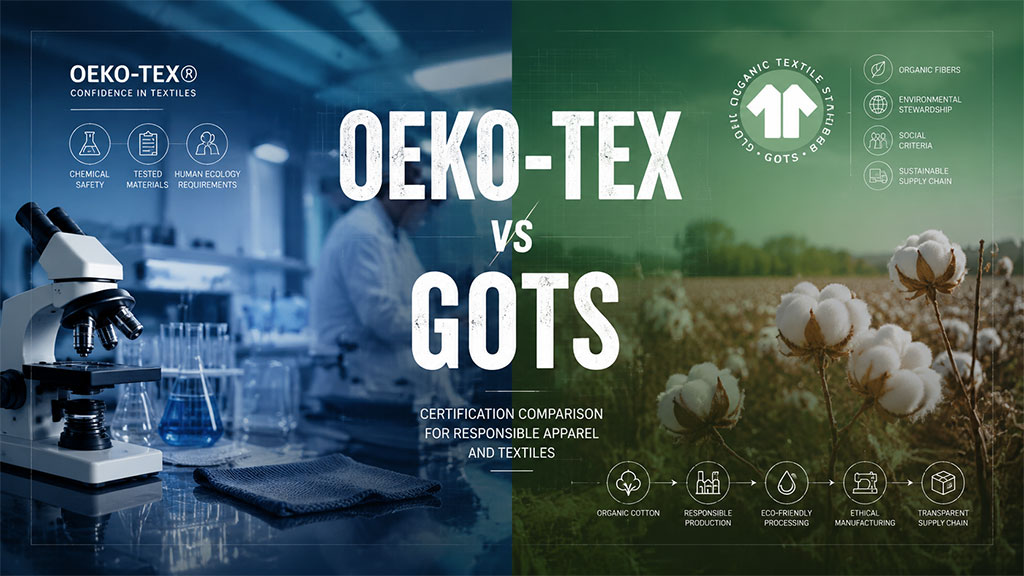
1. Introduction: Why Certifications Matter in B2B Apparel Manufacturing
In global apparel sourcing and OEM/ODM manufacturing, certifications are no longer optional compliance labels—they function as market access requirements, retail trust signals, and ESG positioning tools. For international buyers, especially in the US and EU markets, certification systems directly influence:- Retail onboarding approval
- Product liability risk control
- Sustainability claims validation
- Brand positioning strategy
2. OEKO-TEX Certification (Product Safety Standard)
Core Focus
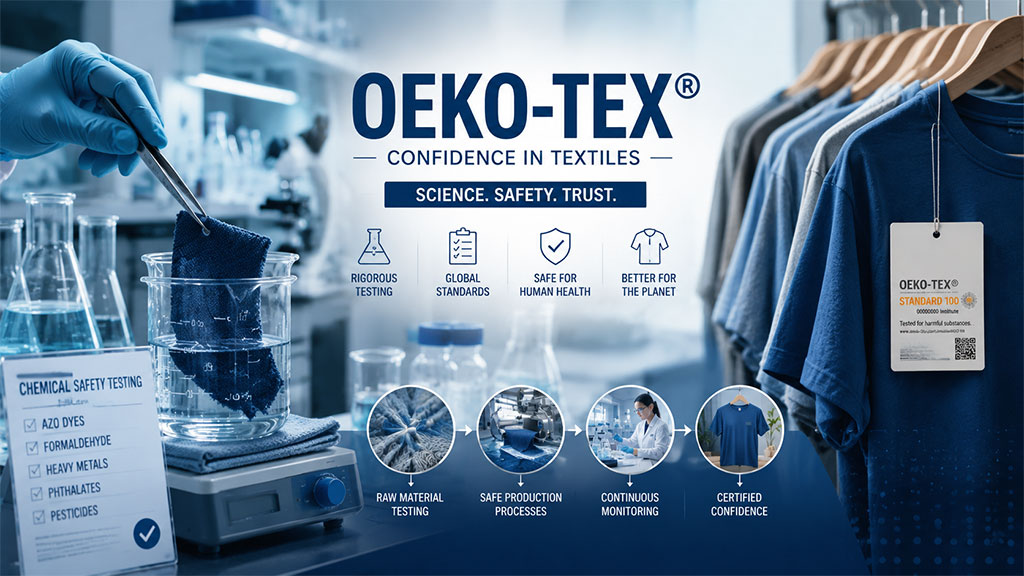
OEKO-TEX is a product-level textile safety certification system focused on chemical and human safety testing. Scope- Finished fabrics
- Textile accessories (zippers, trims, labels)
- Final garments
Key Compliance Areas
- Absence of harmful chemicals (e.g., heavy metals, azo dyes)
- Skin-friendly textile safety verification
- Consumer health risk reduction
Key Advantages (B2B Perspective)
- Fast certification cycle
- Widely accepted in mainstream retail channels
- Lower compliance barrier for manufacturers
- Suitable for scalable mass production
Ideal For
- Fast fashion brands
- DTC apparel labels
- Export-oriented basic apparel suppliers
- High-volume OEM manufacturers
3. GOTS Certification (Organic Supply Chain Standard)
Core Focus
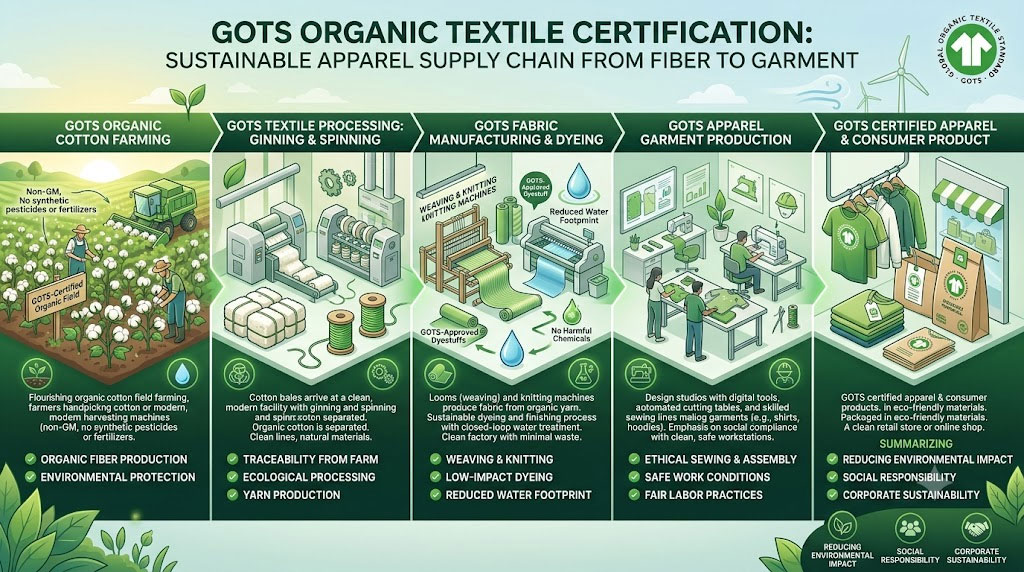
GOTS is a full-chain sustainability certification system covering environmental, chemical, and social compliance from fiber to finished garment. Coverage- Organic raw fiber sourcing
- Yarn and fabric production
- Dyeing and finishing processes
- Final garment manufacturing
Key Requirements
- Minimum organic fiber content (typically ≥70%)
- Strict chemical restrictions across the supply chain
- Social compliance (fair wages, safe working conditions)
- Environmental impact control in production processes
Key Advantages (B2B Perspective)
- Strong ESG and sustainability credibility
- High acceptance in EU and premium US markets
- Supports premium pricing strategies
- Strengthens brand storytelling in eco markets
Ideal For
- Sustainable fashion brands
- Premium apparel labels
- ESG-driven companies
- Eco-conscious retail buyers
4. OEKO-TEX vs GOTS Comparison (B2B Decision Matrix)
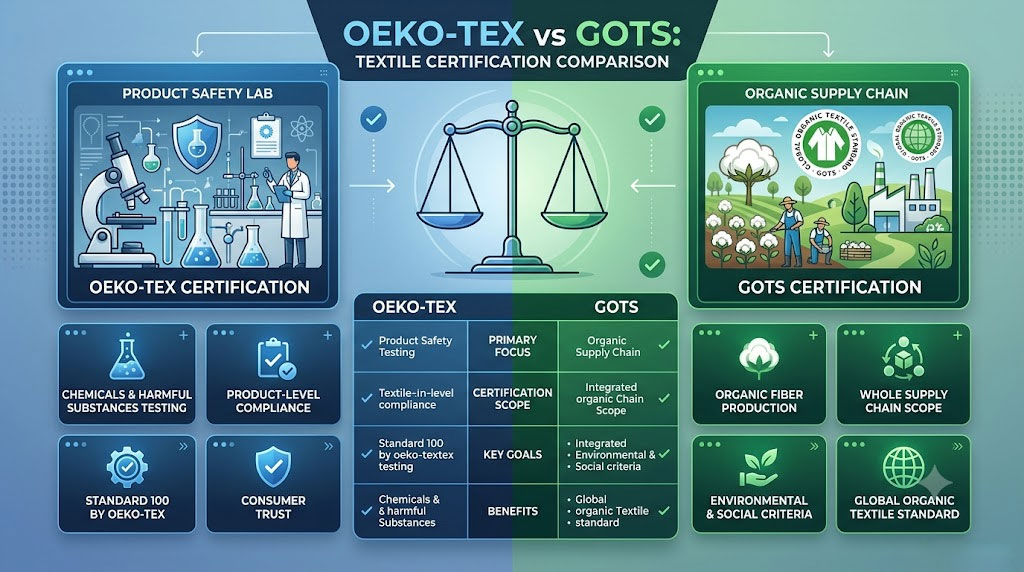
| Aspect | OEKO-TEX | GOTS |
|---|---|---|
| Core Goal | Product safety | Organic + sustainability |
| Scope | Finished product testing | Full supply chain |
| Certification Level | Material / product level | System-level certification |
| Cost | Low–Medium | Medium–High |
| Difficulty | Relatively easy | Strict audit system |
| Market Position | Mass market | Premium / sustainable |
| Ideal Application | Basic apparel OEM | Eco & premium brands |
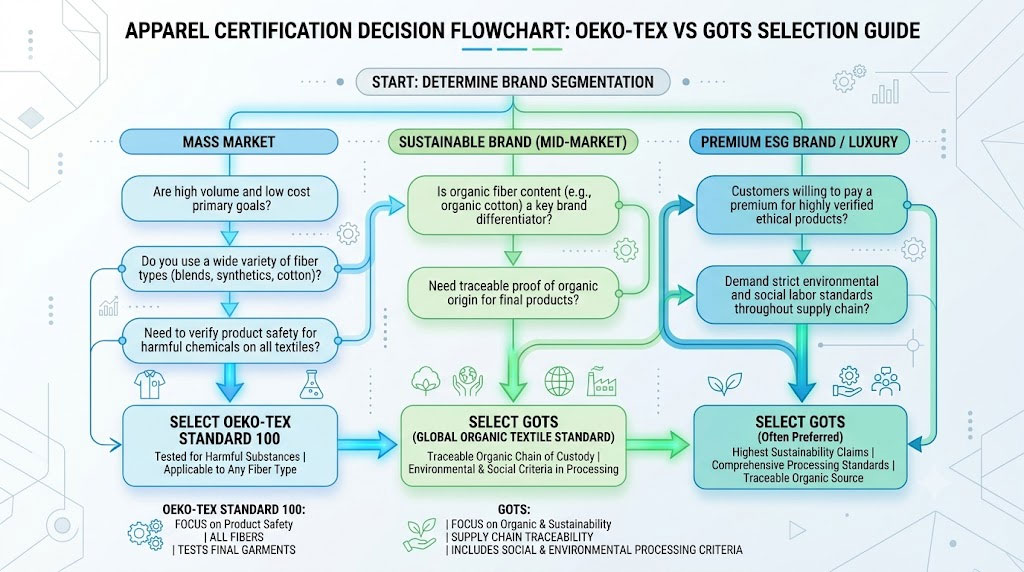
5. Practical B2B Selection Framework
Choose OEKO-TEX if:- Your target market is mainstream retail or export mass market
- Product safety compliance is the top priority
- Faster retail onboarding is required
- You operate high-volume standardized production
- Your brand positioning is sustainability-driven
- You use organic cotton or eco-certified materials
- You target premium or ESG-conscious consumers
- You compete in EU eco-fashion markets
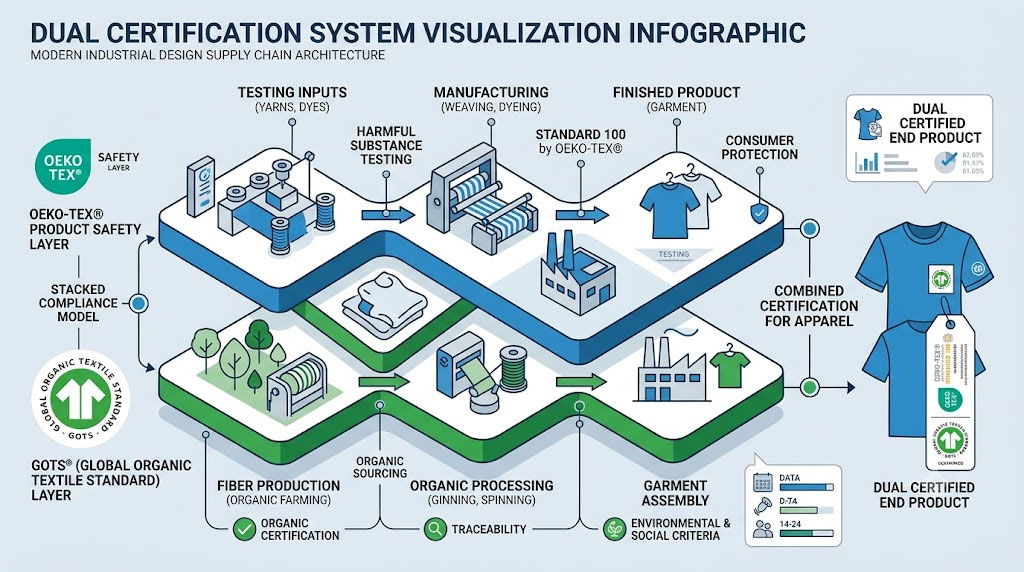
6. Recommended Strategy: Dual Certification Approach
In real-world apparel supply chains, many brands adopt a combined certification strategy:- GOTS → validates sustainable sourcing & organic integrity
- OEKO-TEX → ensures final product safety compliance
- Retailer trust
- ESG reporting credibility
- Consumer confidence
- Market positioning flexibility
7. FAQ
Q1: Which is stricter, OEKO-TEX or GOTS?
GOTS is stricter because it covers the entire supply chain, including raw materials, processing, environmental impact, and social compliance. OEKO-TEX focuses mainly on finished product safety testing.Q2: Can a product have both OEKO-TEX and GOTS certifications?
Yes. Many brands use GOTS for organic sourcing credibility and OEKO-TEX for final product safety assurance.Q3: Which certification is better for the US market?
OEKO-TEX is widely used for mainstream apparel compliance, while GOTS is preferred for premium sustainable and eco-conscious brands.Q4: Does GOTS require 100% organic materials?
No. GOTS typically requires a minimum organic fiber content of around 70%, depending on product classification.Q5: Do certifications increase production cost?
Yes. GOTS increases raw material and audit costs significantly, while OEKO-TEX is more cost-efficient and easier to implement at scale.Q6: Which certification is easier for factories to obtain, OEKO-TEX or GOTS?
OEKO-TEX is significantly easier and faster for factories to obtain because it focuses on testing finished textiles rather than auditing the entire supply chain. GOTS requires full certification of raw materials, chemical inputs, production processes, and social compliance, making it more complex and time-consuming.Q7: Can all types of fabrics be certified under GOTS?
No. GOTS certification is limited to organic fibers such as organic cotton or other approved natural fibers. Synthetic fabrics such as polyester or nylon cannot be certified under GOTS.Q8: How long does OEKO-TEX vs GOTS certification take?
OEKO-TEX certification is relatively fast, usually taking a few weeks depending on lab testing schedules. GOTS certification can take several months due to multi-stage audits covering farms, mills, dyeing facilities, and factories.Q9: What risks do brands face without OEKO-TEX or GOTS certification?
Without certification, brands may face:- Retail rejection in EU/US markets
- Increased compliance risk during customs or audits
- Reduced trust from wholesale buyers
- Limited access to sustainable retail channels
Written by the Simmerui Apparel Manufacturing Team.
We specialize in OEM and ODM apparel production for global B2B brands, focusing on long-term supplier partnerships, quality control systems, scalable manufacturing, and sustainable sourcing solutions. Our team works across fabric engineering, sampling development, production management, and compliance systems to help brands build stable and efficient apparel supply chains.