
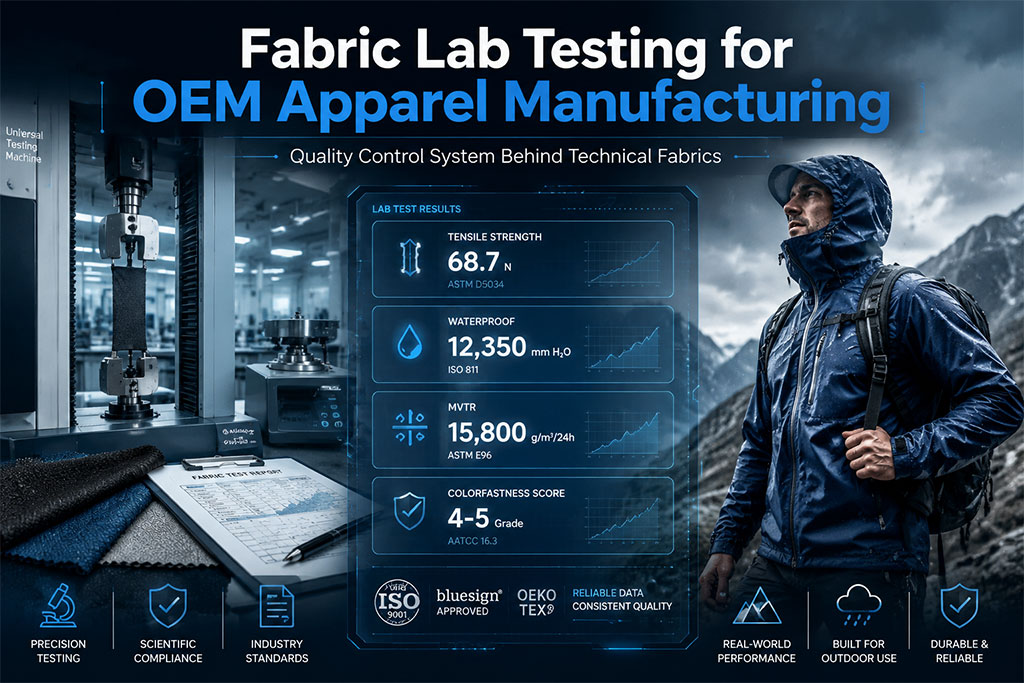
Fabric lab testing in OEM apparel manufacturing is a standardized evaluation process used to verify textile performance, safety, and compliance before bulk production. It measures key factors such as tensile strength, colorfastness, shrinkage, waterproof performance, breathability, and chemical safety (OEKO-TEX, GRS, REACH). For apparel brands, especially in outdoor and technical segments, fabric testing reduces production risk, ensures batch consistency, and strengthens product reliability. It serves as a critical quality gate between sampling and mass production in global apparel supply chains.
What Is Fabric Lab Testing in OEM Apparel Production?
Fabric lab testing is a scientific evaluation process conducted in controlled laboratory environments to validate textile properties before garments enter mass production. In OEM/ODM manufacturing, it acts as a quality gate between fabric sourcing, sampling, and bulk production, ensuring every material meets predefined technical and compliance standards.Core Objectives:
- Validate fabric performance before production
- Ensure compliance with international textile regulations
- Reduce production risk and material inconsistency
- Align fabric selection with brand product specifications
Key Fabric Tests Used in Apparel Manufacturing
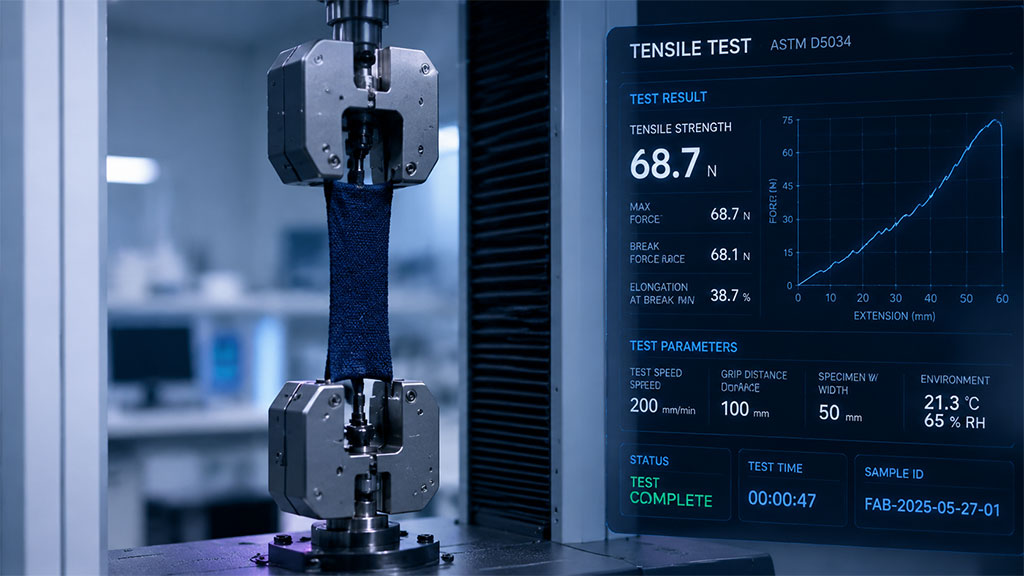
To ensure functional reliability and compliance, OEM fabric testing typically includes:1. Physical Performance Testing
- Tensile strength & tear resistance
- Abrasion and pilling resistance
- Seam slippage behavior
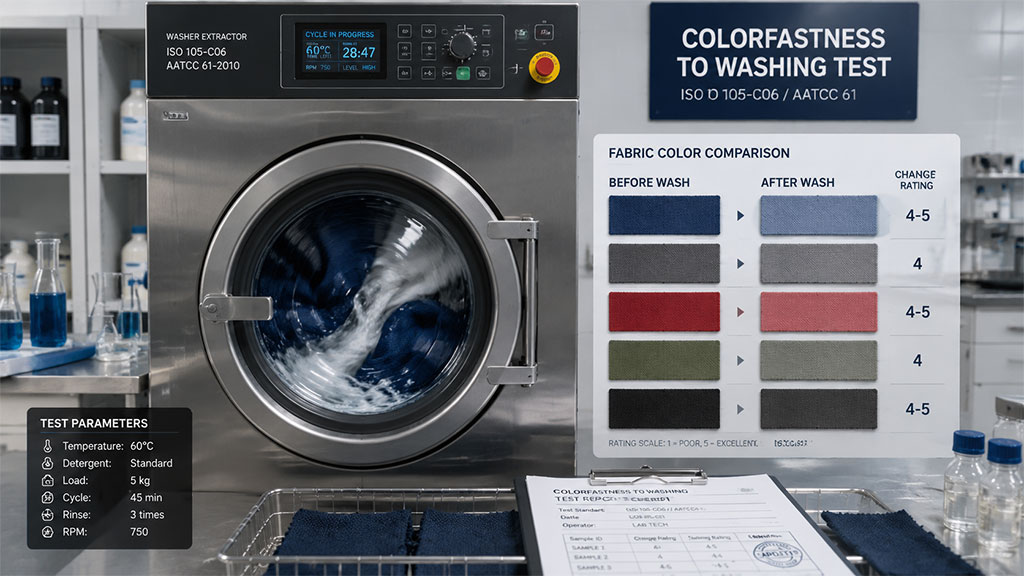
2. Color & Appearance Testing
- Wash fastness
- Rub fastness (dry/wet)
- Light exposure resistance
3. Functional Performance Testing
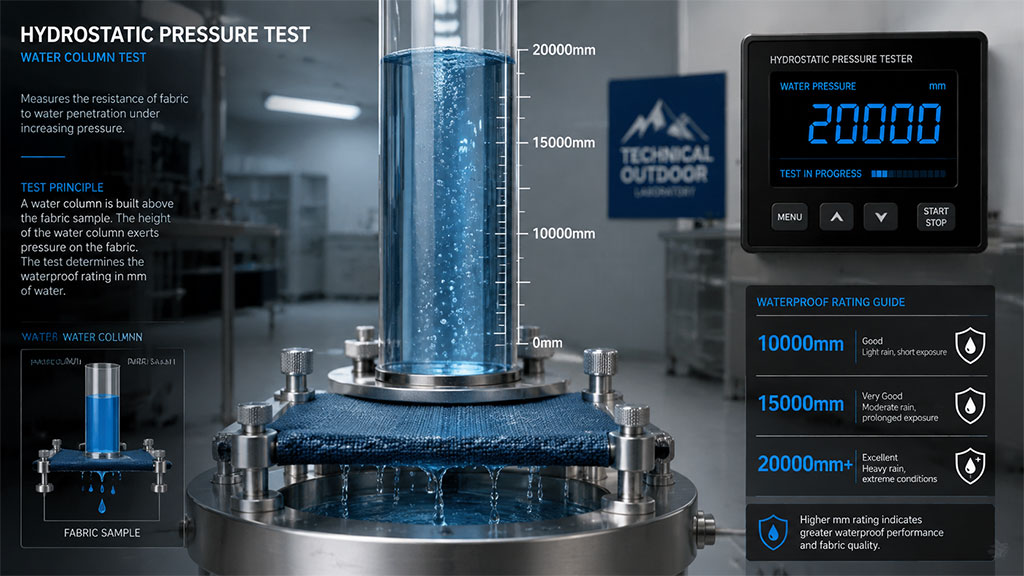
- Waterproof rating (hydrostatic pressure)
- Breathability (MVTR testing)
- Shrinkage after washing
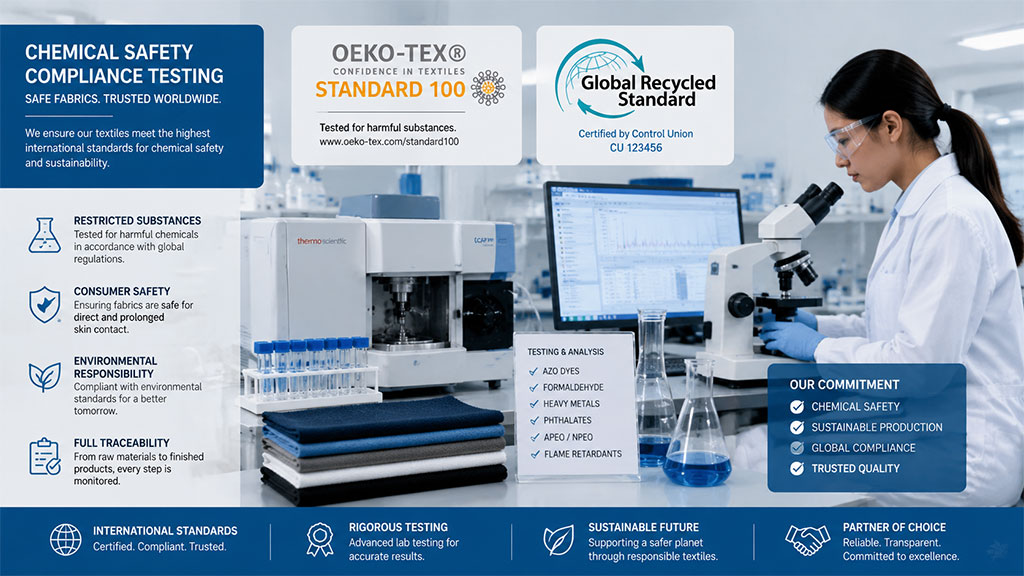
4. Chemical Safety Compliance
- OEKO-TEX Standard 100
- GRS (Global Recycled Standard)
- REACH compliance (EU markets)
Why Fabric Lab Testing Matters in OEM/ODM Production
Fabric testing is not optional for professional B2B apparel manufacturing—it directly determines product stability and brand reliability.1. Reduce Production Risk
Detect fabric defects before bulk production to avoid costly rework or shipment rejection.2. Ensure Batch Consistency
Large-scale sourcing often leads to variation; lab testing ensures every batch meets identical standards.3. Support Global Compliance
Essential for export markets requiring strict textile regulations (EU, US, UK).4. Improve Product Performance
Optimizes durability, waterproofing, and breathability—critical for outdoor apparel categories.Fabric Testing in Simmerui OEM Workflow
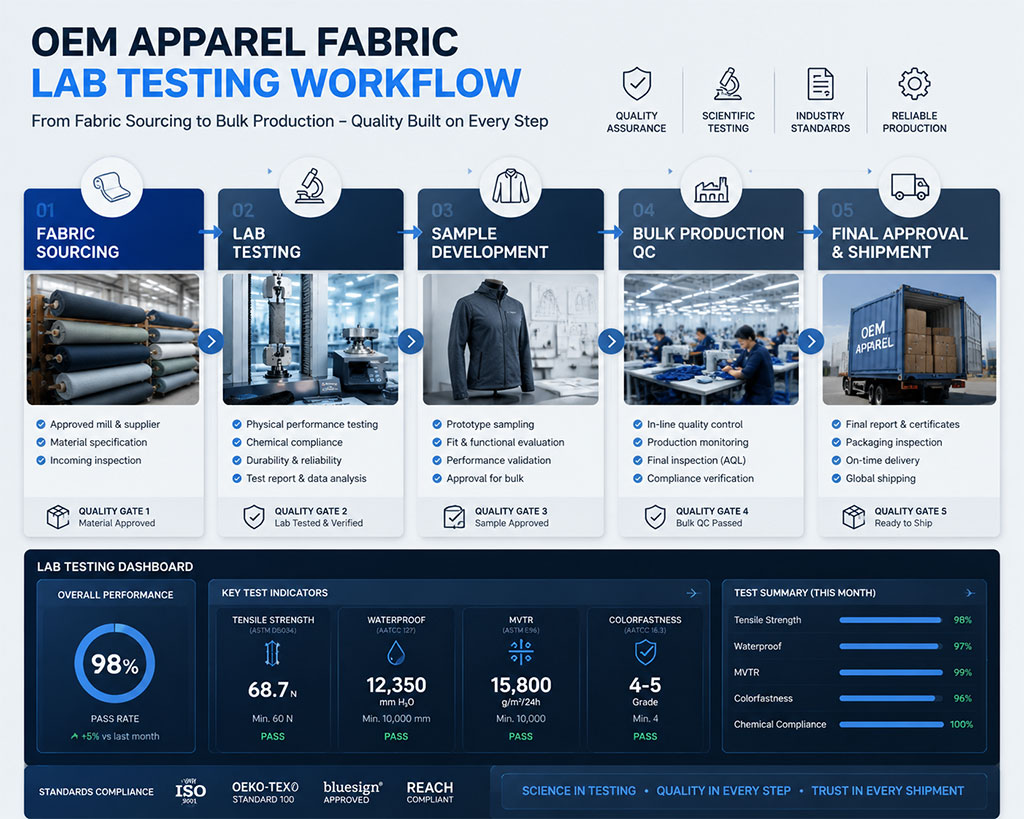
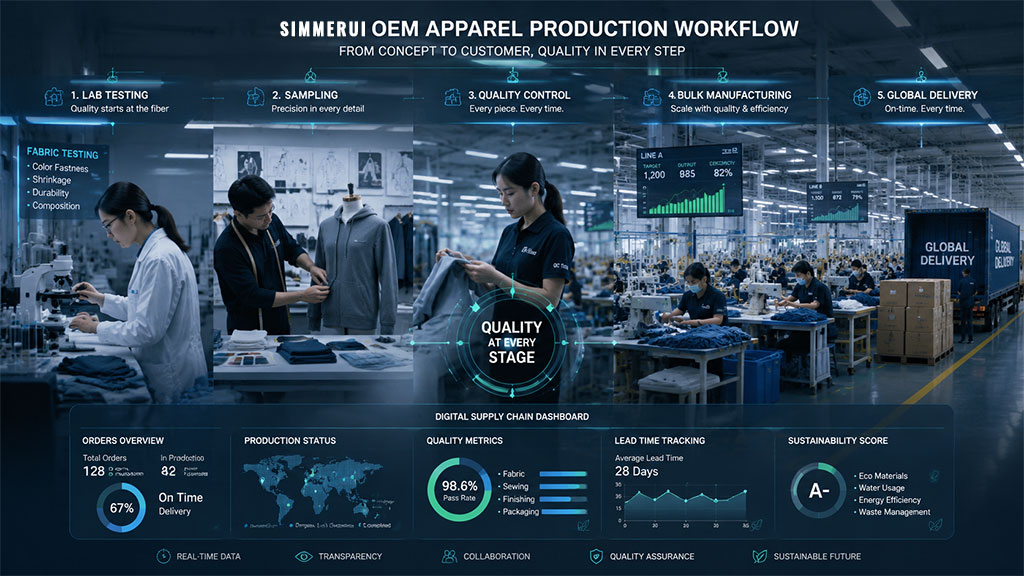
At Simmerui, fabric lab testing is integrated into a structured production system rather than treated as a standalone step.Stage 1: Fabric Sourcing & Supplier Screening
- Initial fabric evaluation
- Supplier qualification checks
Stage 2: Laboratory Testing Phase
All candidate fabrics are evaluated for:- Mechanical performance
- Chemical safety
- Functional properties
Stage 3: Sample Development
Only validated fabrics are used for proto samples and tech pack execution.Stage 4: Bulk Production & QC Integration
- Inline QC monitoring
- Random batch re-testing
- Continuous consistency control
- Fabric Testing Standards: /fabric-testing
- OEM/ODM Manufacturing Process: /oem-odm-manufacturing
- Quality Control System: /quality-control
Key Business Value for B2B Apparel Brands
Fabric lab testing delivers measurable commercial advantages:- Faster tech pack approval cycles
- Lower defect rates in bulk production
- Reduced return and refund risk
- Stronger positioning in premium retail markets
- Higher trust from international buyers
FAQ
Q1: Is fabric lab testing required for OEM apparel production?
Yes. While not always legally required, most international buyers and export markets require testing to meet compliance and quality standards.Q2: How long does fabric lab testing take?
Typically 2–7 days depending on test complexity, fabric type, and certification requirements.Q3: What is the difference between lab testing and QC inspection?
Lab testing evaluates fabric properties scientifically before production, while QC inspection checks finished garments for defects during or after production.Q4: Can fabric testing eliminate production defects?
It significantly reduces risk by identifying material issues before bulk manufacturing begins, but must be combined with QC systems for full control.Q5: Which certifications are commonly involved?
OEKO-TEX, GRS, ISO standards, and REACH compliance are most commonly verified in OEM fabric testing.Q6: What fabrics are commonly used in outdoor apparel testing?
Outdoor apparel commonly uses nylon, polyester, and blended performance fabrics with coatings or membranes such as TPU or PU. These materials are tested for waterproofing, breathability, and durability before production to ensure stability in extreme conditions.Q7: What is hydrostatic pressure testing in fabric lab testing?
Hydrostatic pressure testing measures how much water pressure a fabric can withstand before leaking. It is a key standard for waterproof outdoor apparel, typically expressed in millimeters (e.g., 5,000mm–20,000mm ratings).Q8: How does fabric testing affect OEM production cost?
Fabric testing helps reduce long-term production costs by identifying defective or non-compliant materials before bulk production, minimizing waste, rework, and shipment rejection risks.Q9: Can fabric testing be customized for different brands?
Yes. Fabric testing protocols can be customized based on brand requirements, product category (outdoor, sportswear, casual), and target market compliance standards.Q10: Is lab testing required for sustainable apparel production?
Yes. For sustainable apparel, testing is essential to verify certifications such as GRS, OEKO-TEX, and recycled content compliance, ensuring materials meet environmental and safety standards.
Written by Simmerui Textile Testing & Quality Assurance Team.
We specialize in fabric performance evaluation for OEM/ODM apparel manufacturing, with a focus on technical outerwear, functional textiles, and performance fabrics. Our testing framework aligns with international textile standards and is embedded directly into production workflows to ensure material compliance, durability, and consistency for global B2B apparel brands.