
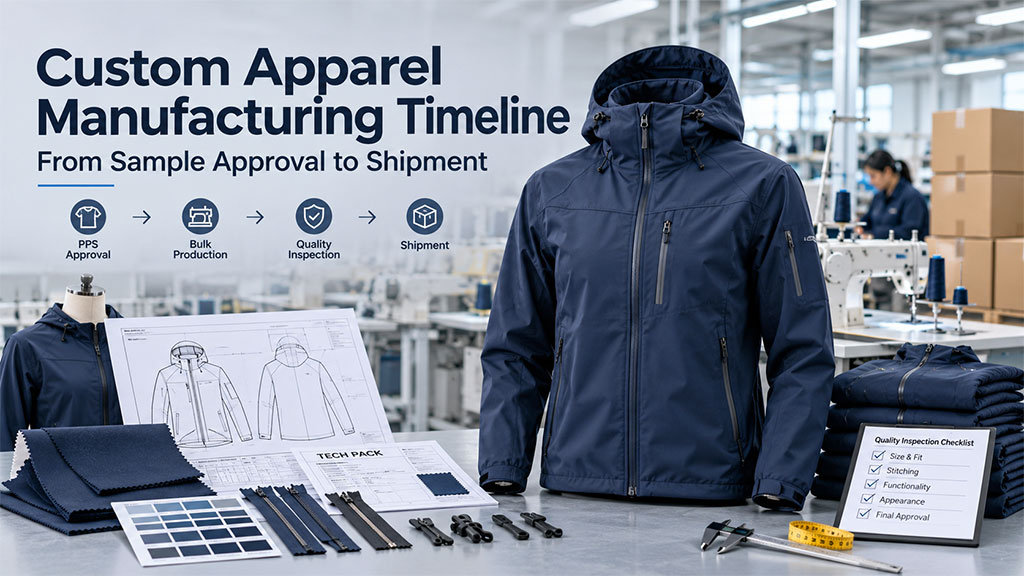
The custom apparel manufacturing timeline typically takes 30–90 days from sample approval to shipment preparation, depending on garment complexity, fabric availability, order quantity, and production capacity. The process includes material sourcing, pre-production planning, bulk cutting and sewing, quality inspection, finishing, packaging, and shipment coordination. Understanding each stage helps apparel brands plan inventory, manage delivery expectations, and reduce manufacturing delays when working with an OEM or ODM apparel manufacturing partner.
Introduction
Approving a production sample is an important milestone in custom apparel manufacturing, but it does not mean an order is ready for immediate production or shipment. Before finished garments reach their destination, every order must pass through several stages, including bulk material preparation, production planning, manufacturing, quality inspection, packaging, and logistics coordination. For apparel brands working with OEM and ODM manufacturers, understanding the production timeline is essential for managing seasonal collections, coordinating inventory, and meeting retail launch deadlines. This guide explains each manufacturing stage, typical lead times by product category, common production delays, and practical ways to keep bulk orders on schedule.1. Overview of the Custom Apparel Manufacturing Timeline
After final sample approval, custom apparel orders generally move through six major production stages.
| Production Stage | Estimated Time | Key Activities |
|---|---|---|
| Material Preparation | 7–14 days | Fabric booking, trim sourcing, material inspection |
| Pre-Production Preparation | 3–7 days | Production planning, PPS confirmation, PP meeting |
| Bulk Production | 15–35 days | Cutting, sewing, printing, embroidery, assembly |
| Quality Inspection | 2–5 days | In-line QC follow-up, final inspection |
| Finishing & Packaging | 2–5 days | Pressing, labeling, folding, packing |
| Shipment Preparation | 2–5 days | Carton verification, documents, cargo booking |
Note: These are indicative planning ranges, not guaranteed lead times. Some activities can overlap. Actual schedules depend on product complexity, order quantity, material readiness, and production capacity. International shipping transit time is additional.
For many standard apparel orders, the period from sample approval to shipment preparation may take approximately 30–60 days. Complex technical apparel projects may require 60–90 days or longer.
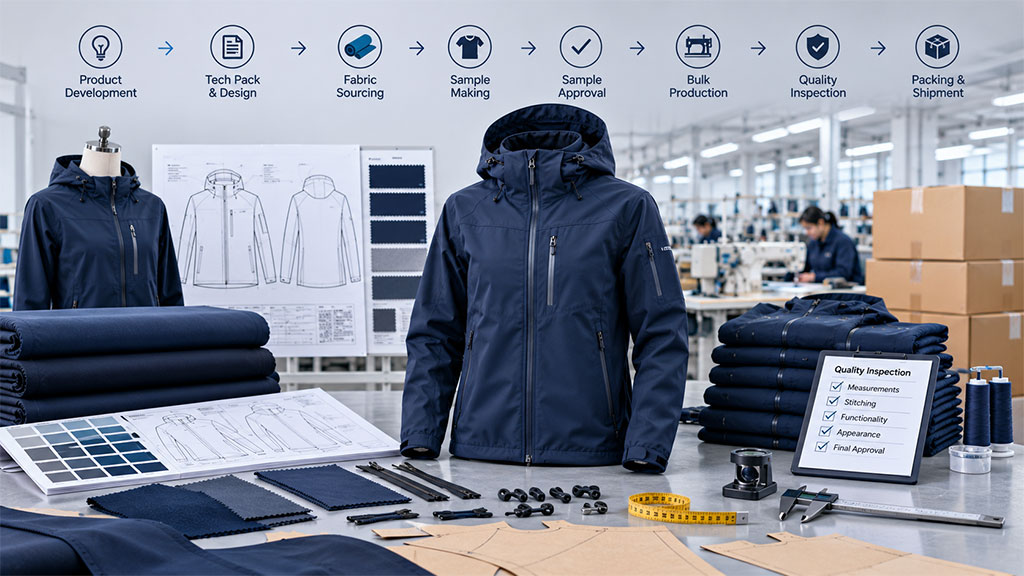
2. Seven Key Stages from Sample Approval to Shipment
Stage 1: Final Sample Approval and Production Confirmation
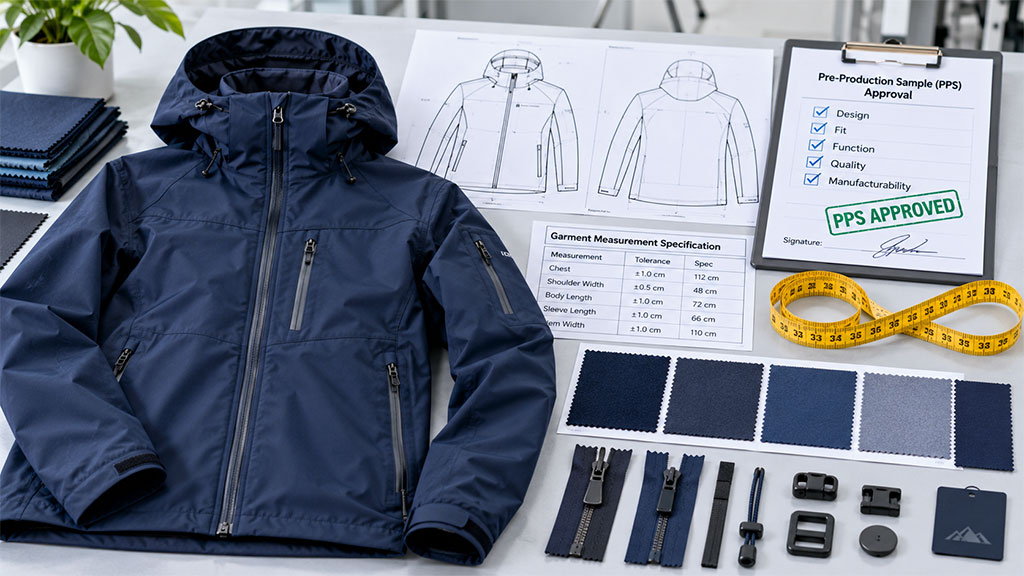
Before bulk manufacturing begins, the approved Pre-Production Sample (PPS) must accurately represent the final product requirements.
Both the brand and manufacturer should confirm:
- Garment measurements and size tolerances.
- Fabric composition, GSM, and color.
- Stitching methods and construction details.
- Zippers, buttons, labels, and accessories.
- Logo placement, printing, and embroidery.
- Packaging and labeling specifications.
The approved PPS becomes the primary reference for bulk production.
Key Deliverable: Approved PPS and confirmed bulk production specifications.
Stage 2: Fabric and Trims Preparation
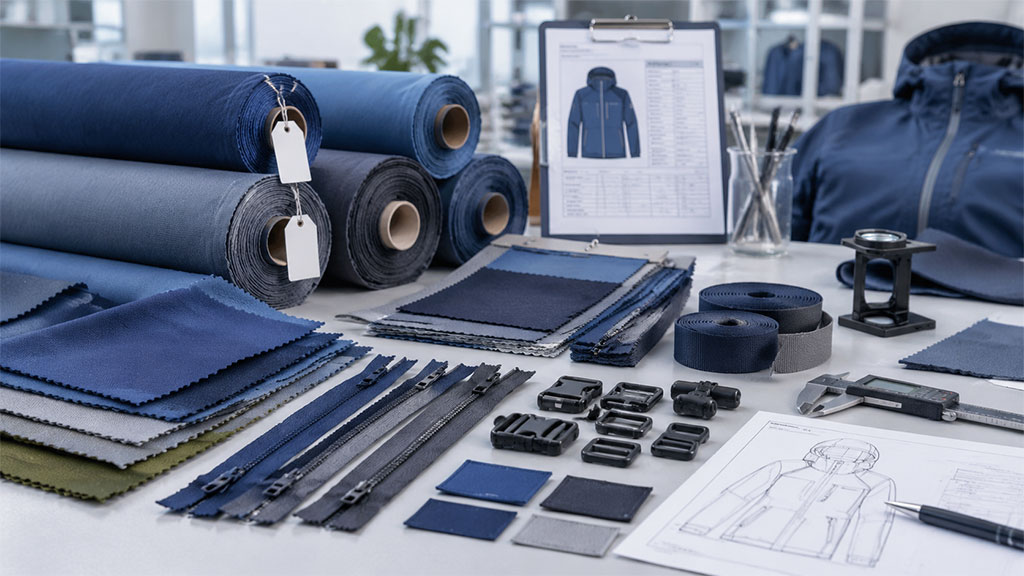
Once specifications are finalized, the manufacturer arranges the required bulk materials.
Typical activities include fabric procurement, color verification, accessory sourcing, and incoming material inspection.
Specialized materials, including waterproof fabrics, custom-dyed textiles, recycled materials, and branded accessories, may require additional sourcing time.
Early material inspection helps identify fabric defects, shade inconsistencies, and specification issues before production begins.
Key Deliverable: Approved and inspected bulk materials ready for manufacturing.
Stage 3: Pre-Production Meeting and Production Planning
A pre-production (PP) meeting aligns technical, sourcing, production, and quality-control teams before bulk manufacturing.
Important checkpoints include:
- Reviewing the approved PPS.
- Confirming the final tech pack and Bill of Materials (BOM).
- Checking fabric and trim availability.
- Confirming production quantities and size breakdowns.
- Reviewing workmanship and construction standards.
- Establishing inspection requirements.
- Assigning production lines and target completion dates.
A structured production plan reduces communication gaps and helps identify potential delays early.
Key Deliverable: Confirmed production schedule and quality-control requirements.
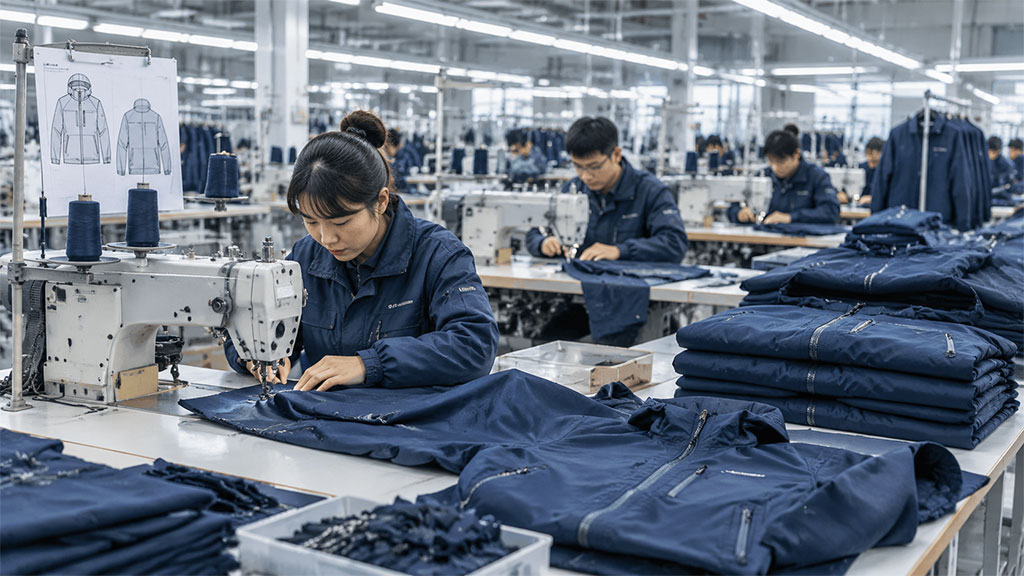
Stage 4: Bulk Cutting and Sewing Production
Bulk manufacturing is generally the most time-consuming stage.
The process includes fabric relaxation and spreading, pattern cutting, sewing, garment assembly, branding applications, and production-line monitoring.
Depending on product requirements, customization may include DTF printing, screen printing, embroidery, heat transfers, and woven labels.
Basic T-shirts and hoodies may move through production relatively quickly when materials are ready. Technical outdoor jackets, insulated garments, and waterproof apparel usually require additional time because of more complex construction and specialized manufacturing processes.
Key Deliverable: Completed bulk garments ready for finishing and inspection.
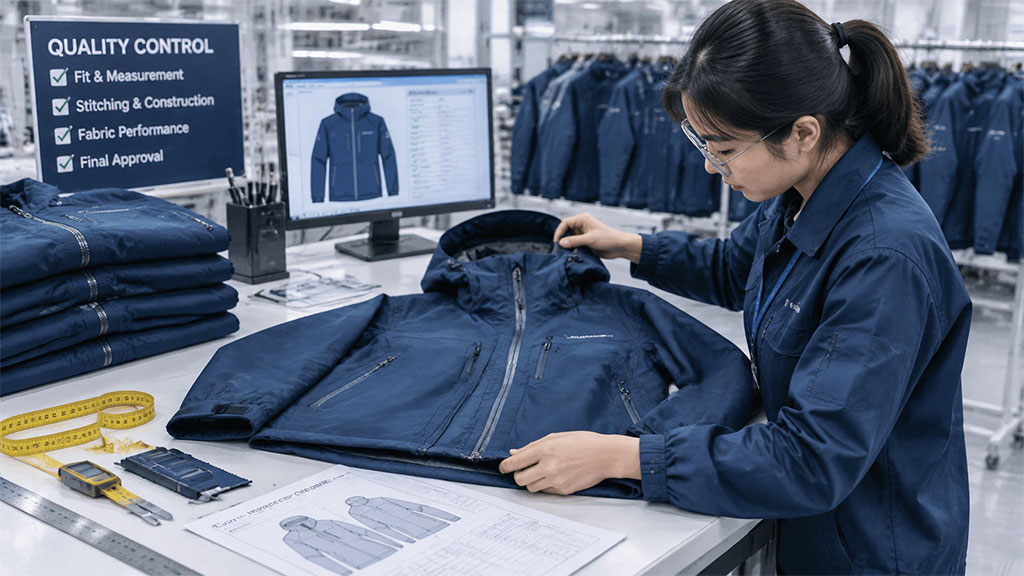
Stage 5: In-Line Quality Control and Final Inspection
Quality control should take place throughout production rather than only after all garments are completed.
In-line QC monitors:
- Measurement accuracy.
- Stitching consistency and seam strength.
- Fabric defects and color differences.
- Logo placement and customization quality.
- Construction details against the approved PPS.
Final inspection checks garment appearance, measurements, functional components, branding, labels, and packaging accuracy.
Depending on the order requirements, buyers may also request AQL-based final random inspection or product-specific testing, such as waterproof performance and colorfastness.
Key Deliverable: Inspection results and quality approval for shipment.
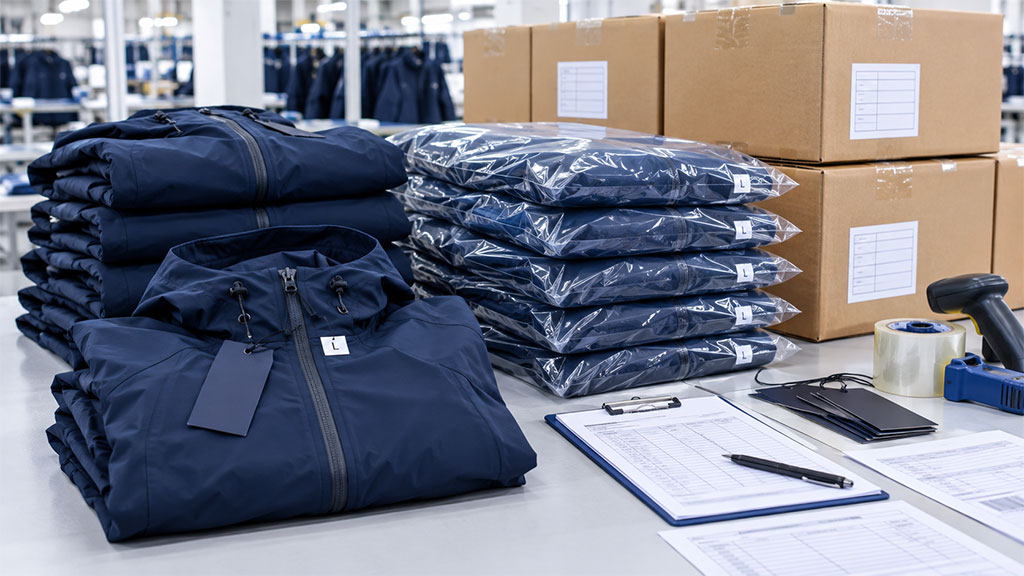
Stage 6: Garment Finishing and Packaging
After passing the required inspections, garments move into final finishing and packing.
Typical activities include thread trimming, pressing, folding, attaching hangtags, applying SKU labels, individual polybag packaging, and carton verification.
For private-label apparel brands, custom packaging and labeling requirements should be confirmed before bulk production to prevent last-minute sourcing delays.
Key Deliverable: Finished garments packed and ready for shipment.
Stage 7: Shipment Preparation and Cargo Dispatch
The final stage involves coordinating the completed order with the buyer’s logistics arrangements.
Before dispatch, both parties should confirm:
- Final order quantities.
- Carton dimensions and gross weight.
- Packing list and commercial invoice.
- Shipping marks and destination details.
- Freight booking and transportation method.
- Export documentation and applicable Incoterms.
Air freight is generally faster but more expensive, while sea freight is often more economical for larger orders but requires longer transit time.
Key Deliverable: Shipment confirmation and relevant shipping documents.
3. Manufacturing Lead Time by Apparel Category
Different apparel products require different manufacturing schedules.
| Apparel Category | Estimated Lead Time | Main Factors |
|---|---|---|
| Basic T-Shirts | 20–35 days | Fabric availability, printing, branding |
| Hoodies & Sweatshirts | 25–40 days | Fabric weight, washing, embroidery |
| Casual Pants | 25–40 days | Pattern complexity, stitching, trims |
| Varsity & Bomber Jackets | 30–50 days | Multiple materials, ribbing, embroidery |
| Outdoor Jackets | 35–60 days | Technical fabrics, functional details |
| Waterproof Performance Apparel | 40–70 days | Waterproof materials, seam sealing, testing |
These are indicative estimates after sample approval. They exclude international shipping transit and may increase with custom fabric development, larger quantities, or additional testing.
Brands planning seasonal collections should allow sufficient time for product development, material sourcing, bulk production, and transportation.
4. What Causes Delays in Custom Apparel Manufacturing?
Several factors can affect the final shipment date.
1. Delayed Fabric and Trim Sourcing
Custom fabrics, special colors, functional materials, and branded accessories may have longer procurement periods.
Solution: Confirm material specifications and trim requirements early.
2. Repeated Sample Revisions
Frequent changes to measurements, fit, construction, or branding can delay production approval.
Solution: Prepare a complete tech pack and consolidate feedback before requesting revisions.
3. Incomplete Production Specifications
Missing measurement tolerances, unclear artwork placement, or inconsistent material information can create production errors.
Solution: Finalize the tech pack, BOM, and PPS before bulk manufacturing.
4. Unexpected Quality Issues
Fabric defects, color inconsistencies, and workmanship problems may require rework.
Solution: Establish incoming material inspection, in-line QC, and final inspection procedures.
5. Seasonal Production Capacity
Peak manufacturing seasons can increase production demand and limit available capacity.
Solution: Discuss production slots and delivery requirements with your manufacturing partner in advance.
6. Shipping and Customs Delays
Freight availability, customs clearance, and destination logistics may affect final delivery.
Solution: Confirm shipping methods, documentation, Incoterms, and delivery responsibilities early.
5. How Apparel Brands Can Keep Production on Schedule
A predictable manufacturing timeline requires cooperation between apparel brands and their OEM/ODM manufacturing partners. Six practical measures can improve production efficiency:- Prepare a complete tech pack: Include technical drawings, measurements, fabric specifications, construction details, and artwork files.
- Approve samples promptly: Establish clear review deadlines for fit samples, PPS, lab dips, and print approvals.
- Confirm bulk materials early: Arrange specialized fabrics, trims, and packaging before the planned production start.
- Establish production milestones: Request a schedule covering material readiness, cutting, sewing, inspection, packing, and shipment.
- Maintain regular communication: Request progress updates and early notification of potential production risks.
- Build contingency time: Allow additional time for revisions, quality corrections, and logistics delays.
6. Custom Apparel Production Timeline Checklist
Before confirming a bulk order, apparel brands can use this checklist to review essential production milestones.| Milestone | Confirmation Required |
|---|---|
| Sample Approval | Final PPS approved |
| Fabric Preparation | Composition, color, and quantity confirmed |
| Trim Approval | Zippers, labels, buttons, and accessories confirmed |
| Production Planning | Quantity, size ratio, and production dates confirmed |
| Bulk Manufacturing | Cutting and sewing schedule established |
| Quality Control | Inspection standards agreed |
| Final Inspection | Inspection results approved |
| Packaging | Folding, labeling, and carton requirements confirmed |
| Shipment | Freight method and shipping documents confirmed |
Conclusion: Build a More Predictable Apparel Production Schedule
A successful custom apparel order requires more than manufacturing capacity. It depends on coordinated material sourcing, accurate sample approval, structured production planning, continuous quality control, and reliable shipping arrangements.
For B2B apparel brands, understanding the timeline from sample approval to shipment makes it easier to manage inventory, prepare seasonal collections, and reduce production risks.
Working with an experienced OEM/ODM apparel manufacturing partner helps establish clear milestones, improve communication, and maintain consistent product quality.
The most effective production schedule is not simply the fastest one. It is a realistic, transparent, and well-managed process that supports both product quality and on-time delivery.
Looking for an Apparel Manufacturing Partner?
Simmerui supports B2B apparel brands with OEM and ODM development and production, focusing on production coordination, quality control, and dependable manufacturing partnerships.
Frequently Asked Questions (FAQ)
1. How long does custom apparel manufacturing take after sample approval?
Many standard orders require approximately 30–60 days from final sample approval to shipment preparation. Complex outerwear and technical apparel may require 60–90 days or longer.2. What are the main stages of apparel production after sample approval?
The main stages include material preparation, pre-production planning, cutting, sewing, customization, quality inspection, finishing, packaging, and shipment preparation.3. Does bulk production start immediately after sample approval?
No. Material availability, production specifications, and manufacturing arrangements must first be confirmed. A pre-production meeting helps align all relevant teams.4. What is the difference between production lead time and shipping time?
Production lead time covers material preparation, manufacturing, inspection, and packing. Shipping time covers transportation from the factory or port of departure to the destination.5. Which apparel products take the longest to manufacture?
Technical outdoor jackets, waterproof garments, insulated outerwear, and multi-layer performance apparel often require longer production periods because of specialized materials, complex construction, and additional testing.6. How can apparel brands reduce manufacturing delays?
Prepare complete tech packs, approve samples promptly, confirm materials early, establish production milestones, and maintain regular communication with the manufacturing partner.7. Can fabric sourcing and production planning happen simultaneously?
Yes. Once specifications are sufficiently confirmed, fabric booking, trim sourcing, packaging preparation, and production planning can often proceed in parallel.8. When should apparel brands place bulk orders for seasonal collections?
Brands should work backward from their required in-market date, allowing sufficient time for development, sample approval, material sourcing, bulk manufacturing, inspection, and transportation.Written by the Simmerui Apparel Manufacturing Team
Simmerui specializes in OEM and ODM apparel production for global B2B brands, providing integrated support across product development, fabric sourcing, sampling, quality control, and scalable manufacturing. Our experience covers outdoor apparel, performance wear, casual clothing, and private-label collections. We help brands reduce production risks, optimize manufacturing processes, and build reliable long-term manufacturing partnerships.