
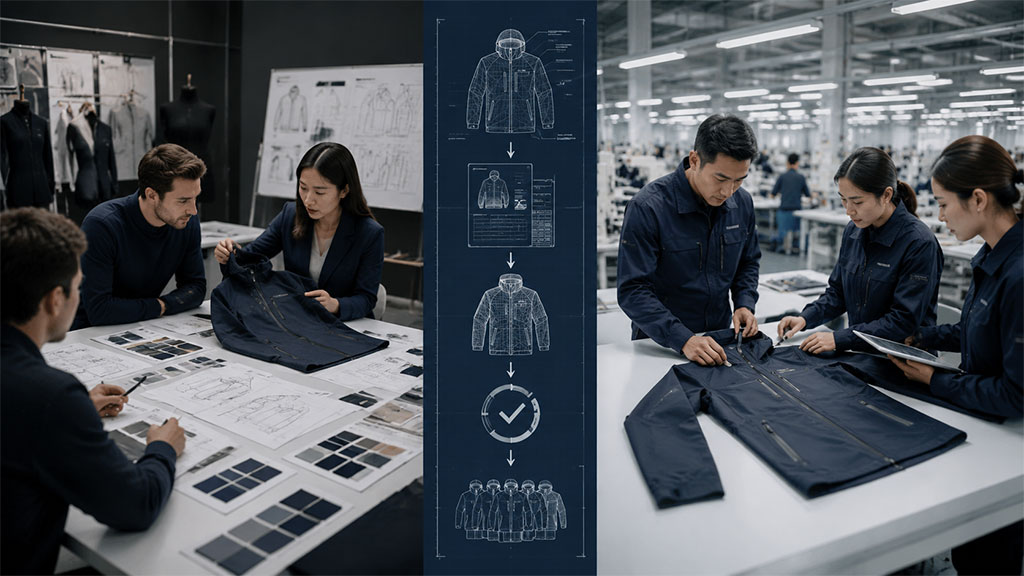
A Pre-Production Sample (PPS) is the final quality checkpoint before bulk apparel manufacturing begins. For clothing brands working with OEM and private label manufacturers, PPS approval ensures that fabric selection, garment construction, measurements, branding details, and production standards are fully aligned before mass production. A professional PPS process helps reduce manufacturing risks, prevent costly mistakes, and ensure consistent product quality from the first production unit to the final delivery.
Introduction: Why PPS Approval Matters in Apparel Manufacturing
For apparel brands, turning a design concept into a finished product involves multiple production decisions. Even with a complete tech pack, unexpected issues may appear during manufacturing, including incorrect fitting, fabric performance differences, color variation, or construction problems. This is why professional OEM clothing manufacturers use the Pre-Production Sample (PPS) process as the final approval stage before bulk production. A properly managed PPS process helps brands:- Reduce production risks
- Avoid expensive bulk corrections
- Maintain consistent product quality
- Ensure the final garment matches the original design concept
What Is a Pre-Production Sample (PPS)?
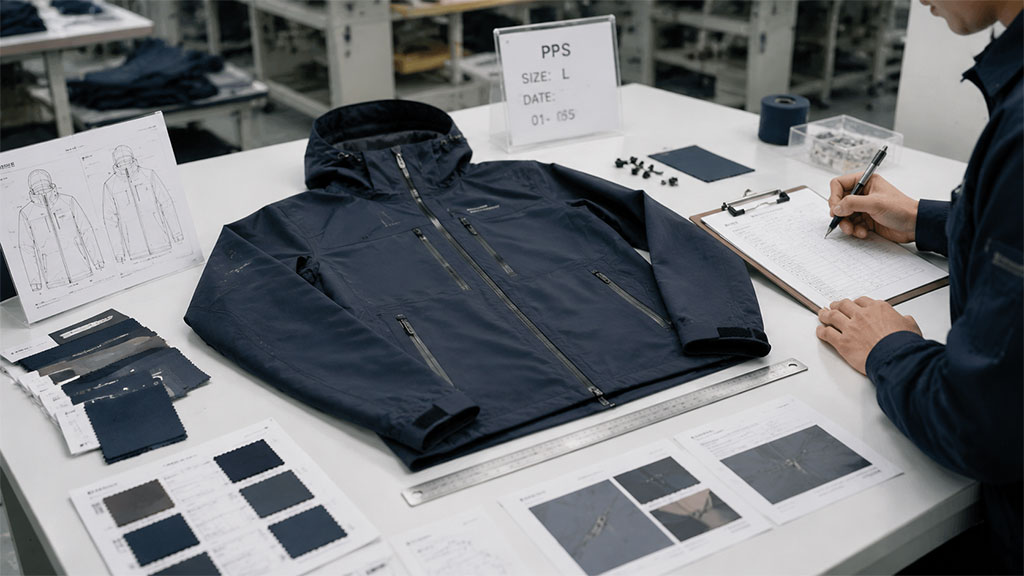
A Pre-Production Sample (PPS) is the final garment sample produced according to the approved specifications before bulk manufacturing begins. Unlike prototype samples or fit samples, the PPS represents the exact production standard that the factory will follow. For OEM and private label apparel projects, the PPS normally includes confirmation of:- Final fabric selection
- Fabric weight (GSM)
- Color standard
- Measurements
- Sewing construction
- Trims and accessories
- Logo and branding placement
- Printing or embroidery details
- Packaging requirements
PPS Sample vs Proto Sample vs Fit Sample: Understanding Apparel Sampling Stages
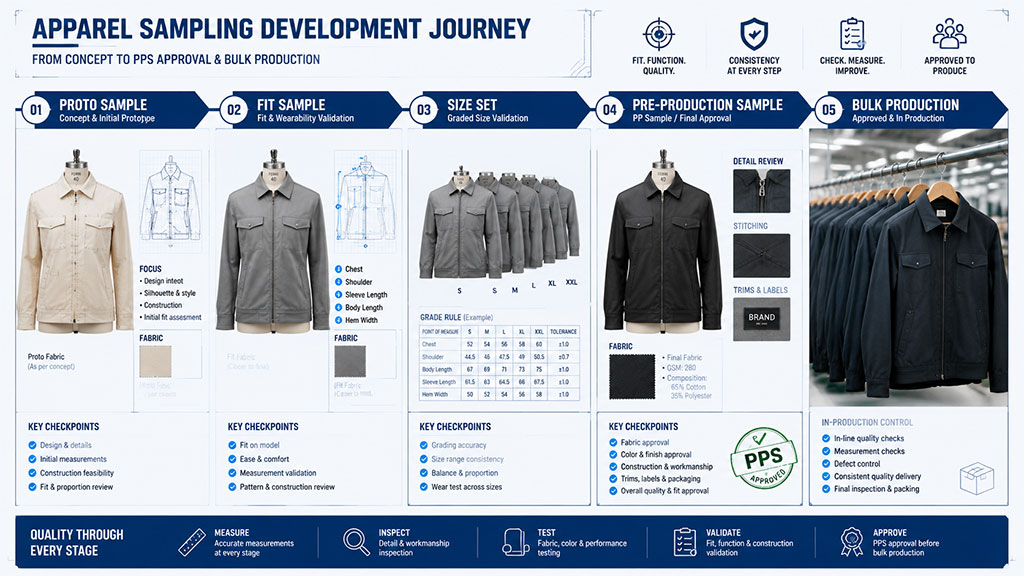
| Sample Type | Purpose | Production Stage |
|---|---|---|
| Proto Sample | Test initial design concept | Product development |
| Fit Sample | Check fitting and measurements | Design adjustment |
| Size Set Sample | Confirm grading accuracy | Pre-production preparation |
| PPS Sample | Final production approval | Before bulk manufacturing |
For brands working with OEM apparel manufacturers, understanding these sampling stages helps avoid unnecessary revisions and production delays.
Why Is PPS Approval Critical for Clothing Brands?
1. Ensures Product Design Accuracy
Tech packs describe the product requirements, but PPS shows the actual manufacturing result. Brands can verify:- Is the garment fit correct?
- Does the fabric perform as expected?
- Are construction details accurate?
- Does the final product match the design vision?
2. Reduces Bulk Production Risks
Without PPS approval, factories may begin producing thousands of units based on incomplete specifications. Common risks include:| Issue | Business Impact |
|---|---|
| Incorrect measurements | Poor fit and customer complaints |
| Wrong fabric selection | Reduced product performance |
| Color inconsistency | Brand image damage |
| Incorrect trims | Quality problems |
| Printing errors | Product rejection |
3. Creates a Manufacturing Quality Standard
The approved PPS becomes the physical quality benchmark during production. Factories compare bulk garments against PPS regarding:- Appearance
- Sewing quality
- Construction
- Material performance
- Finishing details
- Outdoor jackets
- Waterproof apparel
- Softshell jackets
- Performance sportswear
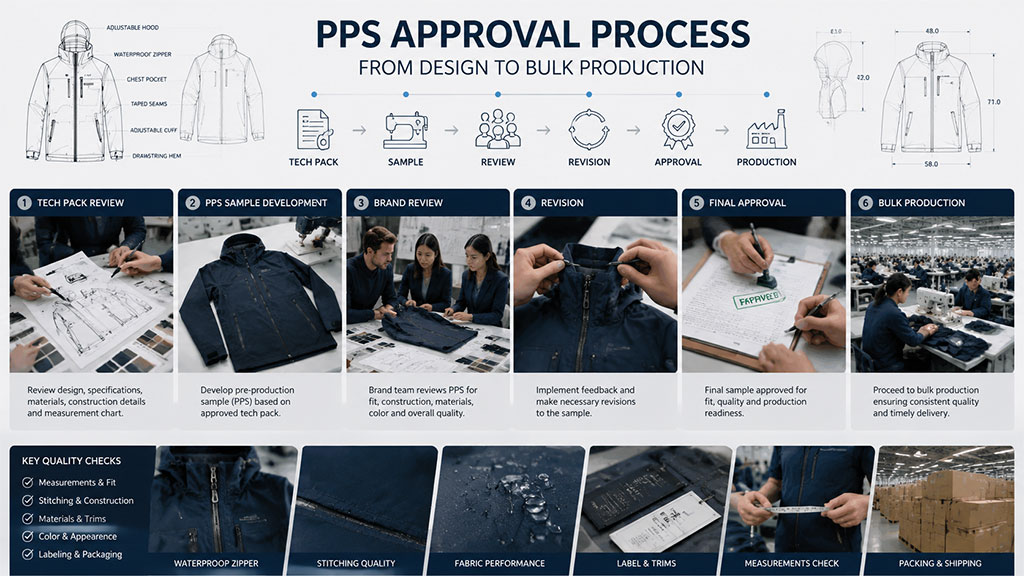
Complete PPS Approval Process in Apparel Manufacturing
Step 1: Tech Pack Review
Before PPS development, manufacturer confirms:
- Design drawings
- Measurement specifications
- Fabric requirements
- Trim details
- Packaging instructions
Step 2: PPS Sample Development
Factory produces the final sample using:
- Approved fabrics
- Correct trims
- Final construction methods
- Production-level workmanship
Step 3: Brand Review and Feedback
Brand evaluates:
Product Appearance
- Color
- Shape
- Style details
Technical Performance
- Fabric function
- Comfort
- Durability
Manufacturing Details
- Stitching
- Labels
- Packaging
Feedback may include:
- Measurement adjustment
- Color correction
- Construction improvement
- Detail modification
Step 4: PPS Approval and Bulk Production
After approval:- Materials are allocated
- Production schedule is confirmed
- Manufacturing begins
- QC follows PPS standards
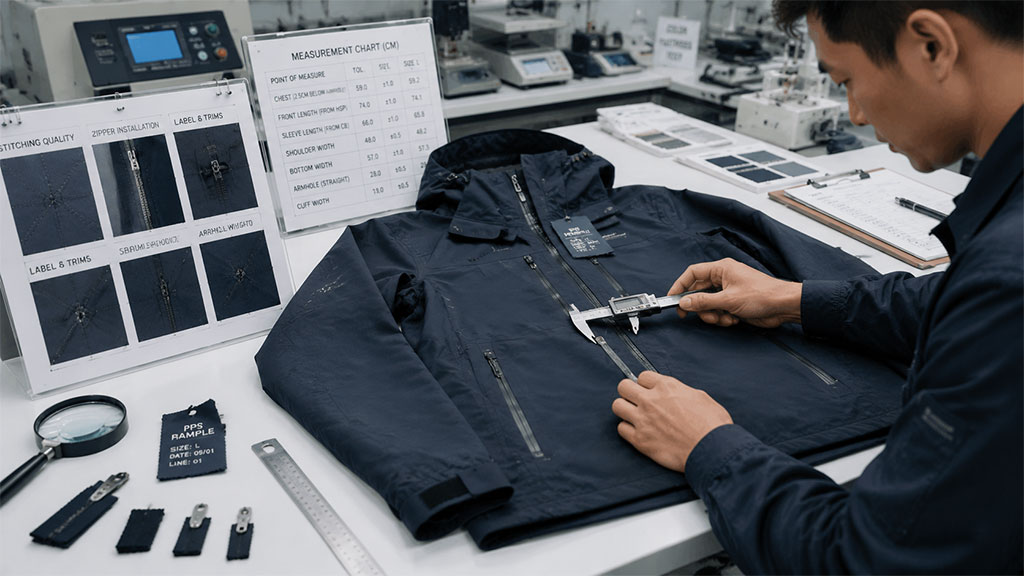
PPS Approval Checklist for Apparel Buyers
Before approving a PPS sample, brands should check:
Fabric Checklist
- Composition
- GSM
- Hand feel
- Stretch performance
- Color consistency
- Functional performance
Fit Checklist
- Chest width
- Body length
- Sleeve length
- Shoulder width
- Pocket position
Construction Checklist
- Stitch density
- Seam strength
- Reinforcement areas
- Zipper installation
- Label placement
Branding Checklist
- Logo size
- Embroidery quality
- Printing method
- Care label
- Hangtag
How Long Does PPS Approval Take?
| Product Category | Average PPS Timeline |
|---|---|
| Basic T-shirt | 5–10 days |
| Hoodie | 7–14 days |
| Jacket | 10–20 days |
| Technical Outdoor Apparel | 15–30 days |
- Product complexity
- Fabric availability
- Testing requirements
- Revision rounds
Common PPS Approval Mistakes Brands Should Avoid
1. Starting Bulk Production Without PPS Approval
Risk:- Large quantity defects
- Costly corrections
- Delivery delays
2. Making Major Changes After PPS Approval
Changes after approval may affect:- Production cost
- Material availability
- Delivery schedule
3. Ignoring Small Production Details
Small issues can create customer complaints:- Label position
- Stitching details
- Packaging methods
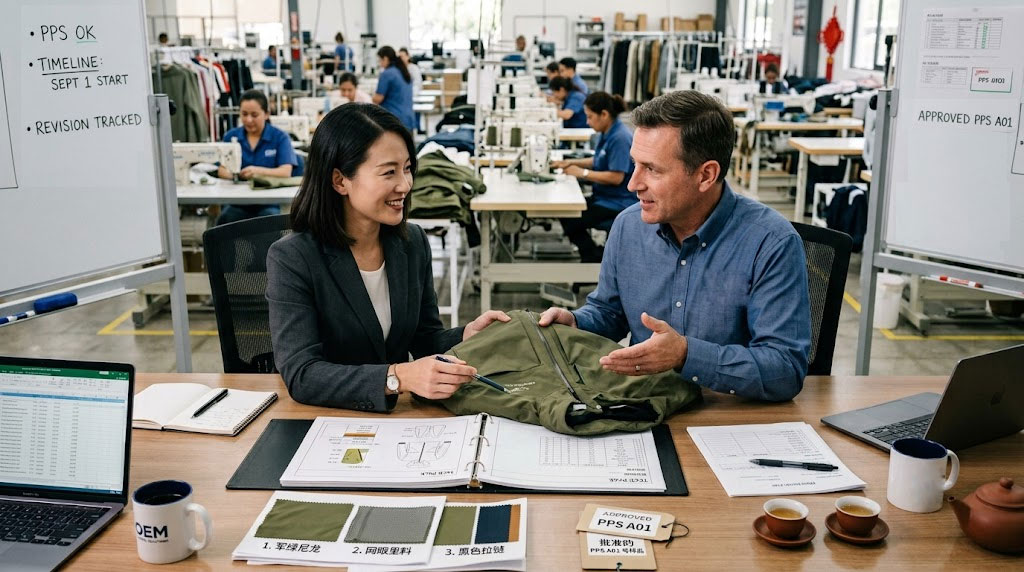
How an Experienced OEM Manufacturer Supports PPS Approval
A reliable OEM apparel manufacturer should support brands throughout the PPS process by providing:
Technical Development Support
- Tech pack review
- Fabric recommendation
- Construction optimization
Sampling Management
- Professional sample development
- Revision tracking
- Approval documentation
Quality Control Preparation
- Production standards
- Inspection procedures
- Bulk consistency control
At Simmerui, our apparel development team helps B2B clothing brands transform product concepts into production-ready garments through structured sampling, material verification, and manufacturing quality management.
FAQ: PPS Approval in Apparel Manufacturing
1.What is PPS approval in garment manufacturing?
PPS approval confirms that the final production sample meets the brand’s requirements before bulk manufacturing starts.2.Is PPS necessary for OEM clothing production?
For professional OEM and private label production, PPS approval is highly recommended because it reduces production risks and ensures quality consistency.3.Who approves the PPS sample?
Usually:- Brand owner
- Product manager
- Buyer
- Design team
4.How many PPS revisions are usually required?
Simple products may require one revision, while complex apparel products may require multiple adjustments.5.What documents are needed before PPS?
Common documents include:- Tech pack
- Measurement sheet
- Fabric specification
- Artwork files
- Trim details
- Packaging requirements
6.What happens if a brand rejects the PPS sample?
If a brand does not approve the PPS sample, the manufacturer will usually revise the product according to the feedback before starting bulk production. Common revision areas include:- Garment measurements
- Fabric selection
- Color adjustment
- Sewing construction
- Trim replacement
- Branding details
7.Can a PPS sample be used as the quality standard for bulk production?
Yes. The approved PPS sample becomes the physical reference standard for bulk manufacturing. During production, the factory quality control team compares finished garments against the PPS sample to check:- Appearance consistency
- Measurements
- Construction details
- Material performance
- Finishing quality
8.What is the difference between PPS approval and final inspection?
PPS approval and final inspection happen at different stages of apparel production. PPS approval:- Happens before bulk manufacturing
- Confirms product specifications
- Prevents production mistakes before scaling
- Happens after bulk production
- Checks finished goods before shipment
- Confirms the order meets quality requirements
9.Does every apparel product require PPS approval?
While PPS approval is highly recommended for most OEM and private label clothing projects, it is especially important for complex products such as:- Outdoor jackets
- Waterproof apparel
- Technical sportswear
- Performance clothing
- Multi-material garments
Conclusion
The PPS approval process is one of the most important quality checkpoints in apparel manufacturing. For brands developing OEM or private label clothing collections, a well-managed PPS process ensures that product expectations, manufacturing standards, and final production results remain aligned.
Working with an experienced apparel manufacturer can help brands reduce risks, shorten development cycles, and bring high-quality products to market faster.
Looking for a reliable OEM apparel manufacturing partner? Contact Simmerui to discuss your next clothing project.
Written by the Simmerui Apparel Development Team. Our apparel development team works with B2B clothing brands on OEM and private label production processes, including product development, sampling approval, fabric selection, and bulk manufacturing preparation. This guide is based on practical workflows used in garment manufacturing to help brands understand PPS approval and reduce production risks before large-scale production.