
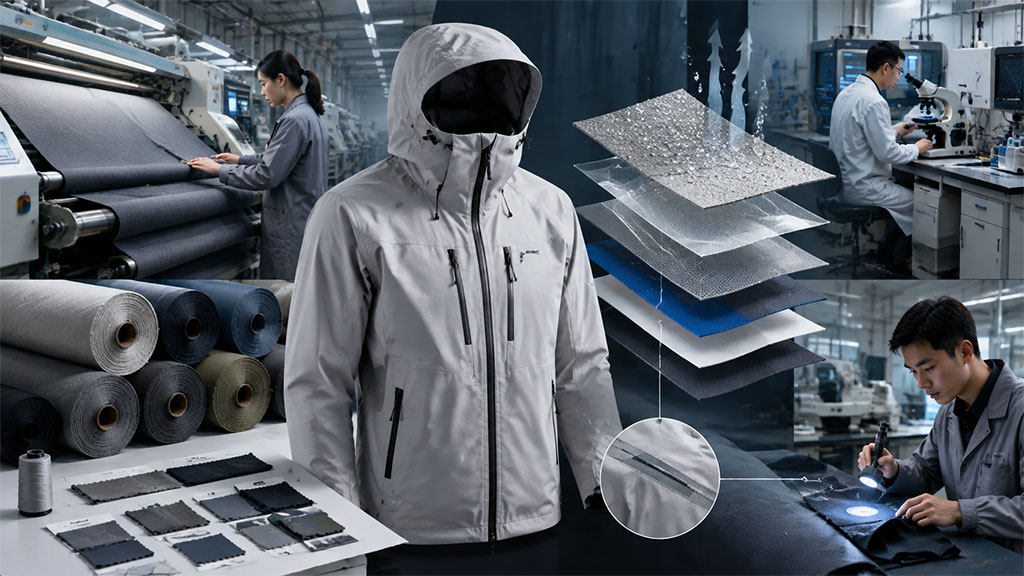
Fabric inspection before production is a critical quality control checkpoint in custom apparel manufacturing. Before bulk cutting and sewing begin, professional OEM and ODM manufacturers verify fabric quality, performance, and consistency to prevent production issues. A structured inspection process helps apparel brands reduce material risks, maintain product standards, and build reliable manufacturing partnerships.
Fabric Inspection Before Production: How Custom Apparel Manufacturers Protect Product Quality
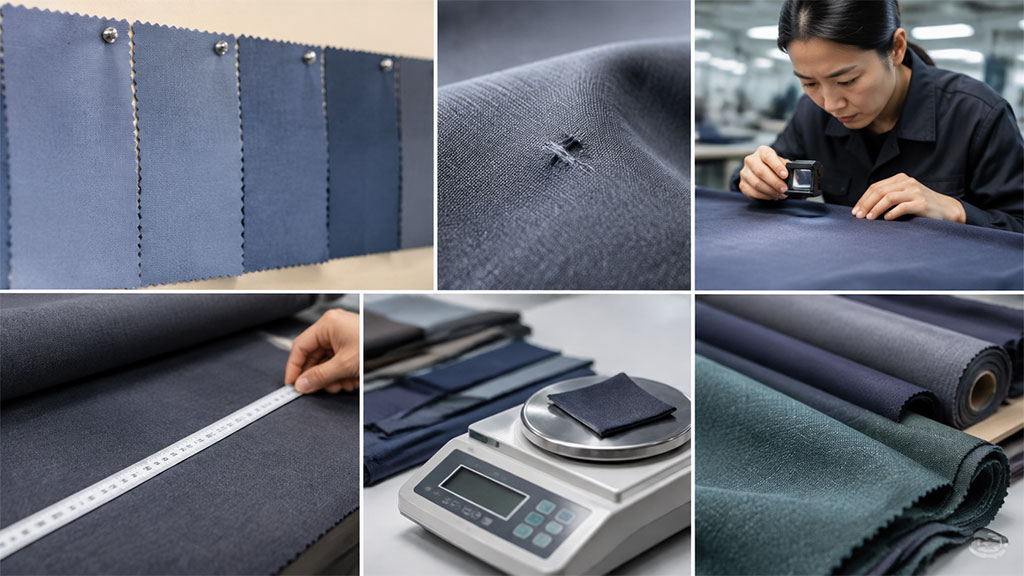
For apparel brands, product quality starts long before garments enter the sewing line. A successful clothing production process depends not only on design, patterns, and manufacturing skills, but also on the quality and performance of the raw materials used. Fabric inspection before production is one of the most important quality control steps in custom apparel manufacturing. It allows manufacturers to identify potential material issues before cutting, sewing, and bulk production begin. Professional OEM/ODM apparel manufacturers use fabric inspection systems to evaluate:- fabric defects
- color consistency
- fabric weight (GSM)
- shrinkage performance
- width accuracy
- construction quality
- functional performance
For global apparel brands working with manufacturing partners, fabric inspection is not simply a factory procedure. It is a key indicator of manufacturing reliability, quality management capability, and long-term supply chain stability.
Why Fabric Inspection Matters in Custom Apparel Manufacturing
Fabric is the foundation of every garment. Even when a design concept, technical package, and samples have already been approved, unsuitable fabric can still create serious production problems. Common issues caused by poor fabric quality include:- inconsistent garment appearance
- incorrect sizing after production
- color differences between batches
- reduced product durability
- delayed production schedules
A professional OEM apparel manufacturer therefore evaluates incoming materials before production begins to confirm that fabrics meet approved specifications. This process helps brands achieve:
1. Lower Production Risk
Fabric defects discovered after cutting can affect thousands of garments.
Early inspection helps identify problems such as:
- holes
- broken yarns
- uneven dyeing
- stains
- incorrect fabric composition
- inconsistent fabric rolls
Detecting these issues before production prevents costly rework, production delays, and unnecessary material loss.
2. Consistent Product Quality
Different apparel categories require different fabric standards.
Professional manufacturers evaluate materials according to product requirements.
| Product Category | Key Fabric Inspection Focus |
|---|---|
| Waterproof Jackets | Waterproof performance, coating condition, membrane quality |
| Outdoor Apparel | Breathability, durability, abrasion resistance |
| Hoodies & Sweatshirts | GSM, softness, shrinkage control |
| T-shirts | Fabric weight, color consistency, hand feel |
Before bulk production, inspection results are compared with approved samples and technical specifications to confirm consistency.
What Is Fabric Inspection Before Production?
Fabric inspection is the first material quality checkpoint before bulk cutting and garment manufacturing. In a professional apparel production workflow, fabric inspection verifies whether incoming materials meet:- buyer specifications
- approved fabric standards
- production requirements
- performance expectations
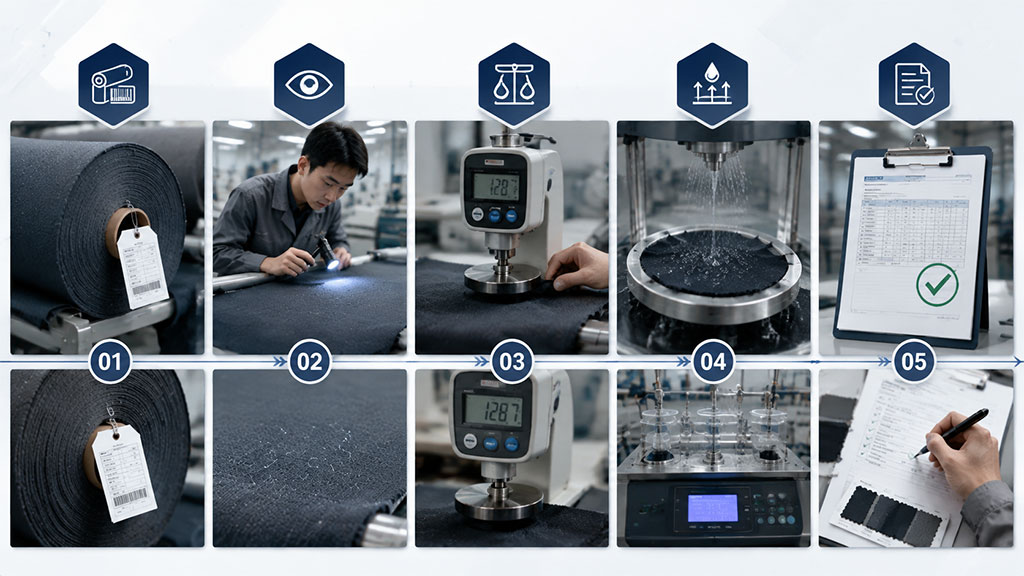
- Fabric roll identification
- Visual inspection
- Physical measurement testing
- Performance testing
- Inspection report approval
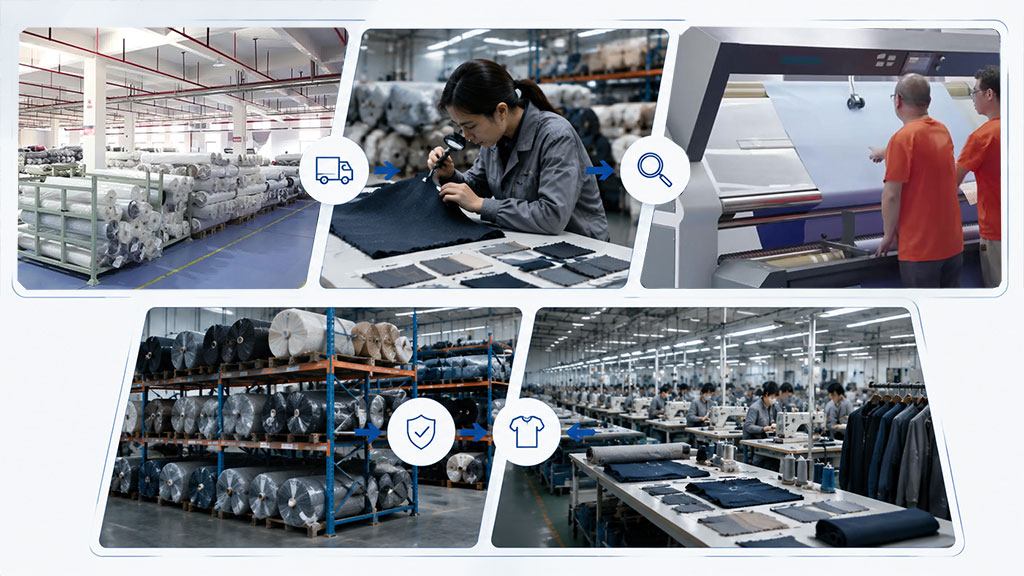
Step-by-Step Fabric Inspection Process Used by Professional Manufacturers
Step 1: Fabric Roll Identification and Traceability
Before inspection begins, manufacturers verify incoming fabric information. Typical checks include:- fabric supplier details
- fabric composition
- color code
- roll quantity
- batch number
- production lot information
- where materials came from
- which batch was used
- how materials were approved
Step 2: Visual Fabric Inspection
After identification, fabric rolls are inspected through professional inspection machines or manual checking systems. Inspectors examine fabric surfaces for:- holes
- broken yarns
- color differences
- uneven texture
- printing defects
- contamination marks
- surface damage
Step 3: Fabric Measurement Testing
After visual inspection, professional apparel manufacturers perform physical measurement testing to confirm that fabric properties match approved specifications.
Fabric measurement testing is essential because even fabrics that appear visually acceptable may create production problems if their physical characteristics are inconsistent.
Key measurement checks include:
Fabric Width Verification
Fabric width directly affects garment pattern efficiency and cutting yield.
Incorrect fabric width can result in:
- inaccurate cutting plans
- increased fabric consumption
- higher production costs
- pattern adjustment issues
Manufacturers verify fabric width before bulk cutting to ensure production efficiency.
GSM (Grams per Square Meter) Testing
GSM measures fabric weight and is an important indicator of fabric thickness, structure, and product performance.
Fabric weight affects:
- garment hand feel
- warmth level
- durability
- overall product quality
For example:
- Outdoor jackets require fabrics with suitable weight and technical performance.
- Sweatshirts require accurate GSM control to maintain expected thickness and comfort.
- T-shirts need consistent fabric weight to ensure repeat production quality.
Professional manufacturers compare GSM test results with approved fabric specifications before production approval.
Color Consistency Testing
Color variation between fabric rolls can create visible differences between finished garments.
Manufacturers check:
- fabric shade consistency
- dye lot differences
- batch variation
Maintaining consistent color standards is especially important for brands producing:
- seasonal collections
- repeat orders
- multi-color product lines
Color consistency checks ensure different fabric rolls maintain the approved shade standard.
Shrinkage Testing
Fabric shrinkage directly impacts garment measurements and final fit.
Incorrect shrinkage control may lead to:
- size inconsistency
- fitting problems
- customer complaints
Manufacturers evaluate how fabrics react after:
- washing
- heat treatment
- production processes
Shrinkage testing helps factories adjust production parameters when necessary.
Step 4: Performance Testing for Technical Fabrics
For functional apparel and outdoor products, fabric inspection requires additional performance testing.
Technical garments depend on fabric performance, not only appearance.
Examples of additional testing include:
- waterproof testing
- breathability testing
- seam performance testing
- abrasion resistance testing
- color fastness testing
For outdoor apparel brands, these tests help confirm that technical fabrics perform according to product requirements before entering bulk manufacturing.
A professional OEM manufacturer should evaluate both:
Material Quality
→ Does the fabric meet specification?
Performance Quality
→ Does the fabric deliver the required function?
This approach is especially important for:
- waterproof jackets
- hiking apparel
- performance outerwear
- technical lifestyle clothing
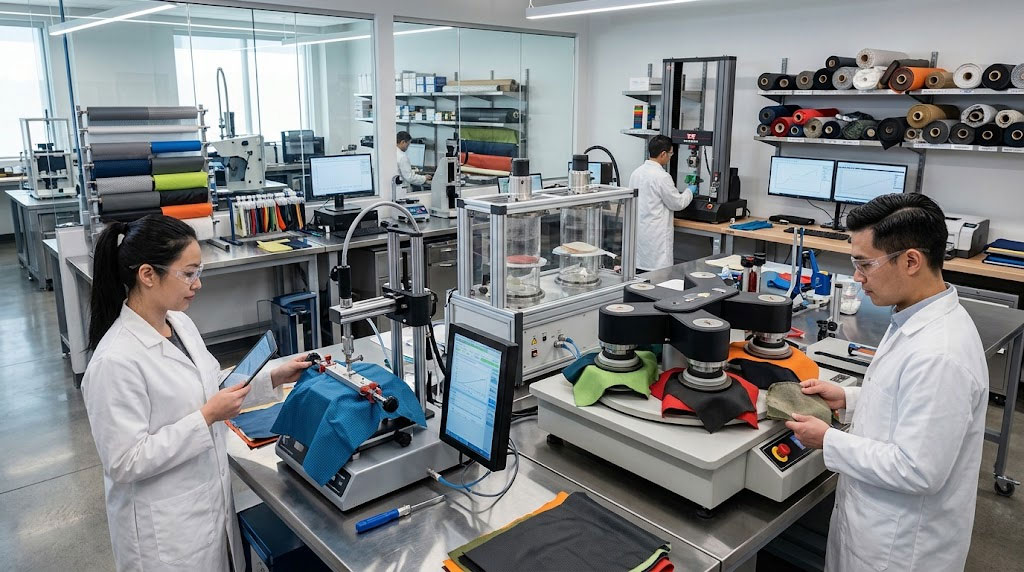
Step 5: Fabric Inspection Report Approval
After completing inspection and testing, manufacturers create a fabric inspection report. A professional inspection report typically records:- inspection date
- fabric supplier
- roll numbers
- defect records
- test results
- approval status
- replace defective fabric rolls
- request supplier correction
- separate approved and rejected materials
Common Fabric Problems Found Before Bulk Production
Even experienced suppliers can encounter fabric issues during production preparation. A structured inspection system helps identify these problems before they affect finished garments.1. Fabric Shade Variation
Problem Different dye lots may create visible color differences between garments. This issue is especially important for:- fashion collections
- uniform production
- repeat orders
Quality Control Solution
Professional manufacturers manage shade variation by:- approving color standards before production
- checking all fabric batches consistently
2. Fabric Shrinkage Problems
Problem Incorrect shrinkage control can affect garment measurements and final fit. Possible results include:- smaller garment dimensions
- inconsistent sizing
- customer dissatisfaction
Quality Control Solution
Manufacturers address shrinkage risks through:- shrinkage testing
- pattern adjustment when required
3. Incorrect Fabric Weight
Problem Fabric that is too heavy or too light can change product performance and customer expectations. Examples:- lightweight products may lose durability
- heavyweight products may affect comfort and mobility
Quality Control Solution
Manufacturers verify:- GSM before cutting
- comparison with approved fabric samples
4. Surface Defects and Technical Fabric Issues
ProblemTechnical fabrics may experience:
- coating problems
- finishing defects
- surface damage
Quality Control Solution
Manufacturers conduct:- appearance inspection
- performance testing when required
Fabric Inspection vs Inline Inspection vs Final Inspection
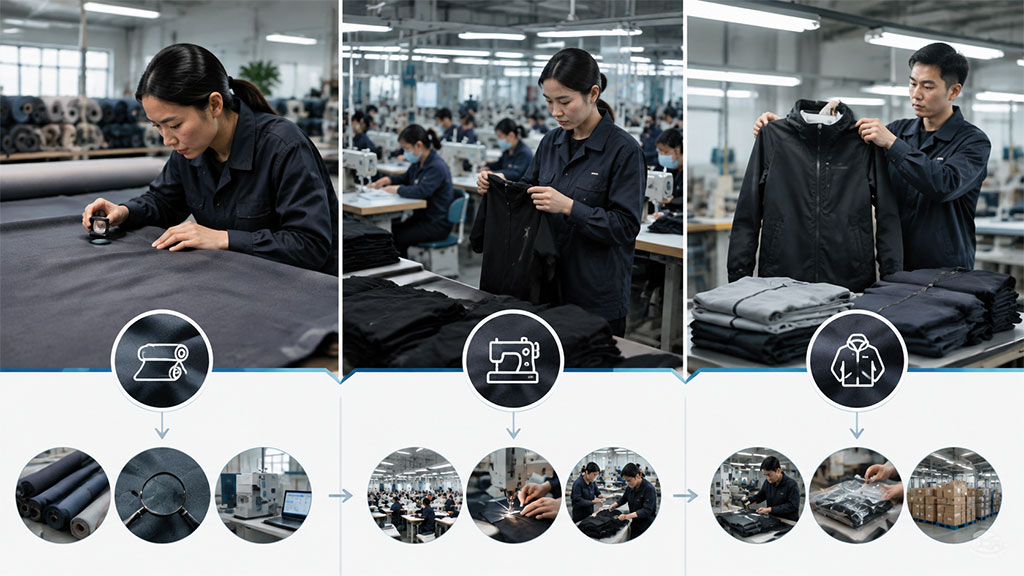
Many apparel buyers focus only on final garment inspection.
However, professional quality control requires multiple checkpoints throughout production.
| Inspection Stage | Purpose |
|---|---|
| Fabric Inspection | Verify raw materials before production |
| Inline Inspection | Monitor quality during manufacturing |
| Final Inspection | Check finished garments before shipment |
A complete apparel quality management system requires all three stages.
For OEM apparel buyers, this means quality should not be controlled only at the end of production.
Quality should be managed from:
Material Selection → Fabric Approval → Production → Final Shipment
How Apparel Brands Can Evaluate Manufacturing Quality
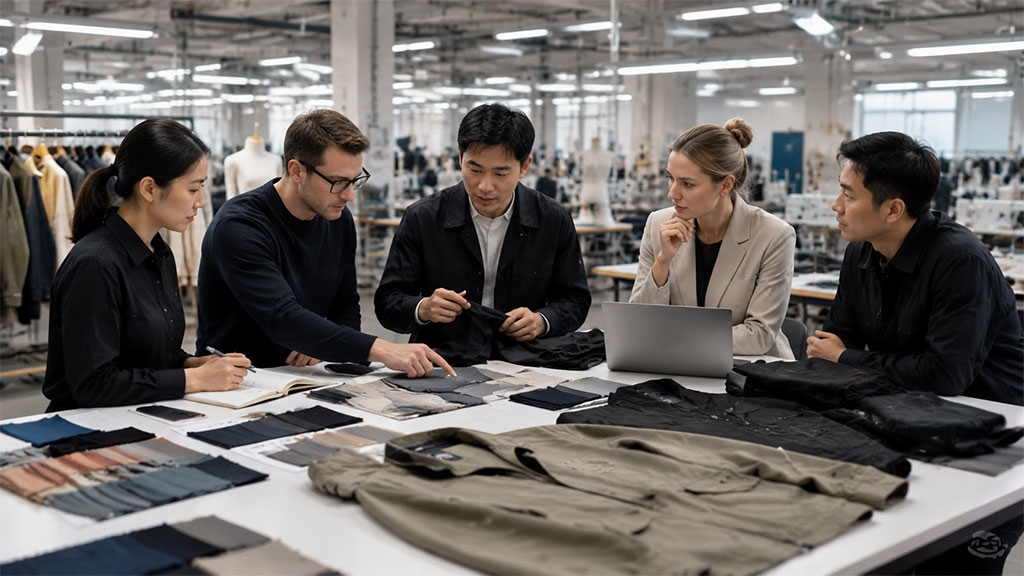
Before starting bulk production, brands should confirm that their manufacturing partner has a structured material control system.
Buyers should request:
- fabric composition reports
- fabric test results
- inspection records
- approved fabric swatches
- color standards
- performance test certificates when applicable
For sustainable apparel projects, brands may also review certifications such as:
- OEKO-TEX®
- GRS recycled material certification
- GOTS organic textile certification
A reliable OEM partner should provide transparency throughout the material approval process and help brands make informed production decisions.
Fabric Inspection in the OEM Apparel Production Workflow
Where Fabric Inspection Fits in the Apparel Manufacturing Process
Fabric inspection is not an isolated quality control activity. It is a key connection point between material sourcing, product development, and bulk manufacturing.
A professional custom apparel development workflow usually includes:
- Product concept confirmation
- Tech pack development
- Fabric sourcing
- Fabric inspection
- Sampling approval
- Bulk production
- Quality control inspection
- Shipment preparation
Fabric inspection takes place after sourcing but before bulk production. This timing allows manufacturers to identify material issues before they affect:
- pattern cutting
- sewing efficiency
- garment appearance
- delivery schedules
A reliable OEM apparel manufacturer integrates fabric inspection into the overall production management system rather than treating it as a separate inspection step.
Why Fabric Inspection Is Critical for OEM Apparel Buyers
For apparel brands, choosing a manufacturing partner is not only about production capacity. A reliable supplier must also demonstrate strong:- material management
- quality control procedures
- production transparency
- problem-solving capability
- production delays
- increased costs
- inconsistent product quality
- missed delivery deadlines
- approved materials are used
- production standards are maintained
- product specifications are protected
How Simmerui Approaches Fabric Quality Management
At Simmerui Apparel Manufacturing, fabric inspection is an important part of a structured OEM/ODM production system. A professional apparel manufacturing process requires coordination between:- fabric sourcing teams
- product development specialists
- quality control teams
- production management teams
- product consistency
- manufacturing efficiency
- production timelines
- final garment performance
FAQ: Fabric Inspection Before Production
1.What is the purpose of fabric inspection?
Fabric inspection ensures that raw materials meet quality requirements before garment production begins. It helps identify:- fabric defects
- material inconsistencies
- performance issues
2.When should fabric inspection happen?
Fabric inspection should be completed after fabric arrives at the factory and before cutting or bulk production begins. This timing allows manufacturers to solve material problems before they impact production.3.What defects are checked during fabric inspection?
Common fabric defects include:- holes
- stains
- broken yarns
- uneven dyeing
- incorrect width
- fabric weight variation
- surface damage
4.Do all apparel products require fabric inspection?
Yes. Fabric inspection is recommended for all apparel categories, especially:- custom clothing
- private label products
- outdoor apparel
- technical garments
5.How often should fabric batches be tested?
Each production batch should be inspected because different suppliers or dye lots may create variations in quality and performance.Conclusion: Fabric Inspection Builds Reliable Apparel Production
Fabric inspection before production is one of the most important quality control steps in custom apparel manufacturing.
By checking:
- fabric defects
- measurements
- color consistency
- shrinkage
- technical performance
before cutting begins, professional OEM manufacturers can reduce production risks and improve product reliability.
For apparel brands, selecting a manufacturing partner with a structured fabric inspection process is a critical decision for building consistent, high-quality products.
A strong manufacturing partnership is built not only on production capability, but also on quality systems that protect every stage of product development.
We specialize in OEM and ODM apparel production for global B2B brands, supporting product development, technical sampling, fabric sourcing, quality control, and scalable manufacturing solutions. Our team works with apparel brands across:
- outdoor apparel
- technical garments
- lifestyle clothing
- private label collections