
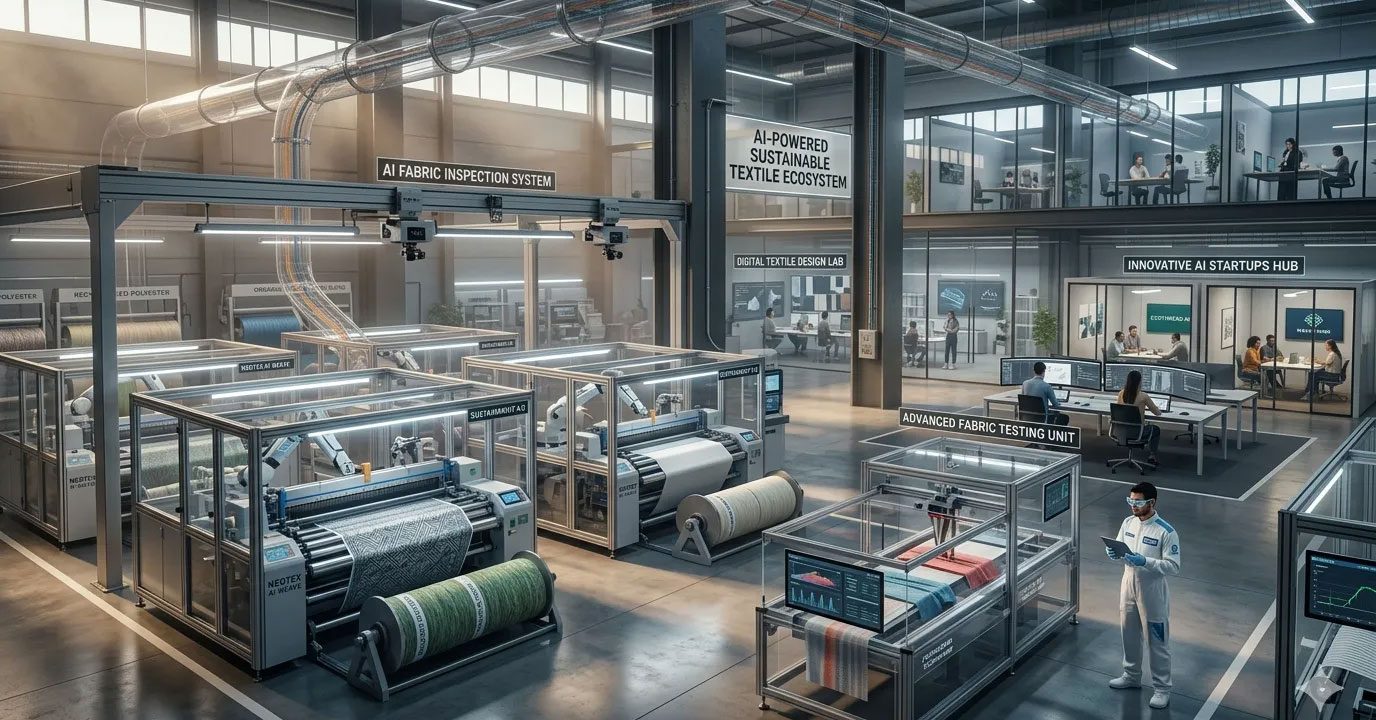
AI-driven fabric testing transforms quality control for B2B apparel manufacturers by detecting defects faster, standardizing testing, and improving production scalability. This guide covers AI-powered inspection, automated lab equipment, digital tracking, and predictive analytics to reduce fabric defects, accelerate QC cycles, and ensure compliance with ISO/ASTM standards.
Implementing these technologies improves bulk production efficiency, lowers defect rates, and enhances on-time delivery performance for global apparel supply chains.
Identify QC Bottlenecks to Prevent Delays
Traditional fabric testing creates bottlenecks that directly impact delivery timelines and product consistency. Common issues include:- Manual inspections missing micro-defects
- Slow lab turnaround delaying bulk production
- Fragmented data with poor traceability
- Reactive quality control instead of prevention
Detect Fabric Defects in Real-Time to Ensure Consistency
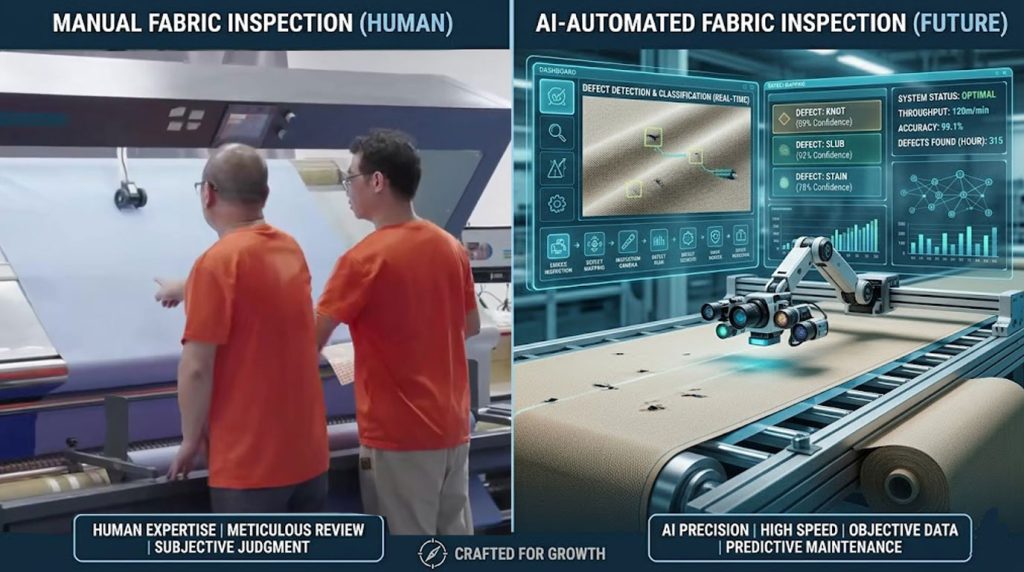
AI-powered inspectionsignificantly increases defect detection accuracy through real-time visual analysis. By using computer vision systems, manufacturers can detect:- Weaving inconsistencies
- Color shading variations
- Surface defects (holes, stains, slugs)
- Real-time inspection during production
- Reduced reliance on manual labor
- Continuous system learning and improvement

Accelerate QC with Standardized Lab Automation
Automation reduces testing time while ensuring standardized and repeatable results. Modern systems can automate:- Tensile strength testing
- Abrasion resistance (Martindale)
- Shrinkage and elasticity tests
- Colorfastness evaluation
- Faster testing cycles
- Lower human error
- Scalable for large-volume production

Centralize Data to Improve Transparency and Reduce Disputes Is Critical for Bulk Orders
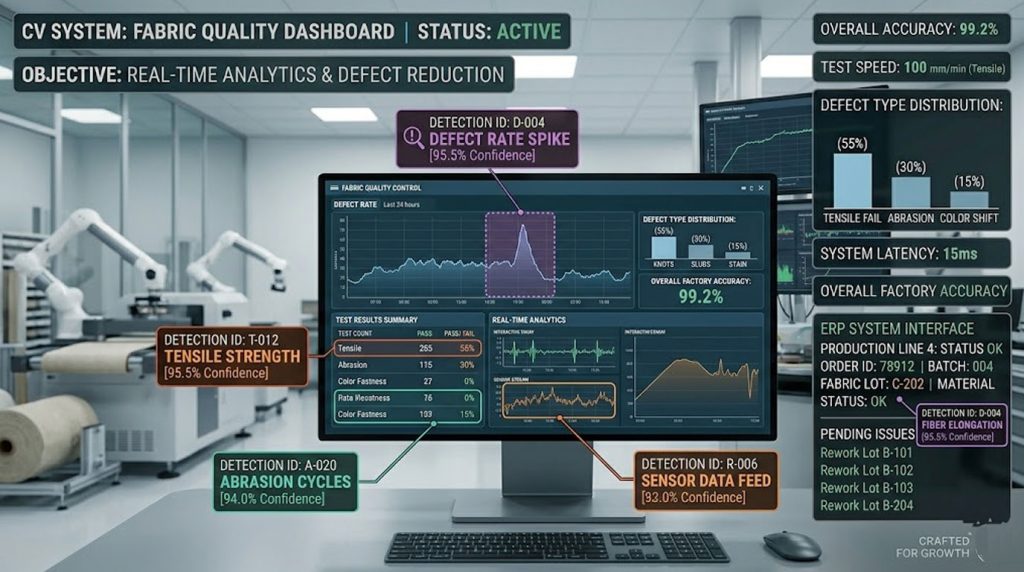
Centralized data systems improve traceability and decision-making in fabric testing. With integrated tracking (ERP or QC systems), you can:- Monitor test results in real time
- Standardize reporting for buyers
- Ensure compliance with global standards
Use Historical Data to Prevent Quality Issues Before Production
Predictive analytics transforms quality control from reactive to proactive. By analyzing historical testing data, AI can:- Predict potential fabric failures
- Identify high-risk materials
- Optimize supplier selection
Measure ROI: Faster Testing, Fewer Defects, On-Time Delivery
Implementing AI and automation delivers measurable ROI in apparel manufacturing. Typical results include:- 30–50% faster testing cycles
- Significant reduction in defect rates
- Improved bulk production efficiency
- Higher on-time delivery performance
When Should You Upgrade to AI Fabric Testing?
You should consider upgrading if:- You handle bulk apparel orders regularly
- You work with multiple suppliers or factories
- You face frequent QC inconsistencies or delays
- Your buyers require strict compliance (ISO / ASTM)
Implementation Roadmap (Simple & Practical)
A phased approach ensures smooth adoption without disrupting production.Step 1: Audit current QC workflow
Step 2: Introduce AI-based fabric inspection
Step 3: Upgrade to automated testing equipment
Step 4: Integrate digital tracking and reporting
This staged process minimizes risk while maximizing ROI
|
Stage |
Technology | Purpose | Benefit |
Key Metric |
| AI Inspection | Computer vision | Detect micro-defects | Reduce manual errors | Defect detection ra-te |
| Automated Lab | Tensile, abrasion, shrinkage, colorfastness | Standardized tests | Faster QC | Test turnaround ti-me |
| Digital Tracking | ERP / IoT / RFID | Monitor batches & compliance | Reduce disputes | Inventory / QC visib-ility |
| Predictive Analytics | Historical data | Predict failures | Prevent quality issues | Fabric rejection rat-e |
FAQ: Fabric Testing in the Age of AI
1.How does AI improve fabric defect detection?
AI uses machine learning and computer vision to identify defects more accurately and consistently than manual inspection.2.What types of tests can be automated?
Most physical and performance tests, including strength, shrinkage, and colorfastness, can be automated with modern equipment.3.How can manufacturers start implementing AI in testing?
Begin with AI-based inspection systems, then integrate automated lab equipment and digital tracking platforms.4.What metrics should be tracked in fabric testing?
Key metrics include defect detection rate, testing turnaround time, fabric rejection rate, and compliance accuracy.5.What is AI fabric testing?
AI fabric testing uses machine learning and computer vision to automate defect detection and analyze fabric performance more accurately than manual methods.6.Can AI testing work for small or mid-size manufacturers?
Yes. Many systems can be implemented modularly, allowing gradual adoption based on production scale.7.How does predictive analytics integrate with supplier selection?
Predictive analytics evaluates historical defect rates, delivery performance, and fabric consistency to identify reliable suppliers and reduce production risks.8.Which metrics are most critical to monitor for bulk production QC?
Key metrics include defect detection rate, testing turnaround time, fabric rejection rate, delivery compliance, and overall quality consistency across bulk orders.What metrics should be tracked in fabric testing?
Key metrics include:- Defect detection rate
- Testing turnaround time
- Fabric rejection rate
- Compliance accuracy
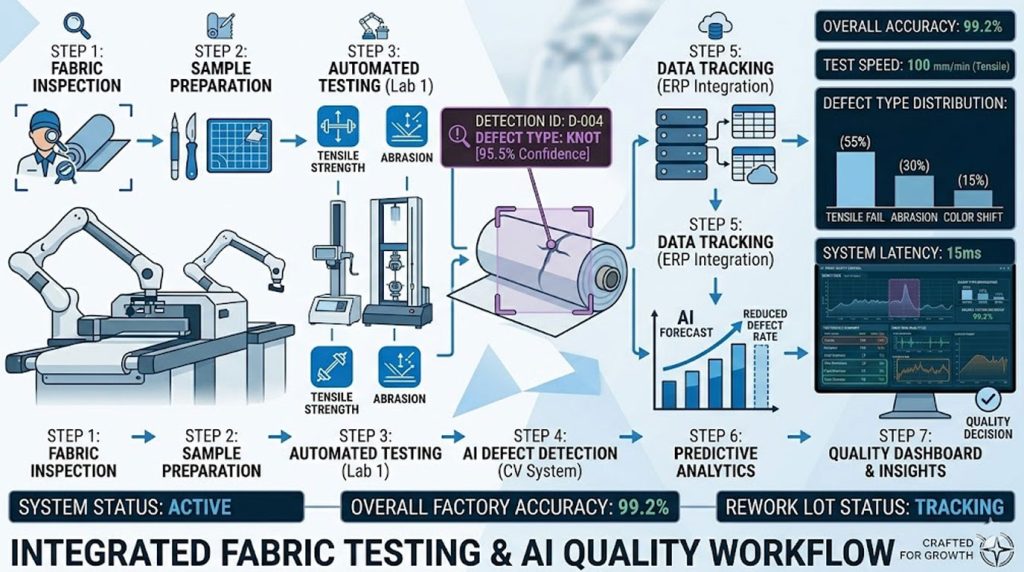
Our team implements a standardized AI fabric testing workflow: material batch verification, AI-powered visual inspection, automated lab performance tests, and digital reporting. This ensures defect detection, compliance verification, and production consistency for bulk apparel orders, helping B2B manufacturers scale efficiently while maintaining high product quality.
Get a customized AI fabric testing solution to reduce defects, accelerate QC, and scale your apparel production confidently.
Written by the Simmerui Textile Testing Team. We support B2B apparel manufacturers with AI-driven fabric inspection, automated lab testing, and digital tracking workflows. Our process includes defect detection, performance validation, and compliance verification, enabling scalable, high-quality production for global apparel supply chains.