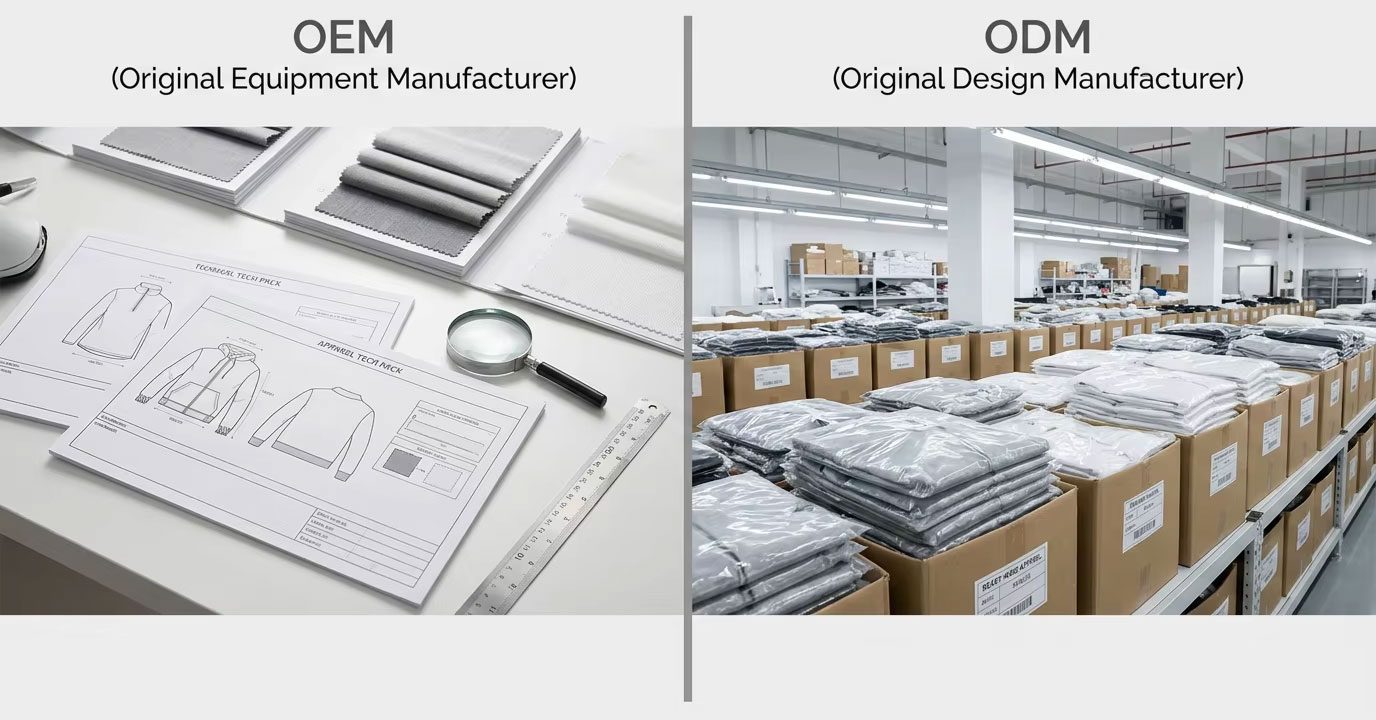
OEM and ODM are two common apparel manufacturing models with different trade-offs in customization, cost, lead time, and brand differentiation. This guide explains how B2B apparel brands can choose the right model based on target market, product type, budget, and internal design capability.
You’ll learn key differences (design ownership, MOQ, sampling cost), best-fit scenarios for startups vs premium brands, and a practical hybrid strategy to test with ODM first and convert winners to OEM for long-term growth.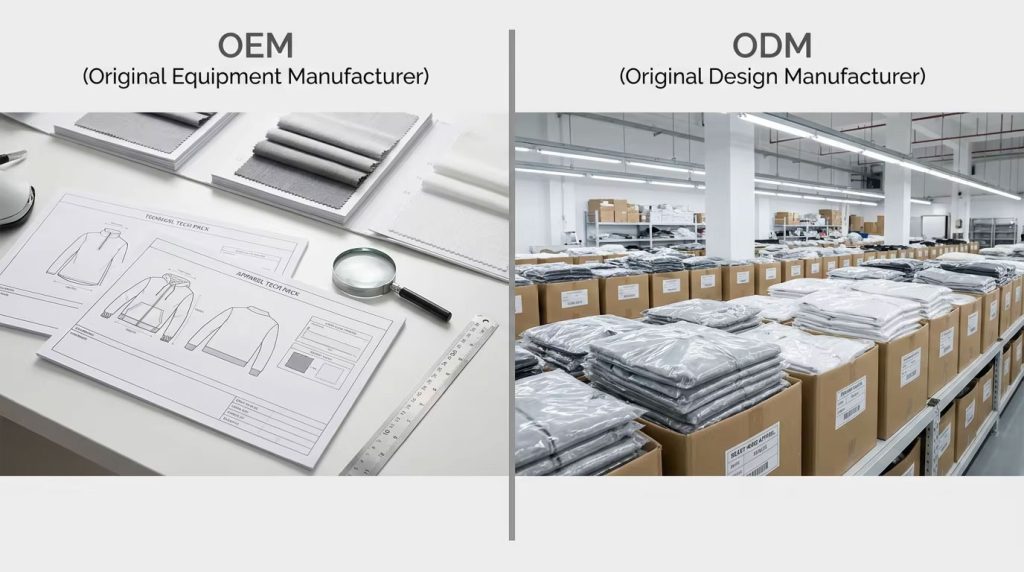
Avoid Costly Delays by Choosing the Right Model Early for B2B Buyers
The manufacturing model you choose directly impacts:- Product uniqueness and brand differentiation
- Development costs and sampling time
- Minimum order quantities (MOQ) and inventory risks
- Speed to market and supply chain flexibility
Use OEM for Full Differentiation and Long-Term Brand Value:Full Control & Customization
Definition:
OEM (Original Equipment Manufacturing) lets you provide your own product designs, technical specifications, or complete tech packs. The manufacturer handles sampling and production. What You Control in OEM:- Garment design and fabrics
- Color and size customization
- Logo placement and labeling
- Packaging specifications
- Sustainability or functional requirements
Best For:
- Established fashion brands
- Premium clothing labels
- Performance or outdoor apparel companies
- Businesses with technical design teams
Advantages:
- Strong brand differentiation
- Full control over every production detail
- Intellectual property protection
- Higher perceived product value
Challenges:
- Longer sampling and production timelines
- Higher upfront costs
- More technicalrequirements and communication complexity
Use ODM to Launch Faster and Test the Market with Lower Risk
Definition:
ODM (Original Design Manufacturing) provides ready-made designs that you can customize partially, such as logos, colors, fabrics, or packaging.Low MOQ ODM apparel optionsBest For:
- Startups with limited budgets
- Fast-moving eCommerce brands
- Private label or promotional apparel buyers
- Market testing with low MOQ
Advantages:
- Faster product launch
- Lower development costs
- Easier for non-technical brands
- Lower market entry risk
Challenges:
- Limited customization options
- Less product uniqueness
- Possible marketcompetition with similar products
Key Differences Between OEM and ODM
Brand Stage | Main Priority | Recommended Model | Why This Works | Next Step |
| Startup Brand | Fast launch & low MOQ | ODM | Ready-made styles red-uce development time and upfront cost. | Prepare logo files, target mar-ket, color preferences, estimated order quantity, and target retail price. |
| Startup Brand | Testing multiple products quickly | Hybrid (ODM + Customization) | Allows fast market validation while adding limited brand identity. | Prepare reference styles, bra-nding elements, packaging ideas, and budget range. |
| Growth Brand | Better differentiati-on | OEM | Custom fabrics, fit, and construction help build a recognizable product line. | Prepare tech pack, measure-ment specs, fabric requirements, trim details, and target FOB price. |
| Growth Brand | Balance between speed and customization | Hybrid | Combines existing factory patterns with partial customization to shorten lead times. | Prepare sample references, customization list, logo placement, and preferred materials. |
| Premium / Designer Bran-d | Unique product developme-nt | OEM | Full control over garment structure, fabric sourcing, and brand identity. | Prepare complete tech pack, Pantone colors, artwork files, construction details, and quality standards. |
| E-commerce Seller | Low-risk inventory testing | ODM | Faster production and lower development costs help reduce inventory risk. | Prepare branding assets, pac-kaging requirements, and sales channel information. |
| Outdoor / Perf-ormance Brand | Exclusive fabric or technical function | OEM | Specialized materials and performance standards require custom development. | Prepare fabric performance requirements, testing standards, and functional design references. |
| Corporate / Uniform Buyer | Cost efficiency & consistency | ODM or Hybrid | Existing styles reduce production complexity while allowing branding updates. | Prepare logo artwork, color requirements, sizing range, and delivery timeline. |
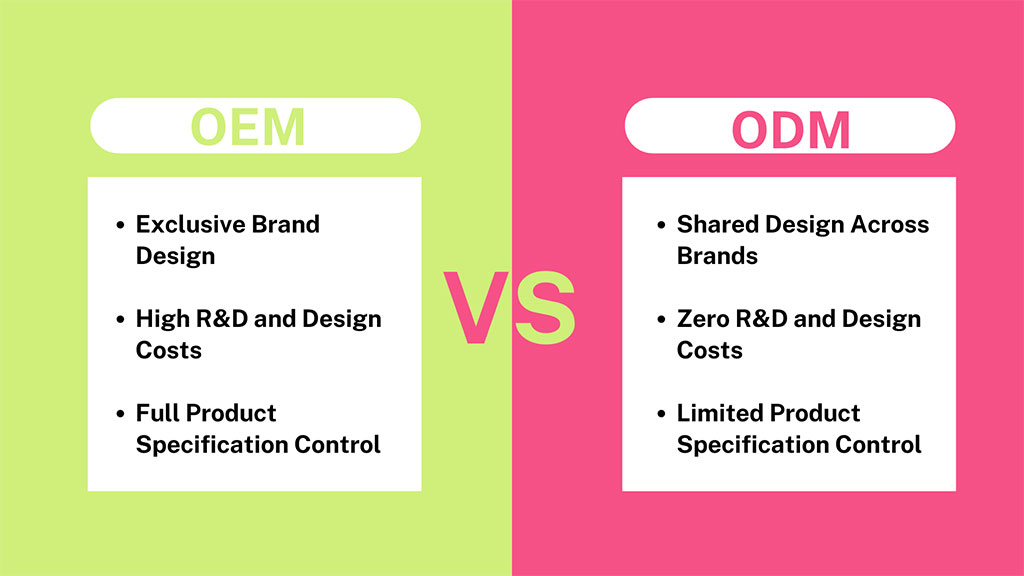
Pick OEM or ODM Based on Budget, Team Capability, and Timeline
Choose OEM if:
- You need unique products or custom fabrics
- Original designs are important
- Long-term brand positioning matters
Choose ODM if:
- You want faster production
- Your budget is limited
- Low MOQs are important
- You are testing new categories
Hybrid Strategy:
Many brands combine OEM and ODM: use ODM for market testing, then convert best-sellers to OEM custom collections. Supplier evaluation checklist for B2B sourcing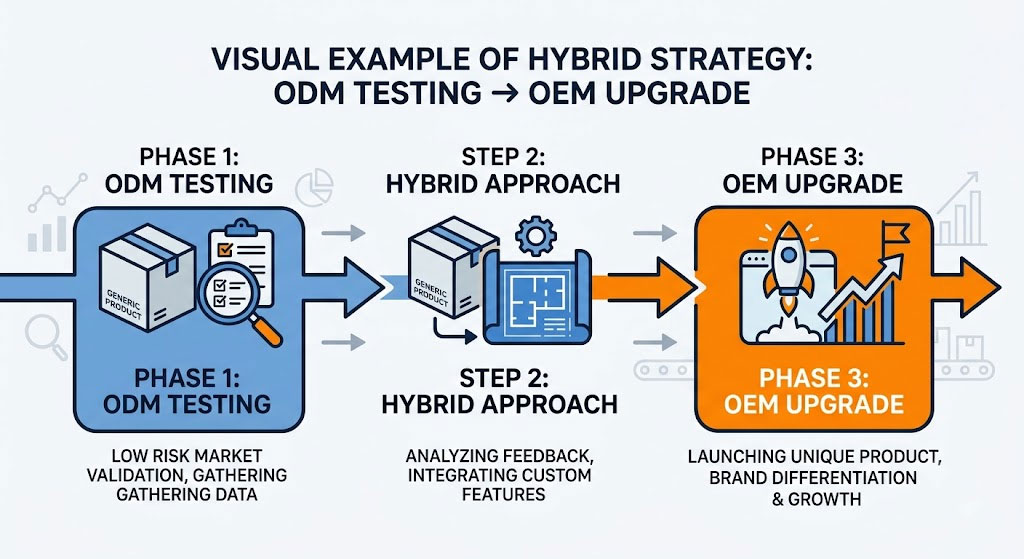
Ask These Questions to Screen Manufacturers in 10 Minutes
- Can they support full OEM development?
- What are their MOQ options?
- How many sample revisions are included?
- What QC standards are applied?
- How efficient is communication (English-speaking merchandiser, response time)?
Conclusion
OEM is ideal for high customization and brand differentiation, while ODM works for speed, cost efficiency, and market testing. Most B2B brands benefit from a hybrid approach tailored to product category and growth stage. Need help selecting the right manufacturing model for your apparel brand? Contact our sourcing team to discuss OEM and ODM options.FAQ
1.What is the difference between OEM and ODM in apparel manufacturing?
OEM apparel manufacturing uses the buyer’s custom designs and specifications, while ODM apparel manufacturing uses factory-developed designs that buyers can customize partially.2.Is OEM more expensive than ODM?
Yes. OEM typically involves higher development costs because it requires custom pattern making, sampling, fabric sourcing, and production adjustments.3.Which model is better for startups?
ODM is usually better for startups because it offers faster production, lower MOQs, and lower upfront development costs.4.Can ODM products still be customized?
Yes. Most ODM apparel manufacturers allow customization of logos, labels, colors, packaging, and minor garment details.5.Can a brand switch from ODM to OEM later?
Yes. Many brands start with ODM to test the market and later move to OEM once product demand and sales volume increase.6.What documents are needed to start OEM development?
Most OEM projects start with a tech pack, BOM (Bill of Materials), size spec/measurement chart, artwork files, logo placements, and fabric/trims requirements. Clear documentation helps reduce sampling revisions and production errors.7.How to protect IP when doing OEM?
Brands usually protect IP through NDAs, supplier agreements, artwork ownership clauses, and clear pattern/sample ownership terms. It’s also recommended to control original design files, prints, and grading data internally.8.What is a realistic sampling timeline for OEM vs ODM?
OEM sampling typically takes 2–6 weeks depending on fabric sourcing and complexity, while ODM can often move faster at around 1–3 weeks because base styles and patterns already exist.9.Can ODM still support performance/outdoor features?
Yes. Many ODM suppliers can still add outdoor/performance functions such as seam taping, DWR coating, waterproof zippers, bonded fabrics, thermal lining, and breathable construction based on the brand’s requirements.Written by the Simmerui Apparel Development & Sourcing Team. We support fashion startups, private label brands, wholesalers, and outdoor apparel companies with OEM and ODM sourcing decisions, including capability evaluation, MOQ planning, sampling workflow alignment, and QC checkpoints. Our goal is to help B2B buyers reduce development risk, shorten lead times, and choose a manufacturing model that fits their growth stage and brand positioning.