
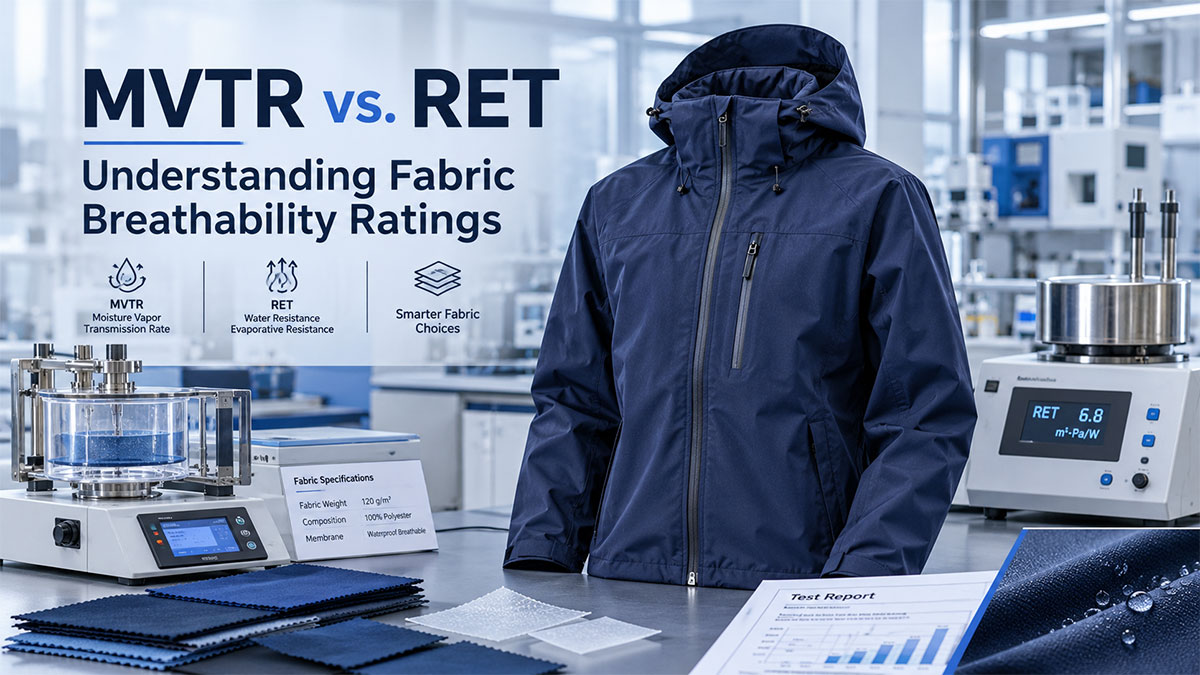
MVTR and RET are two important measurements used to evaluate fabric breathability in outdoor apparel. MVTR measures how much water vapor passes through a fabric over time, while RET measures resistance to evaporative heat transfer. For outdoor apparel brands, understanding these differences helps improve waterproof breathable fabric selection, compare supplier test results, and develop technical jackets that balance moisture management, weather protection, and wearer comfort.
1. Why Fabric Breathability Matters in Outdoor Apparel
Breathability directly affects the comfort and performance of technical outdoor clothing. During physical activity, the body generates heat and perspiration. If moisture vapor cannot escape efficiently, it accumulates inside the garment, creating discomfort and a damp feeling.
For outdoor apparel brands, fabric breathability influences:
- Wearer comfort: Helps manage moisture during physical activity.
- Temperature regulation: Supports heat and moisture transfer.
- Product performance: Contributes to the functionality of technical outerwear.
- Customer satisfaction: Helps garments meet their intended performance requirements.
- Brand positioning: Supports measurable product performance claims.
Two commonly used indicators are Moisture Vapor Transmission Rate (MVTR) and Resistance to Evaporative Heat Transfer (RET).
2. What Is MVTR in Outdoor Fabrics?
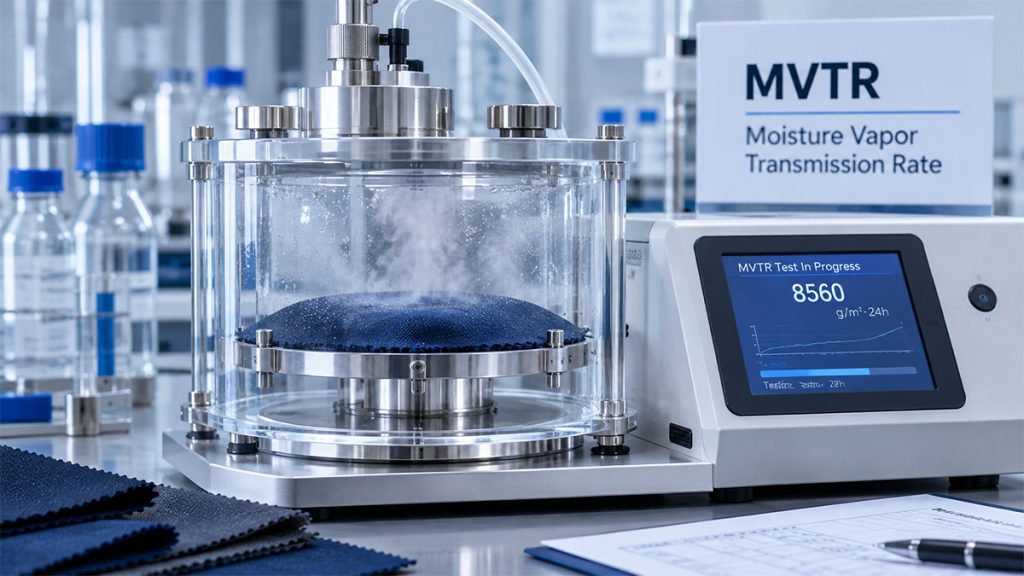
MVTR measures the amount of water vapor passing through a material over a defined period under specified testing conditions.
It is commonly expressed as g/m²/24h, representing the grams of water vapor transmitted through one square meter of fabric in 24 hours.
How Does MVTR Testing Work?
MVTR testing creates a water vapor pressure difference across a fabric specimen. The amount of moisture vapor passing through the material is measured over a specified period.
Different testing methods, including cup-based and instrument-based methods, may produce different results.
Brands should therefore compare MVTR values only when the test methods and conditions are comparable.
How to Interpret MVTR Ratings
- Higher MVTR: More water vapor passes through the fabric under the specified test conditions.
- Lower MVTR: Less water vapor passes through the material.
A higher MVTR may indicate better moisture vapor transmission, but it does not automatically guarantee greater comfort in a finished jacket.
Fabric construction, humidity, temperature, garment layering, and ventilation also influence actual performance.
3. What Is RET in Technical Apparel?
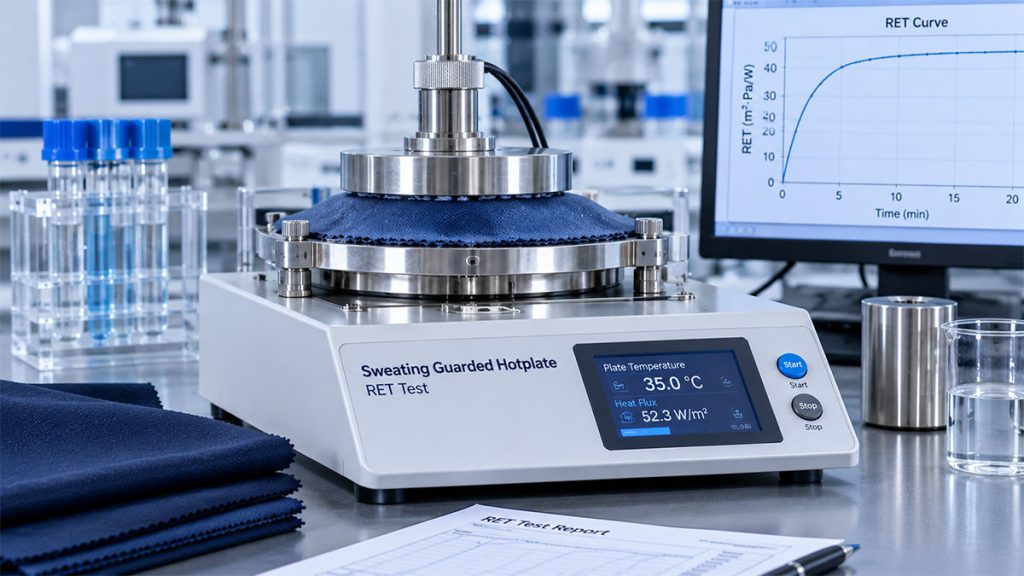
RET measures a fabric’s resistance to evaporative heat transfer. Unlike MVTR, which evaluates the rate of moisture vapor transmission, RET measures how much resistance a material creates against moisture evaporation.
RET is commonly evaluated using a sweating guarded hotplate test, such as the method described in ISO 11092.
Its measurement unit is m²·Pa/W.
How to Interpret RET Ratings
RET works in the opposite direction to MVTR:
- Lower RET: Less resistance to evaporative heat transfer, generally indicating better breathability.
- Higher RET: Greater resistance, generally indicating lower breathability.
A lower RET value can be desirable for high-output outdoor activities such as hiking, climbing, and mountaineering.
However, RET should also be evaluated alongside waterproofness, garment construction, and intended product application.
4. MVTR vs. RET: Key Differences for Apparel Brands
Both measurements evaluate fabric breathability, but they measure different physical properties.| Evaluation Factor | MVTR | RET |
|---|---|---|
| Full Name | Moisture Vapor Transmission Rate | Resistance to Evaporative Heat Transfer |
| Measures | Water vapor transmission | Resistance to evaporation |
| Unit | g/m²/24h | m²·Pa/W |
| Better Result | Higher | Lower |
| Main Purpose | Evaluate vapor transmission | Evaluate evaporative resistance |
| Common Application | Material comparison | Technical textile evaluation |
Which Measurement Is More Important?
Neither measurement is universally better. MVTR helps brands understand how much water vapor passes through a fabric under specific test conditions. RET evaluates the resistance a fabric creates against evaporative heat transfer. Both can support technical fabric evaluation. Importantly, MVTR and RET cannot be directly converted using a universal formula. Their results depend on different testing principles, equipment, and environmental conditions. Brands should avoid treating an MVTR result from one supplier as directly equivalent to an RET result from another.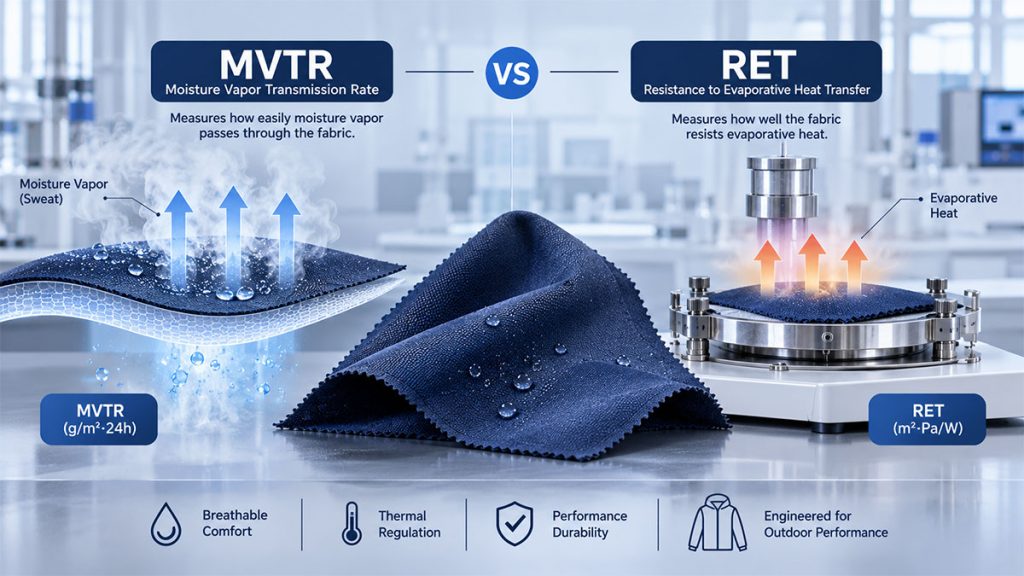
5. How to Select Breathability Ratings for Different Outdoor Products
The appropriate breathability target depends on product application, activity intensity, weather exposure, and garment construction.
| Product Category | Key Performance Priorities |
|---|---|
| Lightweight Hiking Jackets | Moisture management, low weight, weather protection |
| Mountaineering Shells | Weather protection, moisture transfer, abrasion resistance |
| Ski Jackets | Thermal comfort, waterproofness, ventilation |
| Softshell Jackets | Air permeability, moisture management, flexibility |
| Everyday Outdoor Jackets | Comfort, durability, practical weather protection |
Consider Activity Intensity and Weather Conditions
High-output activities generate more body heat and perspiration. Hiking, climbing, and trail running may require greater attention to moisture management and ventilation.
For casual outdoor apparel, comfort, durability, and cost efficiency may be equally important.
Brands should also evaluate waterproofness alongside breathability. A waterproof membrane or coating can prevent external water penetration, but its construction influences moisture vapor transfer.
Evaluate the Complete Garment Construction
Fabric breathability is only one component of finished-garment performance.
Other considerations include:
- Membrane and coating technology
- Face fabric and lining construction
- Seam sealing
- Zipper and pocket design
- Underarm ventilation
- Garment fit and layering compatibility
Even breathable fabrics may feel uncomfortable when garment ventilation is insufficient or moisture accumulates between clothing layers.
6. What Factors Affect Breathability Beyond MVTR and RET?
Several factors influence the actual performance of waterproof breathable fabrics.Fabric Structure and Fiber Composition
Nylon, polyester, and blended fabrics offer different material characteristics. However, fiber composition alone does not determine breathability. Fabric density, yarn structure, coatings, and membranes also influence moisture transfer.Waterproof Membrane and Coating Technology
Membranes and coatings are designed to balance external water protection with moisture vapor transmission. Final performance depends on the complete fabric construction.DWR Performance
Durable Water Repellent (DWR) treatments help water form droplets and roll off the fabric surface. When the outer fabric becomes saturated, moisture transfer and wearer comfort may be affected.Temperature and Humidity
Testing conditions, including temperature, relative humidity, and vapor pressure differences, influence reported results. Brands should request complete laboratory reports rather than relying on isolated figures.Garment Design and Ventilation
Underarm zippers, mesh-lined pockets, and adjustable openings help manage excess heat and moisture. Garment-level ventilation can be as important as laboratory fabric ratings.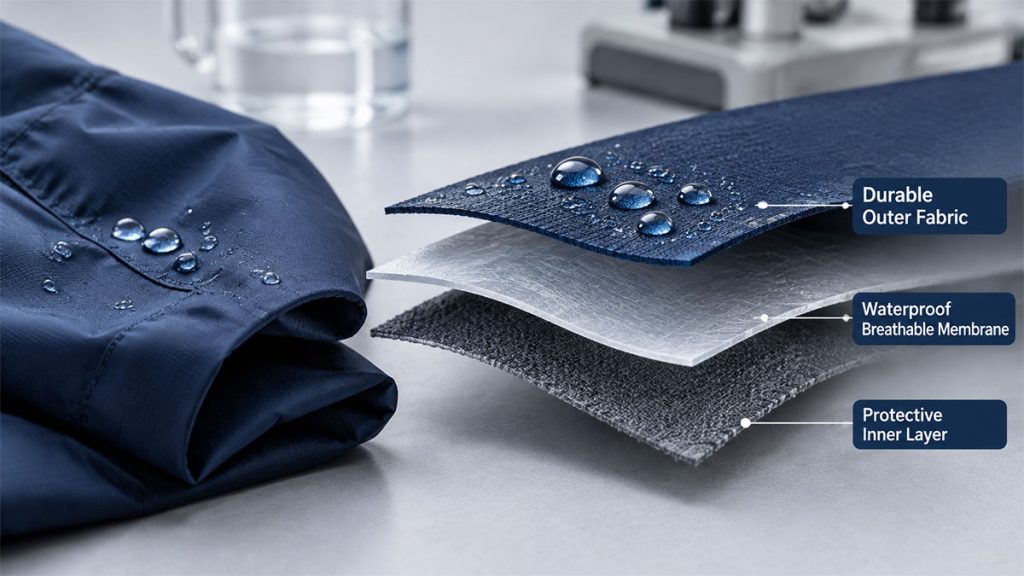
7. What Should B2B Buyers Check Before Approving Breathable Fabrics?
For brands working with OEM/ODM apparel manufacturers, fabric approval should be based on documented specifications and product requirements.| Evaluation Item | What to Confirm |
|---|---|
| MVTR or RET | Test results and exact testing method |
| Waterproofness | Hydrostatic pressure results where applicable |
| Fabric composition | Fiber content and construction |
| Fabric weight | GSM and acceptable tolerance |
| DWR performance | Initial and post-wash results where required |
| Durability | Abrasion, tear, and tensile strength |
| Production consistency | Fabric batch and roll traceability |
| Chemical compliance | Relevant test reports and documentation |
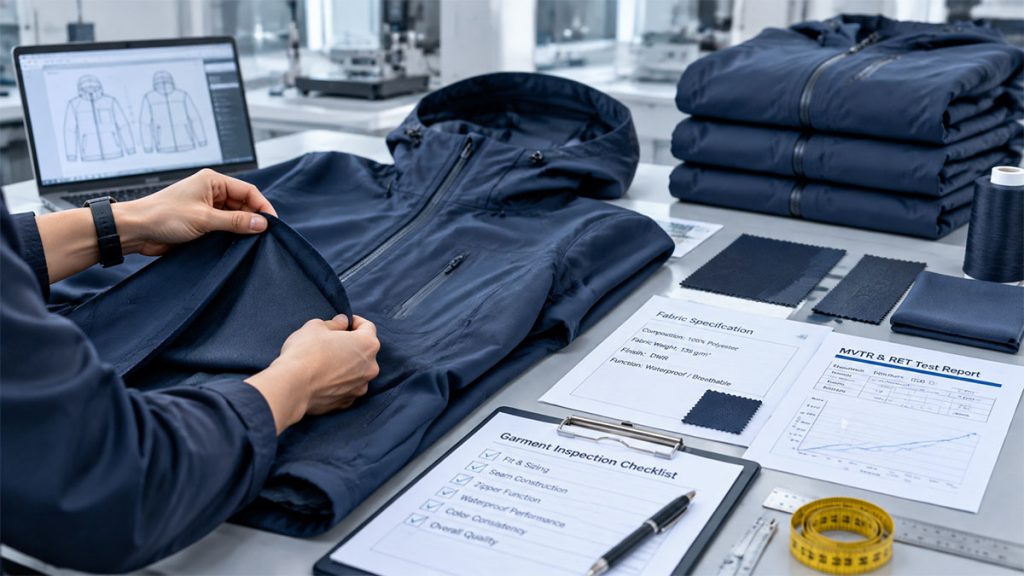
Verify Test Reports and Sampling Performance
Before approving a fabric, request:- Testing method and applicable standard
- Laboratory information and testing date
- Fabric composition and construction
- Sample identification
- Reported results and measurement units
- Relevant testing conditions
8. How Simmerui Supports Breathable Outdoor Apparel Development
Developing technical outdoor apparel requires more than selecting fabrics with attractive MVTR or RET ratings. Brands must coordinate material sourcing, performance specifications, sampling, construction compatibility, and production quality.
At Simmerui, our OEM/ODM apparel development process supports B2B brands through:
- Fabric Sourcing: Identifying suitable nylon, polyester, and functional fabric options.
- Material Evaluation: Reviewing fabric specifications and available performance test reports.
- Sample Development: Evaluating fit, construction, and material compatibility.
- Performance Verification: Coordinating relevant fabric testing against agreed specifications.
- Quality Control: Checking approved materials and production consistency before bulk manufacturing.
For brands developing waterproof jackets, hiking apparel, ski clothing, and technical outerwear, defining breathability requirements early helps reduce material selection risks and improve development efficiency.
Our goal is to help brands develop commercially viable garments with clearly defined performance expectations and consistent manufacturing quality.
FAQ: MVTR vs. RET Breathability Ratings
1. What is a good MVTR rating for outdoor jackets?
There is no universal target. The appropriate MVTR depends on intended activity, fabric construction, waterproof requirements, and testing method.2. Is a higher MVTR rating always better?
A higher MVTR indicates greater moisture vapor transmission under specified conditions. However, overall comfort also depends on ventilation, waterproofness, and garment construction.3. Is a lower RET rating better?
Yes. Lower RET indicates less resistance to evaporative heat transfer and generally better fabric breathability.4. What is the difference between MVTR and RET?
MVTR measures water vapor transmission in g/m²/24h, while RET measures resistance to evaporative heat transfer in m²·Pa/W. Higher MVTR and lower RET generally indicate better breathability.5. Which test is better for waterproof breathable jackets?
Both are useful. MVTR evaluates moisture vapor transmission, while RET evaluates evaporative resistance. The appropriate method depends on material specifications and development requirements.6. Does fabric breathability decrease after washing?
It can. Washing, abrasion, contamination, and deterioration of surface treatments may affect fabric performance. Post-wash testing is recommended where required.7. Can a waterproof jacket also have high breathability?
Yes. Waterproof breathable fabrics are designed to resist external water penetration while allowing moisture vapor to transfer outward. Actual performance depends on membrane technology, fabric construction, and environmental conditions.8. Should brands test breathability before bulk production?
Yes. Fabric testing and pre-production validation help verify that materials meet approved specifications and reduce performance risks before large-scale manufacturing.Conclusion: Evaluate Breathability Through Verified Testing
MVTR and RET provide two different ways to evaluate fabric breathability. MVTR measures moisture vapor transmission, while RET measures resistance to evaporative heat transfer.
For outdoor apparel brands, understanding these differences supports better fabric sourcing, clearer product specifications, and more reliable development decisions.
Rather than relying on a single rating, B2B buyers should evaluate breathability alongside waterproofness, durability, DWR performance, garment construction, and intended use.
A structured material testing and approval process helps OEM/ODM partners deliver consistent technical apparel performance from sampling through bulk production.
Written by the Simmerui Apparel Development Team.
The Simmerui Apparel Development Team supports global B2B brands through fabric sourcing, technical product development, sampling, quality control, and scalable OEM/ODM apparel manufacturing.