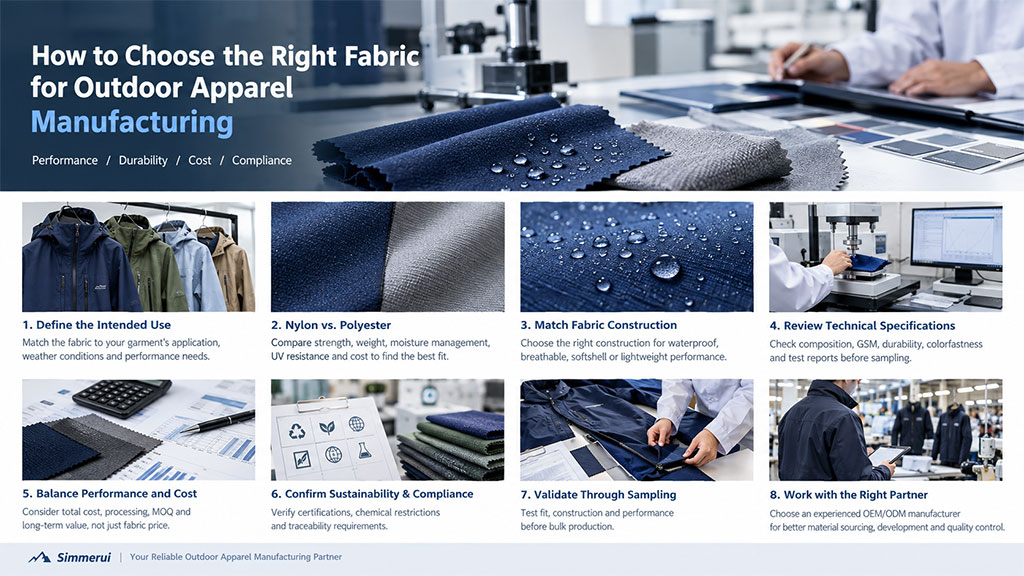
Choosing the right fabric for outdoor apparel manufacturing requires balancing performance, durability, comfort, cost, and production feasibility. B2B apparel brands should evaluate nylon, polyester, softshells, and waterproof breathable fabrics according to garment function, weather exposure, technical specifications, and target market. Working with an experienced OEM/ODM manufacturing partner helps brands validate materials through sampling and testing before bulk production, reducing development risks and improving product consistency.
1. Define the Intended Use Before Choosing Fabric
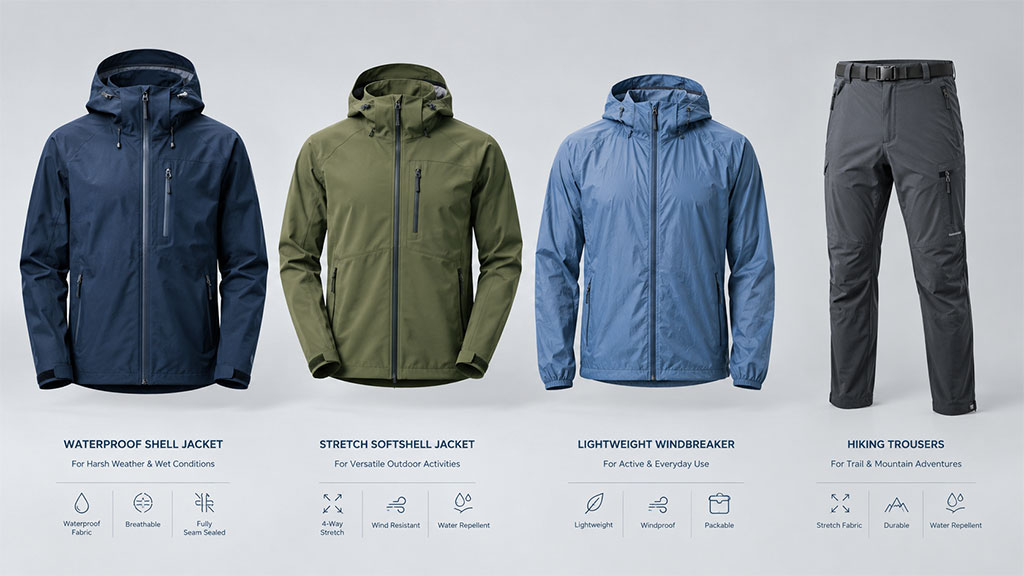
The first step in outdoor apparel fabric selection is identifying the garment’s intended application. Different products require different combinations of weather protection, breathability, abrasion resistance, flexibility, and weight.
| Garment Type | Key Requirements | Common Fabric Options |
|---|---|---|
| Hiking jackets | Durability, breathability, weather protection | Nylon, polyester, softshell |
| Waterproof shell jackets | Waterproofness, wind resistance | Coated fabrics, waterproof breathable laminates |
| Ski jackets | Weather protection, insulation compatibility | Nylon or polyester shell fabrics |
| Hiking pants | Abrasion resistance, flexibility | Stretch nylon or polyester blends |
| Windbreakers | Lightweight construction, packability | Lightweight woven nylon or polyester |
| Outdoor fleece | Thermal comfort, softness | Polyester fleece |
| Outdoor workwear | Durability, easy maintenance | Heavy-duty woven fabrics |
Key takeaway: Define essential performance requirements before requesting fabric samples. This gives your manufacturing partner a clear basis for material recommendations, product development, and cost estimation.
2. Compare Nylon vs. Polyester for Outdoor Apparel
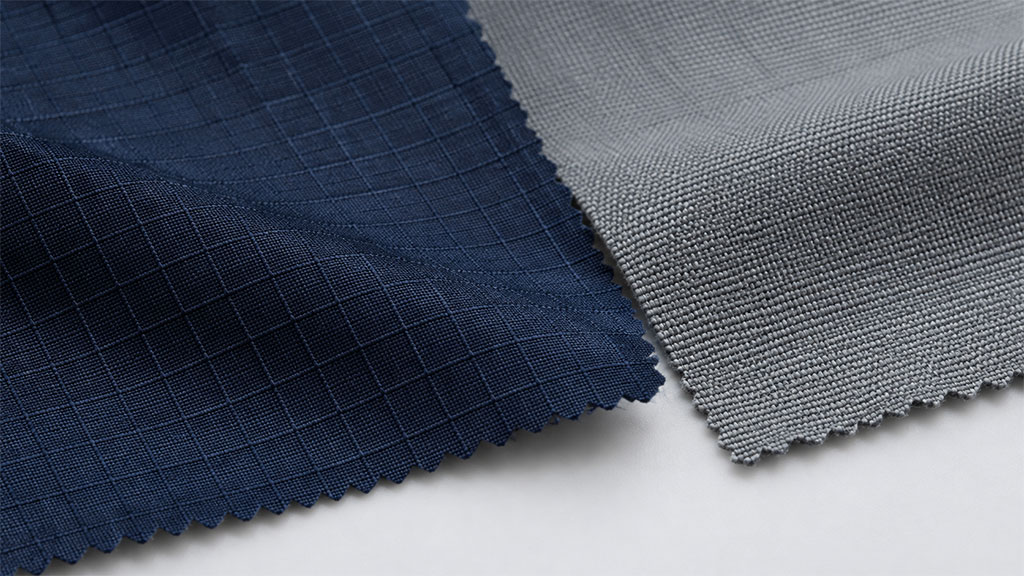
Nylon and polyester are widely used in technical outdoor clothing. Their actual performance depends on yarn characteristics, fabric construction, finishing, coating, and lamination.
When Should Brands Choose Nylon?
Nylon is worth considering for technical shell jackets, hiking pants, and products exposed to repeated friction. It can offer a favorable strength-to-weight balance and good abrasion resistance when appropriately engineered.
For premium outdoor apparel, nylon may be suitable when durability, lightweight construction, and a specific fabric hand feel are priorities. However, performance should be verified through the actual fabric specification and relevant test results.
When Should Brands Choose Polyester?
Polyester is widely used in fleece jackets, insulated apparel, sportswear, and many outdoor shell fabrics. It generally absorbs less moisture than nylon and can provide favorable drying, dimensional stability, and cost characteristics.
Recycled polyester may also support a brand’s material sourcing objectives when appropriate documentation and traceability are available.
Neither fiber is universally superior. Compare fabric weight, construction, finishing, durability, and test performance before selecting a material.
3. Match Fabric Construction to Weather Protection
Fiber composition alone does not determine outdoor garment performance. Fabric construction and finishing are equally important.
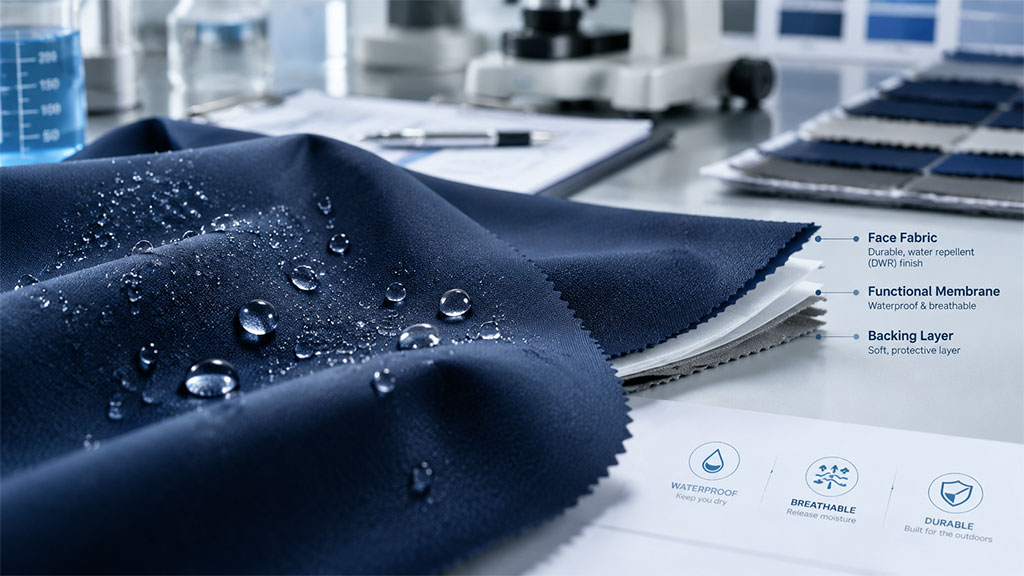
Waterproof Breathable Fabrics
Waterproof shell jackets may use coated fabrics or membrane laminates to resist water penetration while managing moisture vapor.
When evaluating these materials, consider:
- Hydrostatic head: Measures resistance to water penetration under pressure.
- MVTR or RET: Helps evaluate moisture vapor management or evaporative resistance, depending on the test method.
- Seam sealing: Determines whether garment seams can maintain the required water protection.
- Durability: Includes resistance to abrasion, washing, and repeated use.
- Construction compatibility: Covers zippers, hood design, ventilation, and other garment details.
A high waterproof rating does not guarantee a comfortable or fully waterproof finished jacket. Fabric performance must work together with garment construction and manufacturing quality.
Softshell and Lightweight Woven Fabrics
Softshell fabrics are suitable for outdoor products prioritizing mobility, comfort, stretch, and everyday weather protection. However, water repellency should not be confused with full waterproof performance.
Lightweight woven fabrics work well for windbreakers and packable jackets. Brands should verify tear strength, seam performance, opacity, and durability to ensure the material meets the intended application.
4. Review Technical Specifications Before Sampling
Before approving a fabric, request a specification sheet that allows your product development team to compare materials objectively. Important specifications include:- Fiber composition and GSM: Confirm material content and fabric weight.
- Fabric construction: Review weave or knit structure, stretch, drape, and surface characteristics.
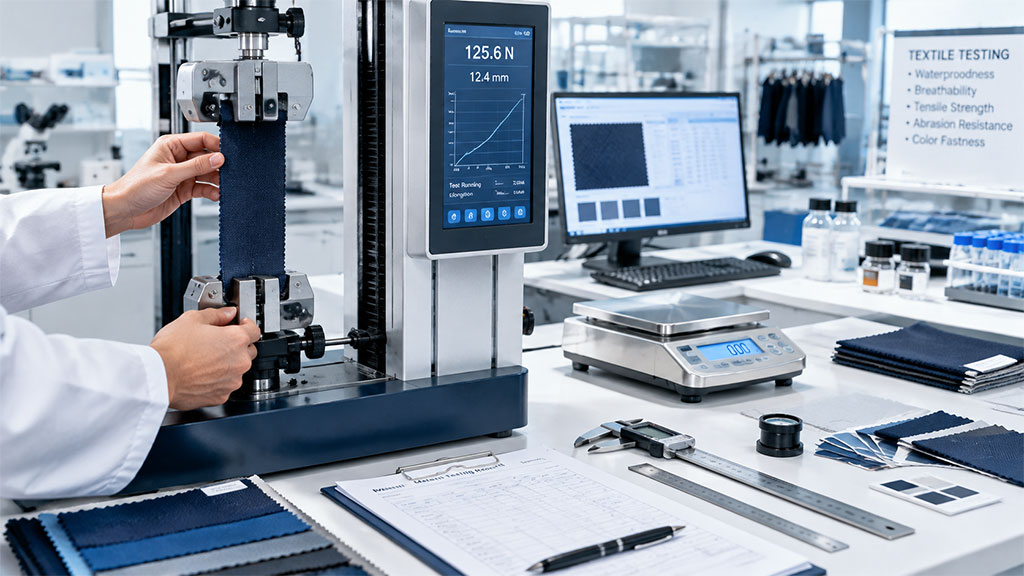
- Tensile and tear strength: Evaluate resistance to applied loads and tearing.
- Abrasion resistance: Assess suitability for friction-intensive applications.
- Waterproofness and breathability: Confirm the required level of weather protection and moisture management.
- Colorfastness and shrinkage: Help maintain appearance and garment dimensions after care.
- Chemical compliance: Check applicable market regulations and customer restricted substance requirements.
5. Balance Fabric Performance with Target Cost
For B2B apparel brands, fabric selection is both a technical and commercial decision. Higher-performance materials can strengthen product positioning but may increase material costs, processing complexity, and development time. Evaluate the total cost rather than comparing fabric prices alone. Consider:- Material price per meter or yard.
- Fabric consumption and cutting efficiency.
- Waste, usable width, and potential defects.
- Dyeing, coating, lamination, and additional finishing.
- Special construction requirements, including seam sealing and bonding.
- Minimum order quantities, availability, and lead times.
- Potential costs associated with failed tests, rework, or rejected garments.
6. Confirm Sustainability and Compliance Requirements
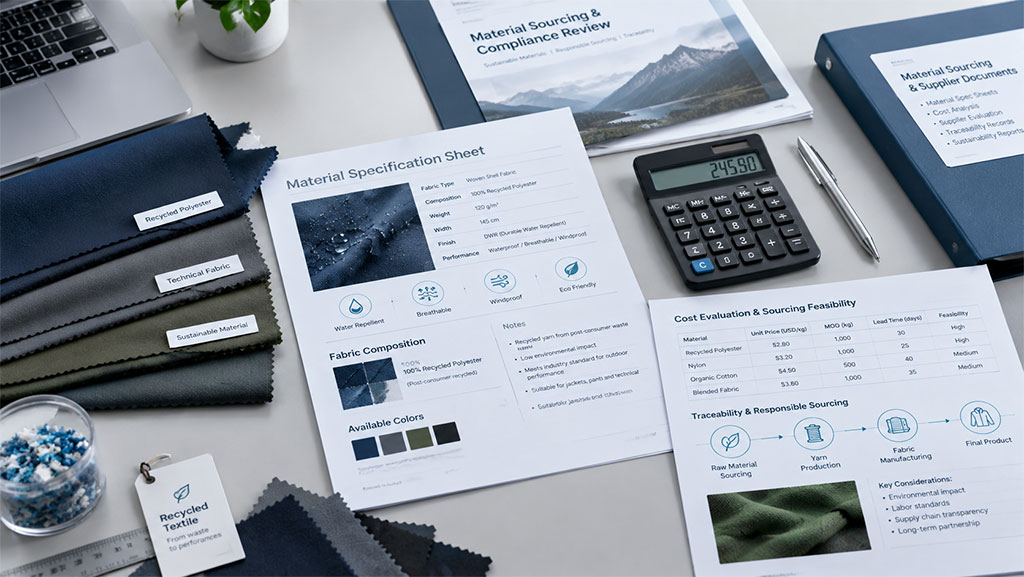
Outdoor apparel brands may need to consider recycled content, chemical restrictions, traceability, and environmental claims during material selection.
Before approving a fabric, confirm whether the supplier can provide applicable documentation for requirements such as GRS, OEKO-TEX, relevant REACH restrictions, and customer restricted substance lists.
Certifications are not interchangeable. A supplier’s general certification does not automatically demonstrate that every fabric or finished garment meets every requirement. Claims such as recycled content or PFAS-free performance should also be supported by appropriate evidence.
Addressing these requirements early helps reduce sourcing changes, resampling, and compliance delays.
7. Validate Fabric Through Sampling and Testing
A fabric that meets its specification may behave differently when incorporated into a finished garment. Sampling is therefore essential before bulk production.
A practical validation process includes:
- Material review: Compare swatches, specifications, colors, and hand feel.
- Prototype development: Build the initial garment using the proposed fabric and construction.
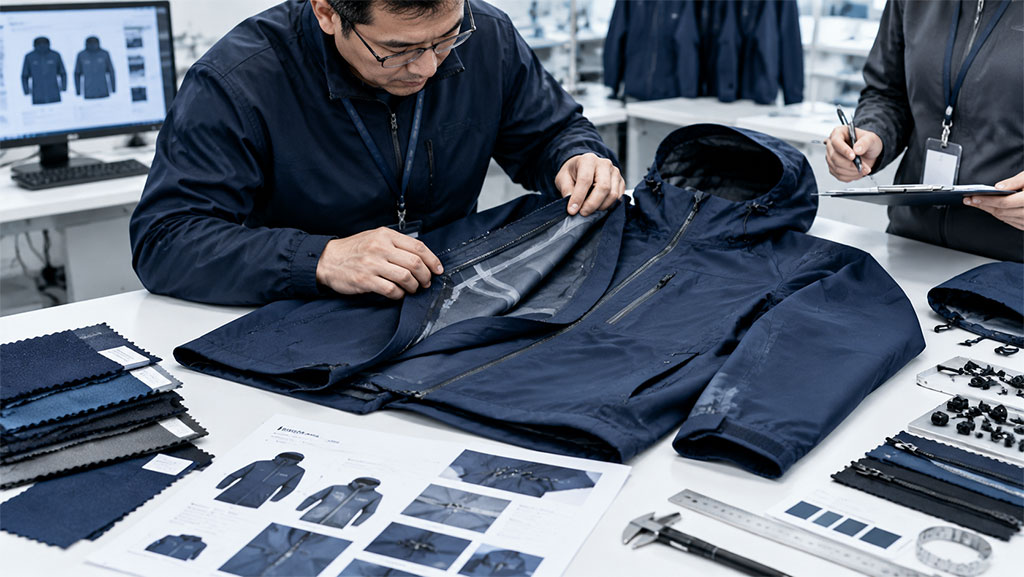
- Fit and construction review: Evaluate drape, mobility, seams, zippers, pockets, and overall appearance.
- Performance testing: Conduct relevant fabric and finished-garment tests against agreed criteria.
- Sample revision and approval: Resolve issues and document approved materials and construction details.
- Pre-production confirmation: Verify bulk availability, color standards, and production requirements.
For waterproof jackets, assess seam tape compatibility, zipper protection, hood construction, and potential water entry points. For stretch hiking pants, focus on mobility, recovery, abrasion resistance, and dimensional stability.
Record the approved fabric specification, supplier reference, color standard, and finishing details. Any subsequent material substitution should undergo review and approval before production.
8. Work with the Right OEM/ODM Manufacturing Partner
An experienced outdoor apparel manufacturing partner can help translate product requirements into practical fabric and construction decisions.
Look for a team that can recommend materials, explain technical trade-offs, coordinate sampling, support relevant testing, confirm sourcing feasibility, and maintain quality control throughout production.
At Simmerui, our OEM/ODM apparel manufacturing approach supports B2B brands through product development, fabric sourcing, sampling, quality control, and scalable manufacturing. Early collaboration helps align material selection with garment performance, target cost, and production requirements.
Conclusion: Choose Fabric for Performance and Production Feasibility
The right fabric for outdoor apparel manufacturing delivers the required performance while meeting construction, cost, sourcing, and quality requirements.
Start with the garment’s intended use, compare suitable fibers and fabric constructions, review technical specifications, confirm compliance requirements, and validate the selected material through sampling and testing.
For B2B brands, working with a reliable OEM/ODM manufacturing partner can make fabric decisions more structured and commercially practical, helping reduce development risks and improve consistency before bulk production.
Frequently Asked Questions
1. What is the best fabric for outdoor apparel?
There is no single best fabric for every application. Nylon, polyester, softshells, stretch wovens, and waterproof breathable laminates serve different purposes. Choose according to weather exposure, durability, comfort, and target cost.2. Is nylon or polyester better for outdoor jackets?
Both can perform well. Nylon is often considered for durable technical products, while polyester offers favorable moisture absorption and cost characteristics in suitable constructions. Actual performance depends on the complete fabric specification.3. What fabric specifications should brands request?
Request fiber composition, GSM, construction, usable width, color options, finishing details, minimum order quantities, lead times, relevant test reports, and applicable compliance documentation.4. How do you choose waterproof breathable fabric?
Evaluate waterproofness, moisture vapor management, durability, and garment construction compatibility. Review hydrostatic head and MVTR or RET results where applicable, then validate the finished garment against defined requirements.5. How can brands reduce fabric costs without sacrificing quality?
Compare materials against the same performance criteria. Consider fabric consumption, cutting efficiency, processing costs, sourcing availability, and quality risks. Validate alternatives through sampling before approval.6. Can an OEM manufacturer help source outdoor fabrics?
Yes. Depending on its sourcing network and development capabilities, an OEM manufacturer can recommend materials, coordinate swatches, support sampling, and help validate fabric performance.7. When should fabric selection be finalized?
Finalize fabric selection during product development and confirm it before final sample approval and bulk production planning. Any later substitution should undergo appropriate technical review and approval.8. Why is fabric sampling important before bulk production?
Sampling helps verify fabric behavior, garment fit, construction compatibility, and performance. It also allows brands to identify problems before committing to bulk material purchases and production.Written by the Simmerui Apparel Manufacturing Team
Simmerui supports global B2B brands with OEM and ODM apparel manufacturing, product development, fabric sourcing, sampling, quality control, and scalable production. Our focus is on building reliable manufacturing partnerships for outdoor apparel, performance wear, casual clothing, and private-label collections.