
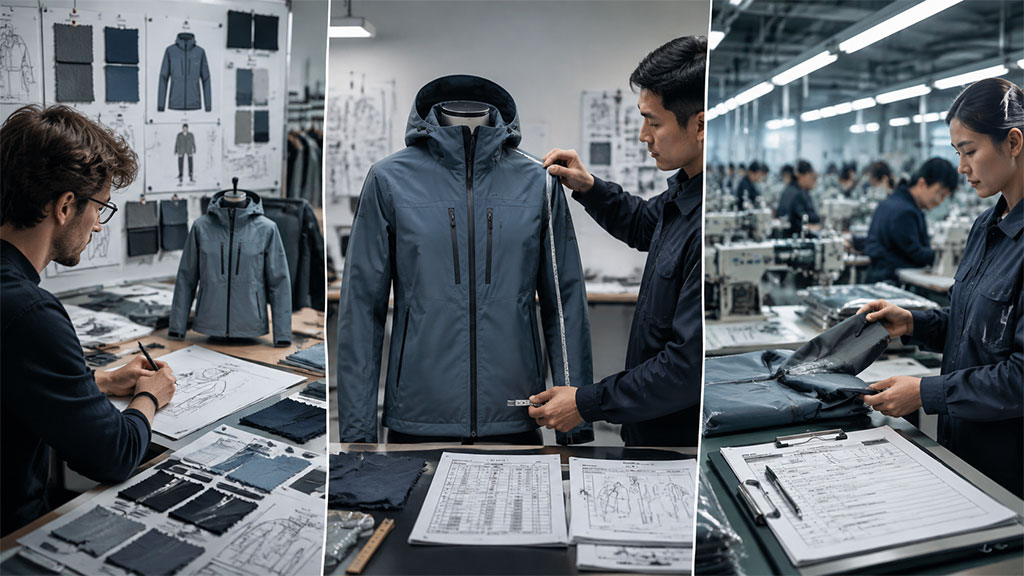
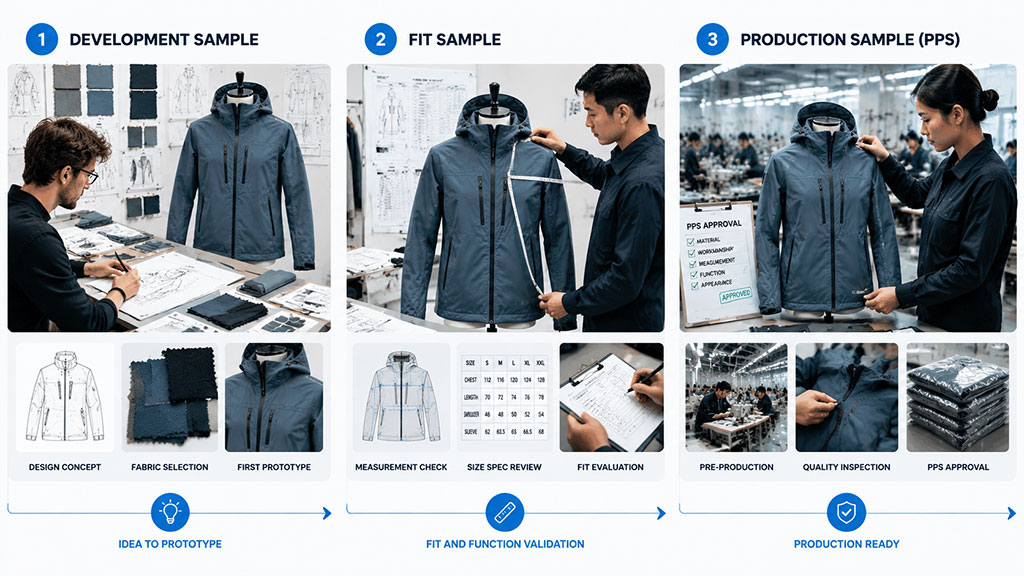
In apparel manufacturing, samples are critical checkpoints before bulk production. Development samples validate design concepts, fit samples confirm measurements and wearing performance, and production samples (PPS) ensure final quality standards. Understanding each sampling stage helps apparel brands and buyers reduce production risks and improve communication with OEM manufacturers.
Introduction: Why Apparel Sampling Stages Matter in OEM Manufacturing
For apparel brands, startups, and retail buyers, samples are more than prototypes. They are essential validation steps before committing to bulk production.
A common mistake among buyers is assuming all garment samples serve the same purpose. However, each sample stage has different objectives, approval standards, and production impacts.
In professional OEM and ODM apparel manufacturing, the three key sampling stages are:
- Development Sample
- Fit Sample
- Production Sample (PPS)
Understanding these differences helps buyers avoid:
- Incorrect sizing
- Construction problems
- Unexpected production changes
- Quality issues during bulk manufacturing
A structured sampling process allows brands and manufacturers to identify problems early and achieve consistent production results.
1. What Is a Development Sample?
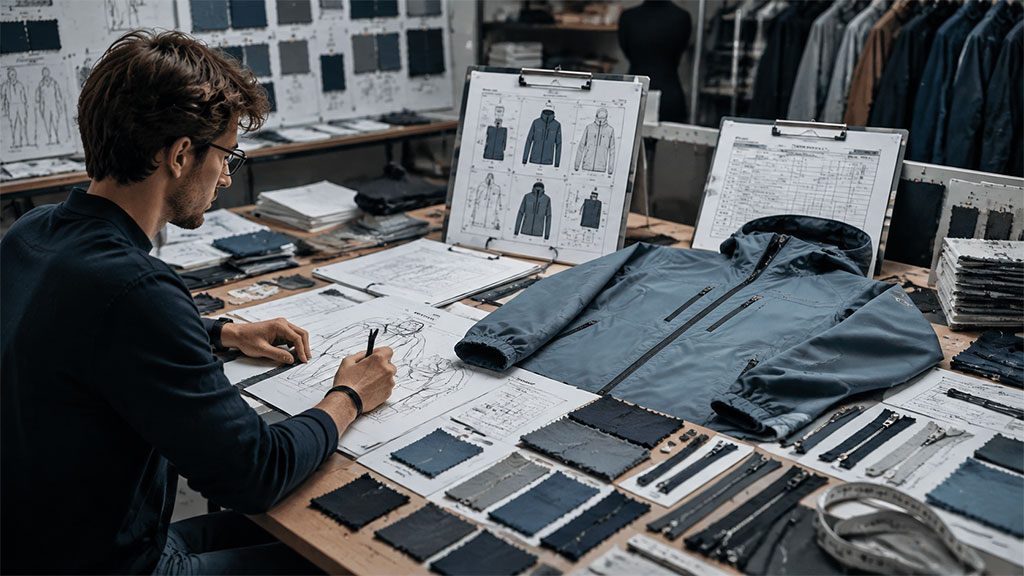
A Development Sample is the first physical garment sample created based on a product concept, design sketch, tech pack, or product requirements. Its primary purpose is to verify whether the design concept can be successfully transformed into a manufacturable product. During this stage, manufacturers evaluate whether the product design is technically achievable and suitable for production.Key Objectives of Development Samples
Manufacturers typically review:Fabric Suitability
The factory checks whether the selected fabric matches the intended product function. Evaluation may include:- Fabric performance
- Material structure
- Application suitability
Garment Construction
The development stage confirms whether the garment construction method is practical. Manufacturers review:- Sewing structure
- Panel construction
- Functional details
- Manufacturing feasibility
Design Details and Components
The sample also verifies:- Trims and accessories
- Zipper selection
- Label placement
- Printing or embroidery position
Example: Outdoor Jacket Development Sample
For a technical outdoor jacket, manufacturers may evaluate:- Shell fabric performance
- Waterproof membrane compatibility
- Zipper selection
- Seam sealing method
- Hood construction
2. What Is a Fit Sample?
A Fit Sample is created after the initial design concept has been approved. Unlike the development sample, the main focus of a fit sample is not only appearance but also:- Garment measurements
- Wearing comfort
- Body fit
- Movement performance
Fit Sample Evaluation Areas
Measurement Accuracy
Manufacturers check key measurements including:- Chest width
- Body length
- Sleeve length
- Shoulder width
- Waist measurement
- Size grading accuracy
Wearing Experience
Brands evaluate:- Comfort
- Mobility
- Silhouette
- Proportion
- Functional performance
Example: Performance Hoodie Fit Testing
A performance hoodie may look correct during initial development sampling but feel restrictive around the shoulders during fitting. The fit sample stage identifies these issues before bulk production begins.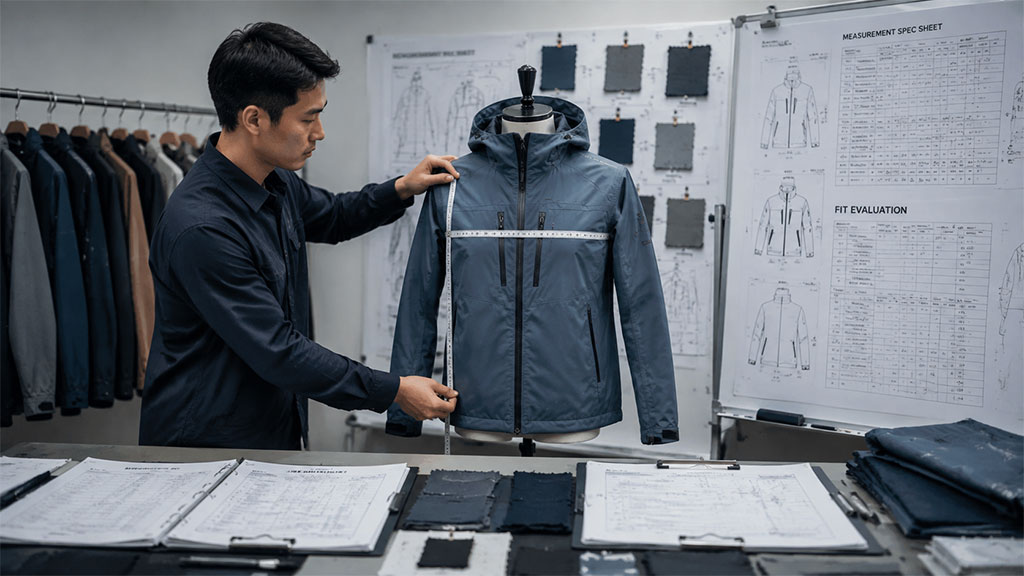
3. What Is a Production Sample (PPS)?
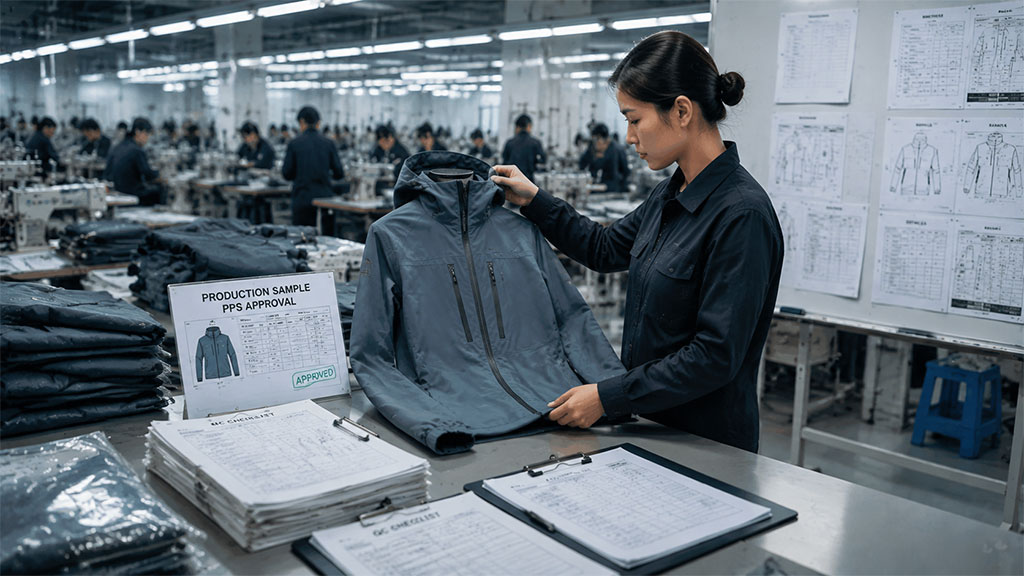
A Production Sample, also called a Pre-Production Sample (PPS), is the final approved sample before bulk manufacturing starts.
It represents the final production standard that the factory must follow.
Production Sample Confirms
The PPS confirms:
- Approved fabric
- Final trims
- Confirmed colors
- Correct labels
- Packaging requirements
- Final workmanship standards
The approved production sample becomes the reference standard for:
- Factory production teams
- Quality control inspectors
- Buyer approval
During bulk manufacturing, finished products should match the approved PPS standard.
Development Sample vs Fit Sample vs Production Sample Comparison
| Sample Type | Main Purpose | Key Review Points | Production Stage |
|---|---|---|---|
| Development Sample | Validate design concept | Fabric, construction, production feasibility | Early development |
| Fit Sample | Confirm sizing and wearing performance | Measurements, comfort, shape | Before final approval |
| Production Sample (PPS) | Confirm bulk production standard | Quality, details, workmanship | Before mass production |
How Many Sample Rounds Are Usually Needed?
The number of sample rounds depends on product complexity.
Typical OEM apparel development:
| Product Type | Typical Sample Rounds |
|---|---|
| Basic T-shirt | 1–2 rounds |
| Hoodie / Sweatshirt | 2–3 rounds |
| Outdoor Jacket | 3–5 rounds |
| Technical Performance Wear | Multiple testing rounds |
Complex products usually require more validation because they involve:
- Technical fabrics
- Functional construction
- Performance requirements
- Additional testing
Common Mistakes Buyers Make During Apparel Sampling
1. Skipping Development Samples
Some buyers request production samples directly to save time.
However, this may create risks:
- Design issues discovered too late
- Higher modification costs
- Production delays
A development sample helps identify technical problems earlier.
2. Approving Samples Without Measurement Review
Visual appearance alone is not enough.
Professional buyers should compare:
- Tech pack measurements
- Actual sample measurements
- Fit comments
Correct measurement approval helps prevent sizing issues during bulk production.
3. Changing Details After PPS Approval
After the production sample is approved, major changes may affect:
- Production timeline
- Material cost
- Quality consistency
Any changes should be reviewed and approved before bulk manufacturing.
How OEM Manufacturers Manage the Sampling Process
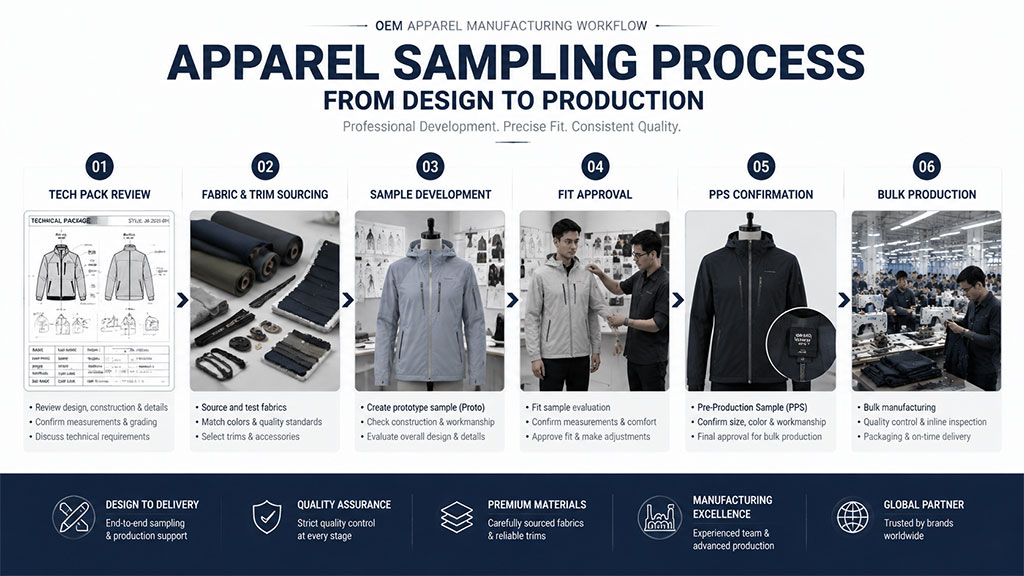
A professional apparel manufacturer usually follows a structured sampling workflow.
Step 1: Product Brief and Tech Pack Review
The buyer provides:
- Design drawings
- Measurement specifications
- Fabric requirements
- Branding details
The manufacturer reviews the product requirements before sample development.
Step 2: Fabric and Trim Sourcing
The factory confirms:
- Material availability
- Color options
- Performance requirements
- Testing standards
Step 3: Sample Development
The factory creates:
- Development sample
- Fit sample
- Revision samples
Each stage allows buyers and manufacturers to review and improve the product.
Step 4: PPS Approval Before Bulk Production
After production sample approval:
- Bulk production begins
- Quality standards are established
- Shipment preparation starts
The PPS becomes the final reference for production quality.
Why Sampling Is Critical for Private Label Apparel Brands
For emerging apparel brands, sampling reduces manufacturing risks by validating:
- Product design
- Customer expectations
- Target pricing
- Production capability
A reliable OEM partner should provide a structured sampling process instead of moving directly from design files to bulk production.
FAQ: Apparel Sampling Process
1.What is the difference between a development sample and a fit sample?
A development sample focuses on design feasibility, fabric selection, and construction methods. A fit sample focuses on garment measurements, sizing accuracy, and wearing comfort.2.Is a production sample the same as a final sample?
Yes. A production sample, also called PPS (Pre-Production Sample), is the final approved sample used as the quality reference before bulk manufacturing.3.How many samples are needed before bulk production?
Most apparel projects require 2–5 sample rounds depending on product complexity. Technical jackets and performance apparel usually require more rounds than basic garments.4.Why is PPS approval important?
PPS approval confirms the final:- Construction
- Materials
- Colors
- Workmanship standards
5.Can buyers request changes after PPS approval?
Yes, but changes after PPS approval may affect:- Production costs
- Manufacturing timeline
- Quality consistency
6.Which sample should buyers approve before mass production?
Buyers should approve the Production Sample (PPS) before bulk manufacturing because it represents the final production standard.Conclusion
Development samples, fit samples, and production samples each play a different role in apparel manufacturing. A successful apparel product development process requires proper validation at every sampling stage. For brands working with OEM clothing manufacturers, understanding these sample types helps:- Improve communication
- Reduce production risks
- Maintain consistent bulk production quality
CTA
Looking for an experienced OEM apparel manufacturer for your next clothing project?
A reliable manufacturing partner can support your product development from initial sample creation to final bulk production.
Contact our team to discuss your apparel manufacturing requirements.
Our team works across fabric engineering, sampling development, production management, and compliance systems to help brands build stable and efficient apparel supply chains.