
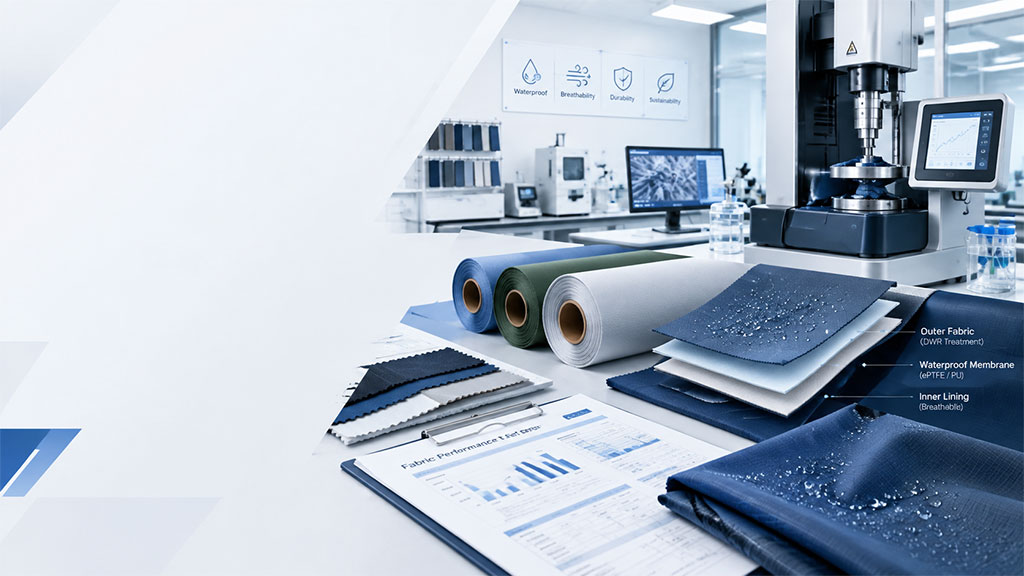
Fabric lab testing is a critical step in OEM apparel production that helps brands verify fabric quality, performance, durability, and compliance before bulk manufacturing. By testing materials for strength, colorfastness, shrinkage, waterproof performance, breathability, and chemical safety, apparel brands can reduce production risks and avoid costly quality issues. Simmerui Apparel Manufacturing Team integrates fabric testing into product development and manufacturing workflows to help global brands build reliable, compliant, and scalable apparel collections.
Fabric Lab Testing for OEM Apparel Production: Why It Matters Before Bulk Manufacturing
In apparel manufacturing, fabric selection directly affects the final product’s performance, durability, and customer experience.
A garment can have an excellent design and precise workmanship, but unstable fabric performance may still cause:
- inconsistent product quality
- failed inspections
- customer complaints
- production delays
- increased return risks
For global B2B apparel brands, fabric testing is more than a quality inspection step. It is a risk management process that helps confirm whether materials meet technical specifications, market requirements, and brand expectations before large-scale production.
According to the Simmerui Apparel Manufacturing Team, professional fabric evaluation should be integrated during early product development instead of waiting until bulk production problems appear.
What Is Fabric Lab Testing in OEM Apparel Manufacturing?
Fabric lab testing is the process of evaluating textile materials through professional laboratory methods to measure physical performance, durability, safety, and functional properties.
During OEM apparel development, fabric testing usually takes place before:
- prototype development
- sample approval
- bulk fabric ordering
- mass production
The purpose is to confirm:
- whether fabric specifications match the tech pack
- whether suppliers provide consistent materials
- whether fabrics meet required compliance standards
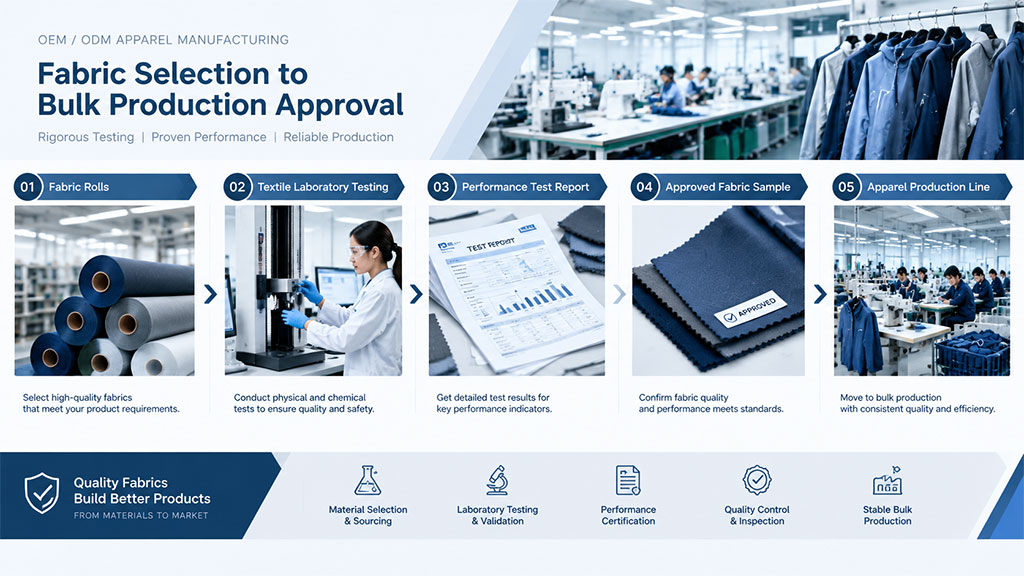
A typical OEM fabric testing workflow includes:
Fabric Selection → Laboratory Testing → Test Report Review → Sample Approval → Bulk Production
Why Fabric Lab Testing Is Important for Apparel Brands
1. Ensures Consistent Fabric Quality Across Production
Fabric performance can vary because of:
- different dye lots
- fiber differences
- finishing processes
- supplier production variations
Laboratory testing provides measurable data to confirm that approved fabrics maintain consistent quality during bulk manufacturing.
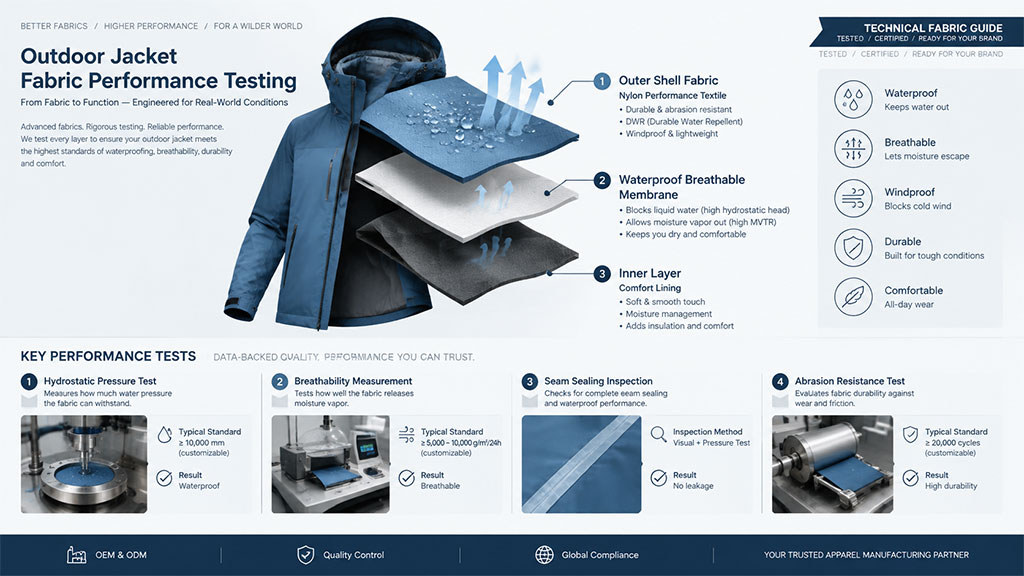
For example, technical outdoor jackets may require verification of:
- waterproof performance
- breathability
- abrasion resistance
- fabric durability
A fabric may appear visually acceptable but fail during actual product use without proper testing.
2. Reduces OEM Production Risks Before Mass Manufacturing
Fabric-related problems are among the common causes of apparel production issues.
Early testing helps identify potential risks such as:
| Fabric Risk | Possible Production Impact |
|---|---|
| Excessive shrinkage | Incorrect garment measurements |
| Poor colorfastness | Customer complaints |
| Low fabric strength | Product durability problems |
| Coating failure | Performance failure |
| Chemical non-compliance | Market access risks |
By identifying problems before bulk production, brands can avoid expensive material replacement and production delays.
3. Supports Global Apparel Compliance Requirements
International apparel markets increasingly require stronger material transparency and chemical control.
Common fabric compliance testing includes:
- restricted substance testing
- chemical residue testing
- formaldehyde testing
- azo dye testing
- PFAS-related testing
For brands selling in different markets, complete testing documentation helps support retailer requirements and smoother supply chain management.
Common Fabric Lab Tests Used in OEM Apparel Production
Fabric Performance Testing
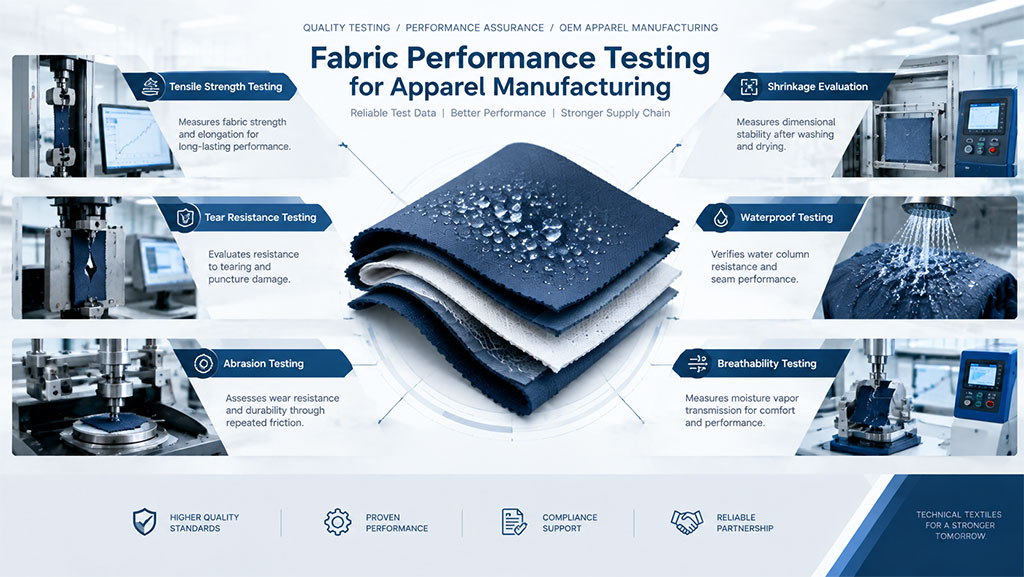
Tensile Strength Testing
Tensile strength testing measures how much force a fabric can withstand before breaking. It is commonly required for:- outdoor jackets
- workwear
- performance apparel
- heavy-duty garments
Tear Strength Testing
Tear strength testing evaluates how resistant fabric is against tearing. It is especially important for:- hiking apparel
- technical outerwear
- tactical clothing
Abrasion Resistance Testing
Abrasion testing measures fabric durability when exposed to repeated friction. It is commonly applied to:- outdoor clothing
- protective apparel
- high-performance garments
How Does Fabric Testing Support Technical Outdoor Apparel?
Performance apparel requires more than basic appearance and dimensional checks. Technical fabrics must be evaluated against the performance targets defined during product development.
Common tests include:
Waterproof Testing
Waterproof testing evaluates how effectively a fabric resists water penetration.
For technical outerwear, relevant evaluation may include:
- hydrostatic pressure testing
- waterproof membrane performance
- seam sealing performance
These tests are particularly relevant to rainwear, hiking jackets, ski apparel, and other waterproof garments.
For OEM brands, waterproof performance should be confirmed against the product specification before bulk fabric approval rather than relying only on supplier claims.
Breathability Testing
Breathability testing evaluates moisture-vapor transfer performance.
It is especially relevant to:
- hiking jackets
- ski apparel
- rainwear
- performance outerwear
For technical apparel, waterproofing and breathability often need to be considered together because both influence the intended performance of the finished garment.
Colorfastness Testing
Colorfastness testing evaluates whether fabric color remains stable during use and care.
Common evaluations include:
- washing colorfastness
- rubbing colorfastness
- light colorfastness
- perspiration colorfastness
These tests are particularly relevant to fashion collections, sportswear, and premium outdoor products.
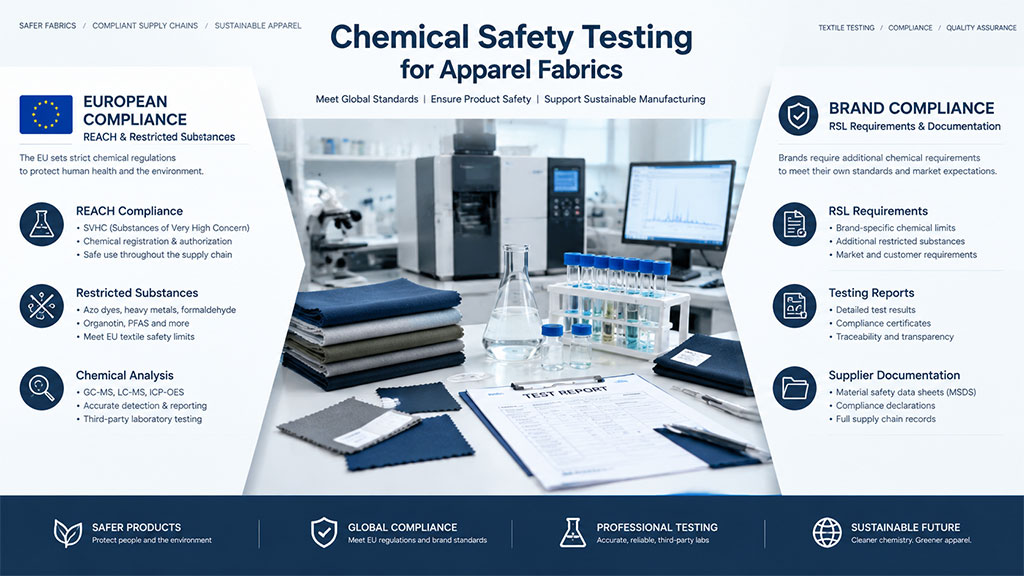
Chemical and Safety Testing for Apparel Fabrics
Chemical compliance has become an increasingly important part of apparel material management.
The original article identifies several common fabric chemical tests:
| Test | Purpose |
|---|---|
| REACH Testing | Checks restricted substances for EU markets |
| RSL Testing | Confirms compliance with brand chemical requirements |
| Formaldehyde Testing | Evaluates chemical safety |
| Heavy Metal Testing | Checks harmful metal residues |
| PFAS Testing | Evaluates fluorinated chemical restrictions |
For OEM production, chemical testing should be incorporated into the material sourcing and approval process rather than treated as a final-stage activity.
For global brands, this approach helps connect fabric selection, compliance documentation, sample development, and bulk production into one controlled workflow.
How Does Fabric Lab Testing Fit Into the OEM Production Process?
A structured testing workflow helps brands make material decisions before production risk becomes expensive.
Step 1: Define Fabric Requirements
The brand provides the target material specifications, which may include:
- fiber composition
- fabric weight or GSM
- performance requirements
- compliance requirements
For example:
Shell Fabric
- 100% recycled nylon
- 40D
- 20,000 mm waterproof performance
- 15,000 g breathability
These requirements provide the technical baseline for fabric selection and laboratory evaluation.
Step 2: Select and Evaluate Fabric Samples
The OEM manufacturer reviews:
- supplier information
- fabric specifications
- previous test reports
This stage helps determine whether candidate fabrics are suitable for further development.
Step 3: Conduct Laboratory Testing
Depending on the product and requirements, testing may cover:
- physical performance
- chemical compliance
- durability
- functional performance
The test scope should correspond to the product category and requirements rather than applying exactly the same test package to every garment.
Step 4: Review Test Results
The OEM team compares laboratory results against:
- tech pack requirements
- brand standards
- applicable market requirements
This creates an objective basis for material approval.
Step 5: Approve Fabric Before Bulk Production
Only approved materials should proceed to:
Cutting → Sewing → Finishing → Final Inspection
This material approval gate helps prevent unverified fabric from entering bulk production.
How OEM Manufacturers Use Fabric Testing to Improve Production Control
Fabric testing works most effectively when it is integrated into product development rather than treated as an isolated laboratory activity.
A controlled OEM workflow can be structured as:
Material Testing → Sample Development → Fit Approval → Production → Inspection → Final Quality Control
This connects material verification with subsequent garment development and production inspection.
For B2B apparel brands, this approach provides a clearer material approval trail and helps the manufacturing team identify potential issues earlier in the production cycle.
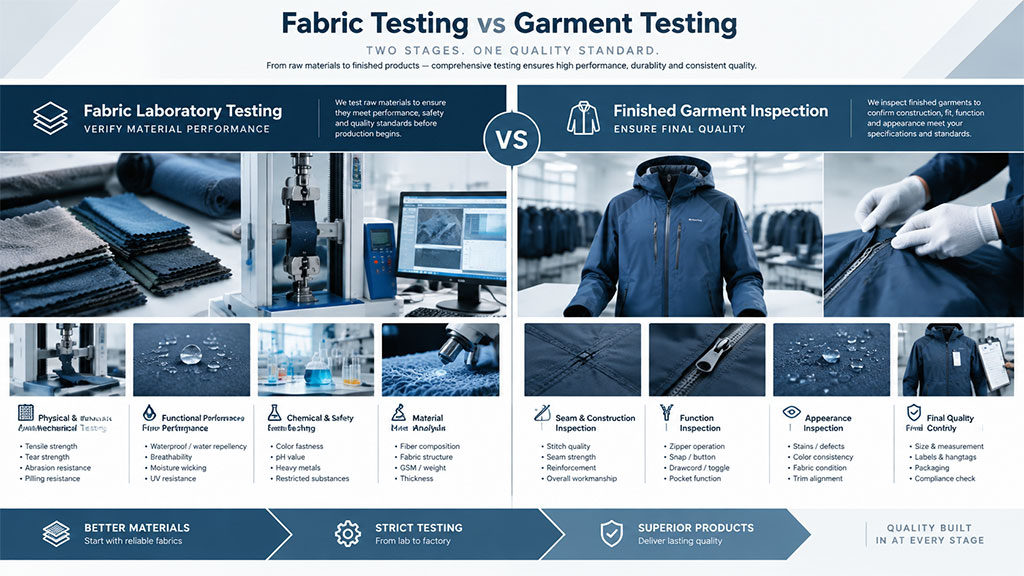
Fabric Lab Testing vs. Garment Testing: What Is the Difference?
Fabric testing and finished-garment testing serve different purposes.
| Category | Fabric Lab Testing | Garment Testing |
|---|---|---|
| Testing Stage | Before production | After garment production |
| Main Focus | Material performance | Finished product performance |
| Example | Fabric strength | Jacket seam durability |
| Main Purpose | Approve materials | Verify final product quality |
The two processes should not be treated as substitutes. Fabric testing verifies the material before production, while garment testing evaluates the finished product after construction.
Fabric Lab Testing Checklist for OEM Apparel Brands
Before approving a production fabric, brands should confirm:- ✓ Fabric composition matches the specification
- ✓ GSM meets the required target
- ✓ Color standards have been approved
- ✓ Required performance testing is completed
- ✓ Chemical compliance documents are available
- ✓ Production batch consistency is verified
- ✓ Test reports are properly archived
How Many Fabric Tests Does an Apparel Product Need?
There is no single testing package suitable for every apparel product.
Testing requirements depend on:
- product category
- target market
- performance expectations
- brand requirements
For example, a basic T-shirt may focus primarily on colorfastness and shrinkage, while an outdoor jacket may require waterproof, breathability, abrasion, and other performance evaluations.
For this reason, OEM manufacturers should define the testing scope according to the product specification instead of using a one-size-fits-all approach.
FAQ: Fabric Lab Testing for OEM Apparel Production
1. Why is fabric lab testing important for OEM apparel production?
Fabric lab testing verifies whether materials meet required quality, safety, and performance requirements before bulk manufacturing. It helps brands identify material risks before they become large-scale production problems. 2. When should fabric testing be completed?
Fabric testing should generally be completed after fabric selection but before bulk production and large-scale material purchasing. Test results should be reviewed before the material is approved for production.3. What tests are commonly required for apparel fabrics?
Common tests include:
- tensile strength
- tear strength
- abrasion resistance
- shrinkage
- colorfastness
- waterproof performance
- breathability
- chemical compliance
4. Do all apparel products need the same fabric tests?
No. Testing requirements depend on the product category, target market, and required performance.
For example, T-shirts may emphasize colorfastness and shrinkage, while technical outdoor jackets may require waterproof, breathability, and abrasion testing. 5. Can OEM factories provide fabric testing reports?
Professional OEM manufacturers can coordinate laboratory testing and provide relevant reports to verify material performance and compliance requirements. 6. How does fabric testing help reduce apparel production costs?
By identifying material problems before bulk production, testing can reduce risks associated with fabric replacement, production delays, failed inspections, and customer complaints. 7. Should fabric testing be completed before sample development?
The source article places fabric testing within the early OEM workflow, before prototype development, sample approval, and bulk fabric ordering. This allows material suitability to be evaluated before larger production commitments are made. 8. What information should brands provide for fabric testing?
The source identifies four important starting inputs: fabric composition, GSM or weight requirements, performance targets, and compliance requirements. These specifications establish the basis for fabric selection and laboratory evaluation. Conclusion: Fabric Testing Builds More Reliable OEM Apparel Supply Chains
Fabric lab testing is a fundamental part of professional OEM apparel production.
For global clothing brands, testing helps verify whether selected materials can provide:
- consistent quality
- required performance
- appropriate compliance documentation
- reliable product performance
Integrating fabric testing into early product development allows brands and manufacturers to identify material risks before bulk production and establish a more controlled manufacturing process.
For technical outdoor apparel, performance wear, workwear, and private-label collections, the testing strategy should be connected directly to the product specification and intended application.
Written by the Simmerui Apparel Manufacturing Team
Simmerui specializes in OEM and ODM apparel production for global B2B brands, supporting product development, fabric sourcing, sampling, quality control, and scalable manufacturing. Our experience covers outdoor apparel, performance wear, casual clothing, and private-label collections.
Need help evaluating fabrics for your next apparel collection?
Work with an OEM/ODM manufacturing partner to connect fabric selection, laboratory testing, sampling, quality control, and bulk production within one development workflow.