
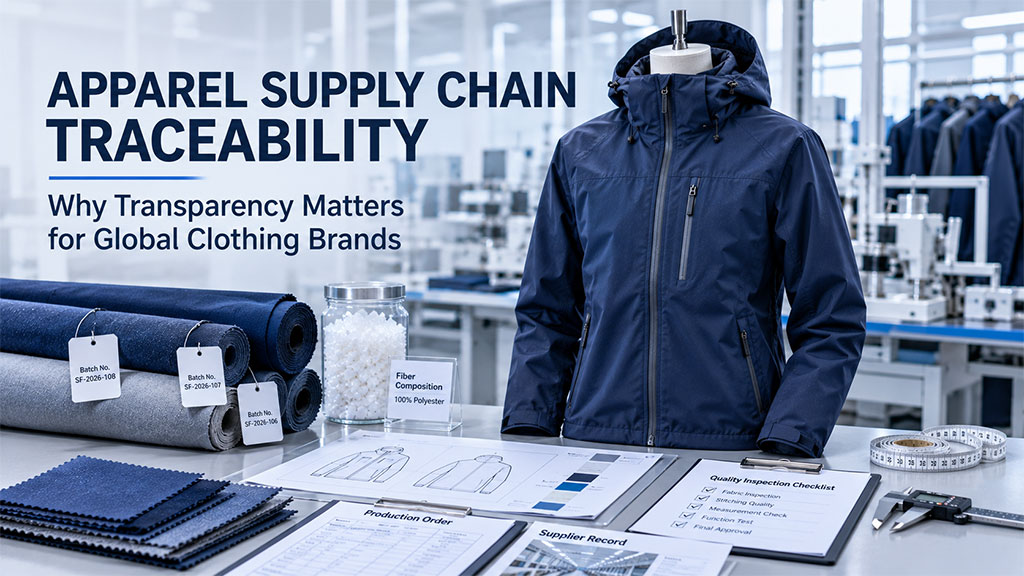
Apparel supply chain traceability helps clothing brands track materials, suppliers, manufacturing processes, and finished products throughout production. For global B2B brands, it improves supplier transparency, reduces sourcing risks, supports quality control, and provides evidence for compliance and sustainability claims. By working with reliable OEM and ODM manufacturing partners, brands can establish better material records, production accountability, and more consistent supply chain management.
Introduction
Global apparel production involves multiple suppliers, textile mills, processing facilities, garment manufacturers, and logistics providers. Without reliable documentation, brands may struggle to identify material origins, verify supplier information, or investigate production problems. Apparel supply chain traceability provides a structured way to connect information across these stages. For clothing brands working with OEM and ODM manufacturers, traceability is more than a sustainability initiative. It is a practical tool for managing sourcing risks, maintaining product consistency, and building reliable long-term manufacturing partnerships.1. What Is Traceability in Apparel Manufacturing?
Apparel supply chain traceability refers to the ability to identify and track materials, components, production activities, and finished garments throughout relevant manufacturing stages.
Key information typically includes:
- Raw Materials: Fiber composition, material origins, and fabric suppliers.
- Fabric Processing: Dyeing, printing, finishing, and treatment records.
- Garment Components: Zippers, buttons, labels, insulation, and accessories.
- Manufacturing Locations: Facilities responsible for cutting, sewing, and finishing.
- Production Records: Order references, material batches, and production dates.
- Compliance Documents: Relevant certifications, declarations, and test reports.
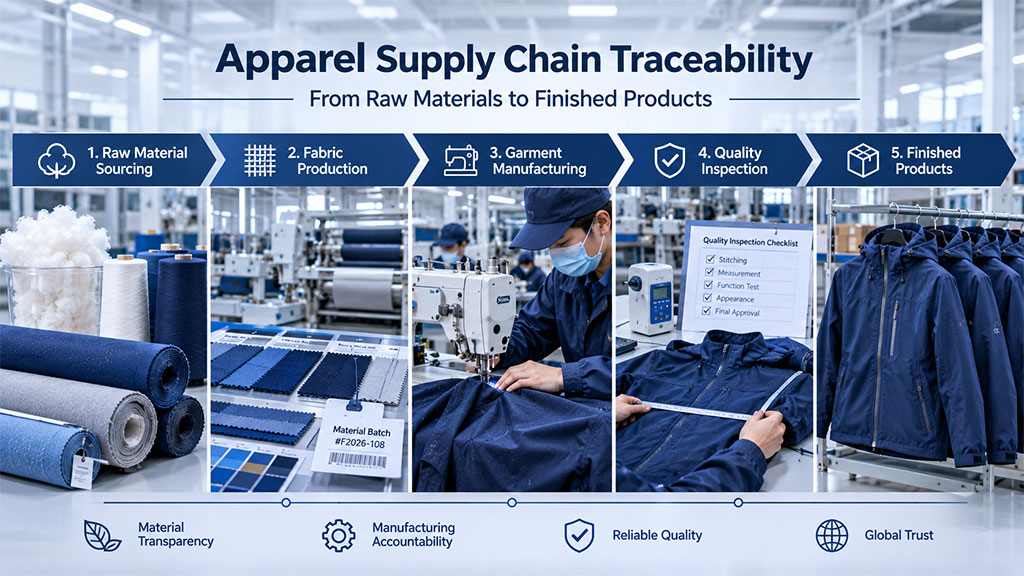
A typical apparel traceability process follows:
Raw Material Sourcing → Fabric Production → Dyeing & Finishing → Garment Manufacturing → Quality Inspection → Shipment
The required traceability level depends on product complexity, sourcing risks, customer expectations, and applicable regulations.
2. Why Is Supply Chain Traceability Important?
2.1 Improve Supplier Transparency
Brands need visibility beyond the final garment manufacturer. Understanding where fabrics, trims, and processed materials originate helps identify potential supply chain gaps.
Traceability helps buyers verify supplier information, identify processing facilities, and understand whether subcontractors are involved.
2.2 Reduce Sourcing and Production Risks
Undocumented material substitutions, inconsistent dye lots, and unapproved supplier changes can affect garment quality.
By connecting material batches with production orders, manufacturers can investigate problems more efficiently and identify their potential sources.
This is particularly important for repeat orders and large-volume apparel production.
2.3 Support Regulatory Compliance
International apparel brands may need documentation covering fiber composition, chemical testing, product labeling, recycled content, and supplier information.
Traceability connects these documents to relevant materials and finished products.
However, traceability alone does not guarantee compliance. Brands must verify document validity, product applicability, and relevant regulatory requirements before production and market entry.
2.4 Verify Sustainability Claims
Using recycled polyester or organic cotton does not automatically establish a verifiable sustainability claim.
Brands should request relevant material declarations, supplier records, transaction documentation, and applicable certification evidence.
Traceability helps connect claimed material attributes with the actual materials used in finished garments.
2.5 Improve Product Quality and Batch Consistency
Material and production records help manufacturers identify which fabric batches, trims, and production processes were used for specific orders.
For example, if two production batches of technical jackets show color differences, manufacturers can review dye lot records, fabric inspection results, and approved color references.
This supports more effective quality investigations and repeat-order consistency.
3. What Information Should Apparel Brands Track?
A practical traceability system should cover the following production stages:| Supply Chain Stage | Information to Track |
|---|---|
| Raw Materials | Fiber composition, origin, supplier details |
| Fabric Production | Mill information, specifications, batch numbers |
| Dyeing & Finishing | Processing facilities, color references, treatment records |
| Trims & Accessories | Supplier details, specifications, relevant test reports |
| Garment Manufacturing | Factory location, production orders, manufacturing dates |
| Quality Control | Inspection reports, test results, defect records |
| Finished Products | Style codes, order references, batch information |
| Shipment | Packing lists, carton references, shipping documents |
4. How OEM Manufacturers Support Supply Chain Traceability
An experienced OEM apparel manufacturing partner connects approved product specifications, material sourcing, production activities, and quality control.
A structured workflow includes five essential steps:
Step 1: Confirm Material Specifications
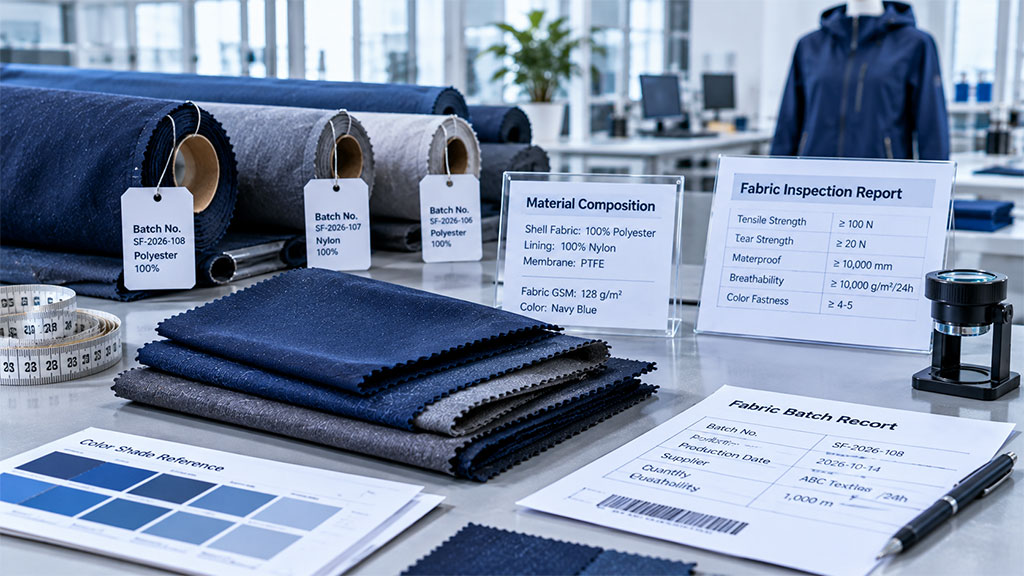
Document fabric composition, GSM, color, performance requirements, and component specifications in the tech pack and material approval records.
Step 2: Maintain Material Batch Records
Record fabric suppliers, roll identification, lot numbers, shade references, inspection results, and trim specifications.
Step 3: Document Production Activities
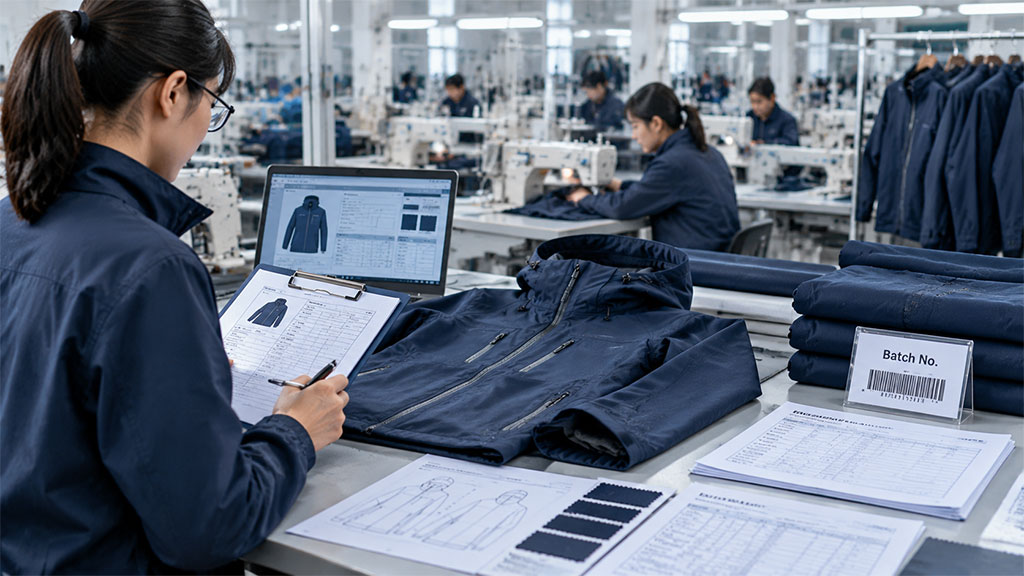
Maintain production orders, cutting and sewing dates, material allocation records, production quantities, and subcontracting information where applicable.
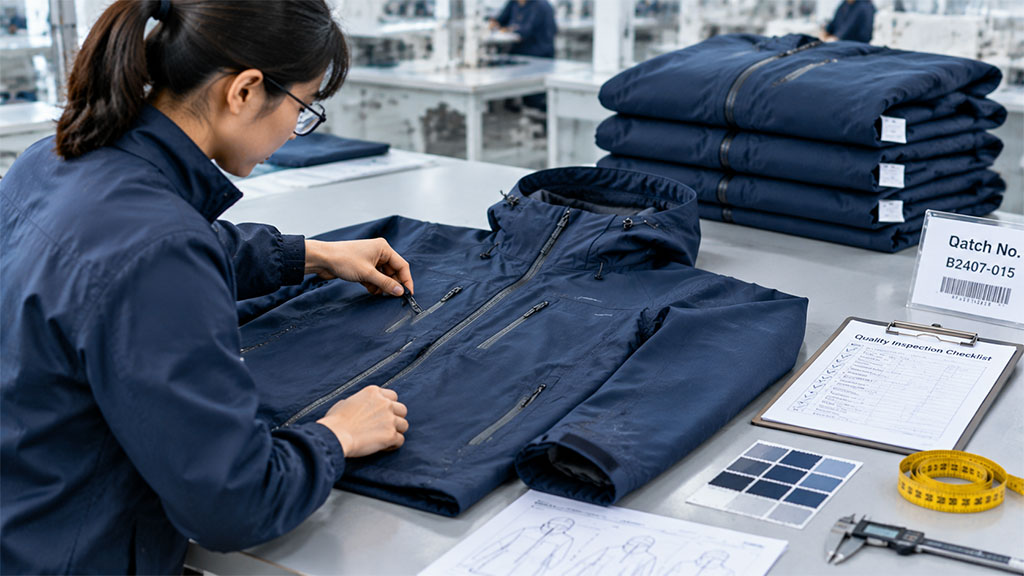
Step 4: Connect QC Records to Production Batches
Link incoming fabric inspections, inline inspections, corrective actions, and final inspection reports to relevant production orders.
Step 5: Organize Finished Product and Shipment Records
Maintain finished quantities, size breakdowns, inspection results, packing lists, carton identification, and shipment documentation.
These practices create a more complete manufacturing history and improve accountability throughout production.
5. Common Challenges in Apparel Traceability
| Challenge | Practical Solution |
|---|---|
| Fragmented supplier networks | Identify critical suppliers and processing facilities |
| Inconsistent documentation | Standardize material codes, order references, and supplier forms |
| Limited subcontractor visibility | Establish approval procedures and document external processing |
| High administrative costs | Start with critical materials and expand gradually |
6. Traceability Checklist for B2B Apparel Buyers
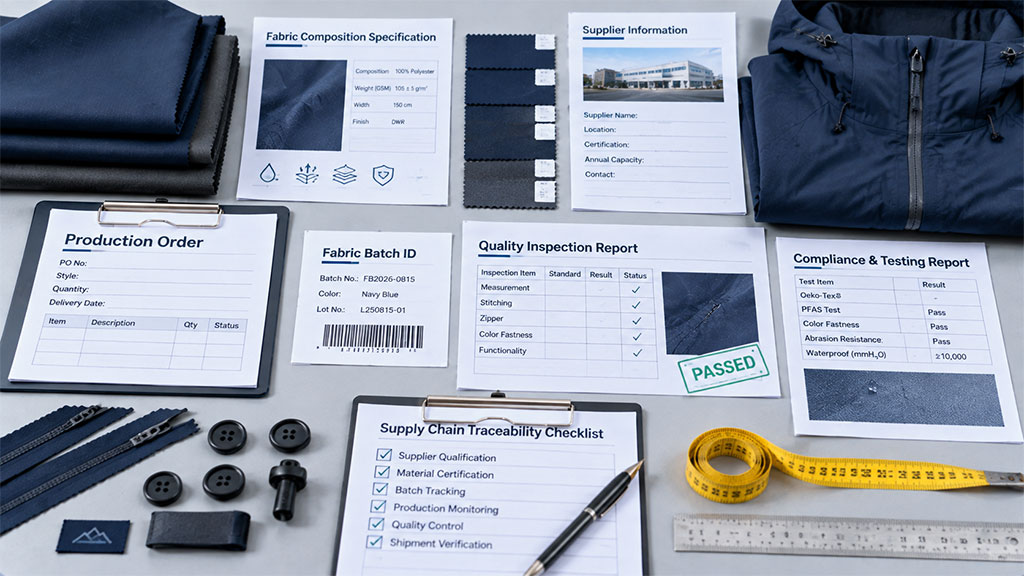
Before placing an OEM or ODM order, buyers should evaluate the manufacturer’s documentation practices.| Evaluation Area | Questions to Ask |
|---|---|
| Material Sourcing | Can you identify fabric and trim suppliers? |
| Material Verification | Are specifications and relevant test reports available? |
| Batch Identification | Can material rolls and production lots be traced? |
| Supplier Transparency | Are relevant processing facilities and subcontractors documented? |
| Production Records | Are manufacturing dates and production orders recorded? |
| Quality Control | Can inspection results be linked to specific batches? |
| Compliance | Are applicable certificates and declarations available? |
| Record Management | How are production documents stored and retrieved? |
| Repeat Orders | Can previous records support future production? |
7. The Future of Apparel Supply Chain Traceability
Traceability is gradually moving toward more connected product and supplier information systems.
Three developments deserve attention:
- Digital Product Passports (DPPs): The EU Ecodesign for Sustainable Products Regulation establishes a framework for Digital Product Passports. Product-specific requirements are developed through subsequent measures, so brands should monitor applicable obligations.
- Integrated Supplier Data: Digital sourcing platforms and production management systems can improve document organization and information sharing.
- Verifiable Sustainability Information: Brands increasingly need reliable material records and supporting evidence before making environmental claims.
Preparing accurate product and supplier documentation can help brands respond to evolving market expectations.
Conclusion: Build Traceability into Apparel Manufacturing
Apparel supply chain traceability helps global clothing brands improve supplier transparency, reduce sourcing uncertainty, maintain product consistency, and support compliance documentation.
For OEM and ODM manufacturers, accurate material records, batch identification, production documentation, and quality inspection reports are essential elements of responsible manufacturing management.
The most effective approach is to establish traceability during product development and maintain it throughout bulk production.
Working with a manufacturing partner that understands material control, production management, and quality assurance helps brands build more reliable supply chains and sustainable long-term business relationships.
Frequently Asked Questions
1. What is apparel supply chain traceability?
It is the ability to identify and track materials, suppliers, processing facilities, manufacturing activities, and finished products throughout relevant apparel production stages.
2. Why is traceability important for clothing brands?
It improves supplier transparency, reduces sourcing risks, supports quality control, and provides documentation for compliance and sustainability claims.
3. How can brands trace fabric origins?
Brands can request fiber composition records, fabric mill information, supplier details, batch numbers, transaction records, and applicable certification documents.
4. What is the difference between transparency and traceability?
Transparency refers to access to supplier and manufacturing information. Traceability refers to the ability to follow specific materials and products through supply chain stages.
5. How do OEM manufacturers support traceability?
They maintain material specifications, batch records, supplier information, production orders, inspection reports, and shipment documentation within their operational responsibilities.
6. What documents should apparel buyers request?
Relevant documents include fabric specifications, material declarations, test reports, certification records, production documentation, inspection reports, and shipment records.
7. Does traceability guarantee sustainable apparel production?
No. Traceability provides supporting evidence but does not automatically guarantee sustainable manufacturing. Brands must also evaluate materials, manufacturing practices, and environmental performance.
8. What is a Digital Product Passport in apparel?
A Digital Product Passport is a digital record designed to provide relevant product information, potentially including materials, environmental attributes, and lifecycle information. Applicable requirements depend on product-specific EU measures.
9. Do small apparel brands need supply chain traceability?
Yes. Smaller brands can begin with basic supplier information, material specifications, production locations, batch records, and quality inspection documentation.
10. How can brands improve traceability across multiple manufacturers?
Establish standardized documentation requirements, consistent material and order references, clear subcontracting policies, and regular production record reviews.
Written by the Simmerui Apparel Manufacturing Team
Simmerui specializes in OEM and ODM apparel production for global B2B brands, providing integrated support across product development, fabric sourcing, sampling, quality control, and scalable manufacturing. Our experience covers outdoor apparel, performance wear, casual clothing, and private label collections. We help brands reduce production risks and build reliable long-term manufacturing partnerships.