
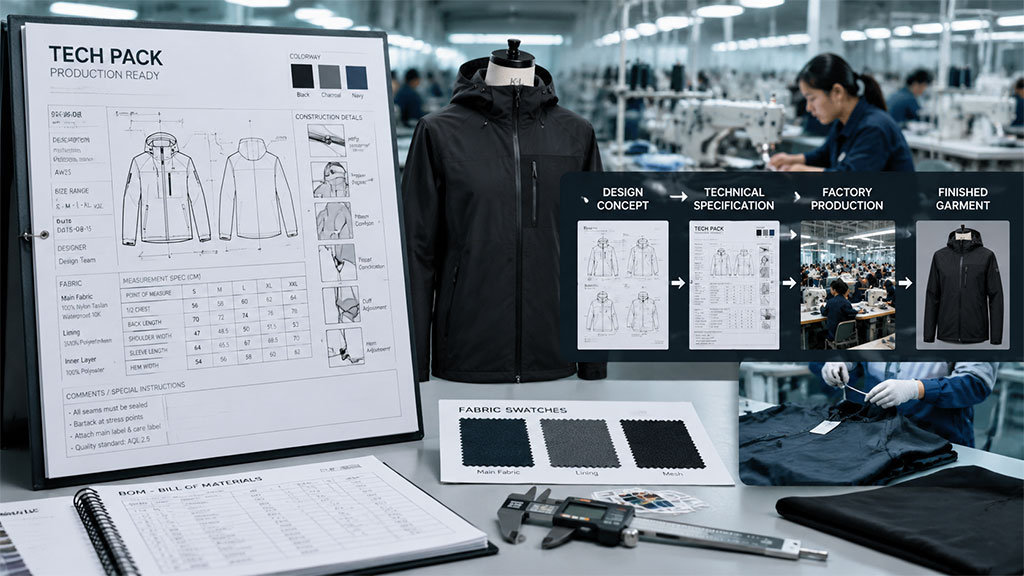
A production-ready tech pack is the foundation of successful OEM clothing manufacturing. It transforms a brand’s design concept into clear production instructions that manufacturers can follow. Before submitting a tech pack to an apparel factory, brands should carefully review technical drawings, measurements, fabric specifications, trims, construction details, artwork placement, and packaging requirements to reduce errors, improve sample accuracy, and avoid production delays.
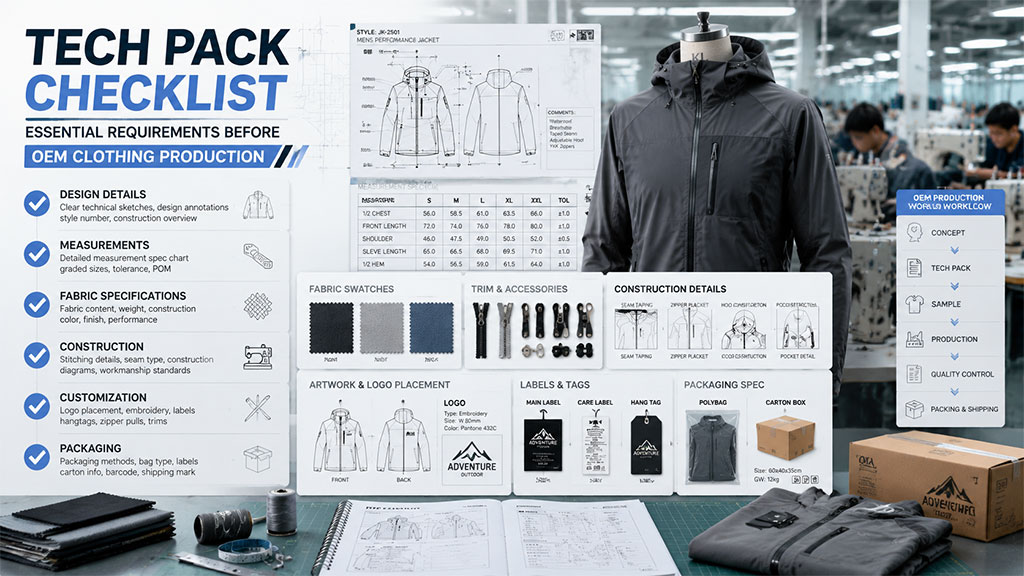
Why Should You Evaluate a Tech Pack Before Sending It to an OEM Clothing Manufacturer?
A tech pack is the communication bridge between an apparel brand and a clothing manufacturer.
For fashion brands, designers, and product developers, a tech pack converts creative ideas into measurable manufacturing instructions. It allows factories to understand product requirements before sampling and bulk production.
However, many apparel production problems occur because tech packs are incomplete, unclear, or missing important technical information.
Before sending a tech pack to an OEM clothing manufacturer, brands should confirm that the document provides enough information for the factory to:
- Understand the garment design
- Select suitable materials
- Develop accurate samples
- Calculate production costs
- Plan manufacturing processes
A professional tech pack evaluation before production helps reduce unnecessary revisions, communication issues, delays, and unexpected costs.
What Is a Production-Ready Tech Pack?
A production-ready tech pack is a detailed apparel manufacturing document that contains all technical information required for product development and production. A complete tech pack should allow manufacturers to clearly understand the garment design, materials, construction methods, customization requirements, and quality expectations. The main components usually include:| Tech Pack Element | Purpose |
|---|---|
| Technical Sketches | Show garment appearance and construction details |
| Measurement Spec Sheet | Define sizing standards and measurement requirements |
| Fabric Information | Specify material requirements |
| Trim Details | Explain zippers, buttons, labels, and accessories |
| Construction Notes | Describe sewing and assembly requirements |
| Artwork Placement | Define printing and embroidery positions |
| Packaging Instructions | Explain final product preparation |
1. Check Technical Sketches and Design Details
Technical drawings are one of the most important parts of an apparel tech pack because they provide manufacturers with a visual understanding of the product. A factory should clearly understand:- Front and back views
- Side details
- Pocket positions
- Collar and cuff construction
- Stitching details
- Functional components
- Missing views
- Unclear design references
- Incorrect proportions
- Lack of explanation for special details
2. Review Measurement Specifications Carefully
Measurement specifications directly affect sample accuracy and final garment consistency. Before sending a tech pack to an OEM manufacturer, brands should review:Size Range
Confirm:- Available sizes
- Size grading rules
- Measurement tolerance
Key Measurements
Important garment measurements may include:- Chest width
- Body length
- Sleeve length
- Shoulder width
- Waist measurement
- Hood dimensions
Tolerance Requirements
Factories need acceptable measurement ranges to maintain production consistency. Missing or inaccurate measurement information may result in:- Incorrect fitting samples
- Additional sample revisions
- Production delays
3. Verify Fabric and Material Specifications
Fabric information is one of the most important sections in OEM apparel production. Material selection directly affects:- Product performance
- Garment quality
- Manufacturing cost
- Customer experience
- Fiber composition
- Fabric weight (GSM)
- Construction type
- Color requirements
- Performance expectations
- Waterproof requirements
- Breathability expectations
- Stretch performance
- Insulation requirements
- Outer shell fabric
- Membrane structure
- Seam sealing requirements
- Water resistance standards
4. Confirm Trim and Accessory Details
Small components can create significant differences in garment appearance, function, and cost. Before production, brands should verify:- Zipper type
- Button specifications
- Drawcord details
- Labels
- Hang tags
- Packaging accessories
- Main label artwork
- Care label information
- Brand logo placement
- Packaging requirements
5. Review Construction Notes and Sewing Requirements
Construction details explain how a garment should be assembled and manufactured. For OEM clothing production, clear construction instructions help factories understand the required sewing methods, finishing standards, and functional requirements. Important construction information includes:- Seam types
- Stitch density
- Reinforcement areas
- Hem construction
- Pocket structure
- Special finishing processes
- Seam taping
- Waterproof zippers
- Reinforced stress points
- Functional pocket construction
6. Check Artwork, Printing, and Embroidery Instructions
For customized apparel and private label clothing, artwork instructions must be precise and easy for manufacturers to follow. Brands should review:- Logo size
- Placement position
- Print method
- Embroidery dimensions
- Color references
- Screen printing
- Digital printing
- Embroidery
- Heat transfer
7. Confirm Packaging and Label Requirements
Packaging details are often overlooked during apparel product development, but they directly affect product presentation and retail readiness. A complete tech pack should include:- Folding method
- Polybag requirements
- Carton information
- Barcode placement
- Shipping marks
-
- Brand labels
- Care labels
- Hang tags
- Packaging
Common Tech Pack Mistakes Before Factory Submission
Even experienced brands can encounter production problems when submitting incomplete tech packs. The following issues are among the most common mistakes.1. Missing Fabric Information
Problem:
The factory cannot accurately source suitable materials or confirm product performance requirements.Solution:
Provide complete fabric specifications, including:- Fiber composition
- Fabric weight
- Construction details
- Performance requirements
2. Incomplete Measurement Charts
Problem:
Samples may require multiple correction rounds because measurements are unclear or incomplete.Solution:
Include:- Complete measurement charts
- Size grading instructions
- Measurement tolerance requirements
3. Unclear Customization Instructions
Problem:
Logo, printing, or embroidery placement may differ from brand expectations.Solution:
Provide:- Artwork files
- Placement diagrams
- Size references
- Color specifications
4. No Production Standards
Problem:
Different manufacturers may interpret quality requirements differently.Solution:
Define:- Construction standards
- Stitching requirements
- Finishing expectations
- Quality checkpoints
How Does a Good Tech Pack Reduce Manufacturing Risks?
A well-prepared tech pack helps apparel brands improve production efficiency and reduce manufacturing risks. Reduce Sample Corrections Clear technical information allows factories to create more accurate prototypes with fewer revisions. This helps brands shorten the product development cycle and move toward bulk production faster.Improve Cost Accuracy
A complete tech pack allows manufacturers to better estimate:- Fabric usage
- Material requirements
- Labor requirements
- Production complexity
Shorten Development Time
Clear instructions reduce unnecessary communication between brands and factories. When manufacturers understand product requirements from the beginning, sampling and approval processes become more efficient.Improve Quality Consistency
A production-ready tech pack provides a clear reference throughout manufacturing. Production teams can use the document to maintain consistency in:- Materials
- Measurements
- Construction methods
- Finishing details
FAQ: Tech Pack Evaluation for OEM Clothing Manufacturing
1.What should I check before sending a tech pack to a factory?
Before sending a tech pack to an OEM clothing manufacturer, brands should review technical drawings, measurements, fabric specifications, trims, construction details, artwork placement, and packaging instructions. A complete tech pack ensures the factory has sufficient production information before sampling and manufacturing.2.Can a factory create samples without a tech pack?
Some factories can develop products using sketches, references, or product samples. However, a complete tech pack usually improves production accuracy, reduces revisions, and helps manufacturers better understand product requirements.3.What is the most important part of a clothing tech pack?
The most important sections are usually: • Measurement specifications • Fabric information • Construction details These elements directly influence product quality, sample accuracy, and manufacturing consistency.4.How detailed should a tech pack be for OEM production?
A professional OEM tech pack should contain enough technical information for manufacturers to understand:- Product design
- Materials
- Manufacturing process
- Quality expectations
5.Does a tech pack affect apparel production cost?
Yes.Fabric selection, construction complexity, trims, and manufacturing requirements included in the tech pack directly influence:
- Material costs
- Labor requirements
- Production pricing
Final Thoughts
A tech pack is more than a design document — it is the foundation of successful apparel manufacturing.
Before sending a tech pack to an OEM clothing manufacturer, brands should ensure every technical detail is complete, measurable, and easy to understand.
A well-prepared production-ready tech pack helps manufacturers create accurate samples, reduce production risks, control costs, and establish a smoother path from product concept to finished garment.
For apparel brands, startups, and product developers, investing time in tech pack evaluation before production can significantly improve communication efficiency and manufacturing results.
Written by the Simmerui Apparel Manufacturing Team
The Simmerui Apparel Manufacturing Team specializes in OEM and ODM apparel production for global B2B brands, providing integrated manufacturing solutions across product development, fabric sourcing, sampling, quality control, and scalable apparel production.
Our experience covers outdoor apparel, performance wear, casual clothing, and private label collections. We help brands reduce production risks, optimize manufacturing processes, and build reliable long-term apparel manufacturing partnerships.