

Designing bulk apparel collections requires aligning creativity with manufacturing feasibility and cost efficiency. This guide explains how B2B brands can plan concept alignment, validate supplier capabilities, select scalable fabrics, develop detailed tech packs, and optimize sampling and cost.
Following this structured workflow helps reduce production errors, maintain quality across batches, and accelerate time-to-market. Practical tips and case insights highlight common pitfalls and how early collaboration with suppliers ensures consistent, scalable, and cost-effective apparel production.Plan Bulk Designs to Avoid Production Bottlenecks
Bulk production is not simply a scaled-up version of small-batch sampling. At scale, small design decisions can create cascading effects across production, including:- Increased complexity in manufacturing workflows
- Higher risk of inconsistency across batches
- Longer coordination cycles between design and production teams

Follow a Structured Workflow to Reduce Errors (Industry Standard Practice)
A structured workflow helps reduce friction between design, sourcing, and production teams:
1.Align Design with Brand Positioning and Market Segment
Ensure design direction aligns with:- Brand positioning
- Target price range
- Intended market segment
2.Validate Supplier Capabilities Early to Ensure Scalability
Before finalizing designs, brands typically validate:- Fabric availability at scale
- Production capability of trims and construction
- Minimum order requirements
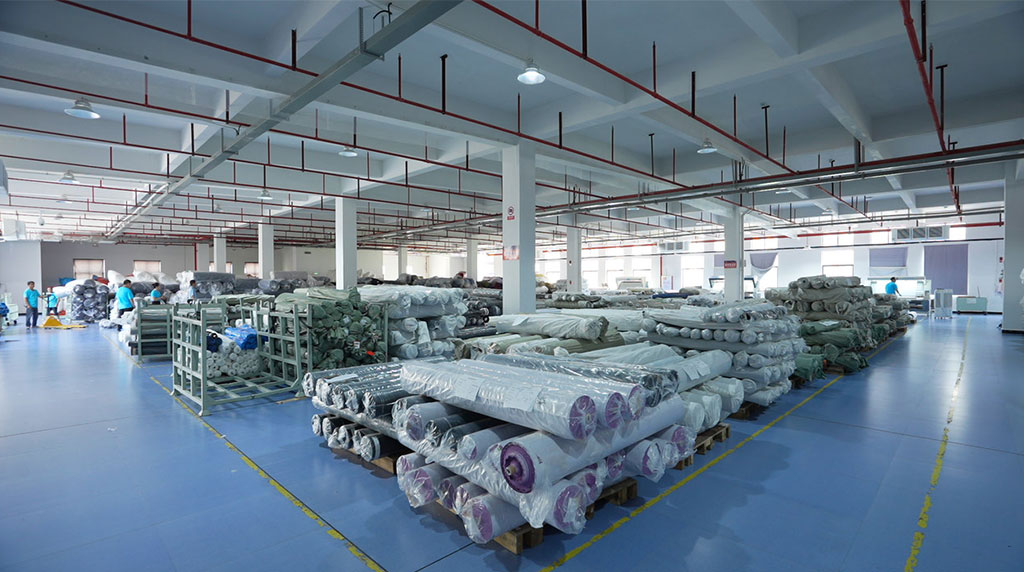
3.Select Scalable Fabrics to Maintain Production Stability
Fabric selection plays a critical role in production stability. Key considerations include:- Long-term availability from mills
- Color consistency across production runs
- Suitability for intended garment category
- Cost efficiency at scale
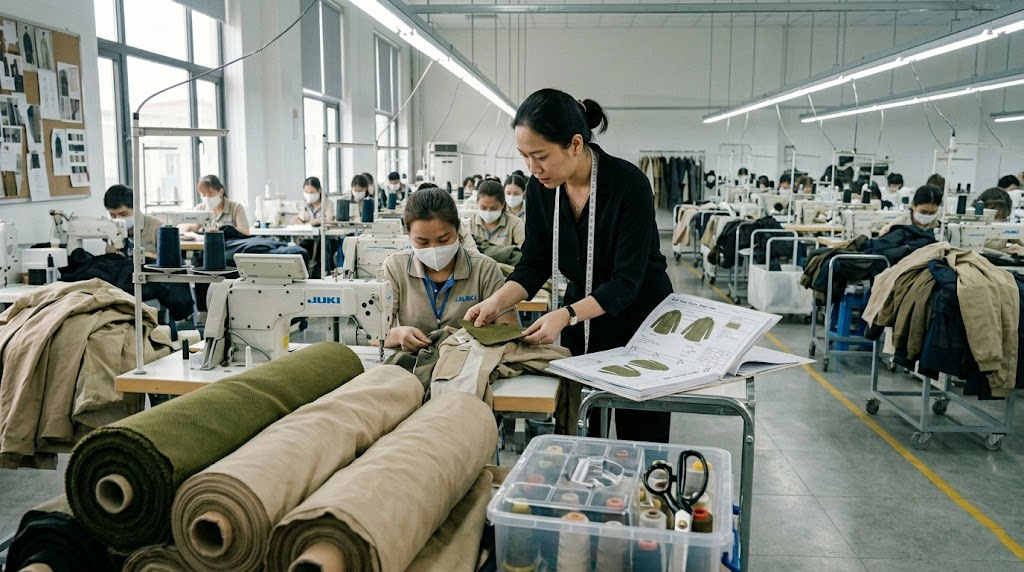
4.Create Detailed Tech Packs to Minimize Production Errors
A detailed tech pack is essential for reducing production errors. A complete tech pack typically includes:- Measurement specifications and grading rules
- Stitching and construction details
- Fabric and trim specifications
- Color references (e.g., Pantone standards)
- Labeling and packaging instructions
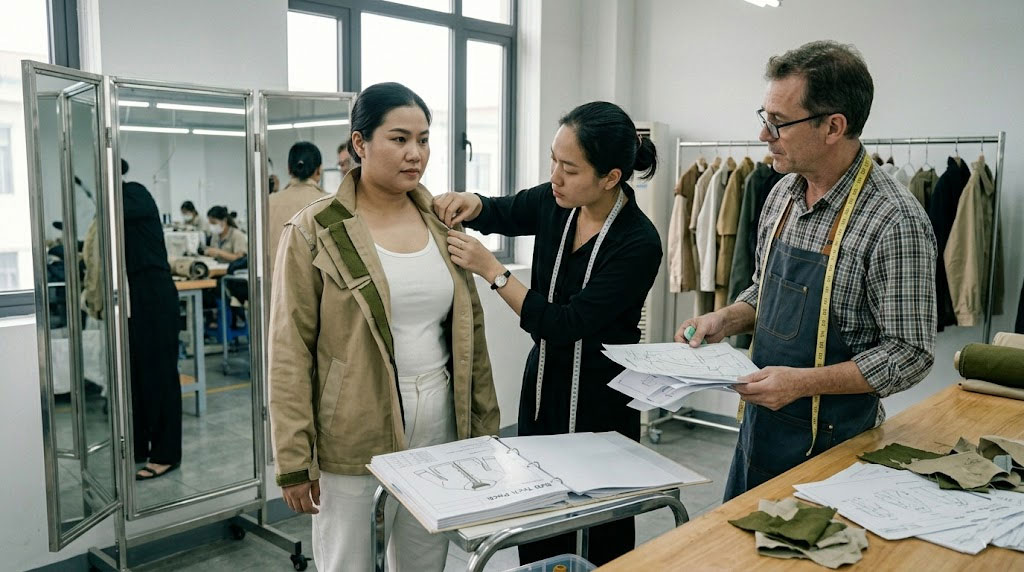
5.Validate Fit and Construction Before Bulk Production
The sampling process generally follows:- Prototype sample
- Fit sample
- Pre-production sample (PPS) Each stage is used to refine construction, fit, and production feasibility.
6.Optimize Materials and Construction Without Sacrificing Quality
At this stage, brands and factories work together to balance:- Material selection
- Construction methods
- Production efficiency
- Target price positioning

7.Align QC, Packaging, and Production Timeline Before Mass Production
Before bulk production begins, teams align on:- Quality control standards
- Packaging requirements
- Production timeline and capacity planning
Stage | Action | Output | B2B Value |
Concept Alignment | Define brand positioning & target price | Aligned design brief | Reduces redesigns & miscommunication |
Supplier Review | Confirm MOQ, capacity, fabric availability | Supplier feasibility report | Avoids sourcing bottlenecks |
Tech Pack | Specify measurements, trims, colors | Complete tech pack | Minimizes sampling revisions |
Sampling | Proto → Fit → PPS | Sample approvals | Reduces errors, ensures fit |
Cost Optimization | Align material + construction | Cost-effective BOM | Maintains margins while scaling |
Pre-Production | QC plan, packaging, timeline | Production readiness | Prevents delays & quality issues |
Key Principles for Designing Bulk Apparel Collections
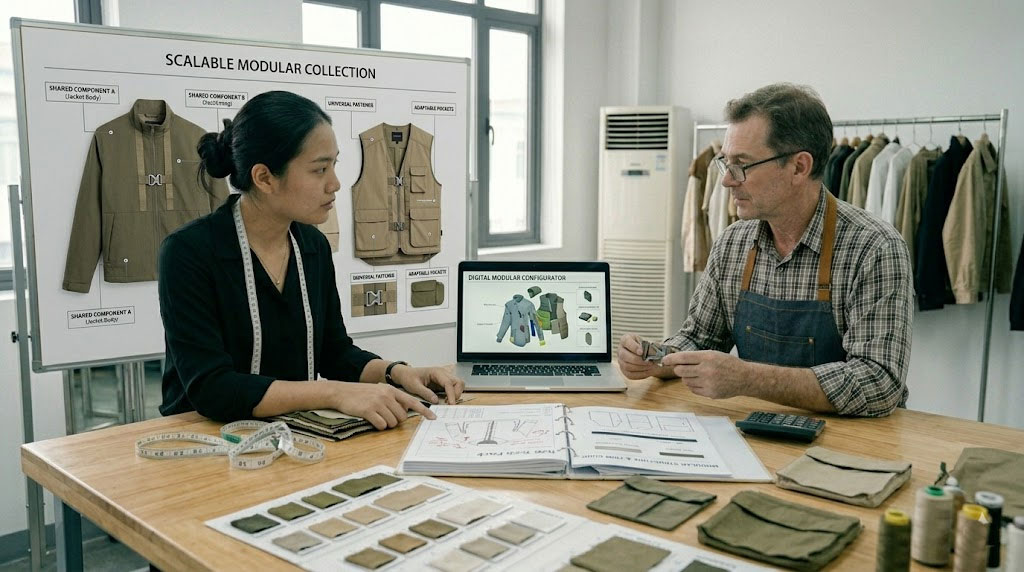
1. Keep Designs Scalable and Production-Friendly
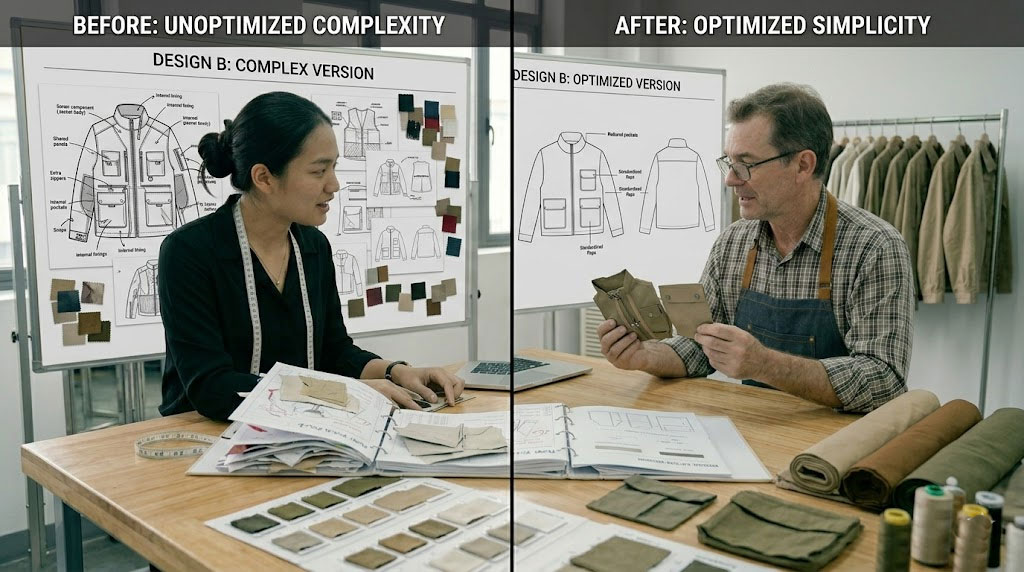
In bulk manufacturing, overly complex designs often create bottlenecks in production. Common industry practices include:- Limiting unnecessary design elements
- Standardizing trims and components across styles
- Avoiding excessive variation in hardware or construction methods
- Designing modular elements that can be reused across SKUs
2. Fabric Selection Is a Strategic Decision
Fabric choice affects not only design but also production stability and delivery timelines. In large-scale production, brands typically prioritize:- Reliable mill supply capacity
- Consistent dye performance across batches
- Durability during transportation and handling
- Balanced cost-to-performance ratio
3. Build Clear and Complete Tech Packs
Incomplete or unclear documentation is one of the most common causes of production delays. A well-prepared tech pack helps:- Reduce sampling revisions
- Improve communication between teams
- Ensure consistent interpretation of design intent
4. Cost Optimization Should Not Compromise Product Integrity
In bulk production, cost efficiency is important—but it must be balanced with product quality and brand positioning. Common optimization approaches include:- Material substitution within acceptable quality ranges
- Reducing unnecessary construction complexity
- Aligning trims across multiple styles to simplify sourcing
- Improving pattern efficiency to reduce waste
5. Consider Logistics Early in the Design Process
Logistics considerations often influence design decisions more than expected. For example:- Heavier garments may increase shipping complexity
- Delicate materials may require specialized packaging
- Complex folding or finishing processes can slow packing operations

Common Mistakes in Bulk Apparel Production
Even experienced brands may encounter challenges when scaling production:- Designing without considering manufacturing limitations
- Late-stage changes in materials or construction
- Inconsistent sizing due to insufficient grading control
- Underestimating production and sourcing timelines
- Lack of early supplier involvement
Case Insight: Design Simplification Impact
In one production project involving a streetwear collection, simplifying construction details and standardizing trims across multiple styles helped:- Improve production consistency
- Reduce coordination complexity across suppliers
- Achieve more stable cost control across the collection
Integrating Trends Without Over complicating Production
Trend-driven design is important for market relevance, but it should not compromise production efficiency. A common industry approach is:- Keeping core silhouettes stable
- Introducing trends through color updates or minor design elements
- Avoiding structural changes that increase production complexity
FAQ: Bulk Apparel Manufacturing
1.How many styles are typically included in a bulk collection?
Most brands focus on a balanced range of core styles that supports production efficiency and inventory control.2.When should suppliers be involved for optimal workflow?
At the early development stage (concept or tech pack phase). Early involvement helps identify cost risks, material availability, and production feasibility before sampling.3.How to integrate cost optimization without compromising quality?
Optimize fabric sourcing, simplify construction, and consolidate trims, while maintaining key performance specs. Focus on value engineering—not just cutting costs—to preserve product integrity.4.Should every design be fully customized?
Not necessarily. Many brands use semi-customizable frameworks to balance flexibility and efficiency.5.When should suppliers be involved?
Ideally from the early design stage to ensure feasibility and reduce production risk.6.How to balance trend-driven design with scalable production?
Focus on trend elements (colors, trims, silhouettes) rather than complex constructions. Use proven base patterns and modular designs to keep production efficient while staying market-relevant.7.What’s the ideal number of styles per bulk collection?
Typically 6–12 core styles per collection. This allows variety without overextending production capacity, sampling costs, or inventory risk.8.How to ensure sizing consistency across multiple factories?
Provide unified tech packs with detailed grading rules, enforce standardized measurement tolerances, and require pre-production (PPS) samples approval from each factory.Start Your Bulk Apparel Project
Designing for bulk production requires aligning creativity with manufacturing reality. With the right planning process, brands can improve efficiency, reduce friction, and achieve more stable production outcomes.
Looking to develop a bulk apparel collection?
- Request production feasibility consultation
- Get fabric and material recommendations
- Receive a tailored quotation for your collection
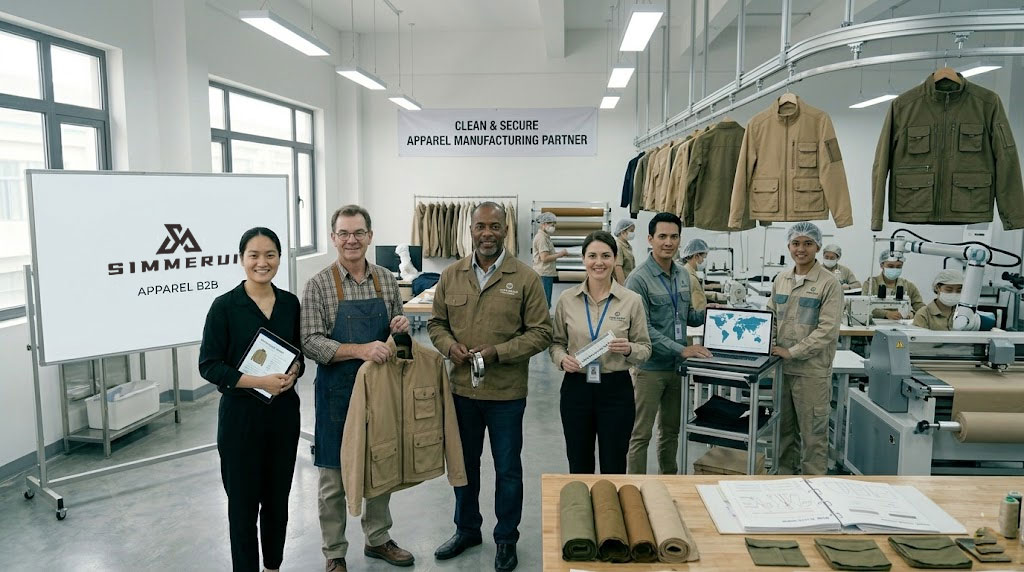
Our production consultants guide B2B brands through bulk apparel design: validating suppliers, aligning fabric and trim sourcing, preparing tech packs, conducting multi-stage sampling, and finalizing pre-production QC. This structured workflow ensures consistency, reduces production errors, maintains cost control, and enables scalable operations across multiple international markets.
👉 Request a feasibility consultation or a tailored quotation to start your bulk apparel project.
Written by Simmerui Senior Apparel Production Consultants. We support B2B brands with scalable bulk apparel design, tech pack development, supplier validation, and production workflow optimization. Our process ensures consistent quality, reduced production errors, and cost-effective scaling for global apparel operations.