

A production-ready tech pack is the blueprint that allows OEM clothing manufacturers to quote accurately, sample faster, and reduce production errors. This checklist covers the core elements brands should prepare—flat sketches, measurement spec sheets with grading and tolerances, fabric and trim specifications, construction notes, artwork placement, and packaging requirements.
You’ll also learn common tech pack mistakes that delay sampling, what suppliers need for accurate costing, and how startups can simplify documentation while still meeting OEM production standards.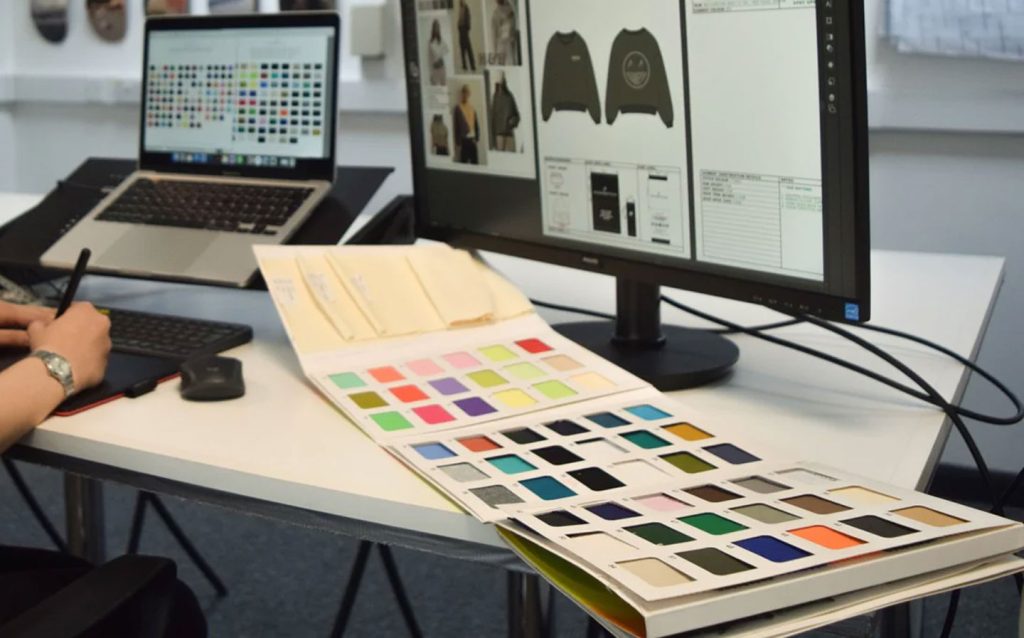
Use Tech Packs to Cut Sampling Delays and Errors
A tech pack (technical package) is a detailed document used to communicate garment specifications to clothing manufacturers. It serves as the blueprint for:- Product development
- Pattern making
- Sampling
- Material sourcing
- Cost estimation
- Bulk production
- Quality control
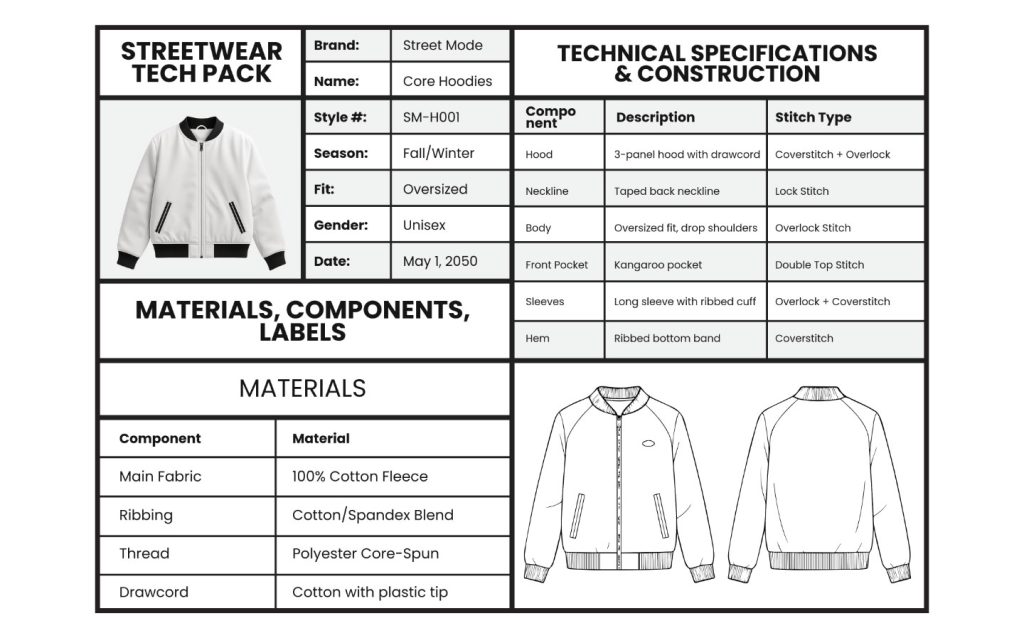
Reduce Sampling Revisions with Standardized Documentation
In B2B apparel manufacturing, brands and factories often work across different countries, languages, and production systems. A complete tech pack creates a standardized workflow that improves communication and production efficiency.Key Benefits of a Professional Tech Pack
Faster Sampling Process
Factories can begin sourcing fabrics, developing patterns, and arranging sampling immediately when specifications are complete.More Accurate Costing
Clear fabric details, trims, and construction requirements help suppliers provide realistic quotations without excessive assumptions.Reduced Production Errors
Detailed documentation minimizes mistakes involving sizing, stitching, materials, and logo placement.Easier Quality Control
QC teams can compare production garments directly against approved specifications.Better Long-Term Manufacturing Collaboration
Organized documentation improves repeat production consistency and simplifies future collection development.
Tech Pack Checklist: The 7 Items OEM Factories Need Before Starting OEM Production
Before starting a custom clothing order, brands should prepare the following essential information:| Tech Pack Element | Why It Matters | What to Include | File Format | Common Mistakes |
|---|---|---|---|---|
| Flat Sketches | Defines garment structure and visual design direction | Front/back sketches, seam details, pocket placement, stitching references, color variations | AI, PDF, PNG | Missing back view, unclear stitching details, inconsistent proportions |
| Measurement Spec Sheet | Maintains sizing consistency across sampling and bulk production | POM (Points of Measure), tolerance chart, grading rules, size chart | Excel, PDF | Missing tolerances, unclear measuring method, inconsistent grading increments |
| Fabric Information | Ensures accurate sourcing, costing, and performance expectations | Fabric composition, GSM/weight, stretch level, finish, supplier references, performance requirements | PDF, Excel | Incomplete composition details, no fabric testing standards, unclear color references |
| Trim Details | Clarifies accessory sourcing and compatibility | Zippers, buttons, labels, drawcords, snaps, thread specifications, trim colors | PDF, AI, Excel | Missing trim sizes, undefined material type, inconsistent color matching |
| Construction Notes | Standardizes sewing methods and production quality | Seam types, stitch density, reinforcement areas, finishing methods, QC requirements | Overly vague sewing instructions, missing seam references, no QC checkpoints | |
| Artwork Placement | Improves logo consistency and branding accuracy | Logo size, print method, embroidery details, placement measurements, color codes | AI, EPS, PDF | Low-resolution artwork, missing Pantone colors, unclear placement dimensions |
| Packaging Instructions | Supports logistics efficiency and retail compliance | Folding method, polybag specs, carton size, barcode labels, shipping marks | PDF, Excel | Missing carton requirements, unclear labeling instructions, no barcode specifications |
Build a Production-Ready Tech Pack Step by Step
1.Use Clear Technical Sketches to Reduce Miscommunication
Technical sketches provide the visual foundation of garment development. A professional flat sketch should include:- Front and back views
- Stitching details
- Pocket placement
- Zippers and closures
- Functional components
- Construction lines
- Waterproof seam locations
- Ventilation zones
- Reinforcement panels
- Adjustable components
- Functional storage pockets
2. Define Accurate Measurements to Improve Fit Consistency
The spec sheet defines garment sizing standards and fit requirements. It usually includes:- Points of Measurement (POM)
- Grading rules
- Tolerances
- Measurement methods
- Chest width
- Body length
- Sleeve length
- Shoulder width
- Bottom opening
3.Provide Detailed Fabric Specifications for Accurate Sourcing.
Fabric selection directly impacts product performance, production feasibility, and overall pricing. Brands should specify:- Fabric composition
- Fabric weight (GSM)
- Stretch characteristics
- Waterproof performance
- Breathability ratings
- Surface treatments
- Color references
- Fabric swatches
- Pantone color codes
- Supplier references
- Performance test requirements
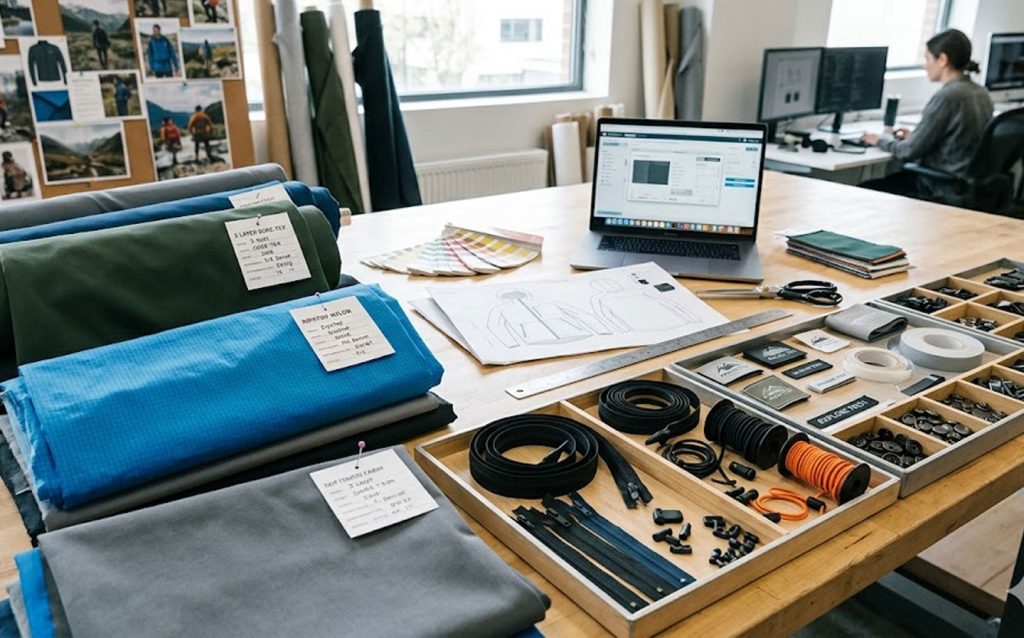
4. Clarify Trim Details Early to Avoid Production Mistakes
Trims significantly influence both product quality and brand presentation. Common trim details include:- Zippers
- Buttons
- Velcro
- Drawcords
- Elastic components
- Labels
- Hangtags
- Packaging materials
- Material
- Size
- Color
- Placement
- Branding requirements
5. Standardize Construction Methods for Consistent Bulk Production
Construction notes explain how the garment should be assembled during production. This section may include:- Seam types
- Stitch density
- Binding methods
- Reinforcement areas
- Lining construction
- Hem finishing
- Seam sealing
- Waterproof taping
- Multi-layer bonding
- Windproof construction
- Insulation placement
6. Use Precise Artwork Placement to Improve Branding Accuracy
For garments involving embroidery, printing, or branding, the tech pack should define:- Logo dimensions
- Placement measurements
- Printing techniques
- Embroidery specifications
- Color references
7. Define Packaging Requirements Before Mass Production
Packaging instructions improve retail presentation and shipping organization. Packaging details may include:- Folding methods
- Polybag specifications
- Carton dimensions
- Barcode placement
- Size stickers
- Shipping marks
Avoid Tech Pack Mistakes That Increase Cost and Lead Time
Even experienced clothing brands sometimes overlook important development details.Incomplete Measurement Charts
Missing grading information can create fit inconsistencies between sizes.Vague Fabric Descriptions
Terms like “waterproof fabric” or “soft shell material” are too broad without technical specifications.Missing Construction Notes
Factories may apply different sewing methods if instructions are unclear.Frequent Design Changes During Sampling
Constant revisions slow timelines and increase development costs.Low-Resolution Artwork Files
Poor-quality logo files negatively affect embroidery and printing precision.How Startup Clothing Brands Can Simplify Tech Pack Development
Many startup brands assume tech packs must be extremely complicated from the beginning. In reality, clear communication is more important than excessive complexity. Small brands can begin with:- Basic flat sketches
- Spreadsheet spec sheets
- Reference garments
- Organized material lists
- CLO 3D
- Adobe Illustrator
- PLM systems
- Digital sampling platforms
How Better Documentation Improves Long-Term Factory Collaboration
Strong factory relationships are built on consistency and transparency. Factories generally prioritize clients who provide organized documentation because:- Development becomes faster
- Sampling revisions decrease
- Production risks are lower
- Communication becomes more efficient

Ready to Start Your Apparel Development Project?
A professional tech pack helps reduce sampling errors, improve production efficiency, and streamline communication between brands and manufacturers. Whether you are developing:- Outdoor apparel
- Activewear
- Workwear
- Streetwear
- Fashion basics
- OEM & ODM apparel manufacturing
- Technical outerwear development
- Fabric sourcing assistance
- Sampling support
- Low MOQ production solutions
Based on Technical Apparel Development and OEM Production Practices
This article was developed using practical workflows commonly applied in custom outerwear manufacturing, OEM apparel sampling, and bulk garment production. The content reflects real production considerations involved in apparel development, including technical sketch preparation, fabric sourcing coordination, grading specifications, trim management, sample revisions, and production communication between brands and factories. The goal is to help clothing brands improve development efficiency, reduce sampling risks, and build smoother long-term manufacturing partnerships.Apparel Tech Pack FAQ for Clothing Brands
1.What is included in a professional apparel tech pack?
A professional tech pack usually includes flat sketches, measurement charts, fabric details, trim specifications, construction notes, artwork placement, and packaging instructions.2.Can manufacturers help create a tech pack?
Yes. Many OEM clothing manufacturers assist startups and emerging brands with tech pack development and production planning.3.How detailed should a clothing tech pack be?
The complexity depends on the garment type, but all essential production information should be clearly documented to avoid assumptions during sampling and manufacturing.4.Do tech packs reduce production costs?
Yes. Clear tech packs reduce sampling revisions, minimize production mistakes, and improve costing accuracy.5.What software is commonly used for tech pack creation?
Popular tools include Adobe Illustrator, CLO 3D, Excel-based templates, and PLM systems.6.What information is required for an accurate OEM quotation?
Brands should provide detailed tech packs including garment sketches, measurements, fabric composition, trims, logo application methods, colorways, size range, target quantity, packaging requirements, and target market standards. Clear specifications help factories calculate accurate material, labor, and production costs.7.What’s the difference between proto sample, fit sample, and PPS?
A proto sample verifies the initial design concept and construction. A fit sample focuses on sizing, measurements, and garment fit adjustments. A PPS (Pre-Production Sample) is the final approved version used as the production standard before bulk manufacturing begins.8.How should brands set tolerances and grading rules to reduce returns?
Brands should define realistic measurement tolerances, standardized grading increments across all sizes, and clear fit expectations in the tech pack. Consistent grading rules and QC standards help minimize sizing inconsistencies, improve bulk production accuracy, and reduce customer returns.Written by the Simmerui Apparel Development Team. This guide is based on workflows commonly used in OEM sampling and bulk production, including technical sketch preparation, grading and tolerance control, fabric and trim sourcing coordination, construction specification, sample approvals (proto/fit/PPS), and production communication between brands and factories. The goal is to help brands reduce sampling risk, improve costing accuracy, and build repeatable manufacturing systems