
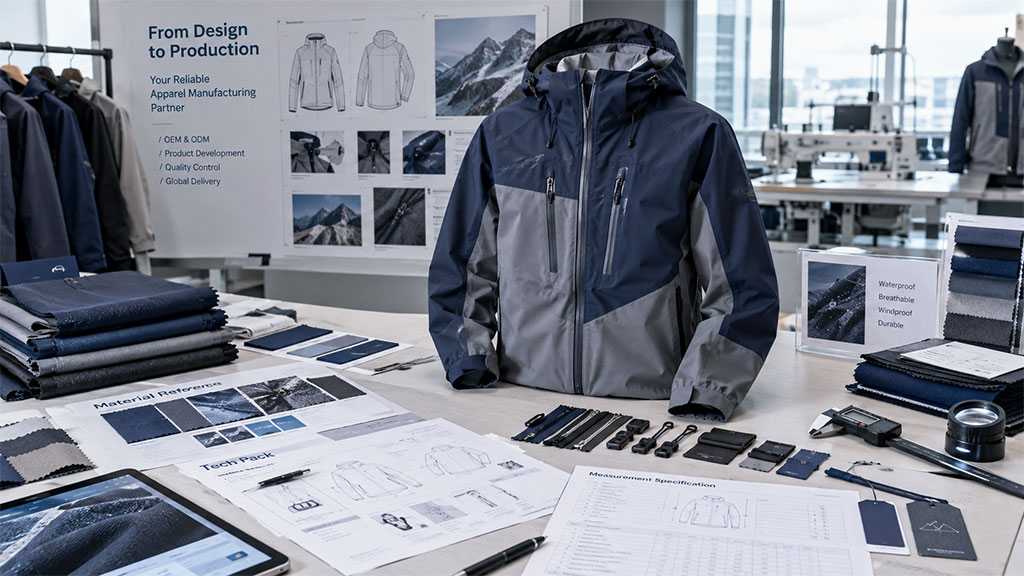
Choosing the right apparel OEM manufacturer requires more than comparing prices or reviewing product samples. Global brands should assess manufacturing capabilities, product development expertise, quality control systems, material sourcing, compliance documentation, minimum order quantities, and delivery reliability. A structured evaluation process helps brands identify potential risks before bulk production, compare suppliers objectively, and establish clear expectations. For outdoor apparel, performance wear, and private label collections, the right manufacturing partner should deliver consistent quality, transparent communication, and scalable production.
1. Evaluate Manufacturing Capabilities and Product Expertise
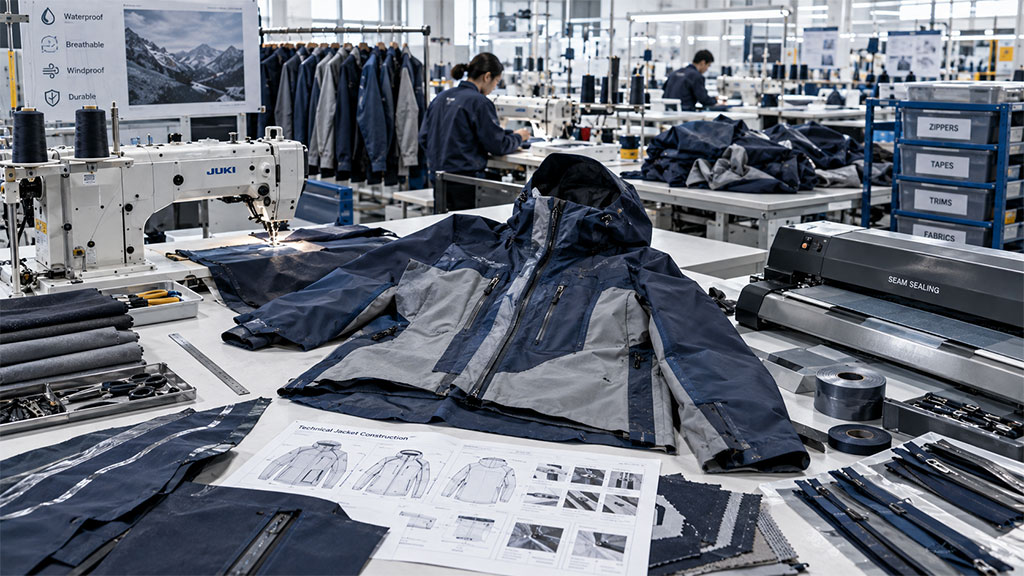
Not every clothing manufacturer has the equipment and technical expertise required for every garment category. A factory experienced in basic T-shirts may not be suitable for waterproof jackets, technical outerwear, or performance apparel. When evaluating an apparel OEM manufacturer, review its experience with your specific product type, fabric construction, and production requirements. Key factors include:- Product specialization: Experience in outdoor apparel, hoodies, jackets, sportswear, or workwear.
- Technical capabilities: Pattern development, garment construction, seam sealing, and specialized finishing.
- Production capacity: The ability to meet current order volumes and seasonal demand.
- Scalability: Capacity to support repeat orders and future growth without compromising quality.
2. Assess Product Development and Sampling
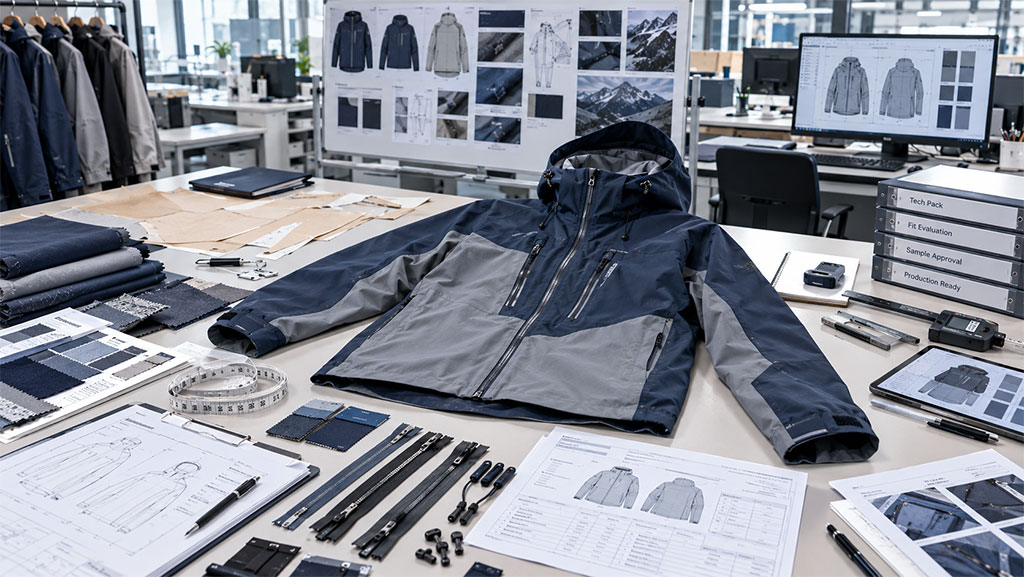
A reliable OEM partner must translate your designs and technical specifications into production-ready garments. Review how the manufacturer handles tech packs, fabric selection, measurements, prototypes, fit adjustments, and sample approvals. A typical development process includes:- Reviewing the tech pack and product requirements.
- Confirming fabrics, trims, measurements, and construction details.
- Developing patterns and producing the first sample.
- Evaluating fit, workmanship, and technical performance.
- Revising samples and documenting changes.
- Approving the pre-production sample before bulk manufacturing.
3. Examine Quality Control Systems
A good sample does not guarantee consistent bulk production. Brands need evidence that the manufacturer can maintain agreed specifications throughout manufacturing.
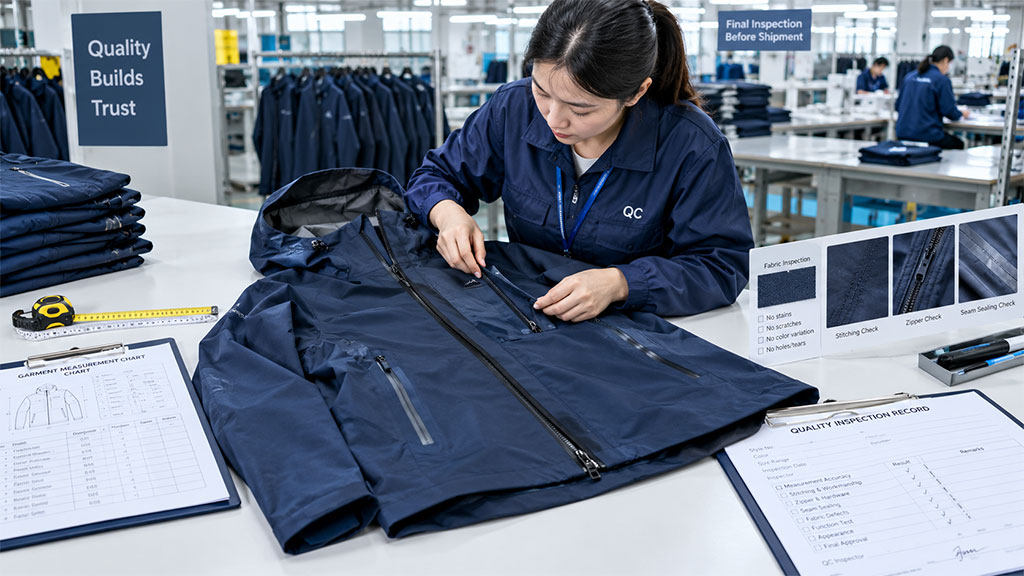
Evaluate quality control at four key stages:
- Incoming inspection: Fabric defects, color consistency, material specifications, and trim quality.
- Inline inspection: Sewing workmanship, construction accuracy, and early defect detection.
- Measurement inspection: Garment dimensions and tolerances against approved specifications.
- Final inspection: Appearance, labeling, packaging, workmanship, and order requirements.
Ask whether the manufacturer uses Acceptance Quality Limit (AQL) sampling when applicable. Confirm the inspection standard, defect classifications, sampling plan, and acceptance criteria before production.
Also review inspection records, corrective action procedures, and how recurring defects are prevented.
A dependable OEM partner should make quality measurable, documented, and repeatable—not rely solely on final inspection.
4. Verify Material Sourcing and Compliance
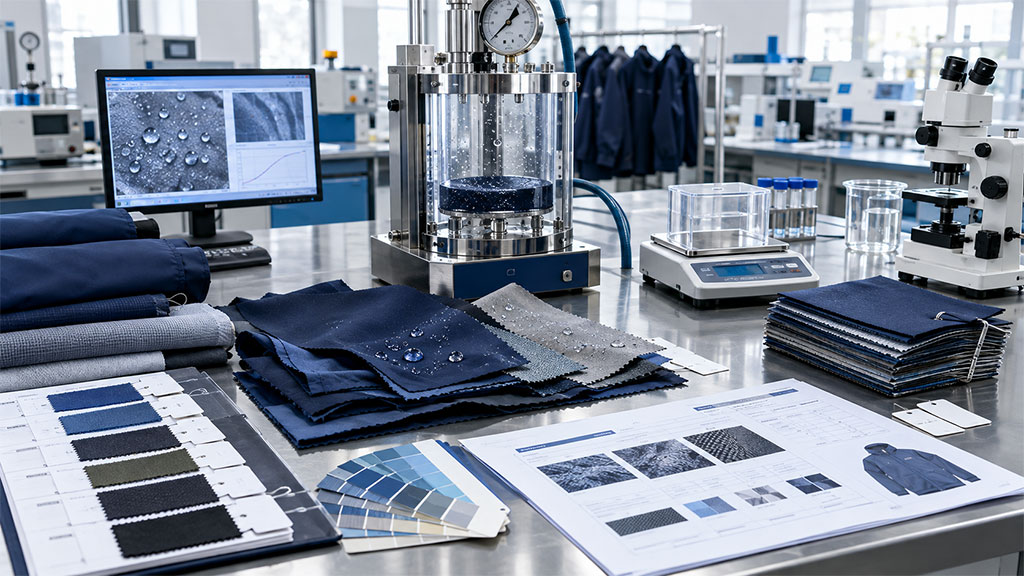
Material selection affects garment performance, durability, cost, and regulatory compliance. An experienced manufacturer should explain available materials and identify the documentation needed for your target market.
Depending on the product, evaluate:
- Fiber composition, fabric weight, and construction.
- Colorfastness, tensile strength, tear strength, and abrasion resistance.
- Waterproofness and moisture-vapor transmission for technical garments.
- Chemical restrictions and applicable market requirements.
- Supporting documentation for recycled or certified materials.
- Traceability of fabrics, trims, labels, and other components.
For brands selling in the United States or European Union, compliance requirements depend on product type, intended use, materials, and applicable legislation.
Request relevant test reports, declarations, and certification details. Verify that the documents apply to the actual company, material, product, or claim.
Never assume that a general compliance statement covers every product. Confirm testing and documentation requirements before bulk production.
5. Compare MOQ, Pricing, and Total Sourcing Costs
The lowest quotation does not necessarily offer the best commercial value. Differences in materials, customization, inspection, and delivery arrangements can affect the final cost.
Request comparable quotations based on the same specifications and review:
- Fabric and trim costs.
- Sampling and development fees.
- Minimum order quantity (MOQ).
- Printing, embroidery, labels, and special finishes.
- Testing and inspection charges.
- Packaging, freight, and other delivery-related costs.
Clarify whether MOQ applies per style, color, fabric, or size combination. Also distinguish fabric minimums from production minimums.
A manufacturer may offer lower unit prices for larger orders, but excess inventory can increase financial risk.
Evaluate total sourcing costs against your expected sales, quality requirements, delivery schedule, and budget. The objective is to achieve sustainable product quality and commercial performance—not simply the lowest unit price.
6. Check Production Capacity and Delivery Reliability
Manufacturing capacity alone does not guarantee on-time delivery. Material procurement, production planning, workload, and subcontractor coordination can all affect deadlines. Ask the supplier to provide a realistic production schedule covering:- Fabric and trim procurement.
- Sample approval and material confirmation.
- Cutting, sewing, and finishing.
- Quality inspection and corrective actions.
- Packaging and shipment preparation.
7. Evaluate Communication and Long-Term Partnership Potential
Clear communication is essential when brands and manufacturers operate across different countries and time zones.
Look for a designated contact, written quotations, documented specifications, version-controlled tech packs, and formal sample approval procedures.
Confirm that changes to fabric, measurements, trims, or construction require documented approval before implementation.
Poor change management can cause bulk garments to differ from approved samples, even when the original development process was successful.
Also assess whether the manufacturer can support future product launches, repeat orders, and increased production volumes. A strong OEM partner should contribute to a repeatable manufacturing process rather than treat every order as an isolated transaction.
8. Use a Structured Manufacturer Evaluation Checklist
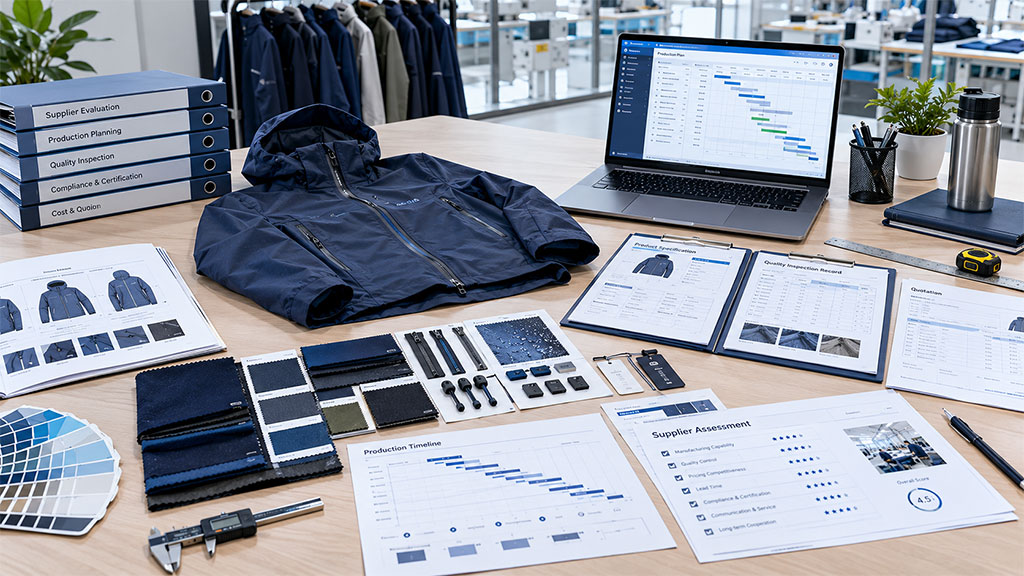
To compare potential suppliers objectively, score each manufacturer from 1 to 5 using available evidence.
| Evaluation Criterion | Suggested Weight |
|---|---|
| Manufacturing capabilities | 20% |
| Quality control | 20% |
| Product development | 15% |
| Compliance and traceability | 15% |
| Pricing and MOQ flexibility | 10% |
| Production and delivery | 10% |
| Communication and documentation | 10% |
| Total | 100% |
Calculate the weighted score using:
Weighted Score = (Supplier Score ÷ 5) × Criterion Weight
For example, a quality control score of 4 out of 5 contributes 16 points out of 20.
Use the results to compare suppliers, but do not let a high overall score override mandatory safety, compliance, or quality requirements.
Before committing to bulk production, investigate warning signs such as unexplained price changes, unverifiable certifications, undocumented sample revisions, unrealistic lead times, and unclear manufacturing capabilities.
Conclusion
Knowing how to evaluate an apparel OEM manufacturer helps global brands reduce sourcing risks and make better long-term decisions.
Assess technical expertise, sampling, quality control, material compliance, pricing, production capacity, and communication together. Verify important claims through samples, documentation, and appropriate factory assessments before placing a bulk order.
At Simmerui, we support global B2B brands with OEM and ODM apparel manufacturing, product development, fabric sourcing, sampling, and quality management. Our goal is to help brands move from product requirements to consistent, production-ready garments through a reliable manufacturing partnership.
Frequently Asked Questions
1. How do I choose the right apparel OEM manufacturer?
Define your product specifications, order volume, target market, quality standards, and delivery requirements. Compare manufacturers using documented evidence of their capabilities, sampling, quality control, and reliability.2. What should I check before partnering with a clothing manufacturer?
Review relevant product experience, sample quality, production capacity, compliance documentation, MOQ, pricing, inspection procedures, and communication practices.3. What is the difference between OEM and ODM apparel manufacturing?
OEM manufacturers generally produce garments according to the buyer’s designs and specifications. ODM manufacturers typically offer existing designs or product development solutions that buyers can adapt and brand.4. What is a typical apparel OEM MOQ?
There is no universal MOQ. It depends on garment complexity, fabric availability, customization, production methods, and factory capacity. Confirm whether minimums apply per style, color, or material.5. How can I verify an apparel manufacturer’s quality?
Request relevant samples, inspection records, material test reports, and documented quality procedures. Agree on specifications, tolerances, defect classifications, and acceptance criteria before production.6. Should I choose an OEM manufacturer based on the lowest price?
No. Compare total sourcing costs alongside quality, technical expertise, compliance, lead times, and service. A low quotation may exclude essential costs or create additional risks.7. How do I check an apparel manufacturer’s compliance?
Request relevant test reports, declarations, and certification documents. Verify their scope, validity, and applicability to your products and destination markets.8. When should I conduct a factory assessment?
Consider an onsite or remote assessment when the supplier is new, the order is commercially significant, or the product involves complex technicalrequirements or elevated manufacturing risks.Written by the Simmerui Apparel Manufacturing Team, supporting global B2B brands through OEM and ODM apparel production, fabric sourcing, product development, sampling, quality control, and scalable manufacturing. Our experience covers outdoor apparel, performance wear, casual clothing, and private label collections. We help brands manage production risks and build reliable manufacturing partnerships.