
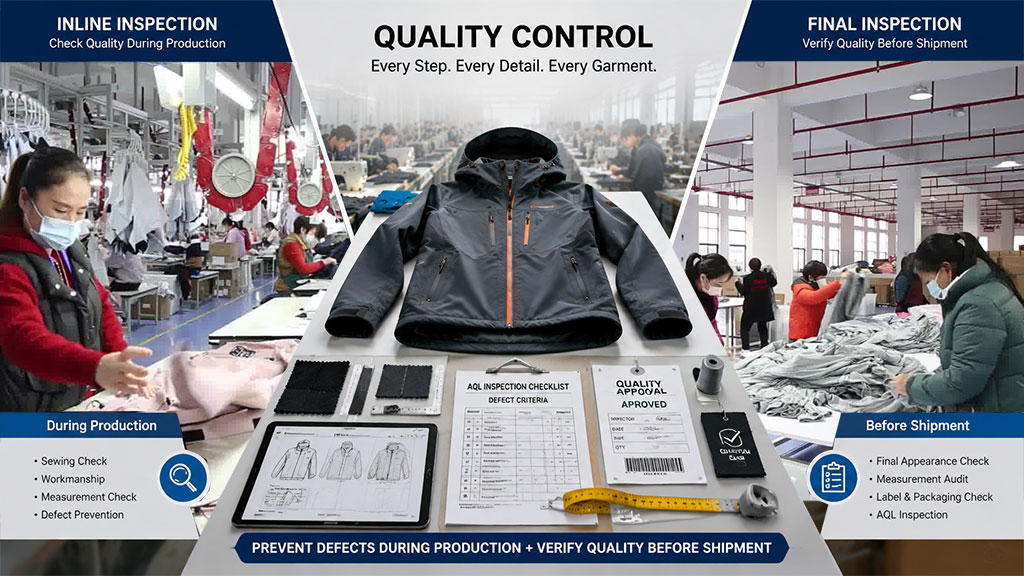
A professional garment quality control inspection process is essential for apparel brands, retailers, and importers to ensure products meet approved standards before reaching the market. Inline inspection helps manufacturers identify and correct production issues during manufacturing, while final inspection verifies finished garments before shipment. By combining multiple QC checkpoints, professional OEM apparel manufacturers reduce production risks, improve consistency, and deliver reliable products for global brands.
Introduction: Why Garment Quality Control Matters in Apparel Manufacturing
For apparel brands sourcing from overseas manufacturers, product quality is one of the most important factors affecting customer satisfaction, brand reputation, and long-term business growth. A single quality issue in bulk production can result in:- Customer complaints
- Product returns
- Delayed product launches
- Increased rework costs
- Damaged brand reputation
What is the difference between inline inspection and final inspection?
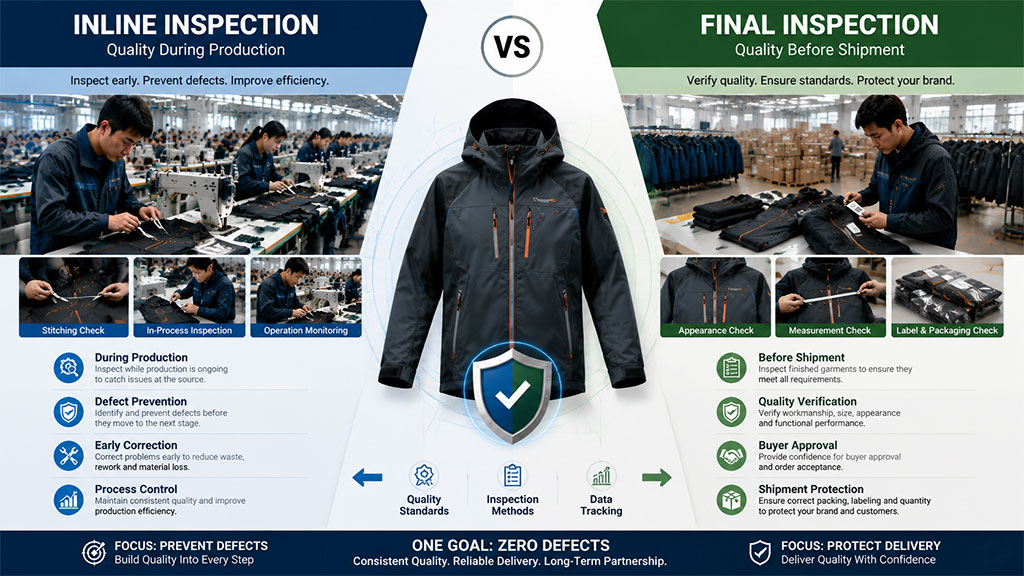
The answer is simple:- Inline inspection focuses on identifying and correcting production problems during manufacturing.
- Final inspection verifies finished garments meet buyer requirements before shipment.
What Is Garment Quality Control Inspection?
Garment quality control inspection is a systematic process used by apparel manufacturers to evaluate whether products meet defined quality standards, technical specifications, and buyer expectations.
For OEM, ODM, and private label apparel production, QC inspection ensures that bulk production matches:
- Approved samples
- Technical packs (Tech Packs)
- Measurement specifications
- Material requirements
- Brand quality standards
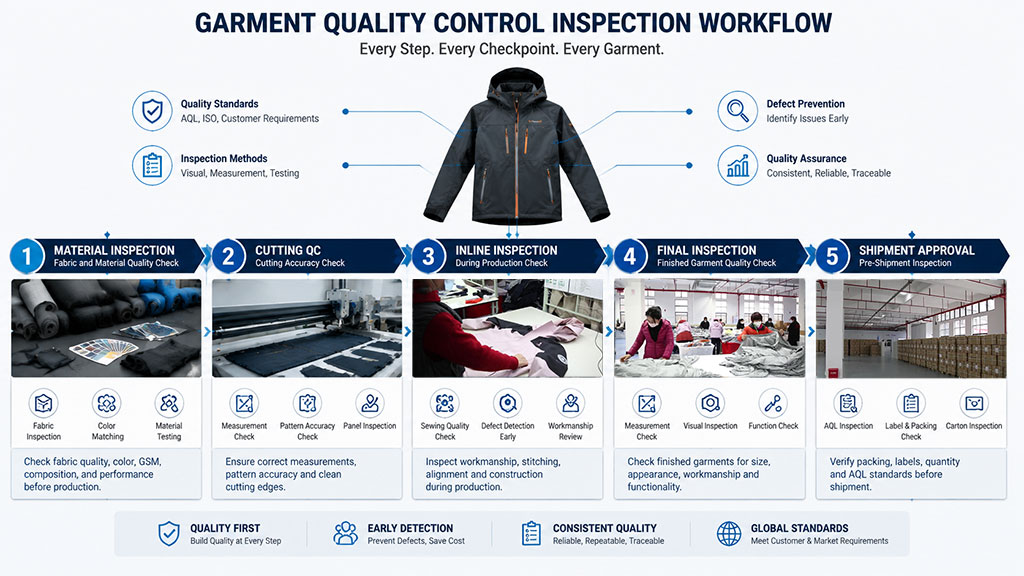
A complete apparel quality control system typically includes:
- Fabric and material inspection
- Cutting inspection
- Inline production inspection
- Finished garment inspection
- Pre-shipment inspection
This structured approach allows manufacturers to detect problems early and maintain consistent quality throughout the production process.
The Complete Garment Manufacturing Quality Control Process
Stage 1: Fabric and Material Inspection
Before production begins, professional apparel factories inspect raw materials to ensure they meet approved standards.
Common checks include:
Fabric Quality Testing
- Fabric appearance
- Color consistency
- Fabric defects
- Weight and composition
- Shrinkage performance
Material Verification
- Zippers
- Buttons
- Labels
- Thread quality
- Trims and accessories
For technical garments such as outdoor jackets and performance wear, additional testing may include:
- Waterproof performance
- Breathability
- Coating quality
- Seam sealing compatibility
Early material inspection helps prevent production delays caused by incorrect or defective materials.
Stage 2: Cutting Quality Control
The cutting process directly affects garment accuracy and final appearance.
Quality teams check:
- Pattern accuracy
- Panel alignment
- Fabric direction
- Cutting precision
- Size consistency
Incorrect cutting can create measurement problems that cannot easily be corrected during later production stages.
Stage 3: Inline Inspection During Production
Inline inspection is performed while garments are being manufactured.
The main purpose is to identify production problems before defects spread across the entire order.
Typical inspection timing includes:
- After cutting
- During sewing
- During assembly
- Before finishing
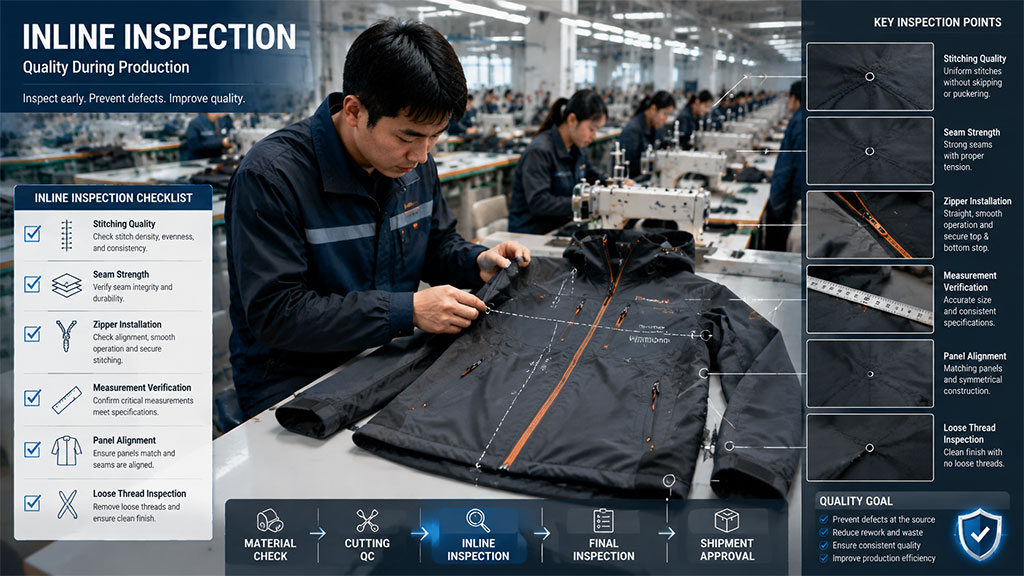
What Does Inline Inspection Check?
1. Sewing Quality Inspection
QC inspectors review:- Stitch consistency
- Seam strength
- Loose threads
- Skipped stitches
- Incorrect construction
- Sewing defects
2. Measurement Accuracy
Production samples are compared with approved measurement specifications. Typical measurement checks include:- Chest width
- Body length
- Sleeve length
- Waist measurement
- Collar dimensions
- Overall garment fit
3. Construction Details
Inspectors verify important garment components:- Pocket placement
- Zipper installation
- Button attachment
- Seam allowance
- Panel alignment
- Label positioning
4. Production Process Monitoring
Inline inspection also evaluates:- Production progress
- Defect percentage
- Worker operation methods
- Manufacturing consistency
- Process compliance
What Is Final Inspection in Apparel Manufacturing?
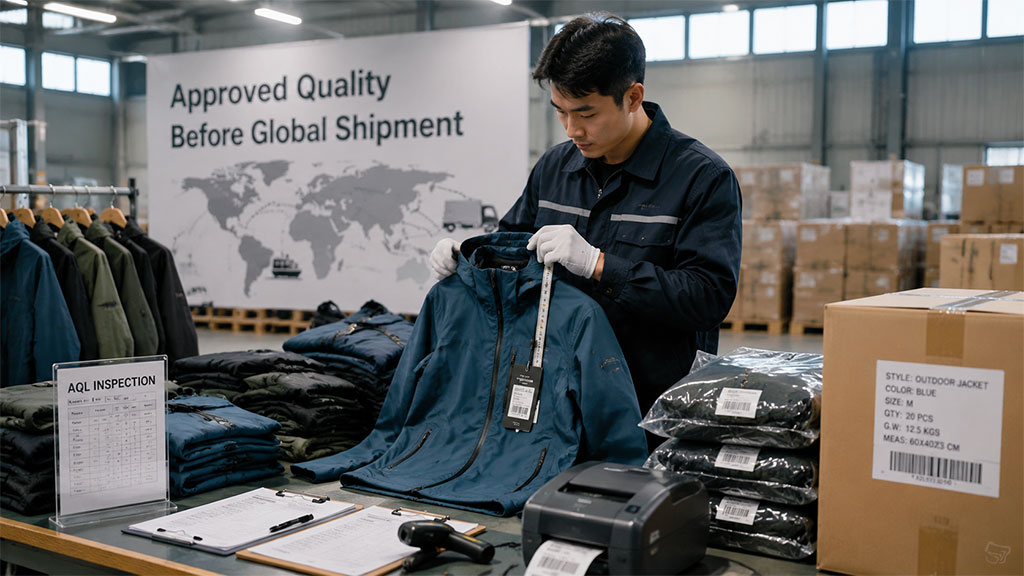
Final inspection is the last quality evaluation performed after garments are completely manufactured, finished, packed, and ready for shipment.Its purpose is to confirm that finished products meet buyer requirements before leaving the factory.
Unlike inline inspection, which focuses on prevention, final inspection focuses on shipment approval.
What Does Final Inspection Check?
1. Product Appearance
Inspectors evaluate:- Overall garment appearance
- Fabric defects
- Color consistency
- Stains or damage
- Finishing quality
2. Measurement Verification
Finished garments are measured against:- Approved size charts
- Technical specifications
- Buyer requirements
3. Functional Testing
Depending on product categories, final inspection may include performance testing.Outdoor Jackets:
- Waterproof performance
- Seam sealing quality
- Zipper function
- Weather protection features
Sportswear:
- Stretch recovery
- Moisture management
- Print durability
- Fabric performance
4. Packaging Inspection
Before shipment, factories verify:- Labels
- Hangtags
- Polybags
- Carton markings
- Shipping quantities
Inline Inspection vs Final Inspection: Key Differences
| Category | Inline Inspection | Final Inspection |
|---|---|---|
| Timing | During production | After production |
| Main Purpose | Prevent defects | Confirm shipment quality |
| Inspection Target | Semi-finished garments | Finished products |
| Problem Detection | Early production issues | Final product issues |
| Risk Control | Reduces bulk defects | Prevents defective shipments |
| Correction Opportunity | High | Limited |
| Production Impact | Allows immediate adjustment | May require rework or replacement |
Why Apparel Buyers Need Both Inline and Final Inspection
Some buyers focus only on final inspection because it is the last checkpoint before shipment. However, relying only on final inspection creates unnecessary risks. If problems are discovered after production completion:- Rework costs increase
- Delivery schedules may be delayed
- Large quantities may require replacement
- Shipment deadlines become difficult to maintain
How Professional Apparel Factories Build a QC System
A reliable apparel quality control system follows multiple checkpoints:
Stage 1: Material Control
Before production:
- Fabric inspection
- Color verification
- Shrinkage testing
- Trim inspection
Stage 2: Manufacturing Control
During production:
- Cutting inspection
- Sewing monitoring
- Inline inspection
- Workmanship evaluation
Stage 3: Finished Product Control
Before shipment:
- Final garment inspection
- AQL inspection
- Packaging verification
- Shipment approval
This complete QC approach allows manufacturers to maintain product consistency across different production volumes.
How Quality Control Supports OEM, ODM, and Private Label Apparel Production
For international brands, quality control becomes even more important when developing:
- Custom jackets
- Outdoor apparel
- Technical garments
- Performance sportswear
- Private label clothing collections
OEM buyers usually provide:
- Tech packs
- Measurement specifications
- Approved samples
- Material requirements
- Packaging instructions
Professional factories use QC checkpoints to ensure bulk production matches these approved standards.
A strong quality control system helps brands:
- Reduce sourcing risks
- Improve product consistency
- Protect brand reputation
- Build long-term manufacturing partnerships
Common Mistakes Buyers Make About Garment Inspection
Mistake 1: Only Inspecting Finished Products
Final inspection is important, but it cannot always solve production problems that have already occurred. Better approach: Combine inline monitoring with final inspection.Mistake 2: Ignoring Approved Samples
Without comparing production garments with approved samples, factories may deliver inconsistent products. Better approach: Use approved samples and technical documents as inspection references.Mistake 3: Focusing Only on Appearance
Garment quality is not only about visual appearance. Professional inspection should also evaluate:- Performance testing
- Construction strength
- Fabric durability
- Compliance requirements
FAQ: Garment Quality Control Inspection
1.What is the difference between inline inspection and final inspection?
Inline inspection happens during production to identify and correct manufacturing issues early. Final inspection happens after production to verify finished garments meet buyer requirements before shipment.2.Is inline inspection necessary for small apparel orders?
Yes. Even small MOQ orders can experience production problems. Inline inspection helps identify issues before they affect the complete order.3.When should final inspection be performed?
Final inspection should be completed after garments are finished, packed, and ready for shipment.4.What inspection standard is commonly used for garment quality control?
Many apparel companies use AQL (Acceptable Quality Limit) inspection standards to evaluate defect levels before shipment.5.Can final inspection replace inline inspection?
No. Final inspection identifies finished product problems, while inline inspection prevents defects from spreading during manufacturing.6.What documents help improve garment inspection accuracy?
Professional apparel buyers usually provide:- Tech pack
- Size specification sheet
- Approved sample
- Material requirements
- Packaging instructions
Conclusion: Choosing an Apparel Manufacturer With a Complete QC System
A successful apparel production partnership requires more than manufacturing capacity. It requires a reliable quality control system that manages risks from materials to finished products.
Inline inspection helps manufacturers identify and correct problems during production, while final inspection ensures finished garments meet buyer expectations before shipment.
For brands sourcing custom apparel, private label clothing, or technical garments, choosing an experienced OEM apparel manufacturer with a complete QC process can improve product consistency, reduce production risks, and support long-term business growth.
A strong quality management system is not only about finding defects—it is about preventing problems before they impact your brand.