ODM and private label apparel manufacturing are two common production models for clothing startups. Private label offers faster launch speed and lower development costs by customizing existing designs. ODM provides deeper customization, technical support, and stronger product differentiation. The right choice depends on your brand goals, budget, product requirements, and long-term development strategy.
ODM vs Private Label Apparel Manufacturing: Understanding the Difference
Choosing the right manufacturing model is a critical decision for clothing startups. The production method affects:- Development cost
- Product customization
- Launch timeline
- Brand differentiation
- Future growth potential
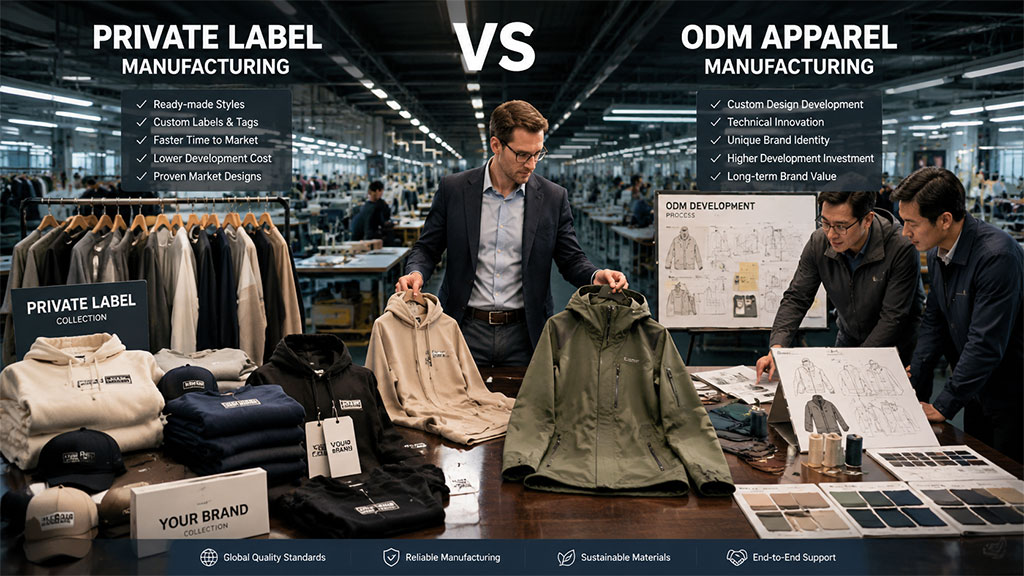
- Private Label Manufacturing
- ODM (Original Design Manufacturing)
What Is Private Label Apparel Manufacturing?
Private label apparel manufacturing allows brands to select existing garment designs from a manufacturer’s collection and customize them with their own branding. Common customization options include:| Customization Area | Examples |
|---|---|
| Branding | Logo, woven label, hangtag |
| Color | Custom color selection |
| Packaging | Polybag and packaging design |
| Details | Minor design adjustments |
| Sizing | Custom size range |
- New clothing startups
- E-commerce fashion brands
- Boutique brands
- Small apparel businesses
Advantages of Private Label Manufacturing
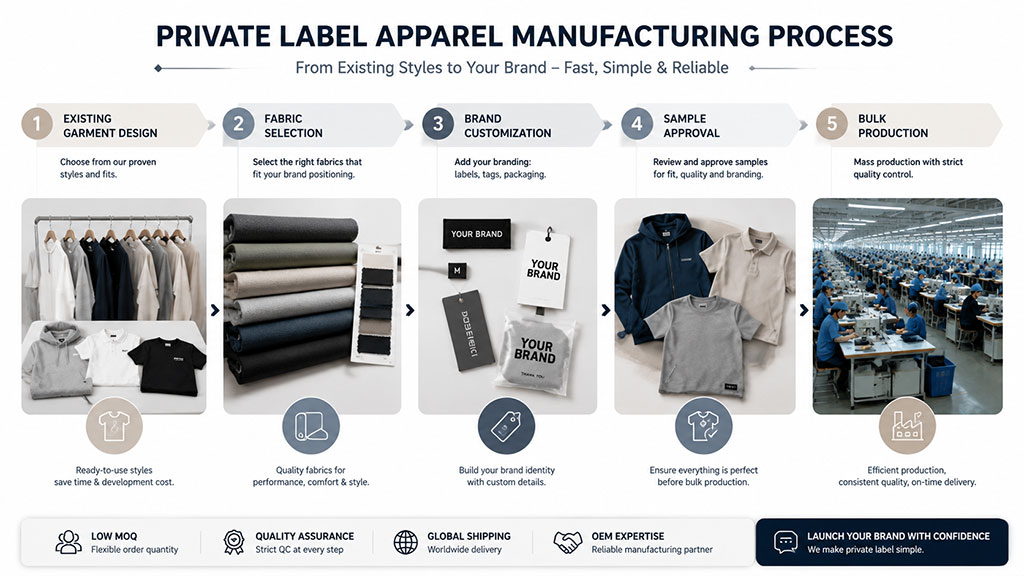
1. Faster Product Launch
Since manufacturers already have:- Existing patterns
- Production experience
- Tested construction methods
- → Material Selection
- → Branding Customization
- → Sample Approval
- → Bulk Production
2. Lower Development Cost
Private label reduces costs related to:- Original product design
- Pattern development
- Multiple prototype rounds
- Technical development
What Is ODM Apparel Manufacturing?
ODM (Original Design Manufacturing) means the manufacturer supports product development based on the brand’s concept, requirements, and market positioning.
Compared with private label, ODM provides deeper customization.
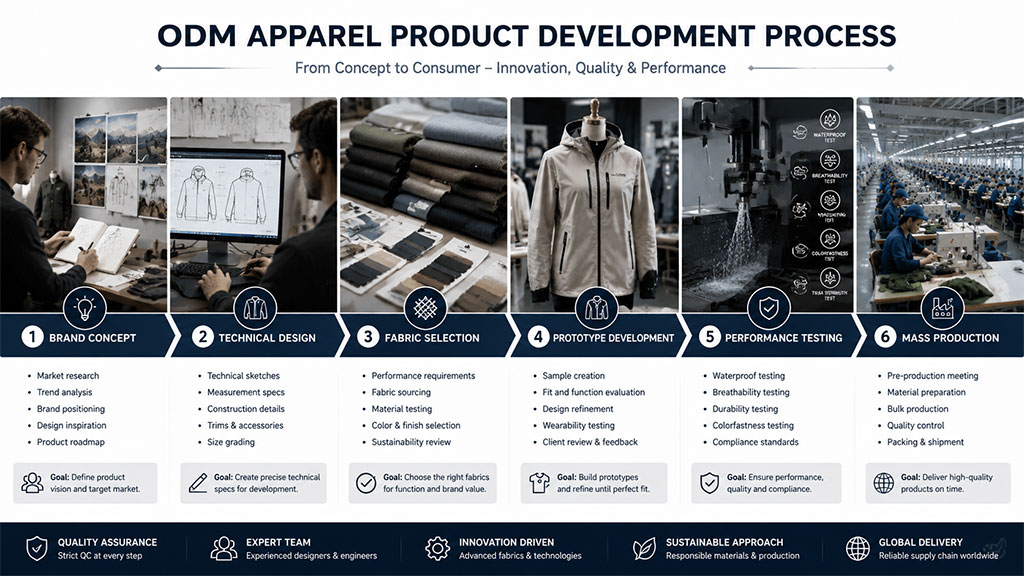
ODM development may include:
- New garment designs
- Fabric selection
- Functional improvements
- Construction optimization
- Product testing
For example, an outdoor apparel startup developing a waterproof jacket may require:
- Waterproof fabric selection
- Seam sealing construction
- Functional pocket design
- Performance testing
Advantages of ODM Apparel Manufacturing
1. Stronger Brand Differentiation
ODM helps brands create products that are more difficult to copy through:
- Unique designs
- Custom fabric solutions
- Functional features
- Product improvements
This is especially important for:
- Outdoor apparel brands
- Sportswear brands
- Technical clothing companies
2. Professional Development Support
Experienced ODM manufacturers can support:
- Fabric sourcing
- Technical design
- Sampling
- Production optimization
- Quality control
This is valuable for brands that understand their market but need manufacturing expertise.
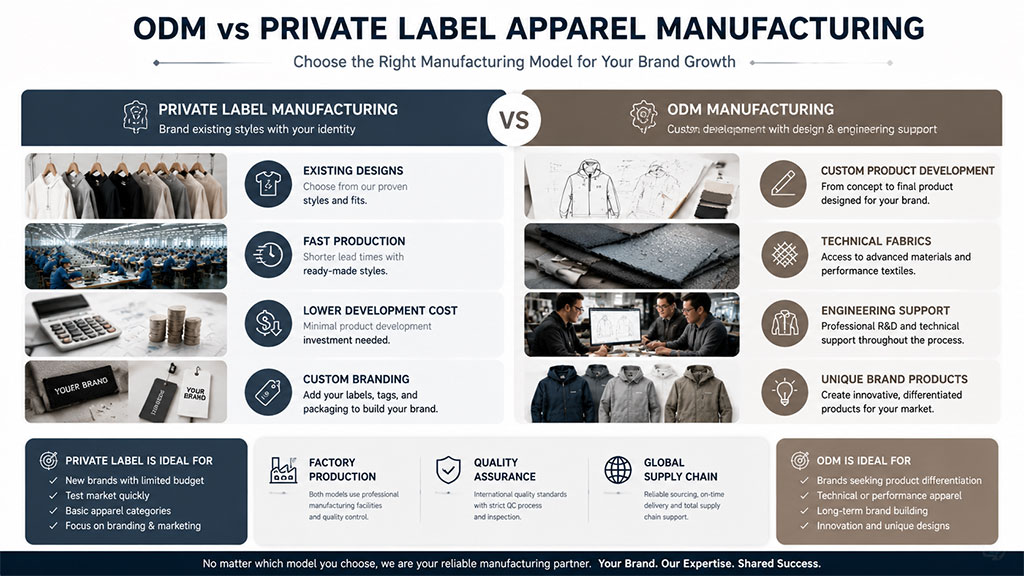
ODM vs Private Label: Key Differences
| Factor | Private Label | ODM |
|---|---|---|
| Design Freedom | Limited | High |
| Development Cost | Lower | Higher |
| Production Speed | Faster | Longer |
| Customization | Basic-Medium | Advanced |
| Technical Support | Limited | Strong |
| Brand Differentiation | Medium | High |
| Best For | Market testing | Unique product development |
Which Manufacturing Model Is Better for Clothing Startups?
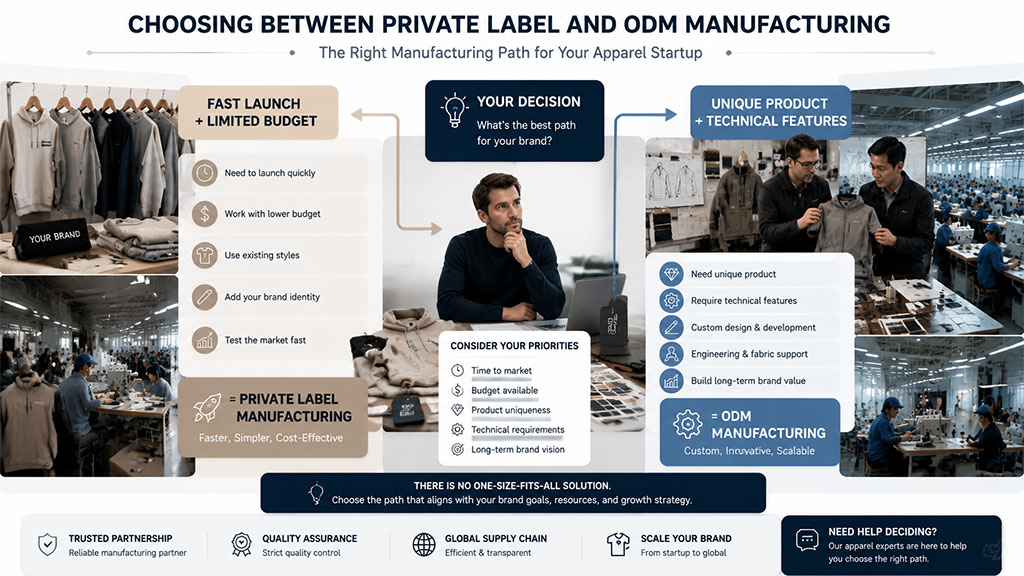
The best choice depends on your business stage.
Choose Private Label If You:
- ✔ Are launching your first collection
- ✔ Have a limited budget
- ✔ Need faster market entry
- ✔ Want to test customer demand
- ✔ Prefer proven products
Example:
A new fitness brand launching customized T-shirts or leggings may benefit from private label manufacturing.
Choose ODM If You:
- ✔ Need unique products
- ✔ Want stronger brand positioning
- ✔ Develop technical apparel
- ✔ Require functional features
- ✔ Plan long-term growth
Example:
An outdoor brand developing a custom waterproof jacket collection may require ODM manufacturing.
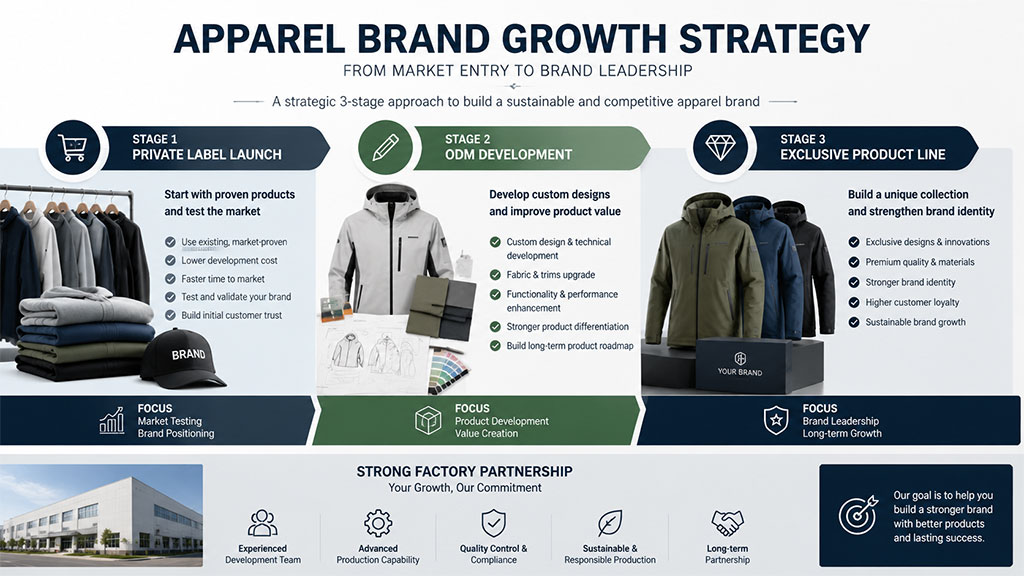
Can Brands Combine ODM and Private Label?
Yes. Many successful apparel brands use both approaches. A common strategy is:Stage 1: Private Label
- Launch proven products
- Test market demand
- Build customer feedback
Stage 2: ODM Development
- Improve designs
- Add unique features
- Create signature products
How to Choose the Right Apparel Manufacturer?
When selecting a manufacturing partner, startups should evaluate:
Product Development Capability
Check whether the factory can provide:
- Design improvement support
- Fabric recommendations
- Sample development
Manufacturing Experience
Review:
- Production capability
- Quality control system
- Previous brand experience
- Export experience
Sampling Process
A reliable manufacturer should provide:
- Prototype samples
- Fit samples
- Pre-production samples
- Quality approval process
Common Mistakes Apparel Startups Make
Choosing Suppliers Only Based on Price
The lowest price does not always mean the best partner. Quality consistency, communication, and production reliability are equally important.Starting ODM Without Clear Requirements
Before development, brands should prepare:- Product concept
- Target customers
- Price positioning
- Functional requirements
FAQ: ODM vs Private Label Apparel Manufacturing
1. Is private label cheaper than ODM?
Yes. Private label usually requires lower investment because it uses existing designs and production processes.2. Is ODM better for clothing startups?
ODM is better for brands seeking unique products and long-term differentiation. Private label is better for faster market entry.3. What is the MOQ for ODM apparel production?
MOQ depends on product type, fabric requirements, customization level, and manufacturing process.4. Can private label products become ODM products later?
Yes. Many brands start with private label and develop customized products after gaining market experience.5. What is the difference between OEM and ODM?
OEM produces according to customer designs, while ODM supports product development and customization.6. Which model is better for outdoor apparel?
ODM is usually more suitable because outdoor products often require technical fabrics and functional construction.7. How long does ODM development take?
The timeline depends on product complexity, sampling rounds, and testing requirements.8. How do startups choose the right model?
Consider your budget, product goals, customization needs, and long-term brand strategy.
Written by Simmerui Apparel Development Team
With experience in OEM and ODM apparel manufacturing, the author focuses on helping global clothing brands develop products through effective manufacturing solutions. Expertise includes private label production, ODM development, fabric selection, product improvement, and apparel quality management.
Final Thoughts
There is no universal answer between ODM and private label apparel manufacturing.
Private label is an efficient solution for startups seeking faster launches and lower development costs.
ODM is a better choice for brands that want unique products, technical innovation, and stronger market differentiation.
The right manufacturing model depends on your brand stage, product requirements, and future growth strategy.
CTA
Looking for the right apparel manufacturing solution?
Our team can help evaluate your product concept, development approach, and production strategy.
Contact us to discuss your next apparel project.