
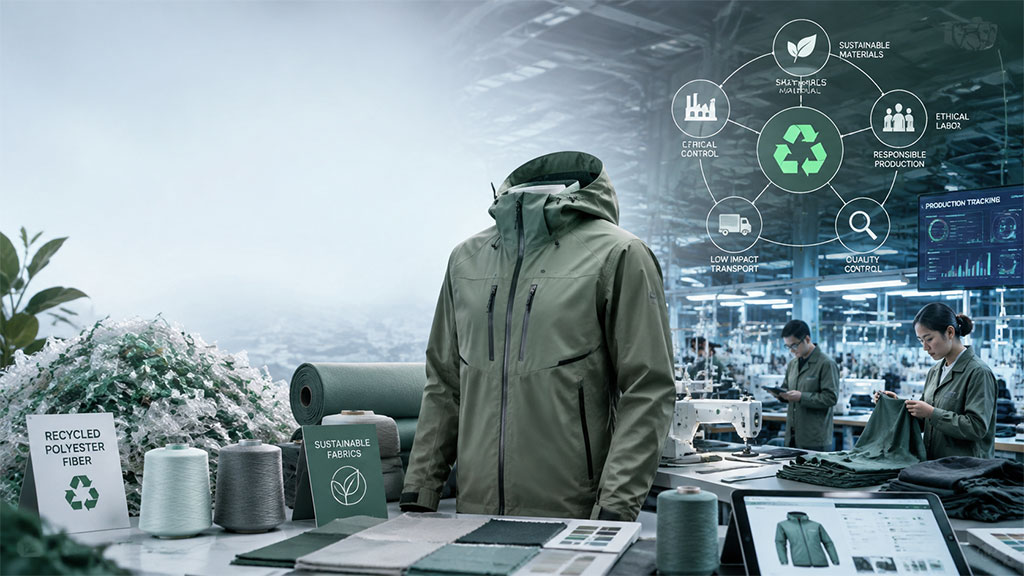
Eco-friendly apparel manufacturing is becoming a key requirement for global clothing brands seeking sustainable, transparent, and responsible supply chains. Sustainable production involves more than using recycled fabrics—it requires verified materials, efficient manufacturing processes, chemical compliance management, quality control systems, and ethical factory practices. This guide explains how brands can evaluate sustainable apparel manufacturers and build reliable long-term production partnerships.
Introduction
Sustainability has become an important factor in modern apparel manufacturing.
For clothing brands, sustainability is no longer only about product marketing. Buyers increasingly evaluate:
- Material traceability
- Manufacturing processes
- Chemical safety
- Factory responsibility
- Product durability
- Supply chain transparency
Eco-friendly apparel manufacturing refers to producing clothing through sustainable materials, responsible production methods, reduced environmental impact, and transparent supply chain management.
For OEM apparel brands, sustainability should be considered as a complete manufacturing system rather than a single product feature.
What Does Eco-Friendly Apparel Manufacturing Actually Mean?
Many companies use terms such as “green clothing” or “sustainable apparel,” but real sustainability requires measurable manufacturing improvements. A professional eco-friendly apparel manufacturer focuses on:| Sustainability Area | Manufacturing Focus |
|---|---|
| Materials | Certified sustainable fabrics and traceable sourcing |
| Production | Reduced water, energy, and waste consumption |
| Chemicals | Safe chemical management and compliance testing |
| Factory Standards | Ethical production and worker safety |
| Quality Control | Durable garments with fewer defects |
| Supply Chain | Transparent production information |
1. Sustainable Fabric Sourcing: The Foundation of Eco-Friendly Apparel
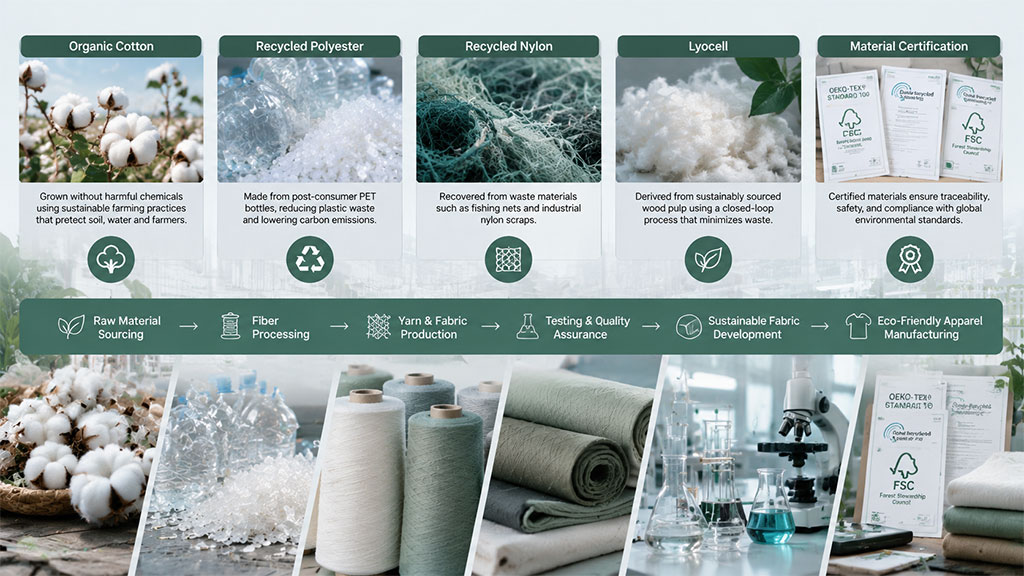
The first step of sustainable apparel manufacturing is selecting materials with lower environmental impact.
Common sustainable textile options include:
| Fabric Type | Sustainability Benefit | Applications |
|---|---|---|
| Organic Cotton | Reduces pesticide and chemical usage | T-shirts, casual apparel |
| Recycled Polyester | Uses post-consumer plastic waste | Sportswear, jackets |
| Recycled Nylon | Reduces dependence on virgin materials | Outdoor apparel |
| TENCEL™ / Lyocell | Uses renewable wood resources | Activewear, fashion apparel |
| Recycled Wool | Extends textile lifecycle | Premium garments |
However, sustainable fabric selection requires verification.
Brands should request:
- Material composition reports
- Certification documents
- Supplier traceability records
Common certifications include:
- GOTS (Global Organic Textile Standard)
- GRS (Global Recycled Standard)
- OEKO-TEX® STANDARD 100
2. Eco-Friendly Manufacturing Requires Responsible Production Processes
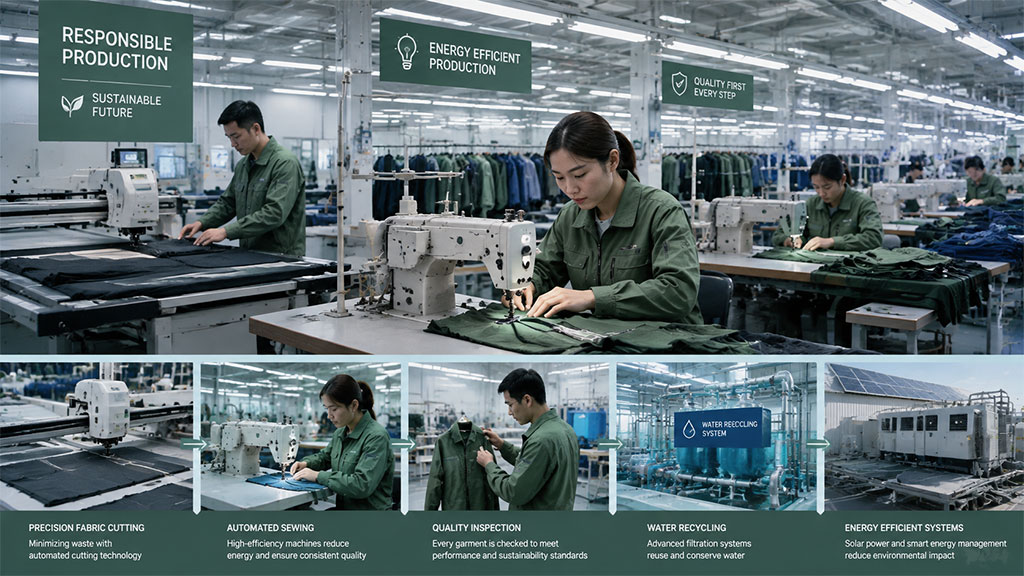
Sustainable clothing production focuses on reducing environmental impact throughout manufacturing.Water Management
Textile dyeing and finishing processes can consume significant amounts of water. Responsible factories may implement:- Water recycling systems
- Low-water dyeing technologies
- Wastewater treatment systems
Energy Efficiency
Manufacturers can reduce carbon impact through:- Energy-efficient equipment
- Renewable energy adoption
- Optimized production planning
Waste Reduction
Sustainable factories improve efficiency by:- Reducing cutting waste
- Recycling fabric scraps
- Optimizing marker layouts
- Improving production accuracy
3. Chemical Safety in Sustainable Apparel Manufacturing
Sustainability is not only about fabric selection. Chemical management is a critical part of responsible apparel production. Professional manufacturers should control:- Restricted substances
- Dye chemicals
- Finishing agents
- Waterproof coatings
- Printing chemicals
| Standard | Purpose |
|---|---|
| RSL | Controls restricted substances in finished products |
| MRSL | Controls chemicals used during manufacturing |
| REACH | European chemical safety regulation |
| PFAS-free Treatment | Safer waterproof finishing solutions |
- PFC-free waterproof coatings
- Low-impact dyes
- Safer textile finishing processes
4. Sustainable Apparel Manufacturing Includes Ethical Factory Standards
Environmental responsibility is closely connected with social responsibility.
Brands should evaluate manufacturing partners based on:
- Worker safety
- Fair working conditions
- Factory transparency
- Compliance documentation
A reliable OEM clothing manufacturer should provide:
- Factory information
- Production standards
- Quality control procedures
- Compliance records
Supply chain trust is an essential part of sustainable apparel development.
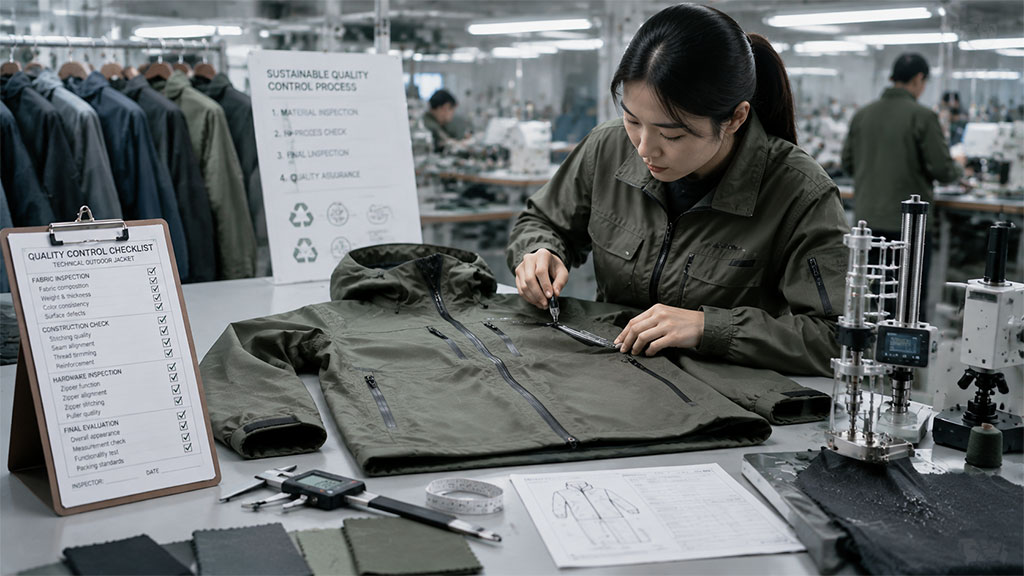
5. Quality Control Supports Sustainable Clothing Production
Quality control is often overlooked in sustainability discussions.
However, durable garments reduce waste caused by:
- Product returns
- Manufacturing defects
- Short product lifecycles
A sustainable apparel manufacturing system should include:
Fabric Inspection
Checking:
- Fabric defects
- Material consistency
- Performance requirements
Inline Production Inspection
Monitoring:
- Sewing quality
- Construction accuracy
- Production issues
Final Garment Inspection
Confirming:
- Appearance quality
- Measurements
- Shipment standards
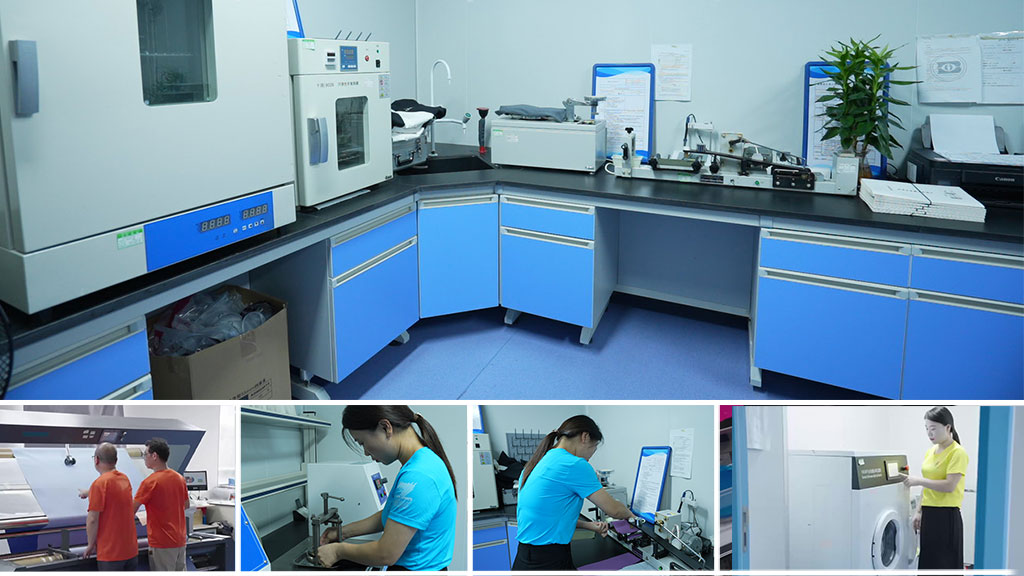
For technical apparel, testing may include:
- Waterproof testing
- Breathability testing
- Seam strength testing
- Color fastness testing
6. How Should Brands Choose an Eco-Friendly Apparel Manufacturer?
Before selecting a sustainable clothing supplier, brands should evaluate four key areas.
Materials
Ask:
- Where are fabrics sourced?
- Are recycled materials verified?
- Are certifications available?
Manufacturing
Ask:
- How does the factory reduce waste?
- What sustainable production improvements exist?
Compliance
Ask:
- Are chemical testing reports available?
- Can the factory provide compliance documentation?
Supply Chain
Ask:
- Is production transparent?
- Can the manufacturer support long-term sustainability goals?
Eco-Friendly Apparel Manufacturing vs Green Marketing
Not every sustainability claim represents real environmental improvement.
Brands should verify evidence instead of relying only on marketing language.
| Marketing Claim | Better Verification |
|---|---|
| Recycled Fabric | GRS Certification |
| Organic Cotton | GOTS Certification |
| Chemical Safety | Testing Reports |
| Responsible Factory | Compliance Documentation |
| Sustainable Production | Process Records |
Real sustainability requires measurable proof.
How OEM Apparel Manufacturers Support Sustainable Brands
Experienced OEM manufacturers can help brands integrate sustainability into product development.
Support areas include:
- Sustainable fabric sourcing
- Custom apparel development
- Certification guidance
- Textile testing
- Production quality control
- Sustainable packaging solutions
From design development to bulk production, sustainability should be integrated throughout the entire apparel supply chain.

FAQ: Eco-Friendly Apparel Manufacturing
1.What is eco-friendly apparel manufacturing?
Eco-friendly apparel manufacturing is the process of producing clothing with reduced environmental impact through sustainable materials, responsible production methods, safer chemical management, waste reduction, and transparent supply chain practices.2.Is recycled fabric enough to make clothing sustainable?
No. Recycled materials are only one part of sustainability. Brands should also consider:- Manufacturing processes
- Chemical management
- Factory standards
- Product durability
- Product lifecycle
3.What certifications should sustainable clothing brands request?
Common certifications include:- GOTS for organic textiles
- GRS for recycled materials
- OEKO-TEX® for chemical safety
- FSC for certain cellulose-based fibers
4.How can brands verify an apparel factory’s sustainability claims?
Brands should request:- Certification documents
- Testing reports
- Material traceability records
- Production process information
- Compliance documentation
5.Does sustainable apparel manufacturing cost more?
Sometimes. Sustainable materials and production improvements may increase initial costs, but better quality, reduced waste, and stronger brand positioning can create long-term value.Conclusion
Eco-friendly apparel manufacturing is not defined by a single sustainable fabric or marketing statement.
For modern clothing brands, true sustainability requires:
- Verified materials
- Responsible manufacturing processes
- Chemical compliance
- Ethical factories
- Strong quality control
- Transparent supply chains
Choosing the right OEM apparel manufacturer allows brands to create sustainable products while maintaining quality, performance, and long-term market competitiveness.
Written By Simmerui Textile Testing Team. We provide standardized fabric testing services for B2B apparel brands, covering tensile, tear, abrasion, and waterproof performance. Our team ensures that fabrics meet international durability, performance, and safety standards, helping OEM manufacturers and brands deliver reliable, high-quality garments to global markets.