
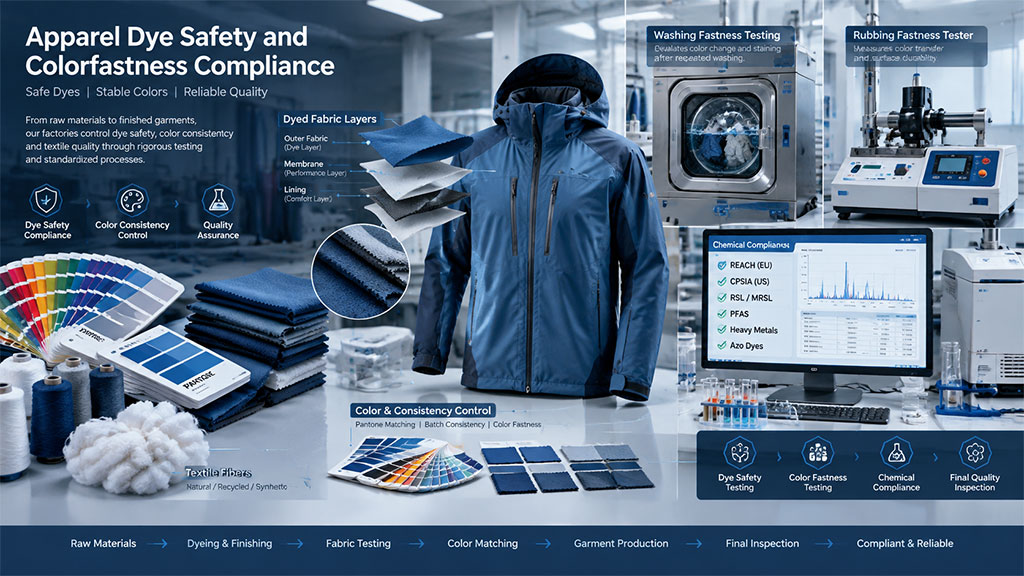
Apparel dye safety and colorfastness compliance are critical quality requirements for global clothing brands. Professional OEM manufacturers control dye performance through approved material sourcing, chemical management, textile laboratory testing, and production inspections. Before bulk manufacturing, fabrics and garments are evaluated for washing fastness, rubbing resistance, perspiration stability, light exposure performance, and restricted substances. A structured compliance process helps brands reduce risks such as color fading, dye migration, customer complaints, and regulatory issues in international markets.
Introduction: Why Dye Compliance Matters in Apparel Manufacturing
For global apparel brands, color quality is not only about achieving the correct shade.
A garment’s dye performance directly affects:
- Product durability
- Customer satisfaction
- Brand reputation
- Market compliance
- Production consistency
Unstable dye systems can create problems such as:
| Risk | Possible Impact |
|---|---|
| Poor washing fastness | Color fading after laundering |
| Low rubbing fastness | Dye transfer onto other materials |
| Chemical residues | Compliance risks in different markets |
| Uneven dye absorption | Bulk production color variation |
| Poor light resistance | Color changes during outdoor use |
For B2B apparel buyers, these issues can result in additional costs from production corrections, delayed shipments, product returns, and quality claims.
Professional OEM manufacturers therefore manage dye safety and colorfastness from fabric development to final garment inspection.
How Apparel Factories Control Dye Safety Compliance
1. Selecting Approved Fabrics and Dye Materials
A reliable dye compliance process starts before production begins.
The Simmerui Apparel Manufacturing Team evaluates fabric suppliers and materials based on:
- Fiber composition
- Dyeing technology
- Chemical management procedures
- Supplier documentation
- Required compliance standards
Different markets and brands may require specific chemical control systems, including:
- REACH requirements for European markets
- CPSIA requirements for children’s products in the US
- Buyer-specific Restricted Substance Lists (RSL)
- Manufacturing Restricted Substance Lists (MRSL)
Material selection is not only about appearance. It also determines:
- Color stability
- Performance durability
- Testing requirements
- Production reliability
2. Controlling the Fabric Dyeing Process
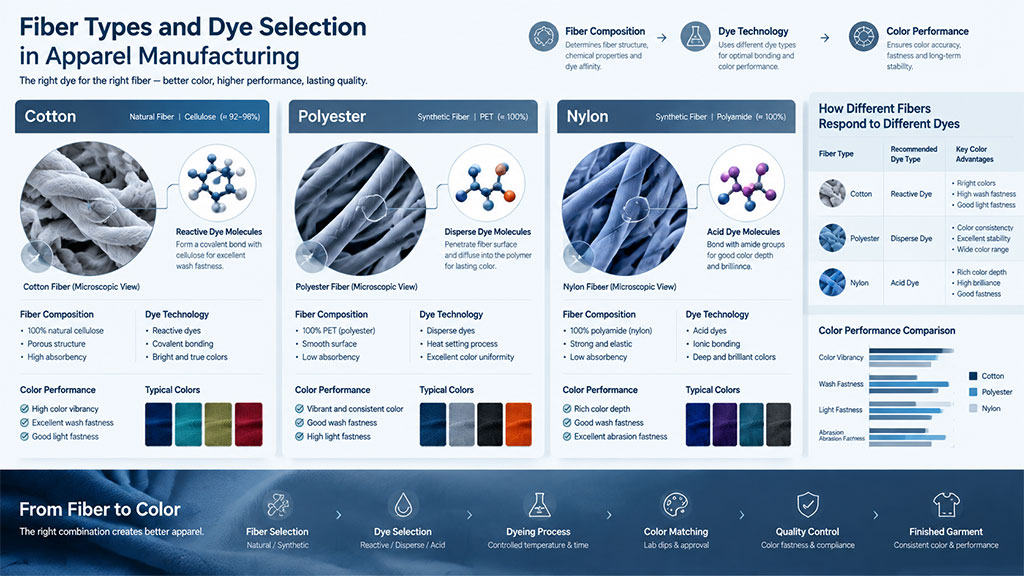
The dyeing process has a direct influence on final garment quality. Professional factories monitor critical parameters throughout dye development and production.Dye Selection Based on Fabric Type
Different fibers require different dye systems.| Fabric Type | Common Dye Method |
|---|---|
| Cotton | Reactive dyes |
| Polyester | Disperse dyes |
| Nylon | Acid dyes |
| Blended fabrics | Combined dye processes |
- Color penetration
- Shade consistency
- Washing durability
- Long-term performance
Dyeing Process Parameters
Factories control:- Dye concentration
- Processing temperature
- Dyeing time
- pH levels
- Washing procedures
- Color fixing processes
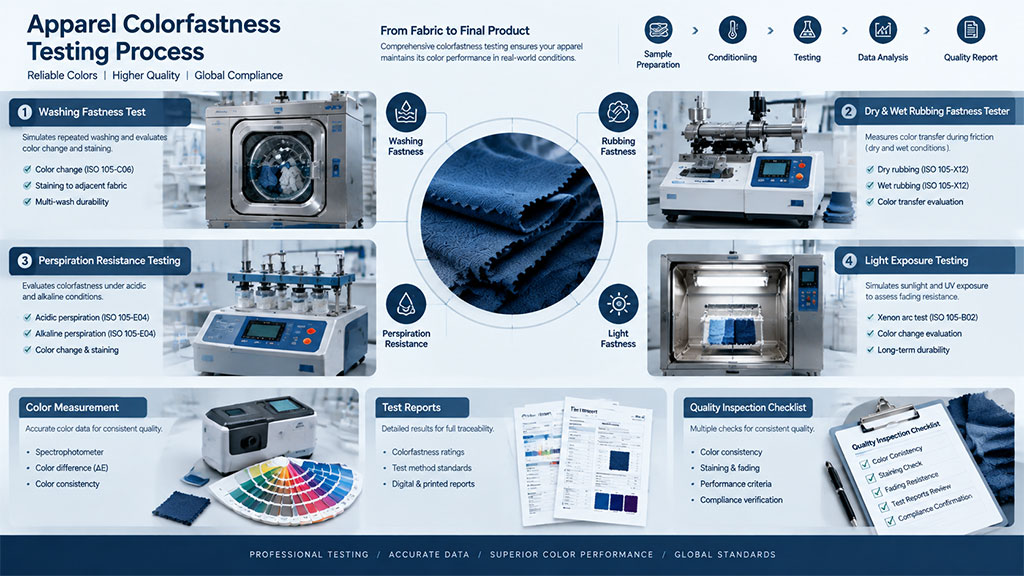
3. Conducting Colorfastness Testing Before Production
Before bulk manufacturing, professional OEM factories verify whether fabrics and garments meet required color performance standards.
Common colorfastness evaluations include:
Washing Colorfastness Testing
This test evaluates whether colors remain stable after repeated washing.
Testing typically checks:
- Color change after laundering
- Staining on adjacent fabrics
Important for:
Rubbing Colorfastness Testing
Rubbing fastness measures whether dye transfers through friction.
Testing usually includes:
- Dry rubbing
- Wet rubbing
This is especially important for:
- Dark-colored garments
- Outdoor jackets
- Workwear
- Performance apparel
Perspiration Colorfastness Testing
This test evaluates color stability when garments are exposed to sweat.
It is commonly required for:
- Sportswear
- Activewear
- Performance clothing
Light Colorfastness Testing
Light fastness measures resistance to color fading caused by sunlight exposure.
This is especially relevant for:
- Outdoor apparel
- Travel clothing
- Summer collections
4. Laboratory Testing Workflow Before Bulk Production
A professional OEM manufacturing process usually follows:
Fabric Arrival → Laboratory Testing → Approval → Bulk Production → Final Inspection
Typical testing categories include:
| Test Category | Purpose |
|---|---|
| Colorfastness Testing | Verify color stability |
| Chemical Testing | Check restricted substances |
| Fabric Performance Testing | Confirm material properties |
| Garment Inspection | Verify finished product quality |
Pre-production testing allows manufacturers to identify problems before large-scale production begins.
How OEM Factories Maintain Color Consistency During Bulk Production
Passing laboratory testing is only the beginning. During mass production, factories must maintain the approved color standard throughout the entire manufacturing process.Fabric Lot Management
Different dye lots may create slight shade differences. Factories control:- Fabric lot tracking
- Shade approval records
- Supplier batch information
- Production traceability
Bulk Color Approval
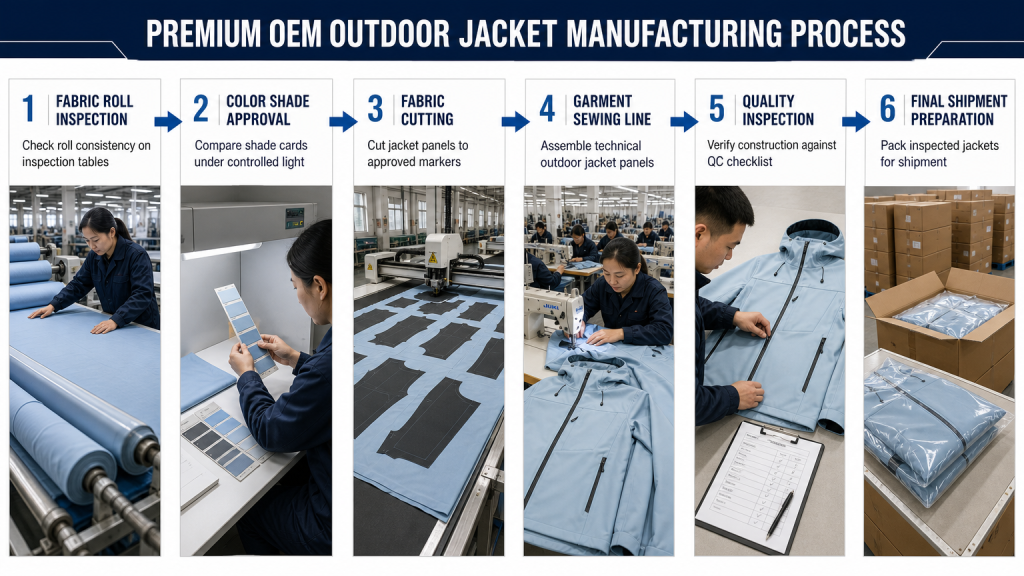
Before cutting and sewing:- Production teams compare fabric shades with approved standards
- Color differences are reviewed
- Bulk production approval is confirmed
Maintaining Dye Quality During Apparel Production
Inline Quality Inspection During Manufacturing
Color approval before production does not replace quality control during manufacturing.
During sewing and assembly, professional apparel factories perform inline inspections to identify potential issues before final shipment.
Quality teams monitor:
- Panel color matching
- Garment appearance
- Stitching quality
- Surface defects
- Shade consistency between production lots
Early inspection helps reduce the risk of large-scale defects and improves shipment reliability for global apparel brands.
Common Textile Dye Safety and Colorfastness Standards
Different markets and brands may require different testing methods depending on product category, destination market, and performance expectations.
Common textile testing standards include:
| Standard | Application |
|---|---|
| ISO Textile Testing Methods | International textile performance evaluation |
| AATCC Testing Methods | Common textile testing procedures in the US market |
| EN Standards | European textile requirements |
During product development, brands should define testing requirements before bulk production begins.
Clear testing standards help manufacturers select suitable fabrics, dye systems, and production controls.
How OEM Apparel Factories Help Brands Reduce Dye Compliance Risks
A professional OEM partner supports brands beyond garment production.
The Simmerui Apparel Manufacturing Team helps manage dye-related risks through:
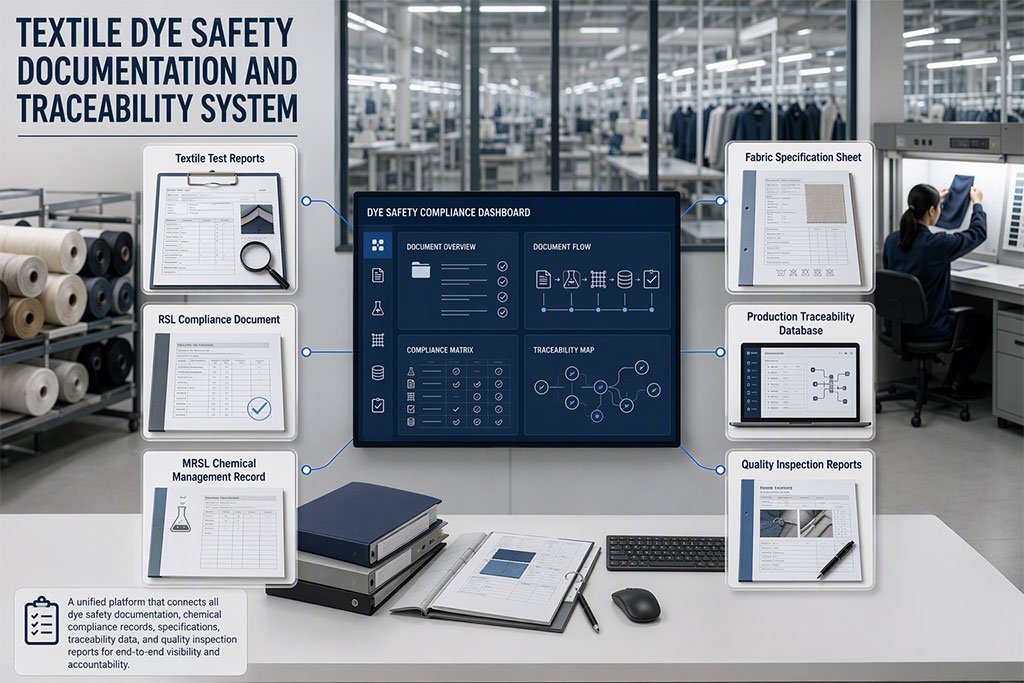
1. Providing Material Documentation
Factories can support brands with:
- Fabric composition reports
- Laboratory test reports
- Chemical compliance documents
- Supplier documentation
- Production records
These documents improve transparency and help brands prepare for international market requirements.
2. Conducting Pre-Production Testing
Testing before bulk production allows manufacturers to identify potential problems early.
Common issues detected through testing include:
- Incorrect dye formulas
- Unstable color performance
- Chemical compliance problems
- Fabric quality variations
Early correction reduces production delays and unnecessary costs.
3. Maintaining Production Traceability
Professional manufacturers maintain records related to:
- Fabric suppliers
- Dye lots
- Testing results
- Inspection reports
- Production batches
Traceability allows factories and brands to quickly identify and solve quality issues throughout the supply chain.
Common Mistakes Brands Make Regarding Dye Safety
1. Selecting Fabrics Based Only on Color Samples
A development sample may show the correct appearance, but it does not always represent bulk production performance.
Before placing large orders, brands should review:
- Colorfastness test results
- Fabric performance reports
- Production consistency records
A visually attractive fabric must also meet durability and compliance requirements.
2. Testing Too Late in the Development Process
Waiting until after bulk production creates higher risks.
Late-stage testing may result in:
- Additional production costs
- Shipment delays
- Material replacement
- Inventory problems
The most effective approach is testing fabrics and colors during the development and sampling stages.
3. Ignoring Market-Specific Compliance Requirements
Different regions may have different chemical and textile regulations.
Before production, brands should define:
- Target market requirements
- Restricted substance standards
- Required laboratory tests
- Documentation expectations
Clear requirements help manufacturers select suitable materials from the beginning.
FAQ: Apparel Dye Safety and Colorfastness Compliance
1.What is colorfastness in apparel manufacturing?
Colorfastness refers to a textile’s ability to maintain its original color when exposed to external conditions such as washing, rubbing, perspiration, and sunlight.
For apparel brands, good colorfastness helps maintain product appearance throughout the garment lifecycle.
2.How do apparel factories test dye safety?
Factories evaluate dye safety through laboratory testing, chemical analysis, and compliance verification based on buyer requirements and international standards.
Testing may include restricted substance analysis and textile performance evaluation.
3.What colorfastness tests are commonly required for clothing?
Common colorfastness tests include:
- Washing fastness
- Rubbing fastness
- Perspiration fastness
- Light fastness
4.Why do dark-colored garments require more testing?
Dark colors usually contain higher dye concentrations.
As a result, they may have higher risks related to:
- Dye migration
- Color transfer
- Washing color change
5.How can brands maintain color consistency in bulk production?
Brands can improve color consistency by:
- Approving fabric standards before production
- Managing dye lots
- Conducting laboratory testing
- Performing inline inspections
- Maintaining production records
6.Does fabric certification guarantee colorfastness?
No.
Fabric certifications can verify specific material or chemical requirements, but colorfastness still requires dedicated textile testing.
Color performance depends on:
- Fiber type
- Dye system
- Fabric construction
- Processing conditions
7.When should brands conduct dye testing?
The ideal timing is before bulk production.
A typical workflow includes:
Fabric selection → Lab testing → Sample approval → PPS confirmation → Bulk manufacturing
Early testing helps reduce quality risks and production changes.
8.Can OEM factories develop custom colors?
Yes.
OEM manufacturers can support custom color development through:
- Pantone color matching
- Lab dip approval
- Fabric shade evaluation
- Bulk color confirmation
Conclusion: Building Reliable Apparel Color Quality
Through Manufacturing Control
Dye safety and colorfastness compliance require more than selecting the right fabric color.
A reliable apparel manufacturing process combines:
- Controlled material sourcing
- Chemical compliance management
- Laboratory testing
- Fabric lot management
- Production inspection
- Documentation traceability
For global B2B apparel brands, working with an experienced OEM manufacturer helps reduce risks related to fading, dye migration, compliance issues, and inconsistent bulk production.
Written by the Simmerui Apparel Manufacturing Team
The Simmerui Apparel Manufacturing Team specializes in OEM and ODM apparel production for global B2B brands, providing integrated solutions across product development, fabric sourcing, sampling, quality control, and scalable manufacturing.
With experience in outdoor apparel, performance wear, casual clothing, and private label collections, Simmerui supports brands through fabric engineering, production management, compliance control, and quality assurance.
Our goal is to help apparel brands reduce production risks, improve product reliability, and build long-term manufacturing partnerships.