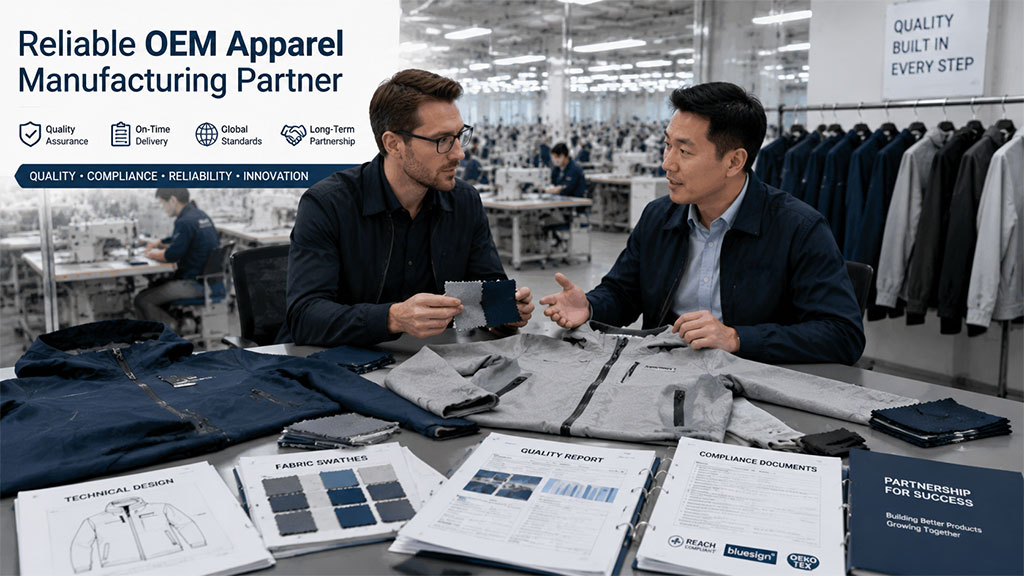
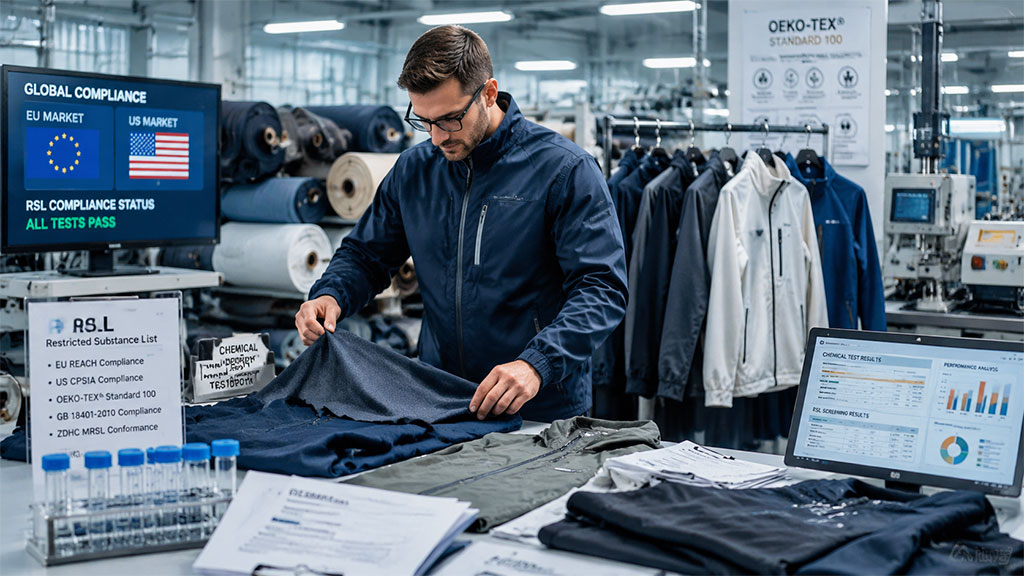
Why Chemical Compliance Matters for Apparel Brands
Modern apparel production involves multiple chemical processes, including fiber manufacturing, dyeing, finishing, printing, coating, and performance treatments.
For global fashion brands and private label buyers, chemical compliance is no longer only a quality issue. It has become a critical supplier qualification requirement.
A garment may meet design specifications and production standards but still face:
- Retailer rejection
- Import clearance problems
- Product recalls
- Brand reputation damage
- Additional testing costs
- Market entry delays
For OEM apparel production, chemical management must begin before manufacturing starts.
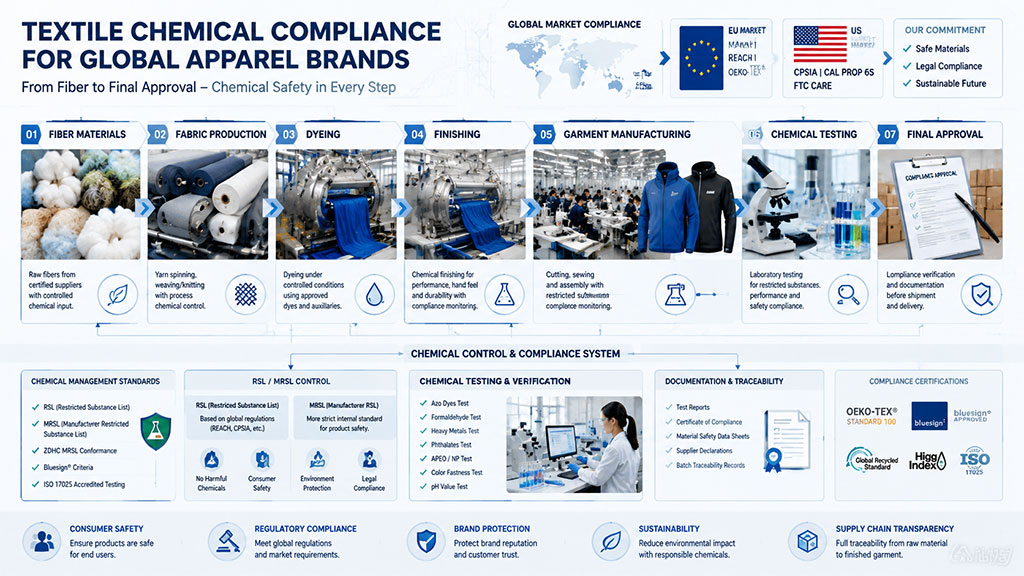
Reliable clothing manufacturers control chemical risks throughout the supply chain, including:
| Production Stage | Chemical Control Focus |
|---|---|
| Fabric sourcing | Material composition and supplier verification |
| Dyeing process | Restricted dye substances and color safety |
| Fabric finishing | Chemical treatment compliance |
| Printing process | Ink and coating safety |
| Garment production | Accessories and trims compliance |
| Final inspection | Laboratory testing and documentation |
What Are Restricted Chemicals in Textile Manufacturing?
Restricted chemicals are substances limited or prohibited because they may create risks to:
- Consumer health
- Worker safety
- Environmental protection
- Product compliance
Apparel brands typically manage these substances through a Restricted Substance List (RSL).
An RSL defines chemical limits that finished textile products must meet before entering specific markets.
Some advanced manufacturers also follow a Manufacturing Restricted Substance List (MRSL), which controls hazardous chemicals used during production processes.
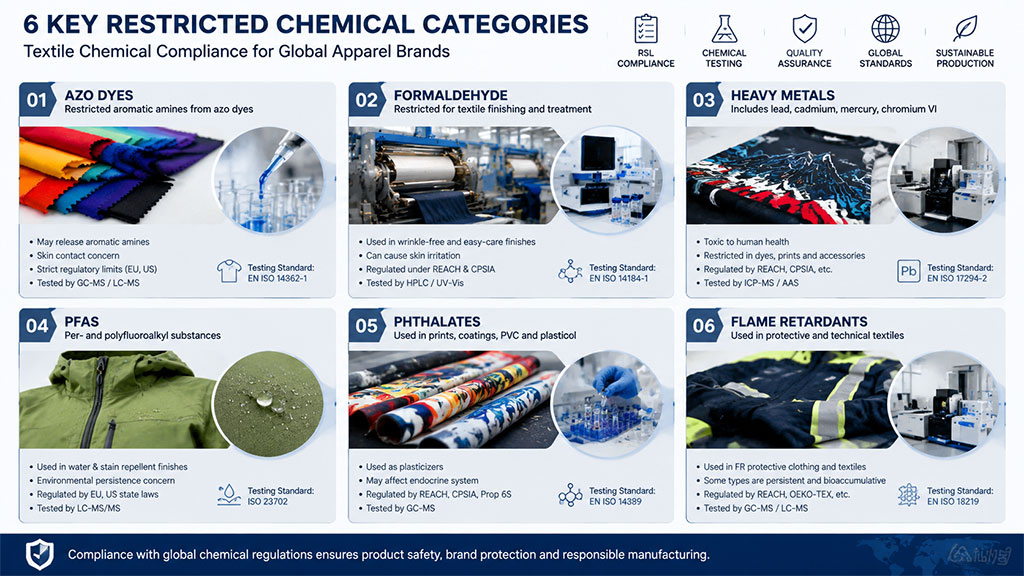
Common restricted chemicals in apparel manufacturing include:
- Azo dyes
- Formaldehyde
- Heavy metals
- PFAS
- Phthalates
- Flame retardants
These substances are especially important for:
- Outdoor jackets
- Sportswear
- Performance apparel
- Children’s clothing
- Fashion garments
- Functional textiles
Common Restricted Chemicals in Textile Manufacturing
1. Azo Dyes
Azo dyes are widely used in textile coloration because they provide:
- Bright colors
- Stable dye performance
- Cost-effective production
However, some azo dyes may release aromatic amines that are restricted due to potential health concerns.
For apparel manufacturers, azo dye control usually includes:
- Dye supplier verification
- Restricted aromatic amine testing
- Color fastness evaluation
- Production batch monitoring
Apparel Categories Requiring Attention
Azo dye compliance is especially important for:
- Printed T-shirts
- Sportswear collections
- Fashion garments
- Children’s apparel
Professional OEM suppliers verify dye compliance before bulk production to reduce rejection risks.
2. Formaldehyde in Textile Manufacturing
Formaldehyde may appear during textile finishing processes, including:
- Wrinkle-resistant treatments
- Resin finishing
- Fabric performance treatments
Excessive formaldehyde levels may cause:
- Skin irritation
- Consumer complaints
- Regulatory non-compliance
Manufacturers control formaldehyde through:
| Control Method | Purpose |
|---|---|
| Low-formaldehyde finishing chemicals | Reduce chemical risk |
| Fabric testing | Verify safety limits |
| Supplier documentation | Confirm chemical compliance |
For brands developing next-to-skin products, formaldehyde testing is an important approval step.
3. Heavy Metals in Apparel Products
Heavy metals may enter textile products through:
- Dyes
- Pigments
- Coatings
- Metal accessories
Common restricted metals include:
- Lead
- Cadmium
- Mercury
- Chromium VI
These chemicals require additional attention for:
- Printed apparel
- Outdoor functional clothing
- Garments with metal hardware
- Fashion accessories
OEM manufacturers should verify both textile materials and garment components.
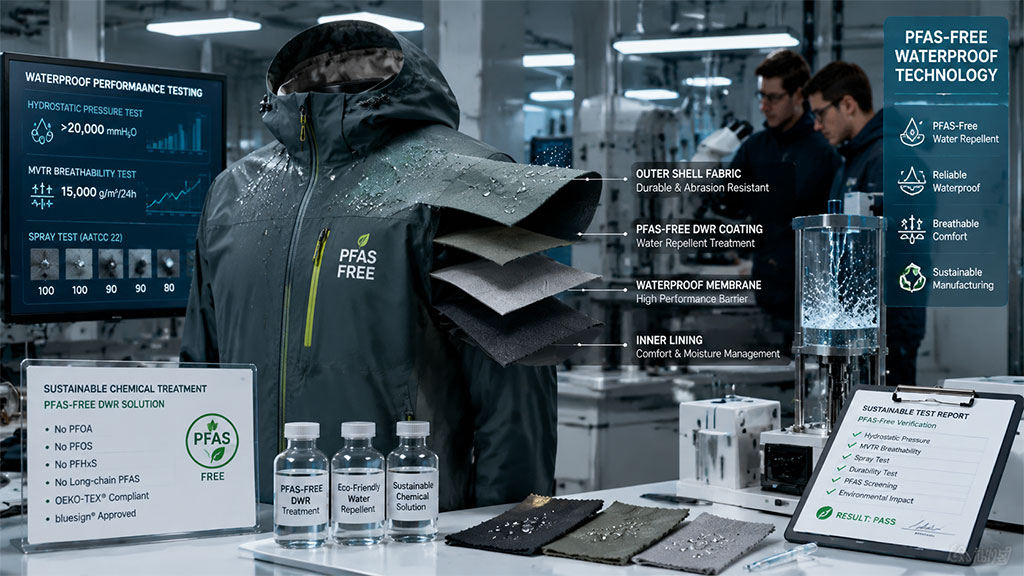
4. PFAS in Outdoor Apparel Manufacturing
PFAS (Per- and Polyfluoroalkyl Substances) have traditionally been used for:- Water-resistant finishes
- Stain-resistant treatments
- Outdoor performance fabrics
- PFAS-free DWR treatments
- Alternative waterproof coatings
- Sustainable performance materials
| Requirement | Purpose |
|---|---|
| PFAS-free fabric options | Reduce environmental concerns |
| DWR performance testing | Confirm water repellency |
| Chemical test reports | Verify compliance |
5. Phthalates in Textile Manufacturing
Phthalates are chemical additives commonly used to improve flexibility and durability in plastic-based materials.
In apparel manufacturing, phthalates may appear in:
- PVC coatings
- Plastic prints
- Synthetic accessories
- Flexible plastic components
Certain phthalates are restricted because of potential risks related to human health and environmental impact.
Apparel categories requiring additional attention include:
- Graphic printed apparel
- Coated outdoor jackets
- Promotional clothing
- Accessories containing plastic materials
OEM manufacturers should evaluate:
| Material Component | Compliance Risk |
|---|---|
| PVC printing | Phthalate migration |
| Plastic labels | Restricted chemical content |
| Coated fabrics | Chemical formulation control |
For brands developing printed or coated products, chemical verification should be completed before mass production.
6. Flame Retardants in Performance Textiles
Flame retardant chemicals are used in some specialized textile applications to improve fire resistance.
They may be found in:
- Industrial protective clothing
- Safety apparel
- Technical textiles
- Treated performance fabrics
However, some flame retardant substances are restricted due to environmental and health concerns.
Before developing flame-resistant products, brands should confirm:
- Required safety standards
- Target market regulations
- Approved chemical treatments
- Testing requirements
A qualified OEM apparel manufacturer should understand the difference between:
- Required functional performance
- Restricted chemical limitations
The goal is to achieve product performance without creating compliance risks.
EU Textile Chemical Compliance Requirements
European markets have some of the strictest chemical regulations worldwide.
For apparel brands selling in Europe, textile products commonly need to comply with several regulatory requirements.
REACH Regulation for Apparel Products
The EU REACH Regulation controls the use of chemicals entering the European market.
For textile and apparel manufacturers, REACH compliance commonly involves:
- Restricted substances monitoring
- SVHC (Substances of Very High Concern) control
- Supplier chemical declarations
- Laboratory testing records
Chemical compliance should be considered during:
Fabric Development
Manufacturers should verify:
- Fiber composition
- Dyeing processes
- Finishing chemicals
- Functional treatments
Sample Approval
Before bulk production, brands should review:
- Material test reports
- Chemical declarations
- Compliance documentation
Bulk Production
Manufacturers should maintain:
- Production consistency
- Supplier traceability
- Testing records
A proactive compliance process helps prevent issues after shipment.
EU POPs Regulation and Outdoor Apparel
The EU Persistent Organic Pollutants (POPs) Regulation controls substances that remain in the environment for long periods.
This regulation is especially relevant for:
- Waterproof outdoor clothing
- Water-repellent fabrics
- Chemical finishing processes
Outdoor apparel brands should pay attention to:
- PFAS restrictions
- Sustainable DWR technologies
- Alternative finishing systems
For technical apparel manufacturers, chemical innovation has become an important part of product development.
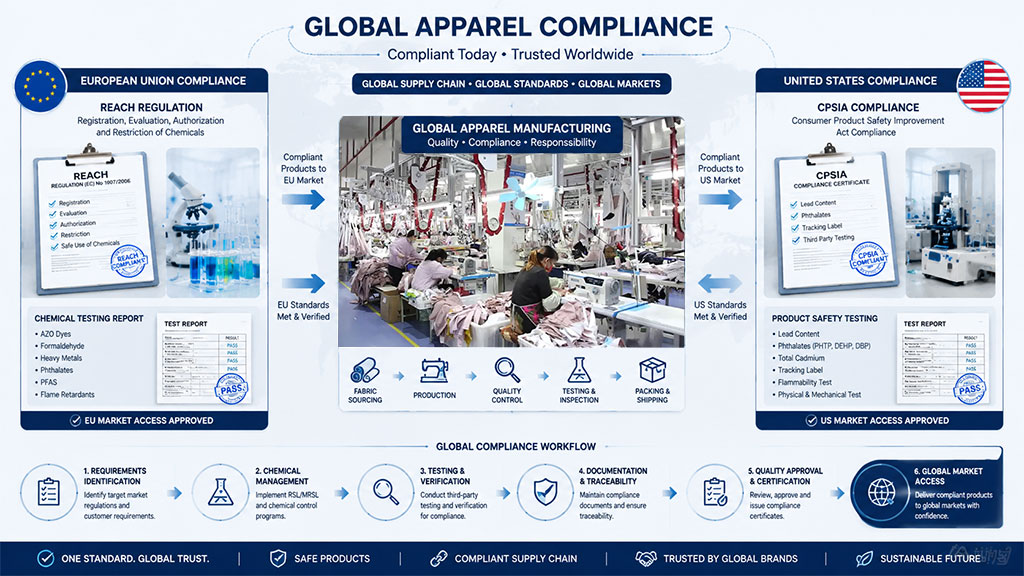
US Textile Chemical Compliance Requirements
Unlike the European Union, the United States does not have one single regulation covering all textile chemicals. Instead, apparel chemical compliance usually involves multiple requirements.Consumer Product Safety Requirements
US apparel products may require testing related to:- Restricted substances
- Lead content
- Children’s product safety
- Consumer protection standards
- Product category
- Target consumer group
- Required testing standards
State-Level Chemical Regulations
Some US states have additional chemical restrictions, especially regarding:- PFAS
- Children’s products
- Environmental safety
- Federal requirements
- State-specific chemical regulations
How OEM Apparel Manufacturers Manage Chemical Compliance
Chemical compliance should not be treated as a final inspection activity. Professional manufacturers integrate chemical control throughout the product development process.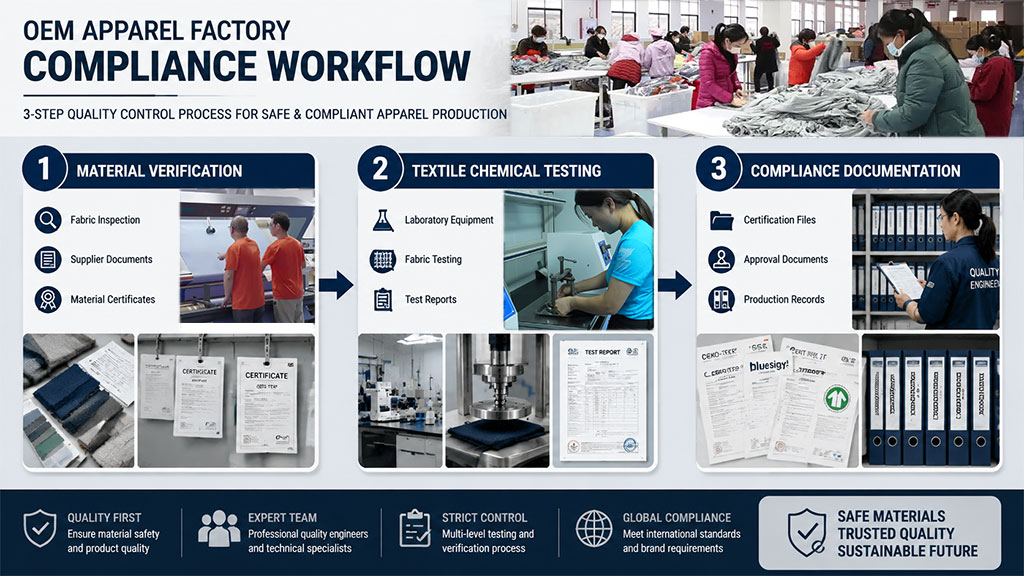
Step 1: Review Fabric and Material Sources
Before production begins, manufacturers should verify:Fabric Information
- Fiber composition
- Fabric supplier qualification
- Chemical treatment process
Material Documentation
Including:- Supplier declarations
- Material specifications
- Chemical compliance statements
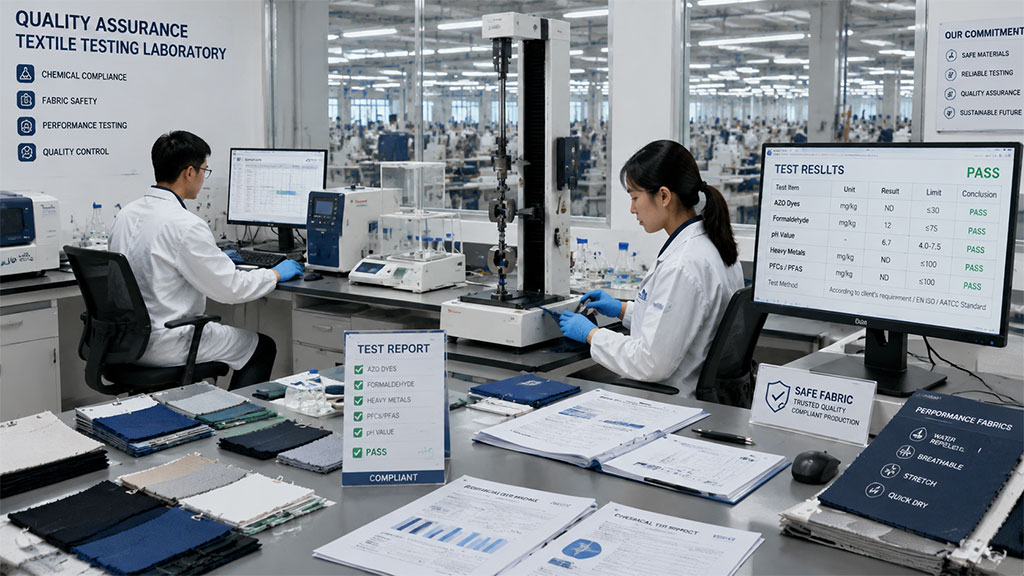
Step 2: Conduct Textile Chemical Testing
Laboratory testing is one of the most important compliance controls in apparel manufacturing. Common textile chemical tests include:| Testing Item | Purpose |
|---|---|
| Formaldehyde Testing | Verify chemical safety limits |
| Azo Dye Testing | Detect restricted aromatic amines |
| Heavy Metal Testing | Confirm metal compliance |
| PFAS Testing | Verify fluorine-free treatment options |
| Phthalate Testing | Check plastic material safety |
| Color Fastness Testing | Ensure dye stability |
- Product category
- Target market
- Retailer requirements
- Fabric type
Step 3: Maintain Chemical Compliance Documentation
Professional OEM clothing manufacturers should maintain complete documentation, including:| Document | Purpose |
|---|---|
| Laboratory Test Reports | Verify chemical safety |
| Material Certificates | Confirm fabric information |
| Supplier Declarations | Provide chemical transparency |
| RSL Compliance Records | Support buyer requirements |
| Certification Documents | Demonstrate responsible production |
- Retailer audits
- Import requirements
- Market expansion
- Sustainability verification
Certifications Supporting Textile Chemical Compliance
Certifications do not replace legal regulations, but they provide additional supply chain transparency.
Common certifications include:
| Certification | Purpose |
|---|---|
| OEKO-TEX® STANDARD 100 | Tests harmful substances in textiles |
| bluesign® | Supports chemical management and sustainable production |
| GRS (Global Recycled Standard) | Verifies recycled materials |
| GOTS | Covers organic textile processing |
For international apparel brands, certified suppliers can provide additional confidence during supplier evaluation.
How to Select a Reliable OEM Clothing Manufacturer
Chemical compliance capability should be an important factor when selecting an apparel manufacturing partner. Before starting a project, brands should evaluate: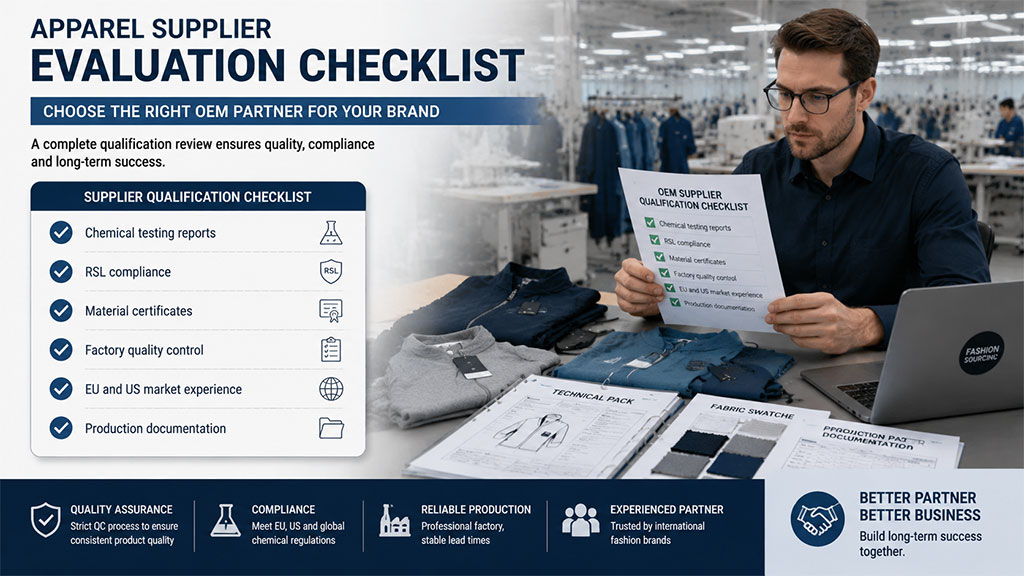
1. Does the Manufacturer Provide Chemical Testing Reports?
A reliable supplier should provide:- Recent laboratory reports
- Material testing records
- Compliance documentation
2. Can the Factory Support EU and US Markets?
International apparel suppliers should understand:- REACH requirements
- RSL requirements
- Retailer compliance expectations
- Import documentation
3. Does the Manufacturer Control Risks Before Production?
Chemical compliance should happen during:- Material sourcing
- Product development
- Sample approval
Textile Chemical Compliance Checklist for Apparel Brands
Before selecting a supplier, brands can use this checklist:| Evaluation Area | Questions to Ask |
|---|---|
| Material sourcing | Can the supplier provide fabric information? |
| Chemical control | Does the factory follow RSL/MRSL requirements? |
| Testing capability | Are laboratory reports available? |
| Certifications | Can the supplier provide relevant certifications? |
| Production control | Are chemical risks reviewed before bulk production? |
| Market experience | Has the factory supplied EU and US brands? |
FAQ: Restricted Chemicals in Textile Manufacturing
1. What are restricted chemicals in textile manufacturing?
Restricted chemicals are substances limited or prohibited because they may create risks to consumer health, environmental safety, or regulatory compliance. Common examples include azo dyes, formaldehyde, heavy metals, PFAS, phthalates, and certain flame retardants.2. Why do apparel brands need chemical testing before production?
Chemical testing helps brands confirm that products meet market regulations and retailer requirements before shipment. It reduces risks such as product rejection, recalls, and import delays.3. What is an RSL in apparel manufacturing?
An RSL (Restricted Substance List) defines chemical limits allowed in finished textile products. Many international brands require suppliers to follow their own RSL requirements.4. What is the difference between RSL and MRSL?
RSL controls restricted chemicals in finished products, while MRSL controls chemicals used during manufacturing processes. MRSL management helps manufacturers reduce chemical risks throughout the supply chain.5. What textile chemical regulations apply to EU apparel imports?
EU apparel products commonly need to comply with REACH regulations, including restrictions on hazardous substances and SVHC requirements.6. Are PFAS still used in outdoor clothing?
PFAS use is decreasing as regulations become stricter. Many outdoor brands are transitioning toward PFAS-free waterproof and water-repellent technologies.7. What documents should an OEM apparel supplier provide?
Common documents include:- Laboratory test reports
- Material declarations
- Chemical compliance statements
- Certification documents
- Supplier records
8. How often should textile products be tested?
Testing frequency depends on:- Product type
- Fabric materials
- Target market
- Buyer requirements
9. Which certifications help verify textile safety?
Common certifications include:- OEKO-TEX® STANDARD 100
- bluesign®
- GRS
- GOTS
10. How can brands choose a compliant OEM clothing manufacturer?
Brands should evaluate:- Chemical management systems
- Testing capability
- Documentation transparency
- Market experience
- Production quality control
Conclusion: Chemical Compliance Is a Key Factor in Apparel Supply Chain Success
For apparel brands entering global markets, restricted chemical management is no longer optional.
Compliance affects:
- Product approval
- Retail partnerships
- Consumer trust
- Market expansion
A professional OEM apparel manufacturer helps brands reduce risks by integrating chemical control into every stage of production:
- Material sourcing
- Supplier verification
- Textile testing
- Documentation management
- Bulk production monitoring
At Simmerui Apparel, chemical compliance is integrated into our custom apparel development process. From fabric selection and testing coordination to OEM production management, we help global brands develop reliable products that meet international market expectations.
Looking for an experienced OEM apparel manufacturing partner for compliant textile production?
Contact Simmerui Apparel to discuss your next project.