
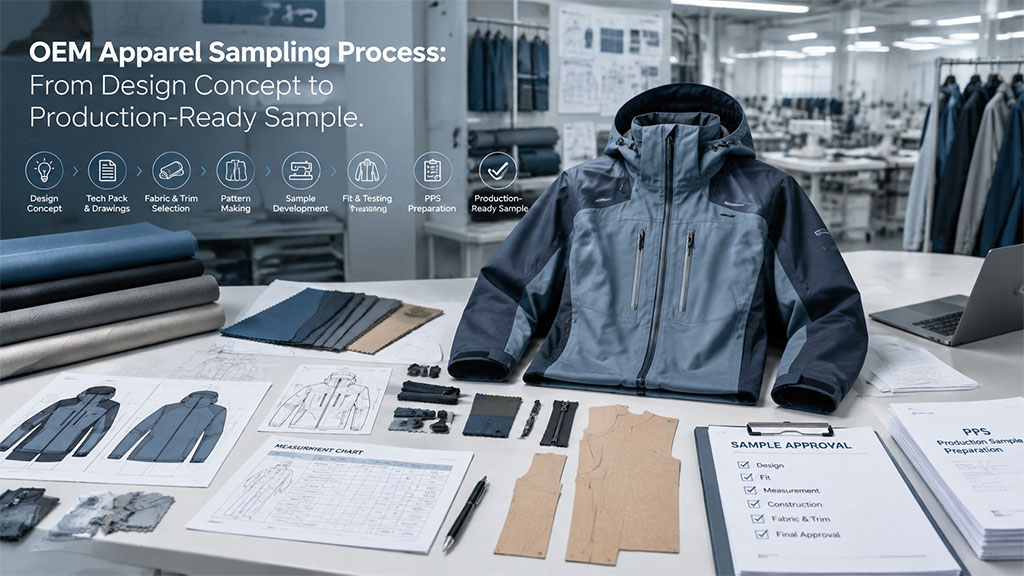
The OEM apparel sampling process usually requires 2–5 sampling rounds before bulk production, depending on product complexity, fabric performance, construction details, and brand requirements. Basic garments such as T-shirts may reach approval quickly, while technical outdoor jackets and performance apparel often require additional revisions for fit, materials, waterproof performance, and functional testing. A structured sampling workflow helps brands reduce production risks, improve product consistency, and move from initial concepts to production-ready garments efficiently.
Introduction: Why Sampling Matters in OEM Apparel Development
For apparel brands working with OEM manufacturers, sampling is one of the most important stages before bulk production.
A common question from sourcing managers is:
How many sampling rounds are normal during OEM apparel development?
There is no fixed number because every product has different development requirements.
A basic hoodie may only require one to three sampling rounds, while waterproof jackets, technical shells, or performance apparel may need multiple revisions to validate:
- Fit accuracy
- Fabric performance
- Construction details
- Functional features
- Production feasibility
A well-managed sampling process allows brands and manufacturers to identify issues before bulk production and create a stable manufacturing standard.
What Is an OEM Apparel Sampling Round?
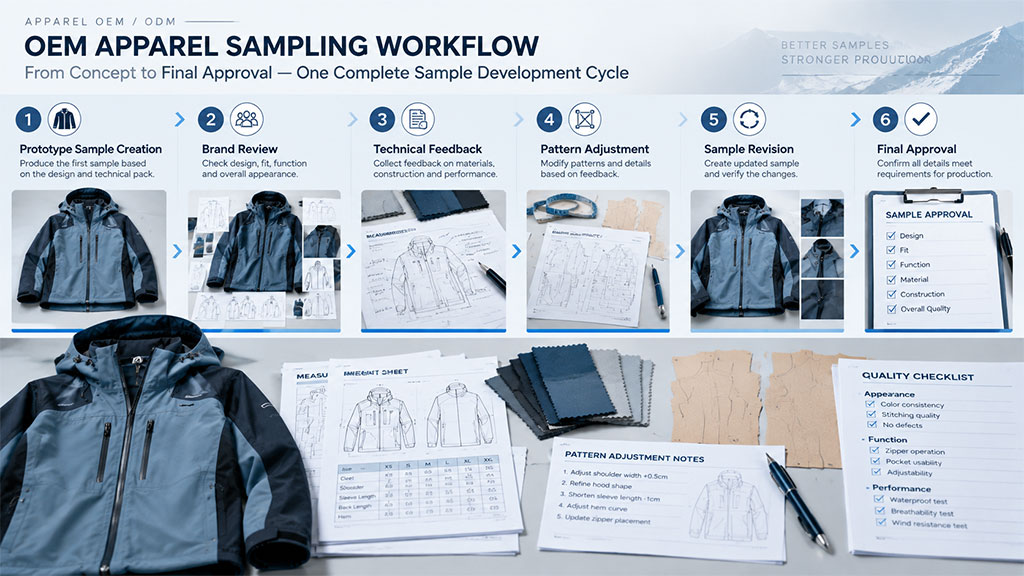
An OEM apparel sampling round is a complete development cycle between the brand and manufacturer. It normally includes:- Manufacturer develops the sample
- Brand reviews the sample
- Feedback is collected
- Pattern, material, or construction adjustments are made
- Updated sample is produced
- Brand approves or requests further revisions
Typical OEM Apparel Sampling Stages Before Bulk Production
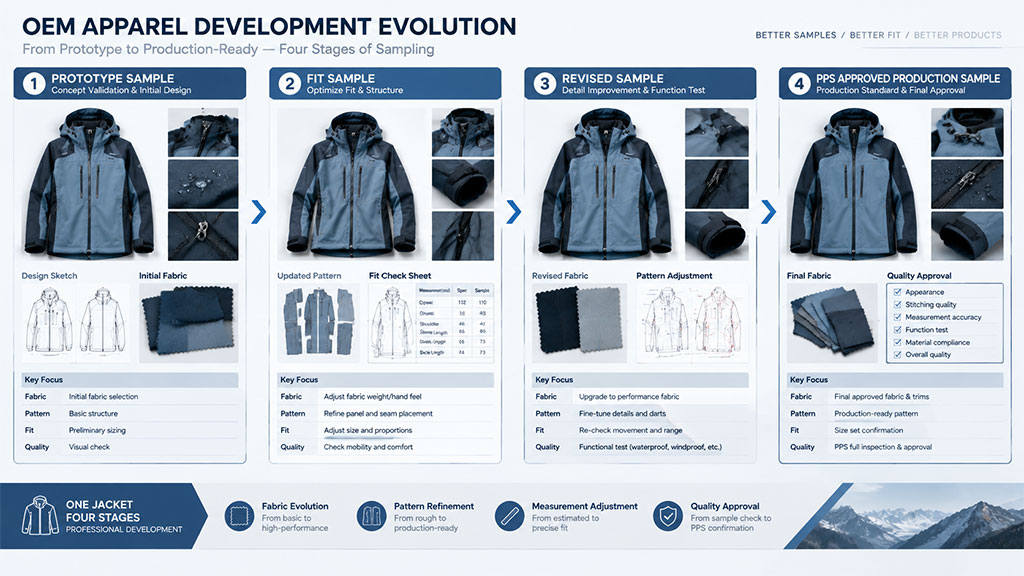
1. Prototype Sample: Turning Design Concepts Into Products
The prototype sample is the first physical version developed from the brand’s concept. At this stage, manufacturers evaluate:- Technical drawings
- Tech pack requirements
- Fabric selection
- Construction methods
- Size specifications
- Functional details
2. Fit Sample: Improving Garment Shape and Comfort
A garment may look correct but still require adjustments in actual wearing performance. The fit sample focuses on:- Measurements
- Garment proportions
- Silhouette
- Comfort
- Movement flexibility
- Pattern adjustments
3. Revised Sample: Solving Development Issues
After receiving brand feedback, manufacturers refine the product through additional sample revisions. Common adjustment areas include:- Fabric weight
- Stitching details
- Pocket placement
- Zipper position
- Hood construction
- Sleeve structure
- Functional components
- Waterproof performance
- Seam sealing
- Breathability
- Fabric durability
- Weather protection
4. PPS Sample: Final Production Approval
The Pre-Production Sample (PPS) represents the final approved production standard.
Before bulk manufacturing begins, brands normally confirm:
- Final fabric
- Colors
- Measurements
- Labels and trims
- Packaging requirements
- Quality expectations
Once PPS approval is completed, factories can begin bulk production.
How Many Sampling Rounds Are Normal in OEM Apparel Development?
The number of sampling rounds depends mainly on product complexity.
| Product Type | Typical Sampling Rounds |
|---|---|
| Basic T-shirts / Hoodies | 1–3 rounds |
| Casual Jackets | 2–4 rounds |
| Outdoor Jackets | 3–5 rounds |
| Waterproof Technical Apparel | 4–6+ rounds |
| Complex Performance Wear | 3–6 rounds |
Products usually require more sampling rounds when they involve:
- Multiple fabric options
- Waterproof or breathable testing
- Complex patterns
- Special trims
- Functional components
- Strict fitting standards
What Factors Affect OEM Sampling Rounds?
1. Product Complexity
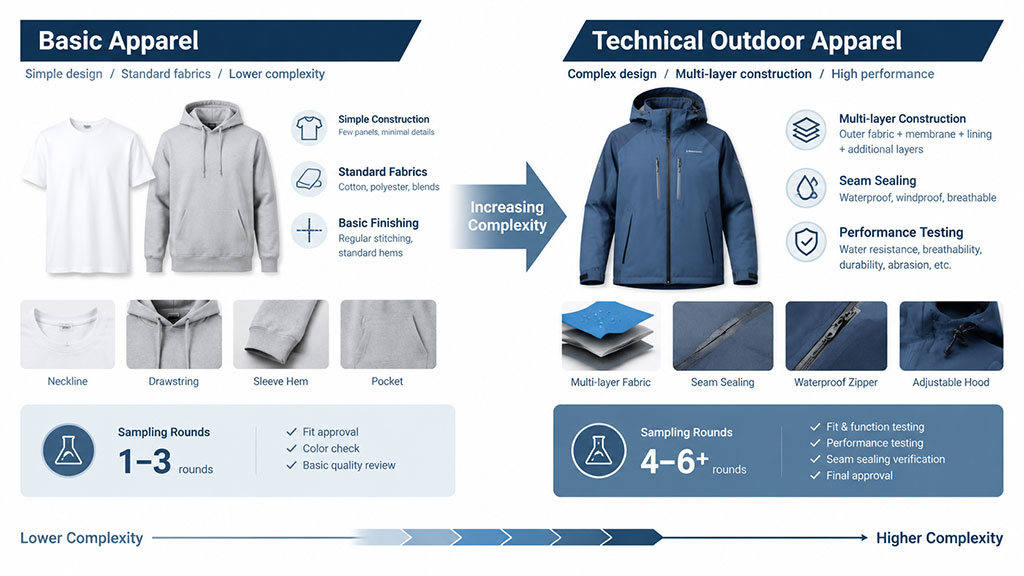
Simple products usually require fewer revisions.
Example:
Basic Cotton Hoodie
Features:
- Standard fabric
- Simple construction
- Limited functional details
Typical requirement:
1–3 sampling rounds
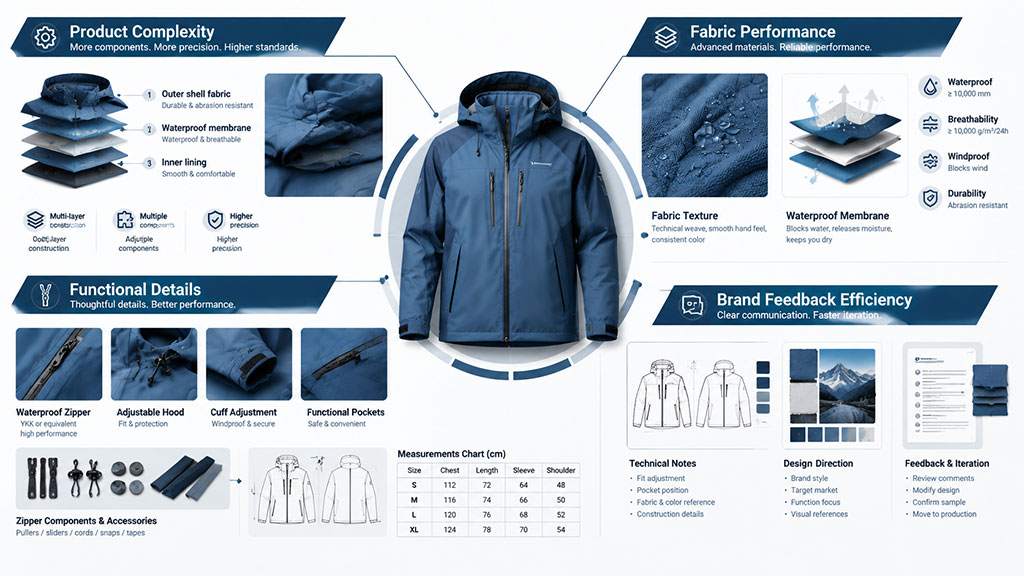
Technical Outdoor Jacket
Features:
- Waterproof membrane
- Multi-layer construction
- Seam sealing
- Functional pockets
- Performance testing
Typical requirement:
4–6+ sampling rounds
2. Fabric Selection and Performance Requirements
Fabric selection directly affects sampling efficiency. Common adjustment areas include:- Hand feel
- Fabric weight
- Shrinkage
- Stretch recovery
- Color accuracy
3. Brand Feedback Efficiency
Clear feedback helps reduce unnecessary revisions. Effective feedback usually includes:- Measurement comments
- Marked sample photos
- Priority adjustment lists
- Approval standards
How Brands Can Reduce OEM Sampling Rounds
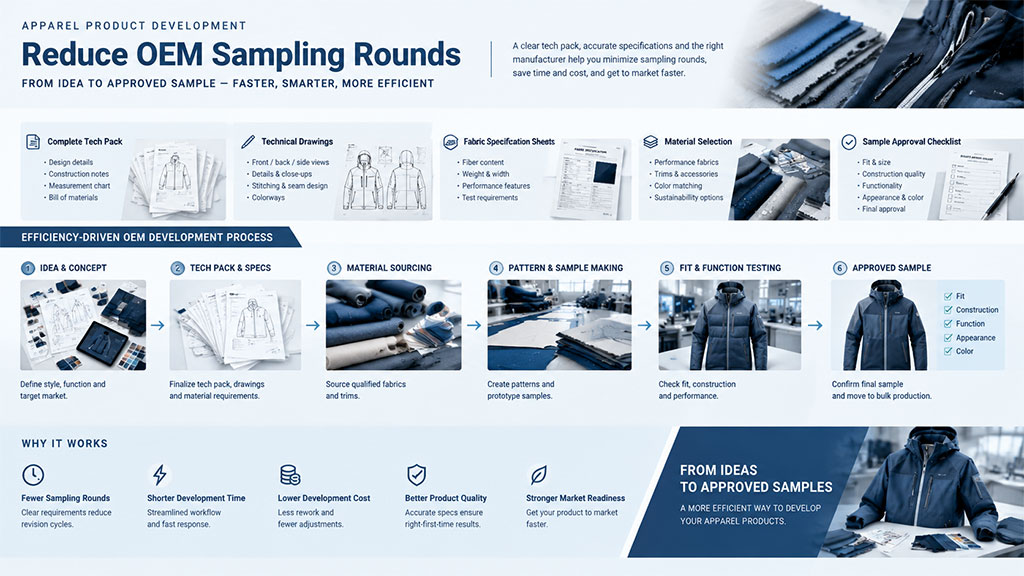
1. Prepare a Complete Tech Pack
A professional tech pack should include:
- Technical drawings
- Measurement charts
- Fabric specifications
- Construction details
- Label requirements
A complete product specification reduces communication errors during development.
2. Confirm Materials Early
Material decisions should be finalized before sampling. Important factors include:- Fabric performance
- Cost target
- Production availability
- Testing requirements
3. Work With an Experienced OEM Manufacturing Partner
Experienced OEM partners can identify potential issues earlier and improve development efficiency. A reliable manufacturing partner should support:- Product development
- Fabric sourcing
- Sampling improvement
- Quality control
- Bulk production management
OEM Apparel Sampling Timeline Example
| Development Stage | Estimated Time |
|---|---|
| Tech Pack Review | 3–7 days |
| First Sample Development | 7–20 days |
| Brand Feedback | 3–7 days |
| Revision Sample | 7–15 days |
| PPS Approval | 5–10 days |
Total development time:
Approximately 4–10 weeks for many OEM apparel projects.
Complex technical products may require longer development cycles.
Common Mistakes Brands Make During Sampling
Expecting the First Sample to Be Perfect
The first sample is usually a development milestone, not the final production version.
Changing Requirements Too Late
Late modifications can increase:
- Sampling costs
- Development time
- Production risks
Ignoring Bulk Production Considerations
A sample may look excellent but still require adjustments for:
- Manufacturing efficiency
- Cost control
- Quality consistency
How Simmerui Supports OEM Apparel Sampling and Product Development
The Simmerui Apparel Manufacturing Team supports global B2B brands through:
- OEM & ODM product development
- Fabric sourcing
- Custom sampling
- Technical apparel development
- Quality control
- Bulk production management
From initial concept validation to PPS approval, we help brands build reliable products with controlled development risks and scalable manufacturing solutions.
FAQ: OEM Apparel Sampling Process
1. How many sample rounds are normal for OEM clothing?
Most OEM apparel projects require around 2–5 sampling rounds. Basic garments usually need fewer revisions, while technical products may require more development cycles.2. Is the first OEM sample usually approved?
Usually not. The first sample mainly evaluates design, construction, materials, and fit before improvements are made.3. How can brands reduce sampling costs?
Brands can reduce sampling costs by preparing accurate tech packs, confirming materials early, and providing clear feedback.4. What is the difference between a fit sample and PPS sample?
A fit sample focuses on garment measurements and wearing comfort. A PPS sample confirms the final production standard before bulk manufacturing.5. Do technical jackets require more sampling rounds?
Yes. Technical jackets often require additional sampling because they involve performance fabrics, waterproof construction, seam sealing, and testing requirements.6. How long does OEM apparel sampling take?
Many OEM apparel projects require around 4–10 weeks from tech pack review to PPS approval.7. Can brands customize samples before bulk production?
Yes. Brands can customize fabrics, colors, trims, labels, construction details, and functional features during the sampling stage.8. Why is PPS approval important?
PPS approval creates the production reference standard and helps factories maintain consistency during bulk manufacturing.Written by the Simmerui Apparel Manufacturing Team
Simmerui specializes in OEM and ODM apparel manufacturing for global B2B brands, providing integrated solutions across product development, fabric sourcing, sampling, quality control, and scalable production.