
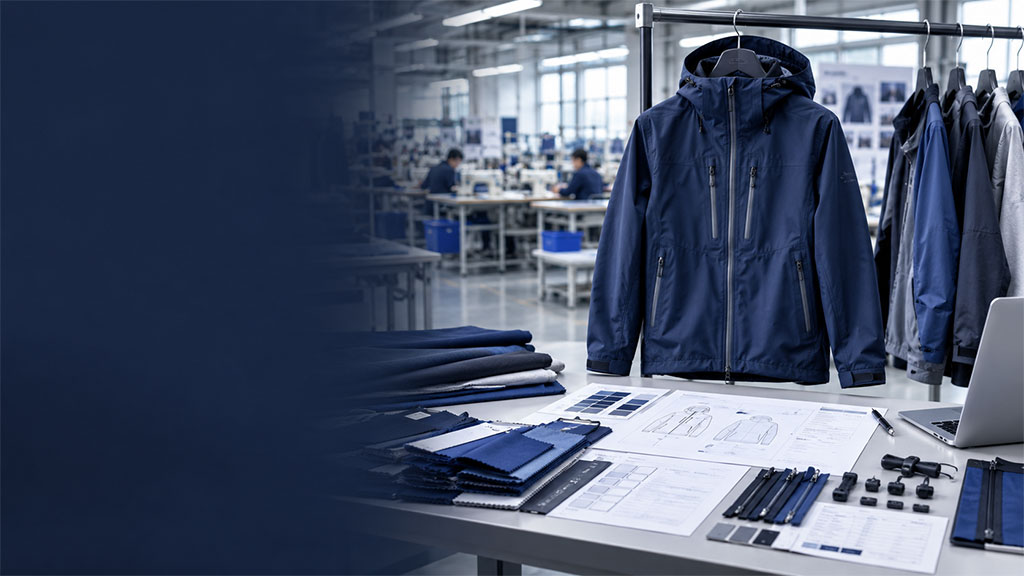
An OEM clothing manufacturer vs trading company comparison helps apparel brands identify the right sourcing partner for their product requirements, budget, and growth plans. OEM manufacturers focus on producing garments to a buyer’s specifications, while trading companies coordinate sourcing through external factories. Both models can support custom apparel production, but they differ in production access, technical collaboration, supplier management, and supply chain visibility.
Understanding these differences helps brands evaluate quality control, minimum order quantities (MOQs), lead times, and total sourcing costs before committing to bulk production.1. What Is an OEM Clothing Manufacturer?
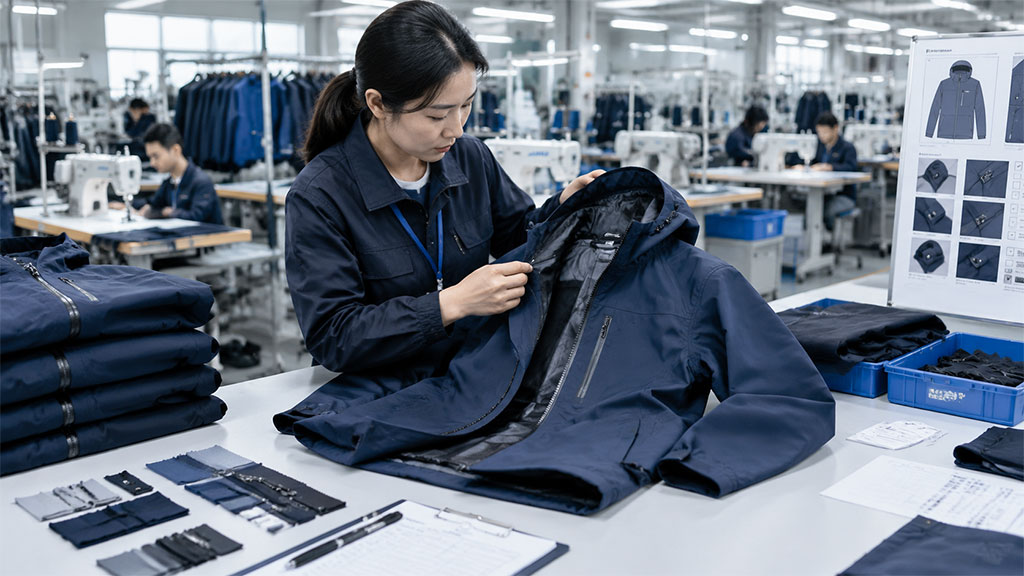
An OEM (Original Equipment Manufacturer) produces garments according to a buyer’s specifications, technical requirements, and branding instructions.
For B2B apparel brands, services may include fabric sourcing, pattern development, sampling, bulk manufacturing, quality inspection, and customized packaging.
Key advantages include:
- Technical collaboration: Direct communication on tech packs, measurements, construction, and materials.
- Product customization: Custom fabrics, colors, trims, labels, embroidery, and printing.
- Production coordination: Sampling, pre-production approval, and bulk scheduling.
- Repeat-order consistency: Approved specifications and production records support consistent results.
OEM manufacturing is particularly suitable for brands developing proprietary designs, technical outdoor apparel, workwear, or repeatable private-label collections.
However, the term “manufacturer” does not automatically mean every process takes place in-house. Verify factory ownership, production capabilities, and subcontracted operations before placing an order.
2. What Is a Clothing Trading Company?
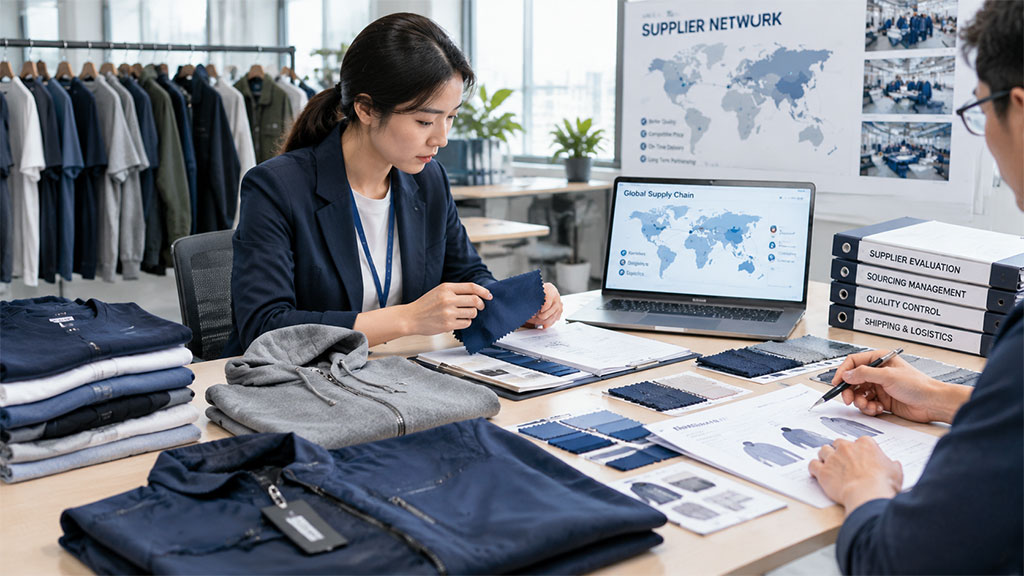
A clothing trading company connects buyers with garment factories and coordinates sourcing, purchasing, communication, and logistics.
Its typical advantages include:
- Broader supplier access: Multiple factories may cover different product categories and price levels.
- Consolidated sourcing: One commercial contact can coordinate several suppliers.
- Flexible supplier selection: Alternative factories may be available when budgets or requirements change.
- Coordination support: Assistance with quotations, order follow-up, documentation, and shipment arrangements.
Trading companies can be useful for brands sourcing multiple categories, such as T-shirts, hoodies, and woven jackets, from different specialist suppliers.
Their technical capabilities vary. Some maintain dedicated development and quality teams, while others primarily manage commercial coordination. Evaluate the actual service scope rather than assuming every trading company operates the same way.
3. OEM Clothing Manufacturer vs Trading Company: Key Differences
| Evaluation factor | OEM manufacturer | Trading company |
|---|---|---|
| Primary role | Produces garments to buyer specifications | Sources products from factories |
| Production access | Direct access to manufacturing operations, depending on the model | Access through a supplier network |
| Customization | Direct technical collaboration may simplify complex development | Depends on the trading company and factory partners |
| Pricing | Manufacturing costs and applicable service charges | Factory costs plus sourcing or coordination charges, where applicable |
| MOQ | Depends on factory, materials, and production setup | Depends on selected factories and negotiated terms |
| Quality control | Can integrate inspections into production | May coordinate inspections through internal teams or external providers |
| Supplier range | Focuses on its capabilities and production partners | May cover multiple factories and product categories |
| Supply chain visibility | Potentially stronger with transparent production access | Depends on factory disclosure and subcontracting transparency |
These are typical operating-model differences, not universal guarantees. A capable trading company may provide excellent quality management, while an OEM manufacturer may outsource specialized operations.
The key question is not which supplier label sounds better, but which partner can demonstrate the capabilities and accountability your brand requires.
4. Which Option Offers Better Pricing?
Neither model is automatically cheaper. An OEM manufacturer may provide more direct visibility into production costs, while a trading company may charge for supplier selection, coordination, inspection, and logistics management.
To compare quotations fairly, evaluate:
- Fabric specifications, trims, and material minimums.
- Garment construction and technical requirements.
- Order quantities, MOQ, and volume pricing.
- Sampling fees and revision costs.
- Inspection, testing, and potential rework.
- Packaging, freight, duties, and delivery terms.
Compare suppliers using the same tech pack, quantities, quality standards, and shipping conditions.
A useful metric is total landed cost per saleable garment, including product costs, development allocation, inspection, logistics, duties, and other applicable charges. This gives brands a more realistic basis for supplier selection than unit price alone.
5. Which Partner Is Better for Customization and Product Development?
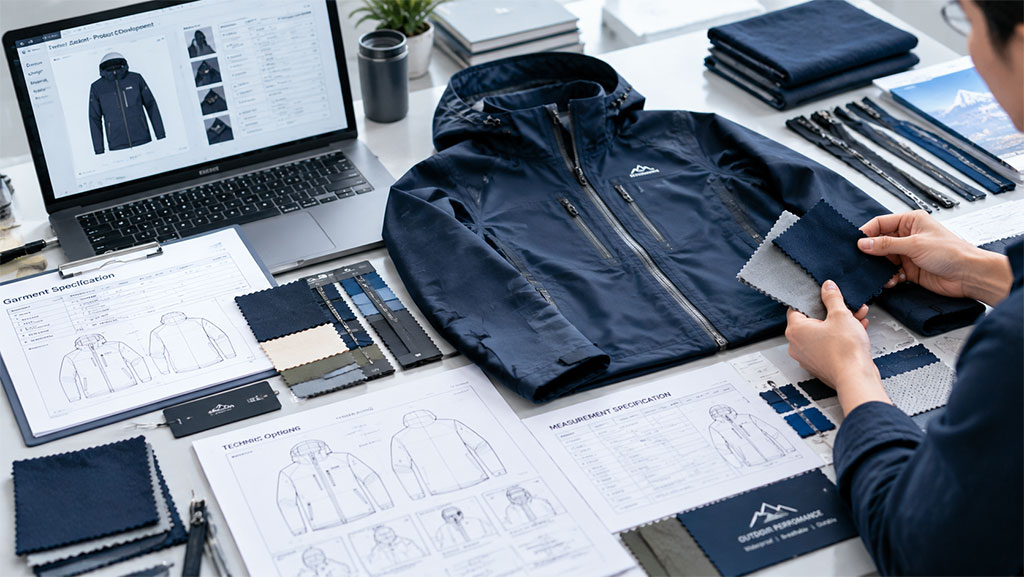
An OEM manufacturer may be the better starting point when your project requires detailed technical development, repeated sample revisions, specialized materials, or consistent bulk production.
For example, a waterproof outdoor jacket may require membrane selection, seam-tape compatibility, waterproof zippers, hood adjustments, and garment-level performance testing. Direct access to development and production teams can help resolve technical issues before bulk manufacturing.
A trading company may be more suitable when your brand needs several product categories, access to different specialist factories, or consolidated purchasing and shipment coordination.
For either model, confirm who manages tech packs, approves materials, controls specification changes, and takes responsibility for production problems.
6. How Do MOQ and Lead Times Compare?
MOQ and lead times depend on the actual factory, material availability, product complexity, order quantity, and production capacity—not simply whether a supplier is a manufacturer or trading company.
Before confirming an order, ask:
- Is MOQ calculated per style, color, or fabric?
- Do fabric and trim suppliers impose separate minimums?
- Can lower quantities be produced at a higher unit cost?
- How many sampling and revision rounds are expected?
- When will materials, bulk production, inspection, and shipment be completed?
A trading company may simplify coordination across several suppliers. An OEM manufacturer may offer more direct production scheduling visibility. In both cases, request a written timeline covering development, material sourcing, pre-production approval, bulk production, quality inspection, and shipment.
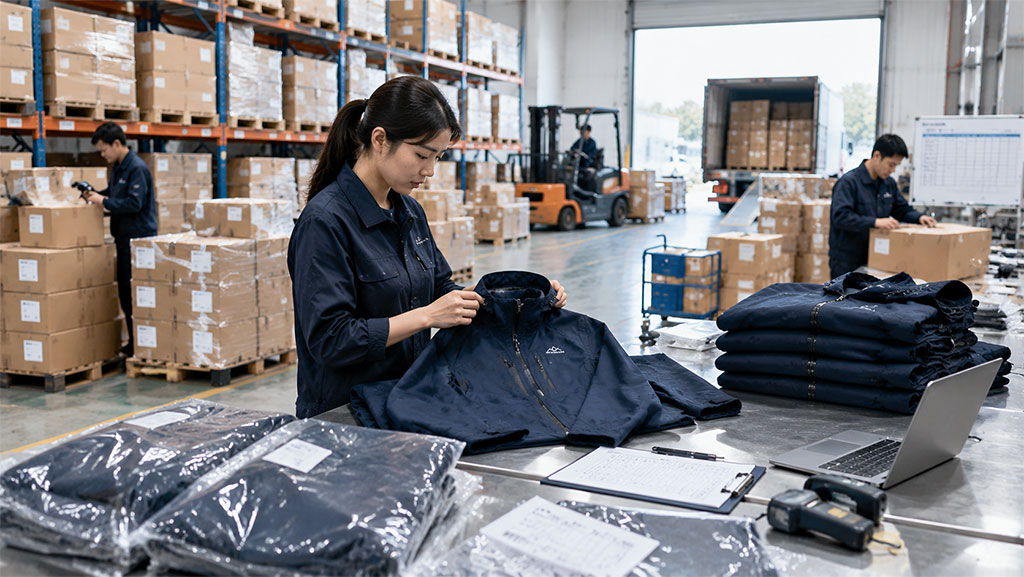
7. How Should Brands Evaluate Quality Control?
Quality assurance depends on documented procedures, agreed acceptance criteria, and effective corrective actions.
Before bulk production, confirm:
- Whether incoming fabric and trim inspections are performed.
- Whether measurements follow approved specifications.
- Whether a pre-production sample is approved.
- Which inspection method and AQL criteria, if applicable, will be used.
- How defects are documented, corrected, and rechecked.
- Who bears responsibility for agreed corrective costs.
- Whether inspection reports and relevant test records are available.
For technical apparel, requirements may include hydrostatic pressure, water repellency, breathability, abrasion resistance, and colorfastness testing.
Establish these requirements in writing, regardless of the supplier model.
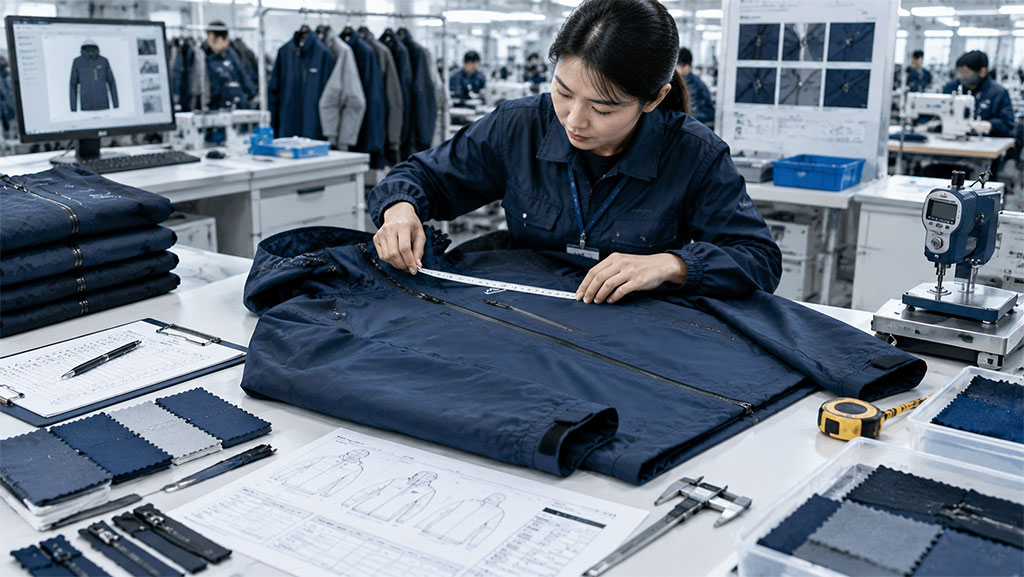
8. How to Verify an Apparel Sourcing Partner
Use a structured evaluation process before committing to bulk orders.
Step 1: Verify the manufacturing location.
Request the factory’s legal name, address, production capabilities, and subcontracting details.
Step 2: Check product-specific experience.
Confirm experience with your garment category, construction requirements, and materials.
Step 3: Review development procedures.
Ask how tech packs, sampling, fit corrections, and pre-production approvals are managed.
Step 4: Assess quality systems.
Review inspection procedures, corrective-action records, and relevant testing capabilities.
Step 5: Compare quotations consistently.
Use identical specifications, quantities, packaging, and delivery terms.
Step 6: Confirm accountability.
Document responsibilities for specification changes, quality issues, subcontracting, and delivery commitments.
Step 7: Evaluate performance before scaling.
Where practical, start with sample development or a controlled production order.
9. Which Should Your Brand Choose?
Choose an OEM manufacturer as your starting point when you prioritize customized product development, technical collaboration, production transparency, and repeat-order consistency.
Consider a trading company when you need multiple product categories, broader supplier access, or centralized coordination across different factories.
For startups and growing apparel brands, compare both models against actual MOQ flexibility, total cost, development support, quality systems, and future production capacity.
The best sourcing partner is the one that meets your current requirements while supporting your brand’s long-term growth.
Frequently Asked Questions
1. Is an OEM clothing manufacturer cheaper than a trading company?
Not always. Compare total landed cost, including development, quality assurance, coordination, logistics, and applicable duties.2. Can a trading company provide custom clothing manufacturing?
Yes. It can arrange OEM or ODM production through factory partners. Verify technical capabilities, factory selection, and accountability.3. Do OEM clothing manufacturers have lower MOQs?
Not necessarily. MOQ depends on factory policies, fabric minimums, garment construction, and production setup.4. How can I verify whether a supplier owns its factory?
Request its legal entity details, factory address, production capabilities, and subcontracting information. Arrange a visit or independent audit when appropriate.5. Is a trading company suitable for a startup clothing brand?
Yes, particularly when coordinating multiple product categories. Assess service fees, MOQ flexibility, sample quality, and supplier transparency.6. What should I prepare before contacting an OEM manufacturer?
Prepare a tech pack with measurements, materials, colors, construction details, trims, branding, quantities, quality requirements, packaging, and delivery expectations. If the design is not finalized, provide a product brief and reference images.7. Who is responsible for quality problems?
Responsibility depends on the supplier agreement. Specify inspection criteria, corrective actions, rework costs, and approval procedures in writing.8. Should I choose an OEM manufacturer or an ODM supplier?
OEM production generally follows buyer-defined specifications, while ODM typically involves supplier-developed designs. Confirm design ownership, customization options, and development costs.Written by the Simmerui Apparel Manufacturing Team.
Simmerui supports global B2B apparel brands through OEM and ODM manufacturing, product development, fabric sourcing, sampling, quality control, and scalable production. Our experience covers outdoor apparel, performance wear, casual clothing, and private-label collections. We work with brands to improve production visibility, manage manufacturing risks, and build reliable long-term partnerships.
Looking for an apparel manufacturing partner?
Share your product specifications, target quantity, and development requirements with Simmerui to discuss a suitable production approach.