
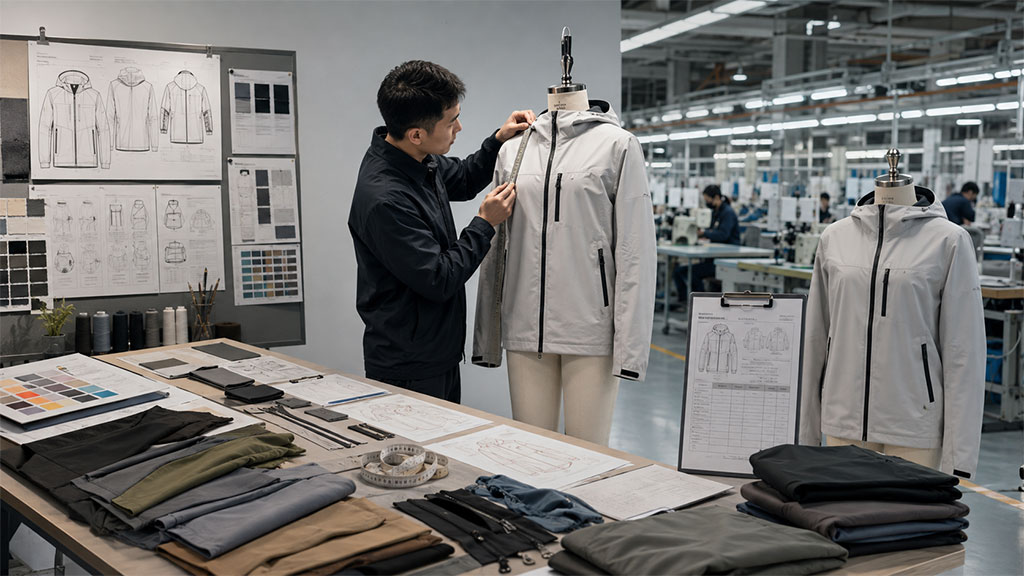
Custom apparel development can take longer than expected when specifications, materials, samples, feedback, and approvals are not clearly managed.
For OEM apparel brands, the most effective way to reduce development time is not simply to make samples faster, but to prevent unnecessary revisions and communication delays.
A complete tech pack, early material confirmation, structured sample reviews, consolidated feedback, and clear approval checkpoints can help move products from concept to bulk production more efficiently.
Introduction
For apparel brands, product development speed can directly affect seasonal launches, inventory planning, and revenue opportunities. Delays in design confirmation, fabric sourcing, sampling, fitting, or pre-production approval can extend the entire manufacturing timeline.
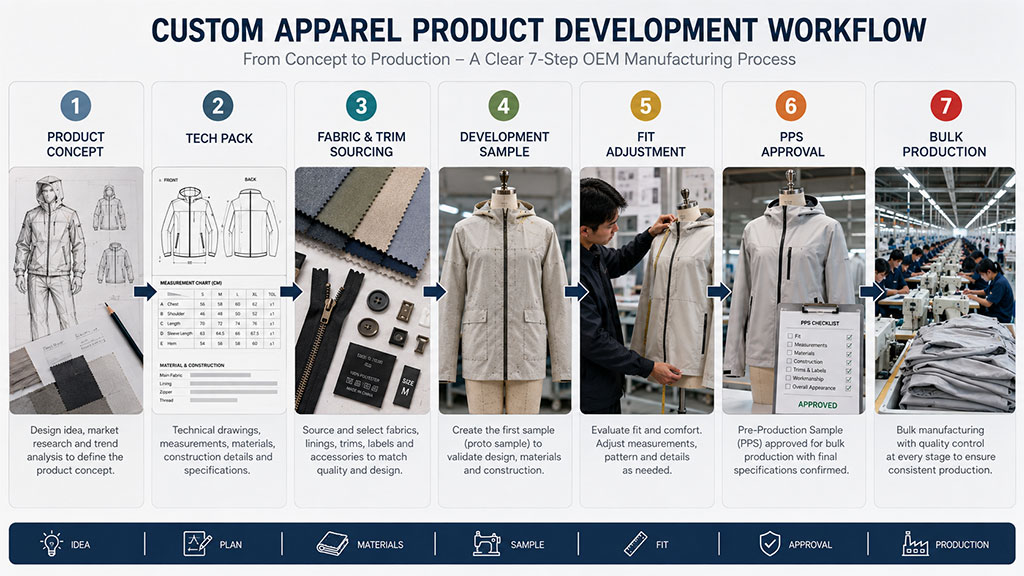
A typical OEM development process is:
Product Concept → Tech Pack → Fabric & Trim Sourcing → Sampling → Fit Adjustment → PPS Approval → Bulk Production
Because each stage depends on the previous one, a delay in one area can affect everything that follows.
The goal is therefore not to eliminate necessary development steps, but to make every stage more controlled and purposeful.
Why Does Apparel Product Development Take So Long?
The most common causes of development delays include:- Incomplete tech packs
- Slow buyer feedback
- Late fabric changes
- Unconfirmed trims
- Multiple disconnected sample revisions
- Unclear approval responsibilities
- Incorrect measurements
- Artwork changes after sampling
- Poor communication between design and manufacturing teams
- Starting bulk production before specifications are fully approved
1. Start With a Complete Tech Pack
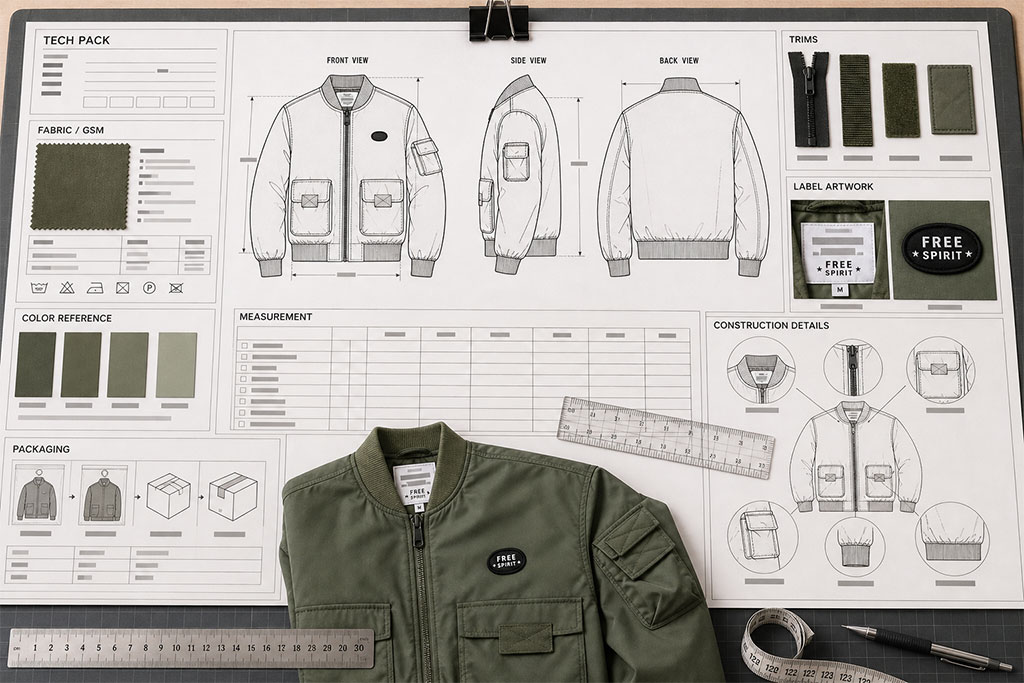
A complete, production-ready tech pack gives the manufacturer clear information before sampling begins.
It should define:
- Technical flat sketches
- Measurement specifications
- Fabric composition and weight
- Color references
- Trim and label requirements
- Artwork placement
- Construction and stitching details
- Packaging instructions
When information is missing, factories may need repeated clarification before proceeding. Consolidating key product information into one controlled development package reduces unnecessary communication and helps identify potential production issues earlier.
2. Confirm Fabrics and Trims Before Sampling
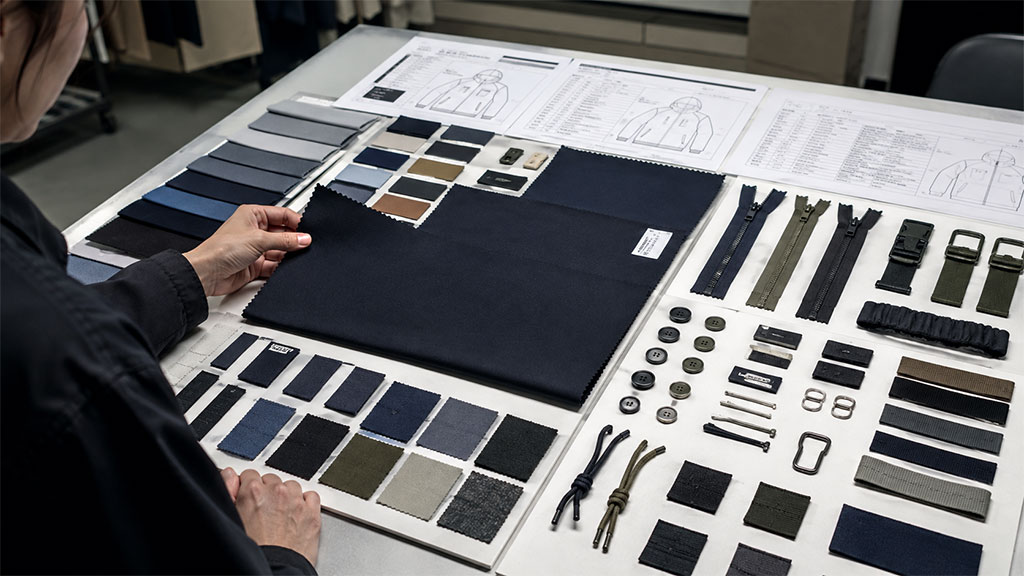
Fabric selection can influence garment construction, fit, appearance, sewing methods, and final cost.
Before sampling, confirm:
| Material Specification | What to Confirm |
|---|---|
| Fabric | Composition, GSM, width, color, finish |
| Performance | Functional requirements and testing |
| Supply | Supplier availability and MOQ |
| Trims | Zippers, buttons, snaps, elastic, labels, buckles, etc. |
Late changes can be particularly disruptive. If the primary fabric or key trims are unavailable after the first sample, part of the development process may need to restart.
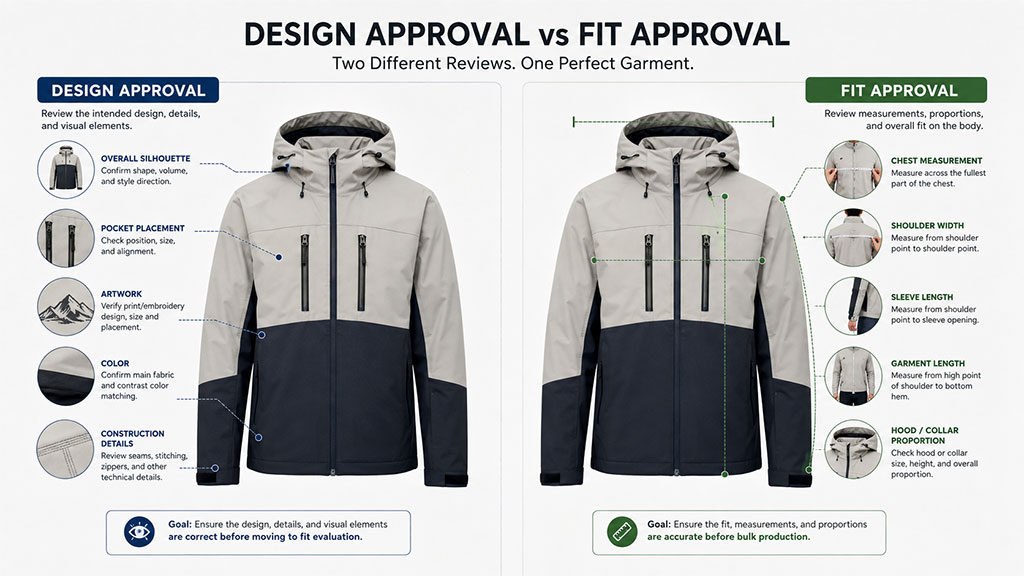
3. Separate Design Approval From Fit Approval
Sample reviews become more efficient when design and fit decisions are handled separately.
Design approval should focus on:
- Overall silhouette
- Pocket placement
- Artwork
- Colors
- Construction details
Fit approval should focus on:
- Chest measurement
- Shoulder width
- Sleeve length
- Garment length
- Hem comfort
- Hood or collar proportions
Separating these decisions makes feedback clearer and helps each sample round address specific issues.
4. Give Every Sample a Clear Objective
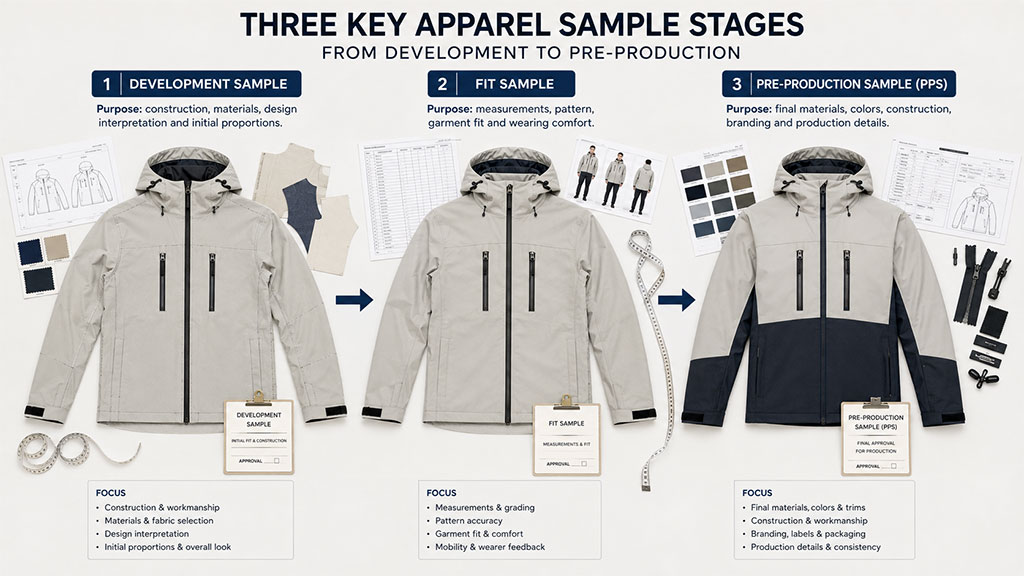
Different samples should answer different questions.
Development Sample: construction, materials, design interpretation, and initial proportions.
Fit Sample: measurements, pattern, garment fit, and wearing comfort.
Pre-Production Sample (PPS): final materials, colors, construction, branding, and production details.
The objective is not to produce the fewest samples possible. It is to make every sample round purposeful and avoid unnecessary revisions.
5. Consolidate Feedback After Each Sample
Repeated small changes can create additional sample rounds.
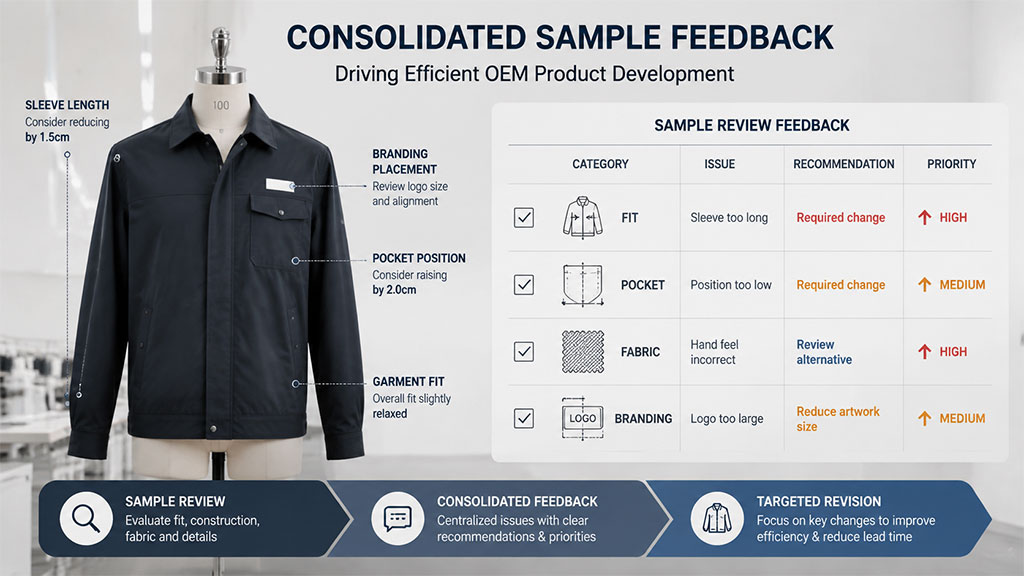
Instead of sending separate comments such as changing sleeve length, moving a pocket, changing fabric, and adjusting the hood at different times, buyers should review the sample systematically and provide one consolidated revision list.
A practical structure is:
Area → Issue → Required Change → Priority
For example:
| Area | Issue | Required Change | Priority |
|---|---|---|---|
| Fit | Sleeve too long | Reduce by 1.5 cm | High |
| Position too low | Move upward | Medium | |
| Fabric | Hand feel incorrect | Review alternative fabric | High |
| Branding | Logo too large | Reduce artwork size | Medium |
This gives the factory a clear revision list and reduces back-and-forth communication.
6. Establish Clear Approval Checkpoints
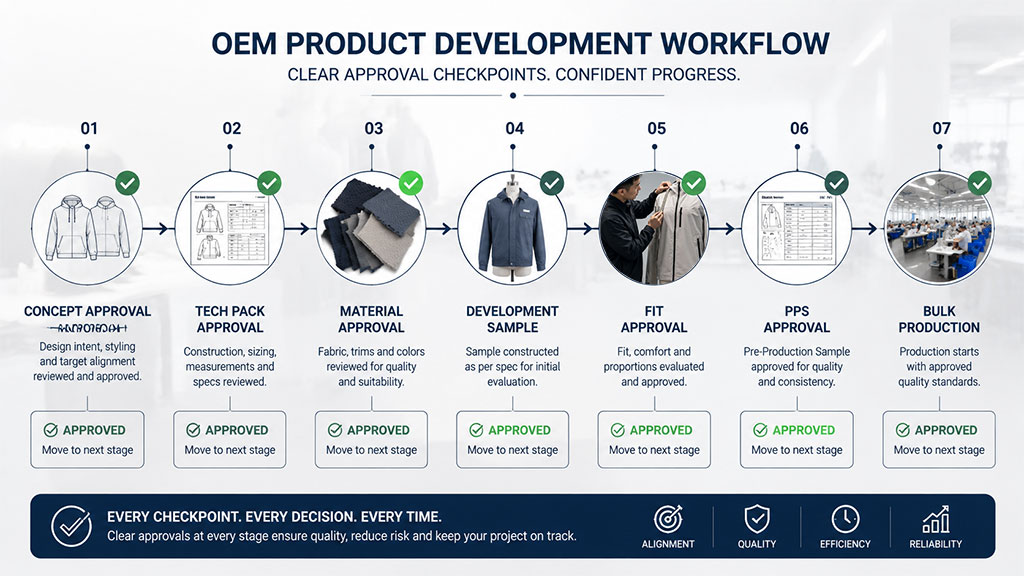
A controlled OEM workflow can use these checkpoints:
Concept Approval → Tech Pack Approval → Material Approval → Development Sample → Fit Approval → PPS Approval → Bulk Production
At each checkpoint, define:
- What needs approval
- Who is responsible
- Required information
- What happens next
- Whether changes affect cost or lead time
This prevents projects from remaining in an undefined review stage.
7. Avoid Late Material Changes
Changing materials after fit approval can affect:- Garment weight
- Drape
- Shrinkage
- Fit
- Seam performance
- Sewing behavior
- Color
- Cost
8. Standardize Frequently Used Materials
Brands developing multiple products can shorten future development cycles by maintaining approved options for:- Shell and lining fabrics
- Rib fabrics
- Zippers and buttons
- Labels
- Packaging
- Elastic
- Drawcords
9. Use Digital Communication
Development delays can also occur while the factory waits for buyer decisions, including:
- Tech pack confirmation
- Fabric and color approval
- Sample comments
- Artwork approval
- Size confirmation
- PPS approval
A simple digital workflow can make each task visible:
Factory submits → Buyer reviews → Buyer comments → Factory revises → Buyer approves
The objective is to create a clear status for every development task instead of relying on scattered communication.
10. Work With an Integrated OEM Manufacturer
An experienced OEM manufacturer can integrate:
- Product development
- Tech pack review
- Fabric and trim sourcing
- Pattern development
- Sampling
- Fit adjustment
- Quality control
- Bulk production
An integrated workflow reduces disconnected supplier handoffs and makes communication more efficient.
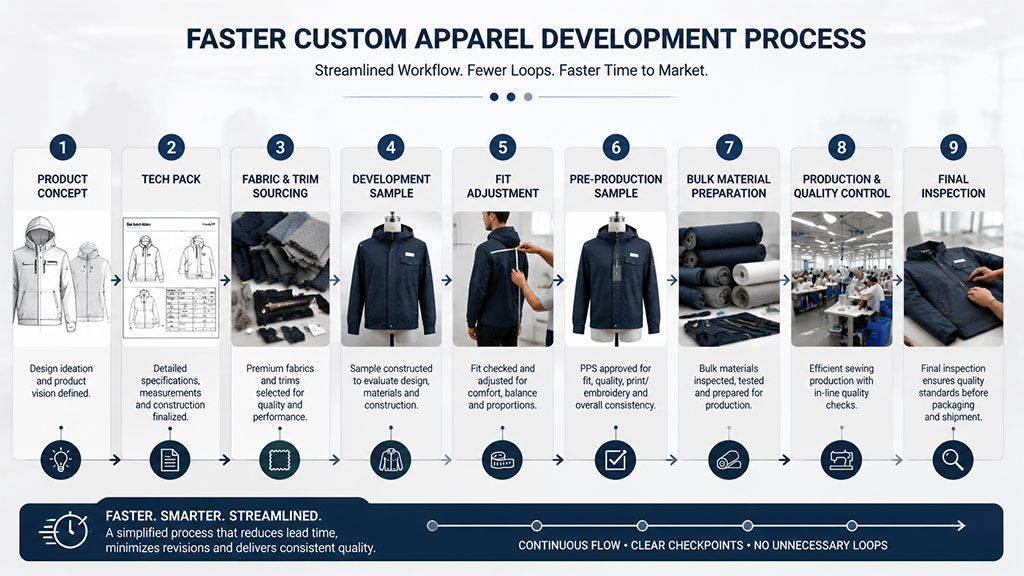
OEM Product Development Workflow
A streamlined workflow can be structured as:
- Product Concept — Define product purpose, target customer, price positioning, and design direction.
- Tech Pack — Complete measurements, materials, construction, artwork, and branding details.
- Fabric & Trim Sourcing — Confirm materials and availability.
- Development Sample — Translate approved specifications into a physical garment.
- Fit Adjustment — Review measurements, proportions, and comfort.
- PPS — Confirm the final production version.
- Bulk Material Preparation — Prepare approved fabrics, trims, labels, and packaging.
- Production & QC — Manufacture according to approved specifications.
- Final Inspection — Verify finished garments before shipment.
How Should Brands Measure Development Efficiency?
There is no universal development timeline because garment complexity varies. A basic T-shirt may require fewer development steps than a technical jacket with specialized fabrics and performance testing.
Instead of using an arbitrary deadline, brands can track:
- Concept-to-tech-pack approval time
- Tech-pack-to-first-sample time
- Number of sample rounds
- Buyer response time
- Material approval time
- Fit approval-to-PPS time
- PPS-to-bulk-production time
These metrics provide a clearer picture of development efficiency.
Pre-Production Approval Checklist
Before bulk production, confirm:
- Product: final design, measurements, construction, artwork, labels
- Materials: fabric, trims, colors, accessories, packaging
- Quality: stitching, dimensions, appearance, functional performance, testing
- Production: approved PPS, production specifications, QC standards, packaging, shipment requirements
A controlled checklist helps prevent unresolved development issues from entering bulk production.
FAQ: Custom Apparel Product Development
1.How can I speed up custom apparel product development?
Start with a complete tech pack, confirm materials early, provide clear measurements, consolidate feedback, and establish approval checkpoints.2.How many sample rounds are needed?
There is no fixed number. Simple garments may require fewer rounds, while technical or complex garments may need additional fit and construction adjustments.3.What causes the most sampling delays?
Incomplete specifications, slow approvals, fabric changes, trim availability issues, unclear feedback, incorrect measurements, and late design changes are common causes.4.Can a complete tech pack reduce development time?
Yes. It reduces clarification requests and gives manufacturers clear information about measurements, materials, construction, artwork, and branding.5.Should fabric be finalized before the first sample?
Ideally, the primary fabric should be confirmed before development sampling because fabric characteristics can affect fit, construction, drape, shrinkage, and appearance.6.What is a PPS?
PPS stands for Pre-Production Sample. It is used to confirm the final production version before bulk manufacturing.7.How can an OEM manufacturer help?
An integrated OEM manufacturer can coordinate development, sourcing, pattern making, sampling, fit adjustment, QC, and bulk production.8.Is faster development always better?
No. The objective is to eliminate unnecessary delays without sacrificing fit, quality, testing, or production consistency.Final Takeaway
Reducing custom apparel development time is primarily about eliminating avoidable delays. The most effective strategies are to:- Start with a complete tech pack
- Confirm materials early
- Define each sample’s purpose
- Consolidate feedback
- Establish approval checkpoints
- Standardize recurring materials
- Improve digital communication
- Integrate development with manufacturing
- Control late-stage changes
- Track development performance
Written by the Simmerui Apparel Manufacturing Team
Simmerui provides OEM and ODM apparel manufacturing solutions covering product development, fabric sourcing, sampling, quality control, and scalable manufacturing for global B2B brands.