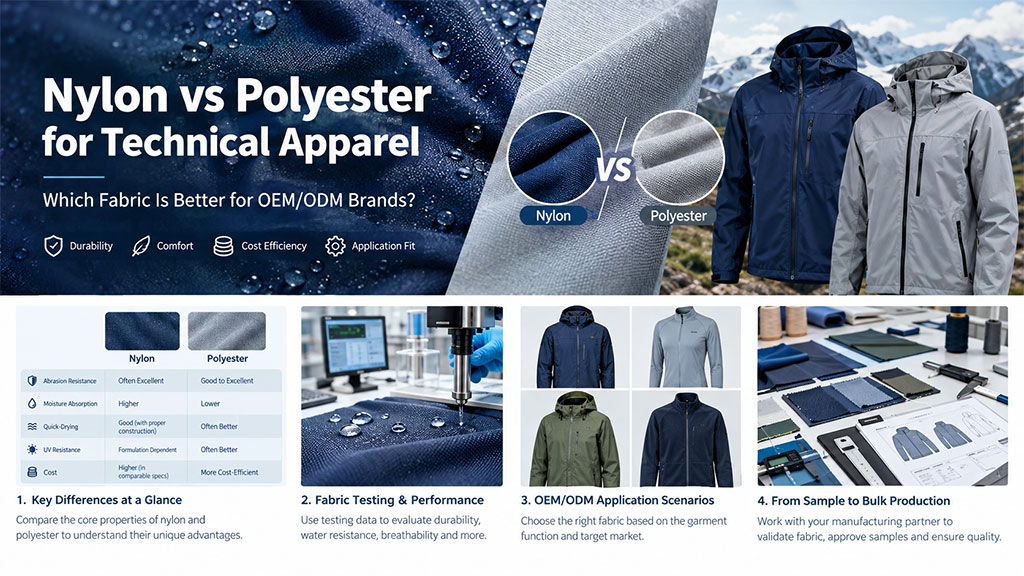
Nylon vs polyester for technical apparel is an important material decision for clothing brands developing outdoor jackets, sportswear, workwear, and performance garments. Nylon often offers excellent abrasion resistance, lightweight durability, and a smooth hand feel. Polyester provides low moisture absorption, good dimensional stability, and cost-efficient versatility. However, neither fiber is universally superior.
For OEM/ODM brands, the best choice depends on fabric construction, finishing technology, performance requirements, target cost, and intended use. Comparing specifications and testing samples before bulk production helps reduce material risks and improve product consistency.1. Understand the Key Differences Between Nylon and Polyester
Nylon and polyester are widely used synthetic fibers in technical apparel manufacturing. Although both support durable, functional garments, their physical properties and commercial advantages differ.
Choose Nylon for Abrasion Resistance and Premium Hand Feel
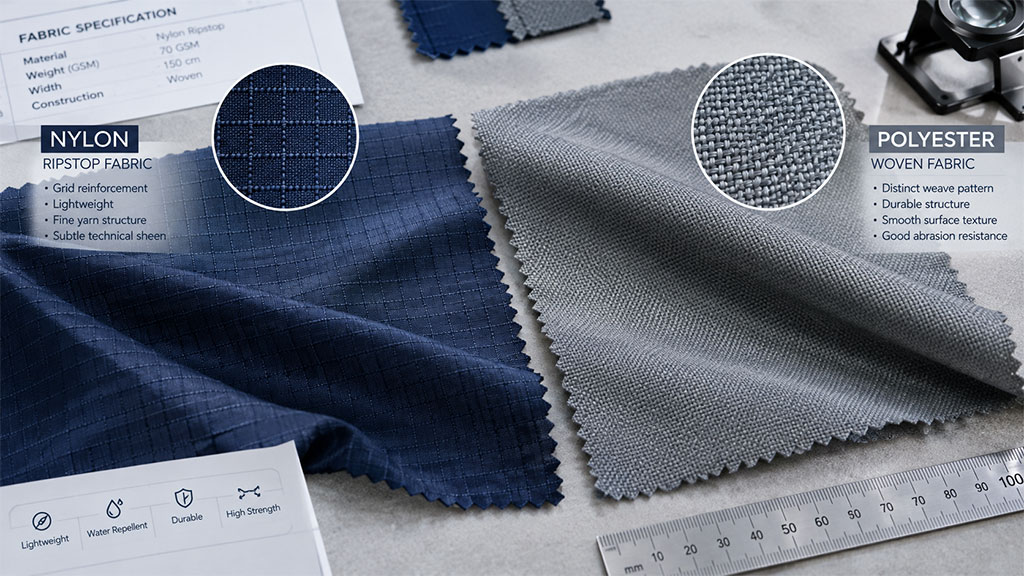
Nylon is a polyamide fiber frequently used in technical outerwear and garments exposed to repeated friction. Depending on yarn type, denier, weave, and finishing, it can deliver a strong balance of low weight and durability.
Key advantages include:
- Abrasion resistance: Suitable for hiking jackets, reinforced trousers, and high-wear areas.
- Lightweight performance: Fine-denier constructions can support lightweight technical shells.
- Smooth hand feel: Often selected for premium outerwear requiring a supple surface.
- Construction flexibility: Compatible with coatings, laminations, and water-repellent finishes.
Nylon is particularly relevant when a product brief prioritizes durability, lightweight construction, and a premium tactile experience. However, moisture absorption and UV durability should be evaluated against the specific fabric specification.
Select Polyester for Versatility and Cost Efficiency
Polyester is widely used in sportswear, fleece, uniforms, and outdoor garments because of its low moisture absorption and generally good dimensional stability.
Its main advantages include:
- Low moisture absorption: Can support quick-drying fabric development.
- UV-related durability: Often performs well outdoors, depending on formulation, dyes, and finishing.
- Shape retention: Can help garments maintain dimensions when properly processed.
- Commercial flexibility: Frequently provides cost-effective options for larger production programs.
- Multiple fabric applications: Suitable for performance knits, fleece, linings, and woven shells.
Polyester does not automatically provide better breathability or moisture-wicking performance. These depend on yarn engineering, fabric structure, finishing, and garment design.
2. Compare Nylon vs Polyester Across Key Performance Factors
The following comparison provides a starting point for OEM/ODM fabric selection. Actual performance varies with fabric construction and processing.
| Performance Factor | Nylon | Polyester |
|---|---|---|
| Abrasion resistance | Often excellent | Good to excellent |
| Strength-to-weight potential | Often strong | Strong, depending on construction |
| Moisture absorption | Generally higher | Generally lower |
| Quick-drying potential | Good with suitable construction | Often advantageous |
| UV resistance | Formulation-dependent | Often advantageous |
| Hand feel | Frequently smooth and supple | Varies by construction |
| Dimensional stability | Depends on construction and processing | Often very good |
| Cost positioning | Can be higher in comparable applications | Often cost-effective |
| Typical applications | Premium shells, hiking garments, high-wear products | Sportswear, fleece, uniforms, versatile outdoor clothing |
Important: Fiber type alone does not determine waterproofness, breathability, wind resistance, or total garment performance. Fabric weight, yarn density, membrane technology, coating, seam construction, and test results must also be considered.
3. Match Fabric Selection to the Intended Garment
Outdoor Jackets and Technical Shells
Nylon is often a strong candidate for premium hiking jackets, lightweight windbreakers, and technical shells exposed to abrasion. Polyester can also work well when UV exposure, color stability, recycled-material sourcing, or cost control are priorities. For waterproof jackets, compare the complete fabric system rather than the face fiber alone. Evaluate hydrostatic head, moisture vapor transmission, seam sealing, and performance after washing.Sportswear and Running Apparel
Polyester is widely used in running tops, training T-shirts, and quick-drying sportswear because of its low moisture absorption and versatility in moisture-management constructions. Nylon is suitable for premium activewear, leggings, and performance garments where softness, stretch compatibility, and abrasion resistance matter. For either material, assess stretch recovery, pilling, colorfastness, moisture management, and wearer comfort.Workwear and Utility Apparel
Nylon can be suitable for reinforcement panels, work trousers, and garments exposed to frequent friction. Polyester is often a practical choice for uniforms and work jackets that require a balance of durability, color retention, and cost efficiency. Material selection should also consider laundering frequency, heat exposure, chemical contact, and applicable workplace safety requirements.Fleece and Insulating Layers
Polyester is commonly used in fleece and synthetic insulation because it can provide lightweight warmth and low moisture absorption. Nylon may be selected for outer face fabrics or reinforcement areas that require abrasion resistance. For some garments, combining materials across different components delivers a better balance of performance and cost than using one fiber throughout.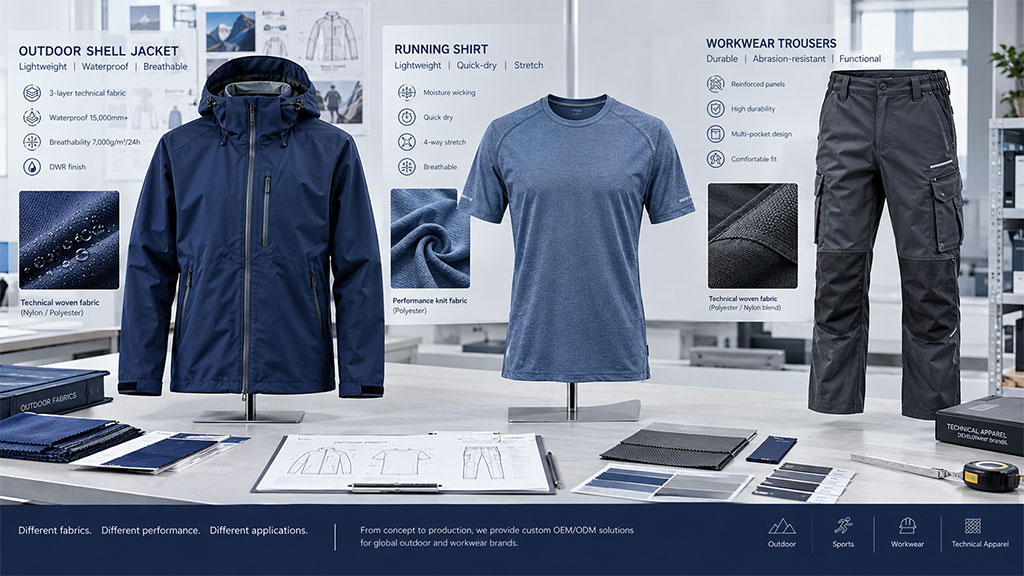
4. Evaluate Fabric Specifications Before Requesting OEM Quotes
For B2B apparel brands, fabric selection should start with a defined product brief, not simply a preference for nylon or polyester.
Step 1: Define Performance Requirements
Document the garment’s intended use, target customer, environmental exposure, target price, and essential performance requirements.
A lightweight windbreaker, waterproof hiking shell, running shirt, and industrial work jacket require different combinations of durability, comfort, and protection.
Step 2: Compare Equivalent Fabric Specifications
Ask your OEM/ODM manufacturing partner to provide comparable fabric options and relevant technical documentation, including:
- Fiber composition and recycled content, where applicable.
- Fabric weight in GSM and yarn denier.
- Weave or knit construction.
- Tensile strength, tear strength, and abrasion resistance.
- Pilling performance and dimensional stability.
- Water repellency or waterproof ratings, where relevant.
- Breathability and moisture vapor transmission.
- Colorfastness and applicable chemical compliance documentation.
Comparisons are meaningful only when test methods, conditions, and acceptance criteria are appropriately aligned.
Step 3: Calculate Total Garment Cost
The lowest fabric price does not necessarily produce the lowest finished-garment cost.
Consider material consumption, cutting efficiency, sewing requirements, finishing processes, defect rates, testing expenses, and expected product lifespan.
A higher-cost nylon fabric may be justified for demanding technical outerwear. Polyester may provide a better commercial balance for high-volume sportswear or cost-sensitive product lines.
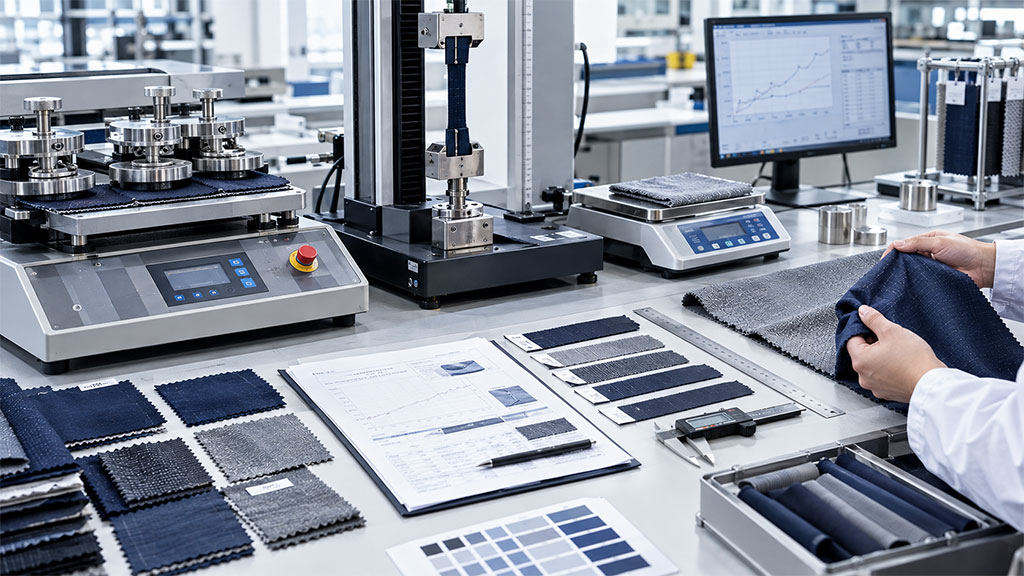
Step 4: Approve Samples Before Bulk Production
Request fabric swatches and garment samples before approving the material.
Evaluate hand feel, fit, movement, stitching performance, surface appearance, and functional results. Technical outerwear may require hydrostatic pressure, moisture vapor transmission, abrasion, tear-strength, colorfastness, and wash-durability testing.
Document the approved fabric composition, weight, color, construction, finishing, and relevant performance requirements in the technical specification. This helps align bulk production with the approved sample.
5. Can Nylon and Polyester Be Combined in One Garment?
Yes. Combining nylon and polyester components can help brands balance durability, comfort, weight, and cost. For example, an outdoor jacket may use a nylon shell in high-abrasion applications, a polyester mesh lining for comfort, and polyester fleece for insulation. Additional stretch panels can be incorporated where mobility is important. The right combination depends on garment construction, care requirements, environmental exposure, and performance targets. For OEM/ODM buyers, a component-by-component material strategy can provide more flexibility than specifying one fiber for every garment part.6. How Simmerui Supports Technical Apparel Fabric Selection
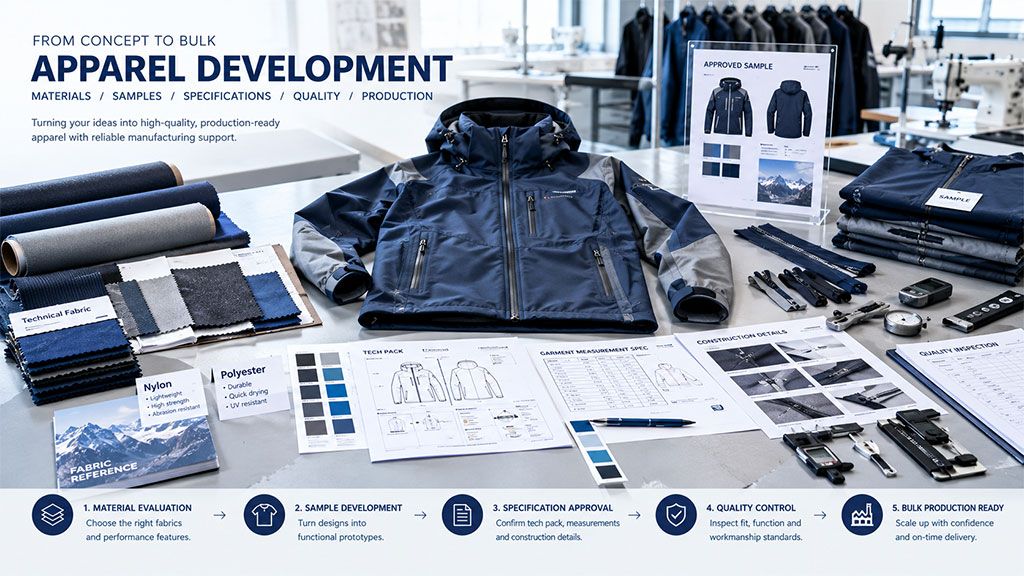
Selecting the right material requires coordination between product development, fabric sourcing, sampling, production planning, and quality control.
The Simmerui Apparel Manufacturing Team supports global B2B brands through OEM/ODM product development, fabric evaluation, sample making, construction review, quality inspection, and bulk manufacturing coordination.
Depending on project requirements, the development process can include:
- Comparing nylon and polyester options against the product brief.
- Reviewing fabric weight, construction, finishing, and available test data.
- Evaluating material behavior during sample development.
- Coordinating sample revisions and documenting approved specifications.
- Aligning bulk production with agreed material and quality requirements.
Early material evaluation helps brands identify specification gaps, control production risks, and make more informed decisions before bulk manufacturing begins.
7. Frequently Asked Questions
1.Is nylon better than polyester for outdoor jackets?
Nylon is often preferred for premium outdoor jackets requiring abrasion resistance and lightweight construction. Polyester can be suitable when cost efficiency, UV-related durability, or specific recycled-material requirements are priorities. The final choice depends on fabric construction and intended use.2.Which is more durable, nylon or polyester?
Both can be durable. Nylon often performs well in abrasion resistance, while polyester can provide good dimensional stability and outdoor durability. Compare actual fabric test results rather than fiber names alone.3.Is polyester more breathable than nylon?
Not necessarily. Breathability depends on fabric structure, yarn design, coatings, membranes, and finishing. Both fibers can be engineered for different airflow and moisture vapor performance levels.4.Which fabric dries faster?
Polyester often has an advantage because it absorbs relatively little moisture. However, drying time also depends on fabric thickness, construction, finishing, and environmental conditions.5.Which fabric is better for waterproof jackets?
Neither fiber is inherently waterproof. Waterproof performance depends on the complete fabric system, including membrane or coating, construction, seam sealing, and verified testing.6.Is nylon more expensive than polyester?
Nylon can cost more in comparable applications, but this is not universal. Fiber grade, denier, fabric weight, finishing, recycled content, order quantity, and supplier availability all affect pricing.7.Can nylon and polyester both be recycled?
Yes. Both have recycling pathways, but actual recyclability depends on material composition, collection systems, processing technology, finishes, and product construction. Recycled-content claims should be supported by appropriate documentation.8.What should brands request before selecting an OEM fabric?
Provide the intended use, target price, fabric weight, performance requirements, color standards, care instructions, and compliance expectations. Request relevant test data, sample yardage, applicable declarations, and a documented material-approval process before bulk production.Conclusion: Choose Fabric by Performance, Not Fiber Name
Nylon and polyester both play important roles in technical apparel manufacturing. Nylon is often suitable for abrasion-resistant, lightweight premium outerwear, while polyester offers versatility, low moisture absorption, and cost-efficient solutions for sportswear, fleece, and outdoor garments.
For B2B clothing brands, the best choice comes from matching fabric specifications to actual product requirements, evaluating samples, and confirming quality standards before bulk production. Working with an experienced OEM/ODM manufacturing partner helps translate those requirements into a practical material and production plan.
Written by the Simmerui Apparel Manufacturing Team, supporting global B2B brands with OEM/ODM apparel development, fabric sourcing, sampling, quality control, and scalable manufacturing.