
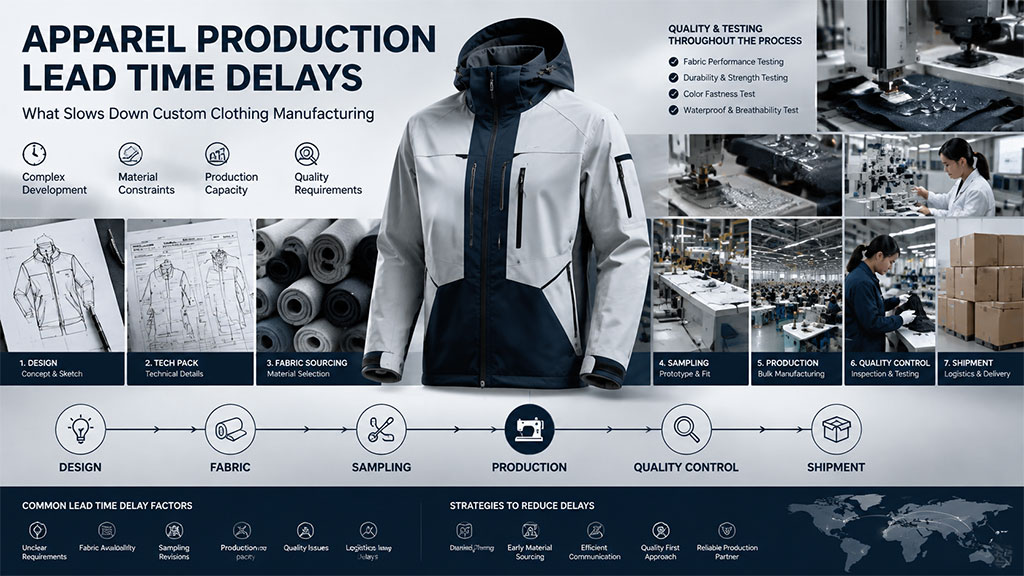
Apparel production lead time delays usually happen because of slow sample approvals, fabric sourcing problems, unclear specifications, production scheduling issues, quality control failures, and shipping disruptions. In custom clothing manufacturing, most delays can be prevented through better product planning, accurate tech packs, reliable material suppliers, and clear communication between brands and factories. Understanding the major causes of production delays helps apparel buyers create realistic timelines, reduce unnecessary revisions, and improve on-time delivery performance.
Why Apparel Production Lead Time Matters for Custom Clothing Brands
For apparel brands, production lead time directly impacts:- Product launch schedules
- Seasonal collection planning
- Inventory management
- Marketing campaigns
- Customer satisfaction
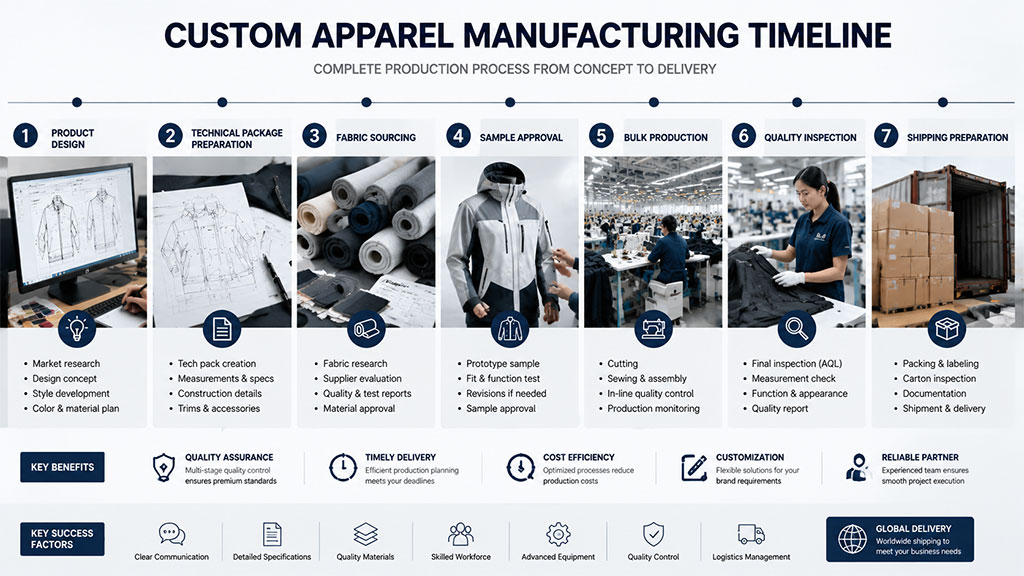
- Product concept confirmation
- Tech pack preparation
- Fabric and trim sourcing
- Sampling development
- Sample review and approval
- Bulk production
- Quality inspection
- Shipping preparation
The Biggest Factors That Delay Apparel Production Lead Time
1. Slow Sample Approval Process
Sample approval is one of the most common reasons for apparel production delays.
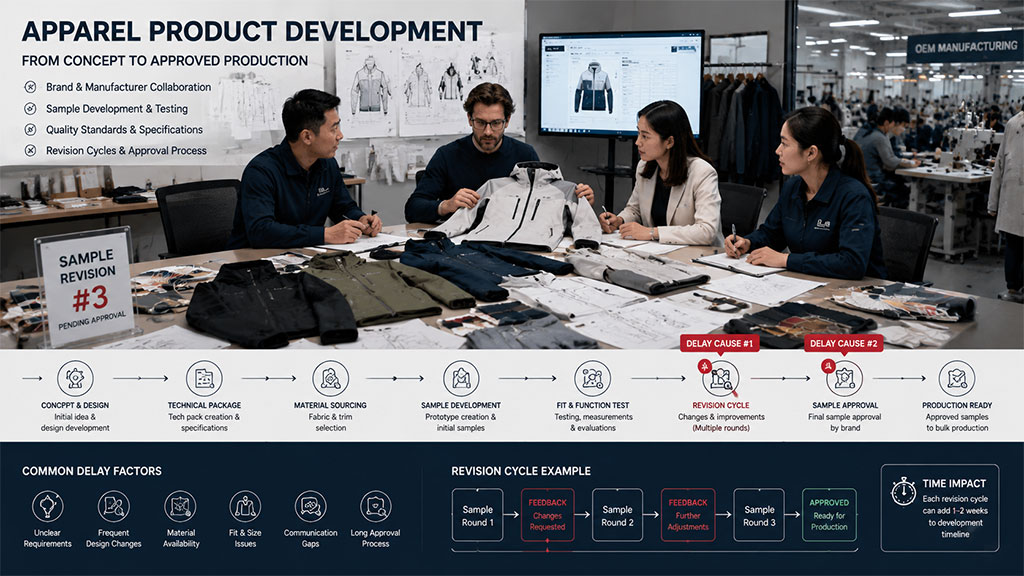
During product development, brands may need several sample stages, including:
- Development samples
- Fit samples
- Size set samples
- Pre-production samples
Delays usually happen when brands:
- Take too long to provide feedback
- Request repeated design modifications
- Change product requirements after approval
- Lack clear fitting and measurement standards
How Brands Can Reduce Sample Delays
To improve development efficiency, brands should:
- Prepare complete product requirements before sampling
- Provide accurate tech packs and measurement specifications
- Establish clear sample review timelines
- Communicate feedback in a structured way
Fast and accurate sample approval helps manufacturers move into bulk production without unnecessary interruptions.
2. Fabric Sourcing and Material Availability Issues
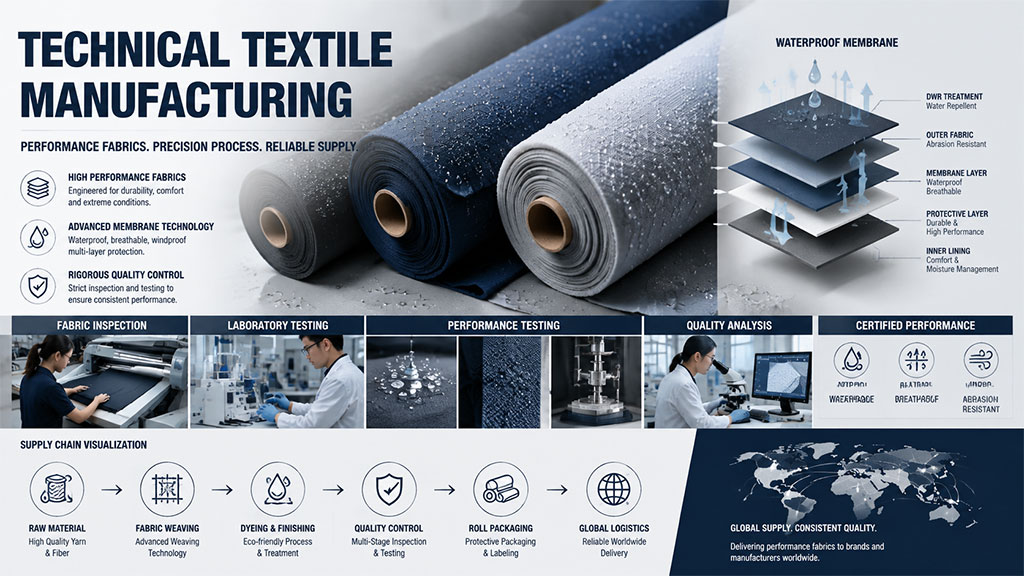
Fabric selection is a critical factor in apparel production timelines.
Production may be delayed because of:
- Long fabric supplier lead times
- Custom color dyeing requirements
- Minimum order quantity limitations
- Delayed fabric testing
- Unavailable trims and accessories
This is especially important for technical apparel products.
Performance fabrics such as waterproof membranes, recycled textiles, coated materials, and outdoor functional fabrics often require additional testing and approval before production.
How Brands Can Reduce Material Delays
Brands can minimize risks by:
- Confirming fabrics early during product development
- Approving fabric swatches before bulk ordering
- Working with experienced textile suppliers
- Preparing alternative material solutions when necessary
Early material planning gives manufacturers more control over production schedules.
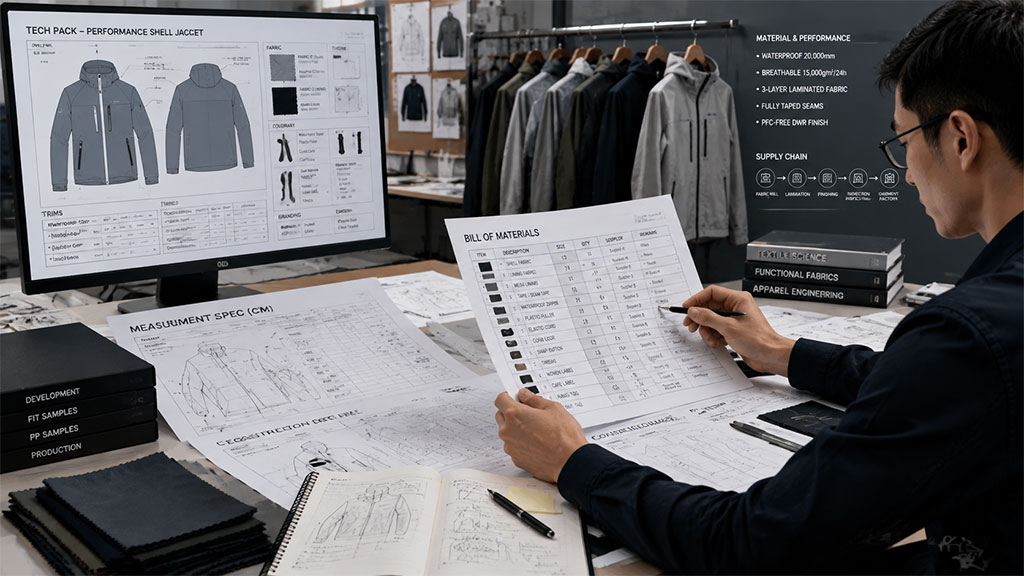
3. Incomplete Tech Packs and Product Specifications
A complete tech pack is essential for efficient apparel manufacturing.
An unclear tech pack can create repeated communication, incorrect samples, and production delays.
A professional tech pack should include:
- Technical drawings
- Measurement specifications
- Fabric information
- Construction details
- Trims and accessories
- Labeling requirements
- Packaging instructions
Common specification problems include:
- Unclear garment measurements
- Missing artwork placement information
- Incorrect fabric details
- Unclear stitching requirements
A detailed tech pack allows brands and manufacturers to align expectations before sampling and production begins.
4. Design Changes During Production
Late-stage design changes can significantly affect apparel production schedules. Examples include:- Changing fabrics after approval
- Modifying garment construction
- Updating logos or prints
- Changing colors
- Adding new product features
- New materials
- Additional samples
- Pattern adjustments
- Production line changes
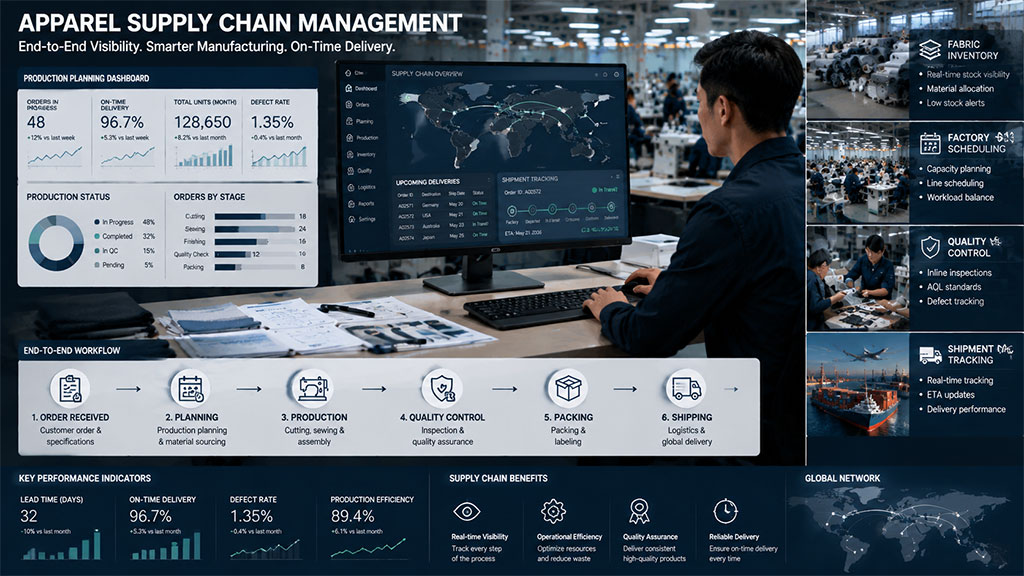
5. Poor Production Planning and Factory Scheduling
Apparel factories usually manage multiple customer orders at the same time.
Production delays may happen because of:
- Peak season capacity pressure
- Machine scheduling conflicts
- Insufficient production planning
- Unexpected order increases
Professional OEM manufacturers reduce these risks through:
- Production scheduling systems
- Capacity planning
- Early material preparation
- Production monitoring
A reliable manufacturing partner should provide clear production timelines and proactive communication throughout the process.
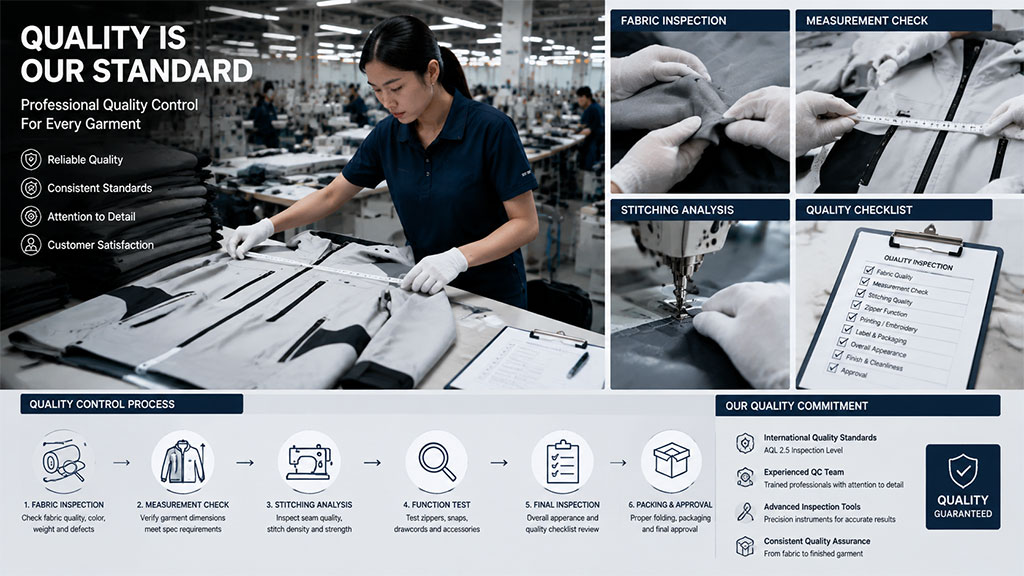
6. Quality Control Problems During Production
Quality issues discovered during manufacturing can create unexpected delays.
Common problems include:
- Incorrect measurements
- Sewing defects
- Color inconsistency
- Failed inspections
When quality problems occur, factories may need to:
- Repair garments
- Replace materials
- Repeat production processes
- Delay shipment schedules
A strong quality control system helps identify problems earlier and prevents costly production rework.
For brands, choosing a manufacturer with established QC procedures is essential for maintaining delivery reliability.
7. Shipping and Logistics Delays
Even after production is completed, logistics can affect final delivery timelines. Possible causes include:- Customs clearance delays
- Transportation issues
- Incorrect shipping documents
- Seasonal freight congestion
Apparel Production Timeline: Where Delays Usually Happen
| Production Stage | Common Delay Risks |
|---|---|
| Product Development | Unclear requirements, repeated changes |
| Sampling | Slow feedback, multiple revisions |
| Fabric Preparation | Supplier delays, material shortages |
| Bulk Production | Capacity issues, quality problems |
| Final Inspection | Failed inspection, rework |
| Shipping | Customs and logistics issues |
How Brands Can Shorten Apparel Manufacturing Lead Time
1. Prepare Complete Product Information Early
Before production begins, brands should provide:- Design references
- Complete tech packs
- Target pricing
- Fabric requirements
- Expected order quantity
2. Approve Samples Quickly
Fast communication between brands and manufacturers helps maintain production schedules.
Establishing clear feedback deadlines can significantly improve efficiency.
3. Confirm Materials Before Production
Early fabric and trim approval reduces sourcing risks and prevents production interruptions.
4. Choose an Experienced OEM/ODM Partner
A professional apparel manufacturer can support brands through:
- Product development
- Fabric sourcing
- Production planning
- Quality control
- Delivery management
The right manufacturing partner helps brands balance speed, quality, and cost.
FAQ: Apparel Production Lead Time Delays
1.What is the biggest cause of apparel production delays?
The most common causes are delayed sample approvals, fabric sourcing problems, unclear product specifications, and late design changes.2.How long does custom apparel production usually take?
Production timelines depend on product complexity, materials, order quantity, and approval speed. Simple garments may require shorter development cycles, while technical apparel often requires more time due to material testing and performance requirements.3.Can brands reduce apparel manufacturing lead time?
Yes. Brands can reduce delays by preparing complete tech packs, confirming fabrics early, responding quickly during sampling, and working with experienced manufacturers.4.Does MOQ affect production lead time?
Yes. Order quantity can influence production scheduling, material planning, and factory capacity allocation.5.Why do fabric problems delay apparel production?
Fabric issues can stop production because garments cannot move into cutting and sewing until materials meet required quality, color, and performance standards.Conclusion: Better Planning Creates More Reliable Apparel Production
Apparel production lead time delays rarely come from one single manufacturing step.
Most delays result from combined issues involving product development, material preparation, communication, quality control, and logistics.
For apparel brands, reducing lead time starts before production begins.
Clear specifications, early fabric approval, efficient sample communication, and selecting the right OEM/ODM manufacturing partner can greatly improve delivery reliability.
A well-managed apparel production process allows brands to launch products faster while maintaining consistent quality and customer expectations.