
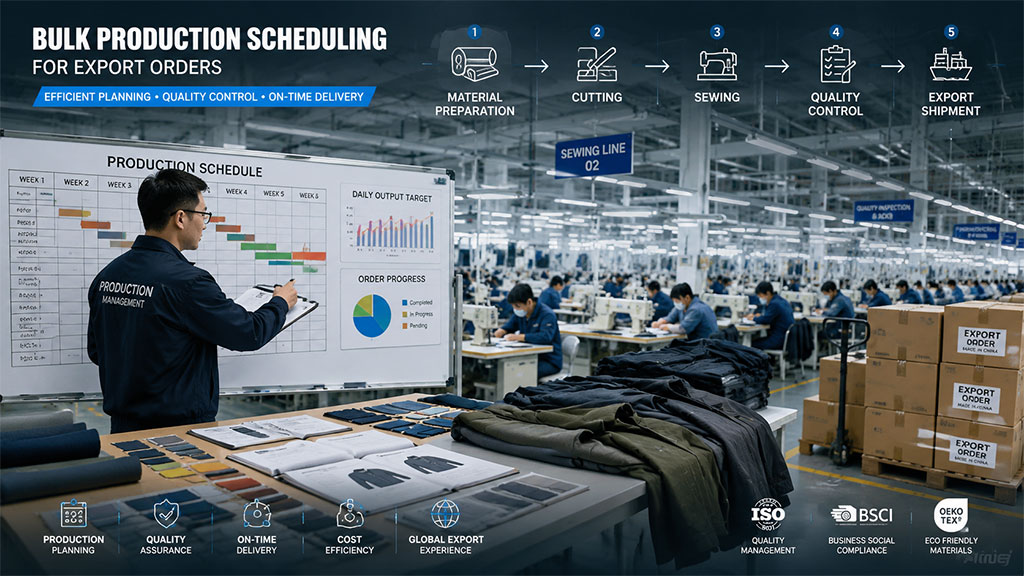
Bulk production scheduling is one of the most critical processes in apparel manufacturing. For global fashion brands, a reliable production schedule ensures that materials, factory capacity, quality inspections, and shipment plans are properly coordinated. Professional OEM clothing manufacturers use production planning systems, milestone tracking, and quality control checkpoints to manage large export orders efficiently and reduce risks such as delays, quality issues, and missed retail launch dates.
Introduction
For apparel brands sourcing from overseas manufacturers, production capability is not only about making garments — it is about delivering consistent quality within an agreed timeline. A professional clothing manufacturer must coordinate multiple factors:- Fabric and trim availability
- Production capacity
- Labor allocation
- Manufacturing workflow
- Quality inspection
- Export shipment schedule
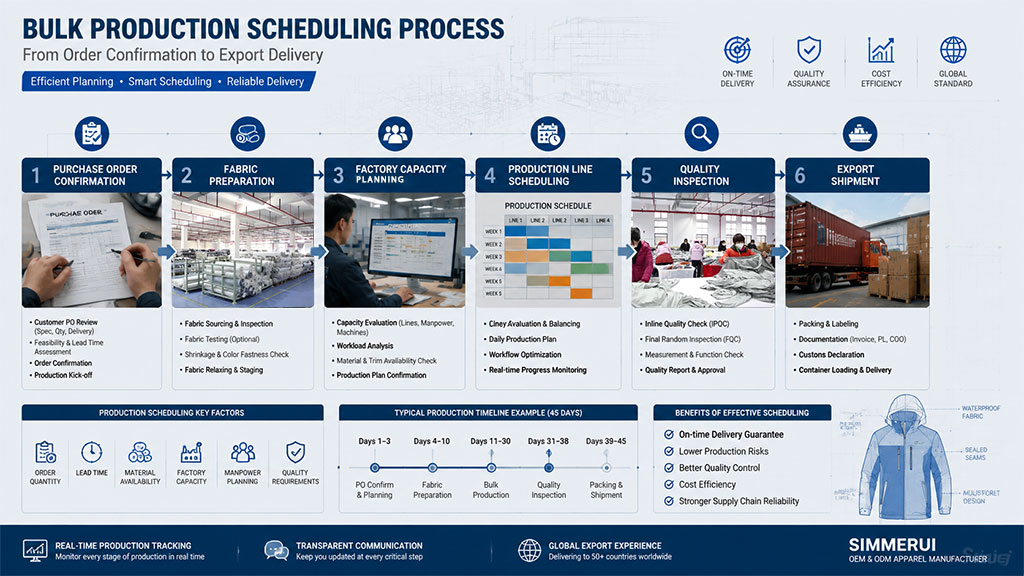
1. What Is Bulk Production Scheduling in Apparel Manufacturing?
Bulk production scheduling refers to the process of planning and controlling every manufacturing activity after order confirmation. It includes:| Production Element | Management Focus |
|---|---|
| Materials | Fabric, trims, labels availability |
| Factory Capacity | Production lines and manpower |
| Manufacturing Process | Cutting, sewing, finishing |
| Quality Control | Inspection checkpoints |
| Shipping | Delivery timeline management |
2. How Apparel Factories Create Bulk Production Plans
Bulk production normally begins after:
- ✓ Final sample approval
- ✓ Tech pack confirmation
- ✓ Purchase order confirmation
- ✓ Material approval
Before production starts, manufacturers evaluate:
| Planning Factor | Buyer Risk Controlled |
|---|---|
| Order quantity | Capacity shortage |
| Product complexity | Production delay |
| Fabric availability | Material shortage |
| Delivery deadline | Shipment delay |
| Custom requirements | Quality problems |
Professional OEM factories do not immediately start mass production.
Instead, they build a production timeline covering every manufacturing milestone.
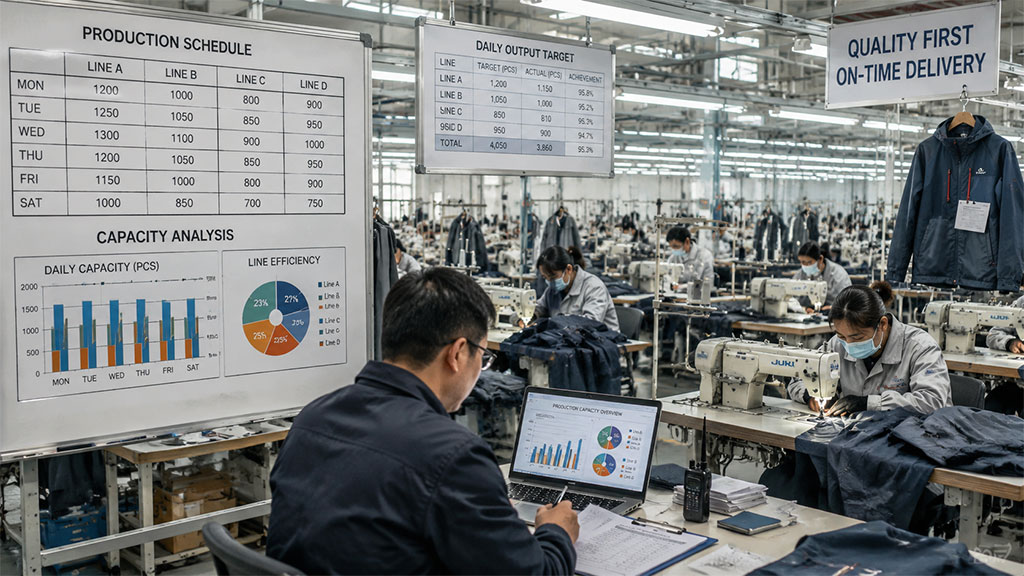
3. Factory Capacity Planning Before Bulk Production
Production capacity evaluation is one of the first steps in bulk scheduling.
Factories analyze:
- Available sewing lines
- Worker availability
- Equipment requirements
- Existing production commitments
- Daily output capability
For example:
Basic Apparel
Examples:
- T-shirts
- Polo shirts
- Hoodies
Characteristics:
- Simple construction
- Faster sewing process
- Higher daily output
Technical Outdoor Apparel
Examples:
- Waterproof jackets
- Softshell jackets
- Functional outerwear
Requires:
- Technical fabric handling
- Seam sealing
- Specialized machinery
- Additional inspection procedures
Therefore, experienced manufacturers schedule production based on product complexity, not only order quantity.
4. Material Planning and Supply Chain Coordination
Material readiness directly affects bulk production timelines.
Before manufacturing begins, factories confirm:
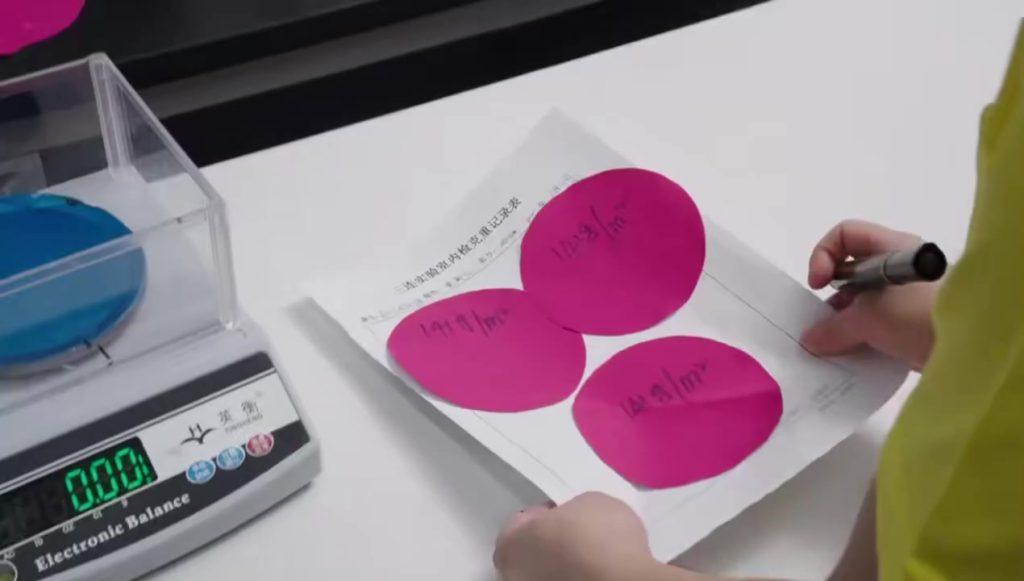
Fabric Requirements
- Fabric composition
- GSM specification
- Color approval
- Performance testing
Trim Requirements
- Zippers
- Buttons
- Labels
- Packaging materials
For outdoor apparel manufacturing, technical materials may require:
| Testing Item | Purpose |
|---|---|
| Hydrostatic Pressure Test | Waterproof performance |
| Breathability Test | Moisture management |
| Color Fastness Test | Color durability |
| Fabric Performance Test | Material reliability |
A fabric delay can stop the entire production line and impact export delivery schedules.
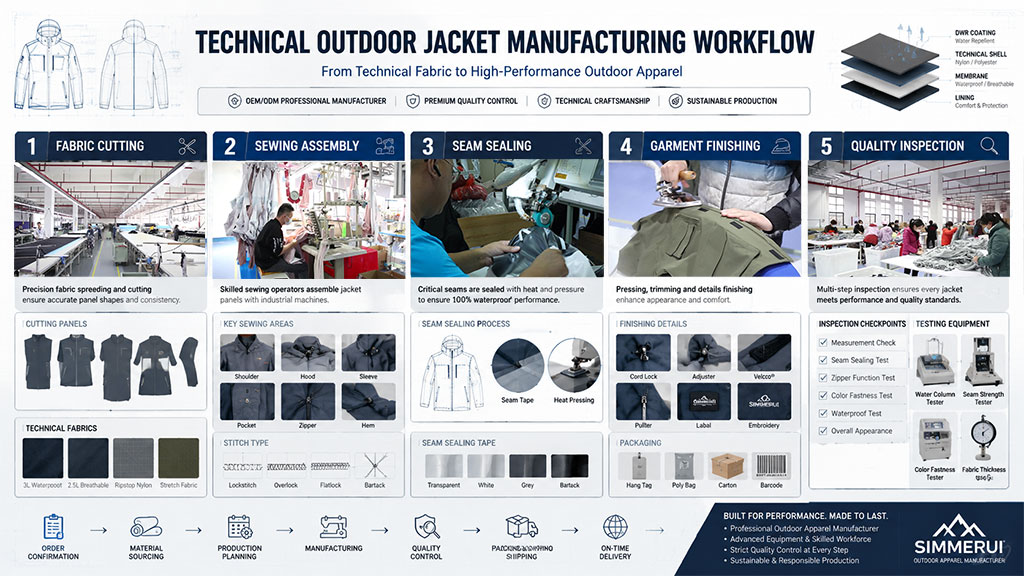
5. Apparel Bulk Production Workflow Management
A professional garment factory normally manages production through several stages.
Cutting Process
Main controls:
- Pattern accuracy
- Fabric utilization
- Panel matching
Sewing Assembly
Production lines are arranged according to garment construction.
Example:
T-shirt Production
- Simple sewing process
- Short production cycle
- High output efficiency
Technical Jacket Production
Requires:
- More sewing operations
- Skilled operators
- Longer production time
- Additional quality checkpoints
Finishing Process
Includes:
- Thread trimming
- Pressing
- Label attachment
- Packaging inspection
6.Bulk Production Timeline for Export Orders
Typical production schedule:| Production Stage | Estimated Timeline |
|---|---|
| Tech Pack Review | 3–7 Days |
| Material Preparation | 2–6 Weeks |
| Cutting | 3–7 Days |
| Sewing Production | 2–5 Weeks |
| Quality Inspection | 3–7 Days |
| Packing & Shipment | 3–7 Days |
- Product category
- Order volume
- Fabric availability
- Customization requirements
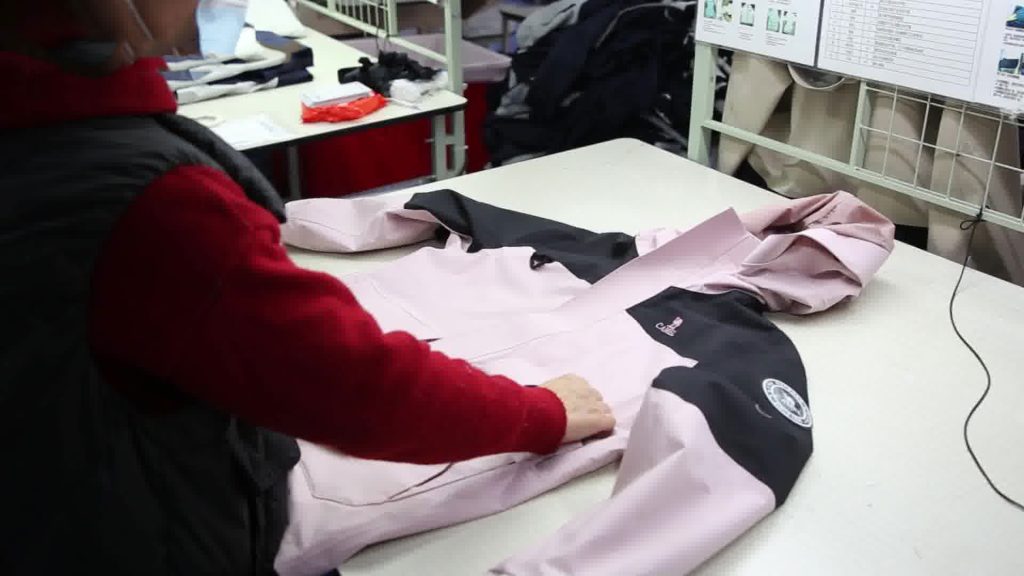
7. Quality Control During Bulk Production
Quality control should be integrated into production scheduling. Professional factories normally apply three inspection stages:Inline Inspection
During sewing production: Check:- Stitch quality
- Measurement accuracy
- Construction consistency
Mid-Production Inspection
Purpose: Identify repeated production issues before large quantities are completed. Final Inspection Before shipment:- Appearance inspectionn
- Size checkingn
- Packaging verificationn
- Quantity confirmation
8. How Apparel Factories Handle Production Delays
Experienced manufacturers prepare contingency solutions.Material Delay
Solutions:- Alternative sourcing
- Production sequence adjustment
- Priority material allocation
Capacity Problems
Solutions:- Additional shifts
- Production line adjustment
- Schedule optimization
Quality Problems
Solutions:- Root cause analysis
- Process correction
- Additional inspections
9. Why Production Scheduling Matters for Global Apparel Brands
Effective scheduling provides:
Reliable Delivery
Brands can coordinate:
- Retail launches
- Seasonal collections
- Marketing campaigns
Better Cost Control
Efficient planning reduces:
- Factory downtime
- Material waste
- Production interruptions
Consistent Product Quality
Standardized processes ensure every batch meets approved specifications.
Supply Chain Stability
Reliable production schedules help brands forecast inventory and future orders.
10. How Brands Should Prepare Before Bulk Production
To avoid production delays, buyers should provide:| Required Information | Purpose |
|---|---|
| Tech Pack | Product specifications |
| Size Chart | Measurement control |
| Artwork Files | Branding accuracy |
| Fabric Requirements | Material sourcing |
| Label Details | Private label production |
| Delivery Requirements | Shipment planning |
FAQ
1.What is bulk production scheduling in apparel manufacturing?
Bulk production scheduling is the process of organizing materials, factory resources, manufacturing steps, quality inspections, and shipping plans to complete large clothing orders efficiently.2.How long does bulk apparel production take?
Production time depends on garment complexity, order quantity, material availability, and customization requirements. Basic garments usually require several weeks, while technical outerwear may require longer production cycles.3.What information should buyers provide before bulk production starts?
Before production begins, buyers should provide complete product information, including:- Technical specification sheet (Tech Pack)
- Size chart
- Fabric requirements
- Color references
- Artwork files
- Label specifications
- Packaging requirements
- Delivery requirements
4.How do apparel factories prevent bulk production delays?
Professional manufacturers reduce production risks through proactive planning. Common solutions include: Material Delay- Alternative sourcing options
- Early material ordering
- Production sequence adjustment
- Production line adjustment
- Additional shifts
- Schedule optimization
- Root cause analysis
- Process improvement
- Additional inspections
5.Can buyers track bulk production progress?
Yes. Many OEM apparel manufacturers provide production updates through milestone reports and communication systems. Typical updates include:- Material preparation status
- Cutting progress
- Sewing production updates
- Quality inspection results
- Packing and shipment schedule
6. What quality tests are commonly used for outdoor apparel production?
Outdoor apparel manufacturers often perform additional testing because functional garments require higher performance standards. Common tests include:| Test Item | Purpose |
|---|---|
| Hydrostatic Pressure Test | Evaluate waterproof performance |
| Breathability Test | Measure moisture vapor transmission |
| Seam Leakage Test | Check waterproof seam reliability |
| Color Fastness Test | Ensure color durability |
| Fabric Abrasion Test | Evaluate material resistance |
7. How do factories control quality during bulk production?
Quality control is integrated throughout the production process instead of being performed only at the end. Professional apparel factories typically use:Inline Inspection
Checks sewing quality, measurements, and construction during production.
Mid-production Inspection
Identifies repeated problems before large quantities are completed.
Final Inspection Verifies:
- Appearance
- Size accuracy
- Packaging
- Quantity
- Product specifications
8. What factors affect apparel production lead time?
Several factors influence garment production lead time:Material Availability
Fabric shortages or delayed trims can stop production.
Product Complexity
Technical apparel requires more processes than basic garments.
Order Quantity
Large orders require longer cutting, sewing, and inspection periods.
Customization Requirements
Private labels, special fabrics, printing, embroidery, and functional features may extend production time. Professional manufacturers consider these factors when creating realistic delivery schedules.
9. How do apparel factories plan bulk production orders?
Professional apparel factories plan bulk production orders by evaluating:- Order quantity
- Product complexity
- Available production capacity
- Material readiness
- Required delivery date
- Quality requirements
Conclusion
Choosing the right apparel manufacturer is not only about production price. Reliable bulk production scheduling determines whether your products arrive on time, meet quality expectations, and support your business growth.
A professional OEM apparel partner should provide:
- ✓ Transparent production planning
- ✓ Strong manufacturing capacity
- ✓ Quality control systems
- ✓ Reliable export delivery management
Looking for a reliable OEM clothing manufacturer for your next bulk order?
Contact our team to discuss your production requirements.
Written by Simmerui Apparel Manufacturing Team
We specialized in OEM and ODM clothing production for global fashion brands, outdoor apparel companies, and private label businesses.
With extensive experience in garment manufacturing, we focus on production planning, technical apparel development, fabric selection, quality control, and export order management.