
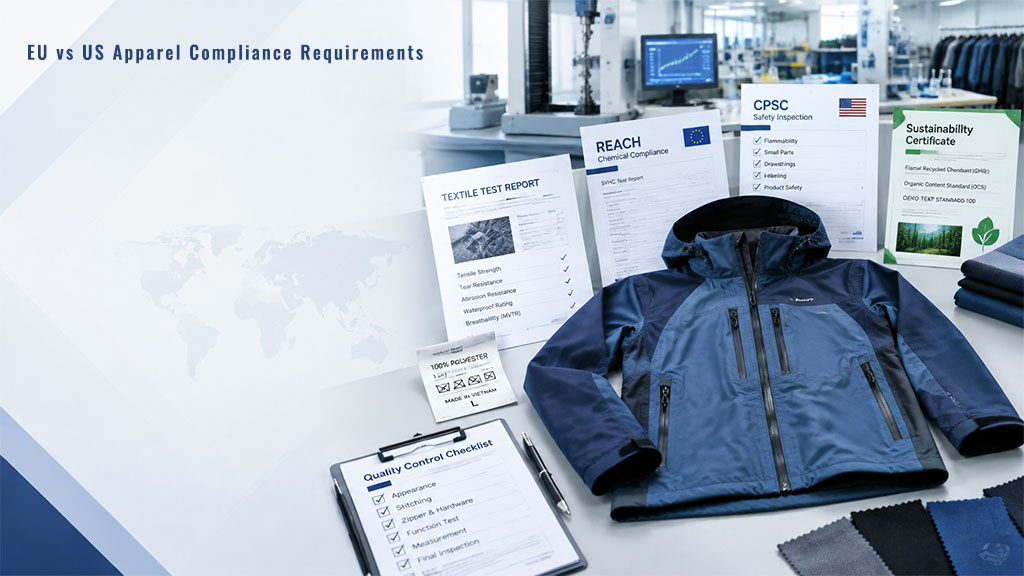
EU and US apparel compliance requirements differ in chemical regulations, labeling systems, product safety standards, and documentation processes. The EU market generally follows harmonized regulations such as REACH and textile labeling requirements, while the US combines federal regulations, state-level requirements, and customer-specific standards. For global apparel brands working with OEM manufacturers, understanding these differences before product development helps reduce compliance risks, avoid shipment delays, and create reliable supply chains across different markets.
Introduction: Why Apparel Compliance Matters in Global Apparel Manufacturing
For international apparel brands, compliance has become more than a legal requirement. It is now an important factor influencing product development, supplier selection, market entry, and long-term brand reputation.
A technical jacket, hoodie, or performance garment manufactured for the European market may require different testing reports, labeling information, and documentation compared with the same product sold in the United States.
For brands working with an OEM apparel manufacturer, understanding regional compliance differences helps to:
- select suitable fabrics and trims during development
- define testing requirements before sampling
- prepare accurate product documentation
- reduce customs and shipment risks
- maintain consistent quality across global markets
The EU and US represent two of the largest apparel consumption markets, but their compliance systems operate differently.
For this reason, compliance planning should begin during the early product development stage — not after bulk production has started.
1. EU vs US Apparel Compliance Framework: Understanding the Main Differences
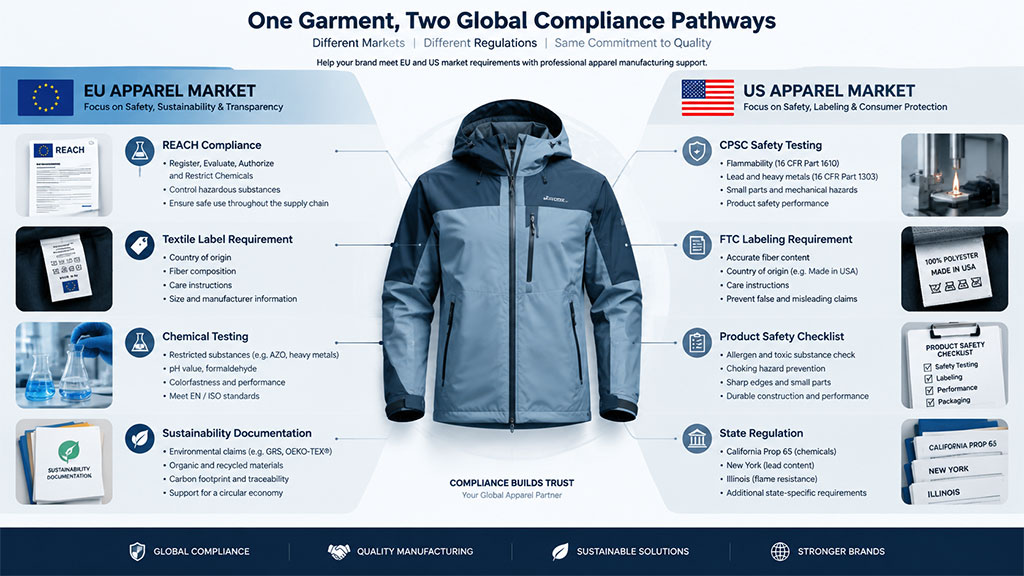
The biggest difference between EU and US apparel compliance systems is their regulatory structure. The EU generally applies unified regulations across member states, while US apparel compliance involves multiple federal agencies, state regulations, and customer-specific requirements.EU Apparel Compliance Framework
The European apparel market commonly focuses on:- REACH chemical restrictions
- textile labeling requirements
- consumer safety regulations
- sustainability documentation
- supply chain transparency
US Apparel Compliance Framework
The US apparel market follows a different structure involving:- federal regulations
- state-level requirements
- product safety standards
- customer-specific Restricted Substance Lists (RSL)
2. Chemical Compliance: REACH vs US Apparel Chemical Requirements
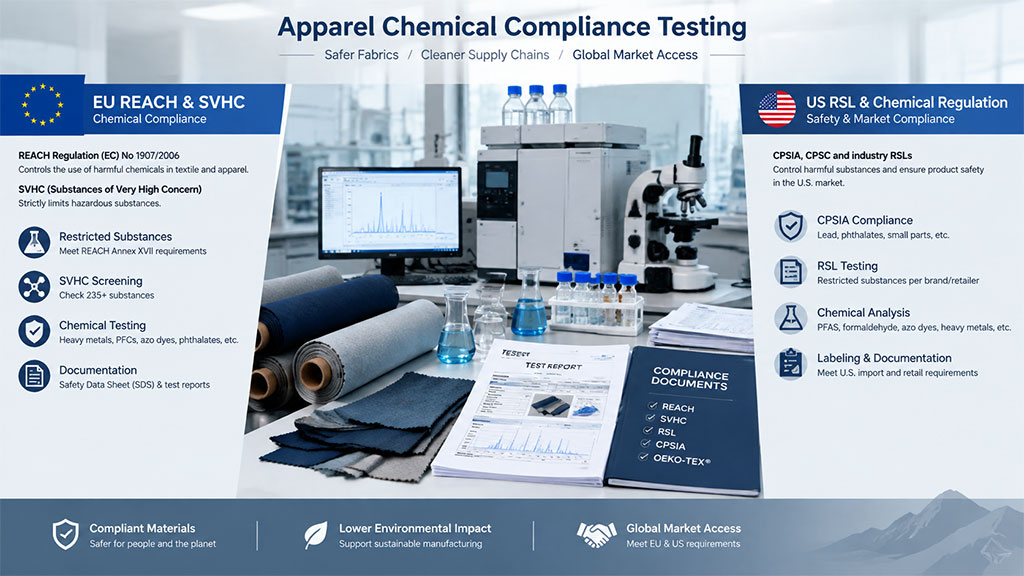
Chemical compliance is one of the most important differences between EU and US apparel markets. During apparel manufacturing, fabrics, dyes, coatings, prints, waterproof membranes, and accessories may need chemical testing to verify consumer safety and regulatory compliance.EU Chemical Compliance: REACH and Restricted Substances Control
For products entering the EU market, brands and manufacturers commonly consider:- REACH restricted substances
- SVHC (Substances of Very High Concern)
- restricted chemicals in textiles and accessories
- material safety documentation
| Testing Category | Purpose |
|---|---|
| Azo dyes testing | Verify restricted dye chemicals |
| Formaldehyde testing | Confirm chemical safety for skin contact |
| Heavy metals testing | Check restricted metallic substances |
| Phthalates testing | Control chemical additives |
| PFAS-related testing | Verify fluorinated chemical restrictions |
US Chemical Compliance: Federal, State, and Customer Requirements
The US apparel market does not use a single chemical regulation comparable to REACH. Instead, compliance may involve:- federal requirements
- state regulations
- customer-specific RSL requirements
- California Proposition 65 requirements
- PFAS restrictions in certain states
- brand-specific chemical standards
3. Apparel Labeling Requirements: EU vs US Market Differences
Correct garment labeling affects customs clearance, retail distribution, and consumer information.
A professional OEM manufacturing process should confirm labeling requirements before bulk production begins.
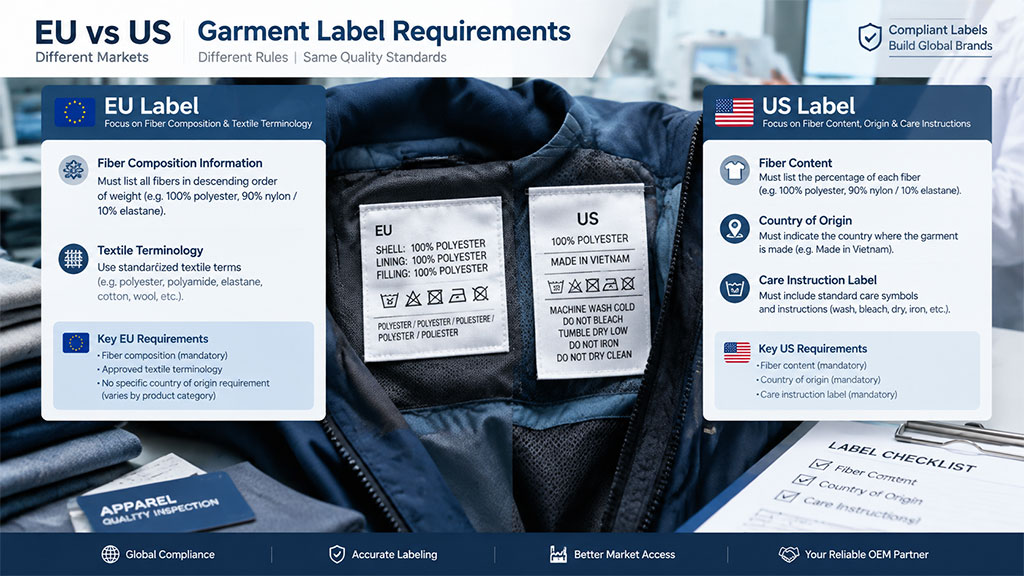
EU Textile Label Requirements
EU apparel products generally require:
- accurate fiber composition information
- approved textile terminology
- durable garment labels
Example:
Outer Fabric:
92% Polyester
8% Elastane
US Apparel Label Requirements
US apparel labeling commonly focuses on:
- fiber content
- country of origin
- care instructions
- manufacturer or importer information
Example:
Shell:
100% Nylon
Made in China
Care:
Machine Wash Cold
For global apparel brands, label development should be included in the tech pack together with fabric specifications, testing requirements, and packaging information.
4. Product Safety Standards: EU vs US Apparel Market Requirements
Beyond chemical control and labeling requirements, apparel brands must also consider product safety standards before entering different markets.
For OEM apparel manufacturing, safety requirements can affect:
- fabric selection
- garment construction
- trims and accessories
- testing procedures
- production documentation
A garment that meets basic quality expectations may still require additional verification depending on the target market, product category, and customer requirements.
EU Apparel Product Safety Considerations
The EU apparel market places strong attention on:
- consumer product safety
- chemical restrictions
- textile traceability
- responsible manufacturing documentation
For technical apparel such as outdoor jackets, performance wear, and functional garments, brands may need to evaluate:
- waterproof performance
- breathability performance
- colorfastness
- seam durability
- restricted substance compliance
Common testing areas include:
| Testing Category | Purpose |
|---|---|
| Colorfastness Testing | Verify color stability during washing, rubbing, and exposure |
| Fabric Performance Testing | Confirm strength, durability, and functional properties |
| Waterproof Testing | Verify resistance against water penetration |
| Breathability Testing | Evaluate moisture vapor transmission performance |
| Seam Testing | Confirm garment construction reliability |
US Apparel Product Safety Considerations
The US apparel market commonly evaluates product safety through:
- federal consumer product requirements
- retailer testing programs
- brand-specific quality standards
Depending on product type, brands may require:
- fabric safety testing
- flammability testing
- performance verification
- third-party laboratory reports
For global apparel brands, defining testing requirements before production helps avoid unexpected compliance issues during shipment or retail approval.
5. Sustainability and Traceability Requirements in Global Apparel Supply Chains
Sustainability has become an increasingly important part of apparel compliance. Many brands now require suppliers to provide not only product quality information but also environmental and supply chain documentation. Common sustainability requirements include:- recycled material verification
- responsible chemical management
- environmental certifications
- supply chain transparency
- production traceability
EU Sustainability Compliance Focus
European apparel brands often place emphasis on:- environmental impact reduction
- circular economy principles
- responsible material sourcing
- chemical management transparency
- recycled fiber certificates
- supplier declarations
- material traceability records
- sustainability test reports
US Sustainability Requirements
In the US market, sustainability requirements are often driven by:- brand commitments
- retailer standards
- consumer expectations
- state-level environmental requirements
- preferred materials
- packaging reduction
- responsible sourcing
- chemical management
6. OEM Apparel Compliance Workflow: From Product Development to Bulk Production
For global brands, compliance should be integrated into the entire OEM manufacturing process.
The Simmerui Apparel Development Team follows a structured approach to help brands manage compliance requirements from concept to production.
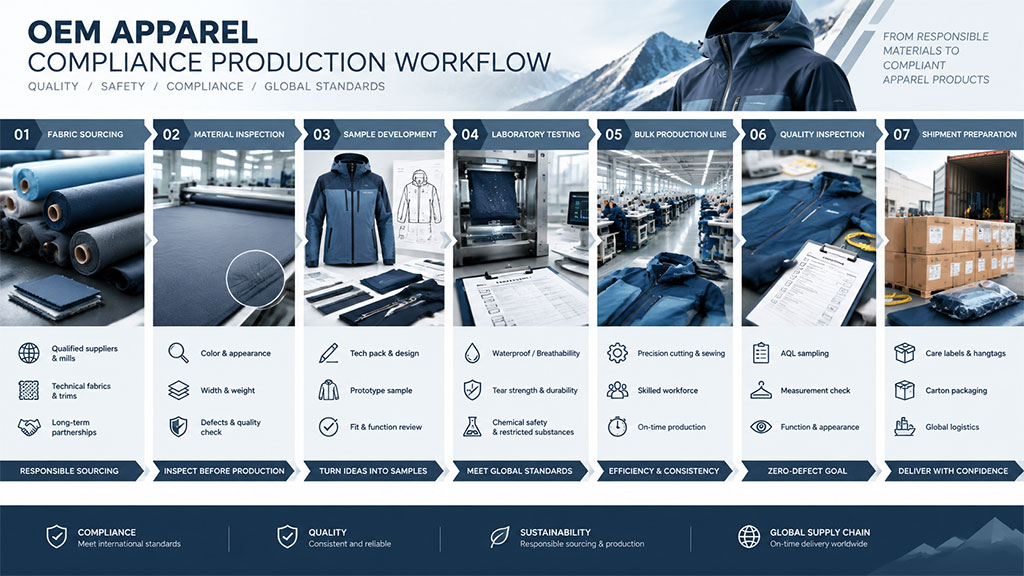
Step 1: Requirement Discussion and Market Definition
Before development begins, brands should confirm:
- target sales market
- product category
- compliance standards
- required certifications
- testing expectations
Different markets may require different documentation packages.
Step 2: Fabric and Material Selection
Material selection directly influences compliance performance.
During development, manufacturers evaluate:
- fabric composition
- coatings and finishes
- trims and accessories
- chemical requirements
- performance specifications
For outdoor apparel, this stage is especially important because waterproof membranes, DWR finishes, and functional coatings may affect testing requirements.
Step 3: Sampling and Testing Verification
Before bulk production, samples should be evaluated through:
- prototype review
- performance testing
- compliance testing
- fit confirmation
Typical development documents include:
- tech pack
- material specification sheet
- testing reports
- sample approval records
Step 4: Bulk Production Quality Control
During production, compliance management continues through:
- incoming material inspection
- inline quality checks
- final garment inspection
- documentation review
The Simmerui Apparel Manufacturing Team supports brands through production management, quality control, and shipment preparation to maintain consistent product standards.
7. EU vs US Apparel Compliance Checklist for Global Brands
Before starting production, brands can use the following checklist:| Compliance Area | EU Market | US Market |
|---|---|---|
| Chemical Control | REACH, SVHC, restricted substances | Federal, state, and brand RSL requirements |
| Labeling | Fiber composition and textile terminology | Fiber content, origin, care instructions |
| Testing | Textile performance and chemical testing | Product safety and customer testing programs |
| Documentation | Traceability and compliance records | Testing reports and supplier documentation |
| Sustainability | Material transparency and environmental requirements | Brand sustainability programs and retailer standards |
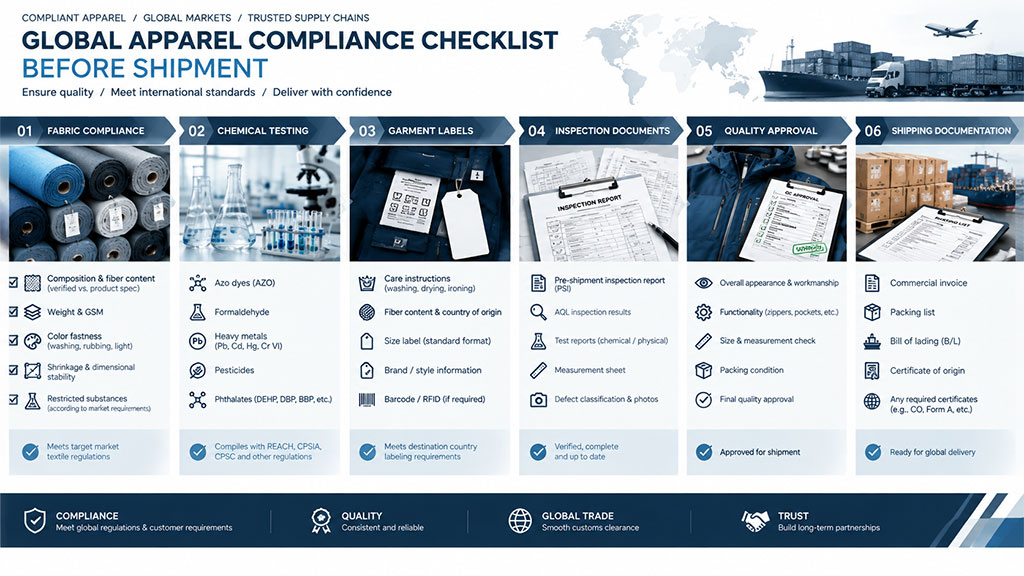
8. How Global Brands Can Reduce Apparel Compliance Risks
Compliance problems often happen when requirements are discussed too late in the manufacturing process.
To reduce risks, brands should:
Define Compliance Requirements Early
Confirm market requirements before:
- selecting fabrics
- creating samples
- placing bulk orders
Include Compliance Details in the Tech Pack
A complete tech pack should include:
- fabric composition
- testing requirements
- labeling information
- packaging requirements
- certification expectations
Choose an Experienced OEM Manufacturing Partner
An experienced apparel manufacturer can help brands coordinate:
- material sourcing
- testing preparation
- production control
- quality documentation
The Simmerui Apparel Manufacturing Team works with global apparel brands to support OEM and ODM development, from initial product planning to finished garment shipment.
FAQ: EU vs US Apparel Compliance Requirements
1. What is the main difference between EU and US apparel compliance requirements?
The EU generally follows unified regulations such as REACH and textile labeling rules, while the US system combines federal regulations, state requirements, and customer-specific standards.2. Does clothing sold in the EU require REACH compliance?
Many apparel products entering the EU market need to consider REACH restrictions and restricted substance requirements, especially regarding chemicals used in textiles and accessories.3. Are US apparel requirements the same as EU requirements?
No. Although many testing areas overlap, labeling, chemical requirements, and documentation expectations can differ between the two markets.4. What apparel tests are commonly required for global brands?
Common tests include:- colorfastness testing
- chemical testing
- fabric performance testing
- waterproof testing
- seam strength testing
5. Why should compliance be considered during product development?
Early compliance planning helps prevent material changes, production delays, and additional testing costs after bulk production begins.6. Do outdoor jackets require additional compliance testing?
Yes. Technical outdoor garments may require additional testing for waterproof performance, breathability, coatings, membranes, and chemical safety.7. What documents should brands prepare before OEM production?
Common documents include:- tech pack
- material specifications
- testing requirements
- labeling instructions
- packaging details
8. How can an OEM manufacturer help with apparel compliance?
An experienced OEM partner can support fabric selection, testing coordination, production quality control, and compliance documentation management.Conclusion: Building Reliable Global Apparel Supply Chains Through Compliance
EU and US apparel compliance requirements are different in structure, but both markets require careful planning, accurate documentation, and reliable manufacturing processes.
For global apparel brands, compliance should not be treated as a final inspection step. It should be integrated into product development, material selection, sampling, testing, and production management.
The Simmerui Apparel Manufacturing Team supports international brands with OEM and ODM apparel development, helping manage technical requirements, quality control processes, and market-specific compliance needs.
By establishing a clear compliance workflow from the beginning, brands can develop apparel products with greater confidence and build stronger long-term supply chain partnerships.
Written by the Simmerui Apparel Manufacturing Team.
We specialize in OEM and ODM apparel production for global B2B brands, providing integrated solutions across product development, fabric sourcing, sampling, quality control, and scalable manufacturing. Our experience covers outdoor apparel, performance wear, casual clothing, and private label collections. We help brands reduce production risks, optimize costs, and build reliable long-term manufacturing partnerships.