
OEM clothing manufacturing is a production model where brands outsource garment development and manufacturing to a professional factory. The process typically includes product design confirmation, fabric selection, tech pack creation, sampling, bulk production, quality control, and final shipment. For first-time brands, understanding this workflow is essential to reduce cost mistakes, improve product quality, and ensure smooth communication with suppliers.
A structured OEM process helps brands scale efficiently while maintaining consistent product standards across batches.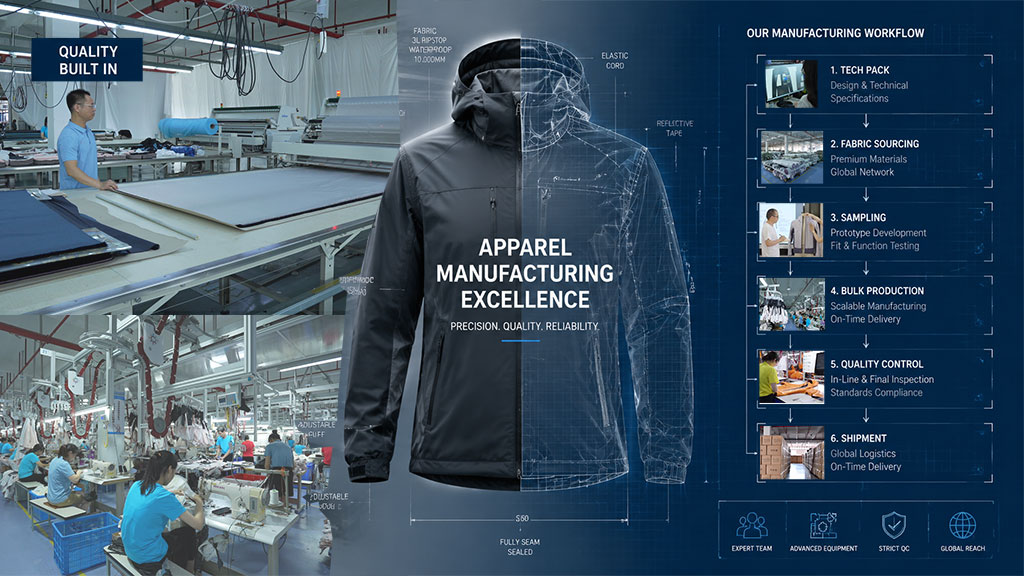
What Is OEM Clothing Manufacturing?
OEM clothing manufacturing refers to a process where a factory produces garments strictly based on a brand’s design specifications, tech pack, and material requirements.
- The brand owns the design and concept
- The factory executes development and production
This model is ideal for startups and established brands seeking scalable production without investing in in-house manufacturing.
Step-by-Step OEM Clothing Manufacturing Process
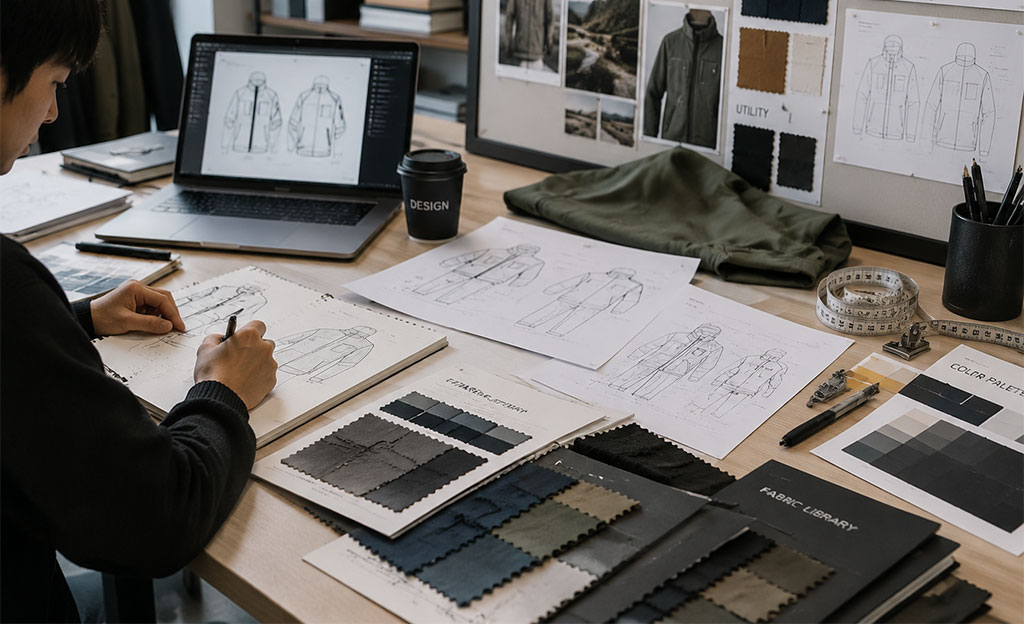
Step 1 — Product Concept & Design Input
This is the foundation stage where product direction is defined.
Brand provides:
- Design sketches or reference samples
- Target customer profile and market positioning
- Fabric or performance requirements (optional)
👉 Outcome: Clear product direction aligned with market needs before development begins.
Step 2 — Tech Pack Development (Production Blueprint)
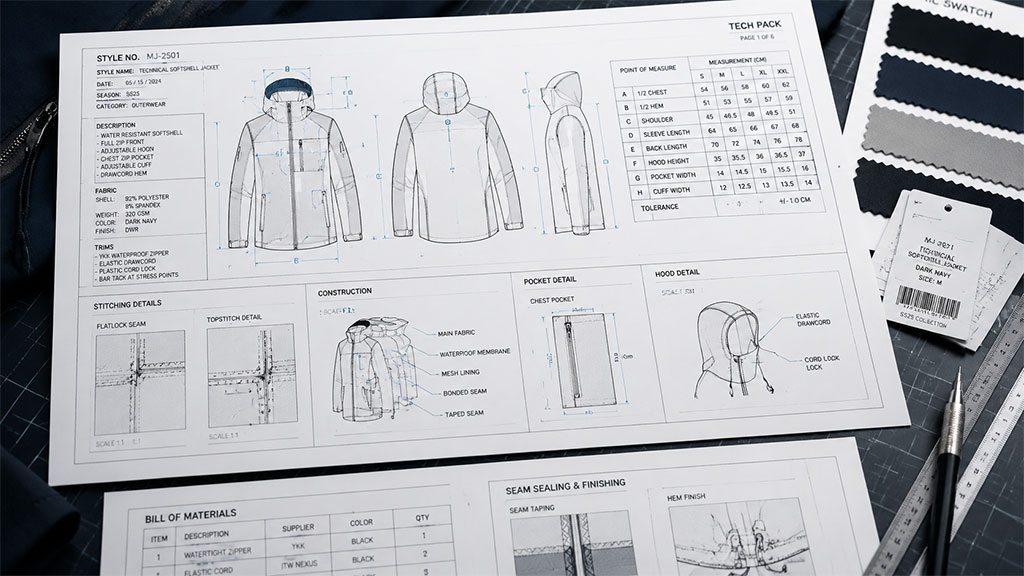
The tech pack is the most critical document in OEM production.
Includes:
- Garment measurements & size grading
- Fabric composition and GSM
- Stitching, seams, and construction details
- Labeling, packaging, and branding requirements
👉 Purpose: Ensures factories can produce exactly according to design intent with minimal deviation.
Step 3 — Fabric Sourcing & Confirmation
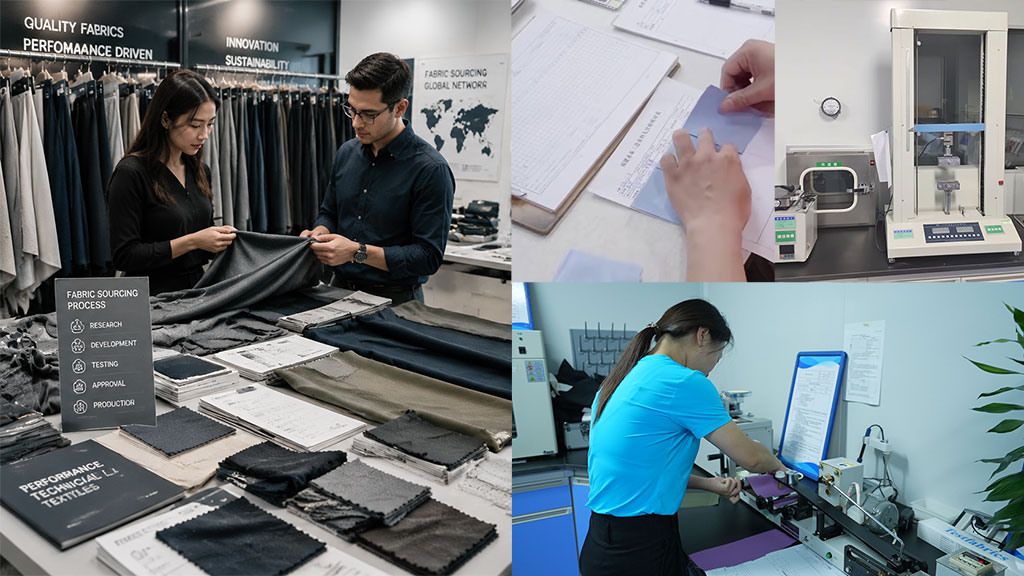
Factories source and validate materials based on technical and performance requirements.
Key criteria:
- Fabric weight (GSM)
- Composition (cotton, polyester, blends, etc.)
- Functional performance (waterproof, stretch, breathability)
👉 Process: Fabric swatches are submitted for approval before sampling begins.
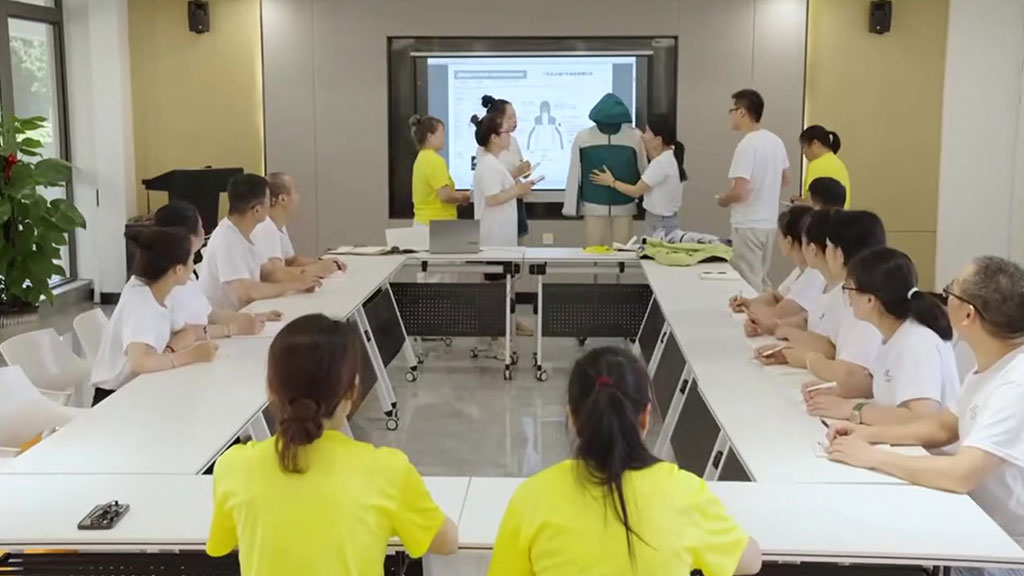
Step 4 — Sample Development (Proto → Fit → PP Sample)
Sampling is a risk-control stage before mass production.
- Proto Sample: First version for structure validation
- Fit Sample: Adjusts sizing and wearability
- Pre-Production (PP)
Sample: Final approved version for bulk production
👉 Value: Minimizes costly errors in bulk manufacturing.
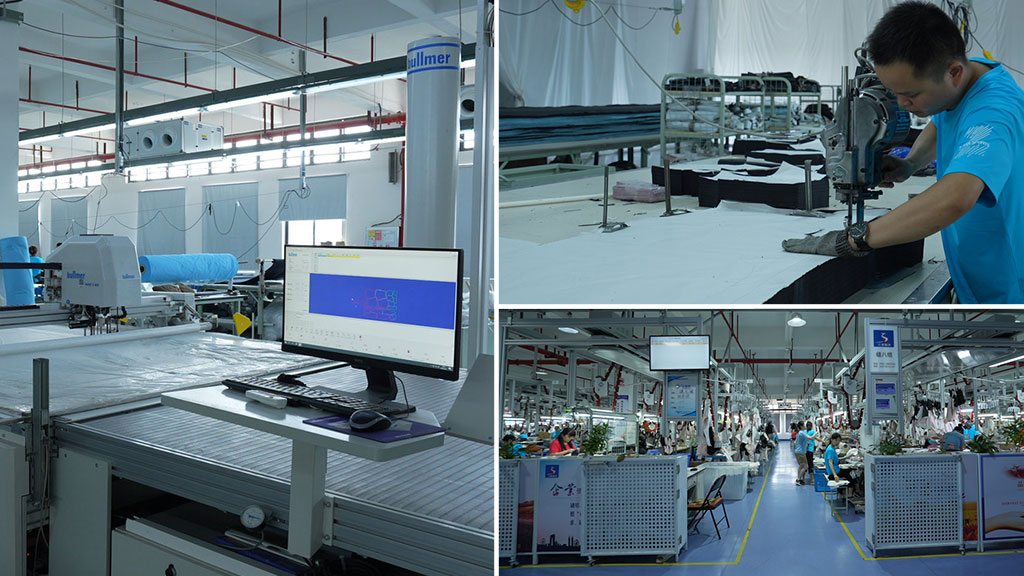
Step 5 — Bulk Production
Once the PP sample is approved, production begins.
Includes:
- Bulk fabric ordering
- Cutting, sewing, printing, embroidery
- Inline quality control during production
👉 Goal: Maintain consistency and efficiency at scale.
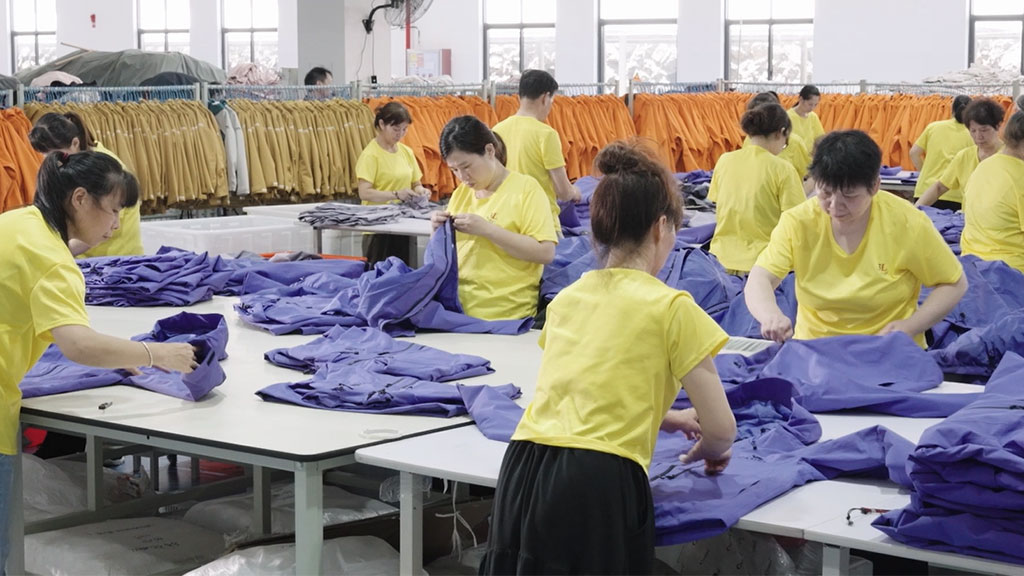
Step 6 — Quality Control & Inspection
Quality assurance ensures compliance with brand standards. Inspection points:- Stitching strength and accuracy
- Size tolerance verification
- Color consistency checks
- Final AQL inspection (Accepted Quality Limit)
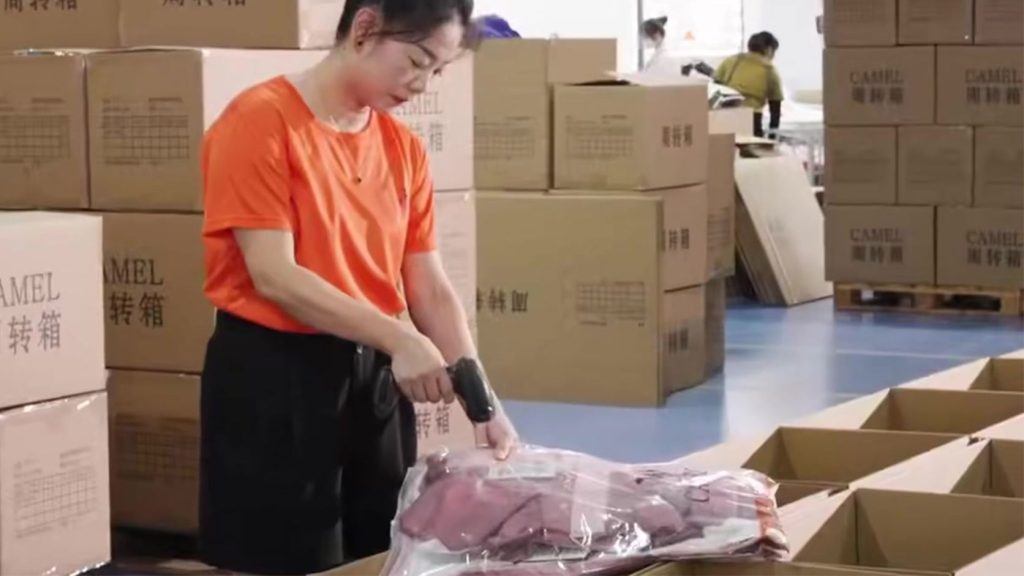
Step 7 — Packaging & Shipment
Final stage before delivery.
Process:
- Folding, tagging, labeling
- Packaging according to brand specifications
- Shipment via air or sea logistics
👉 Outcome: Ready-for-market finished goods delivered to destination.
Common Mistakes First-Time OEM Brands Make
Many production issues are not factory-related but process-related.- Incomplete or unclear tech packs
- Skipping fabric testing before approval
- Rushing sample approval decisions
- Underestimating MOQ and lead time requirements
- Poor communication with factories
FAQ — OEM Clothing Manufacturing
1. What does OEM mean in clothing manufacturing?
OEM means a factory manufactures garments based on a brand’s design and specifications, while the brand retains ownership of the product concept.2. How long does OEM clothing production take?
Typically 25–60 days, depending on design complexity, fabric sourcing, and order quantity.3. What is the difference between OEM and ODM?
- OEM: Brand provides the design
- ODM: Factory provides pre-designed products for modification and branding
4. What is a tech pack in apparel manufacturing?
A tech pack is a detailed production document that defines all garment specifications for factory manufacturing.5. What is MOQ in clothing manufacturing?
MOQ (Minimum Order Quantity) usually ranges from 100–500 pieces per style, depending on factory capability and product type.6. How can first-time brands reduce OEM production risk?
By using detailed tech packs, testing fabrics before approval, and following structured sampling stages.7.What documents are required to start OEM clothing production?
To begin OEM production, brands typically need:- Tech pack or design sketches
- Fabric requirements or references
- Size chart (if available)
- Logo / branding files
8.Can I start OEM production without a tech pack?
Yes, but it will require factory-assisted development, which may include:- Additional sampling rounds
- Longer lead time
- Higher development cost
9.What affects OEM clothing pricing?
Key cost drivers include:- Fabric selection and GSM
- Order quantity (MOQ impact)
- Design complexity (cuts, panels, stitching)
- Printing / embroidery techniques
- Packaging requirements
10. How many sampling rounds are normally needed?
Typically:- 2–3 rounds for standard products
- 3–5 rounds for technical or performance wear
11. What is the biggest risk for first-time apparel brands?
The most common risks include:- Poor tech pack preparation
- Fabric mismatch after bulk production
- Ignoring MOQ constraints
- Underestimating production lead time
Conclusion
A structured OEM workflow is essential for building reliable and scalable apparel products. From concept development to final shipment, each stage directly impacts cost, quality, and delivery efficiency.
For first-time brands, mastering this process is the foundation for successful product launches and long-term manufacturing partnerships.
CTA
Looking for OEM apparel manufacturing support?
Work with a structured factory system that ensures quality control, efficient sampling, and scalable production for global brands.
Written by: Simmerui Apparel Manufacturing Team.
We specialized in OEM & ODM apparel manufacturing, including T-shirts, hoodies, jackets, and performance wear. With advanced production lines and multi-process capabilities (printing, embroidery, digital transfer, and fabric customization), our team supports global B2B brands from sampling to mass production.
We help B2B brands, startups, and growing labels streamline custom apparel development from tech pack creation, fabric and trim approval, and prototype sampling to PPS approval, bulk production, and shipment. Our team’s structured approach reduces unnecessary revisions, shortens lead times, and ensures high-quality production across performance, casual, and outerwear collections.