
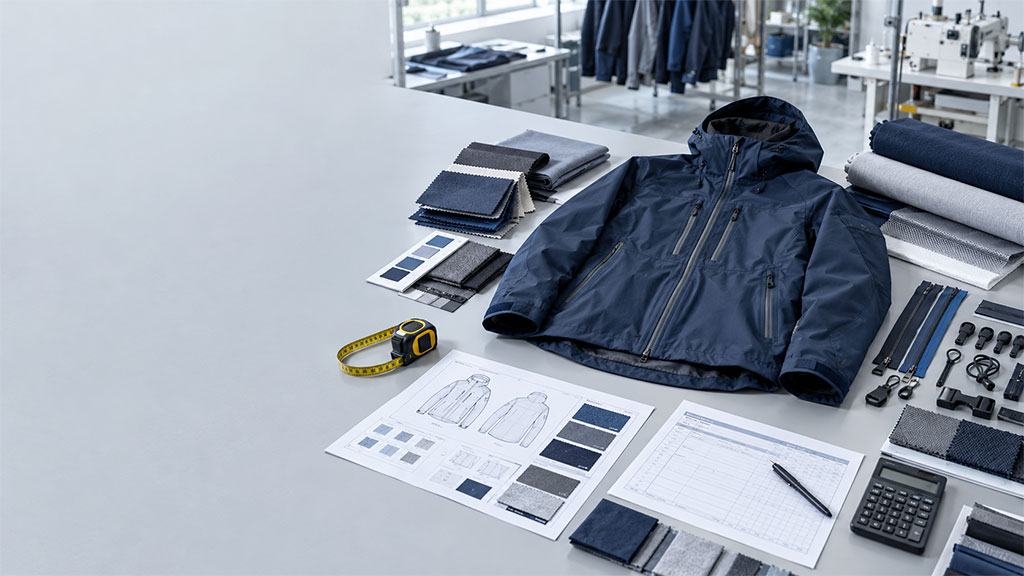
Apparel manufacturing cost includes more than the unit price quoted by a clothing manufacturer. Brands must account for fabric, trims, labor, product development, customization, testing, packaging, freight, and applicable import duties. Understanding these expenses before bulk production helps apparel brands compare OEM/ODM suppliers, estimate landed cost per garment, protect profit margins, and avoid unexpected charges. A structured cost calculation also makes it easier to evaluate minimum order quantities (MOQ), optimize product specifications, and plan repeat orders.
1. Understand Manufacturing Cost vs. Total Landed Cost
One common mistake in apparel sourcing is treating a manufacturer’s quoted unit price as the complete cost of a garment.
Depending on the quotation, the price may cover fabric, trims, labor, and agreed construction details, while sampling, testing, packaging, or shipping may be charged separately.
Brands should distinguish three cost categories:
| Cost Category | What It Includes | Business Purpose |
|---|---|---|
| Factory production cost | Materials, garment labor, construction, and agreed customization | Evaluates manufacturing expenses |
| Total project cost | Production, development, testing, packaging, and other project expenses | Measures the overall investment |
| Total landed cost | Applicable project expenses plus freight, insurance, duties, customs, and delivery charges | Estimates the cost of receiving goods at the destination |
These categories are not interchangeable. Before comparing suppliers, confirm exactly what each quotation includes and excludes.
2. Calculate Fabric and Material Costs
Fabric is often a major component of clothing manufacturing cost, particularly for outdoor jackets, performance apparel, and technical garments.
The basic calculation is:
Fabric cost per garment = Fabric consumption per garment × Fabric price per unit
For example, if a garment requires 1.8 meters of fabric at $5 per meter, the base fabric cost is $9 per garment.
Actual costing should also account for cutting waste, fabric yield, garment sizes, defects, and production allowances. Avoid counting waste twice if it is already included in the consumption estimate.
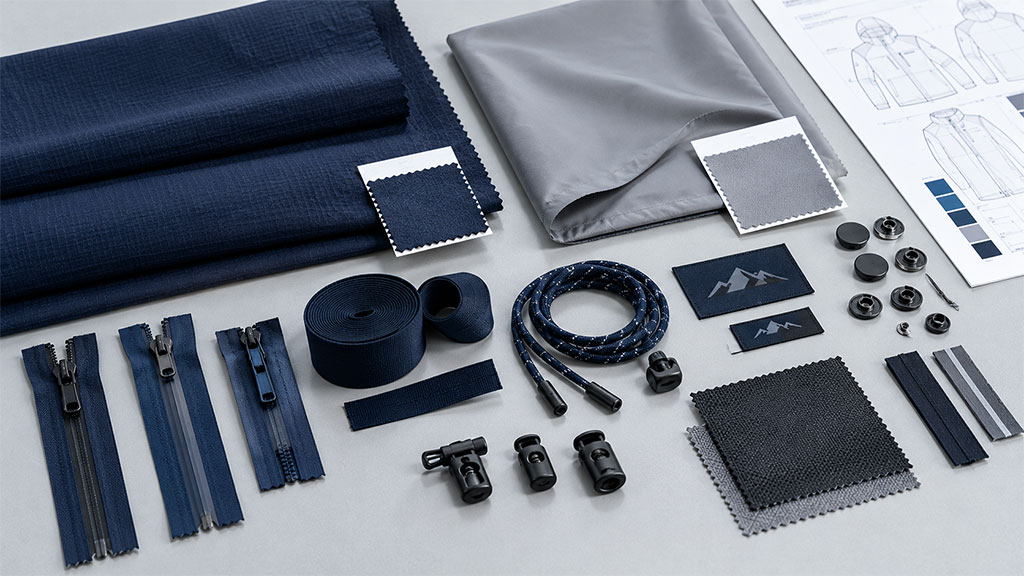
Additional materials may include:
- Lining, pocketing, and reinforcement fabrics
- Zippers, buttons, snaps, and hook-and-loop fasteners
- Elastic, drawcords, and cord locks
- Labels, patches, and branded components
- Seam-sealing tape and waterproof membranes
For technical apparel, material specifications can significantly affect costs. Waterproof shells, insulated jackets, stretch softshells, and abrasion-resistant workwear may require specialized fabrics and components.
Before approving a budget, confirm fabric composition, weight, performance requirements, color availability, and supplier minimums.
3. Evaluate Labor and Construction Complexity
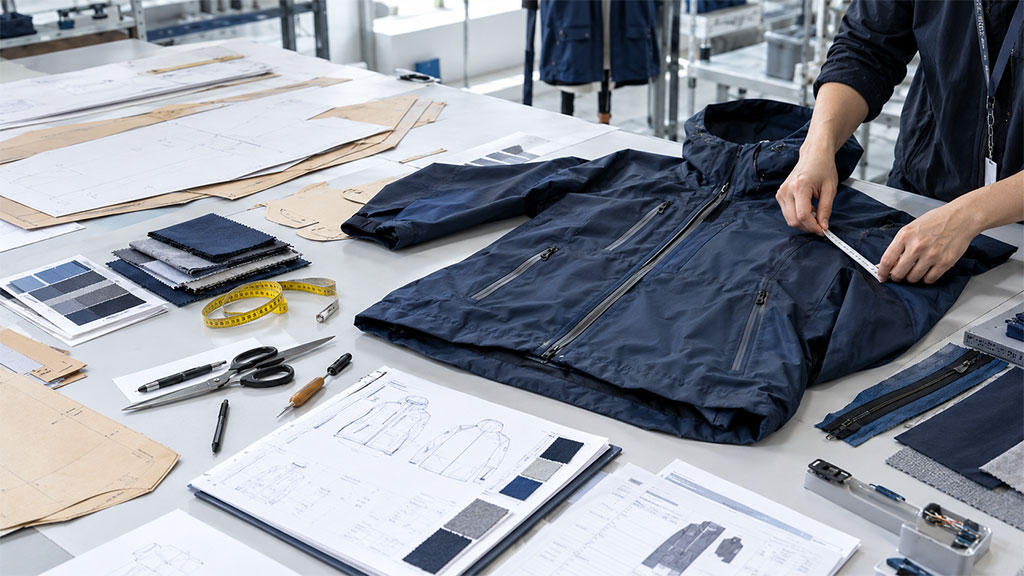
Garment labor costs depend on construction complexity, production efficiency, equipment requirements, and the skills needed to complete each style. A basic T-shirt generally requires fewer operations than a technical jacket featuring multiple panels, reinforced pockets, adjustable cuffs, lining, and sealed seams. Key cost drivers include:- Number of panels and sewing operations
- Pocket construction and reinforcement
- Zipper installation and specialized closures
- Lining, padding, and multilayer construction
- Seam sealing and technical finishing
- Printing, embroidery, and decorative details
4. Include Sampling and Product Development Costs
Sampling and development expenses are frequently overlooked when preparing the first production budget.
Depending on the project, these costs may include pattern development, grading, prototype samples, fit revisions, material sourcing, printing setup, testing, and pre-production samples.
Some suppliers charge these expenses separately, while others incorporate selected services into their commercial quotations.
Separate one-time development expenses from recurring production costs. This distinction helps brands evaluate both the initial order and future replenishment orders.
For example, if development costs $900 and the initial order contains 300 sellable garments, allocating the full development expense across that order adds $3 per garment.
If the brand subsequently orders 1,000 units without repeating the same development activities, the original expense may not recur. However, design revisions, new materials, and additional testing can create further costs.
5. Calculate Customization, Branding, and Packaging
Private-label apparel often requires additional components beyond standard garment construction.
| Item | Main Cost Drivers |
|---|---|
| Embroidery | Stitch count, size, placement, and setup |
| Screen printing | Number of colors, artwork complexity, and print locations |
| Heat transfers | Transfer type, dimensions, application, and durability |
| Woven labels | Artwork, dimensions, material, and order quantity |
| Hangtags | Printing, finishing, and attachment |
| Custom packaging | Packaging materials, printing, inserts, and assembly |
| Special finishes | Washing, coating, garment dyeing, or other treatments |
Customized labels, packaging, and printing components may have separate minimum order quantities, even when the garment order is relatively small.
Before bulk production, confirm artwork, placement, dimensions, color references, packaging specifications, and setup fees. Clarify whether each charge applies per garment, per design, per color, or as a one-time expense.
6. Budget for Quality Control, Testing, and Compliance
Quality control and laboratory testing should be planned according to the product’s intended use, performance claims, destination market, and buyer requirements.
Potential expenses include in-line inspections, final inspections, third-party inspection services, fabric testing, colorfastness testing, dimensional stability testing, abrasion testing, waterproofness testing, and applicable chemical compliance tests.
Not every garment requires every test. For example, an outdoor brand selling waterproof jackets should establish the required waterproof performance, test methods, and acceptance criteria before confirming materials and production specifications.
Remember that quality inspection and laboratory testing serve different purposes. Inspection evaluates workmanship and product conformity, while laboratory testing measures defined material or product properties.
Confirm which services are included in the manufacturer’s quotation and which require separate arrangements or payments.
7. Add Freight, Import Duties, and Logistics Costs
Manufacturing cost is not necessarily the cost of receiving finished garments at a warehouse. Depending on the destination and shipping arrangement, additional expenses may include:- International freight and cargo insurance
- Customs brokerage and clearance
- Import duties and applicable taxes
- Port and terminal handling charges
- Destination delivery and warehousing
8. Understand MOQ and Economies of Scale
Minimum order quantity (MOQ) can significantly influence clothing manufacturing cost.
A manufacturer may have separate minimums for finished garments, fabric purchases, colors, and customized components. These requirements should be confirmed before production planning.
The basic unit-cost relationship is:
Unit cost = Variable cost per garment + Allocated fixed costs per garment
Development and setup expenses may remain relatively fixed, while fabric consumption and garment labor generally increase with production volume. Spreading fixed expenses across more units can reduce the cost allocated to each garment.
However, larger orders are not always financially preferable. Excess inventory ties up cash and increases exposure to storage costs, markdowns, and unsold products.
Brands should evaluate unit cost alongside expected demand, inventory risk, total cash investment, and the flexibility to reorder.
9. Use a Total Apparel Manufacturing Cost Formula
Once all applicable expenses have been identified, consolidate them into a single cost model.
Total project cost = Production cost + Development cost + Customization cost + Testing and QC cost + Packaging cost + Applicable logistics and import costs
Use this formula as a checklist rather than assuming every category is charged separately. Remove any expenses already included elsewhere to avoid double-counting.
To estimate landed cost per sellable garment:
Landed cost per sellable unit = Total applicable landed cost ÷ Number of sellable garments
The denominator matters because ordered quantity and sellable quantity may differ.
Example: Calculate the Landed Cost of a 500-Piece Apparel Order
The following figures are illustrative only, not Simmerui quotations or market benchmarks.
| Cost Item | Estimated Cost |
|---|---|
| Fabric and materials | $4,500 |
| Garment manufacturing labor | $2,500 |
| Branding and customization | $500 |
| Sampling and development | $900 |
| Quality control and testing | $400 |
| Packaging | $350 |
| Freight and insurance | $850 |
| Duties and customs-related charges | $700 |
| Total estimated project cost | $10,700 |
If all 500 garments are sellable:
$10,700 ÷ 500 = $21.40 per garment
If only 485 garments are sellable and total expenditure remains unchanged:
$10,700 ÷ 485 ≈ $22.06 per sellable garment
This example shows why brands should calculate cost using the expected sellable quantity rather than relying solely on the original order quantity.
Actual costs vary according to specifications, supplier pricing, production volume, destination, and shipping arrangements.
10. Compare OEM/ODM Manufacturer Quotations Fairly
The lowest quoted unit price does not necessarily represent the lowest total cost. One manufacturer may include standard labels, packaging, and inspection, while another may charge for these services separately. Quotations may also differ in fabric quality, construction, customization, and delivery responsibilities. Before selecting an apparel manufacturing partner, compare:- Fabric composition, weight, finish, and performance
- Construction details and customization requirements
- MOQ by style, color, and material
- Sampling charges and revision policies
- Included trims, labels, and packaging
- Inspection standards and testing responsibilities
- Production lead time and payment terms
- Shipping arrangements and delivery responsibilities
- Exclusions, surcharges, and change-order costs
11. Complete a Pre-Production Cost Checklist
Before approving bulk production, verify the following:
- Confirm the final tech pack and garment specifications.
- Check fabric and trim costs, availability, and minimum purchases.
- Verify MOQ requirements by style, color, and customized component.
- Separate development fees from recurring manufacturing expenses.
- Confirm branding, printing, labels, and packaging charges.
- Establish testing, inspection, and compliance responsibilities.
- Verify shipping terms, freight assumptions, and applicable import duties.
- Calculate total project cost and landed cost per sellable garment.
- Review payment terms and the timing of cash outflows.
- Document the approved sample, quotation, inclusions, and exclusions.
Completing these checks before production establishes a clear financial baseline and reduces the risk of unexpected charges.
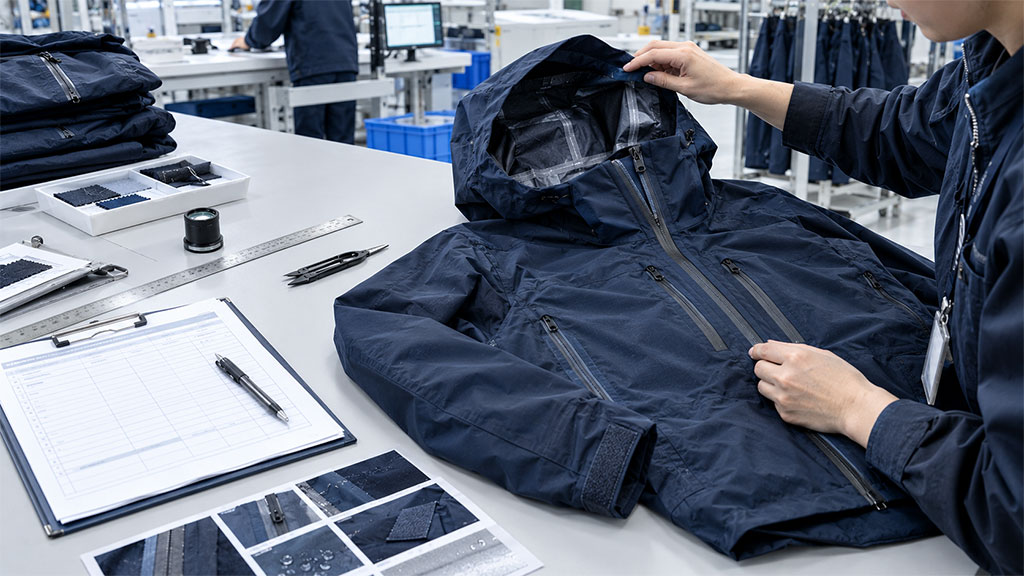
How Simmerui Supports Apparel Cost Planning
Simmerui works with global B2B apparel brands through OEM and ODM manufacturing partnerships covering product development, fabric sourcing, sampling, quality control, and bulk production.
Accurate costing begins with clear product specifications. Garment construction, fabric selection, customization, order quantity, quality requirements, and delivery arrangements all influence the final quotation.
Brands preparing for production can share their tech pack or product references, estimated order quantity, target cost, customization requirements, and destination market. This information helps assess manufacturing feasibility and identify cost variables before bulk production begins.
Our approach focuses on transparent quotation scope, practical product development, and coordinated manufacturing planning, helping brands evaluate costs while maintaining the specifications and quality standards their products require.
Planning a custom apparel order? Contact Simmerui to discuss your product requirements, target quantity, and manufacturing budget before committing to bulk production.
Frequently Asked Questions
1. What is included in apparel manufacturing cost?
Apparel manufacturing cost commonly includes fabric, trims, labor, construction, and agreed customization. Depending on the quotation, labels, packaging, inspection, and other services may also be included. Sampling, testing, freight, and import duties may be charged separately.
2. How do you calculate clothing production cost per unit?
Add the applicable production expenses and divide by the quantity produced. To calculate landed cost per sellable unit, include relevant development, testing, packaging, freight, duties, and other applicable expenses, then divide by the number of sellable garments.
3. What is the difference between manufacturing cost and landed cost?
Manufacturing cost covers the expenses associated with producing a garment. Landed cost includes applicable additional expenses required to transport and deliver the goods to the agreed destination, such as freight, insurance, customs charges, and import duties.
4. Why does MOQ affect clothing manufacturing cost?
MOQ influences material purchasing requirements and the allocation of fixed expenses. Larger orders may reduce fixed cost per garment, but they also require more upfront capital and can increase inventory risk. The appropriate quantity balances unit economics with expected demand.
5. How can apparel brands reduce manufacturing costs without sacrificing quality?
Brands can simplify unnecessary construction details, standardize compatible fabrics and trims, improve tech pack accuracy, reduce avoidable sample revisions, and plan production around realistic demand. Essential performance specifications and agreed quality standards should remain intact.
6. Are sampling and development costs included in the garment unit price?
Not always. Pattern development, prototypes, sample revisions, and other development services may be charged separately or included in a project quotation. Confirm which expenses are one-time costs, which may recur, and whether any fees are refundable or creditable against bulk production.
7. What should I check before accepting a clothing manufacturer quotation?
Confirm that the quotation matches the approved tech pack, materials, construction, customization, order quantity, and quality requirements. Review MOQ, development fees, packaging, lead time, payment terms, delivery responsibilities, exclusions, and potential surcharges.
8. How do I calculate a selling price from manufacturing cost?
Start with the expected landed cost per sellable garment, then account for other business expenses, including marketing, warehousing, fulfillment, payment processing, and overhead.
A simplified target gross margin formula is:
Selling price = Cost per unit ÷ (1 − Target gross margin)
For example, a $25 unit cost and a 60% target gross margin produce a selling price of $62.50 before considering other pricing adjustments, taxes, or channel-specific costs.
We specialize in OEM and ODM apparel production for global B2B brands, supporting product development, fabric sourcing, sampling, quality control, and scalable manufacturing. Our experience covers outdoor apparel, performance wear, casual clothing, and private-label collections. We help brands manage production risks, optimize costs, and build reliable long-term manufacturing partnerships.