
OEM apparel development helps outdoor brands convert design concepts into production-ready collections through structured tech packs, fabric engineering, sampling, and quality control. By optimizing each stage of development, brands can reduce sampling iterations, control manufacturing costs, and accelerate time-to-market. This case study demonstrates how a structured OEM workflow enables consistent multi-SKU production while improving efficiency, scalability, and product quality for global B2B apparel brands.

1. How a Mid-Size Outdoor Brand Scaled From Concept to Production
In this case study, a mid-size outdoor performance brand partnered with an OEM/ODM apparel manufacturer to develop a multi-SKU jacket and performance wear collection designed for the US and European wholesale market.
Project Scope:
- Product categories: Waterproof jackets, insulated outerwear, performance pants
- Total SKUs: 8 styles
- Target market:Outdoor retail & wholesale distributors (US/EU)
- Development goal: Build a consistent, cost-optimized, production-ready collection
Primary Business Objectives:
- Improve cross-SKU consistency in fit and fabric performance/li>
- Reduce unnecessary sampling iterations/li>
- Optimize material cost without reducing technical performance/li>
- Accelerate go-to-market timeline for seasonal launch
2. Key Bottlenecks in OEM Apparel Development Projects
Outdoor apparel development requires balancing performance, cost, and manufacturability. Core Challenges Identified:
1) Multi-SKU Consistency Challenges
Ensuring jackets, pants, and layers maintain consistent:
- Fit grading
- Fabric behavior
- Color matching across batches
2) Fabric Cost vs Performance Optimization
High-performance fabrics (3L shell, TPU membrane) significantly increase cost pressure.
3) Sampling Iteration Reduction Strategy
Multiple revisions caused:
- Delayed approvals
- Extended development cycles
- Increased prototype cost
4) Production Scalability Risk
Design elements needed to remain stable when scaled from sample → bulk production.
3. Structured OEM Development Workflow for Multi-SKU Production
A structured workflow was implemented to standardize development across all SKUs: Development Pipeline:
| Stage | Key Output | Risk if Missing | Business Impact |
|---|---|---|---|
| Tech Pack | Specs, BOM, sketches | Inconsistent samples | Delayed development |
| Fabric Engineering | Material selection | Cost overruns | Poor performance |
| Sampling | Proto / Fit / PPS | Wrong fit | Rework cycles |
| Bulk Production | Mass manufacturing | QC issues | Delivery delay |
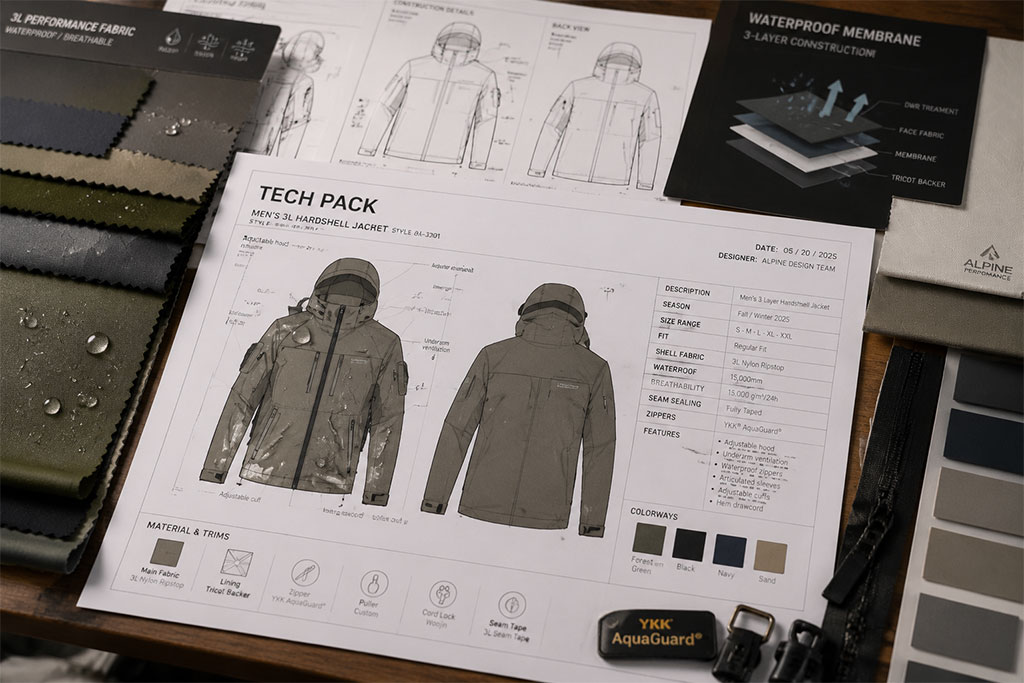
Stage 1: Tech Pack Development
The process begins with translating brand vision into technical execution documents.
Outputs:
- Measurement specification sheets
- Construction diagrams
- BOM (Bill of Materials)
- Initial fabric direction
Key Risk:
Incomplete tech pack leads to inconsistent sampling outcomes.
Stage 2: Fabric Engineering & Selection
Fabric selection directly determines product performance and cost structure.
Evaluation Criteria:
- Waterproof performance vs breathability balance
- Durability under outdoor usage conditions
- Cost-per-meter optimization for scaling production
Engineering Decision Logic:
- 2L vs 3L laminated shell systems
- TPU membrane vs PU coating selection
- DWR coating durability and re-treatment cycles
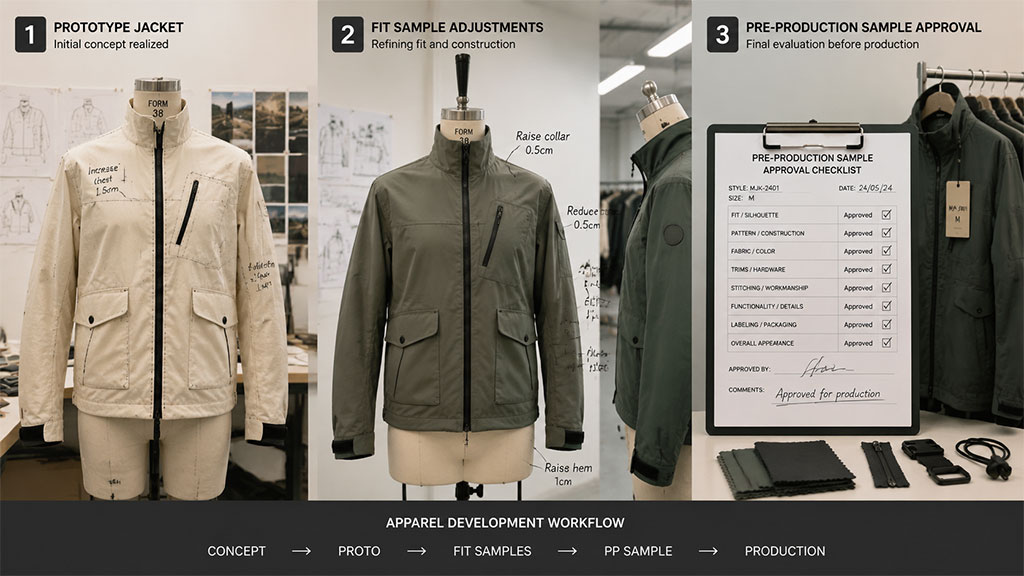
Stage 3: Sample Development (Proto → Fit → PPS)
Sampling is the most critical stage for reducing production risk.
Sampling Stages:
- Prototype sample (first physical version)
- Fit sample (adjust silhouette and measurements)
- Pre-production sample (final approval standard)
Common Issues Resolved:
- Size grading inconsistencies
- Logo placement alignment
- Fabric substitution due to availability or cost
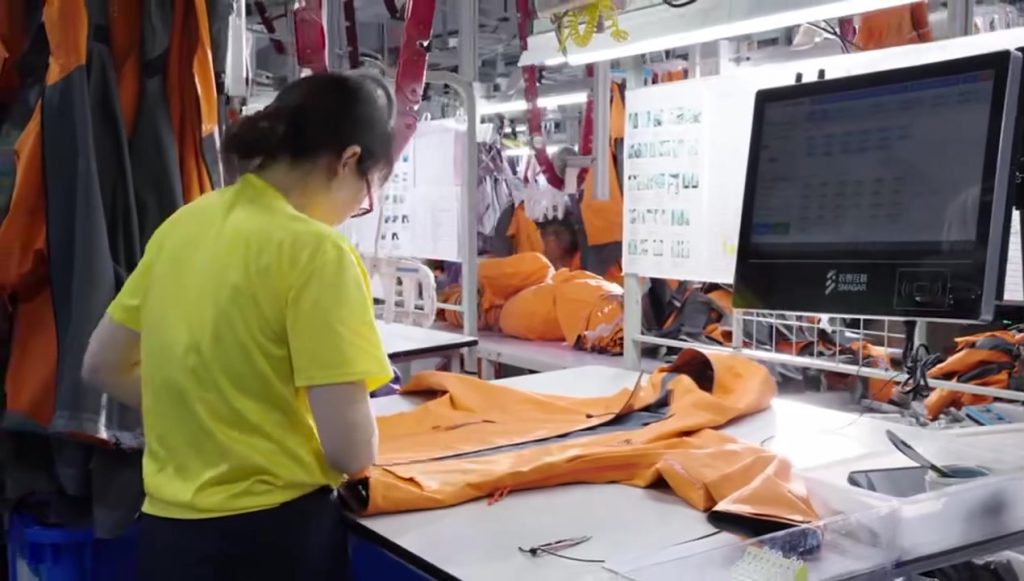
Stage 4: Bulk Production & Quality Control
After PPS approval, controlled mass production begins under strict QC standards.
QC Inspection Framework:
- Incoming fabric inspection (GSM, color deviation, shrinkage rate)
- Inline production inspection (stitching, seam sealing integrity)
- Final AQL inspection before shipment
Stage 5: Final Collection Delivery
The final output is a fully aligned production collection:
- Consistent sizing across SKUs
- Unified fabric performance system
- Production-ready for wholesale and retail distribution
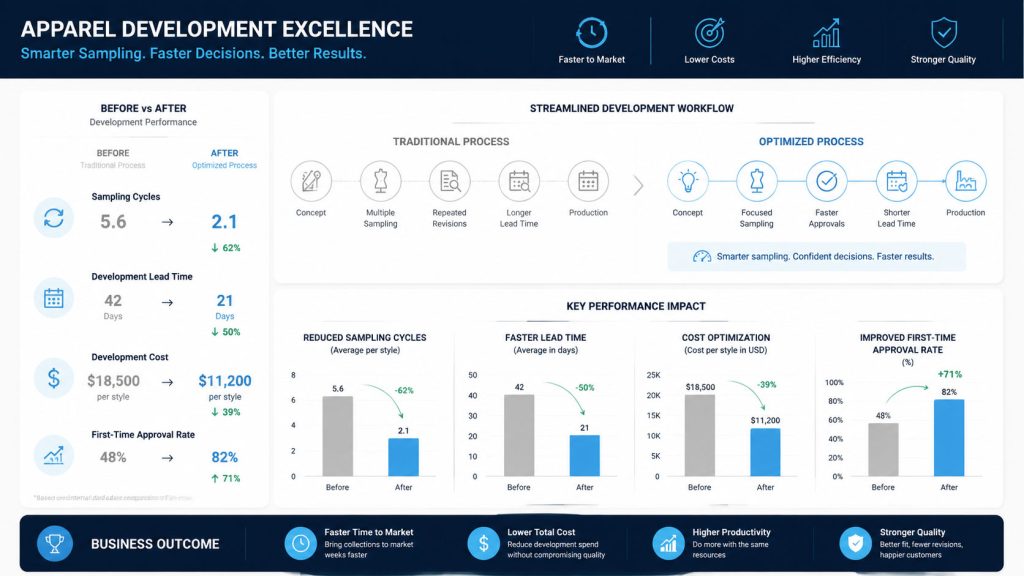
4. Measurable Improvements in Sampling, Cost, and Lead Time
The structured OEM workflow delivered measurable improvements:
Performance Outcomes:
- ✔ 30% reduction in sampling rounds
- ✔ 18-day reduction in total development lead time
- ✔ 12% lower average cost per SKU through fabric optimization
- ✔ Faster seasonal go-to-market execution
Results may vary depending on design complexity, fabric selection, and number of SKUs involved.
Strategic Impact:
This workflow enables brands to scale from a single concept into a structured, multi-product collection without compromising consistency or production efficiency.
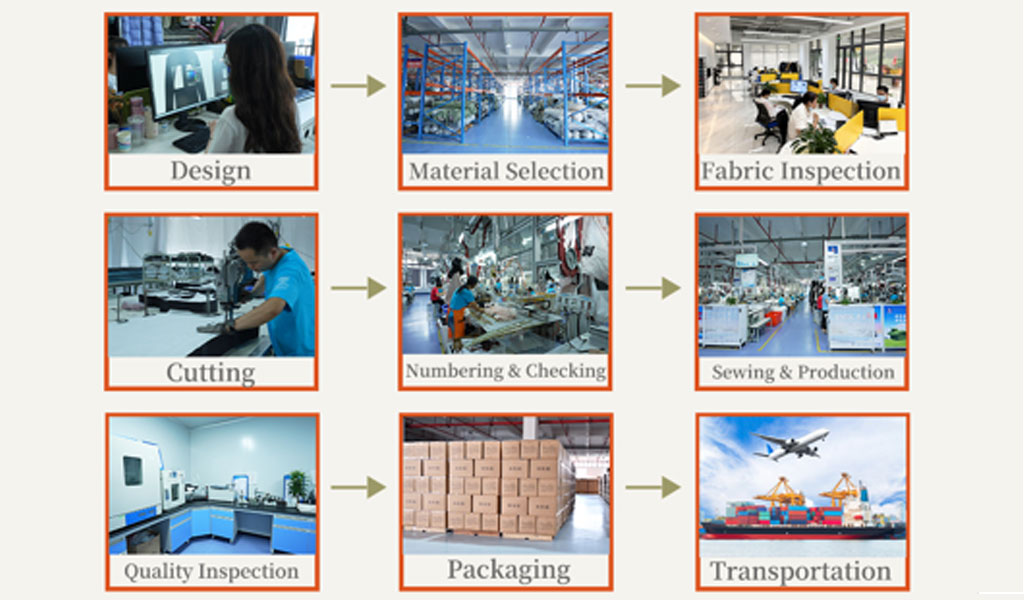
5. Why Standardized OEM Processes Improve Apparel Manufacturing Efficiency
Without a structured workflow, apparel development typically results in:
- Repeated sampling cycles
- Uncontrolled material substitution
- Delayed production timelines
- Inconsistent retail-ready quality
A standardized OEM/ODM system ensures:
- Predictable production outcomes
- Lower development risk
- Better cost control
- Faster scaling for global distribution
6. FAQ
Q1: What is an OEM apparel development case study?
It demonstrates how a clothing concept is transformed into a production-ready collection through structured design, sampling, fabric selection, and manufacturing processes.
Q2: How long does OEM apparel development take?
Typically 30–90 days depending on design complexity, fabric sourcing, and number of sampling iterations.
Q3: What is the difference between OEM and ODM apparel production?
OEM allows brands to provide their own designs, while ODM offers pre-developed designs that can be customized and branded.
Q4: Why is sampling critical in apparel manufacturing?
Sampling ensures correct fit, construction accuracy, and fabric performance before bulk production, reducing costly manufacturing errors.
Q5: Can small brands use OEM manufacturing?
Yes. Many manufacturers support low MOQ production, allowing emerging brands to develop collections with reduced inventory risk.
Q6: How many SKUs can be handled in one OEM development cycle?
Typically 1–5 core SKUs per development cycle is optimal for most OEM apparel programs. Complex programs can handle more, but beyond ~5–8 SKUs increases risk of inconsistent fit, fabric sourcing delays, and sampling bottlenecks.
Q7: What causes most delays in apparel OEM production?
The main delay drivers are:
- Slow fabric and trim approvals
- Repeated fit/sample revisions
- Unclear or incomplete tech packs
- Late design changes after sampling starts
- Bulk fabric lead time mismatches
Q8: How can brands reduce sampling rounds in jacket development?
- Provide complete, accurate tech packs (specs + BOM + construction details)
- Use reference samples for fit and construction alignment
- Freeze design decisions before first sample
- Align fabric and trim selection early
- Consolidate feedback from all stakeholders into one review cycle
Q9: What is the role of PPS in production accuracy?
PPS (Pre-Production Sample) is the final “gold standard” sample used to confirm everything before bulk production. It locks:
- Fit and measurements
- Fabric and trim consistency
- Construction methods and finishing details
- QC standards for mass production
It effectively serves as the production benchmark to ensure batch-to-batch consistency.
Written by the Simmerui Apparel Development Team.
We specialize in OEM & ODM apparel development for global B2B brands, focusing on outdoor jackets, performance wear, and private label manufacturing. Our expertise covers tech pack engineering, fabric development, sampling optimization, PPS validation, and bulk production QC.
We work closely with fabric engineers and production teams to ensure scalable, cost-efficient, and production-ready apparel development systems.