
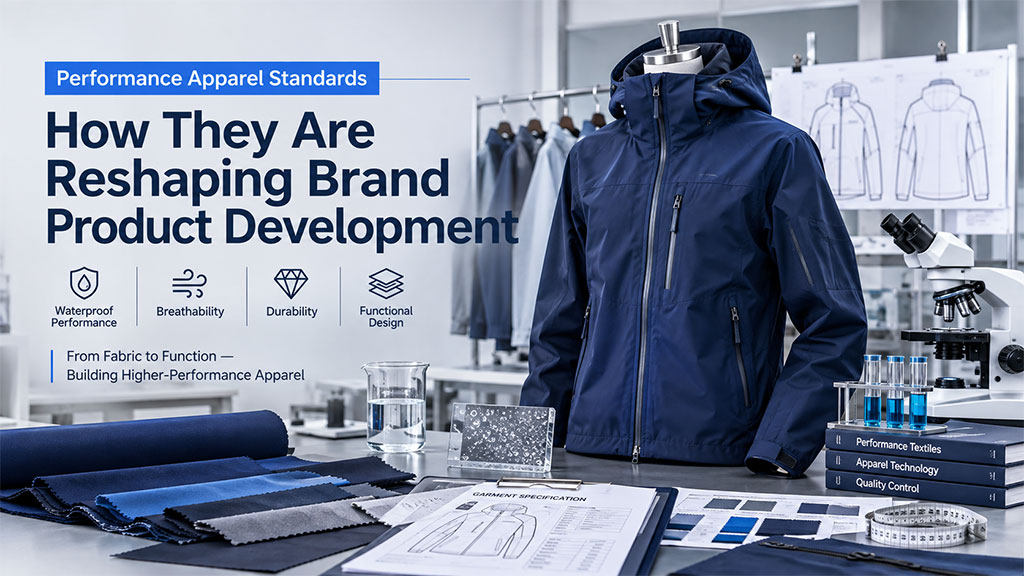
Performance apparel standards are changing how clothing brands approach fabric selection, product development, and manufacturing quality. From waterproofness and breathability to abrasion resistance and chemical compliance, measurable performance requirements now influence decisions throughout the production process. For outdoor, activewear, and technical apparel brands, understanding these standards helps reduce development risks, improve product reliability, and ensure garments meet their intended performance requirements. Working with an experienced OEM/ODM manufacturing partner makes it easier to translate technical specifications into commercially viable products.
1. Why Performance Apparel Standards Matter for Clothing Brands
Performance apparel is no longer evaluated by appearance and comfort alone. Consumers increasingly expect outdoor jackets, hiking pants, activewear, and sportswear to deliver reliable functionality under real-use conditions. Several factors are driving this change:Higher Functional Expectations
- Outdoor jackets need reliable waterproof and wind-resistant protection.
- Hiking pants require abrasion resistance,flexibility, and durability.
- Activewear needs moisture management, stretch recovery, and comfort.
- Insulated jackets must balance thermal performance, weight, and mobility.
Greater Product Reliability
Garments must maintain their performance after repeated washing, stretching, and regular use. Fabric stability, seam construction, and durability testing are therefore becoming essential.More Demanding Market Requirements
Retailers and international buyers may request product testing reports, restricted-substance documentation, and quality assurance procedures. Requirements depend on the destination market, product category, and customer specifications.2. Understand the Key Performance Apparel Testing Standards
Brands need measurable technical requirements to translate product concepts into manufacturing specifications.
| Performance Area | What It Evaluates | Common Testing Methods |
|---|---|---|
| Waterproofness | Resistance to water penetration | Hydrostatic head testing |
| Breathability | Moisture vapor transmission | MVTR testing |
| Moisture Management | Sweat absorption and transfer | Wicking and drying tests |
| Abrasion Resistance | Resistance to surface wear | Martindale testing |
| Tear Strength | Resistance to fabric tearing | Tear strength testing |
| Tensile Strength | Resistance to pulling forces | Tensile testing |
| Colorfastness | Resistance to fading and transfer | Washing, rubbing, and light tests |
| Chemical Compliance | Restricted substances in materials | Laboratory testing |
The appropriate test methods and acceptance criteria depend on garment application, fabric construction, customer requirements, and applicable regulations.
Waterproofness and Breathability
Waterproofness is essential for rain jackets, ski jackets, and technical outdoor shells. Hydrostatic head testing measures a fabric’s resistance to water penetration under pressure.
However, fabric performance alone does not guarantee a waterproof finished garment. Seam sealing, zipper protection, pocket construction, and manufacturing quality also affect overall performance.
Breathability is commonly evaluated through:
- MVTR: Measures the amount of water vapor passing through a material over a defined period.
- RET: Measures resistance to evaporative heat transfer. Lower values generally indicate better evaporative breathability under the relevant test method.
Brands should balance waterproofness, breathability, weight, and durability according to intended product use.
Mechanical Durability
Hiking pants may require additional abrasion resistance around the knees and seat, while technical jackets need sufficient tear strength for demanding outdoor conditions.
Performance targets should reflect actual garment applications rather than applying identical requirements to every product.
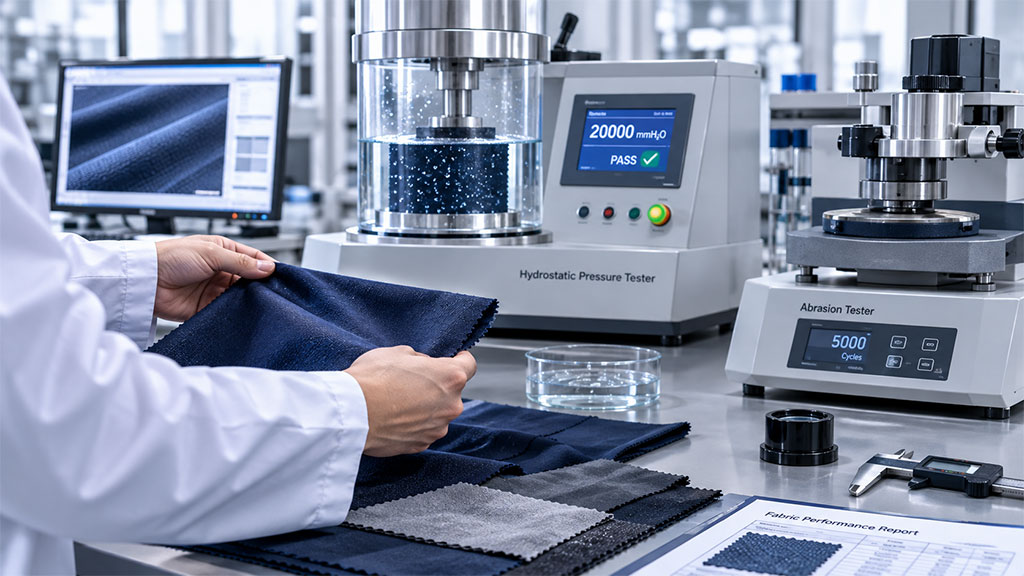
3. Select Technical Fabrics Based on Performance Requirements
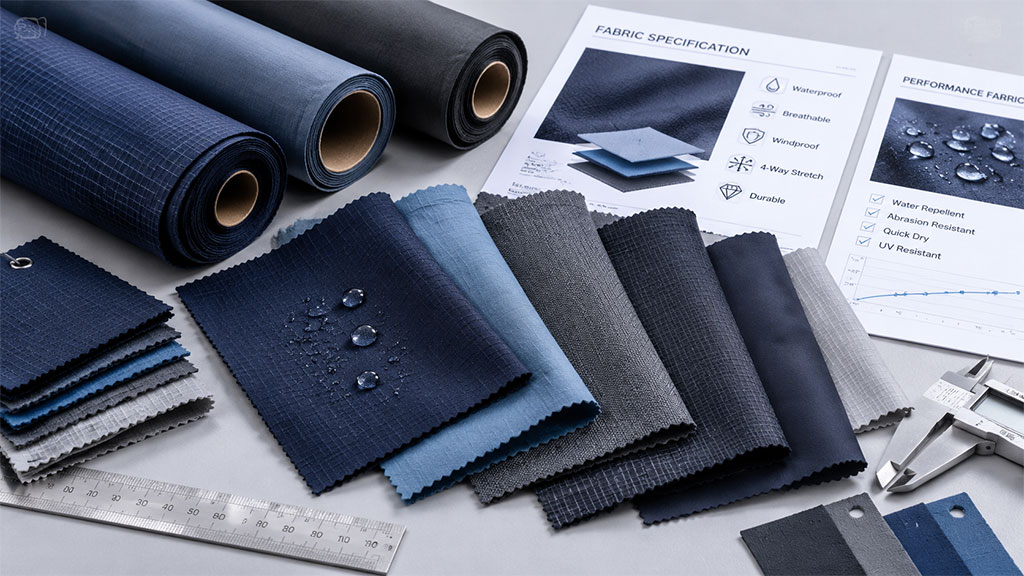
Fabric selection is no longer determined by composition, weight, color, and price alone.
Technical apparel development also requires evaluating:
- Waterproof ratings and membrane construction.
- Breathability and moisture management.
- Stretch and recovery.
- Abrasion and tear resistance.
- Dimensional stability after washing.
- Colorfastness and surface durability.
- Chemical compliance documentation.
Balance Technical Performance and Manufacturing Cost
Higher-performance materials do not automatically create better commercial products.
For example, higher waterproof ratings may increase material costs and require more demanding seam-sealing processes. Specialized stretch fabrics can improve mobility but introduce additional cutting and sewing challenges.
Before confirming materials, brands should evaluate six factors:
- Intended product application.
- Required performance levels.
- Material availability and consistency.
- Processing and construction compatibility.
- Testing and certification requirements.
- Target manufacturing cost.
This approach helps brands avoid over-specifying materials and paying for unnecessary performance features.
4. Integrate Performance Standards into Every Development Stage
Technical requirements should be established before sampling and bulk production, not addressed only after problems appear.
Stage 1: Define Product Specifications
Translate the product concept into measurable requirements, including waterproofness, breathability, DWR treatment, seam construction, zipper performance, and durability targets.
Stage 2: Evaluate and Test Fabrics
Assess potential materials against agreed specifications before sample development. Early testing helps identify material-related risks and avoid unnecessary production delays.
Stage 3: Develop and Validate Samples
Evaluate fit, movement, seam construction, sewing behavior, functional components, and garment-level performance.
A fabric may pass laboratory testing but still create challenges when integrated into a finished garment. Sample validation is therefore essential.
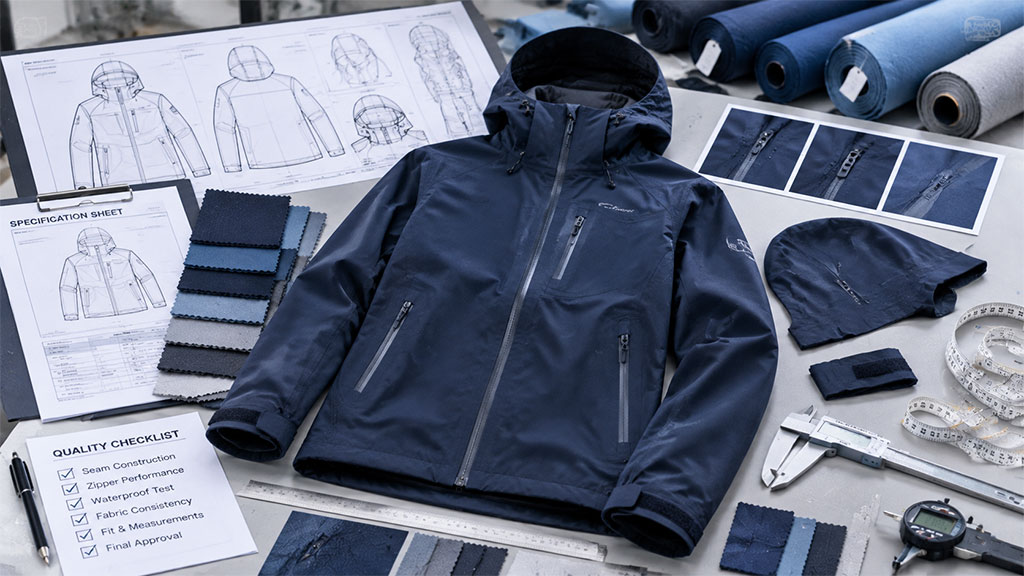
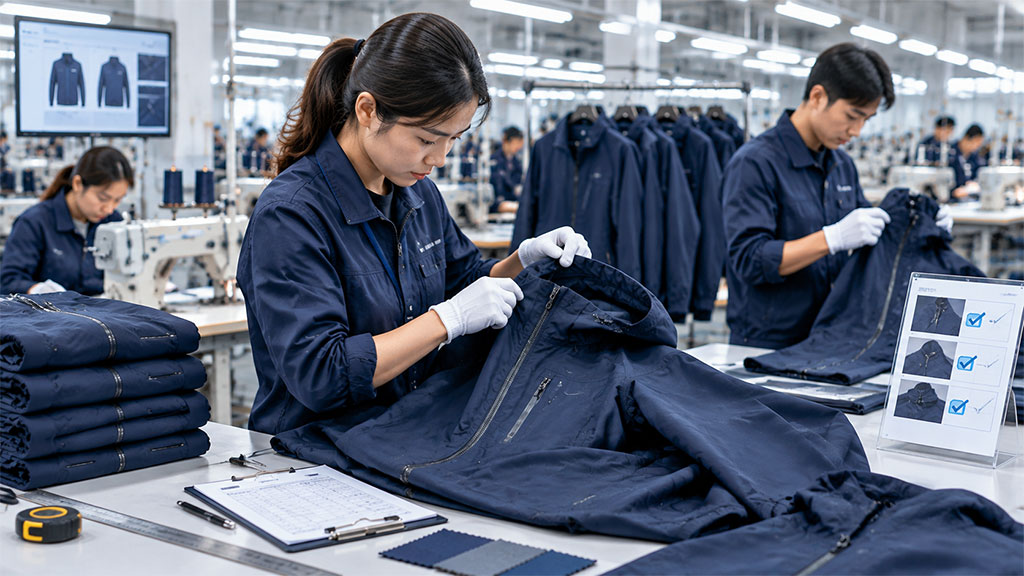
Stage 4: Establish Bulk Production QC
Translate approved sample specifications into documented inspection procedures, including:
- Incoming fabric inspection.
- Measurement verification.
- Construction and seam inspection.
- Functional component checks.
- Inline production inspection.
- Final garment inspection.
- Applicable laboratory testing.
Clear acceptance criteria help maintain consistency between approved samples and bulk production.
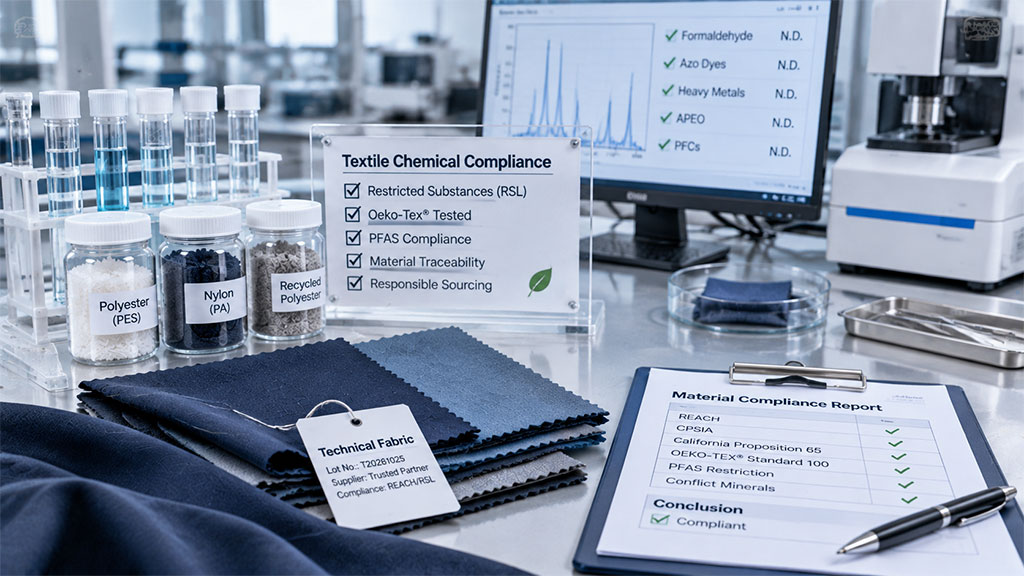
5. Meet Chemical Compliance and Material Transparency Requirements
Performance apparel brands must consider material safety alongside functional performance.
Several standards and regulatory frameworks may apply depending on the product and destination market.
| Standard / Regulation | Main Focus |
|---|---|
| OEKO-TEX STANDARD 100 | Testing textiles for harmful substances |
| REACH | EU chemical restrictions and compliance |
| CPSIA | Applicable US consumer product safety requirements, including covered children’s products |
| GOTS | Certified organic textile processing and supply chain requirements |
| ZDHC MRSL | Restricted chemical inputs in manufacturing processes |
These frameworks serve different purposes. A textile certification does not automatically demonstrate compliance with every applicable regulation.
PFAS-related requirements are also receiving greater attention in technical outdoor apparel. Brands should evaluate relevant market regulations, material chemistry, water-repellent treatments, and supplier documentation before approving materials.
6. Evaluate OEM/ODM Manufacturers for Technical Apparel Production
A capable OEM/ODM manufacturing partner should provide more than basic garment assembly.
When evaluating a potential partner, consider five capabilities:
Technical Fabric Sourcing: Identifying suitable materials according to performance specifications, target costs, and production feasibility.
Product Development and Sampling: Supporting pattern development, sample revisions, construction evaluation, and material compatibility.
Manufacturing Process Control: Managing specialized techniques such as seam sealing, reinforcement stitching, bonding, and functional component installation.
Quality Inspection and Testing Coordination: Establishing inspection procedures, coordinating relevant testing, and maintaining production documentation.
Scalable Bulk Production: Maintaining consistent material quality, construction standards, and production controls as order quantities increase.
These capabilities help brands turn technical requirements into repeatable manufacturing results.
7. Prepare Your Brand for the Future of Performance Apparel
Brands can improve product development efficiency by following five practical strategies:
- Define measurable requirements: Replace vague descriptions such as premium waterproof fabric with specific performance targets and agreed testing methods.
- Match fabrics to real applications: Select materials according to intended use rather than unnecessary technical specifications.
- Integrate testing early: Evaluate materials and garment construction before bulk approval.
- Address compliance during sourcing: Identify applicable regulations, certifications, and documentation requirements before confirming suppliers.
- Choose technically capable partners: Work with manufacturers experienced in material sourcing, sample validation, construction optimization, and quality control.
Conclusion: Turn Performance Standards into a Product Development Advantage
Performance apparel standards are reshaping fabric selection, garment construction, testing, chemical compliance, and manufacturing quality.
For outdoor, activewear, and technical clothing brands, successful product development requires more than an attractive design. It depends on measurable specifications, validated materials, and consistent manufacturing execution.
At Simmerui, we support global B2B brands with technical apparel development, fabric sourcing, sampling, quality control, and scalable OEM/ODM manufacturing solutions.
Develop your next performance apparel collection with a manufacturing partner that understands both technical requirements and production realities. Contact Simmerui to discuss your project.
Frequently Asked Questions
1. What are the most important performance apparel standards?
Key performance areas include waterproofness, breathability, moisture management, abrasion resistance, tensile strength, tear strength, colorfastness, and chemical compliance.2. How do performance standards affect apparel product development?
They influence fabric selection, garment construction, sample validation, laboratory testing, and bulk production quality control.3. What tests should brands conduct before bulk production?
Common tests include hydrostatic head, MVTR, abrasion, tensile strength, tear strength, dimensional stability, and colorfastness testing. Chemical testing may also be necessary.4. Why is fabric testing important for technical apparel?
Fabric testing verifies whether materials meet defined performance specifications and helps identify potential quality problems before bulk production.5. What is the difference between waterproofness and breathability?
Waterproofness measures resistance to water penetration, while breathability describes a material’s ability to allow water vapor to pass through.6. Are OEKO-TEX and GOTS the same?
No. OEKO-TEX STANDARD 100 focuses on harmful-substance testing, while GOTS covers certified organic textile processing and related supply chain requirements.7. How can an OEM manufacturer support performance apparel development?
An experienced OEM manufacturer can assist with technical fabric sourcing, sample development, construction optimization, testing coordination, quality control, and compliance documentation.8. Why should brands evaluate performance standards before choosing a manufacturer?
Performance requirements influence material sourcing, production techniques, equipment, testing procedures, and quality control. Early evaluation helps brands select a suitable manufacturing partner.Written by the Simmerui Apparel Development Team
The Simmerui Apparel Development Team supports global B2B brands with technical product development, fabric sourcing, sampling, quality control, and scalable OEM/ODM manufacturing. Our expertise covers outdoor apparel, performance wear, and functional clothing, helping brands reduce development risks and build reliable long-term manufacturing partnerships.