
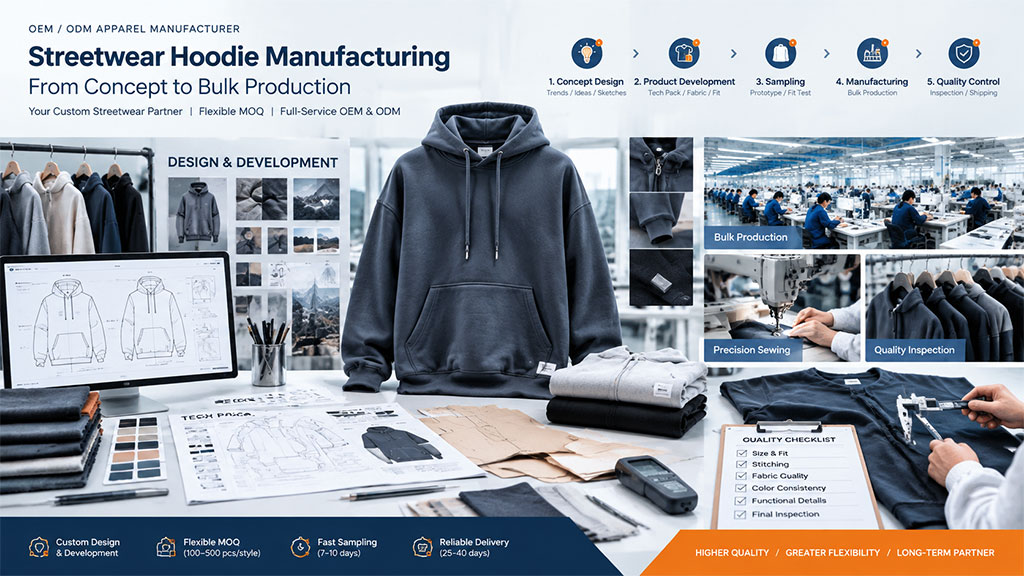
Streetwear hoodie manufacturing requires more than garment sewing. For fashion brands, turning a creative hoodie concept into a commercial product involves professional product development, fabric selection, pattern engineering, sampling, quality control, and production management. This case study explains how an OEM apparel manufacturing partner helps a streetwear brand transform initial design ideas into production-ready hoodies through a structured development process, from concept review and prototype sampling to bulk manufacturing and quality consistency.
Introduction: Turning Streetwear Concepts into Production-Ready Hoodies
Streetwear brands often begin with a creative vision: an oversized hoodie silhouette, unique fabric treatment, custom graphics, or signature construction details. However, transforming these ideas into a scalable product requires more than creativity. A successful streetwear hoodie collection depends on the ability to balance design expectations, manufacturing feasibility, material performance, production efficiency, and quality consistency. For growing fashion brands and established apparel companies, selecting the right streetwear hoodie manufacturer is a critical step because product development involves multiple stages:- Design interpretation
- Fabric sourcing
- Pattern development
- Prototype sampling
- Fit optimization
- Production preparation
- Quality inspection
- Bulk manufacturing
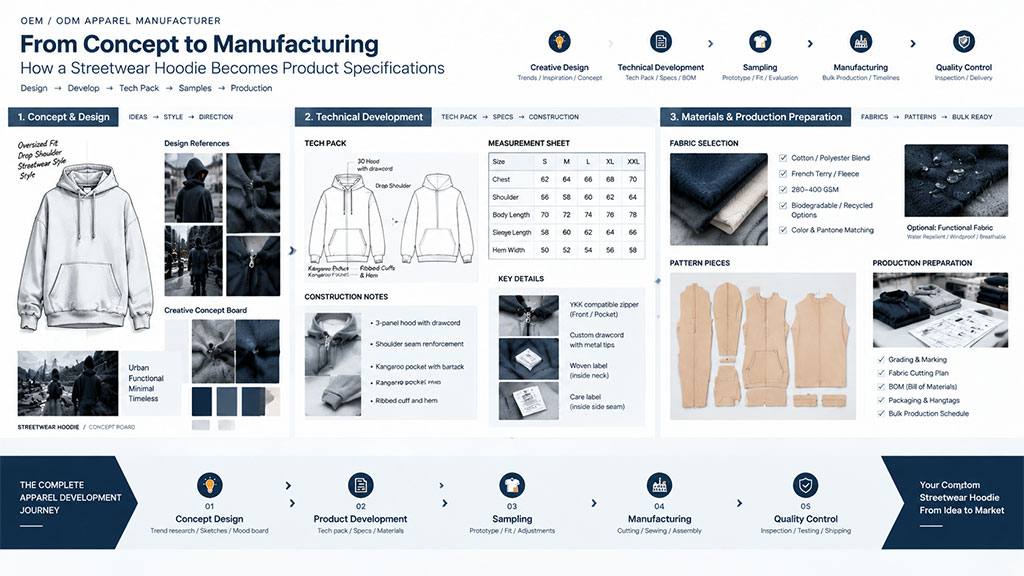
Project Overview: Custom Streetwear Hoodie Development
Building a Production System Beyond a Single Hoodie Style
A growing streetwear brand wanted to develop a premium hoodie collection featuring:| Brand Requirement | OEM Manufacturing Solution |
|---|---|
| Oversized streetwear silhouette | Custom pattern development and fit adjustment |
| Heavyweight hoodie structure | Fabric weight evaluation and performance testing |
| Unique brand identity | Custom labels, trims, and packaging |
| Consistent bulk quality | Production QC system |
| Future collection expansion | Scalable OEM manufacturing support |
Stage 1: Reviewing Brand Concepts and Developing Production Requirements
How OEM Product Development Converts Creative Ideas into Manufacturing Specifications
The first step in streetwear hoodie manufacturing is converting a creative concept into clear production requirements. The brand provided:- Reference images
- Design sketches
- Measurement requirements
- Fabric preferences
- Branding details
- Hoodie construction
- Seam structure
- Fabric compatibility
- Production feasibility
- Cost optimization opportunities
- Pattern creation
- Fabric recommendations
- Construction improvements
- Production solutions
Stage 2: Selecting the Right Fabric for Premium Streetwear Hoodies
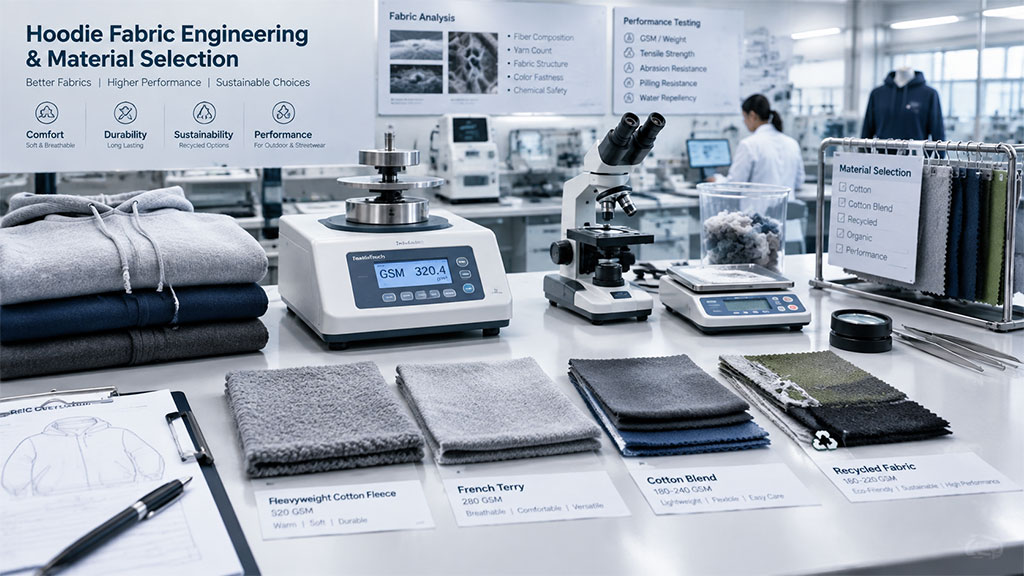
How Fabric Engineering Influences Hoodie Performance and Brand Positioning
Fabric selection directly affects a hoodie’s appearance, comfort, durability, and market positioning. For this project, the development team evaluated key fabric factors:| Fabric Factor | Manufacturing Consideration |
|---|---|
| Fabric Weight (GSM) | Creates a premium heavyweight streetwear feel |
| Cotton Blend Ratio | Balances comfort, durability, and cost |
| Shrinkage Control | Maintains size consistency after washing |
| Surface Finish | Supports washed, vintage, or special effects |
| Color Stability | Protects long-term appearance |
- Heavyweight cotton fleece
- Cotton-polyester blends
- French terry
- Organic cotton fabrics
- Recycled textile options
Stage 3: Developing Samples and Optimizing Hoodie Fit
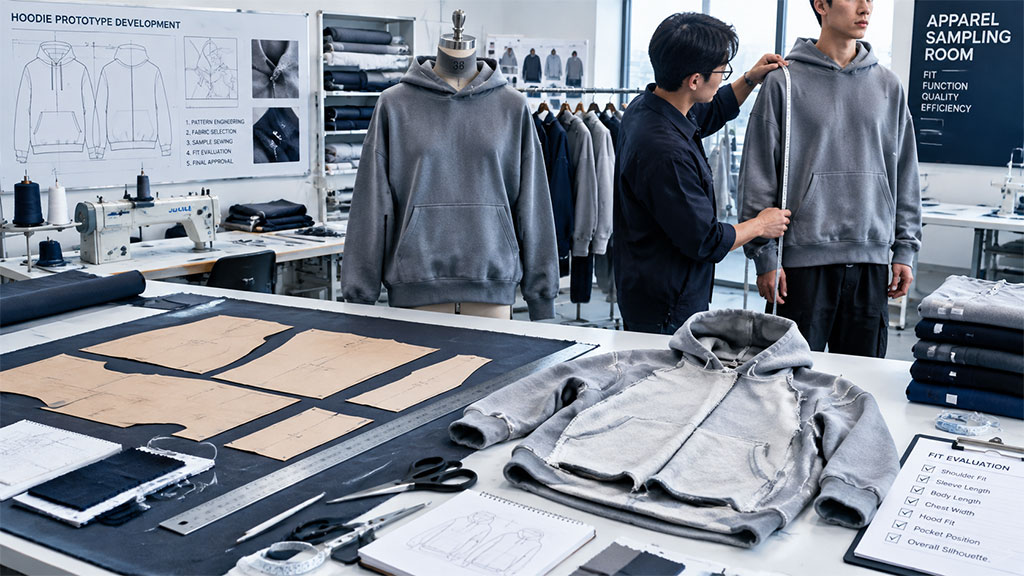
How Sampling Reduces Production Risks Before Bulk Manufacturing
After design confirmation, the factory developed the first prototype sample. The sampling process included:Prototype Development
- Pattern creation
- Fabric cutting
- Sewing construction
- Graphic placement confirmation
Fit Evaluation
The development team reviewed:- Shoulder width
- Hoodie shape
- Sleeve proportion
- Body length
- Oversized fitting balance
- Wearing comfort
- Visual balance
- Brand recognition
- Production consistency
Stage 4: Preparing Production and Implementing Quality Control
How OEM Factories Maintain Consistent Quality During Bulk Production
Before bulk production started, the factory completed a complete pre-production approval process.
This included:
- Final approved sample
- Fabric confirmation
- Color approval
- Production specifications
- Packaging requirements
After approval, manufacturing moved into the production preparation stage.
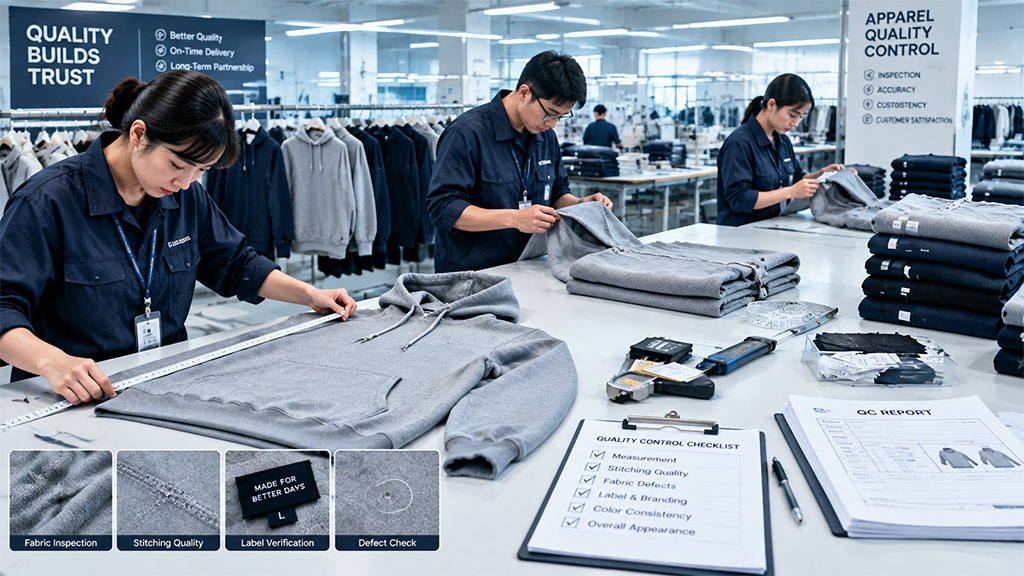
During bulk production, quality inspections focused on:
- Fabric defects
- Sewing quality
- Measurement accuracy
- Stitch consistency
- Label placement
- Final garment appearance
The Simmerui Apparel Manufacturing Team applies structured quality management procedures to help brands maintain product consistency throughout production.
A reliable QC system helps prevent common bulk production issues and ensures finished garments meet approved specifications.
Stage 5: Scaling from Approved Samples to Bulk Hoodie Production
How OEM Manufacturing Supports Growing Streetwear Brands
After sample approval, the hoodie collection moved into bulk manufacturing.
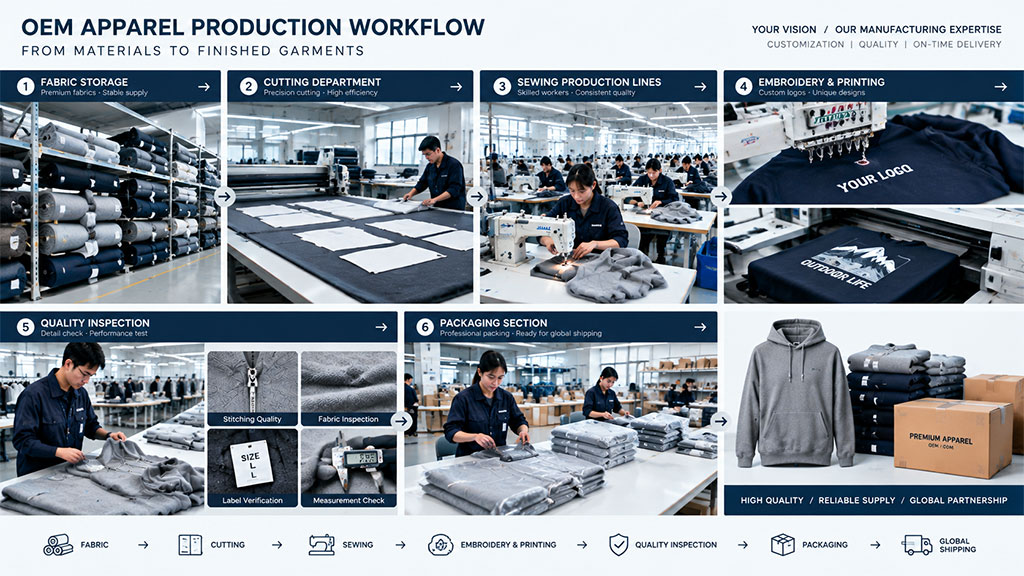
The production workflow included:
Tech Pack Review → Material Preparation → Cutting → Sewing → Printing/Embroidery → Quality Inspection → Packaging → Shipment
During production, the factory managed:
- Production scheduling
- Material coordination
- Manufacturing consistency
- Final inspection
- Shipment preparation
For streetwear brands planning future collections, production scalability is an important consideration.
A capable OEM manufacturing partner helps brands maintain quality while increasing order volume and expanding product categories.
Manufacturing Challenges and OEM Solutions
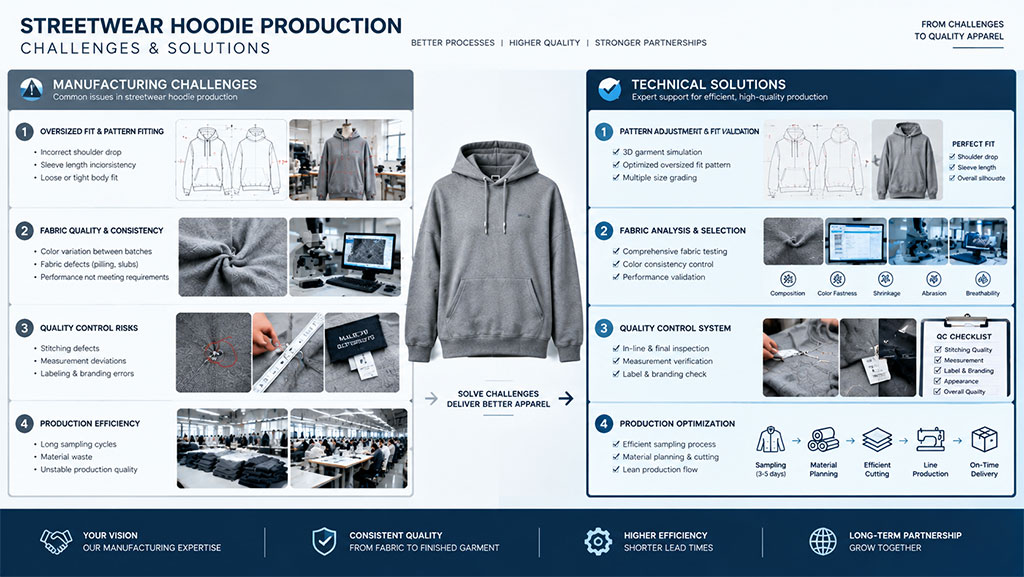
Challenge 1: Achieving the Correct Oversized Hoodie Fit
Problem
Oversized garments can easily lose their intended shape if patterns are not carefully developed.
Solution
The factory optimized:
- Pattern dimensions
- Shoulder structure
- Sleeve proportions
- Fabric behavior
Through sample evaluation and technical adjustments, the final hoodie structure matched the brand’s design expectations.
Challenge 2: Maintaining Quality During Bulk Production
Problem
A prototype sample may look perfect, but maintaining consistency across thousands of garments requires controlled production processes.
Solution
The factory implemented:
- Pre-production sample approval
- Inline inspection
- Final quality inspection
- Measurement control
These procedures help reduce variations between approved samples and bulk production.
Challenge 3: Balancing Premium Quality and Production Cost
Problem
Streetwear brands need premium appearance while maintaining competitive production costs.
Solution
The OEM team optimized:
- Fabric selection
- Construction methods
- Production efficiency
- Material sourcing
Professional manufacturing support allows brands to achieve the right balance between product value and production investment.
Why Choose an Experienced Streetwear Hoodie Manufacturer?
More Than Production: Building Long-Term Apparel Partnerships
A reliable OEM apparel partner provides more than sewing services.
Professional manufacturers support brands through:
Product Development
- Design consultation
- Pattern development
- Sampling
- Technical improvements
Manufacturing Management
- Fabric sourcing
- Bulk production
- Quality management
- Production coordination
Brand Customization
- Custom labels
- Packaging solutions
- Embroidery
- Printing
- Private label services
For brands building long-term collections, manufacturing capability is as important as creative design.
The right partner helps transform product concepts into consistent, scalable apparel lines.
Conclusion: Building Scalable Streetwear Collections Through OEM Manufacturing
Successful streetwear hoodie manufacturing requires a structured process from concept development to final production.
From fabric selection and prototype sampling to quality control and bulk manufacturing, an experienced OEM apparel partner helps brands reduce development risks and create reliable supply chains.
The Simmerui Apparel Manufacturing Team supports global B2B apparel brands with integrated OEM and ODM solutions, including product development, fabric sourcing, sampling, quality management, and scalable production.
By combining technical expertise with manufacturing capability, brands can transform creative streetwear ideas into production-ready collections designed for long-term growth.
FAQ: Streetwear Hoodie Manufacturing
1. What is streetwear hoodie manufacturing?
Streetwear hoodie manufacturing is the process of developing and producing custom hoodies for fashion brands. It includes design development, fabric sourcing, pattern creation, sampling, customization, quality control, and bulk production.2. How does an OEM hoodie manufacturer support streetwear brands?
An OEM hoodie manufacturer supports brands through product development, material selection, sampling, production management, customization, and quality control.3. What information does a brand need before developing a custom hoodie?
Brands typically provide design references, measurements, fabric preferences, branding requirements, and other available product specifications.4. How many sampling rounds are required for custom hoodies?
The number of sampling rounds depends on design complexity, fitting requirements, fabric selection, construction details, and brand approval requirements.5. What fabrics are commonly used for streetwear hoodies?
Common options include heavyweight cotton fleece, cotton-polyester blends, French terry, organic cotton, and recycled textile materials.6. Can brands customize hoodie fit and construction?
Yes. Brands can customize:- Fabric composition
- Colors
- Fit
- Labels
- Embroidery
- Printing
- Packaging
- Hardware accessories
7. What MOQ is required for custom hoodie manufacturing?
MOQ depends on fabric type, production requirements, customization methods, and manufacturing capabilities. Lower MOQ options may be available for selected materials or development projects.8. How does an OEM factory control hoodie quality?
Professional factories use:- Material inspection
- Sample approval
- Inline production checks
- Measurement inspection
- Final quality control
9. How long does custom hoodie production take?
The production timeline depends on design complexity, sampling requirements, material availability, production quantity, and the overall development process.10. Can an OEM manufacturer support future streetwear collections?
Yes. An OEM manufacturing partner can support repeat production, additional product development, private label collections, and future collection expansion.Written by the Simmerui Apparel Manufacturing Team
Simmerui specializes in OEM and ODM apparel manufacturing for global B2B brands, providing integrated solutions across product development, fabric sourcing, sampling, quality control, and scalable production.
Our experience covers outdoor apparel, performance wear, casual clothing, streetwear, and private label collections.
We help brands reduce production risks, optimize manufacturing processes, and build reliable long-term apparel partnerships.