
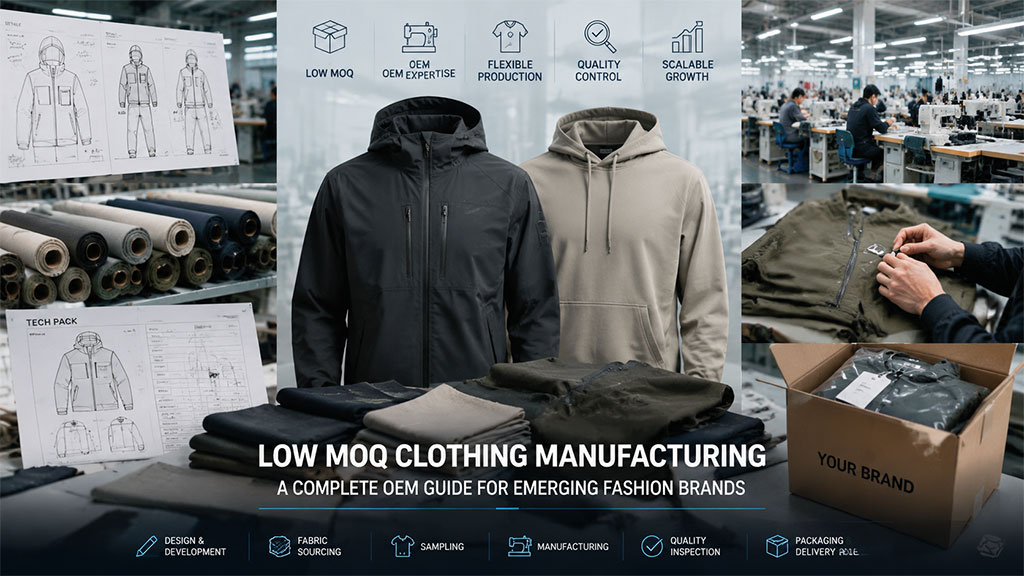
Low MOQ clothing manufacturing allows emerging fashion brands to create custom apparel collections without investing in large inventory volumes. By partnering with experienced OEM clothing manufacturers, brands can access flexible production solutions including product development, fabric sourcing, sampling, quality control, and delivery. This manufacturing model helps startups reduce risk, test new products, and build scalable apparel businesses.
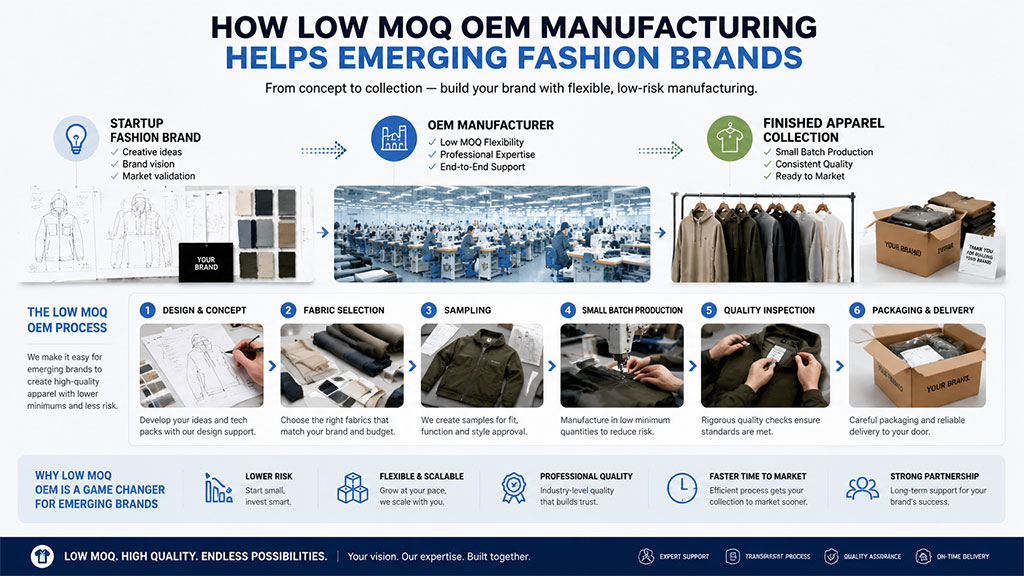
Introduction: Why Low MOQ Clothing Manufacturing Matters for Emerging Brands
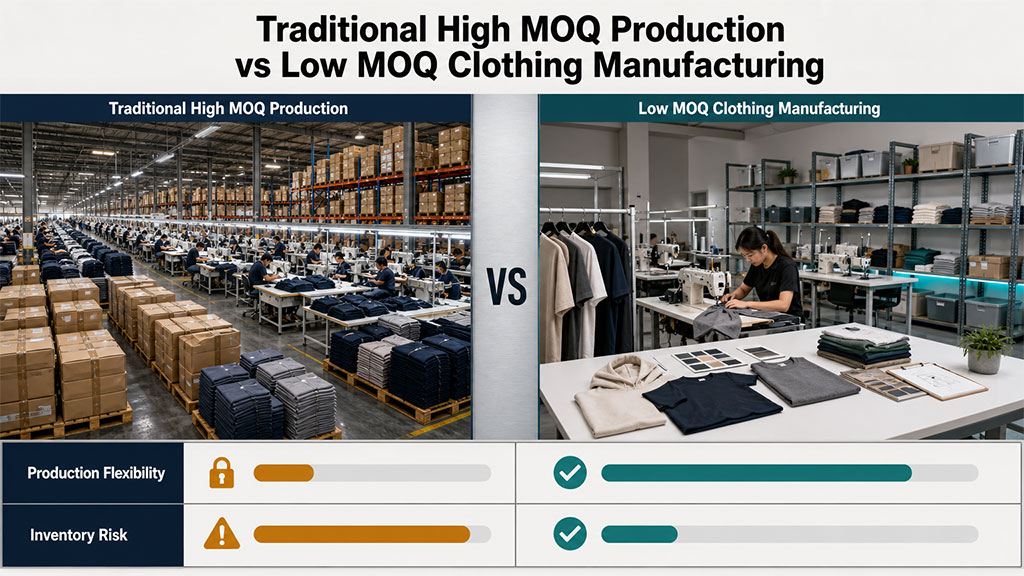
Launching a clothing brand requires more than creative design ideas. For many emerging fashion companies, the biggest challenge is finding a reliable manufacturing partner that can produce high-quality garments without requiring large production commitments.Traditional apparel manufacturing often requires high minimum order quantities (MOQ). While large production volumes may reduce unit costs, they can create significant challenges for startups and independent brands, including:
- High upfront investment
- Excess inventory risk
- Limited product testing opportunities
- Reduced flexibility for seasonal collections
Professional OEM apparel manufacturers support brands throughout the entire manufacturing journey, from initial product concepts and material selection to sampling, bulk production, and final delivery.
For emerging brands, low MOQ OEM manufacturing creates an opportunity to build competitive products while maintaining better control over investment, inventory, and market expansion.
What Is Low MOQ Clothing Manufacturing?
Low MOQ clothing manufacturing refers to apparel production with smaller minimum order quantities compared with traditional large-scale manufacturing.
MOQ requirements vary depending on:
- Product category
- Fabric selection
- Customization complexity
- Production process
- Manufacturer capabilities
Typical low MOQ ranges include:
| Product Category | Common MOQ Range |
|---|---|
| Custom T-shirts | 50–200 pieces per style |
| Hoodies | 100–300 pieces per style |
| Jackets | 100–500 pieces per style |
| Technical Outdoor Apparel | 200+ pieces per style |
Actual MOQ requirements may change depending on fabric availability, colors, sizes, and customization requirements.
For startups and growing brands, low MOQ production provides a practical way to launch collections while reducing financial pressure.
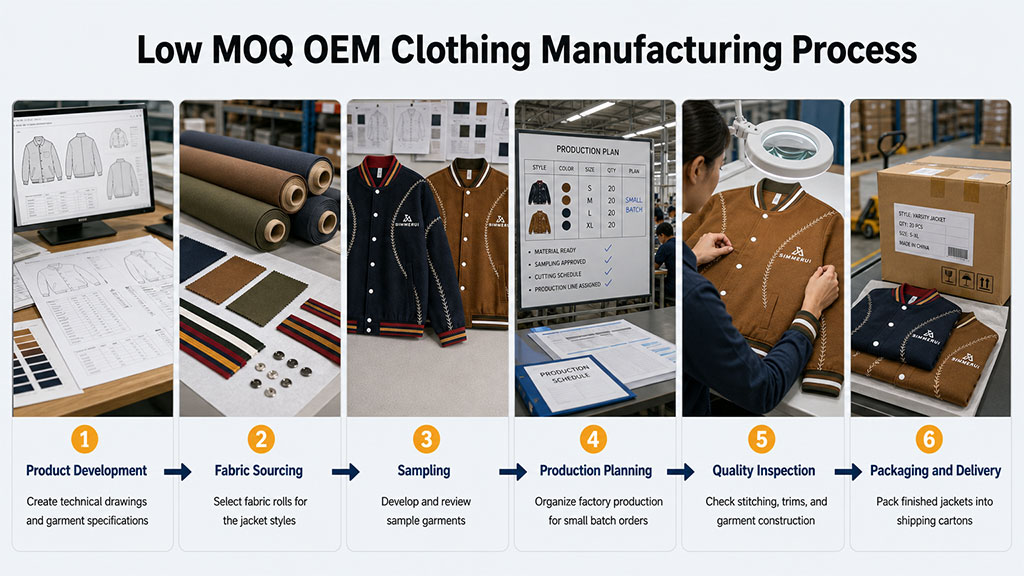
How Does Low MOQ Custom Clothing Manufacturing Work?
A professional OEM clothing manufacturing process usually includes several key stages:
- Product development
- Fabric sourcing
- Sampling and approval
- Production planning
- Quality control
- Packaging and delivery
Each stage plays an important role in ensuring the final product meets brand expectations.
Step 1: Product Development and Requirement Confirmation
The first stage begins when a brand communicates its apparel concept and production requirements to the manufacturer.
OEM manufacturers typically review:
- Product category
- Design references
- Technical drawings
- Fabric requirements
- Target customer positioning
- Expected order quantity
- Customization requirements
- Target price range
Clear communication at this stage helps manufacturers understand the product vision and evaluate production feasibility.
The Importance of a Professional Tech Pack
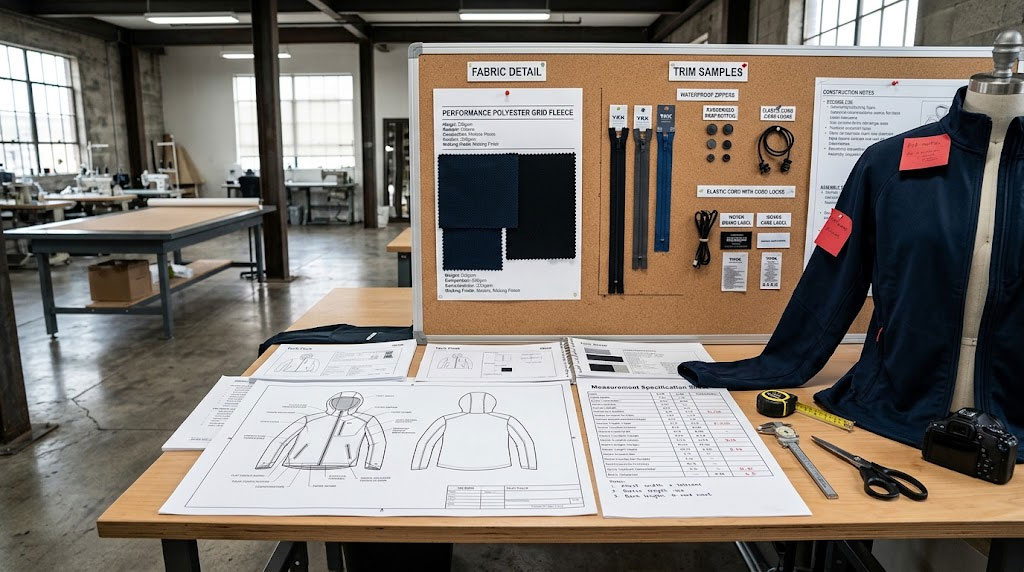
A Tech Pack is one of the most important documents in custom apparel manufacturing.
A complete Tech Pack normally includes:
- Technical drawings
- Garment measurements
- Material specifications
- Trims information
- Construction details
- Label requirements
- Packaging instructions
A detailed Tech Pack helps manufacturers accurately understand product requirements and reduces communication errors during sampling and production.
For brands without complete technical documents, experienced OEM suppliers can provide product development assistance to transform design concepts into production-ready garments.
Step 2: Fabric Sourcing and Material Selection
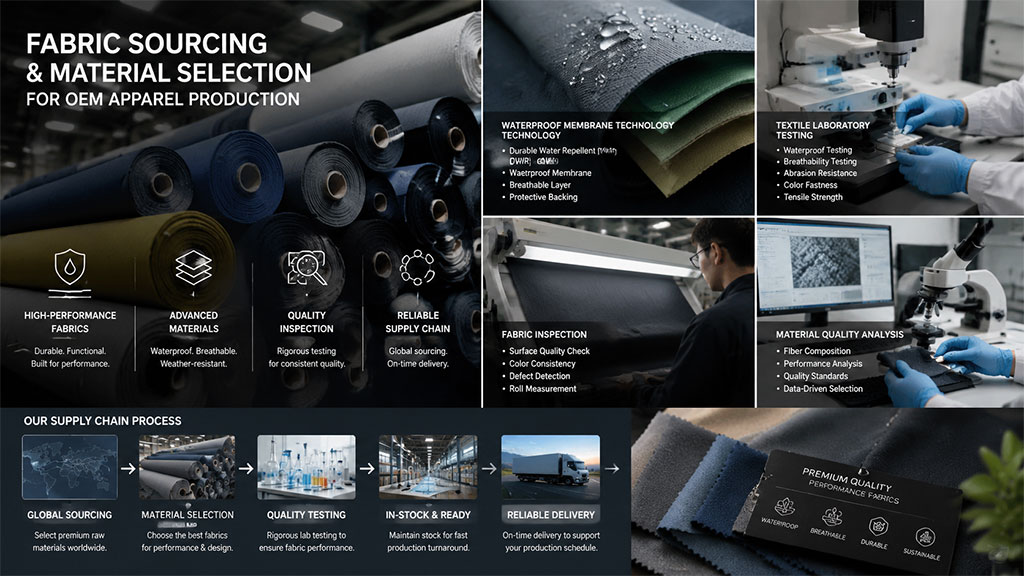
Fabric selection directly influences product performance, manufacturing cost, and market positioning. For low MOQ apparel production, choosing the right fabric requires balancing:- Availability
- Minimum purchasing requirements
- Performance expectations
- Cost efficiency
Common Fabric Options for Different Apparel Categories
| Product Type | Recommended Fabrics | Key Benefits |
|---|---|---|
| T-shirts | Cotton, organic cotton, blends | Comfort and versatility |
| Hoodies | French terry, fleece | Warmth and durability |
| Jackets | Softshell, nylon, polyester | Weather protection |
| Outdoor Apparel | Waterproof membrane fabrics | Technical performance |
- Target retail price
- Customer expectations
- Seasonal demand
- Certification requirements
Step 3: Sampling and Product Approval
Before bulk manufacturing begins, professional clothing manufacturers create samples to verify the design, materials, and construction.
Sampling is a critical stage because it allows brands to identify problems before investing in production.
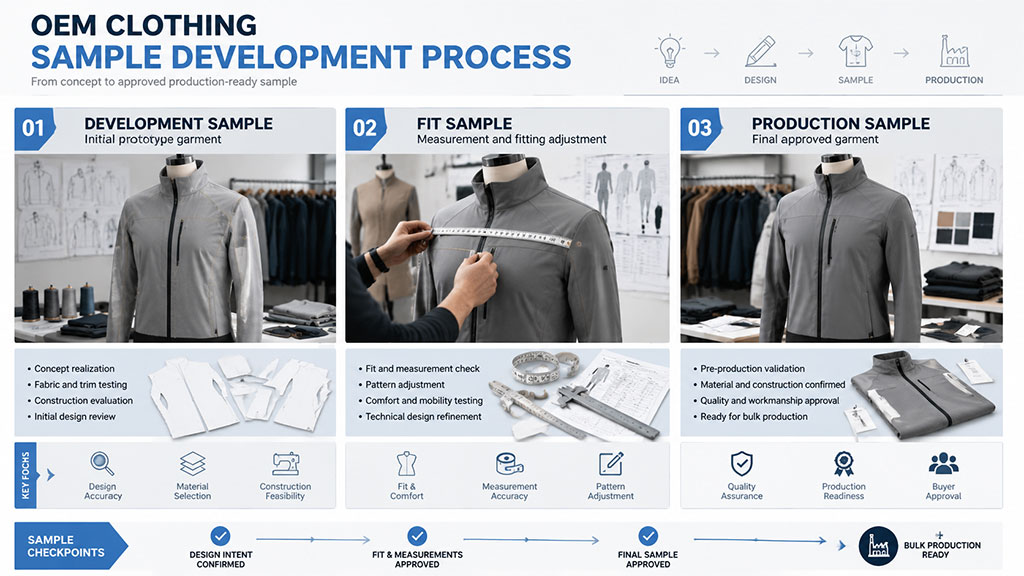
A typical apparel sampling process includes:
Development Sample
The development sample confirms:
- Initial design concept
- Fabric selection
- Construction method
- Manufacturing feasibility
This stage ensures the product direction is correct before further refinement.
Fit Sample
The fit sample focuses on:
- Measurements
- Garment proportions
- Wearing comfort
- Overall silhouette
Brands can adjust patterns and measurements before final approval.
Production Sample (PPS)
The Production Sample (PPS) is the final approved sample used as the quality reference for bulk manufacturing.
During production, manufacturers compare finished garments against the approved PPS to maintain consistency.
Sampling helps brands identify:
- Incorrect measurements
- Fabric performance issues
- Color differences
- Printing or embroidery placement errors
- Construction improvements
For emerging brands, this process significantly reduces production risk.
Step 4: Production Planning for Low MOQ Orders
After sample approval, manufacturers begin production preparation.
Production planning includes:
- Fabric ordering
- Cutting schedules
- Sewing arrangements
- Printing and embroidery coordination
- Quality inspection checkpoints
- Packaging preparation
Small MOQ production still requires professional manufacturing management because many production steps remain similar to larger orders.
A reliable OEM supplier should have systems for:
- Flexible production scheduling
- Material management
- Production tracking
- Quality control monitoring
- Delivery coordination
Effective production planning helps brands avoid unnecessary delays and maintain consistent quality.
Step 5: Quality Control in OEM Apparel Manufacturing
Quality control is essential regardless of production volume.
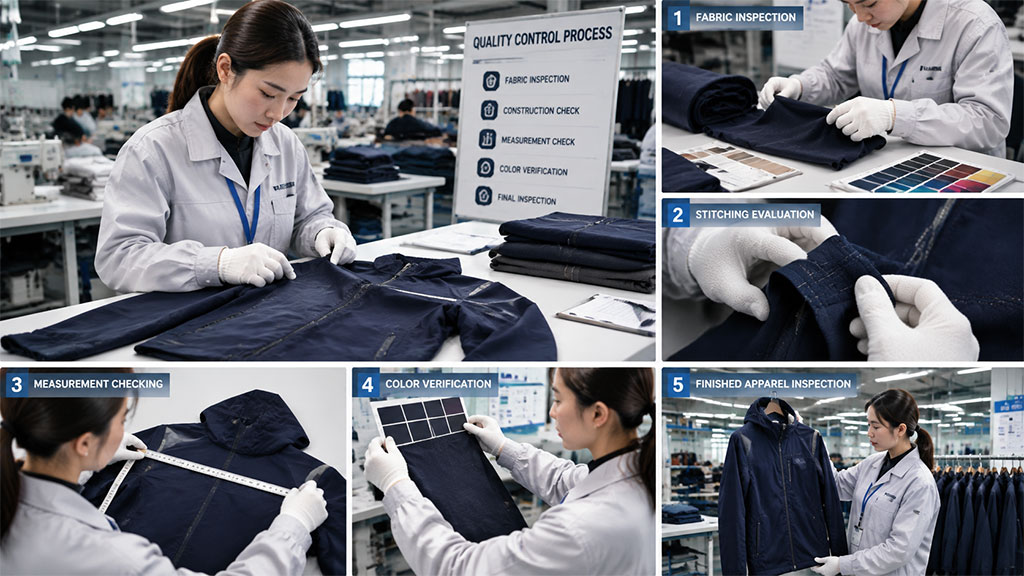
Professional apparel factories usually conduct inspections throughout the manufacturing process.
Inline Inspection
Inline inspection identifies problems during sewing and assembly.
It helps manufacturers correct issues before products move to later stages.
Final Product Inspection
Finished product inspection verifies garments before shipment.
Quality checks typically include:
- Fabric defects
- Stitching quality
- Measurement accuracy
- Color consistency
- Printing and embroidery quality
- Packaging standards
Low MOQ production does not mean lower quality expectations.
Professional OEM manufacturers apply consistent quality standards across different order volumes.
Step 6: Packaging and Delivery
After final inspection, garments move into the final preparation stage. This includes:- Folding
- Label attachment
- Packaging
- Carton packing
- Shipment preparation
- Custom labels
- Hang tags
- Packaging design
- Barcode preparation
- International shipping coordination
Benefits of Low MOQ OEM Manufacturing for Emerging Brands
1. Lower Inventory Risk
Small production runs allow brands to test customer response before committing to larger quantities. This reduces:- Unsold inventory
- Storage costs
- Financial pressure
2. Faster Product Validation
Brands can launch new designs faster and collect real market feedback. This is especially valuable for:- Startup brands
- Seasonal collections
- Limited product drops
3. More Flexible Collection Planning
Low MOQ manufacturing enables brands to develop:- Capsule collections
- Limited editions
- Niche products
- Seasonal releases
4. Easier Brand Growth
Successful products can gradually increase production volume based on actual market demand. This creates a scalable growth model from small batch production to larger manufacturing programs.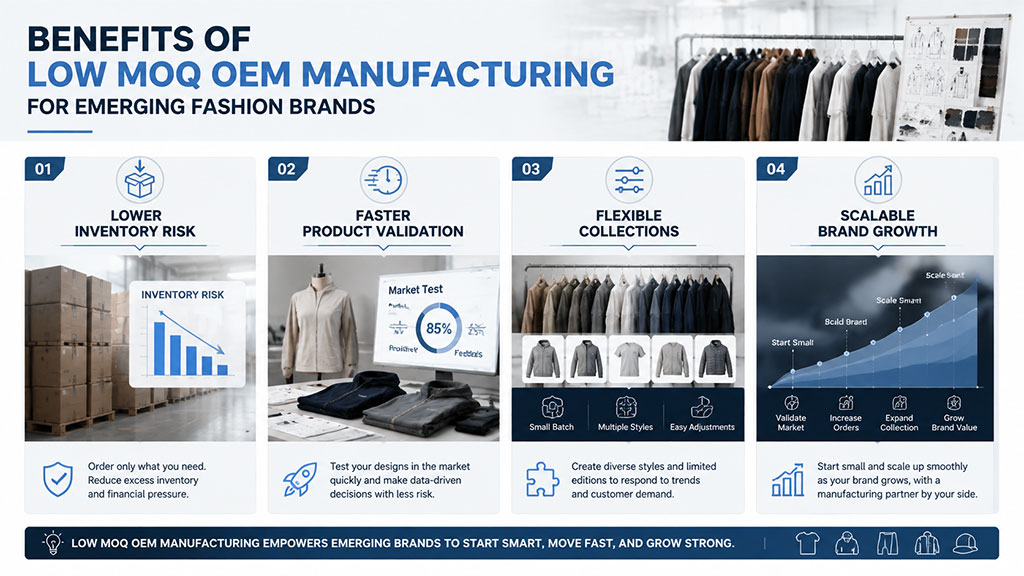
How to Choose the Right Low MOQ Clothing Manufacturer
Choosing the right OEM partner is one of the most important decisions for apparel brands. Brands should evaluate:Manufacturing Experience
Check whether the manufacturer has experience producing similar apparel categories. Relevant experience helps reduce:- Development mistakes
- Production issues
- Communication problems
Customization Capability
A capable OEM manufacturer should support:- Fabric sourcing
- Pattern development
- Sampling
- Printing
- Embroidery
- Custom labels
- Packaging solutions
Quality Management System
Brands should understand the supplier’s:- Inspection procedures
- Testing capabilities
- Production monitoring systems
Communication Efficiency
Reliable communication is essential. Clear communication helps reduce:- Sampling delays
- Production errors
- Unexpected costs
FAQ: Low MOQ Clothing Manufacturing
1.What is low MOQ apparel manufacturing?
Low MOQ apparel manufacturing refers to clothing production with smaller minimum order quantities, allowing startups and emerging brands to create custom garments without ordering thousands of units.2.Can small brands work with OEM clothing manufacturers?
Yes. Many OEM manufacturers support startup brands through product development, sampling, customization, and small-batch production services.3.What is the MOQ for custom jackets?
Custom jacket MOQ depends on:- Fabric selection
- Design complexity
- Customization requirements
4.Does low MOQ mean lower product quality?
No. MOQ affects production volume, not quality standards. Professional manufacturers maintain the same quality control procedures for both small and large production orders.5.How long does low MOQ clothing production take?
Production timelines depend on:- Product complexity
- Sampling approval
- Fabric availability
- Order quantity
Final Takeaway
Low MOQ clothing manufacturing provides emerging fashion brands with a practical way to develop custom apparel while controlling inventory risk.
By partnering with an experienced OEM clothing manufacturer, brands can access professional product development, flexible production solutions, reliable quality control, and scalable manufacturing support.
The right manufacturing partner should support the complete apparel journey — from initial concept development and fabric selection to sampling, production, and final delivery.
Written by the Simmerui Apparel Manufacturing Team
We are specialized in OEM and ODM apparel production for global B2B brands, providing integrated manufacturing solutions across product development, fabric sourcing, sampling, quality control, and scalable production.
With practical experience in custom clothing manufacturing and apparel supply chain management, our team helps emerging brands and established companies understand the processes behind low MOQ production, from initial product concepts and material selection to sample approval and bulk manufacturing.