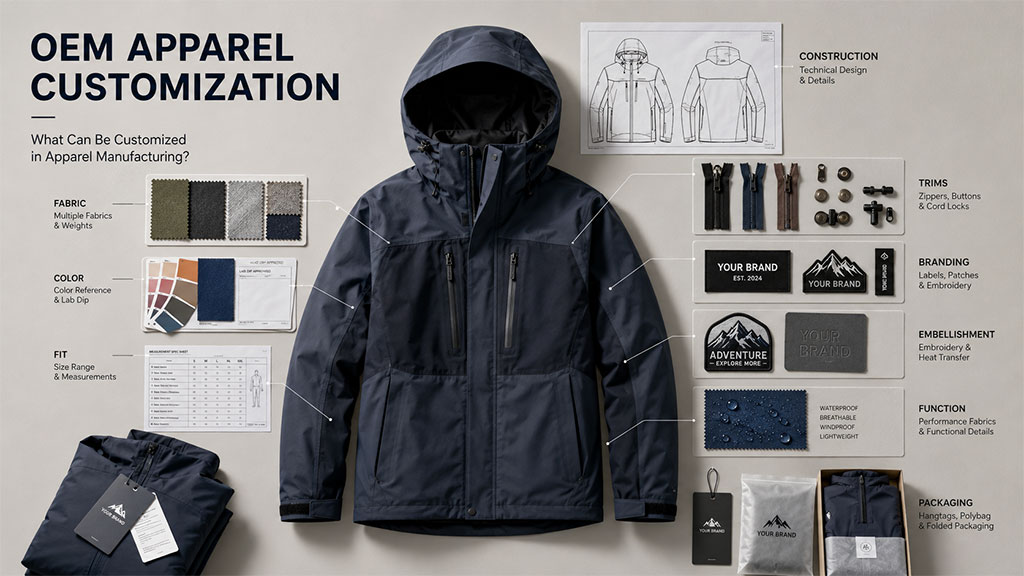
OEM apparel manufacturing allows brands to customize far more than logos and colors. Fabric, fit, garment construction, trims, branding, printing, functional features, finishing, and packaging can all be specified. However, customization affects cost, MOQ, development time, and production complexity. Understanding these factors helps B2B buyers create realistic specifications and reduce production risks.
Introduction: What Can Be Customized in OEM Apparel?
OEM manufacturing is more than adding a brand logo to an existing garment.
Depending on the product and factory capabilities, buyers can customize major product elements from fabric and color to fit, construction, trims, branding, functional performance, finishing, and packaging.
The practical level of customization depends on product type, order quantity, technical requirements, available materials, and development budget. A clear tech pack and approved samples help translate these requirements into consistent bulk production.
1. Fabric and Color Customization
Fabric is one of the most important customization areas. Buyers may specify:
- Fiber composition
- GSM and fabric weight
- Fabric structure and stretch
- Hand feel and surface texture
- Color
- Functional finishes
- Recycled or organic materials
- Water resistance, breathability, or insulation
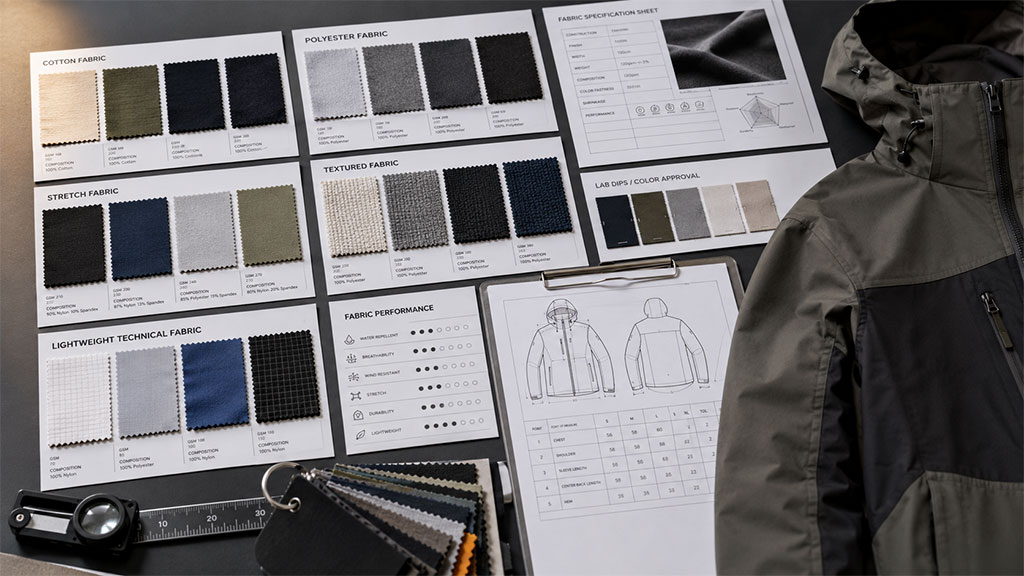
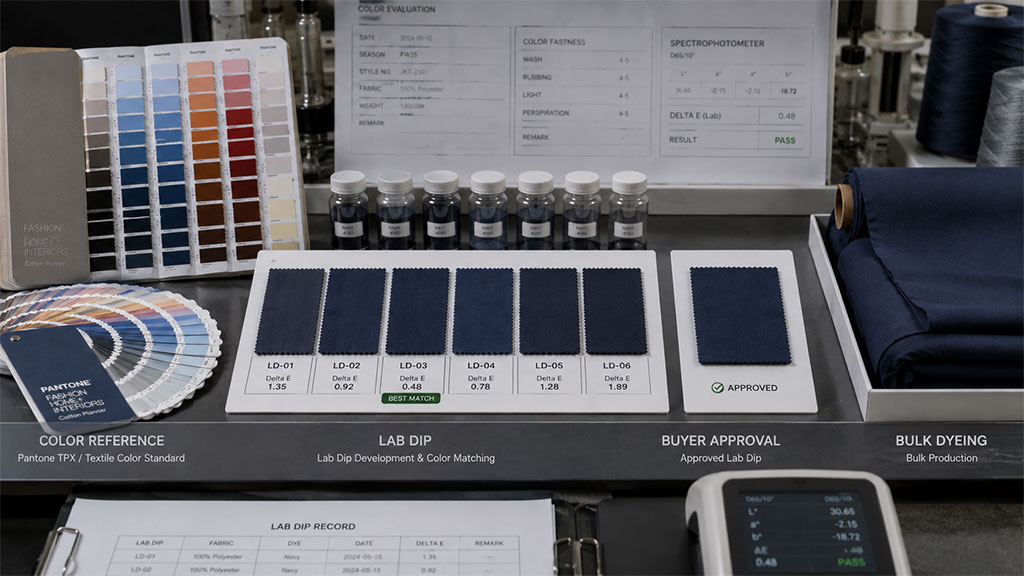
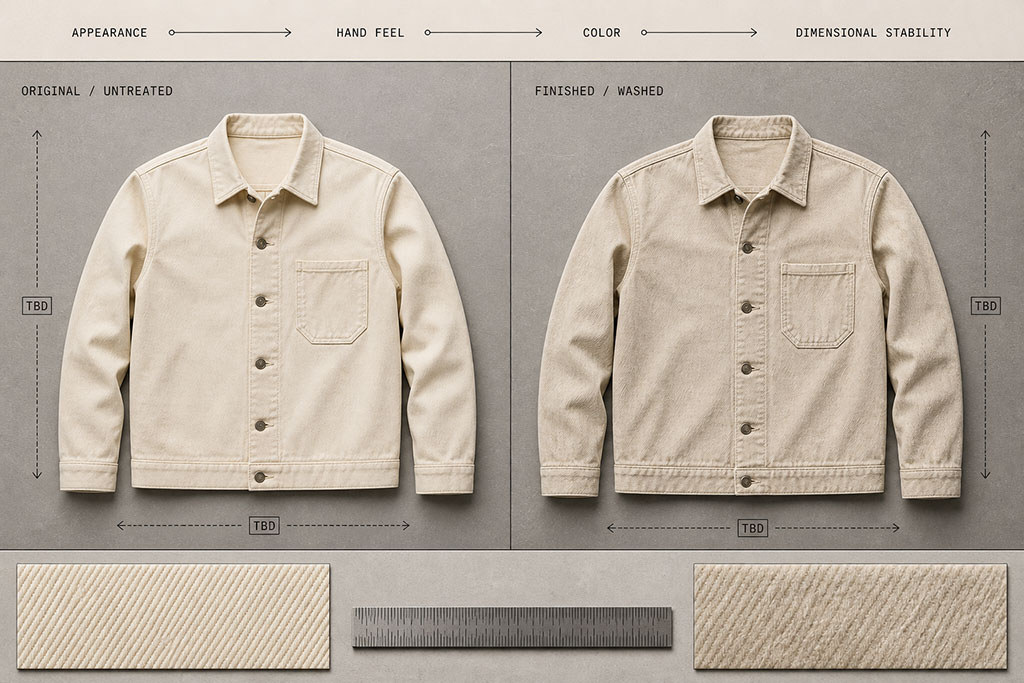
Color can also be developed through Pantone matching, custom dyeing, piece dyeing, garment dyeing, yarn dyeing, color blocking, and contrast panels.
For custom colors, a typical approval process is:
Color Reference → Lab Dip → Buyer Approval → Bulk Dyeing → Production
This reduces the risk of producing bulk garments in the wrong shade.
2. Fit, Size and Garment Construction
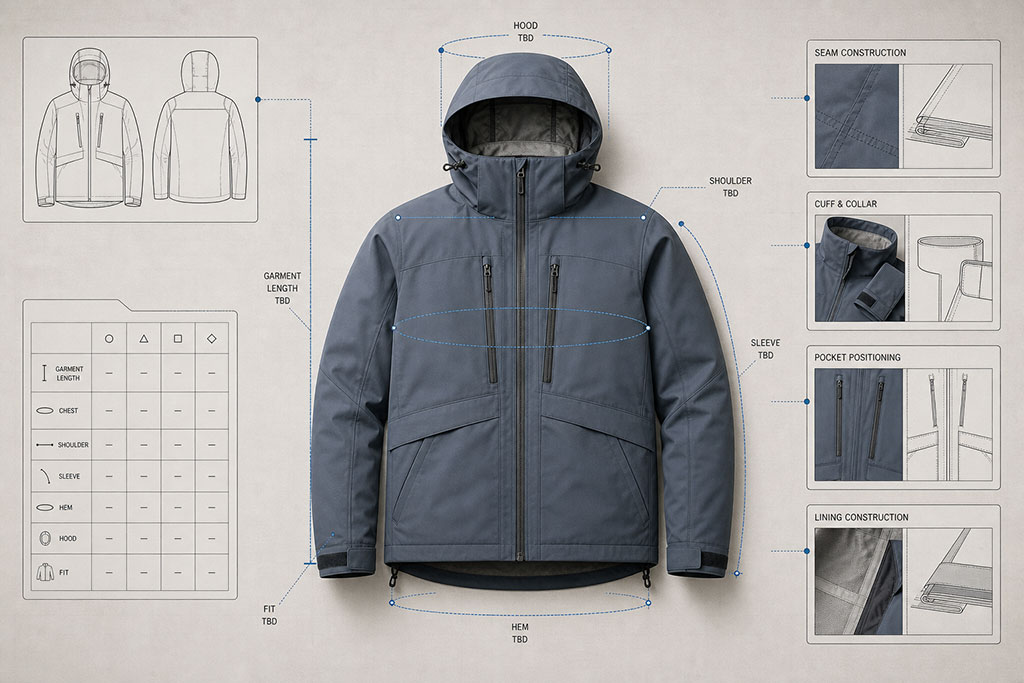
OEM buyers can develop the garment around their target fit instead of relying entirely on standard factory measurements. Specifications may include garment length, chest width, shoulder width, sleeve length, waist, hem, rise, inseam, hood dimensions, pocket positioning, and grading rules. Common fit directions include:- Regular
- Relaxed
- Oversized
- Slim
- Athletic
- Women’s-specific
- Men’s-specific
- Youth sizing
For technical outerwear, these details can directly influence durability and performance.
3. Trims, Labels and Branding
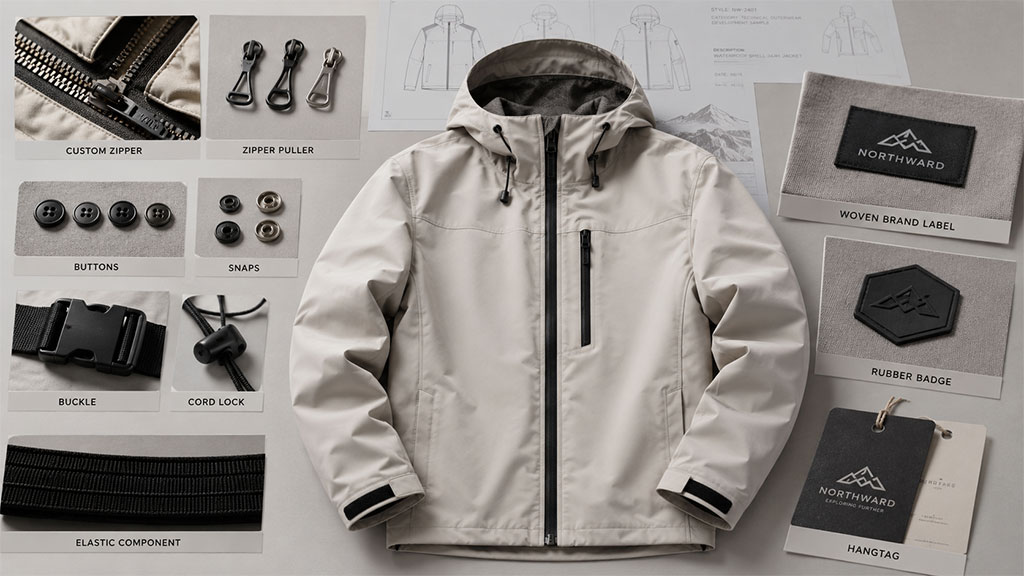
Customization extends beyond the main fabric.Common Customizable Components
| Category | Examples |
|---|---|
| Trims | Zippers, buttons, snaps, buckles, elastic, Velcro |
| Hardware | Pullers, metal components, cord locks |
| Labels | Neck, size, care, woven and printed labels |
| Branding | Patches, rubber badges, heat-transfer logos |
| Accessories | Hangtags, custom zipper pullers |
4. Printing, Embroidery and Functional Details
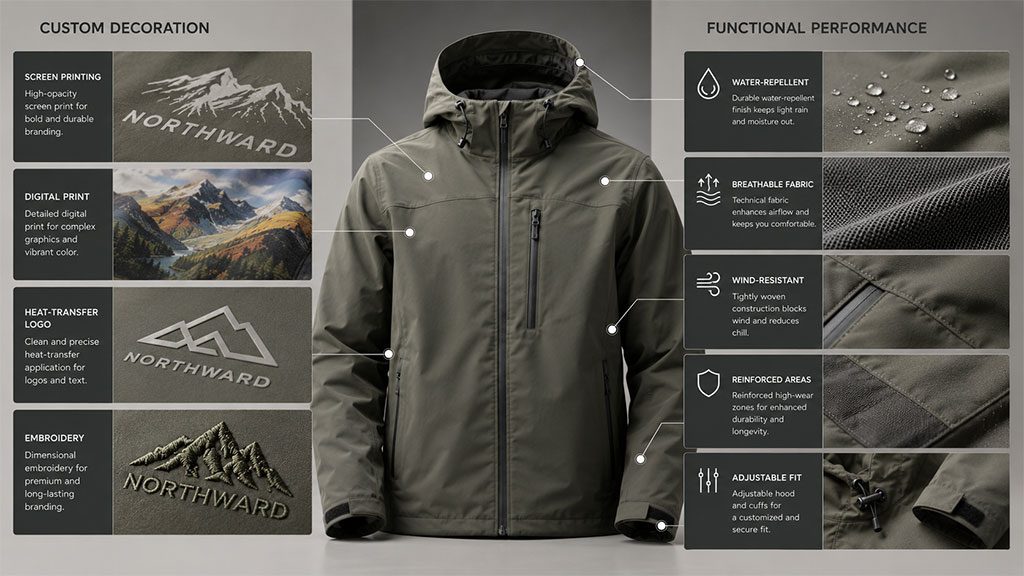
Decoration methods should match the fabric, artwork, quantity, and durability requirements.- Screen printing: suitable for many large-volume graphic applications
- Digital printing: useful for detailed artwork and complex graphics
- Heat transfer: suitable for selected logos, names, and small-batch applications
- Embroidery: creates a dimensional, premium appearance
- 3D or embossed effects: creates raised or textured effects on suitable products
5. Pockets, Washing and Finishing
Pocket design can be customized according to product function:- Pocket quantity and size
- Pocket position
- Zippered or internal pockets
- Chest, sleeve, cargo, hidden, mesh, or waterproof pockets
6. Packaging and Production Documentation
OEM customization can continue through packaging. Options may include custom polybags, hangtags, stickers, barcode labels, carton markings, tissue paper, folding methods, and retail or e-commerce packaging.
Production documentation should clearly define the agreed specifications.
| Documentation | Purpose |
|---|---|
| Tech Pack | Defines product and construction requirements |
| Measurement Chart | Controls fit and dimensions |
| BOM | Defines materials and components |
| Artwork Files | Controls printing and branding |
| Fabric & Trim Specs | Controls material selection |
| Packaging Instructions | Controls packing requirements |
| Inspection Standards | Defines quality expectations |
| Testing Requirements | Verifies performance claims |
A complete tech pack converts a design concept into measurable manufacturing requirements.
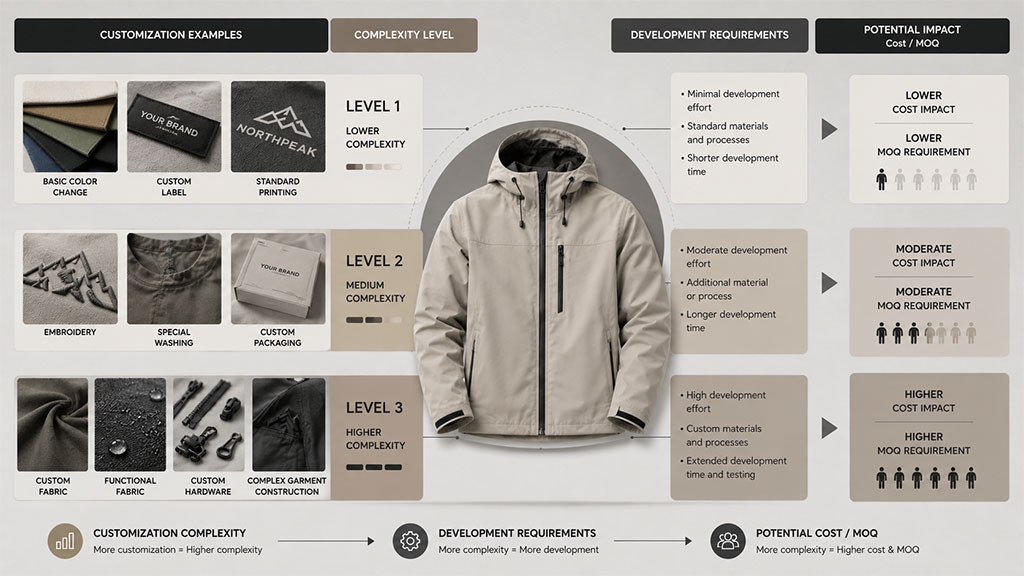
7. How Customization Affects Cost and MOQ
Not every customization has the same commercial impact.
| Customization | Typical Cost Impact | Complexity |
|---|---|---|
| Basic color change | Low–Medium | Low |
| Custom label | Low | Low |
| Printing | Low–Medium | Low–Medium |
| Embroidery | Low–Medium | Medium |
| Custom fabric | Medium–High | Medium–High |
| Complex construction | Medium–High | High |
| Functional fabric | Medium–High | Medium–High |
| Custom hardware | Medium–High | Medium |
| Special washing | Medium | Medium |
| Custom packaging | Low–Medium | Low–Medium |
Actual pricing depends on order quantity, materials, development, testing, construction complexity, and supplier availability.
Simple changes such as labels, embroidery, standard printing, and selected fabrics are generally easier at lower quantities. Custom fabrics, special dyes, custom hardware, molds, complex trims, functional materials, and special finishing programs often require higher MOQs.
8. OEM Customization Workflow
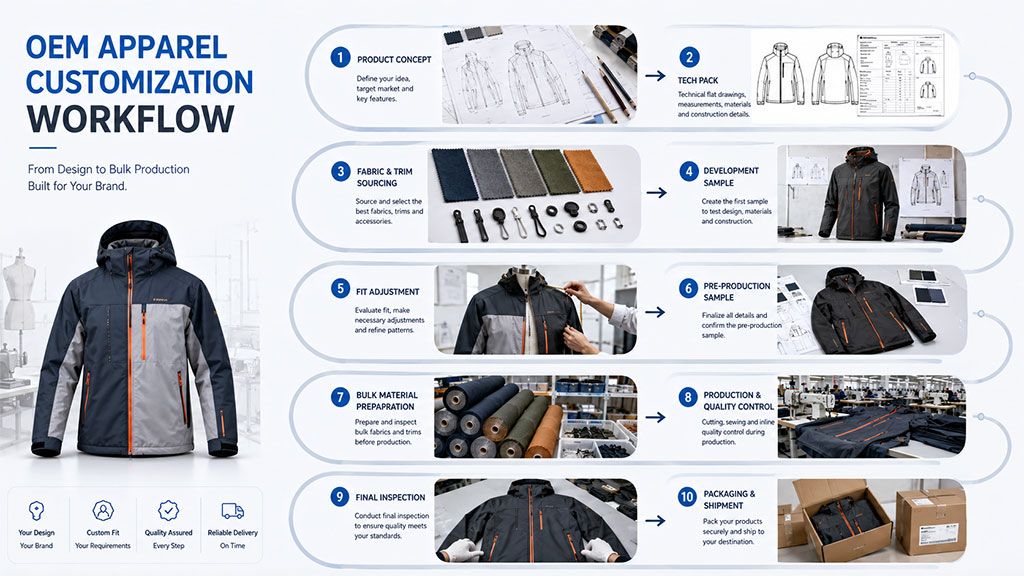
A typical development process is:
Product Concept → Tech Pack → Fabric & Trim Sourcing → Development Sample → Fit Adjustment → Pre-Production Sample → Bulk Materials → Production & QC → Final Inspection → Packaging & Shipment
The more customized the product, the more important the approval checkpoints become.
9. How B2B Buyers Can Reduce Customization Risk
Before requesting an OEM quotation, buyers should provide:
- Product references or technical drawings
- Tech pack and measurement chart
- Fabric and color requirements
- Artwork and branding specifications
- Target quantity
- Packaging requirements
- Testing or compliance requirements
To control production risk:
- Convert visual expectations into measurable specifications.
- Approve fabric, color, trims, and accessories early.
- Use development, fit, and pre-production samples as separate checkpoints.
- Define testing requirements for performance claims.
- Use the approved sample as the bulk-production quality reference.
OEM Apparel Customization Checklist
Before placing a bulk order, buyers should confirm:- Fabric composition
- Fabric weight
- Color standard
- Size chart
- Garment measurements
- Construction details
- Trim specifications
- Logo placement
- Label specifications
- Printing or embroidery method
- Functional requirements
- Washing or finishing
- Packaging
- Testing requirements
- Inspection standards
- Approved pre-production sample
- Final quantity and size breakdown
FAQ
1.What can be customized in OEM apparel manufacturing?
Fabric, color, fit, measurements, construction, trims, labels, printing, embroidery, functional features, washing, finishing, and packaging can potentially be customized.2.Can I customize the fabric?
Yes. Buyers can specify composition, GSM, structure, stretch, hand feel, color, finishing, and performance characteristics. Custom fabric generally requires more development time and a higher MOQ.3.Can I customize size and fit?
Yes. Manufacturers can work from a buyer’s measurement chart, grading rules, silhouette, proportions, and target fit.4.Does more customization always mean a higher MOQ?
No. Simple changes may be possible at relatively low quantities, while custom fabrics, dyes, hardware, molds, and specialized materials often require higher MOQs.5.How many samples are required?
The number depends on product complexity. Development, fit, revised, and pre-production samples may be required.6.Can OEM factories provide custom packaging?
Yes. Packaging can include polybags, hangtags, stickers, barcode labels, carton markings, tissue paper, and retail packaging.7.How can I control quality?
Define specifications clearly, approve materials and samples before bulk production, establish measurable quality standards, and conduct appropriate inspections and testing.8.What information should I provide for an OEM quotation?
Provide product references, tech packs, measurements, fabric and color requirements, branding, estimated quantity, packaging requirements, and testing specifications.Conclusion
OEM apparel customization gives brands control over far more than logos and colors. Fabric, fit, construction, trims, branding, decoration, functional performance, finishing, and packaging can all become part of the product specification.
For B2B buyers, successful customization depends on clear specifications, realistic MOQ expectations, structured sampling, material approval, quality control, and reliable bulk production.
The best starting point is to define your customization priorities clearly before moving into sampling and bulk production.
Written by the Simmerui Apparel Manufacturing Team
We specialize in OEM and ODM apparel production for global B2B brands, providing integrated solutions across product development, fabric sourcing, sampling, quality control, and scalable manufacturing. Our experience covers outdoor apparel, performance wear, casual clothing, and private label collections. We help brands reduce production risks, optimize costs, and build reliable long-term manufacturing partnerships.