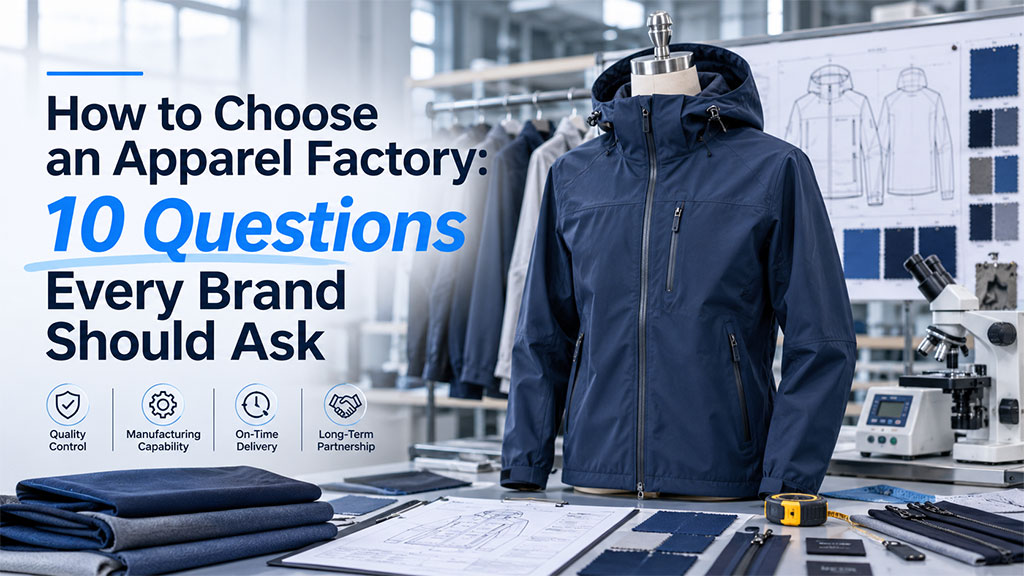
Choosing the right apparel factory requires more than comparing prices and reviewing samples. Brands should evaluate manufacturing experience, OEM/ODM capabilities, minimum order quantities (MOQ), fabric sourcing, sampling procedures, quality control, production capacity, lead times, pricing transparency, and communication. Asking these 10 questions before placing a bulk order helps B2B buyers identify production risks, verify technical capabilities, and build reliable manufacturing partnerships that support long-term business growth.
Introduction
Selecting the right apparel factory directly affects product quality, manufacturing costs, delivery schedules, and brand development.
However, a competitive quotation or attractive sample does not necessarily indicate reliable bulk production capabilities. Brands must also evaluate a manufacturer’s technical expertise, material sourcing, quality management, and production coordination.
Before choosing a clothing manufacturer, B2B buyers should ask the following 10 questions to determine whether a potential partner can meet their product requirements and support future business growth.
1. Does the Factory Have Experience with Similar Products?
Different apparel categories require different manufacturing expertise. Casual clothing, sportswear, workwear, and technical outdoor apparel involve different fabrics, construction methods, and quality requirements.
Evaluate the manufacturer’s experience in:
- Similar garment styles and constructions.
- Relevant fabrics, trims, and accessories.
- Specialized sewing and finishing techniques.
- International B2B manufacturing projects.
- Complex technical specifications.
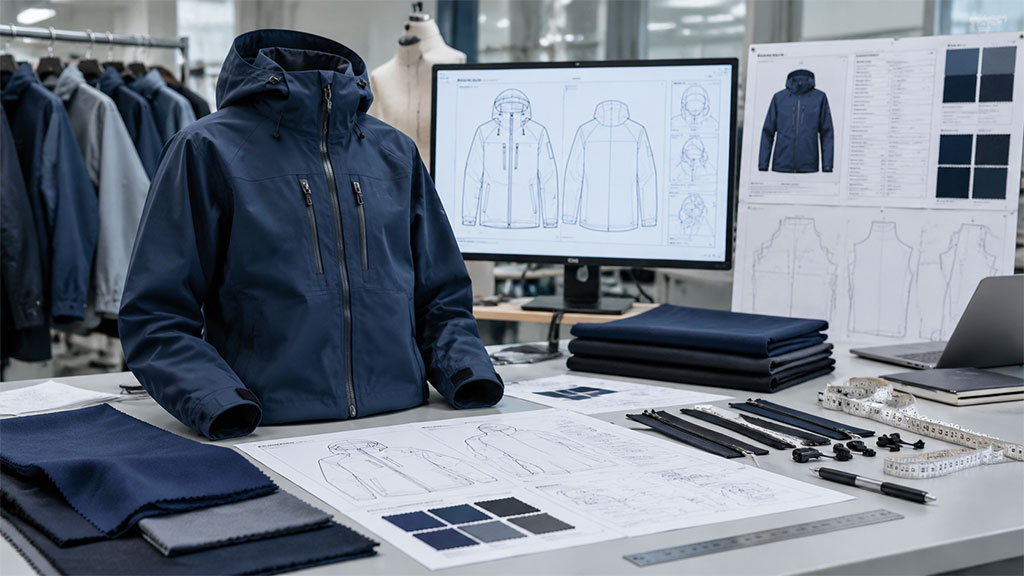
For example, waterproof jackets require knowledge of membrane fabrics, seam sealing, water-resistant zippers, and specialized inspections. These requirements differ significantly from basic T-shirt production.
What to request: Relevant product samples, previous project examples, and evidence of experience with your garment category.
2. Does the Manufacturer Offer OEM, ODM, or Both?
Understanding OEM and ODM capabilities helps brands select the right manufacturing model.
| Evaluation | OEM Manufacturing | ODM Manufacturing |
|---|---|---|
| Product Design | Buyer-provided | Manufacturer-developed |
| Tech Pack | Usually buyer-provided | Development support available |
| Customization | Based on buyer specifications | Based on existing or developed designs |
| Main Support | Technical production | Design and product development |
| Suitable For | Established brands | Startups and developing brands |
OEM is suitable for brands with established designs and technical packs. ODM is more appropriate for buyers requiring support with product development, material selection, or design adjustments.
Some manufacturers offer both services, providing greater flexibility as brands expand.
What to request: Confirm available OEM/ODM services and the scope of technical and development support.
3. What Is the Minimum Order Quantity (MOQ)?
MOQ directly influences inventory investment, production costs, and sourcing flexibility.
Before placing an order, clarify:
- MOQ per style and color.
- MOQ per size, where applicable.
- Whether mixed-size orders are accepted.
- Availability of smaller trial orders.
- Separate MOQ requirements for custom fabrics and trims.
A manufacturer may offer a low garment MOQ while requiring higher quantities for custom fabric development or special dyeing.
What to request: A detailed MOQ breakdown covering garments, fabrics, colors, and customization.
4. Can the Factory Source Suitable Fabrics and Accessories?
Material selection affects garment performance, appearance, durability, comfort, and production costs.
Different products require different material solutions:
- Outdoor jackets: Nylon or polyester shell fabrics with suitable water-resistant or waterproof constructions.
- Activewear: Stretch fabrics with moisture-management properties.
- Casual clothing: Cotton and polyester blends.
- Workwear: Durable fabrics with appropriate abrasion resistance.
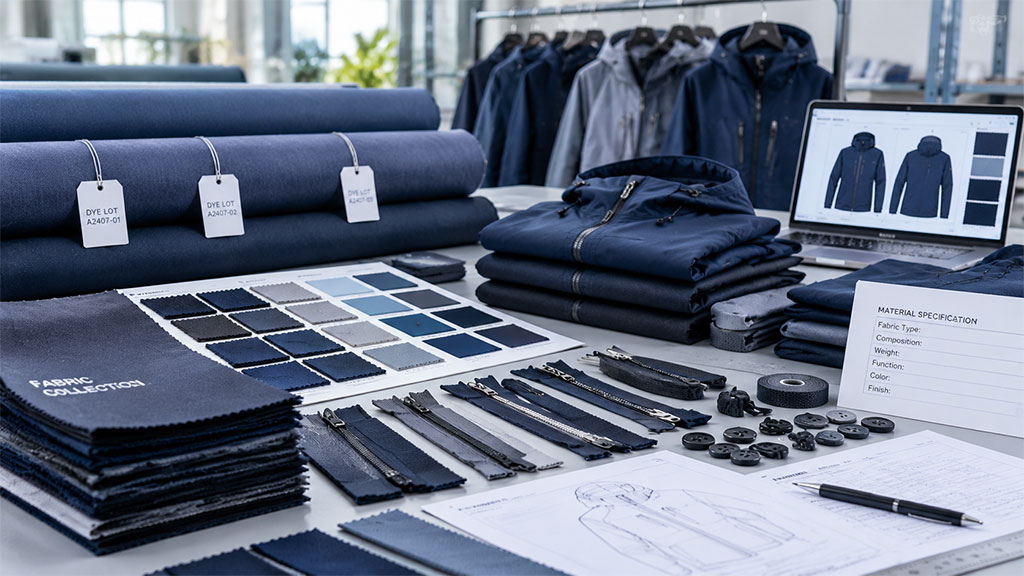
Also evaluate the manufacturer’s ability to source custom fabrics, recycled materials, certified textiles, zippers, buttons, labels, and branded accessories.
What to request: Fabric swatches, technical specifications, applicable test reports, and material traceability information.
5. How Does the Sampling and Product Development Process Work?
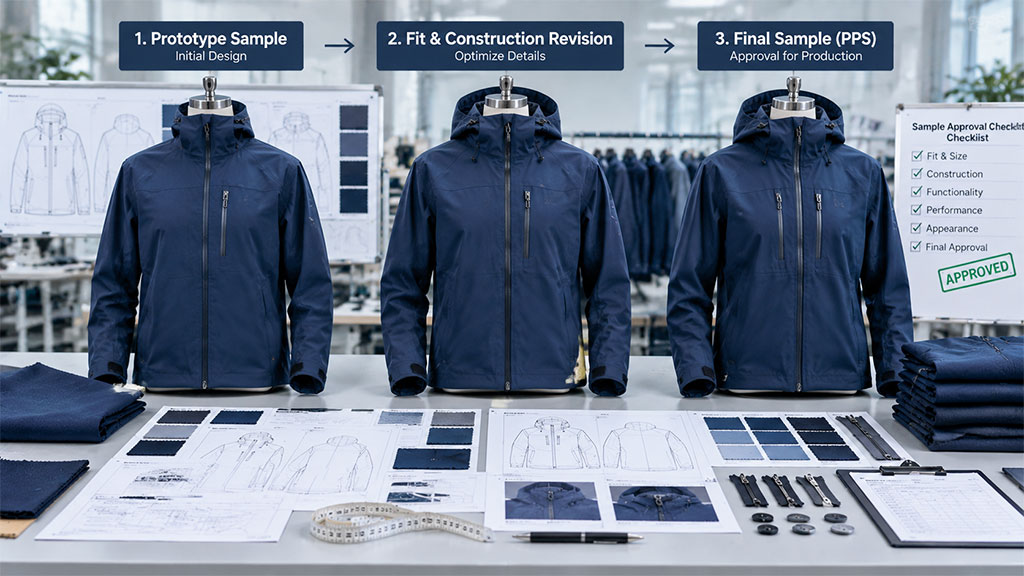
Sampling allows brands to verify product specifications before bulk manufacturing.
A structured development process may include:
- Prototype Sample – Evaluates initial design and construction.
- Fit Sample – Checks measurements, proportions, and fit.
- Size Set Sample – Verifies sizing consistency.
- Pre-Production Sample (PPS) – Confirms the final product before bulk production.
Brands should understand sampling costs, revision allowances, development timelines, and approval procedures.
What to request: A sample development schedule and confirmation that bulk production will follow approved specifications.
6. How Does the Factory Manage Quality Control?
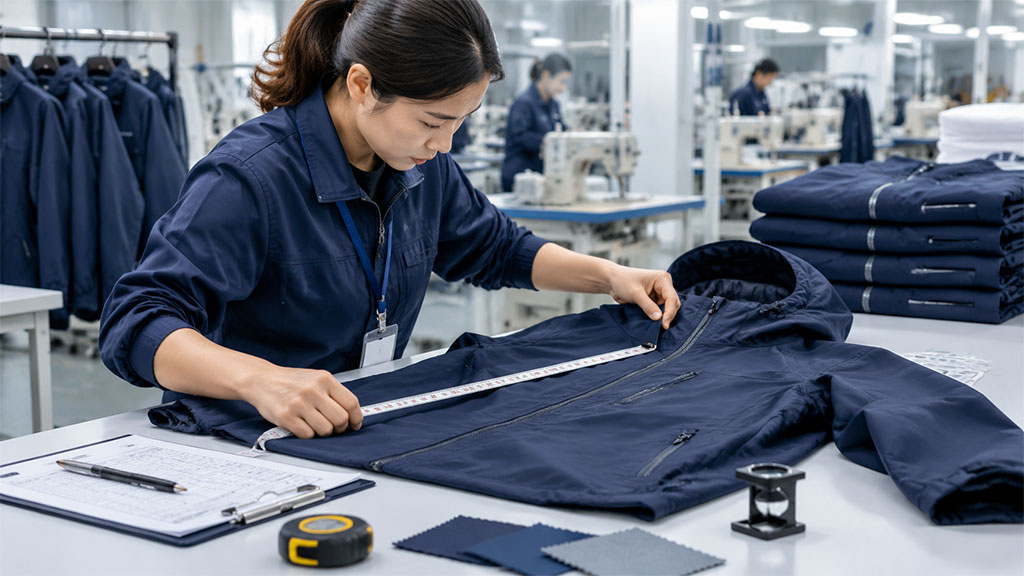
Quality control should cover the entire manufacturing process, not just final inspection.
| QC Stage | Key Inspection Focus |
|---|---|
| Fabric Inspection | Defects, shade variation, width, and weight |
| Cutting Inspection | Pattern accuracy and panel consistency |
| Inline Inspection | Stitching, workmanship, and construction |
| Final Inspection | Measurements, appearance, and functionality |
| Packing Inspection | Labels, quantities, and packaging |
For larger orders, discuss AQL requirements, defect classification, acceptance criteria, and corrective actions.
What to request: QC procedures, inspection records, defect-handling processes, and third-party inspection arrangements.
7. What Is the Factory’s Production Capacity?
Good samples do not automatically guarantee consistent bulk production.
Evaluate whether the manufacturer has sufficient resources to handle your order volume and product complexity.
Important questions include:
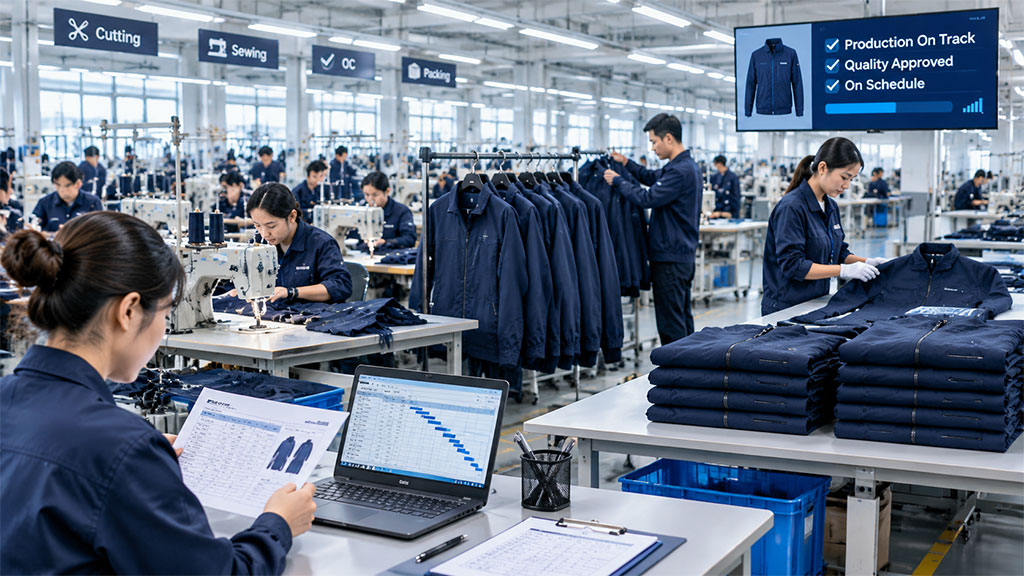
- What is the estimated monthly production capacity?
- How many production lines are available?
- Is specialized equipment available?
- Can the manufacturer handle seasonal demand?
- Can capacity scale with future orders?
Technical garments may require specialized equipment and experienced workers for seam sealing, pocket construction, and performance garment assembly.
What to request: Realistic production estimates based on garment type, order quantity, and construction requirements.
8. What Are the Expected Production Lead Times?
Production lead times affect inventory planning, seasonal collections, and product launches.
A typical apparel manufacturing schedule includes:
- Technical review and product development.
- Fabric and trim sourcing.
- Sample development and approval.
- Material preparation.
- Bulk cutting and sewing.
- Quality inspection.
- Finishing, packing, and shipment preparation.
Actual timelines depend on material availability, customization, product complexity, and factory workload.
What to request: A stage-by-stage production schedule with clear approval milestones and responsibilities.
9. Is the Manufacturing Pricing Transparent?
The lowest quotation does not necessarily represent the lowest total production cost.
A detailed quotation should identify:
- Fabric and material costs.
- Trims and accessories.
- Cutting and sewing costs.
- Printing, embroidery, and special processes.
- Labels and packaging.
- Sampling and development fees.
- Additional testing and inspection costs.
- Shipping terms and applicable charges.
Ensure that quotations are based on the final approved product specifications. Changes in materials, construction, or order quantities may affect the final price.
What to request: An itemized quotation with clearly defined inclusions and additional charges.
10. How Does the Manufacturer Handle Communication?
Effective communication is essential throughout apparel product development and bulk production.
Before starting a partnership, clarify:
- Who is the main project contact?
- How frequently are production updates provided?
- How are specification changes managed?
- Are progress photos and inspection reports available?
- How are production problems communicated and resolved?
- Can the manufacturer support repeat orders and future development?
A dependable manufacturing partner should provide realistic commitments, transparent updates, and accountable problem-solving.
What to request: Defined communication channels, reporting frequency, approval procedures, and escalation contacts.
Apparel Factory Evaluation Checklist
Use this checklist to compare potential manufacturing partners before making a sourcing decision.| Evaluation Area | What to Verify |
|---|---|
| Manufacturing Experience | Relevant product expertise |
| OEM/ODM Capabilities | Customization and development support |
| MOQ | Clear order requirements |
| Material Sourcing | Fabric and trim availability |
| Sampling | Structured development and approval |
| Quality Control | Documented inspection procedures |
| Production Capacity | Equipment and realistic output |
| Lead Times | Clear production schedules |
| Pricing | Transparent quotations |
| Communication | Responsive project management |
Final Thoughts: Choose a Manufacturing Partner, Not Just a Supplier
Choosing an apparel factory should involve more than comparing quotations or reviewing samples.
Brands need to evaluate technical expertise, material sourcing, sampling procedures, quality control, production capacity, and communication before committing to bulk production.
A reliable manufacturing partner should understand product requirements, identify potential production risks, and provide consistent support from development to final delivery.
For B2B apparel brands, the objective is not simply to find a manufacturer that can produce garments, but to establish a partnership that supports product quality, operational efficiency, and sustainable business growth.
Frequently Asked Questions
1. How do I choose the right apparel factory?
Evaluate manufacturing experience, OEM/ODM capabilities, MOQ, material sourcing, sampling, quality control, production capacity, pricing, and communication. Request relevant samples before placing bulk orders.2. What should I check before choosing a clothing manufacturer?
Review product expertise, production capabilities, fabric sourcing, inspection procedures, order requirements, delivery schedules, and project responsibilities.3. What is a reasonable MOQ for custom apparel?
There is no universal MOQ. It depends on garment complexity, fabric availability, customization, production methods, and supplier requirements.4. What is the difference between OEM and ODM?
OEM manufactures garments according to buyer-provided designs and specifications. ODM provides design or product development support, including existing or developed product solutions.5. How can I evaluate a factory’s quality control?
Request fabric inspection procedures, inline and final inspection records, defect-handling processes, and relevant testing reports.6. Should I request samples before bulk production?
Yes. Samples allow brands to evaluate fit, construction, measurements, materials, and functionality. Always review and approve the pre-production sample before bulk manufacturing.7. How long does custom apparel manufacturing take?
Timelines vary according to product complexity, fabric sourcing, sampling revisions, order quantity, and production workload. Request a complete production schedule.8. Is the cheapest apparel factory always the best choice?
No. Compare total manufacturing costs, material quality, workmanship, inspection standards, and delivery reliability rather than unit price alone.Written by the Simmerui Apparel Manufacturing Team
Simmerui specializes in OEM and ODM apparel production for global B2B brands, providing integrated support across product development, fabric sourcing, sampling, quality control, and scalable manufacturing. Our experience covers outdoor apparel, performance wear, casual clothing, and private label collections. We help brands reduce production risks, optimize manufacturing costs, and build reliable long-term manufacturing partnerships.