
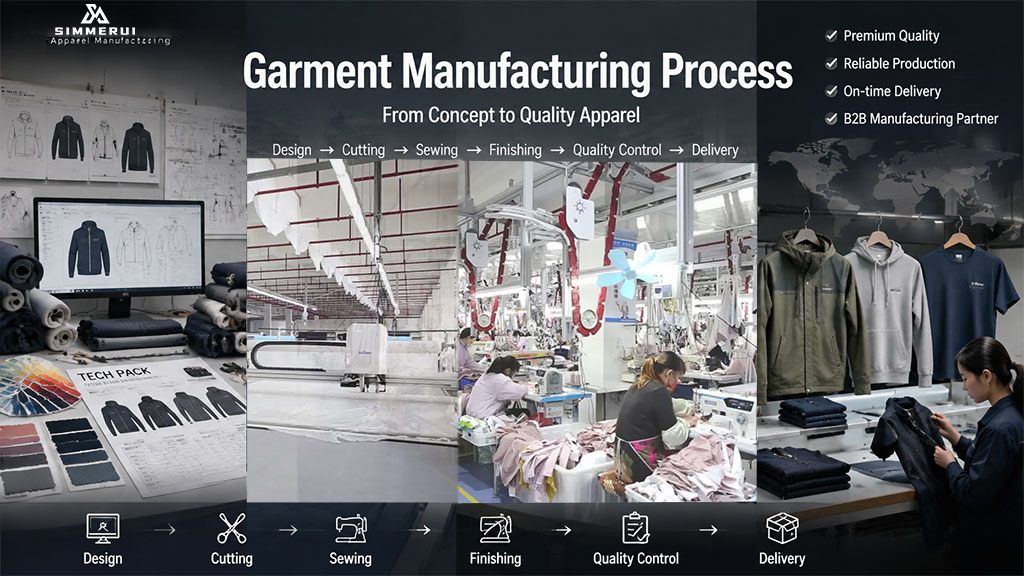
The garment manufacturing process involves multiple production stages that transform fabric and design concepts into finished apparel products. From fabric cutting and sewing assembly to finishing and quality inspection, each step directly impacts garment quality, production efficiency, and delivery reliability. For fashion brands working with OEM apparel manufacturers, understanding factory workflows helps reduce production risks and build stronger manufacturing partnerships.
Introduction: Understanding the Garment Manufacturing Process
For fashion brands, retailers, and private label companies, understanding how garments are produced is essential when selecting the right OEM manufacturing partner.
A finished jacket, hoodie, T-shirt, or outdoor garment may look simple, but the manufacturing process behind it requires precise coordination between materials, production techniques, skilled workers, and quality control systems.
A professional apparel factory follows a structured workflow to transform product concepts, design files, and technical specifications into production-ready garments. The process includes fabric preparation, cutting, sewing, finishing, inspection, and packaging to ensure products meet brand requirements.
The three core stages of garment manufacturing include:
- Fabric Cutting
- Garment Sewing and Assembly
- Finishing and Quality Control
| Production Stage | Main Purpose | Key Quality Focus |
|---|---|---|
| Fabric Cutting | Transform patterns into garment components | Accuracy and sizing consistency |
| Sewing Assembly | Combine components into complete garments | Construction quality and durability |
| Finishing & QC | Prepare products for shipment | Appearance and final inspection |
Each stage plays an important role in determining final product performance, appearance, and consistency during bulk production.
For B2B apparel buyers, understanding these production steps provides better visibility into factory capabilities, helps improve communication with manufacturers, and allows brands to make more informed sourcing decisions.
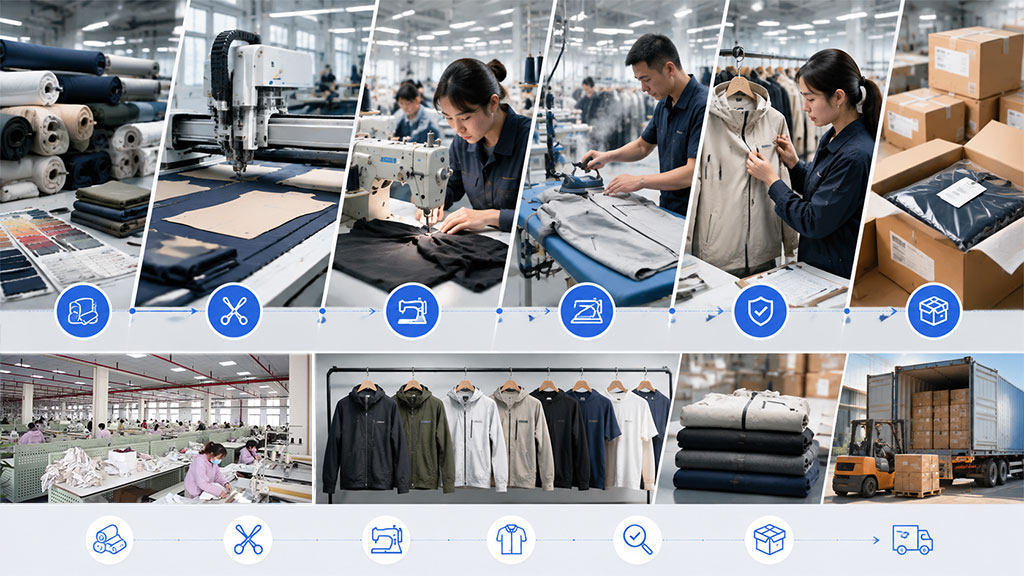
1. Fabric Cutting Process: Turning Patterns Into Production Pieces
Fabric cutting is the first major production stage after product development approval. At this stage, manufacturers transform fabric materials into accurate garment components according to approved technical specifications, patterns, and size requirements.
The cutting process directly affects garment fitting, construction accuracy, fabric utilization, and overall production consistency. Even small cutting errors can create problems during sewing, including misalignment, incorrect measurements, and inconsistent sizing across bulk orders.
Before cutting begins, professional OEM apparel factories prepare:
- Approved tech packs
- Pattern files
- Fabric specifications
- Size grading information
- Cutting layouts
These documents ensure that production teams follow the same standards throughout the manufacturing process.
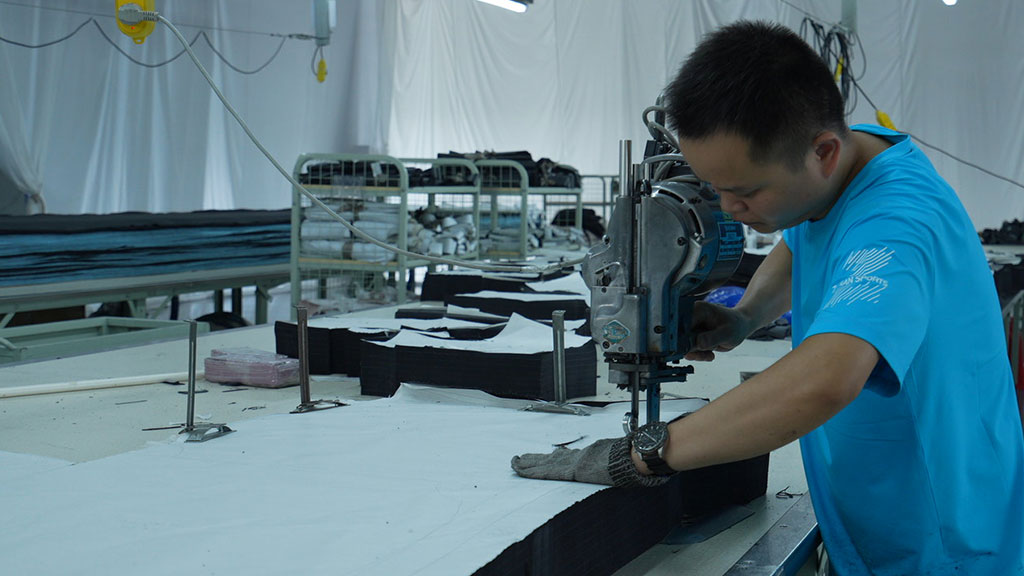
Cutting Methods Used in Apparel Manufacturing
Different order types and production requirements may require different cutting approaches.
Manual Cutting
Manual cutting is commonly used for:
- Sample development
- Small quantity production
- Customized apparel orders
Advantages include:
- Flexible production adjustments
- Suitable for prototype development
- Easier modification during early product stages
For emerging brands and product development projects, manual cutting provides flexibility when designs require adjustments before bulk production.
Automated Cutting
Automated cutting systems are often used for larger production orders where consistency and efficiency are critical.
Advantages include:
- Higher cutting accuracy
- Reduced fabric waste
- Improved production efficiency
- Better consistency across large quantities
For OEM bulk production, precise cutting helps factories maintain accurate sizing and consistent garment appearance throughout the entire order.
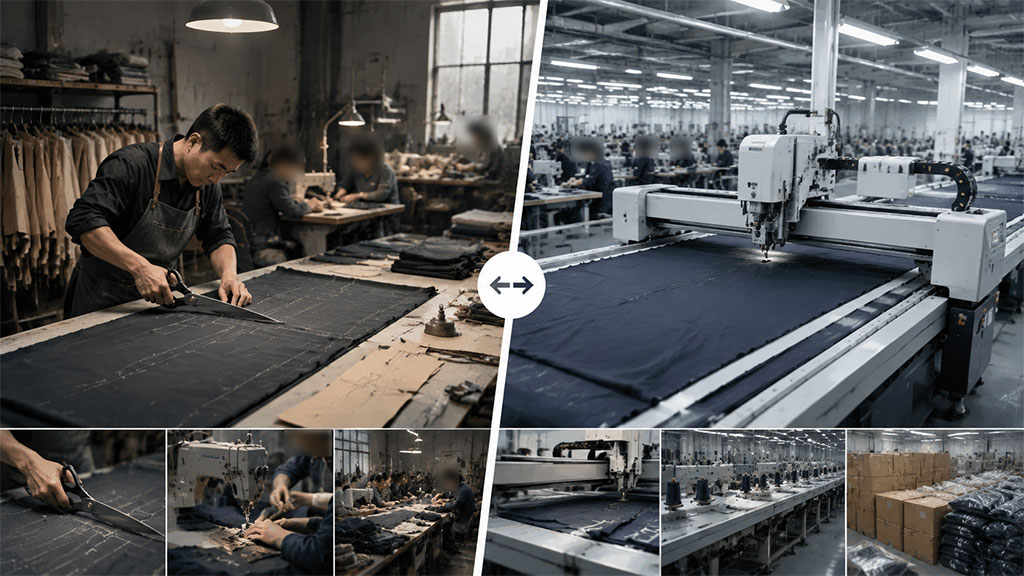
Why Cutting Accuracy Matters for Brands
Accurate fabric cutting directly impacts:- Garment fitting
- Sewing alignment
- Final appearance
- Customer satisfaction
2. Garment Sewing Process: Assembling Fabric Components
After cutting, individual fabric panels are transferred to the sewing department, where separate components are assembled into complete garments.The sewing stage is one of the most important parts of apparel manufacturing because it determines garment structure, durability, comfort, and overall quality. Different garment categories require different sewing techniques and construction methods based on their design requirements and performance expectations.
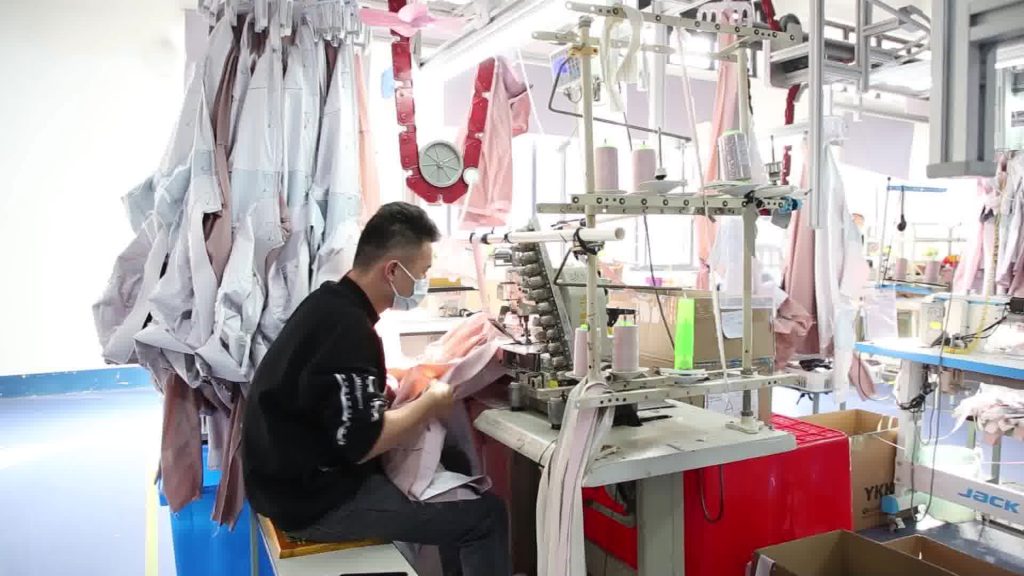
Main Sewing Operations in Apparel Production
Component Assembly
During assembly, workers join different garment parts together, including:- Front and back panels
- Sleeves
- Collars
- Waistbands
- Pockets
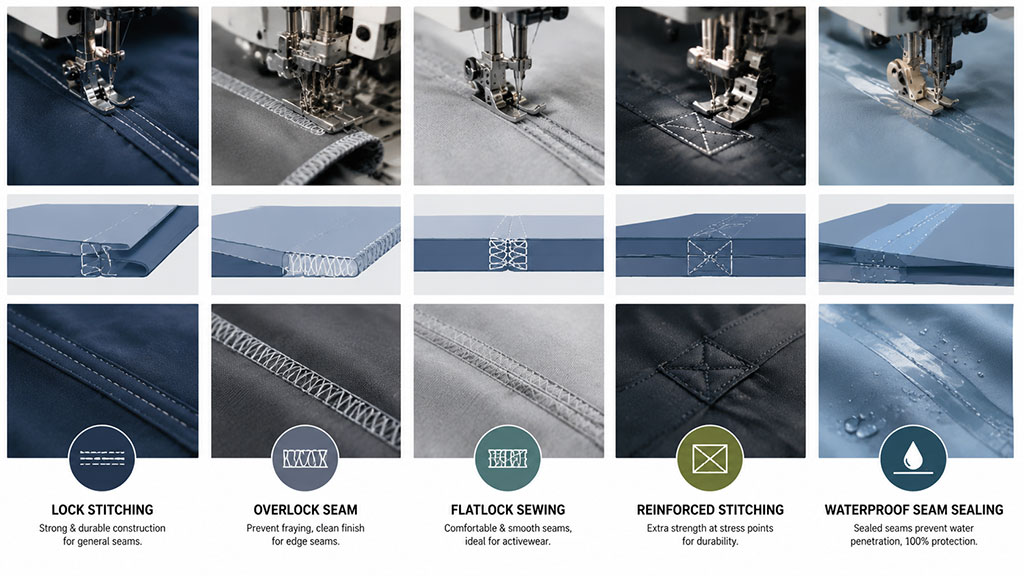
Common Sewing Techniques
Professional apparel factories use different stitching methods depending on product requirements.Lock Stitching
Commonly used for basic garment construction, providing strong and reliable seams.Overlocking
Used for edge finishing and seam protection, helping prevent fabric edges from unraveling.Flatlock Sewing
Frequently used in performance wear and activewear where comfort and reduced seam bulk are important. Reinforced Stitching Applied to areas requiring additional strength, such as stress points and high-wear areas.Seam Sealing
Used for technical outdoor apparel where waterproof performance is required.Sewing Requirements by Product Category
Different apparel products require different sewing expertise. For example:- Outdoor jackets may require waterproof seam construction and reinforced stitching.
- Performance wear may require flexible sewing techniques to support movement and comfort.
- Premium fashion products may require detailed decorative sewing and higher construction standards.
| Sewing Method | Main Application |
|---|---|
| Lock Stitching | Basic garment construction requiring strong and reliable seams |
| Overlocking | Seam finishing and edge protection |
| Flatlock Sewing | Performance wear and activewear requiring comfort and reduced seam bulk |
| Reinforced Stitching | High-stress areas requiring additional durability |
| Seam Sealing | Technical outdoor apparel requiring waterproof performance |
How OEM Factories Control Sewing Quality
Reliable apparel manufacturers manage sewing quality through:- Operator training
- Standard operating procedures
- Inline quality inspections
- Production monitoring
3. Garment Finishing Process: Preparing Products for Delivery
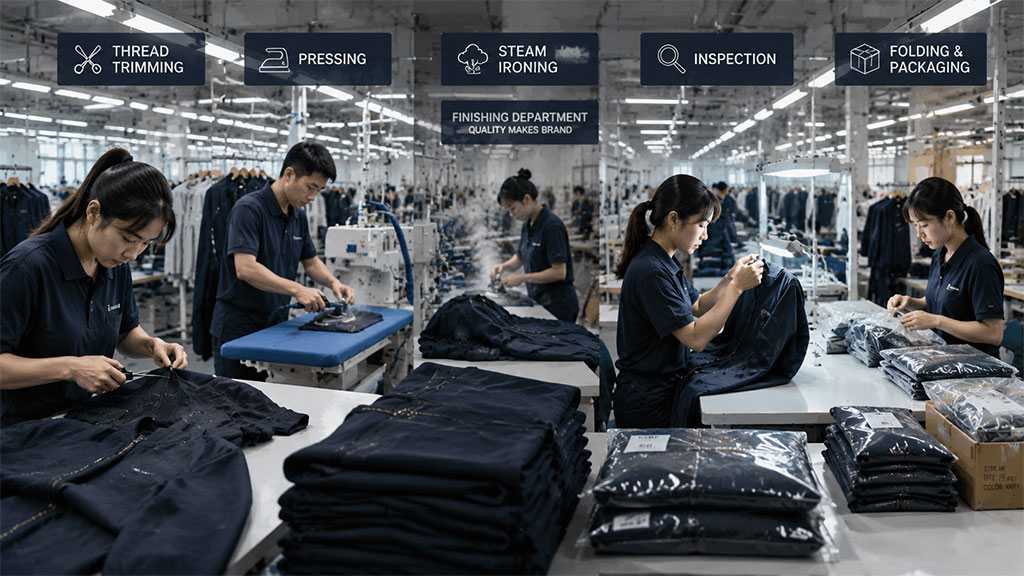
Finishing is the final production stage before garments are packed and shipped to customers. This stage improves product appearance, ensures construction quality, and prepares finished garments according to brand requirements. A professional apparel factory uses finishing procedures to remove production imperfections and ensure each garment meets approved quality standards before delivery. Common finishing procedures include:Thread Trimming
During sewing operations, excess threads may remain on garments. Thread trimming removes unnecessary threads to create a cleaner appearance and improve the overall presentation of finished products.Pressing and Ironing
Pressing helps garments maintain the correct shape and improves their appearance before packaging. Professional pressing ensures:- Proper garment shape
- Clean presentation
- Improved retail readiness
Washing and Special Treatments
Depending on product requirements, manufacturers may apply different garment treatments, including:- Garment washing
- Enzyme washing
- Softening treatments
- Vintage effects
Final Quality Inspection
Before shipment, finished garments go through final inspection to confirm that products meet customer specifications. Inspectors typically check:- Measurement accuracy
- Sewing defects
- Fabric problems
- Color consistency
- Label placement
- Packaging requirements
4. Quality Control Throughout Garment Production
Quality control should not only happen at the final inspection stage.
Professional OEM apparel manufacturers apply quality checks throughout the entire production process to identify and prevent problems earlier.
A structured quality control system helps reduce:
- Production delays
- Rework costs
- Customer complaints
- Quality risks
Quality Control Before Production
Before bulk manufacturing begins, factories review:
- Fabric quality
- Trim approval
- Sample confirmation
- Production planning requirements
This stage ensures that materials, specifications, and production standards are aligned before production starts.
Quality Control During Production
During manufacturing, factories monitor:
- Cutting accuracy
- Sewing quality
- Construction consistency
- Defect rates
Inline inspections allow manufacturers to identify issues during production instead of waiting until final inspection.
Quality Control Before Shipment
Final inspection focuses on:
- Product appearance
- Quantity accuracy
- Packaging standards
- Buyer requirements
A complete QC system gives brands greater confidence in production quality and delivery reliability.
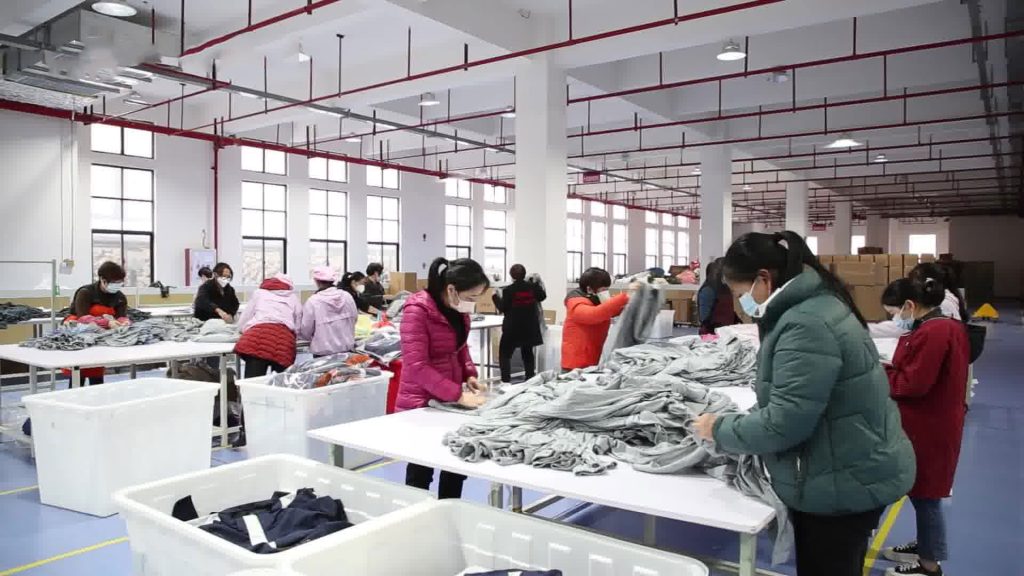
5. How OEM Apparel Factories Improve Production Efficiency
Experienced OEM manufacturers improve production performance through organized workflows, skilled teams, and production management systems.
Production Planning
Professional factories create detailed production schedules covering:
- Material preparation
- Cutting
- Sewing
- Finishing
- Shipping
Effective planning helps maintain production timelines and reduces unnecessary delays.
Skilled Production Teams
Experienced operators contribute to:
- Sewing consistency
- Production speed
- Product quality
Technical skills and manufacturing experience are especially important for complex products such as outdoor apparel and performance wear.
Digital Manufacturing Management
Modern apparel factories may use production tracking systems to monitor:
- Order progress
- Material usage
- Quality checkpoints
These systems help brands receive clearer production updates and reduce communication risks during manufacturing.
6. Cutting, Sewing, and Finishing in Different Apparel Categories
Different garment categories require different manufacturing approaches and technical capabilities.
T-Shirts
Key manufacturing considerations include:
- Fabric cutting accuracy
- Seam durability
- Printing or embroidery quality
Simple products still require precise control to maintain consistent sizing and appearance in bulk production.
Hoodies
Hoodie manufacturing requires attention to:
- Heavy fabric handling
- Rib construction
- Hood assembly
The weight and structure of hoodie materials require experienced sewing operations to achieve consistent results.
Jackets and Outdoor Apparel
Technical outerwear often requires additional manufacturing expertise, including:
- Functional fabric handling
- Waterproof construction
- Seam reinforcement
- Performance testing
For brands developing outdoor collections, selecting a manufacturer with technical apparel experience is important for achieving product performance expectations.
7. Why Understanding Factory Workflow Matters for Buyers
For B2B apparel buyers, understanding the garment manufacturing workflow helps brands manage production more effectively.
A clear understanding of production stages supports:
- Better product planning
- More accurate cost expectations
- Faster sample approval
- Improved communication with manufacturers
A reliable OEM partner should provide transparency throughout the manufacturing process, from product development and sampling to bulk production and final delivery.
The right manufacturing partner does more than produce garments. They help brands manage quality, timelines, and production risks while building long-term supply chain relationships.
FAQ: Garment Manufacturing Process
1.What are the main steps in garment manufacturing?
The main garment manufacturing steps include product development, fabric preparation, cutting, sewing, finishing, quality inspection, and packaging.2.How long does the garment production process take?
Production timelines depend on product complexity, order quantity, fabric availability, and customization requirements. Standard apparel production usually requires several weeks from approval to shipment.3.Why is cutting accuracy important in garment production?
Accurate cutting ensures correct garment measurements, better fitting, reduced fabric waste, and consistent quality across bulk production.4.What quality checks do garment factories perform?
Professional factories typically conduct fabric inspections, production checks, measurement inspections, sewing inspections, and final quality control before shipment.5.What is the difference between OEM and ODM garment manufacturing?
OEM manufacturing allows brands to produce garments based on their own designs and specifications. ODM manufacturing provides factory-developed designs that brands can customize and sell under their own labels.Conclusion: Choosing the Right OEM Apparel Manufacturing Partner
The garment manufacturing process involves multiple connected stages, from fabric cutting and sewing assembly to finishing and quality control.
Each stage plays an important role in determining product quality, production efficiency, and delivery reliability.
For fashion brands, working with an experienced OEM apparel manufacturer provides greater control over production risks, quality standards, and long-term supply chain development.
A reliable manufacturing partner should offer not only production capability but also professional communication, quality management, and the expertise needed to transform product concepts into successful apparel collections.