
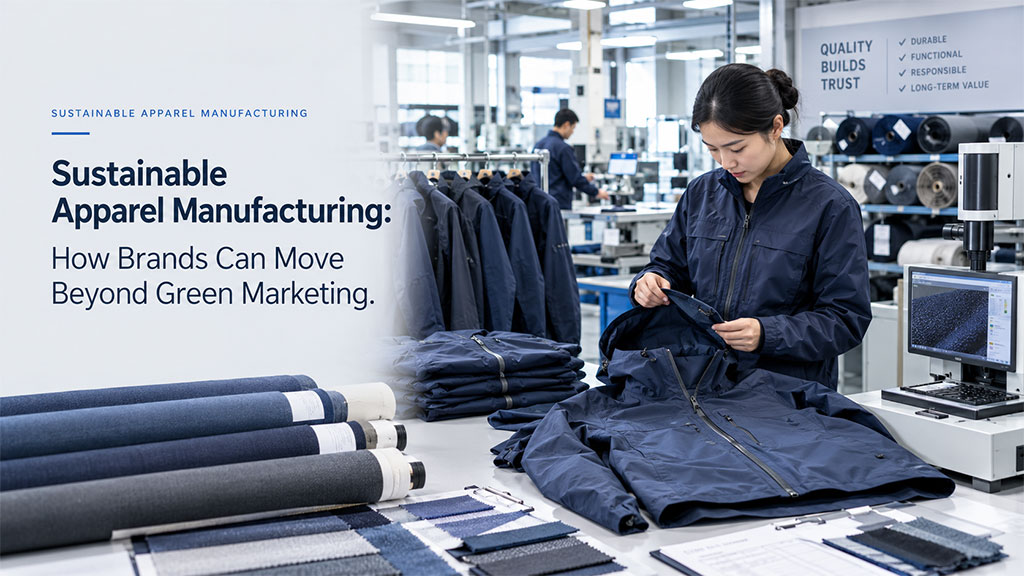
Sustainable apparel manufacturing goes beyond recycled fabrics and eco-friendly marketing claims. For B2B clothing brands, it requires measurable improvements in material sourcing, fabric utilization, chemical management, quality control, waste reduction, and supply chain transparency. Choosing the right OEM or ODM manufacturing partner means verifying sustainability documentation, evaluating product durability, and understanding the environmental impact of relevant production processes.
This guide explains how apparel brands can assess manufacturers, reduce production waste, balance sustainability with cost, and build a more responsible sourcing strategy.Introduction
Sustainability is becoming an important consideration in apparel sourcing, but meaningful progress requires more than recycled-fabric labels or environmental marketing campaigns. For clothing brands, sustainable apparel manufacturing means integrating environmental responsibility into material selection, product development, production planning, quality assurance, and supply chain management. These decisions influence not only environmental performance but also product durability, manufacturing costs, and long-term business competitiveness. For B2B buyers, the challenge is identifying manufacturing partners that can support sustainability objectives with verifiable documentation and consistent production practices. Rather than relying on broad environmental claims, brands should evaluate how materials are sourced, how efficiently garments are produced, which chemical requirements apply, and whether sustainability claims can be substantiated. This guide outlines eight practical ways to move beyond green marketing and develop a more measurable, commercially viable apparel manufacturing strategy.1. Evaluate Sustainable Apparel Manufacturing Beyond Green Marketing
Green marketing can communicate a brand’s environmental goals, but it cannot replace evidence of responsible manufacturing.
Terms such as “eco-friendly,” “conscious,” and “sustainable” are meaningful only when the underlying product, materials, processes, and supporting documentation justify those claims.
For B2B apparel buyers, the key question is not simply whether a manufacturer offers sustainable materials. It is whether the manufacturer can demonstrate how environmental considerations are incorporated into relevant sourcing and production activities.
Look Beyond Eco-Friendly Fabric Claims
Recycled polyester, certified organic cotton, and other preferred materials can contribute to a more responsible sourcing strategy. However, the overall impact of a finished garment also depends on processing methods, transportation, product lifespan, production waste, and manufacturing quality.
For example, a jacket made with recycled polyester may still generate unnecessary waste if pattern layouts are inefficient or production defects lead to rejected garments.
Brands should therefore evaluate the complete manufacturing process instead of treating one material attribute as proof of overall sustainability.
Request Verifiable Sustainability Documentation
Responsible sourcing requires evidence that matches the specific product, material, process, and environmental claim.
Depending on the project, relevant documentation may include:
- Material composition records and supplier declarations.
- Applicable recycled-content or organic-material certifications.
- Chemical compliance documentation and restricted-substance test reports.
- Production records supporting relevant environmental performance claims.
- Supplier audit reports and traceability records, where available.
Certifications should be checked for their scope, validity, and relevance to the actual product or production stage. A facility-level certification does not automatically certify every garment manufactured at that facility.
B2B takeaway: Replace broad sustainability promises with product-relevant documentation and measurable manufacturing requirements.
2. Select Sustainable Apparel Materials Based on Product Performance
Material selection is an important part of sustainable apparel manufacturing, but environmental considerations should not be separated from product performance.
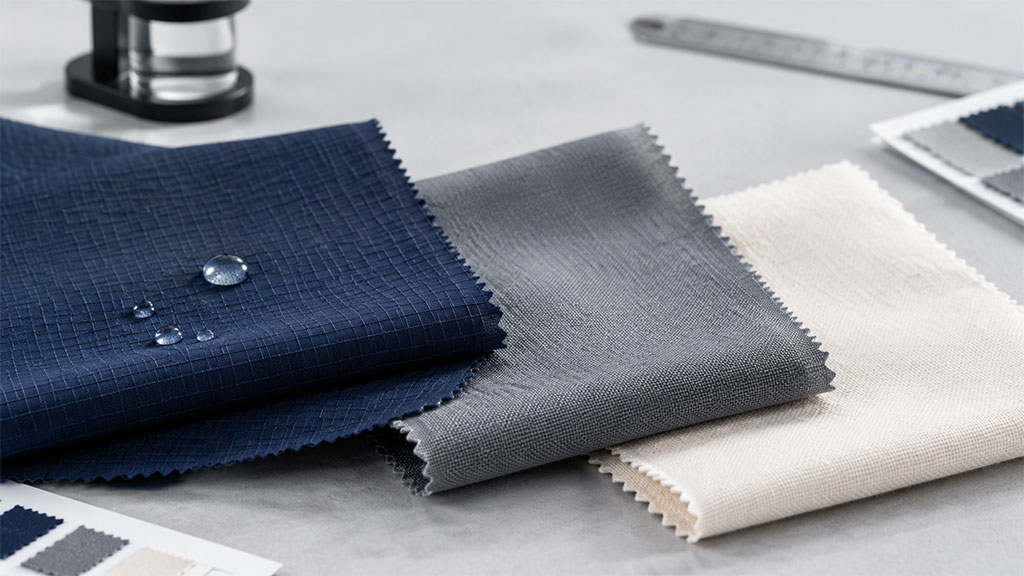
Different materials offer different combinations of durability, weight, comfort, technical performance, availability, cost, and environmental benefits.
| Material option | Potential advantages | What buyers should evaluate |
|---|---|---|
| Recycled polyester | Can reduce demand for virgin polyester when it replaces conventional material | Recycled-content evidence, certification scope, durability, and supply consistency |
| Certified organic cotton | Supports agricultural practices that meet defined organic standards | Certification, shrinkage, fabric performance, and cost |
| Recycled nylon | Incorporates recovered nylon feedstock into apparel materials | Strength, abrasion resistance, availability, and price |
| Preferred cellulosic fibers | May offer environmental benefits depending on feedstock and processing | Sourcing, processing methods, and applicable certifications |
| Conventional materials | May provide established performance and reliable supply chains | Material impacts, service life, and opportunities to improve efficiency |
No single fabric is the most sustainable choice for every application. A material suitable for a lightweight T-shirt may not meet the abrasion resistance, waterproofing, or durability requirements of a technical outdoor jacket.
For outdoor and performance apparel, buyers should evaluate the complete product specification, including:
- Fabric weight and construction.
- Tensile strength, tear strength, and abrasion resistance.
- Colorfastness and dimensional stability.
- Water resistance and breathability, where applicable.
- Expected service life and maintenance requirements.
- Material availability, production consistency, and total cost.
Product durability matters because garments must perform as intended throughout their expected service life. Choosing a material that fails essential performance requirements may lead to premature replacement, returns, or additional production.
B2B takeaway: Select materials that meet technical specifications while offering credible, documented sustainability benefits.
3. Reduce Apparel Production Waste Through Better Manufacturing Efficiency
Sustainable apparel manufacturing depends not only on the materials entering production but also on how efficiently those materials are used.
Fabric waste, repeated sample revisions, cutting errors, defective garments, and unnecessary production runs can increase both environmental impact and manufacturing costs.
Optimize Pattern Making and Fabric Cutting
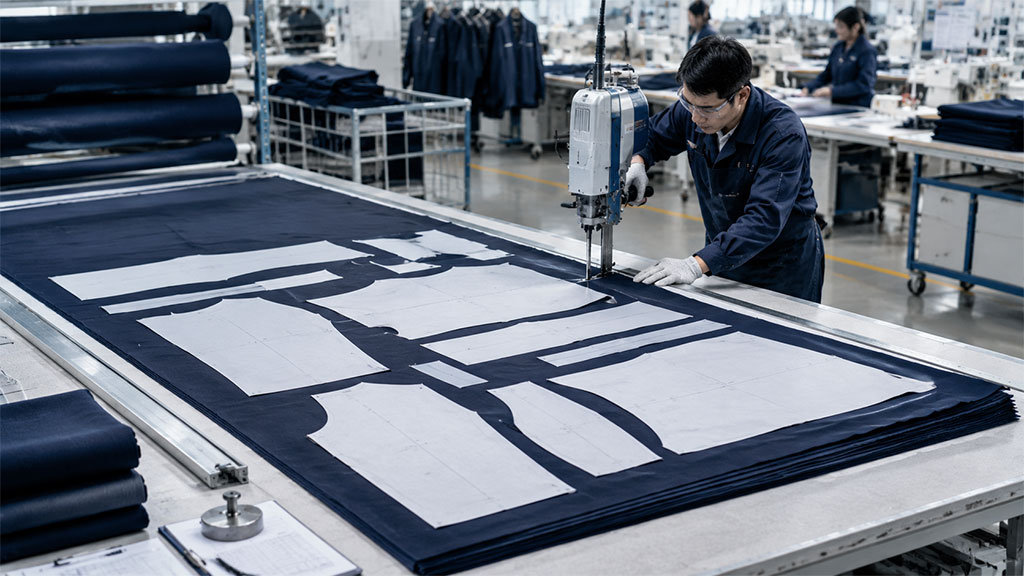
Fabric utilization is one practical area where manufacturers can improve resource efficiency.
Pattern grading, marker planning, fabric nesting, spreading accuracy, and controlled cutting procedures all influence how much fabric is required for a finished garment.
For brands ordering garments in bulk, even a modest improvement in fabric yield can produce meaningful material savings.
A simple estimate is:
Material savings = Total fabric input × Reduction in waste rate
For example, if an order uses 10,000 meters of fabric and the measured waste rate decreases by two percentage points, the potential saving is 200 meters, assuming both rates use the same measurement basis and other factors remain constant.
Actual results depend on garment design, fabric width, size distribution, marker efficiency, and cutting conditions.
Improve Sampling and Reduce Avoidable Revisions
Repeated sample revisions consume fabric, trims, labor, and shipping resources.
A complete tech pack helps align the brand and manufacturer on measurements, construction details, materials, trims, labeling, and performance requirements before sampling begins.
Although clear specifications cannot eliminate every revision, they can reduce avoidable misunderstandings and improve product development efficiency.
Brands should establish a structured approval process for prototype samples, fit samples, and pre-production samples where applicable. Material substitutions and critical construction changes should be documented and approved before bulk production.
Prevent Quality Defects Before They Create Waste
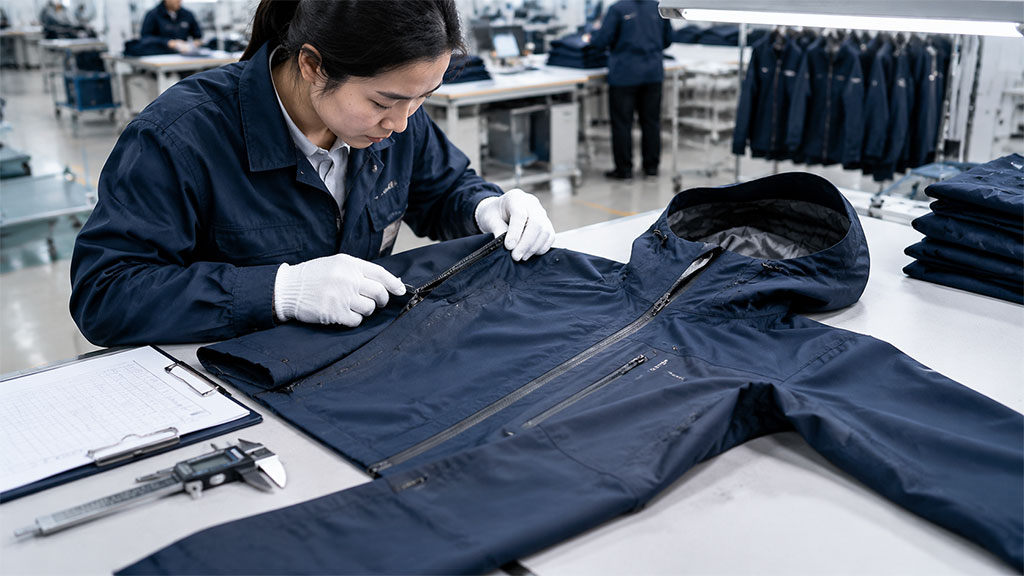
Quality control is also an important component of responsible manufacturing.
Incoming fabric inspection, in-line production checks, measurement verification, and final inspection help identify problems before additional resources are consumed or defective products reach customers.
When a garment fails its quality requirements, it may require repair, replacement, or disposal. Preventing defects at the source is generally more resource-efficient than correcting them after production.
B2B takeaway: Improve tech-pack accuracy, fabric utilization, sampling control, and defect prevention to reduce avoidable material consumption and production costs.
4. Strengthen Chemical Compliance and Environmental Management
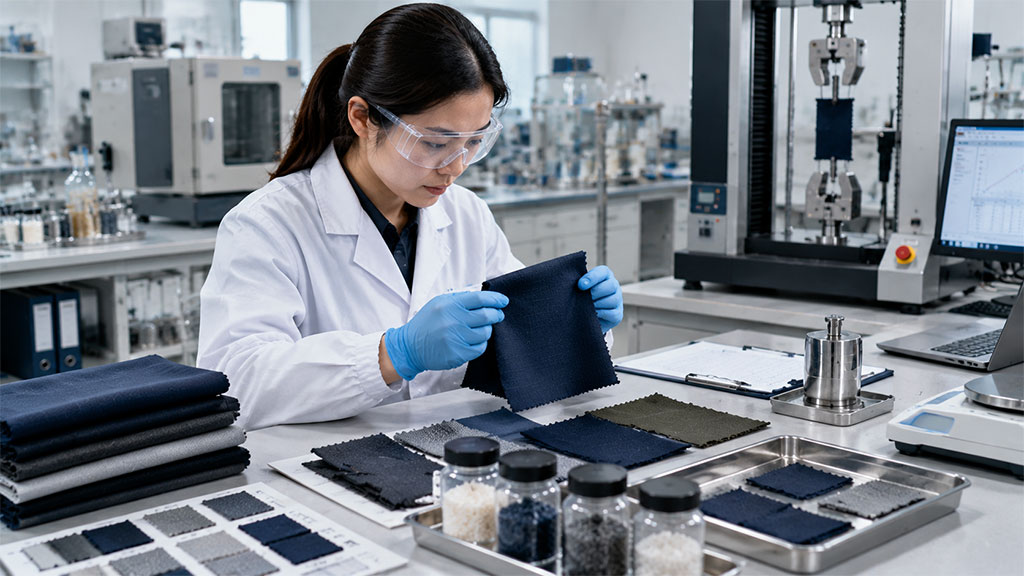
Environmental responsibility extends beyond material selection. Dyeing, printing, washing, finishing, and functional treatments may involve significant resource use and chemical-management requirements.
The relevant risks depend on the material, process, equipment, production location, and applicable market requirements.
For this reason, apparel brands should assess the processes involved in their products rather than relying on general statements about environmentally responsible manufacturing.
Apply the Right Chemical Compliance Requirements
Manufacturers and material suppliers should understand the chemical requirements applicable to the destination market and product category.
Depending on the product, these may include EU REACH requirements, applicable U.S. regulations, customer-specific restricted substances lists (RSLs), and relevant material standards.
An RSL identifies substances restricted in finished products. A manufacturing restricted substances list (MRSL), where applicable, addresses chemical inputs used in manufacturing processes.
These tools serve different purposes and should not be treated as interchangeable.
Testing should be based on product risks, material composition, applied treatments, buyer specifications, and applicable requirements. Supporting records should be traceable to the relevant supplier, material, or production lot wherever applicable.
Improve Water and Energy Efficiency
Where suppliers directly control or influence wet processing, useful improvement measures may include:
- Monitoring water and energy consumption.
- Improving process efficiency and reducing unnecessary reprocessing.
- Maintaining equipment to prevent leaks and inefficient operation.
- Reviewing wastewater treatment and applicable discharge requirements.
- Assessing the environmental controls of relevant processing partners.
Brands should evaluate suppliers according to their actual responsibilities. A cut-and-sew manufacturer that does not conduct dyeing should not be assessed as though it directly controls a dyehouse’s water consumption.
Instead, buyers should map the relevant supply chain and evaluate environmental controls at the facilities responsible for each process.
B2B takeaway: Define chemical and environmental requirements according to the product, market, and actual production processes involved.
5. Build Supply Chain Transparency Into Apparel Sourcing
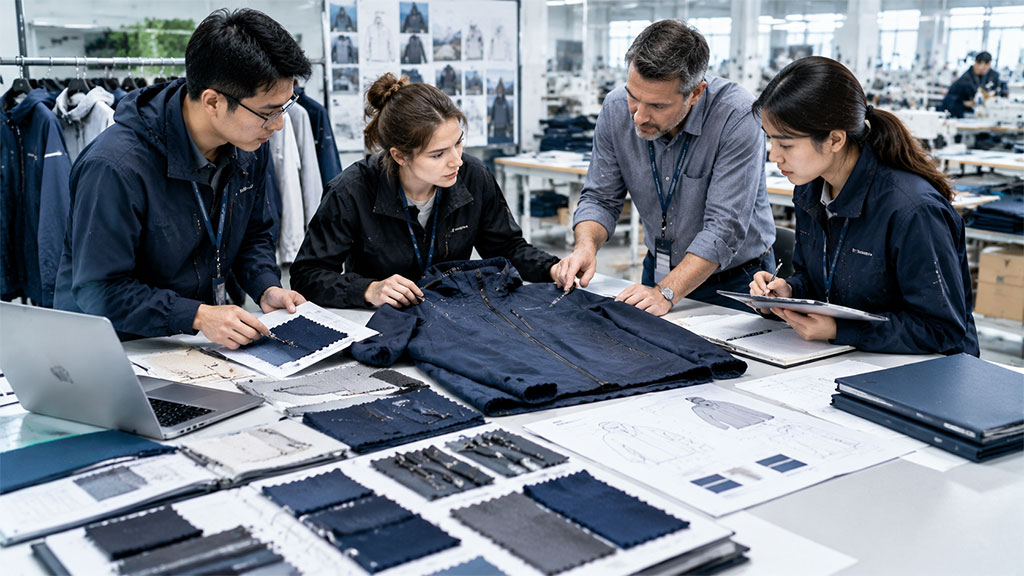
Supply chain transparency is essential when brands need to verify material claims, assess manufacturing risks, and respond to customer or regulatory requests.
Without sufficient visibility into material origins and production locations, it becomes more difficult to establish whether sustainability claims accurately reflect the finished product.
Map Relevant Suppliers and Production Facilities
Depending on the product and risk profile, brands should seek visibility into:
- Fabric and trim suppliers.
- Dyeing, printing, washing, and finishing facilities.
- Cut-and-sew manufacturing locations.
- Relevant material certifications and transaction records.
- Subcontracting arrangements and supplier approval procedures.
Not every brand needs the same level of traceability. However, the information collected should be sufficient to substantiate the claims being made and meet applicable customer and legal requirements.
Verify What Each Certification Actually Covers
Certifications can provide useful evidence, but they are not interchangeable.
For example, OEKO-TEX STANDARD 100 focuses on testing textile products for harmful substances under its applicable criteria. The Global Organic Textile Standard (GOTS) covers defined requirements for organic textiles, including environmental and social criteria within its scope. Applicable recycled-content standards may help substantiate recycled-material claims.
Before accepting a certification, buyers should verify:
- The certificate holder and certified entity.
- The specific product, material, or process covered.
- The certificate’s validity.
- Applicable transaction documentation and chain-of-custody requirements.
A single certification does not demonstrate that a product is sustainable in every respect.
A responsible manufacturing partner should be able to explain what its documentation proves, which production stages it covers, and where additional evidence may be required.
B2B takeaway: Establish traceability requirements that correspond to the sustainability claims, product risks, and markets your brand serves.
6. Balance Sustainability With Manufacturing Costs and Commercial Viability
Sustainable apparel manufacturing must be commercially viable as well as environmentally responsible.
Some preferred materials, specialized treatments, additional testing, or certification processes may increase upfront costs. However, the lowest unit price does not necessarily produce the lowest total project cost.
Fabric waste, defects, rework, product returns, and replacement orders can all affect the financial performance of an apparel collection.
B2B buyers should therefore compare manufacturing partners using a broader cost framework.
| Cost factor | Questions to ask |
|---|---|
| Materials | What is the cost difference between conventional and preferred materials? |
| Fabric utilization | How much fabric is consumed per finished garment? |
| Sampling | How many sample rounds are expected, and what causes revisions? |
| Quality | What are the inspection criteria, defect rates, and corrective-action procedures? |
| Durability | Does the product meet its intended service-life and performance requirements? |
| Compliance | Which testing, documentation, and certification costs apply? |
| Logistics | How do shipping methods, order consolidation, and delivery schedules affect total cost? |
A useful evaluation compares the expected total cost of producing and delivering compliant, fit-for-purpose garments—not just the quoted price per piece.
Brands should also distinguish between documented improvements and assumptions. For example, a manufacturer may demonstrate reduced fabric waste through production records, but this does not automatically establish a lower total environmental impact across the entire product lifecycle.
Related resource: How Apparel Brands Calculate Total Manufacturing Cost Before Production.
B2B takeaway: Choose a manufacturing solution that meets product specifications, supports credible sustainability claims, and remains commercially viable at the required production volume.
7. Evaluate Sustainable Apparel Manufacturers With a Structured Checklist
Selecting a manufacturing partner requires a combination of documented evidence, technical capability, quality assurance, and realistic production planning.
Before entering a long-term OEM or ODM partnership, brands can assess potential suppliers using the following criteria.
| Evaluation area | What to verify |
|---|---|
| Material sourcing | Material specifications, supplier documentation, and applicable certifications |
| Product development | Ability to translate design requirements into accurate samples and production specifications |
| Waste reduction | Fabric utilization, defect prevention, and rework management |
| Chemical management | Applicable RSL/MRSL requirements, testing plans, and process controls |
| Traceability | Visibility into relevant suppliers, facilities, and material records |
| Quality assurance | Inspection procedures, measurement tolerances, testing, and corrective actions |
| Production planning | Manufacturing capacity, realistic lead times, and material-change controls |
| Claim substantiation | Evidence supporting the environmental claims intended for product pages and marketing |
Ask for Evidence Before Making Sustainability Claims
A useful next step is to request examples of standard supplier documentation and understand how production records connect to the finished product.
Where reliable performance metrics are available, brands should establish a baseline and track progress over time.
Potential indicators include:
- Fabric utilization and material waste rates.
- Production defect and rework rates.
- Material traceability coverage.
- Water and energy consumption at relevant facilities.
- Completion of required testing and documentation.
Metrics should be defined consistently. For example, defect rates should be compared across equivalent product types and inspection methods rather than interpreted as isolated figures.
Brands should also clarify which environmental improvements the manufacturer controls directly and which depend on upstream suppliers.
B2B takeaway: Evaluate manufacturers through specific requirements, relevant documentation, measurable indicators, and clear responsibilities—not through marketing statements alone.
8. Turn Sustainability Claims Into Measurable Manufacturing Improvements
The effectiveness of sustainable apparel manufacturing depends on connecting environmental objectives with everyday production decisions.
Brands can make progress by selecting suitable materials, improving pattern efficiency, reducing avoidable defects, verifying chemical compliance, and strengthening supply chain visibility.
Manufacturers also need clear requirements from their customers. Complete technical specifications, realistic performance targets, early material decisions, and documented sample approvals can help reduce unnecessary revisions and production risks.
Rather than attempting to address every sustainability issue at once, brands can prioritize improvements according to product requirements, supply chain risks, available evidence, and commercial objectives.
A practical starting point is to:
- Define the product’s technical and sustainability requirements.
- Identify the materials, processes, and suppliers involved.
- Establish the documentation needed to substantiate relevant claims.
- Set measurable production and quality indicators where reliable data is available.
- Review performance and identify opportunities for continuous improvement.
No single fabric, certification, or manufacturing method makes every garment sustainable. Meaningful progress depends on the combination of material choices, manufacturing processes, product durability, supply chain practices, and credible measurement.
For B2B apparel brands, the objective is to work with manufacturing partners who can explain their processes, provide relevant evidence, maintain consistent quality, and support continuous improvement.
Sustainability should be demonstrated through manufacturing decisions—not just communicated through marketing.
Frequently Asked Questions
1. What is the difference between sustainable apparel manufacturing and green marketing?
Sustainable apparel manufacturing involves practical measures to reduce environmental impacts, improve resource efficiency, manage chemicals responsibly, and strengthen supply chain oversight. Green marketing communicates environmental benefits or goals. Marketing claims are credible only when they accurately reflect the product or process and are supported by appropriate evidence.2. How can apparel brands verify whether a clothing manufacturer is sustainable?
Brands can review material documentation, applicable certifications, chemical compliance procedures, quality-control records, waste-reduction practices, and supply chain traceability. They should verify certification scope and validity and request evidence relevant to the actual product and production facilities.3. Which fabrics are best for sustainable apparel manufacturing?
There is no single best fabric for every application. Recycled polyester, recycled nylon, certified organic cotton, and certain preferred cellulosic fibers may be suitable depending on product requirements and verified sourcing. Buyers should compare durability, performance, material impacts, availability, and cost before making a selection.4. Does sustainable clothing manufacturing cost more?
It may involve higher upfront material, testing, or process costs. However, better fabric utilization, fewer defects, reduced rework, and longer product life may improve overall value. Brands should compare total manufacturing costs rather than purchase price alone.5. What certifications should B2B apparel buyers look for?
Relevant certifications depend on the material, product, market, and environmental claim. Examples include GOTS for eligible organic textiles, OEKO-TEX STANDARD 100 for harmful-substance testing under its criteria, and applicable recycled-content standards. Buyers should verify the scope and validity of each certification instead of assuming that one certificate proves overall sustainability.6. How can OEM and ODM manufacturers support sustainable apparel production?
OEM and ODM manufacturers can support responsible production through material sourcing, efficient pattern development, sampling control, quality assurance, waste reduction, supplier coordination, and documentation. Their specific contribution depends on which processes they manage directly and which are performed by upstream partners.7. How can brands reduce waste during apparel production?
Brands can improve tech-pack accuracy, optimize pattern layouts and cutting plans, control material changes, reduce avoidable sample revisions, inspect incoming fabrics, and identify production defects early. Tracking fabric utilization and rework rates helps teams evaluate whether these measures are effective.8. Why is supply chain traceability important for sustainable apparel?
Traceability helps brands identify relevant suppliers and production facilities, verify material claims, assess compliance risks, and maintain supporting documentation. The required level of traceability depends on the product, environmental claim, customer expectations, and applicable regulations.Build a More Responsible Apparel Manufacturing Strategy With Simmerui
Sustainable apparel manufacturing is most effective when environmental objectives are integrated into product development, material sourcing, production planning, and quality control from the beginning.
At Simmerui, we support B2B apparel brands with OEM and ODM manufacturing solutions across product development, fabric sourcing, sampling, quality control, and bulk production.
For brands developing outdoor apparel, performance wear, casual clothing, and private-label collections, clear specifications and coordinated production processes provide a stronger foundation for consistent quality and responsible sourcing.
Explore our apparel manufacturing resources to understand fabric selection, technical specifications, and production cost planning before your next project.
Work with Simmerui to develop an apparel manufacturing strategy aligned with your product requirements, quality expectations, and sourcing objectives.
Written By Simmerui Apparel Manufacturing Team
We support global B2B brands through OEM and ODM apparel production, including product development, fabric sourcing, sampling, quality control, and scalable manufacturing. Our experience covers outdoor apparel, performance wear, casual clothing, and private-label collections. We help brands reduce production risks, optimize costs, and build reliable long-term manufacturing partnerships.