
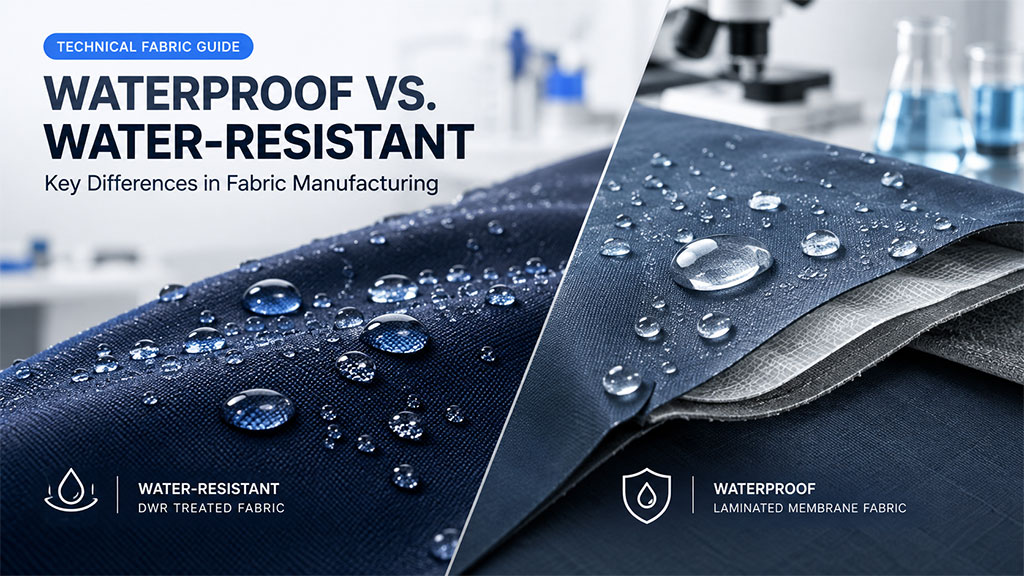
Waterproof and water-resistant fabrics offer different levels of moisture protection and require different manufacturing processes. Water-resistant materials typically use DWR treatments or surface coatings to repel light rain, while waterproof fabrics rely on membranes, PU/TPU coatings, and sealed seams to prevent water penetration under specified conditions. For apparel brands, selecting the right fabric requires evaluating weather exposure, performance requirements, garment construction, testing standards, and production costs.
Introduction
Waterproof and water-resistant fabrics are widely used in outdoor apparel, sportswear, workwear, and performance clothing. Although these terms are sometimes used interchangeably, they represent different levels of protection and manufacturing requirements.
For brands working with OEM and ODM apparel manufacturers, understanding these differences is essential for material selection, product development, cost control, and quality assurance.
Importantly, fabric performance alone does not determine whether a finished garment is waterproof. Coating technology, membrane construction, seam sealing, and garment assembly all influence the final result.
1. Waterproof vs. Water-Resistant Fabric: What Is the Difference?
The main difference lies in how each material prevents water from penetrating.
Water-Resistant Fabric
Water-resistant fabric is designed to repel moisture and resist light rain or splashes. Common solutions include durable water-repellent (DWR) treatments, tightly woven structures, and lightweight surface coatings.
Typical applications include:
- Lightweight outdoor jackets
- Windbreakers
- Casual rainwear
- Travel and commuter apparel
- Everyday outdoor clothing
However, prolonged rainfall or increasing water pressure may eventually cause moisture penetration.
Waterproof Fabric
Waterproof fabric is engineered to prevent water penetration under defined testing conditions. Manufacturers typically achieve this through waterproof membranes, PU or TPU coatings, and laminated fabric constructions.
Technical waterproof garments may also require sealed seams, waterproof zippers, and protective closures.
Typical applications include:
- Technical rain jackets
- Hiking and mountaineering shells
- Ski and snowboarding jackets
- Waterproof workwear
- Performance outdoor clothing
Quick Comparison
| Factor | Water-Resistant | Waterproof |
|---|---|---|
| Main function | Repels light moisture | Prevents water penetration under specified conditions |
| Technology | DWR, tight weave, light coating | PU/TPU coating, membrane, lamination |
| Rain protection | Light rain and splashes | Moderate to heavy rain, depending on specifications |
| Seam construction | Standard stitching may be sufficient | Critical seams generally require sealing |
| Manufacturing complexity | Lower | Higher |
| Production cost | Generally lower | Generally higher |
| Typical products | Windbreakers, casual jackets | Rain shells, ski jackets, technical outerwear |
Important: Waterproofing and breathability are separate performance characteristics. A waterproof fabric is not automatically breathable.
2. How Water-Resistant Fabrics Are Manufactured
Water-resistant fabric manufacturing focuses on surface protection and reducing moisture absorption.Fabric Selection
Polyester and nylon are commonly selected according to product requirements.- Polyester: Suitable for lightweight outdoor clothing.
- Nylon: Offers useful abrasion resistance for performance apparel.
- Ripstop fabrics: Provide lightweight construction for outdoor jackets and travel apparel.
DWR Treatment and Finishing
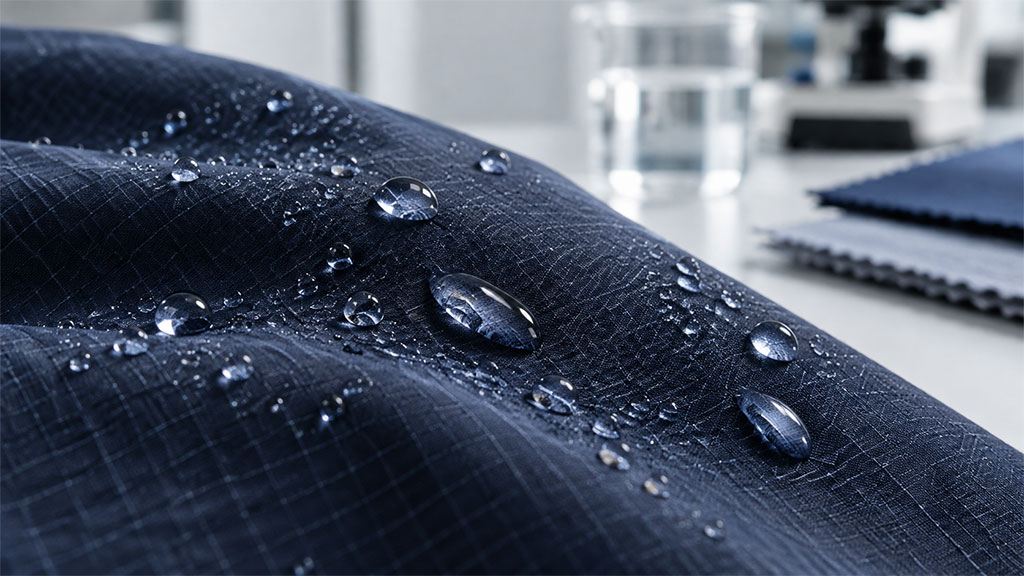
Durable water-repellent (DWR) treatment is a common method for improving surface water repellency. The treatment encourages water droplets to bead up and roll off instead of immediately soaking into the fabric. After treatment, controlled drying and finishing help maintain consistent performance across production batches. However, DWR effectiveness may decrease through repeated washing, abrasion, and extended use.Water-Repellency Testing
Common evaluation methods include:- AATCC TM22
- ISO 4920
3. How Waterproof Fabrics Are Manufactured
Waterproof fabric manufacturing requires more advanced material engineering and process control.Waterproof Coating Technology
Common coating materials include:- PU (Polyurethane): Widely used in outdoor apparel because of its flexibility and versatility.
- TPU (Thermoplastic Polyurethane): Used in technical textiles requiring a flexible waterproof barrier.
- Other polymer coatings: Selected according to performance and application requirements.
Waterproof Membrane Lamination
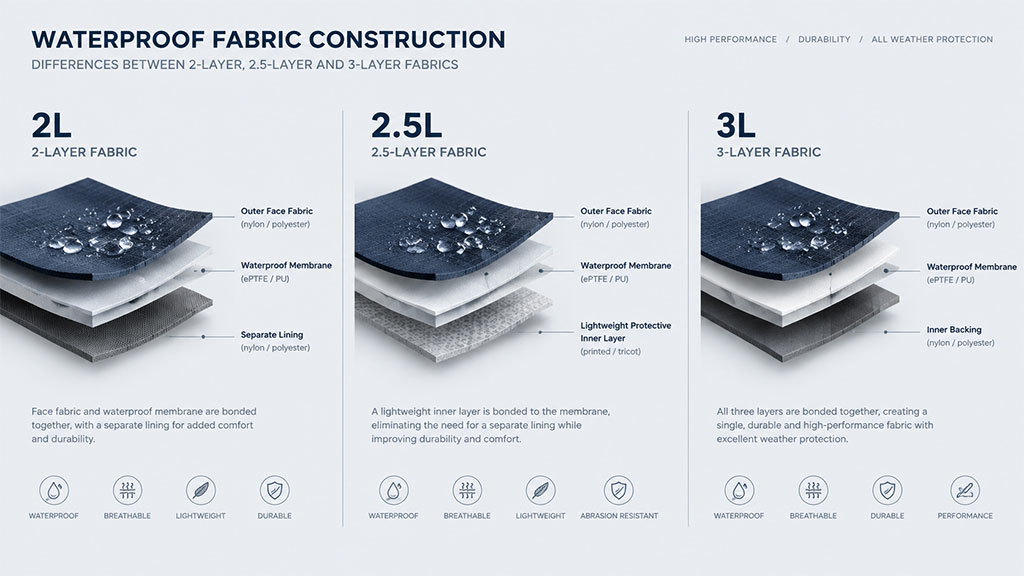
Membrane lamination bonds a waterproof membrane to textile layers to create a functional composite material. Three common constructions include:| Construction | Structure | Typical Application |
|---|---|---|
| 2-Layer (2L) | Face fabric bonded with membrane, usually with a separate lining | Comfortable outdoor jackets |
| 2.5-Layer (2.5L) | Face fabric, membrane, lightweight protective inner layer | Lightweight packable rain jackets |
| 3-Layer (3L) | Face fabric, membrane, and inner backing bonded together | Durable technical outdoor shells |
Seam Sealing and Garment Construction
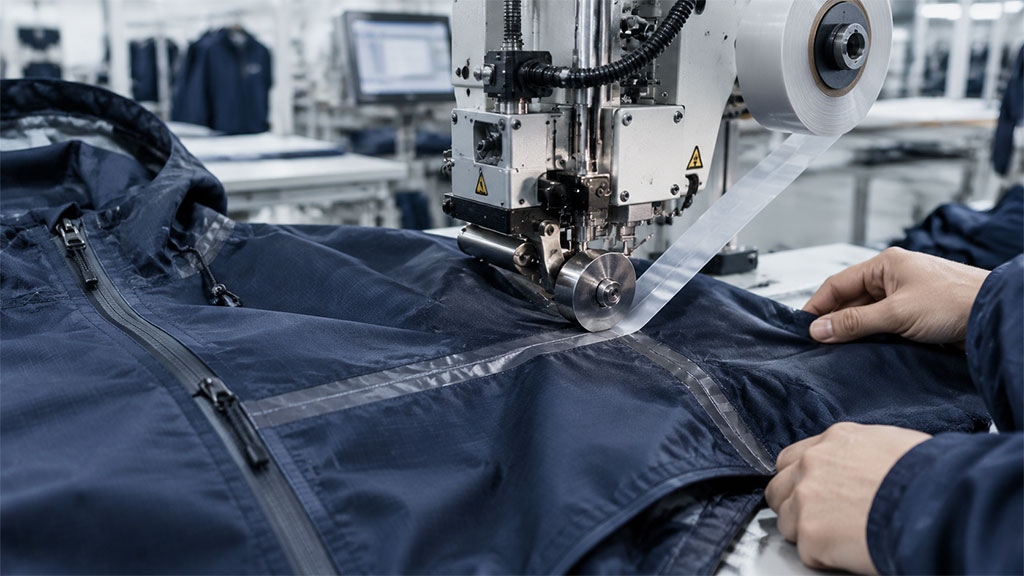
Waterproof fabric alone does not guarantee a waterproof garment. Needle holes created during sewing can become potential water-entry points. Manufacturers therefore apply compatible seam-sealing tape to critical stitched areas. The process generally involves:- Sewing garment panels according to approved specifications.
- Applying waterproof seam-sealing tape.
- Controlling heat, pressure, and processing speed.
- Checking tape adhesion and seam coverage.
- Conducting finished-garment leakage testing.
4. Key Manufacturing Differences
The manufacturing requirements of waterproof and water-resistant fabrics differ in four main areas.
Material Processing
Water-resistant fabrics mainly require surface treatments and finishing consistency.
Waterproof materials involve additional processes such as specialized coatings, membrane lamination, and barrier construction.
Equipment and Technical Requirements
Water-resistant fabrics can generally use conventional textile finishing equipment.
Waterproof production may require specialized coating, lamination, and seam-sealing equipment. Temperature, bonding pressure, and material compatibility must be carefully controlled.
Quality Control
Water-resistant fabric inspections generally focus on:
- Surface water repellency
- Spray-test performance
- Treatment consistency
- Colorfastness
- Fabric durability
Waterproof fabric and garment inspections may additionally include:
- Hydrostatic pressure resistance
- Membrane or coating integrity
- Seam-tape adhesion
- Waterproof zipper performance
- Finished-garment leakage testing
Testing requirements should be agreed upon before bulk production.
Production Cost and Lead Time
Waterproof garments generally involve higher manufacturing costs because of specialized materials, lamination, seam-sealing components, additional processing, and inspection.
Material sourcing and performance verification may also extend development and production lead times.
For B2B buyers, total manufacturing costs should be evaluated rather than comparing fabric prices alone.
5. Waterproof Fabric Testing Standards
Testing helps brands verify that product performance matches technical specifications.Hydrostatic Pressure Testing
ISO 811 and AATCC 127 are commonly referenced methods for evaluating resistance to water penetration under hydrostatic pressure. Results are generally expressed in millimeters of water column (mmH₂O). Higher results indicate greater resistance under the specified test conditions.Spray Testing
AATCC TM22 and ISO 4920 evaluate surface wetting resistance. These methods are particularly relevant when assessing DWR treatments and water-resistant fabrics. A good spray rating does not automatically indicate resistance to water penetration under pressure.Finished-Garment Testing
Fabric-level testing is only part of product verification. Finished waterproof jackets may require additional testing around seams, zippers, pockets, and other construction details to identify potential leakage points. Brands should define test methods, exposure conditions, and acceptance criteria with their manufacturing partner before production.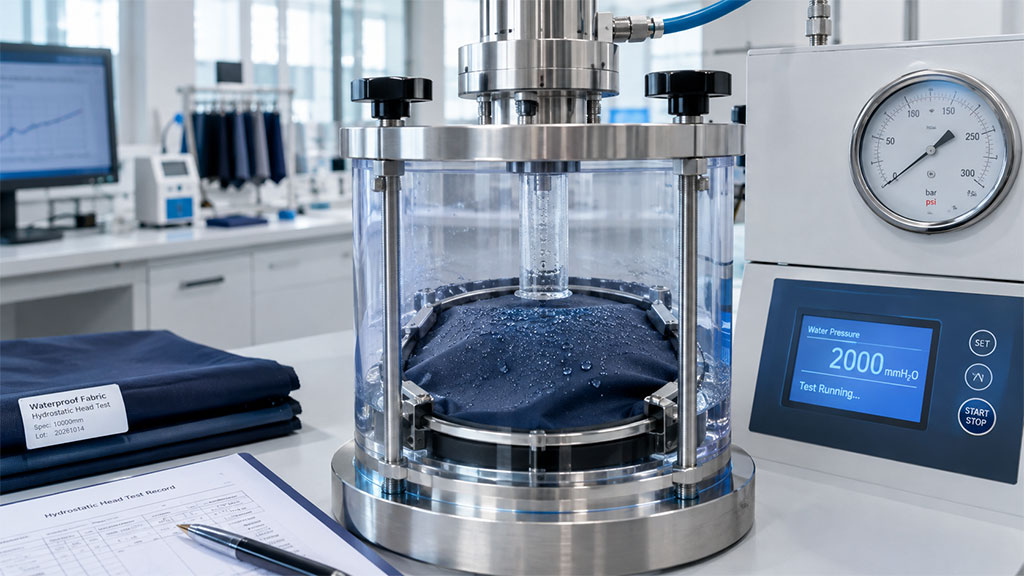
6. How to Choose the Right Fabric for Your Collection
The correct material depends on intended use, target customers, functional requirements, and product positioning. Choose water-resistant fabric when:- The product is designed for everyday outdoor activities.
- Protection against light rain and splashes is sufficient.
- Lightweight construction and flexibility are priorities.
- A more cost-effective material solution is required.
- Fully taped seams are unnecessary.
- The product faces prolonged rain exposure.
- Customers require reliable weather protection.
- The collection targets technical outdoor markets.
- Waterproof seams and closures are necessary.
- Defined hydrostatic pressure performance is required.
B2B Fabric Selection Checklist
Before confirming specifications with an OEM or ODM manufacturer, evaluate:| Development Factor | Questions to Confirm |
|---|---|
| Intended Use | Light rain, heavy rain, or prolonged exposure? |
| Fabric Composition | Polyester, nylon, or blended construction? |
| Waterproof Technology | DWR, PU, TPU, or membrane lamination? |
| Breathability | Is moisture vapor transmission required? |
| Seam Construction | Standard stitching or taped critical seams? |
| Performance Testing | Which test methods and acceptance levels apply? |
| Durability | How does performance change after washing and abrasion? |
| Target Cost | Does the material fit the product cost structure? |
7. How OEM and ODM Manufacturers Support Waterproof Apparel Development
Developing functional outdoor apparel requires coordination between material performance, garment design, pattern development, sewing techniques, and quality control.
An experienced OEM or ODM manufacturing partner can support brands through:
Fabric Sourcing and Evaluation
Comparing textile suppliers, fabric constructions, coatings, and membrane options according to product requirements.
Sample Development
Developing prototypes to evaluate fit, appearance, construction, and functional details before bulk approval.
Production Engineering
Translating approved specifications into production instructions, including seam types, tape placement, component selection, and assembly requirements.
Quality Control and Bulk Production
Checking material consistency, sewing accuracy, seam-sealing quality, and compliance with approved specifications.
These processes help maintain consistent product performance across production batches.
8. Common Mistakes Apparel Brands Should Avoid
- Treating DWR as waterproofing: DWR improves surface repellency but does not independently create a waterproof barrier.
- Ignoring seam construction: Untreated critical seams can allow water to enter even when the main fabric is waterproof.
- Selecting fabric based only on price: Lower-cost materials may not meet durability, waterproofing, or breathability requirements.
- Using the wrong testing method: Spray testing and hydrostatic pressure testing measure different properties.
- Testing only after bulk production: Material and construction performance should be evaluated during product development.
Conclusion: Match Fabric Performance with Product Requirements
Waterproof and water-resistant fabrics serve different purposes in apparel manufacturing.
Water-resistant materials are suitable for light rain, everyday outdoor wear, and cost-conscious collections. Waterproof materials provide higher levels of weather protection through specialized coatings or membranes, appropriate garment construction, and additional quality-control procedures.
The best solution is not necessarily the fabric with the highest waterproof rating. It is the material and construction combination that meets the product’s functional requirements, target cost, and customer expectations.
Working with an experienced OEM or ODM apparel manufacturing partner helps brands make informed material decisions, improve development efficiency, and maintain consistent quality throughout bulk production.
Develop Your Next Outdoor Apparel Collection with Simmerui
Simmerui supports global B2B brands with OEM and ODM apparel development, fabric sourcing, sampling, quality control, and scalable manufacturing.
Contact our team to discuss your waterproof jacket, outdoor shell, or private-label apparel project.
Frequently Asked Questions
1. What is the main difference between waterproof and water-resistant fabric?
Water-resistant fabric repels light rain and splashes, while waterproof fabric prevents water penetration under specified testing conditions through coatings, membranes, or laminated constructions.2. Is water-resistant fabric suitable for heavy rain?
Generally, no. Water-resistant materials are designed primarily for light rain and short-term moisture exposure. Prolonged rainfall may eventually cause water penetration.3. Does DWR treatment make fabric waterproof?
No. DWR improves surface water repellency but does not independently create a waterproof barrier.4. What materials are commonly used for waterproof jackets?
Common options include PU-coated polyester, TPU-coated nylon, and membrane-laminated textiles. Selection depends on waterproof performance, breathability, durability, weight, and cost.5. What is the difference between 2L, 2.5L, and 3L waterproof fabric?
2L combines face fabric and membrane with a separate lining. 2.5L uses a lightweight protective inner layer. 3L bonds the face fabric, membrane, and backing into one composite structure.6. Are waterproof jackets always breathable?
No. Waterproofing and breathability are separate properties. Breathability depends on membrane technology, material structure, and garment construction.7. How is waterproof fabric tested?
ISO 811 and AATCC 127 evaluate resistance to water penetration under hydrostatic pressure. AATCC TM22 and ISO 4920 evaluate surface wetting resistance. Finished garments may require additional leakage testing.8. Are waterproof garments more expensive to manufacture?
Generally, yes. Specialized fabrics, membrane lamination, seam-sealing tape, waterproof zippers, and additional quality inspections increase manufacturing costs.9. Can an OEM clothing manufacturer develop custom waterproof jackets?
Yes. An experienced OEM or ODM apparel manufacturing partner can support fabric sourcing, material evaluation, pattern development, sampling, seam-sealing construction, quality inspection, and bulk production.Written by the Simmerui Apparel Manufacturing Team.
We specialize in OEM and ODM apparel production for global B2B brands, providing integrated solutions across product development, fabric sourcing, sampling, quality control, and scalable manufacturing. Our experience covers outdoor apparel, performance wear, casual clothing, and private label collections. We help brands reduce production risks, optimize costs, and build reliable long-term manufacturing partnerships.