
B2B custom apparel orders often fail due to unclear tech packs, poor fabric selection, missing sampling stages, and weak quality control definitions. These mistakes lead to production delays, inconsistent product quality, and increased costs. This guide explains the 10 most common errors apparel buyers make when working with OEM manufacturers and provides practical strategies to improve sourcing efficiency, reduce risk, and ensure successful bulk production.
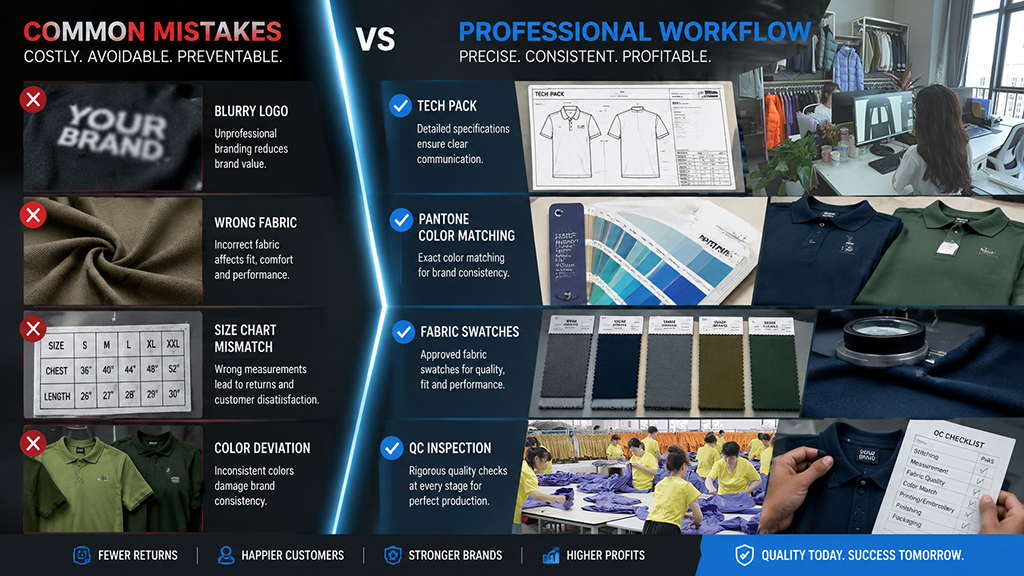
Mistake 1. Why Custom Apparel Orders Often Fail in B2B Manufacturing
Keyword focus: custom apparel mistakes, artwork file requirements Low-quality artwork is one of the most frequent causes of production failure in custom apparel manufacturing. Blurry logos, missing fonts, or non-vector files often lead to inaccurate printing, embroidery distortion, or branding inconsistency.How OEM factories control this:
- Require AI / EPS / PDF vector files
- Pre-production artwork verification
- Logo size & placement approval during sampling
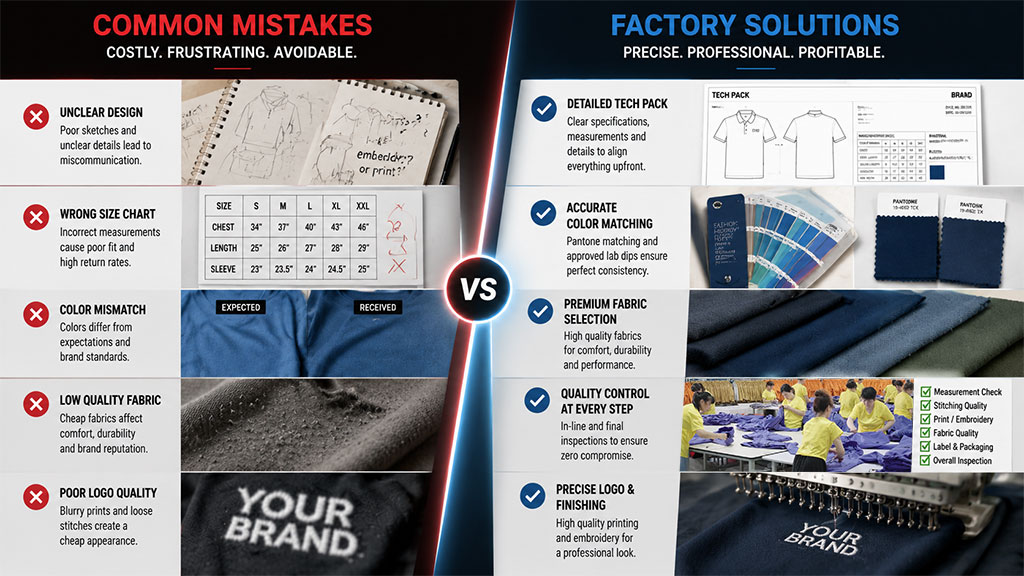
Mistake 2. Wrong Fabric Selection (Performance Mismatch)
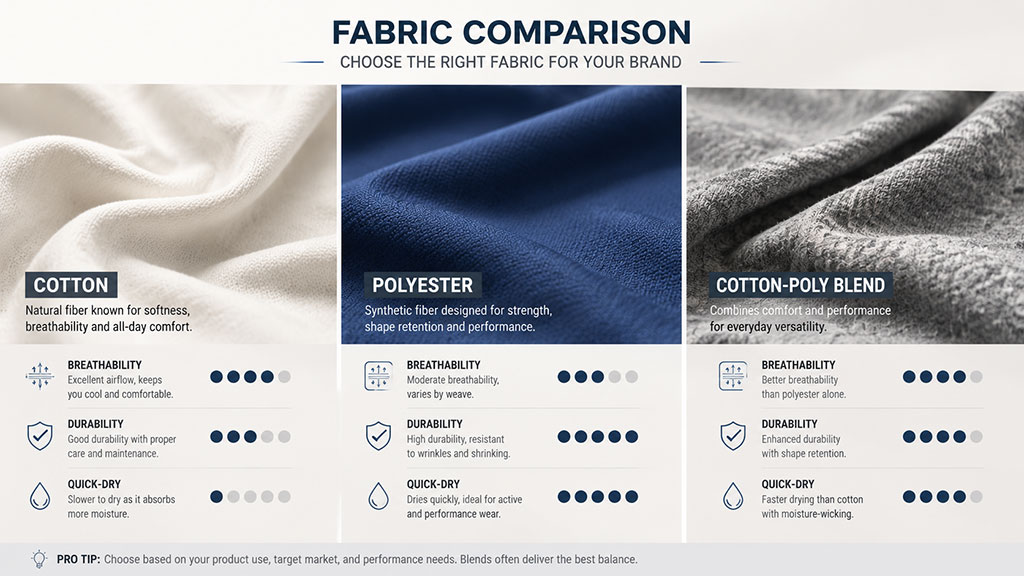
Keyword focus: fabric selection for custom clothing, OEM fabric guide
Fabric directly affects durability, comfort, print quality, and end-use performance.
For example:
- Cotton → comfort-focused apparel
- Polyester → sports & quick-dry performance
- Blends → balanced durability & softness
OEM Best Practice:
Factories recommend fabric based on:
- end-use scenario
- climate conditions
- decoration method
- budget tier
Mistake 3. Ignoring Size Charts and Fit Standards
Keyword focus: apparel sizing problems bulk order, OEM clothing fit control Sizing inconsistency is a major issue in global apparel sourcing due to regional grading differences.Risk:
- inconsistent fit across batches
- high return rate for retail brands
OEM solution:
- standardized grading rules (US/EU/Asia)
- size set sampling
- fit approval before bulk production
Mistake 4. Critical Pre-Production Mistakes That Lead to Manufacturing Failures
Keyword focus: apparel sampling process OEM, pre-production sample clothing Skipping sampling is one of the highest-risk mistakes in bulk apparel production.A pre-production sample validates:
- fabric behavior
- stitching quality
- logo placement
- color accuracy
- sizing consistency
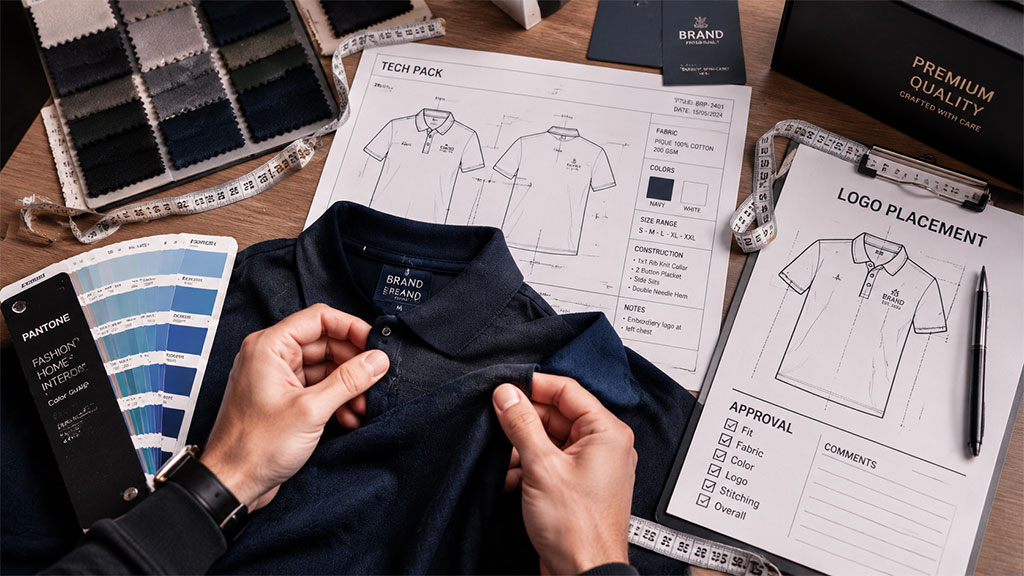
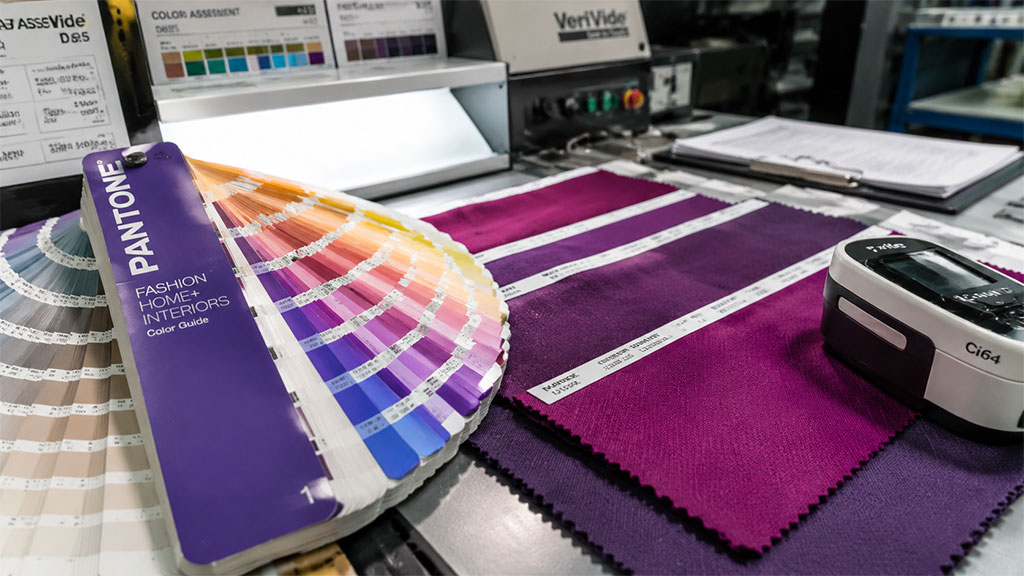
Mistake 5. No Color Standard Control (Pantone Mismatch Issue)
Keyword focus: Pantone color apparel manufacturing, color consistency clothing production Color inconsistency often happens between digital screens and fabric dyeing.OEM solution:
- Pantone matching system
- lab dip approval before bulk dyeing
- color confirmation across fabric + trims + logo
Mistake 6. Wrong Logo Decoration Method Selection
Keyword focus: custom apparel printing vs embroidery, logo application methods Different decoration methods affect durability and visual performance.Options include:
- screen printing
- embroidery
- heat transfer
- sublimation
- silicone print
OEM decision logic:
- fabric elasticity
- logo complexity
- order quantity
- cost structure
Mistake 7. Underestimating Production Timeline
Keyword focus: apparel production lead time, OEM manufacturing timelineBulk apparel production includes multiple stages:
- sampling
- material sourcing
- production
- QC inspection
- packaging
- shipping
Risk:
Ignoring pre-production time causes delivery delays in retail drops or seasonal campaigns.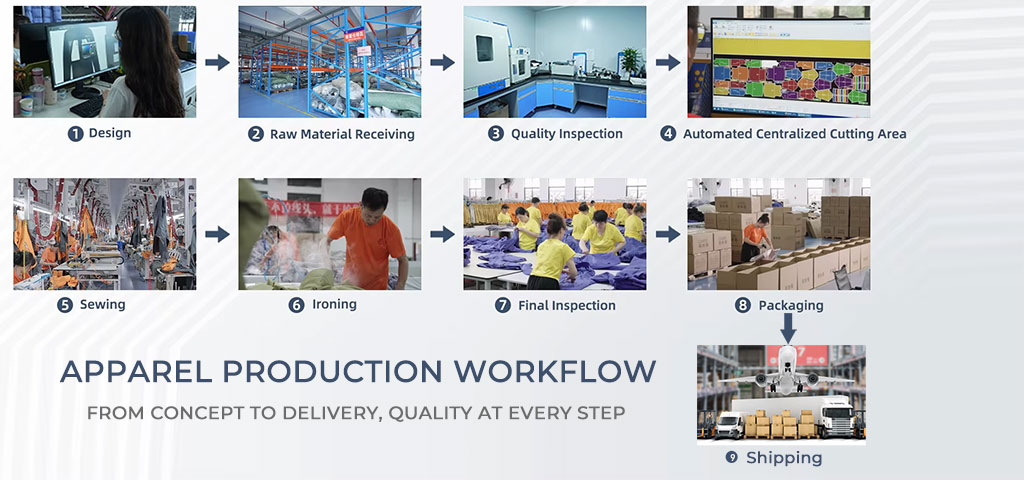
Mistake 8: Missing Labels, Tags, and Packaging Requirements
Why it matters: Branding inconsistency reduces retail acceptance and weakens private label positioning. Keyword focus: private label clothing packaging, custom apparel labelingBranding is not only garment-level — it extends to:
- neck labels
- hang tags
- wash care labels
- packaging bags
- carton labeling
Mistake 9: Manufacturing and Quality Control Mistakes in OEM Apparel Orders
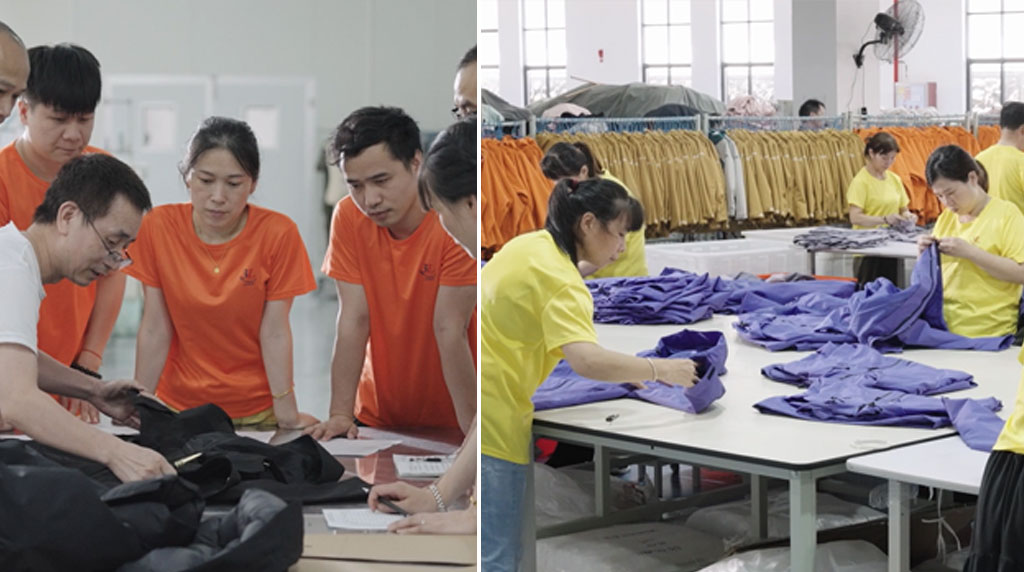
Keyword focus: apparel quality control standards OEM, garment inspection criteria Without defined standards, quality expectations become subjective.OEM approach:
- stitching tolerance definition
- measurement allowance system
- inspection AQL standards
Mistake 10. How Poor Supplier Selection Impacts Apparel Production Success
Keyword focus: OEM clothing supplier selection, apparel factory evaluationLow price often hides risks in:
- fabric quality
- communication delay
- inconsistent QC
- unstable delivery
Better evaluation criteria:
- sampling capability
- production stability
- QC system
- export experience
Apparel Production Risk Control Framework for B2B Buyers
Keyword focus: apparel production quality control system, OEM risk management| Risk Area | Common Issue | Factory Control System |
|---|---|---|
| Fabric | Shrinkage / mismatch | Lab testing + approval |
| Color | Batch variation | Pantone + lab dip |
| Fit | Size inconsistency | Size set sampling |
| Logo | Misalignment | Pre-production sample |
FAQ
1.What are the most common mistakes in custom apparel orders?
The most common mistakes include unclear artwork files, wrong fabric selection, ignoring sizing standards, skipping sampling, and not defining quality expectations.2.How can I avoid production delays in apparel manufacturing?
Ensure complete tech pack submission, approve samples early, and confirm production timeline including sourcing, sampling, and shipping.3.Why is sampling important in custom clothing orders?
Sampling ensures fabric, fit, stitching, and logo placement are correct before mass production, reducing costly errors.4.What is the biggest mistake in custom apparel ordering?
Lack of complete and precise tech packs—this leads to miscommunication, inconsistent samples, and costly rework.5.How to reduce MOQ risks in OEM apparel production?
Start with phased ordering (sample → pilot run → bulk), consolidate SKUs, and negotiate flexible MOQ based on fabric/trim standardization.6.What is the role of tech packs in manufacturing?
They act as the “production blueprint,” defining measurements, materials, construction, BOM, and quality standards to ensure factory alignment.7.How do I evaluate a reliable apparel factory?
Check sampling consistency, QC systems, certifications (e.g., OEKO-TEX, ISO), communication clarity, and proven production case studies.8.Why does sampling prevent production failure?
Sampling validates fit, construction, and materials before bulk production, reducing defects, misalignment, and financial risk.
Written by the Simmerui Apparel Production Team.
We specialize in OEM and ODM apparel manufacturing for global B2B buyers, including custom T-shirts, hoodies, uniforms, sportswear, and outdoor apparel. Our expertise covers fabric sourcing, tech pack development, sampling, bulk production, quality control, and private label packaging. We help brands reduce production risks and ensure consistent manufacturing results across global supply chains.