
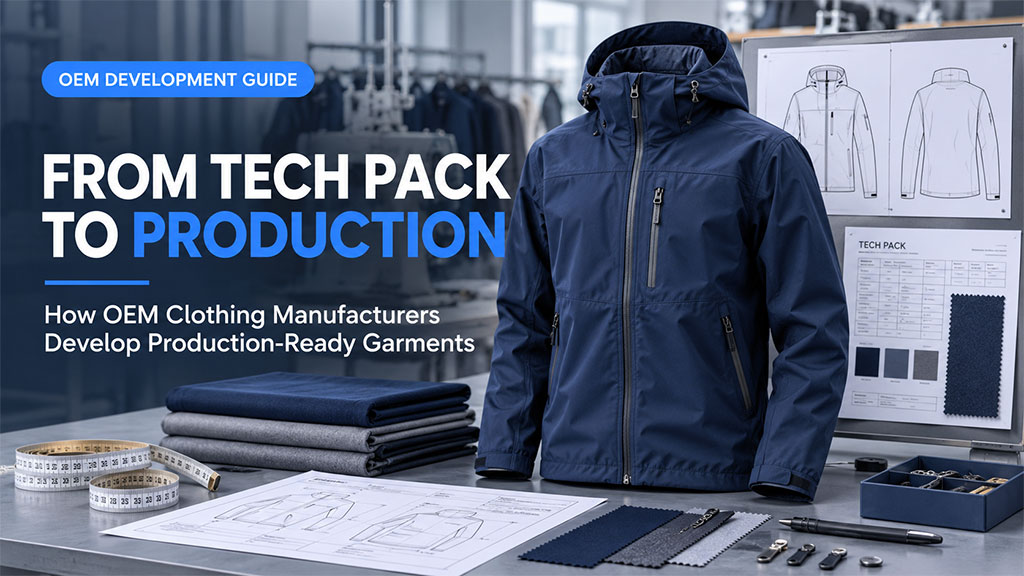
An OEM clothing manufacturer transforms a tech pack into a production-ready garment through technical review, fabric sourcing, pattern development, sampling, fit evaluation, and pre-production approval. Each stage translates design requirements into measurable manufacturing specifications. For apparel brands, a structured OEM development process helps identify production risks early, reduce unnecessary sample revisions, confirm material compatibility, and establish consistent quality standards before bulk manufacturing begins.
Introduction: Turning Apparel Designs into Manufacturable Products
A complete design concept does not automatically mean a garment is ready for production. For apparel brands, a tech pack provides essential information, including technical sketches, measurement charts, fabric specifications, construction details, and branding requirements. However, these details must be reviewed and translated into practical manufacturing instructions. An experienced OEM clothing manufacturer helps bridge this gap between design expectations and production feasibility. This case study explains how a typical B2B apparel development project moves from an initial tech pack to a production-ready garment, highlighting the key stages, common challenges, and quality checkpoints involved.1. Tech Pack Review: Identifying Development Requirements
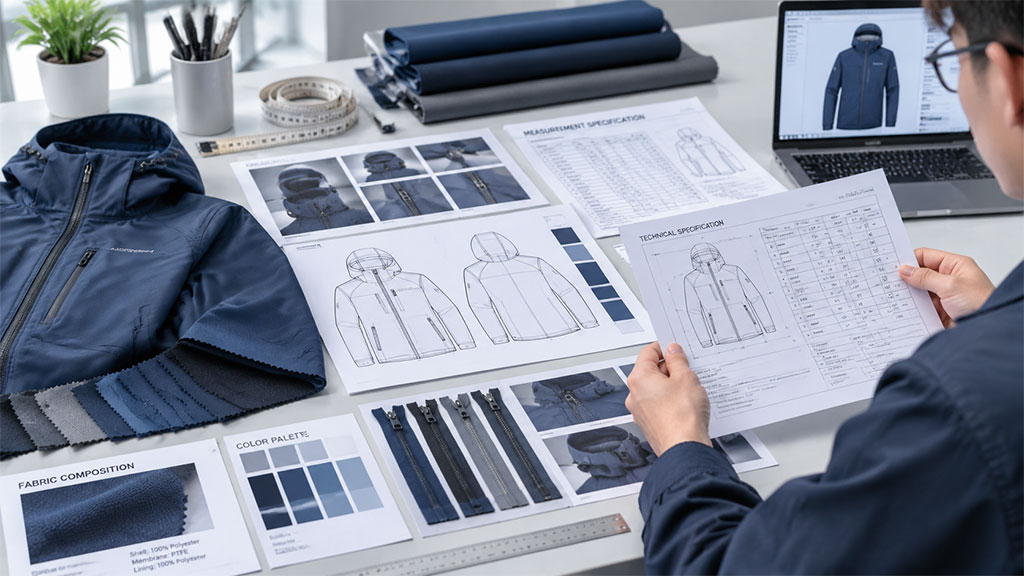
The project begins when an apparel brand submits its tech pack for technical evaluation.
The document typically includes:
- Front and back technical sketches
- Garment measurements and size specifications
- Fabric composition and material references
- Color requirements
- Stitching and construction details
- Zipper, button, and trim specifications
- Logo placement and branding instructions
- Labeling and packaging requirements
Even a detailed tech pack may contain missing information or specifications that require clarification.
| Development Area | Common Challenge | Required Action |
|---|---|---|
| Fabric | Material availability | Evaluate alternatives |
| Measurements | Unclear tolerances | Confirm measurement standards |
| Construction | Incomplete instructions | Review manufacturing feasibility |
| Trims | Component compatibility | Confirm accessories |
| Colors | Physical color differences | Arrange color approval |
| Branding | Unclear placement | Confirm artwork and application |
Key takeaway: A professional tech pack review identifies technical gaps, material limitations, and potential production risks before sampling begins.
2. Technical Development: Converting Designs into Production Specifications
After reviewing the tech pack, the development team evaluates measurements, construction methods, and manufacturing feasibility.
Key considerations include:
- Points of Measurement (POM) and garment dimensions
- Measurement tolerances and size grading
- Seam allowances and stitching methods
- Fabric compatibility with proposed construction
- Special machinery and additional production operations
- Material availability and production consistency
For example, an oversized jacket design needs clearly defined shoulder width, chest measurements, and body length. Without measurable specifications, the first sample may not accurately represent the intended silhouette.
The objective is to establish technical specifications that both the brand and manufacturer can follow throughout production.
3. Fabric and Trim Sourcing: Confirming Material Compatibility
Fabric selection directly affects garment appearance, fit, durability, and manufacturing performance.
A material that looks suitable in a design reference may behave differently during cutting, sewing, washing, or finishing.
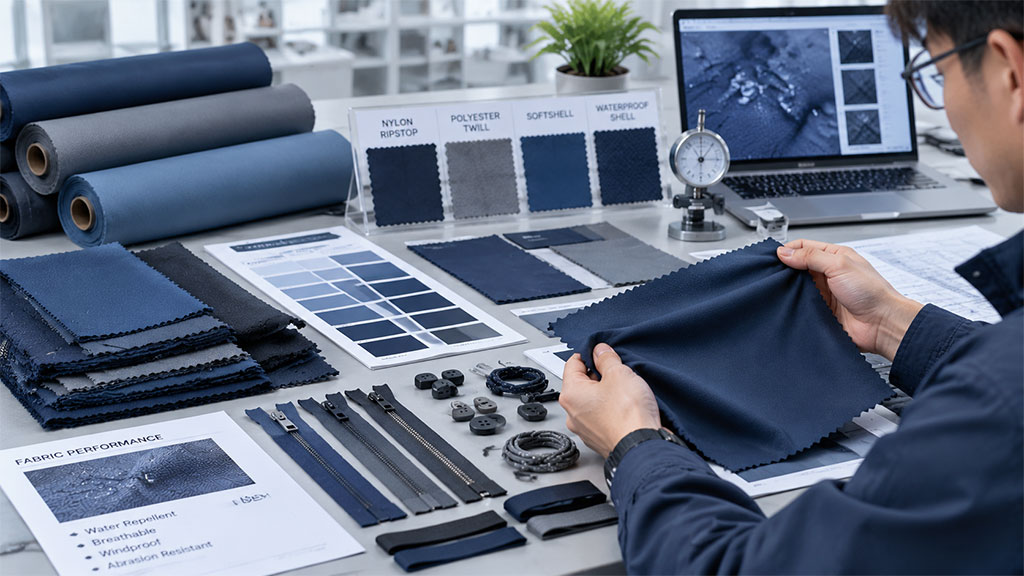
The manufacturer evaluates:
| Evaluation Factor | Key Considerations |
|---|---|
| Composition | Fiber content and suitability |
| Fabric Weight | GSM and thickness |
| Appearance | Texture, color, and finishing |
| Stability | Shrinkage and deformation |
| Durability | Abrasion and seam performance |
| Functionality | Stretch, breathability, and water resistance where required |
| Production Compatibility | Cutting and sewing performance |
| Cost and Availability | Material pricing and MOQ |
Once suitable materials are identified, fabric swatches, linings, zippers, buttons, elastic, drawcords, labels, and other accessories are submitted for confirmation.
Physical fabric samples or approved lab dips should serve as color references rather than relying exclusively on-screen images.
Any material changes should be documented and approved before sampling continues.
4. Sample Development: Validating the Physical Garment
Sampling translates technical documentation into a physical product. Each sample stage should have a clearly defined purpose.
Prototype Sample
The first sample evaluates:
- Overall appearance and proportions
- Initial pattern construction
- Material compatibility
- Basic sewing feasibility
- Functional design details
Fit Sample
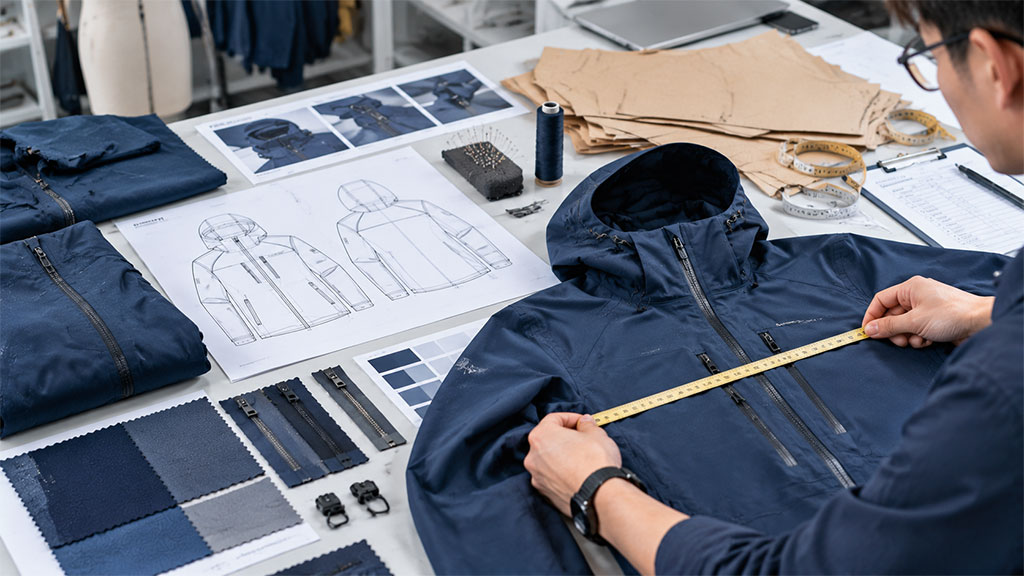
The fit sample focuses on:
- Chest, shoulder, waist, and hip measurements
- Sleeve and body length
- Garment proportions and silhouette
- Movement and wearing comfort
- Size grading where applicable
The brand provides fitting comments, and the manufacturer adjusts patterns and specifications accordingly.
Pre-Production Sample (PPS)
The PPS represents the approved production version, including:
- Confirmed fabrics and trims
- Final measurements
- Construction and stitching methods
- Logo and label placement
- Color and finishing details
- Packaging requirements where applicable
Formal PPS approval establishes the production reference before bulk manufacturing.
5. Sample Revisions: Resolving Common Development Issues
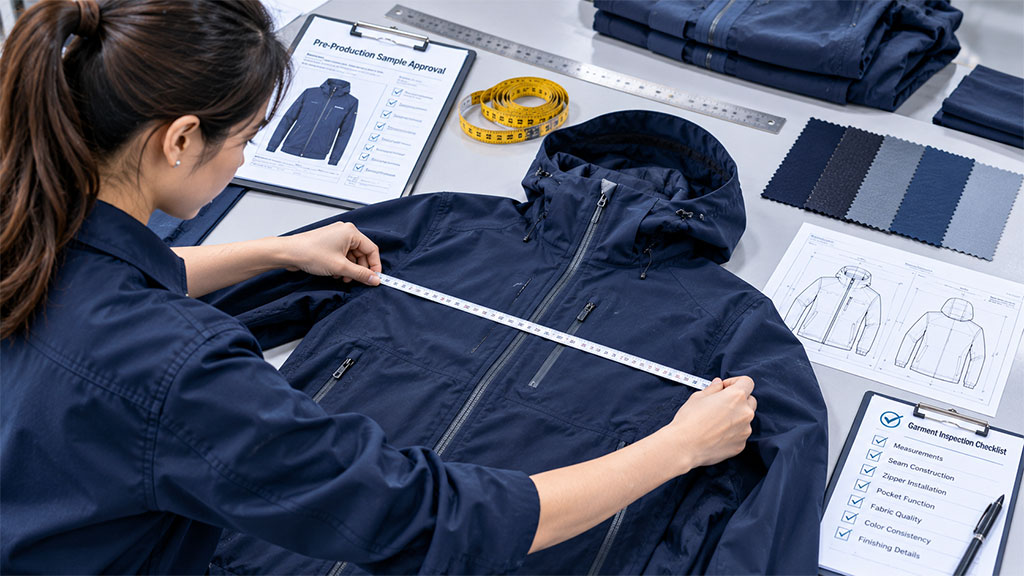
Sample evaluation may reveal differences between the original tech pack and the physical garment.| Common Issue | Corrective Action |
|---|---|
| Incorrect measurements | Recheck POM, tolerances, and patterns |
| Fabric shrinkage or deformation | Evaluate material behavior and adjust patterns |
| Difficult construction details | Review sewing sequences and alternative methods |
| Inconsistent branding placement | Confirm artwork dimensions and positioning references |
6. Production Preparation: Establishing Quality Standards
PPS approval is an important milestone, but bulk manufacturing still requires systematic preparation.
Before production begins, the manufacturer confirms:
- Final tech pack and production specifications
- Approved patterns and size grading
- Confirmed fabrics, trims, and colors
- Final measurements and tolerances
- Construction and finishing instructions
- Branding and labeling requirements
- Quality inspection criteria
- Folding and packaging specifications
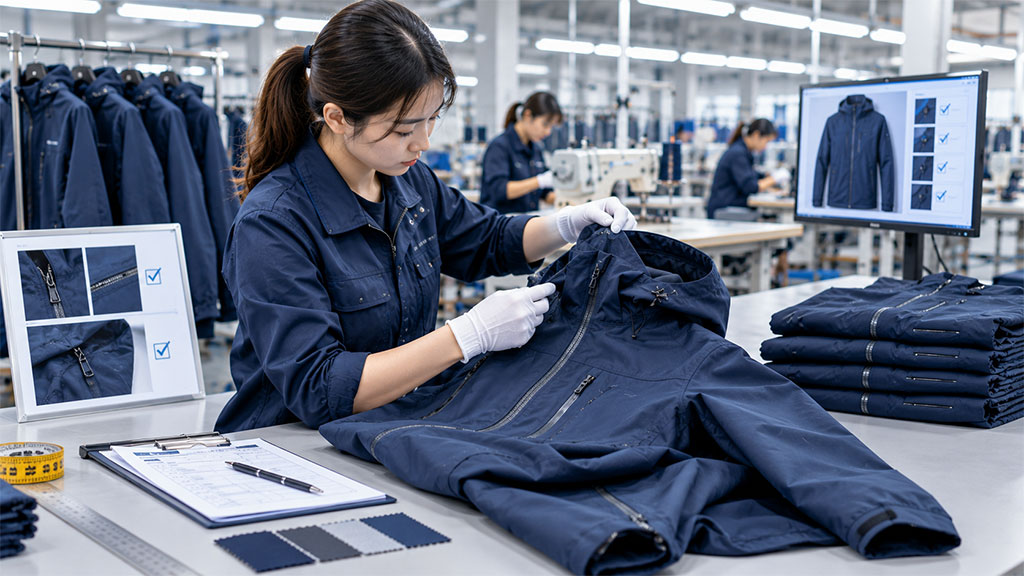
Quality control should also be integrated into three major production checkpoints.
Incoming Material Inspection: Check fabric defects, color variation, material specifications, weight, width, and trim quality before cutting.
Inline Production Inspection: Monitor stitching, seam alignment, measurements, construction consistency, and branding during manufacturing.
Final Garment Inspection: Verify measurements, workmanship, appearance, labels, and packaging against approved specifications before shipment.
The approved PPS serves as a physical reference for evaluating bulk production consistency.
7. Final Outcome: Building a Production-Ready Apparel Product
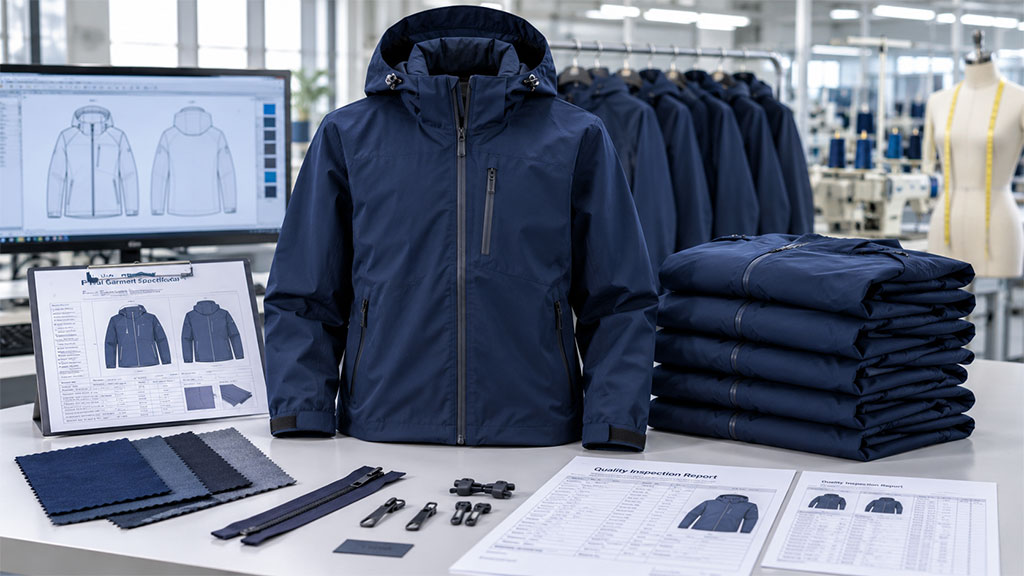
After technical review, material confirmation, sample revisions, and PPS approval, the project establishes:
- Measurable manufacturing specifications
- Approved fabrics and accessories
- Refined patterns and construction methods
- Confirmed garment fit and appearance
- Documented production requirements
- Defined quality control checkpoints
These deliverables provide a more reliable foundation for bulk manufacturing and repeat orders.
For apparel brands, successful OEM development is not just about producing one acceptable sample. It is about establishing a repeatable manufacturing standard that supports consistent quality and future collection development.
8. What Apparel Brands Can Learn from This Case
Five practical lessons stand out:
- Review tech packs before sampling. Confirm that technical details are complete, measurable, and manufacturable.
- Confirm materials early. Late fabric or trim changes can affect sampling, costing, and production schedules.
- Give every sample round a clear purpose. Consolidated feedback helps reduce unnecessary revisions.
- Treat PPS approval as a production gate. Bulk manufacturing should follow a formally approved reference.
- Define QC standards before production. Agree on measurements, workmanship, materials, and inspection requirements in advance.
Successful OEM clothing manufacturing depends on close cooperation between the brand’s product team and the manufacturer’s development and production teams.
9. How Simmerui Supports OEM Clothing Development
At Simmerui, our Apparel Development Team works with global B2B brands to translate product concepts and technical documents into manufacturable apparel collections.
Our OEM and ODM development support includes:
- Tech pack review and technical clarification
- Fabric and trim sourcing
- Pattern development and sample making
- Fit evaluation and sample revisions
- Production specification confirmation
- Quality control and bulk manufacturing coordination
From outdoor jackets and performance apparel to casual clothing and private label collections, we help brands align design expectations with manufacturing capabilities.
Our focus is to build reliable, scalable apparel production through clear communication, coordinated development, and long-term manufacturing partnerships.
Frequently Asked Questions About OEM Clothing Manufacturing
1. How does an OEM clothing manufacturer turn a tech pack into a garment?
The process includes technical review, fabric sourcing, pattern development, sampling, fit adjustments, PPS approval, and bulk production preparation.2. What should an apparel tech pack include?
It should contain technical drawings, measurement charts, size grading, fabric specifications, a Bill of Materials (BOM), construction instructions, color references, branding details, and packaging requirements.3. Can an OEM manufacturer help improve an incomplete tech pack?
Yes. A manufacturer can identify missing specifications, evaluate production feasibility, and recommend suitable materials or construction methods.4. How many sample rounds are needed before bulk production?
There is no fixed number. The process typically includes a prototype, one or more fit revisions, and a PPS. Complexity and initial specification accuracy influence the number of rounds.5. What is the difference between a fit sample and a PPS?
A fit sample evaluates measurements, proportions, and comfort. A PPS confirms the final production version, including materials, construction, branding, and finishing.6. Why is PPS approval important?
PPS approval establishes the agreed production reference and helps reduce discrepancies in materials, measurements, construction, and quality during bulk manufacturing.7. Can manufacturers modify designs to improve production feasibility?
Yes, with brand approval. Manufacturers may recommend alternative fabrics, construction methods, or production techniques while maintaining the intended design requirements.8. How can apparel brands reduce product development delays?
Prepare complete tech packs, confirm materials early, provide clear measurements, consolidate sample feedback, and document revisions and approvals.9. What quality checks should take place before shipment?
Typical checks include garment measurements, workmanship, appearance, material consistency, labeling, and packaging against agreed inspection standards.10. When is a garment ready for bulk production?
When technical specifications, materials, measurements, construction, branding, and QC requirements are confirmed and the PPS receives formal approval.Conclusion: Build a Reliable Path from Tech Pack to Production
Turning a tech pack into a production-ready garment requires coordinated technical development, material evaluation, sample validation, and production preparation.
For B2B apparel brands, working with an OEM clothing manufacturer that understands both product requirements and manufacturing feasibility helps create a more predictable development process.
Planning your next custom apparel collection? Contact Simmerui to discuss your tech pack, material requirements, sampling needs, and OEM/ODM production plans.
Written by the Simmerui Apparel Development Team
The Simmerui Apparel Development Team supports global B2B brands through OEM and ODM product development, fabric sourcing, sampling, production coordination, and quality control. Our focus includes outdoor apparel, performance wear, casual clothing, and private label collections, helping brands build reliable long-term manufacturing partnerships.