
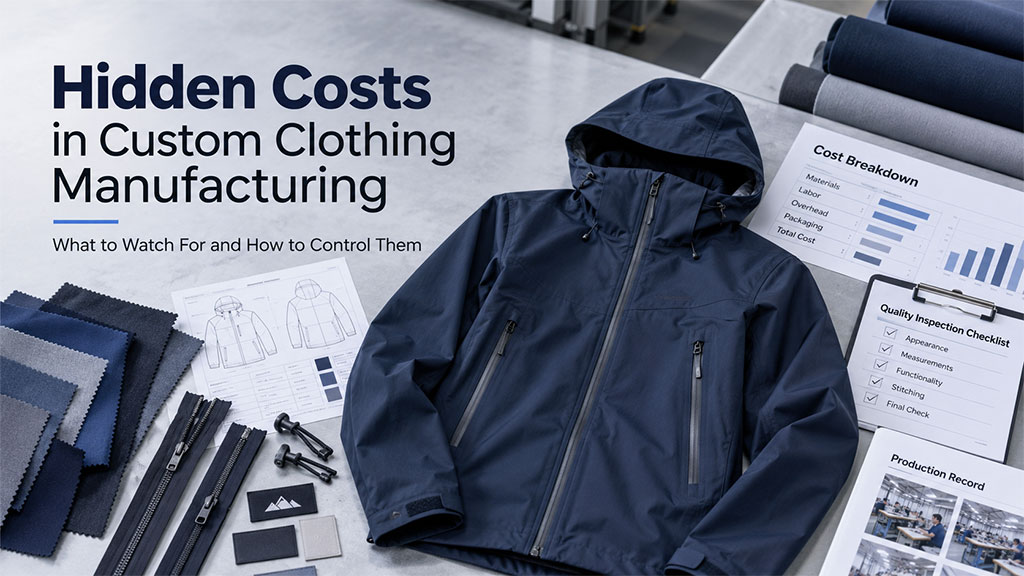
Hidden costs in custom clothing manufacturing can significantly increase an apparel brand’s production budget beyond the initial factory quotation. Common expenses include sampling revisions, fabric sourcing, custom trims, pattern grading, product testing, packaging, shipping, and production delays. For apparel brands working with OEM or ODM manufacturers, understanding these costs before placing an order is essential. A detailed tech pack, transparent quotation, confirmed material specifications, and clear quality standards can help control expenses and protect profit margins.
1. Why Hidden Costs Matter in Custom Clothing Manufacturing
When comparing clothing manufacturers, apparel brands often focus on unit price, minimum order quantity (MOQ), and lead time. However, the initial quotation may not cover every expense involved in developing and delivering finished garments. Additional costs can emerge during product development, material sourcing, sampling, bulk production, quality inspection, and shipping. These unexpected expenses can affect:- Product profitability and retail margins.
- Production budgets and cash flow.
- Product launch schedules.
- Long-term manufacturing relationships.
2. Eight Common Hidden Costs in Custom Clothing Production
2.1 Sampling Revisions and Product Development
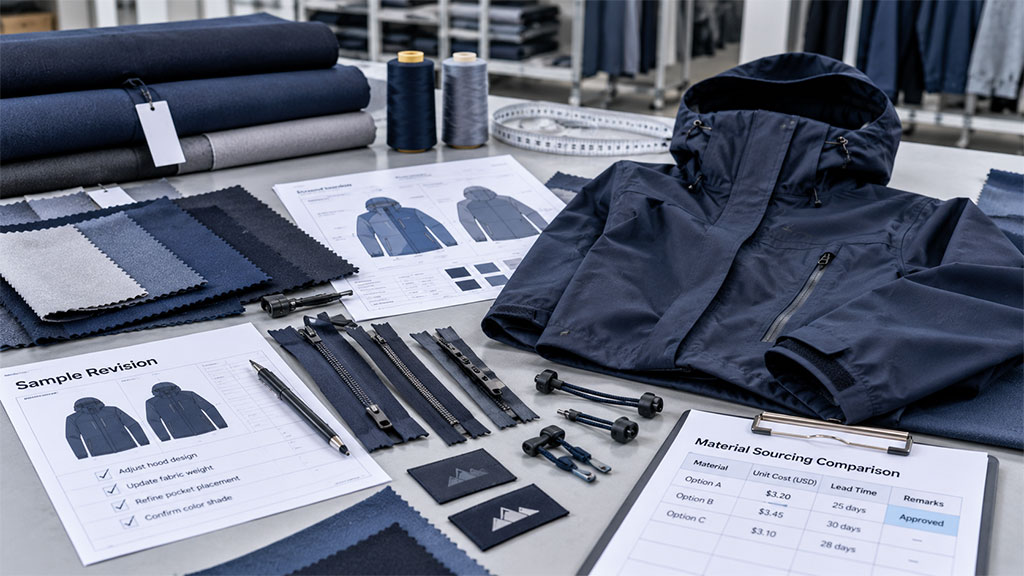
Repeated sample revisions can increase development expenses through additional materials, labor, pattern adjustments, and shipping.
Common causes include incomplete tech packs, incorrect measurements, fabric changes, construction adjustments, and logo or trim revisions.
How to avoid it: Prepare a complete tech pack covering measurements, fabric specifications, construction details, artwork placement, and accessories. Establish clear sample approval checkpoints before proceeding to the next stage.
2.2 Fabric Sourcing and Material Price Fluctuations
Fabric is one of the largest components of garment manufacturing costs.
Additional expenses may include custom dyeing, fabric MOQ, testing, certification, sourcing fees, and cutting waste.
How to avoid it: Confirm fiber composition, GSM, Pantone color references, fabric MOQ, testing requirements, and quotation validity. Consider alternative materials with similar performance when necessary.
2.3 Custom Trims, Labels, and Accessories
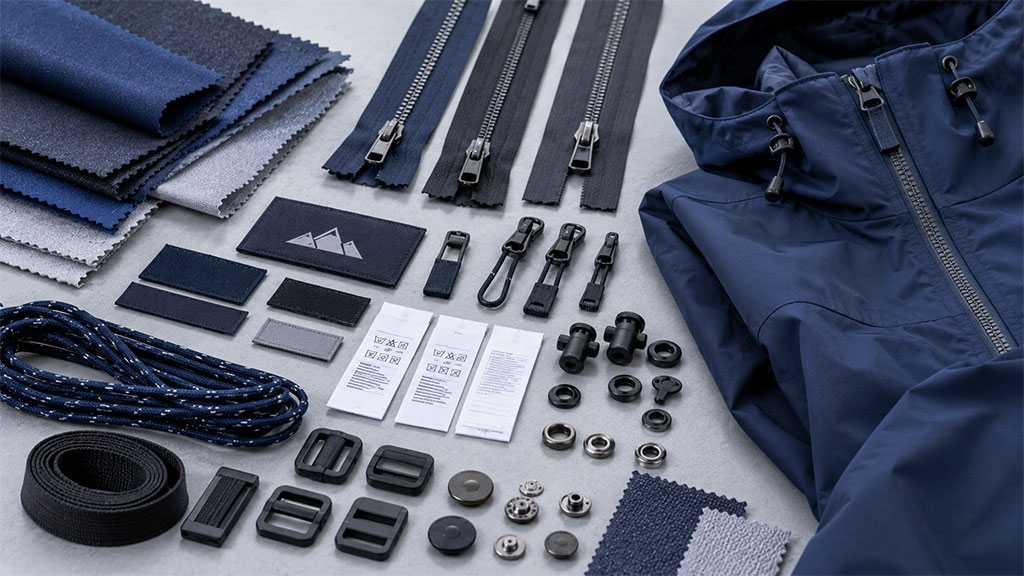
Customized woven labels, embroidery, branded zippers, zipper pulls, buttons, snaps, and packaging can create additional expenses.
Some accessories have higher MOQs than the garment order itself. For example, a 300-piece jacket order may still require purchasing a larger quantity of customized zipper pulls.
How to avoid it: Finalize branding and accessory specifications during development. Confirm accessory MOQ, tooling charges, setup fees, lead times, and storage arrangements for unused components.
2.4 Pattern Making, Grading, and Size Adjustments
Pattern development, modifications, size grading, and fit adjustments may be charged separately, especially for products with multiple sizes or different fit versions.
How to avoid it: Provide approved measurement specifications and fit references. Confirm whether pattern making and grading are included in the development quotation.
2.5 Quality Control and Product Testing
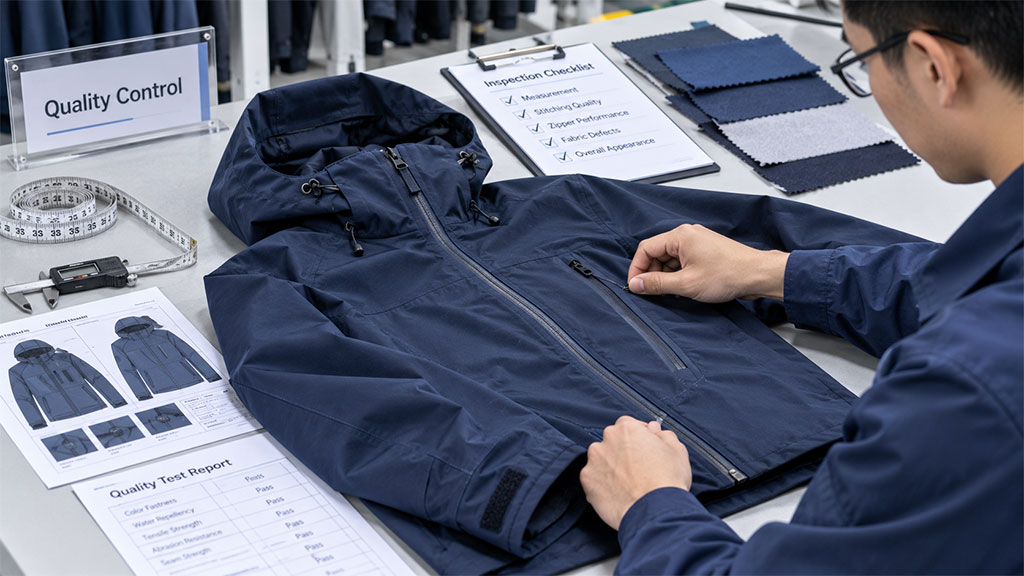
Technical apparel may require additional testing for tensile strength, tear resistance, abrasion, colorfastness, waterproofness, breathability, and restricted substances.
Failed inspections can lead to rework, replacement materials, additional testing, and production delays.
How to avoid it: Define quality standards and testing requirements before production. Use approved samples as production references and establish material inspection, inline inspection, and final inspection checkpoints.
2.6 MOQ and Production Efficiency
A lower MOQ does not necessarily mean lower total production costs.
Small orders may involve higher material prices per unit, accessory purchasing costs, setup expenses, and less efficient production-line utilization.
For example, producing 100 custom hoodies may result in a higher unit cost than producing 500 identical pieces.
How to avoid it: Confirm both garment and material MOQs. Consider standardizing trims, combining compatible colors, and planning repeat orders. Compare total order costs as well as unit prices.
2.7 Packaging, Shipping, and Logistics
Manufacturing quotations may exclude custom packaging, individual labeling, carton upgrades, freight, customs duties, and import taxes.
Shipping terms also affect the final cost. EXW and DDP quotations represent different cost and responsibility structures.
How to avoid it: Confirm packaging specifications, Incoterms, freight arrangements, customs responsibilities, and destination requirements before placing the order.
2.8 Production Delays and Rework
Late fabric deliveries, unapproved samples, specification changes, material problems, and quality corrections can increase production costs.
For seasonal apparel collections, delays may also affect marketing campaigns, inventory planning, and product launch schedules.
How to avoid it: Establish realistic production milestones and approval deadlines. Monitor material readiness, sample approval, bulk production progress, and final inspection.
3. Hidden Cost Breakdown: What Brands Should Check
| Cost Category | Potential Hidden Expense | Prevention Strategy |
|---|---|---|
| Product Development | Repeated sampling | Complete tech pack |
| Fabric Sourcing | Custom dyeing, fabric MOQ | Confirm specifications |
| Trims and Accessories | Tooling and extra MOQ | Finalize trims early |
| Pattern Development | Grading and fit adjustments | Approve measurement specs |
| Quality Control | Rework and additional testing | Define QC standards |
| Production | Low-volume inefficiency | Optimize order quantities |
| Packaging and Shipping | Special packaging and freight | Confirm Incoterms |
| Scheduling | Delays and rush charges | Establish milestones |
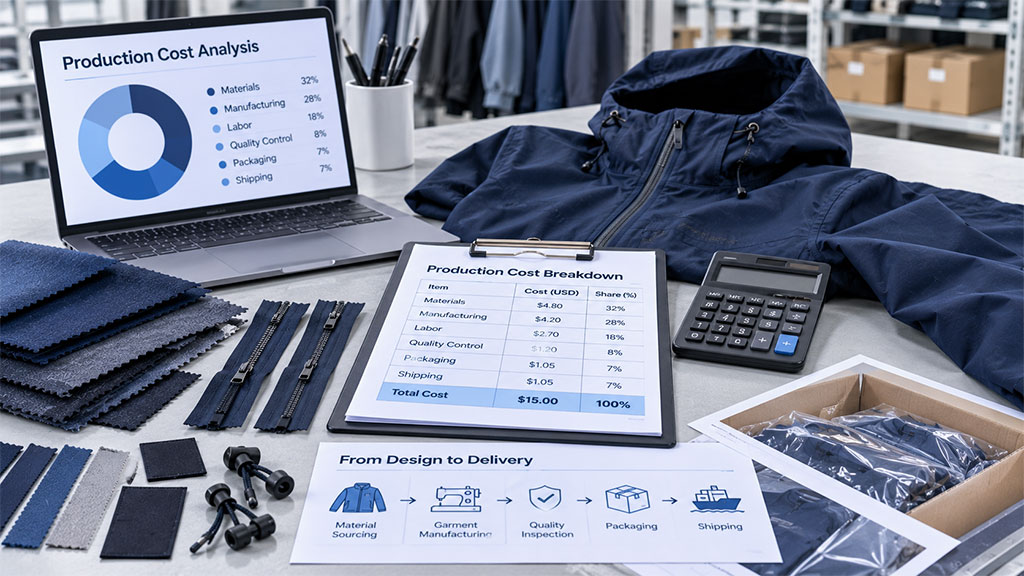
4. How to Calculate the True Cost of Custom Clothing Production
Comparing manufacturing quotations based only on garment unit price can lead to inaccurate cost estimates.
Brands should evaluate the complete production and delivery expenses.
Total Production Cost Formula:
Total Cost = Sampling + Fabric and Trims + Manufacturing + Testing and QC + Packaging + Shipping and Duties + Other Applicable Fees
Actual Cost Per Sellable Garment:
Actual Unit Cost = Total Production Cost ÷ Sellable Units
For example, consider an order of 500 custom hoodies:
| Cost Item | Estimated Cost |
|---|---|
| Sampling and Development | $300 |
| Fabric and Trims | $3,000 |
| Bulk Manufacturing | $4,000 |
| Testing and Quality Control | $250 |
| Packaging | $250 |
| International Shipping | $700 |
| Total | $8,500 |
Assuming all 500 garments meet the acceptance requirements:
$8,500 ÷ 500 = $17 per garment
Although bulk manufacturing costs only $8 per garment, the actual production and delivery cost reaches $17 per garment in this example.
Import duties, taxes, warehousing, and other applicable expenses should also be included when calculating the final landed cost.
5. Seven Ways to Avoid Hidden Clothing Manufacturing Costs
- Prepare a complete tech pack: Specify measurements, materials, construction, and branding requirements.
- Request an itemized quotation: Separate fabric, trims, labor, sampling, testing, packaging, and additional charges.
- Confirm material specifications: Approve exact fabric compositions, GSM, colors, and accessory references.
- Approve samples before bulk production: Minimize unnecessary changes after production starts.
- Understand MOQ requirements: Check both garment and customized component MOQs.
- Establish quality standards: Define tolerances, testing requirements, inspection methods, and defect handling.
- Choose a transparent manufacturing partner: Confirm cost changes, material availability, production risks, and delivery schedules in advance.
The lowest quotation is not necessarily the most cost-effective option. Transparent pricing and consistent quality are more important for sustainable long-term manufacturing.
6. What to Ask Before Confirming a Clothing Manufacturing Order
Before approving a purchase order, clarify these questions with your OEM/ODM manufacturing partner:- Does the quotation include sampling and pattern development?
- Are fabric and trims included?
- What are the MOQs for customized accessories?
- Are product testing and inspection fees included?
- Who is responsible if bulk products fail inspection?
- Which packaging and shipping services are included?
- How long is the quotation valid?
7. How Simmerui Helps Brands Control Manufacturing Costs
At Simmerui, we support global B2B apparel brands through integrated OEM and ODM manufacturing services, covering product development, fabric sourcing, sampling, quality control, and bulk production.
Our manufacturing support focuses on identifying potential production risks before they become expensive problems.
Our services include:
- Product Development: Reviewing tech packs and product specifications before sampling.
- Fabric Sourcing: Evaluating material options based on performance, quality, and budget.
- Sampling Support: Refining fit, construction, and functional details before bulk production.
- Production Management: Coordinating material preparation and manufacturing schedules.
- Quality Control: Implementing inspection procedures to maintain product consistency.
- Bulk Manufacturing: Supporting scalable production for outdoor apparel, casualwear, performance wear, and private-label collections.
Our goal is to help apparel brands improve cost visibility, reduce avoidable production risks, and build reliable long-term manufacturing partnerships.
8. Frequently Asked Questions
Q1. What are the most common hidden costs in custom clothing manufacturing?
Common hidden costs include sampling revisions, fabric development, accessory MOQ, pattern grading, testing, packaging, shipping, quality rework, and production delays.Q2. Why is the final production cost higher than the factory quotation?
Initial quotations may cover only selected manufacturing expenses. Additional development, customization, testing, packaging, and logistics charges can increase the final cost.Q3. How can apparel brands reduce custom clothing manufacturing costs?
Prepare accurate tech packs, select suitable materials, minimize sample revisions, optimize order quantities, standardize accessories, and confirm all charges before production.Q4. Does a lower MOQ always mean lower production costs?
No. Smaller orders can increase unit costs because material purchasing, setup, and accessory expenses are distributed across fewer garments.Q5. Are sampling costs included in OEM manufacturing quotations?
Not always. Sampling, pattern making, material consumption, and revisions may be charged separately. Confirm the sampling policy before development.Q6. How should brands compare clothing manufacturer quotations?
Compare identical product specifications, fabric requirements, construction details, order quantities, quality standards, packaging, and shipping terms rather than unit prices alone.Q7. What is the difference between manufacturing cost and landed cost?
Manufacturing cost covers garment production expenses. Landed cost includes additional delivery expenses such as shipping, insurance, customs duties, and applicable taxes.Q8. How can an OEM clothing manufacturer prevent unexpected expenses?
An experienced OEM partner can review technical specifications, identify material constraints, confirm MOQ requirements, plan sampling, establish quality standards, and provide transparent cost breakdowns before bulk production.Written by the Simmerui Apparel Manufacturing Team
We specialize in OEM and ODM apparel production for global B2B brands, providing integrated solutions across product development, fabric sourcing, sampling, quality control, and scalable manufacturing. Our experience covers outdoor apparel, performance wear, casual clothing, and private-label collections. We help brands reduce production risks, optimize costs, and build reliable long-term manufacturing partnerships.