
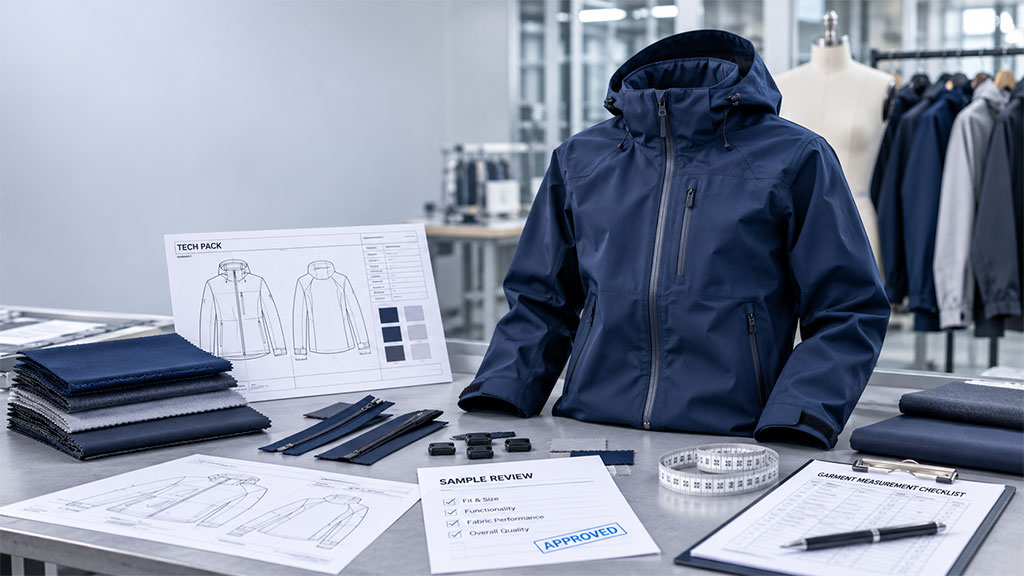
Apparel sampling management helps clothing brands identify design, fit, fabric, and construction issues before bulk production. A structured sampling process enables brands and OEM manufacturers to verify specifications, evaluate materials, approve product details, and establish clear manufacturing standards. By managing sample revisions and approvals effectively, brands can reduce production errors, unnecessary costs, development delays, and quality inconsistencies.
Introduction: Why Sampling Management Matters in Apparel Manufacturing
Production risks often begin long before bulk manufacturing starts.
A fabric may look correct in a reference photo but have a different weight or texture. A prototype may appear acceptable but fail to meet fit specifications. Small differences in measurements, stitching, trims, or color can become costly problems when repeated across hundreds or thousands of garments.
For B2B apparel brands, these issues can result in:
- Unexpected production costs and material waste.
- Repeated sample revisions and longer development cycles.
- Inconsistent garment measurements and workmanship.
- Delayed bulk production and shipment schedules.
- Customer complaints and damage to brand reputation.
A structured apparel sampling management process helps identify and resolve these issues before they affect bulk production.
At Simmerui, sampling is more than prototype development. It is a critical quality-control stage connecting product development with scalable OEM/ODM manufacturing.
This case study uses a representative outdoor jacket development scenario to demonstrate how systematic sampling management can prevent production problems. It illustrates a practical manufacturing approach rather than a quantified result from a specific customer project.
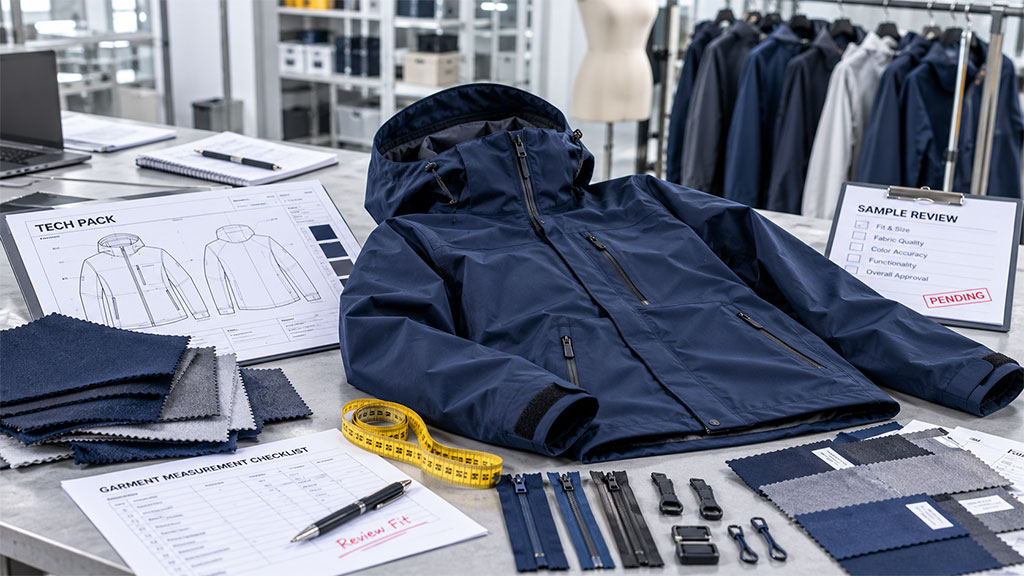
1. Identify Production Risks Before Sampling Begins
Consider a B2B apparel brand preparing to launch a custom outdoor jacket collection.
The product includes specialized shell fabric, functional zippers, adjustable cuffs, branded labels, and specific fit requirements. The manufacturer must reproduce the approved design consistently throughout bulk production.
However, several risks emerge during early development.
Incomplete Technical Specifications
The initial tech pack does not fully define fabric weight, measurement tolerances, zipper specifications, seam construction, or logo positioning.
Production risk: Different teams may interpret the design differently, resulting in repeated revisions, inconsistent workmanship, and unexpected costs.
Fabric and Trim Inconsistencies
The proposed fabric looks similar to the reference material, but its weight, hand feel, and performance have not been fully verified. Some accessories also require confirmation.
Production risk: Unapproved material substitutions may affect garment appearance, functionality, durability, and bulk consistency.
Unclear Sample Approval Procedures
Feedback is provided through multiple communication channels, with comments covering fit, construction, color, and branding.
Production risk: Without consolidated feedback and revision records, previously corrected problems may reappear in subsequent samples.
These challenges demonstrate why sampling requires defined stages, documented specifications, and formal approval checkpoints.
2. Establish a Structured Apparel Sampling Process
Each sample should have a specific purpose, measurable review criteria, and documented approval requirements.
Step 1: Review the Tech Pack Before Sampling
Before developing the first sample, the manufacturer should review the complete technical package, including:
- Technical drawings and garment construction details.
- Fabric composition, GSM, and performance requirements.
- Measurement charts and tolerances.
- Zipper, button, label, and trim specifications.
- Printing, embroidery, and branding placement.
- Stitching methods and finishing requirements.
Any missing or unclear information should be confirmed before sample production begins.
This step reduces assumptions and aligns the brand’s expectations with the manufacturer’s capabilities.
Step 2: Verify Fabrics and Trims
Material selection directly
affects product quality, cost, and manufacturing feasibility.
| Material | Key Verification Points |
|---|---|
| Main Fabric | Composition, GSM, texture, color, and performance |
| Lining | Weight, comfort, compatibility, and color |
| Zippers | Size, functionality, durability, and finish |
| Buttons and Trims | Dimensions, material, appearance, and attachment |
| Labels | Artwork, dimensions, placement, and readability |
For technical apparel, laboratory testing may also be required to verify water resistance, abrasion resistance, colorfastness, or other performance properties.
Material approvals should be documented to ensure consistent standards during bulk sourcing.
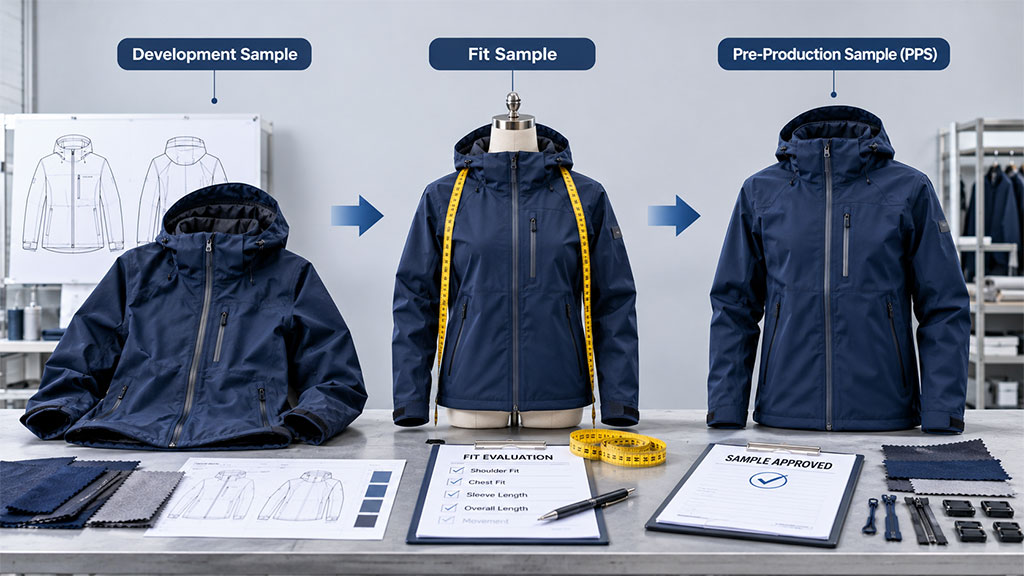
Step 3: Use Different Sample Stages for Different Risks
Each sample stage serves a different purpose.
Development Sample
Evaluates whether the initial design can be translated into a physical garment.
Review points:
- Overall appearance and design execution.
- Initial fabric and construction feasibility.
- Functional details and component placement.
Fit Sample
Focuses on garment dimensions and wearing performance.
Review points:
- Chest, shoulder, sleeve, and body measurements.
- Garment proportions and silhouette.
- Movement, comfort, and ease of wear.
- Pattern adjustments and measurement tolerances.
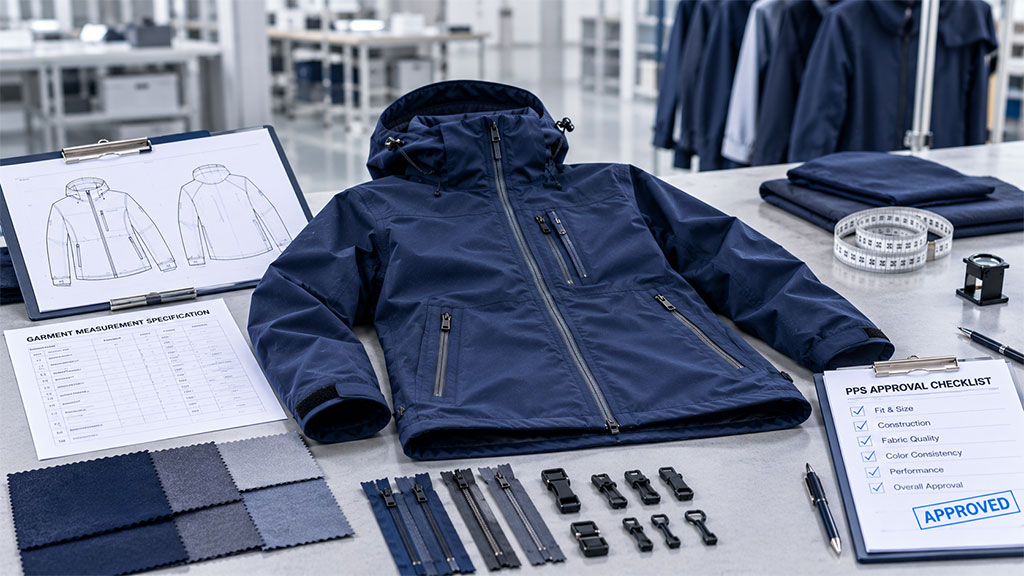
Pre-Production Sample (PPS)
The final approval checkpoint before bulk manufacturing.
It should represent the approved production standard, including:
- Final fabric and trims.
- Confirmed colors and branding.
- Approved measurements and tolerances.
- Final construction and stitching details.
- Finishing and packaging requirements.
Once approved, the PPS becomes the physical reference for bulk production and quality inspection.
Step 4: Consolidate Feedback and Track Every Revision
Brands should avoid sending scattered comments through multiple channels. Instead, sample feedback should be consolidated into a single revision document.| Review Area | Required Feedback | Action |
|---|---|---|
| Measurements | Actual measurements and adjustments | Pattern revision |
| Fabric | Weight, texture, color, or performance concerns | Material verification |
| Construction | Stitching, seams, and structural details | Construction adjustment |
| Trims | Zippers, buttons, labels, and accessories | Component correction |
| Branding | Logo size, position, and application | Artwork adjustment |
| Overall approval | Acceptance or rejection with comments | Next sample round |
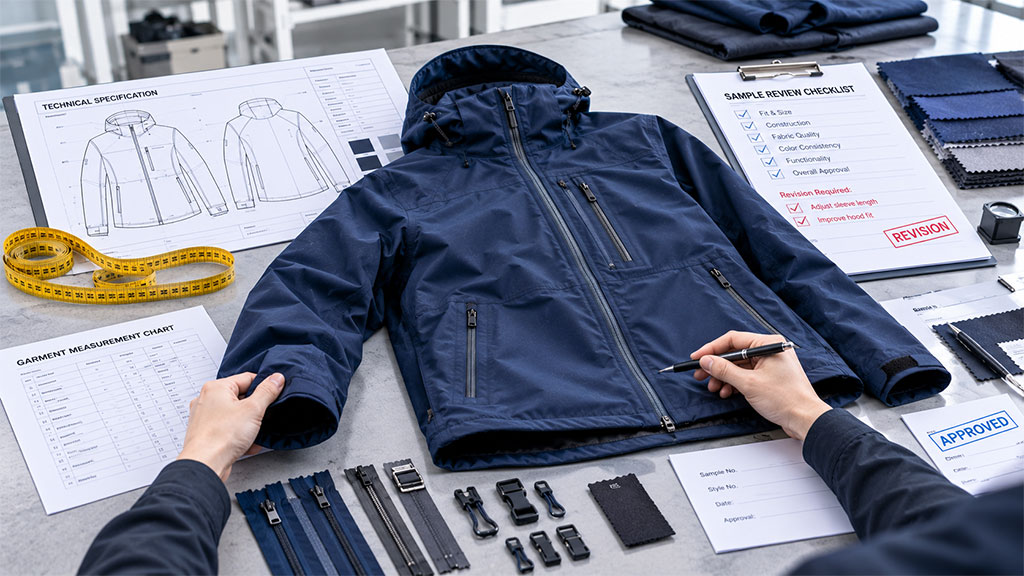
Step 5: Confirm PPS Approval Before Bulk Production
PPS approval should be treated as a manufacturing control point, not an administrative formality. Before bulk production begins, both parties should confirm:- Final garment measurements.
- Approved fabric and material specifications.
- Color and trim standards.
- Construction and workmanship requirements.
- Branding and labeling details.
- Packaging and folding instructions.
- Applicable testing and inspection requirements.
3. How Sampling Management Reduces Production Risks
| Sampling Practice | Risk Controlled | Business Benefit |
|---|---|---|
| Complete tech pack review | Specification misunderstandings | Fewer unnecessary revisions |
| Fabric and trim verification | Material inconsistencies | Better material control |
| Prototype evaluation | Design and construction issues | Earlier problem detection |
| Fit sample approval | Measurement and fit problems | More consistent sizing |
| Revision tracking | Repeated or conflicting feedback | More efficient communication |
| PPS approval | Bulk production deviations | Clear production standards |
| Documented approvals | Unclear responsibilities | Better accountability |
4. Maintain Quality Consistency from Sampling to Bulk Production
Sample approval alone does not guarantee that every bulk garment will be identical.
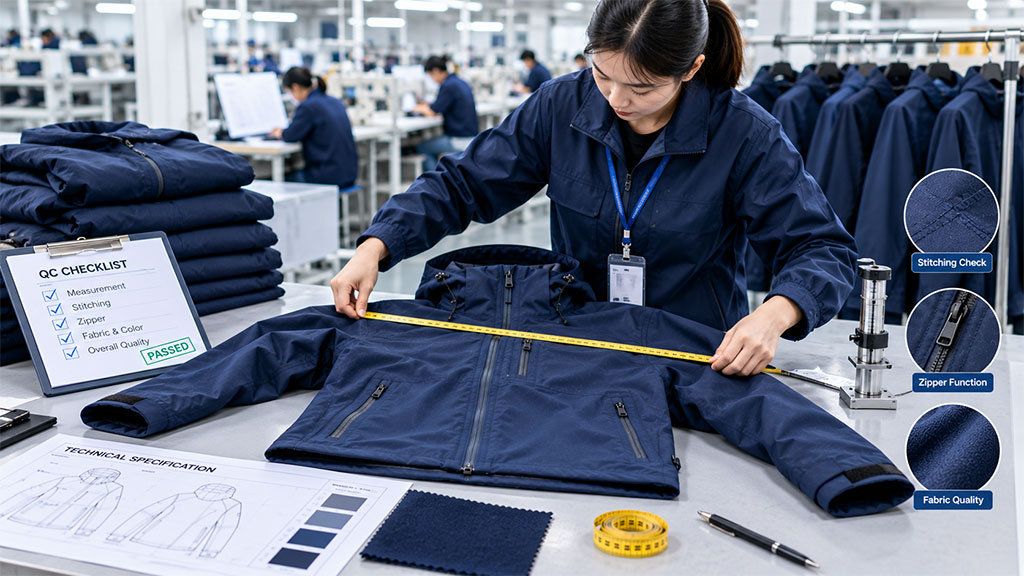
The approved sample must be translated into clear manufacturing instructions and supported by production quality-control procedures.
After PPS approval, the manufacturer should use the sample and supporting documentation as references for:
Material Inspection: Check incoming fabric and trims against approved specifications.
Cutting and Sewing Control: Monitor cutting accuracy, measurement consistency, seam construction, and workmanship.
Inline Quality Inspection: Identify recurring defects during production instead of waiting until the entire order is completed.
Final Inspection: Evaluate finished garments against approved specifications and agreed AQL inspection requirements.
Sampling management therefore works together with bulk production QC to maintain consistency from the first garment to the last.
5. The Business Value of Better Sampling Management
For B2B apparel brands, effective sampling management reduces uncertainty throughout the manufacturing process.Lower Production Correction Costs
Early identification of incorrect measurements, materials, or construction details helps reduce extensive bulk corrections.More Predictable Development Timelines
Clear feedback, defined approval stages, and revision tracking help reduce unnecessary communication cycles.Improved Product Consistency
Approved material specifications and PPS references provide a common standard for manufacturing and QC teams.Better Brand-Manufacturer Collaboration
Documented decisions clarify responsibilities and help both parties work toward the same product requirements.Greater Production Readiness
Confirmed specifications allow manufacturers to prepare materials, production planning, and QC procedures more effectively.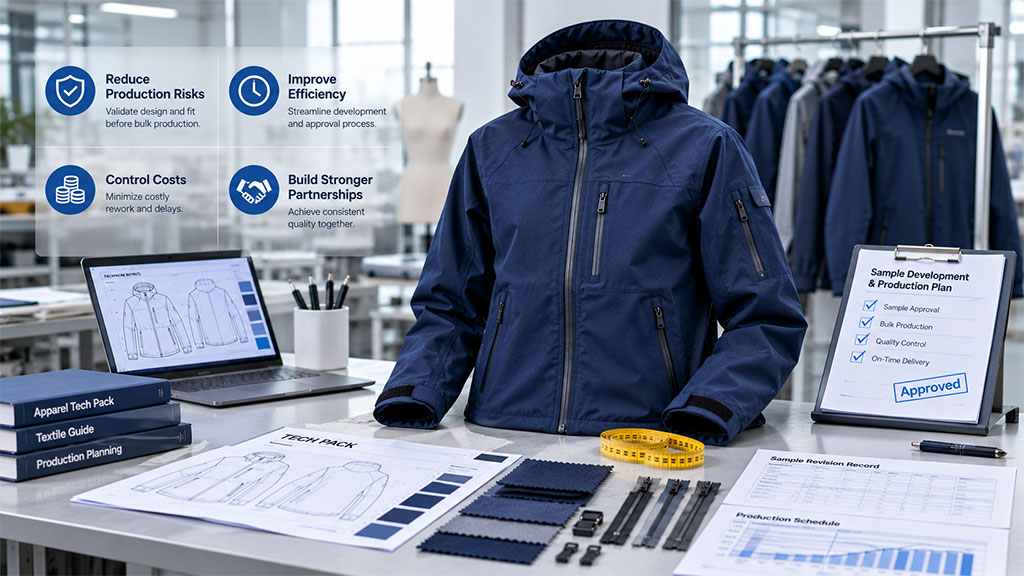
6. How Simmerui Supports Sampling and Production Risk Management
Simmerui supports global B2B apparel brands through integrated OEM and ODM manufacturing services.
Our approach connects product development, fabric sourcing, sampling, quality control, and bulk production to help brands establish reliable manufacturing standards.
Our sampling and development support includes:
- Technical Review: Evaluating tech packs, construction details, and measurement specifications before sampling.
- Fabric Sourcing: Supporting fabric selection and material verification according to product requirements.
- Custom Sampling: Developing prototypes, fit samples, and pre-production samples for different product categories.
- Revision Management: Coordinating sample feedback and tracking adjustments throughout development.
- PPS Approval: Confirming critical product specifications before bulk manufacturing.
- Production QC: Applying inspection procedures to help maintain consistency during mass production.
Whether developing outdoor jackets, performance apparel, casualwear, or private label collections, our goal is to help brands move from design concepts to production-ready garments with fewer avoidable risks.
Conclusion: Reduce Apparel Production Risks Before Bulk Manufacturing
Production problems are often easier and less expensive to prevent during product development than to correct after bulk manufacturing has started.
A structured apparel sampling management process helps brands verify materials, confirm fit, improve construction, document revisions, and establish clear production standards.
For B2B apparel brands, choosing a manufacturing partner with a disciplined sampling and approval process is an important step toward controlling costs, protecting product quality, and improving delivery reliability.
The right sample is not just a preview of the finished garment. It is the foundation of a controlled and repeatable manufacturing process.
FAQ: Apparel Sampling Management and Production Risks
1. How does apparel sampling reduce production risks?
Apparel sampling identifies potential problems with fabric, fit, measurements, construction, and functionality before bulk manufacturing. Early corrections help reduce rework, material waste, quality inconsistencies, and production delays.2. How many sample rounds are normally required for OEM apparel production?
Most OEM apparel projects require approximately 2–5 sampling rounds, depending on garment complexity, fabric performance, construction requirements, and the completeness of the original specifications. Basic T-shirts may need fewer rounds, while technical outerwear may require additional testing and revisions.3. What is the difference between a development sample, fit sample, and PPS?
A development sample checks the initial design and construction. A fit sample evaluates garment measurements, proportions, and wearing comfort. A Pre-Production Sample (PPS) confirms the final materials, trims, construction, and specifications before bulk production.4. Why is PPS approval important in apparel manufacturing?
PPS approval establishes the final product standard before mass manufacturing. It provides the factory and brand with an agreed reference for materials, measurements, construction, branding, and workmanship.5. Can bulk production start without PPS approval?
Although some manufacturers may accept production instructions without formal PPS approval, this increases the risk of misunderstandings and production inconsistencies. For custom OEM and ODM apparel, approving a PPS before bulk manufacturing is strongly recommended.6. How can brands reduce repeated sample revisions?
Brands can reduce unnecessary revisions by preparing complete tech packs, confirming fabric and trim specifications early, providing accurate measurement charts, consolidating feedback, and maintaining version-controlled sample records.7. What happens if a brand requests changes after PPS approval?
The manufacturer should evaluate the requested changes before implementation. Changes may affect material availability, production cost, pattern specifications, manufacturing efficiency, and delivery schedules. Major changes should be formally reviewed and approved by both parties.8. Does an approved sample guarantee bulk production quality?
No. An approved sample establishes the production reference standard, but consistent bulk quality also requires material inspection, production monitoring, inline QC, and final inspection.9. What should brands check before approving a production sample?
Brands should review fabric composition and weight, color, garment measurements, construction, stitching, trims, branding, finishing, and packaging requirements. Performance testing should also be completed when required by product specifications.10. How does a professional OEM manufacturer help manage sampling risks?
An experienced OEM manufacturer supports technical specification reviews, material sourcing, sample development, revision tracking, PPS approval, and production quality control. These coordinated activities help reduce avoidable errors before and during bulk manufacturing.Written by the Simmerui Apparel Manufacturing Team
We specialize in OEM and ODM apparel production for global B2B brands, providing integrated solutions across product development, fabric sourcing, sampling, quality control, and scalable manufacturing. Our experience covers outdoor apparel, performance wear, casual clothing, and private label collections.
We help brands reduce production risks, optimize costs, and build reliable long-term manufacturing partnerships.