
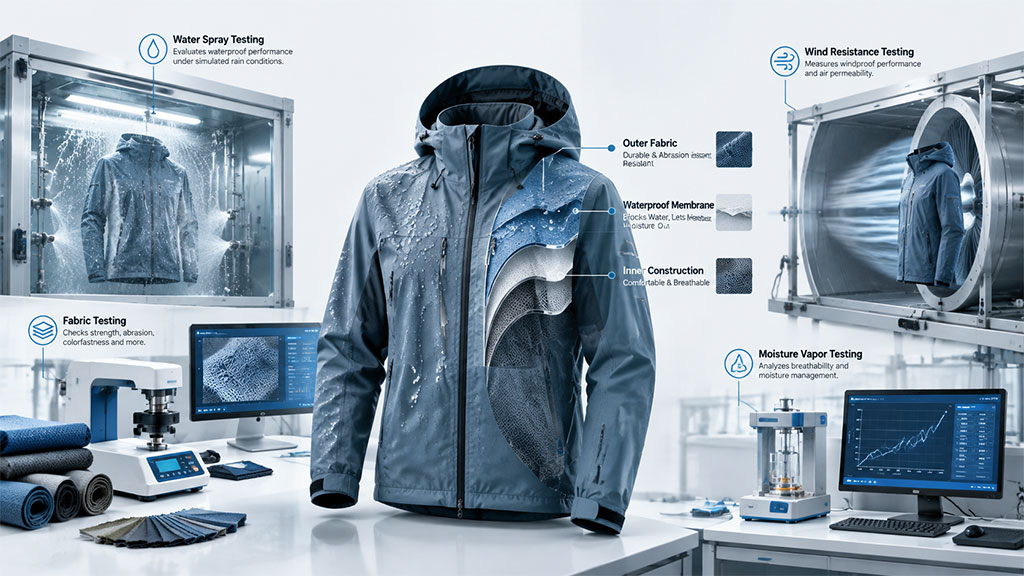
Outdoor apparel testing standards help brands verify whether technical garments can perform in demanding environments such as heavy rain, snow, strong wind, and cold temperatures. Before mass production, professional testing evaluates waterproof protection, breathability, insulation, durability, seam performance, and material safety. For outdoor apparel brands working with OEM manufacturers, establishing clear testing requirements during product development helps reduce production risks, maintain consistent quality, and build reliable performance clothing collections.
How Outdoor Apparel Testing Ensures Reliable Performance Before Production
For outdoor apparel brands, performance claims must be supported by measurable testing results.
A jacket marketed as waterproof, breathable, windproof, or durable must pass professional evaluation before reaching the market. Testing allows brands and manufacturers to confirm whether a garment can perform under real outdoor conditions.
Key questions include:
- Can the jacket protect users during heavy rain?
- Can moisture vapor escape during high-intensity activities?
- Can the construction withstand repeated outdoor use?
- Can the garment maintain performance after washing and long-term wear?
For B2B apparel buyers, testing standards are not only product requirements but also an important part of supplier evaluation and quality management.
1. Test Waterproof Performance to Protect Against Extreme Weather
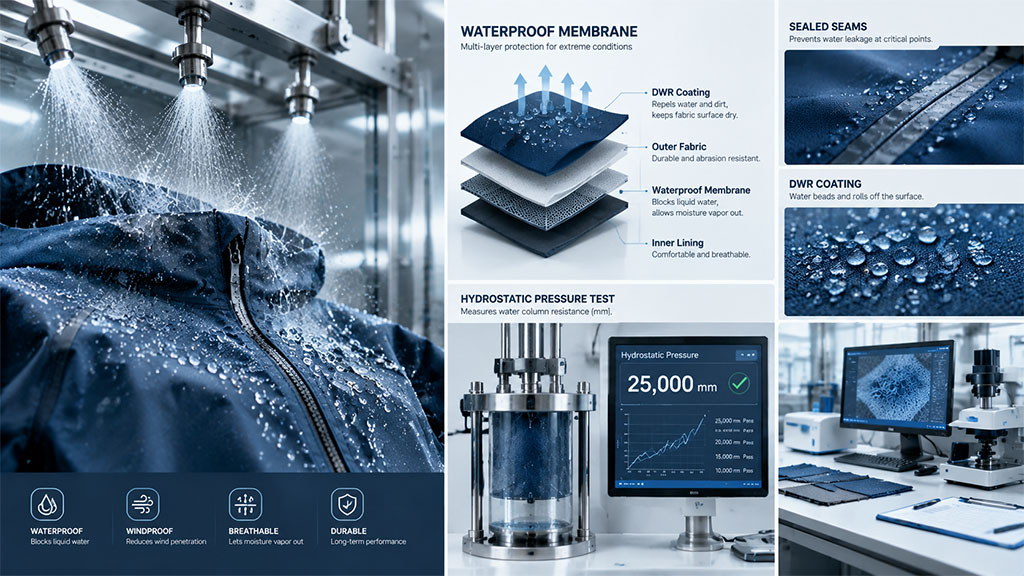
Waterproof protection is one of the most important performance requirements for technical outdoor apparel. A high-performance waterproof jacket must prevent external moisture penetration while maintaining wearer comfort.Evaluate Fabric and Garment-Level Waterproof Performance
Common waterproof testing methods include:| Testing Method | Purpose |
|---|---|
| Hydrostatic Pressure Test | Measures fabric resistance against water pressure |
| Spray Test | Evaluates surface water repellency performance |
| Seam Leakage Test | Checks waterproof protection of stitched areas |
| Washing Durability Test | Evaluates waterproof performance after repeated washing |
- Waterproof membrane performance
- Durable Water Repellent (DWR) treatment
- Fully taped seams
- Waterproof zipper compatibility
2. Measure Breathability to Improve Comfort During Outdoor Activities
Extreme outdoor environments require protection without sacrificing comfort.
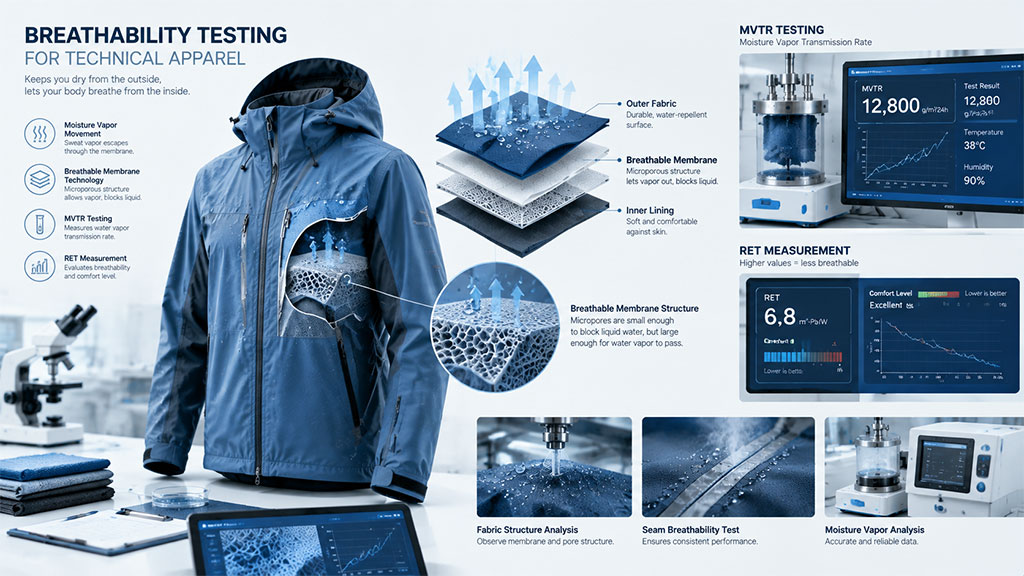
During hiking, climbing, skiing, or outdoor work, body heat and moisture accumulate inside garments. Breathability testing evaluates how effectively a garment transfers moisture vapor away from the body.
Use Professional Testing Methods to Verify Moisture Management
Common breathability measurements include:
| Testing Method | What It Measures |
|---|---|
| MVTR Test | Moisture Vapor Transmission Rate |
| RET Test | Fabric resistance to moisture movement |
| Air Permeability Test | Air movement through fabric |
These results help brands determine whether a garment is suitable for:
- Casual outdoor products
- Hiking apparel
- Mountaineering shells
- Ski jackets
- Professional outdoor applications
A balanced waterproof-breathable system is essential for technical apparel performance.
3. Test Wind Resistance for Cold Weather Protection
Wind can significantly reduce body temperature in outdoor environments.
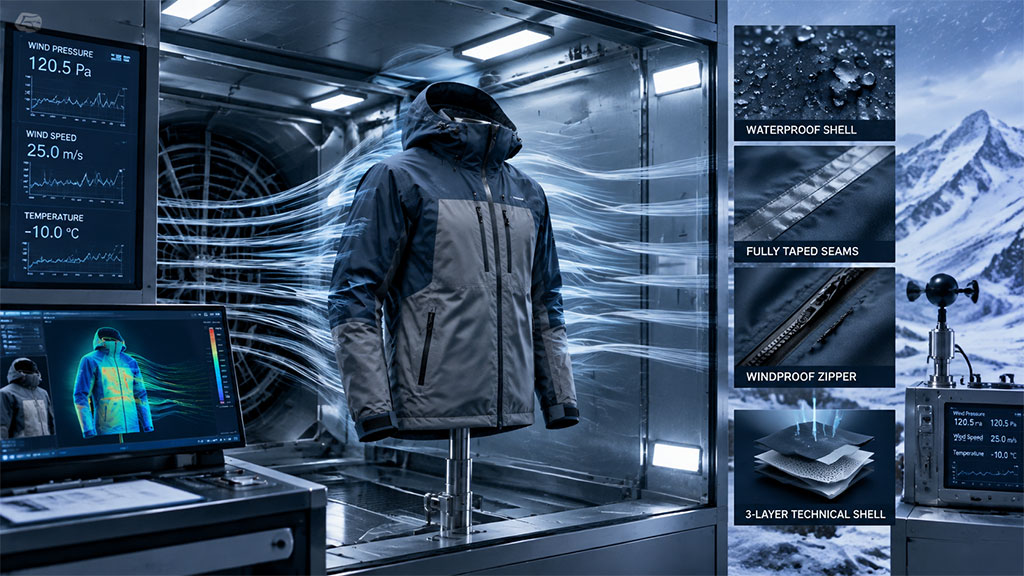
Windproof testing evaluates whether fabrics and garment structures can block airflow while maintaining comfort.
Important evaluation factors include:
- Fabric density
- Membrane structure
- Layer construction
- Garment sealing design
Wind resistance testing is especially important for:
- Ski jackets
- Alpine shells
- Winter outdoor jackets
- Expedition clothing
For cold-weather products, wind protection is usually evaluated together with insulation performance.
4. Evaluate Thermal Performance for Different Climate Conditions
Cold-weather apparel requires reliable heat retention and insulation performance.
Brands evaluate thermal protection through:
- Thermal resistance testing
- Fill weight measurement
- Loft evaluation
- Cold chamber testing
Common insulation materials include:
- Down insulation
- Synthetic insulation
- Recycled insulation fibers
Different products require different thermal standards.
For example:
A lightweight hiking jacket and an extreme winter expedition jacket cannot use the same insulation requirements.
Performance targets should consider:
- Expected temperature range
- User activity level
- Layering system
- Target market environment
5. Test Fabric Durability for Long-Term Outdoor Use
Outdoor garments experience repeated friction from:
- Backpack straps
- Rocks
- Equipment
- Daily movement
Durability testing helps brands predict product lifespan and reduce customer complaints.
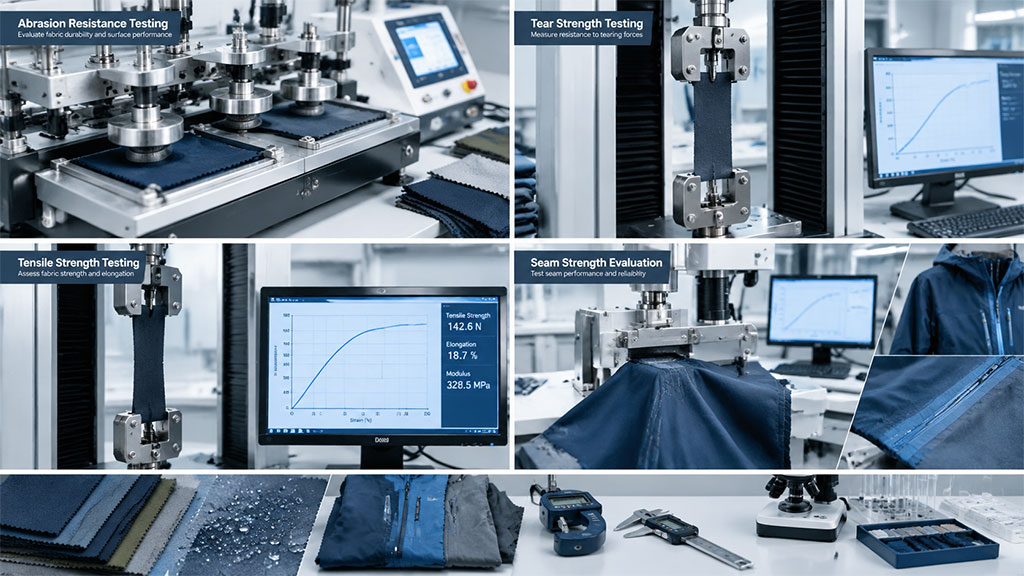
Evaluate Strength, Abrasion, and Construction Reliability
Common durability tests include:
| Performance Area | Testing Method |
|---|---|
| Fabric Strength | Tensile Strength Test |
| Tear Resistance | Tear Strength Test |
| Surface Durability | Abrasion Resistance Test |
| Seam Reliability | Seam Strength Test |
For outdoor brands, durability directly influences customer satisfaction and brand reputation.
6. Test Zippers, Trims, and Construction Details
Technical apparel performance depends on more than fabric technology. Small components can directly affect product reliability. Professional OEM manufacturers typically evaluate:Zipper Performance
Testing may include:- Opening and closing cycle tests
- Water resistance evaluation
- Pull strength testing
Seam Construction
Evaluation focuses on:- Stitch density
- Seam strength
- Seam sealing quality
Functional Components
Including:- Adjustable hood systems
- Ventilation openings
- Pocket construction
- Adjustable cuffs
7. Verify Chemical Safety and Sustainable Production Requirements
Global outdoor apparel brands increasingly require responsible manufacturing standards.
Common testing requirements include:
- Restricted Substance List (RSL)
- Manufacturing Restricted Substance List (MRSL)
- PFAS-free treatment verification
- OEKO-TEX® related requirements
These standards help brands meet international regulations and growing consumer expectations for safer and more sustainable products.
For OEM apparel development, chemical testing should be considered during material selection rather than after production.
8. Integrate Testing Into the OEM Apparel Development Process
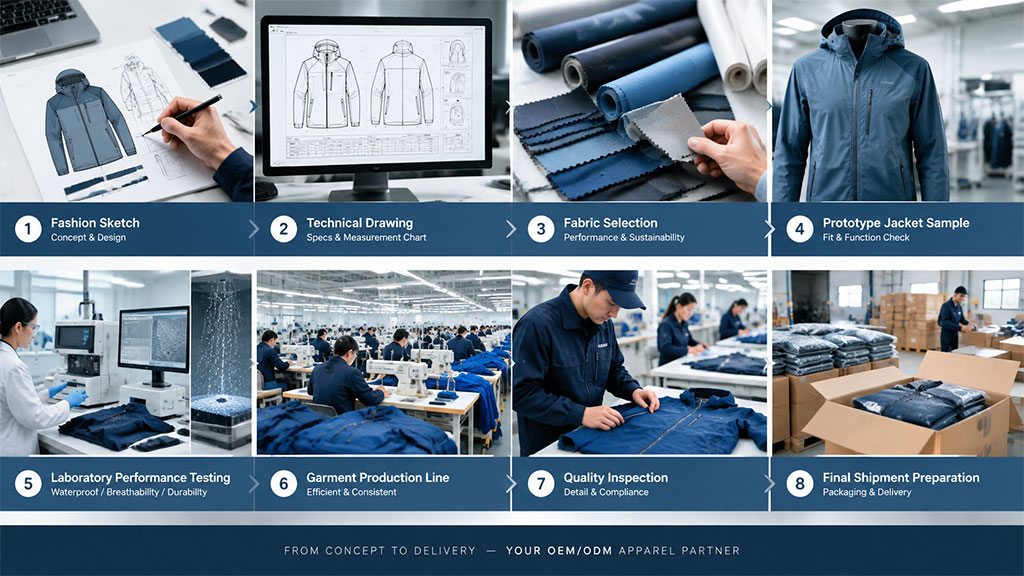
Experienced outdoor apparel manufacturers help brands integrate testing throughout the complete product development workflow.
Product Development Stage
Manufacturers and brands define:
- Performance targets
- Fabric requirements
- Technical specifications
- Construction methods
Sampling Stage
Teams evaluate:
- Prototype performance
- Fit and construction
- Initial testing results
- Material compatibility
Bulk Production Stage
Manufacturers verify:
- Material consistency
- Production quality
- Final inspection requirements
Early testing reduces the risk of production failures and helps brands achieve consistent bulk manufacturing results.
Outdoor Apparel Testing Checklist for Brands
Before approving production, brands should confirm:
- ✅ Waterproof performance requirements
- ✅ Breathability targets
- ✅ Wind resistance expectations
- ✅ Thermal insulation standards
- ✅ Fabric durability testing
- ✅ Seam and construction evaluation
- ✅ Chemical safety requirements
- ✅ Wash durability performance
- ✅ Final quality inspection procedures
A clear testing checklist helps outdoor brands reduce quality risks before bulk manufacturing.
FAQ: Outdoor Apparel Testing Standards
1.Why is outdoor apparel testing important?
Outdoor apparel testing verifies whether garments can perform under real environmental conditions and helps brands maintain consistent product quality before mass production.
2.What tests are commonly used for waterproof outdoor jackets?
Outdoor apparel testing
Common waterproof tests include hydrostatic pressure testing, spray testing, seam leakage testing, and washing durability testing.
3.How do brands test breathable outdoor clothing?
Brands typically use MVTR, RET, and air permeability tests to evaluate moisture management performance.
4.Are fabric tests enough for technical outdoor apparel?
Outdoor apparel testing
No. Complete testing should include fabrics, seams, zippers, trims, construction methods, and finished garments.
5.When should performance testing begin?
Testing should begin during product development and sampling stages rather than waiting until bulk production.
6.How do OEM manufacturers support apparel testing?
OEM manufacturers support brands through material selection, prototype development, testing coordination, production quality control, and final inspection.
7.What testing standards are important for waterproof jackets?
Brands should evaluate waterproof ratings, seam sealing performance, zipper protection, and long-term washing durability.
8.Why should brands test garments before bulk production?
Pre-production testing helps identify construction issues, material problems, and performance gaps before large-scale manufacturing.
Written by the Simmerui Apparel Manufacturing Team.
Simmerui specializes in OEM and ODM apparel manufacturing for global B2B brands, providing integrated solutions across product development, fabric sourcing, sampling, quality control, and scalable production.
With experience in outdoor apparel, performance wear, casual clothing, and private label collections, our team helps brands reduce production risks, optimize manufacturing processes, and develop reliable long-term apparel partnerships.
Develop Your Technical Outdoor Apparel Collection
Looking for an experienced OEM/ODM partner for waterproof jackets, outdoor shells, functional apparel, and private label collections?
Contact Simmerui Apparel Manufacturing Team for product development support.