
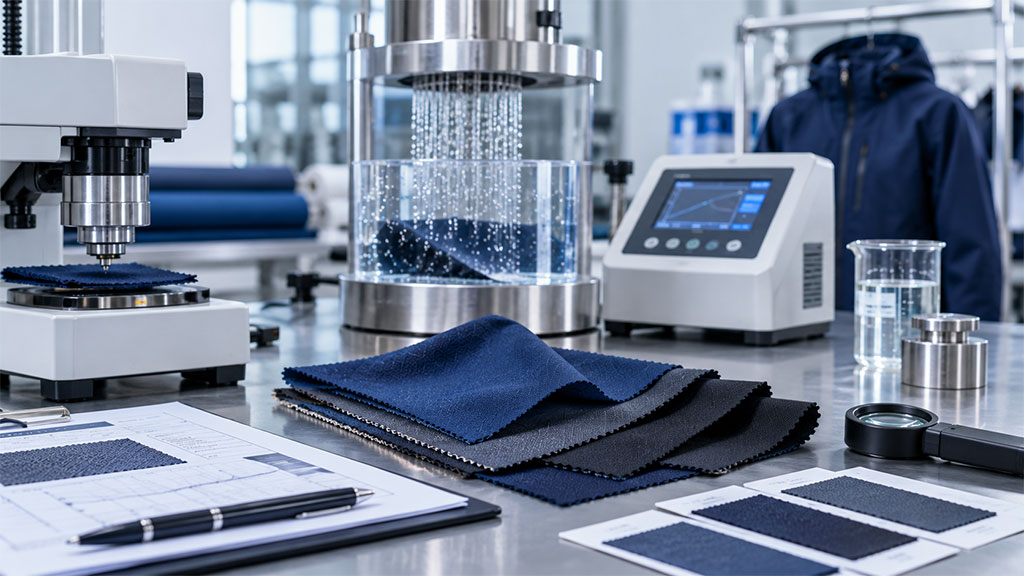
Outdoor apparel fabric testing helps brands verify whether materials meet the performance requirements of finished garments before bulk production. By evaluating waterproofness, breathability, tensile strength, tear resistance, abrasion resistance, and colorfastness, manufacturers can identify material weaknesses early. Integrating fabric testing into OEM and ODM development improves material selection, reduces production risks, and supports consistent product quality across outdoor clothing collections.
1. Why Fabric Testing Matters in Outdoor Apparel Manufacturing
Outdoor clothing must perform under changing environmental conditions. Unlike basic casual garments, technical outdoor apparel often needs to balance waterproof protection, breathability, durability, and comfort.
For example, an outdoor shell jacket may require:
- Waterproof protection against rain and moisture.
- Breathability to release excess body heat and moisture vapor.
- Abrasion resistance against backpacks and outdoor equipment.
- Tear strength to withstand mechanical stress.
- Colorfastness to maintain appearance after washing and exposure.
- Dimensional stability to retain its original shape.
However, supplier specifications and visual inspections alone cannot guarantee consistent material performance.
Different fabric constructions, coatings, laminations, dyeing processes, and finishing treatments can influence the final result.
Fabric testing provides measurable evidence that materials meet agreed technical requirements before production approval.
2. How Fabric Testing Identifies Material Risks During Development
Consider a technical outdoor jacket development project in which the development team needs to evaluate several candidate fabrics. Although the initial materials appear suitable based on weight, texture, and supplier specifications, their actual performance still needs verification. The team focuses on four critical areas:Waterproof Performance
Hydrostatic head testing evaluates how well the fabric resists water penetration under pressure. This is essential for rain jackets and waterproof shells.Breathability
MVTR and RET testing help evaluate moisture vapor transfer and evaporative resistance, ensuring that waterproof protection does not compromise wearer comfort.Abrasion and Tear Resistance
Outdoor garments experience repeated friction from backpacks, equipment, and rough surfaces. Testing helps identify materials that may wear or tear prematurely.Color Consistency
Colorfastness and shade consistency checks help prevent fading, color transfer, and visible differences between fabric batches. These evaluations provide a more objective basis for material selection and approval.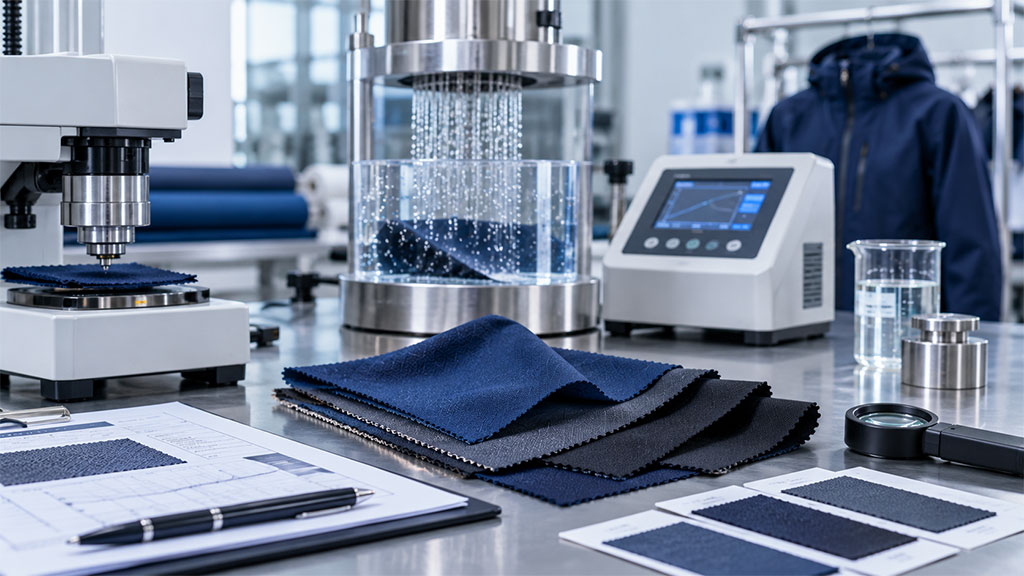
3. Key Fabric Testing Methods for Outdoor Clothing
Different outdoor products require different testing combinations. The following methods are commonly used in technical apparel development.| Testing Method | What It Measures | Why It Matters |
|---|---|---|
| Hydrostatic Head Test | Resistance to water penetration | Waterproof performance |
| MVTR Test | Moisture vapor transmission rate | Breathability |
| RET Test | Resistance to evaporative heat transfer | Moisture management |
| Tensile Strength Test | Resistance to pulling forces | Fabric strength |
| Tear Strength Test | Resistance to tear propagation | Material durability |
| Abrasion Resistance Test | Resistance to surface wear | Long-term durability |
| Colorfastness Test | Resistance to color change or transfer | Appearance consistency |
| Dimensional Stability Test | Changes in fabric dimensions | Shrinkage control |
3.1 Waterproof Testing
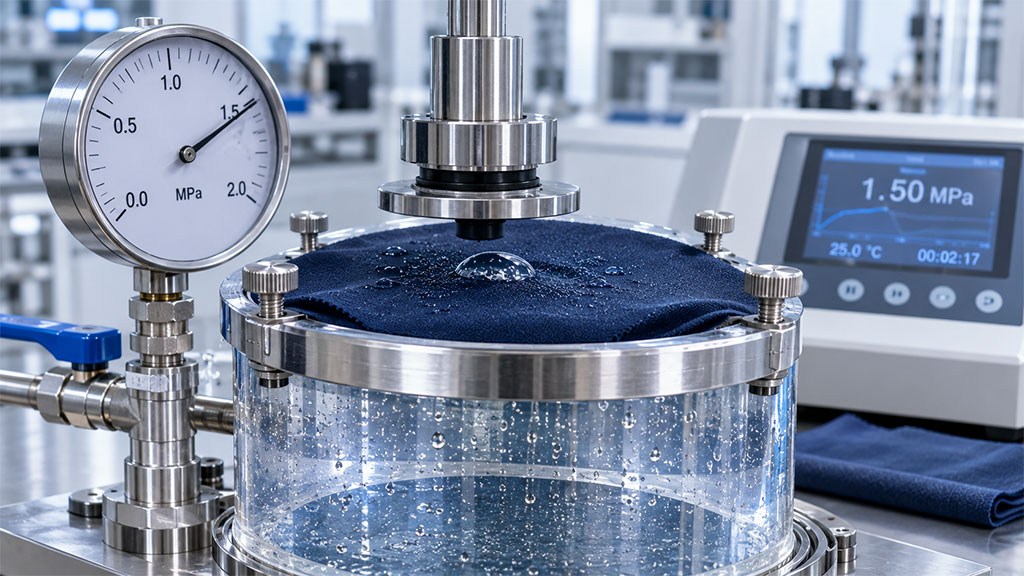
Hydrostatic head testing measures the water pressure a fabric can withstand before water penetrates its structure.
It is particularly important for waterproof jackets, rainwear, and technical outdoor shells.
The required waterproof rating should be determined according to the garment’s intended application and agreed technical specifications.
3.2 Breathability Testing:MVTR and RET
Breathability is essential for outdoor clothing designed for physical activity.
Two commonly used indicators are:
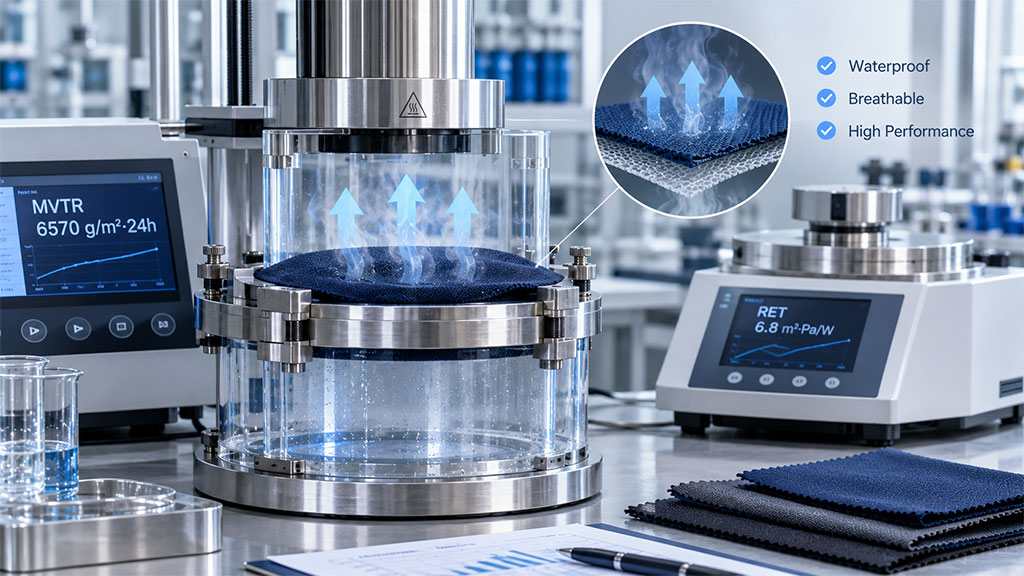
- MVTR (Moisture Vapor Transmission Rate): Measures how much water vapor passes through a material over a specified period.
- RET (Resistance to Evaporative Heat Transfer): Measures resistance to moisture vapor transfer. Lower RET values generally indicate better evaporative breathability.
These methods provide different measurements, so results should be compared using consistent test conditions.
3.3 Strength and Abrasion Testing
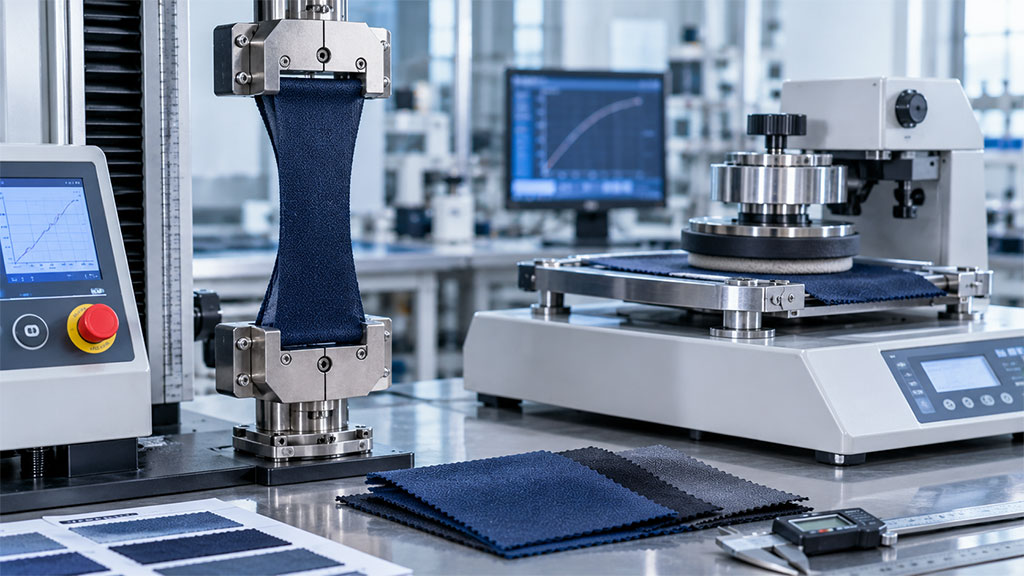
Tensile testing measures resistance to pulling forces, while tear testing evaluates how well a fabric prevents an existing tear from spreading.
Abrasion testing measures resistance to repeated rubbing.
These tests are particularly relevant for hiking jackets, outdoor pants, reinforced panels, elbows, shoulders, and backpack contact zones.
3.4 Colorfastness and Dimensional Stability
Colorfastness testing evaluates resistance to color changes caused by washing, rubbing, perspiration, and light exposure. Dimensional stability testing checks whether fabric dimensions change after washing or other specified treatments. Both are important for maintaining consistent garment appearance, sizing, and quality across production batches.4. How Fabric Testing Improves Product Development
Fabric testing creates value when results support actual manufacturing decisions.
Better Material Selection
Brands can compare candidate fabrics using measurable performance data instead of relying entirely on appearance, hand feel, or supplier descriptions.
Earlier Risk Detection
Identifying material weaknesses before bulk purchasing and cutting helps prevent costly production delays, rework, and material waste.
More Consistent Quality
Approved fabric specifications and laboratory reports establish clear references for incoming material inspections and subsequent production batches.
Better Team Communication
Documented test results help fabric suppliers, product developers, QC teams, and brand representatives work with agreed technical requirements rather than subjective descriptions.
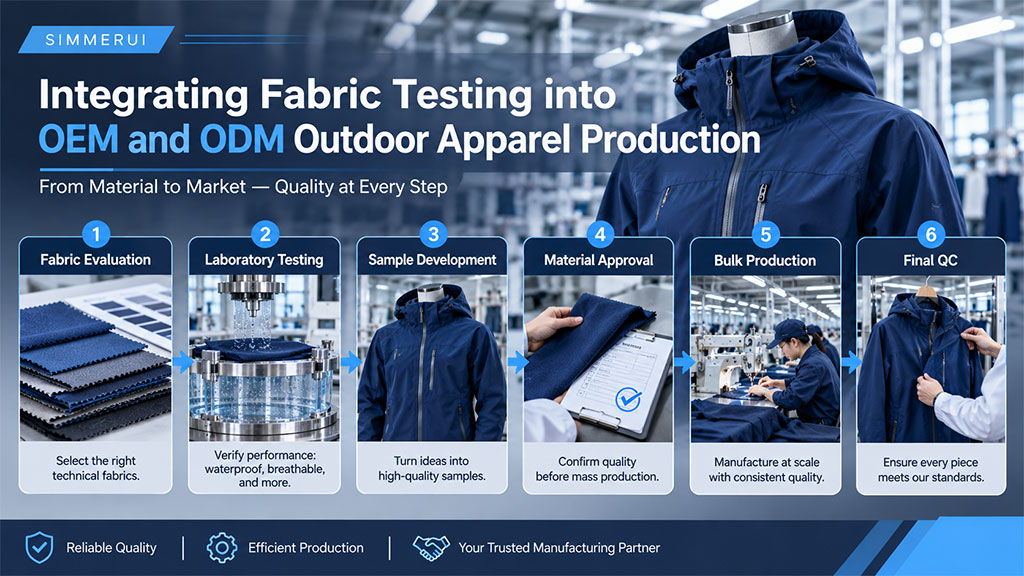
5. How to Integrate Fabric Testing into OEM and ODM Production
Fabric testing should be part of the complete apparel development workflow, not an isolated laboratory activity.
A practical process includes six stages:
Stage 1: Define Performance Requirements
Identify the garment’s intended application and required performance. A lightweight hiking jacket and a heavy-duty mountaineering shell will have different material requirements.
Stage 2: Evaluate Fabric Samples
Review fabric composition, construction, weight, finishing treatments, and supplier specifications. Conduct initial testing to compare candidate materials.
Stage 3: Confirm Fabric Approval
Compare test results against agreed specifications. Record the approved fabric reference, testing methods, acceptance criteria, and supplier information.
Stage 4: Develop Garment Samples
Use approved materials to produce prototypes and pre-production samples. Evaluate how the fabric performs during cutting, sewing, bonding, and garment assembly.
Stage 5: Inspect Bulk Materials
Before bulk production, inspect incoming fabric lots and verify critical properties according to the agreed QC plan. Additional testing may be necessary when suppliers, materials, or dyeing batches change.
Stage 6: Maintain Quality Records
Keep material specifications, laboratory reports, fabric approval records, and inspection results to support traceability and consistent quality management.
6. Common Fabric Testing Mistakes Apparel Brands Should Avoid
| Common Mistake | Better Approach |
|---|---|
| Testing only waterproofness | Evaluate all critical performance properties |
| Relying entirely on supplier data | Verify materials against agreed specifications |
| Ignoring batch variations | Inspect incoming fabric lots |
| Testing too late | Conduct testing during material development |
| Missing acceptance criteria | Define measurable requirements before approval |
7. How OEM Apparel Manufacturers Support Fabric Quality Control
A reliable OEM or ODM apparel manufacturing partner should support fabric verification throughout product development and production.
Key responsibilities include:
• Recommending suitable fabric constructions and material suppliers.
- Reviewing fabric specifications and technical requirements.
- Coordinating third-party laboratory testing when required.
- Comparing test results against approved specifications.
- Evaluating material performance during sample development.
- Conducting incoming fabric inspections before bulk production.
- Maintaining material approval and QC documentation.
For outdoor apparel brands, this integrated approach connects fabric performance with garment construction and manufacturing quality.
The objective is not simply to pass a laboratory test. It is to ensure that the selected material, garment design, and production process work together to deliver the intended performance.
Conclusion: Better Fabric Testing Creates More Reliable Outdoor Apparel
Outdoor apparel fabric testing helps brands make informed material decisions before bulk production. By evaluating waterproofness, breathability, strength, abrasion resistance, colorfastness, and dimensional stability, manufacturers can identify potential weaknesses and improve product consistency.
Integrating testing into OEM and ODM development also strengthens material approval, production communication, and quality control.
For outdoor apparel brands, choosing the right fabric is only the first step. Verifying its performance is what makes the decision reliable.
Looking for an OEM/ODM partner for your outdoor apparel collection? Simmerui supports fabric sourcing, product development, sampling, and manufacturing quality control to help brands turn technical requirements into reliable finished garments.
Frequently Asked Questions
1. Why is fabric testing important for outdoor apparel?
Fabric testing verifies whether materials meet the performance requirements of outdoor clothing. It evaluates waterproofness, breathability, strength, durability, and colorfastness before bulk production.2. What tests are most important for outdoor jacket fabrics?
Common tests include hydrostatic head, MVTR, RET, tensile strength, tear strength, abrasion resistance, and colorfastness testing. The exact testing plan depends on the jacket’s intended use.3. How do manufacturers test waterproof outdoor fabrics?
Manufacturers commonly use hydrostatic head testing to evaluate resistance to water penetration under pressure. Required performance levels should follow agreed product specifications.4. What is the difference between MVTR and RET testing?
MVTR measures water vapor transmission through a material, while RET measures resistance to evaporative heat transfer. Both evaluate breathability but use different measurement principles.5. When should fabric testing be conducted?
Initial testing should take place during material selection, before final fabric approval. Additional verification may be necessary during incoming inspections or when suppliers and materials change.6. Can fabric testing reduce apparel manufacturing costs?
Yes. Early testing helps identify unsuitable materials before bulk purchasing and production, reducing potential material waste, rework, delays, and quality-related claims.7. Should apparel brands use third-party fabric testing?
Third-party testing is useful when independent verification, customer requirements, or specific performance claims are involved. Brands should select qualified laboratories and define the required test methods.8. How can an OEM clothing manufacturer help with fabric testing?
An OEM manufacturer can support fabric sourcing, specification review, sample evaluation, laboratory testing coordination, material approval, incoming inspections, and production quality control.Written by the Simmerui Apparel Manufacturing Team
Simmerui specializes in OEM and ODM apparel production for global B2B brands, providing integrated solutions across product development, fabric sourcing, sampling, quality control, and scalable manufacturing. Our experience covers outdoor apparel, performance wear, casual clothing, and private label collections. We help brands reduce production risks and build reliable long-term manufacturing partnerships.