

ODM to OEM apparel manufacturing represents a major step in a brand’s product development journey. While ODM (Original Design Manufacturing) allows brands to customize existing factory designs with adjustments such as fabrics, colors, and branding elements, OEM (Original Equipment Manufacturing) enables brands to create fully customized apparel based on their own concepts, specifications, and technical requirements.
For growing apparel brands, moving from ODM to OEM provides greater control over product design, material selection, quality standards, and brand identity. The transition requires more involvement in product development, including design planning, tech pack creation, fabric sourcing, sampling, testing, and production management.
This guide explains the differences between ODM and OEM apparel manufacturing, why brands make the transition, the complete OEM development process, and how professional manufacturers support brands from concept to final production.
Understanding ODM vs OEM Apparel Manufacturing
Before transitioning from ODM to OEM, brands need to understand how these two manufacturing models differ.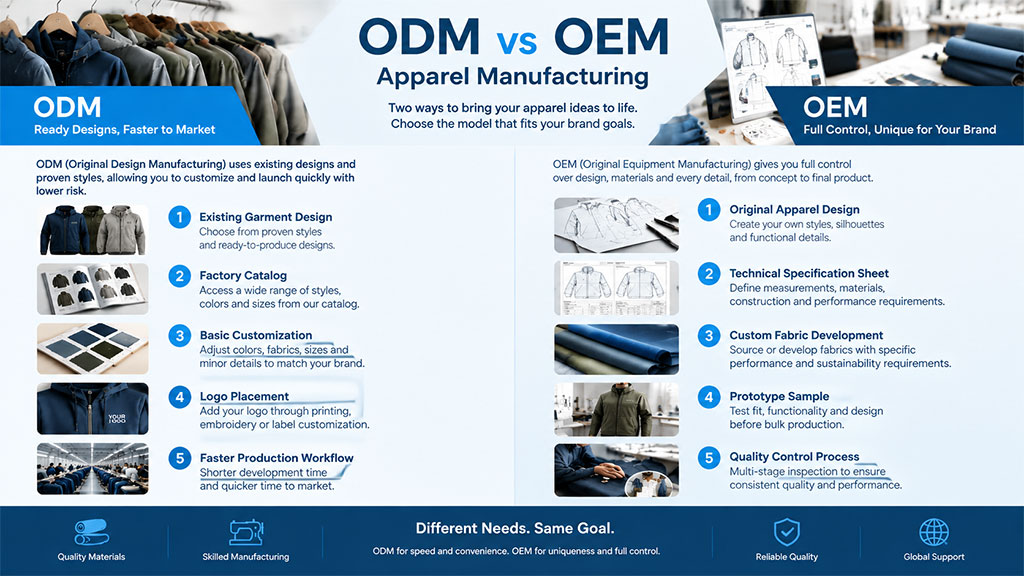
What Is ODM Apparel Manufacturing?
ODM apparel manufacturing allows brands to use a manufacturer’s existing designs, patterns, and production capabilities while adding customization elements. Typical ODM services include:- Selecting existing garment styles
- Adjusting colors and fabrics
- Adding logos, labels, and branding elements
- Modifying basic construction details
- Producing products with shorter development cycles
- New apparel startups
- Brands testing market demand
- Companies needing faster product launches
- Buyers with limited product development experience
- Fabric color
- Embroidery logo
- Labels
- Packaging
What Is OEM Apparel Manufacturing?
OEM apparel manufacturing gives brands full control over product creation.
Instead of selecting existing factory designs, brands provide their own product concepts, technical requirements, and performance expectations. The manufacturer supports the development process by transforming the concept into a production-ready garment.
OEM apparel development typically includes:
- Original garment design
- Custom patterns
- Fabric sourcing
- Technical specification development
- Prototype sampling
- Fit adjustments
- Performance testing
- Production approval
- Quality management
OEM is preferred by brands that want:
- Unique product identity
- Exclusive designs
- Better market differentiation
- Long-term product ownership
For example, an outdoor brand developing a new waterproof jacket may define:
- Fabric performance requirements
- Waterproof membrane technology
- Pocket structure
- Hood construction
- Seam sealing method
- Trim selection
The result is a product designed specifically around the brand’s target customers.
Why Apparel Brands Move from ODM to OEM
Many brands start with ODM because it offers speed and lower development costs. However, as brands grow, OEM manufacturing becomes a strategic choice for building stronger product value.
1. Create a Stronger Brand Identity
One of the biggest limitations of ODM production is that similar factory designs may be available to multiple buyers.
OEM development allows brands to control important product elements, including:
- Garment silhouette
- Fabric selection
- Functional features
- Construction details
- Branding components
For performance apparel brands, OEM development can create products with unique technical advantages.
Examples include:
- Lightweight waterproof hiking jackets
- Sustainable recycled fabric shells
- Urban technical outerwear
- High-performance outdoor layers
By developing original products, brands can create collections that are more recognizable and difficult to duplicate.
2. Improve Product Differentiation and Customer Value
Today’s apparel market is highly competitive. Customers increasingly expect products that provide better performance, stronger design identity, and meaningful brand stories.
OEM manufacturing enables brands to develop products based on specific customer needs.
Examples:
Outdoor brands may develop:
- Lightweight trekking jackets
- Technical rain shells
- Multi-functional outdoor clothing
Lifestyle brands may develop:
- Custom bomber jackets
- Premium hoodies
- Private label collections
Instead of competing only on price, brands can build value through product innovation and customer experience.
3. Gain More Control Over Quality Standards
ODM production usually depends on existing factory standards. With OEM development, brands can define their own quality expectations.
OEM quality control may include:
- Fabric requirements
- Measurement specifications
- Sewing standards
- Performance testing
- Packaging requirements
A professional OEM manufacturer can support:
- Fabric inspection
- Sample approval
- Inline quality control
- Final inspection
This allows brands to maintain consistent product quality from development to bulk production.
The Step-by-Step OEM Apparel Development Process
Moving from ODM to OEM requires a structured product development process.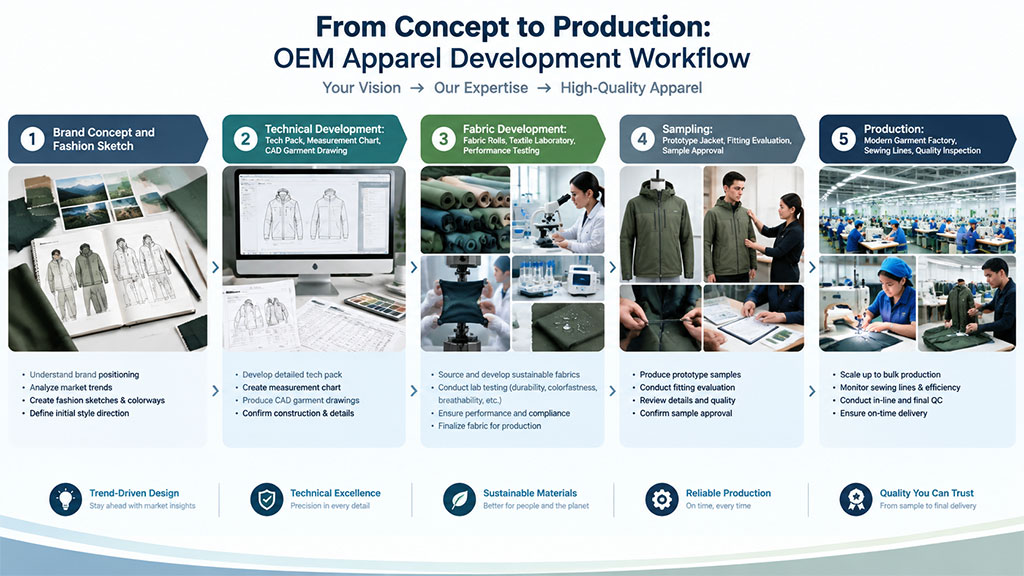
Stage 1: Define Product Concept
Every successful OEM project begins with a clear product vision.
Brands should define:
- Target customers
- Product positioning
- Price range
- Functional requirements
- Market application
A general idea such as:
“Create a jacket similar to existing products”
needs to become a detailed product concept:
“Develop a lightweight waterproof hiking jacket for premium outdoor consumers.”
A clear concept helps manufacturers understand the expected product direction.
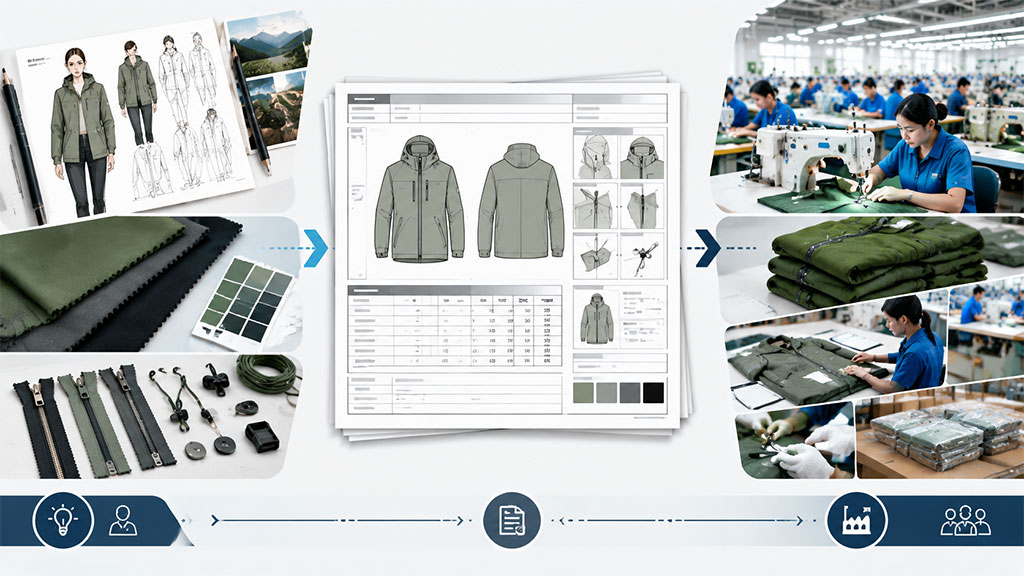
Stage 2: Develop Technical Specifications
A successful OEM project requires detailed technical information.
Brands typically prepare:
- Tech pack
- Flat sketches
- Measurement charts
- Fabric requirements
- Trim specifications
- Label instructions
- Packaging requirements
A complete tech pack reduces communication errors between brands and manufacturers.
It provides essential production information, including:
- Garment construction details
- Material specifications
- Size requirements
- Sewing instructions
- Quality expectations
For brands developing complex apparel, technical documentation is one of the most important parts of the OEM process.
Stage 3: Fabric and Material Development
Fabric selection is one of the biggest differences between ODM and OEM manufacturing. OEM brands can select materials based on their product goals. Important considerations include:- Fabric composition
- Weight (GSM)
- Performance requirements
- Sustainability certifications
- Testing standards
- Waterproof performance
- Breathability
- Abrasion resistance
- Color fastness
- Durability
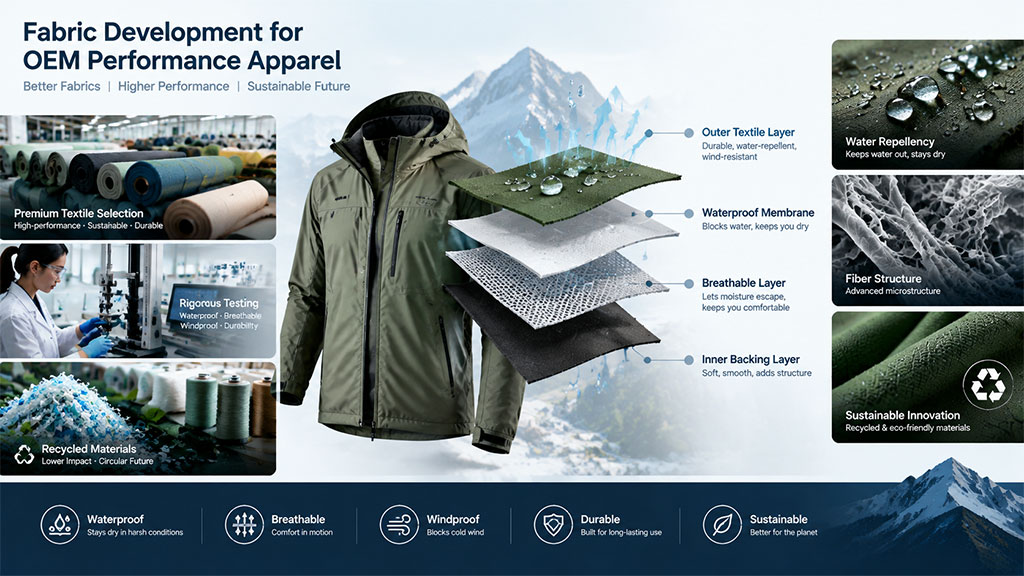
Stage 4: Sampling and Product Approval
OEM development usually requires multiple sample rounds before production approval.
Common sample stages include:
Prototype Sample
Purpose:
- Verify initial design
- Check construction feasibility
- Review overall appearance
Fit Sample
Purpose:
- Check garment fitting
- Adjust measurements
- Improve wearing comfort
Size Set Sample
Purpose:
- Confirm grading accuracy
- Review size consistency
PPS (Pre-Production Sample)
Purpose:
- Final production approval
- Confirm all details before bulk manufacturing
During sample review, brands evaluate:
- Fit
- Construction
- Fabric performance
- Appearance
- Functionality
Careful sample approval helps reduce production risks.
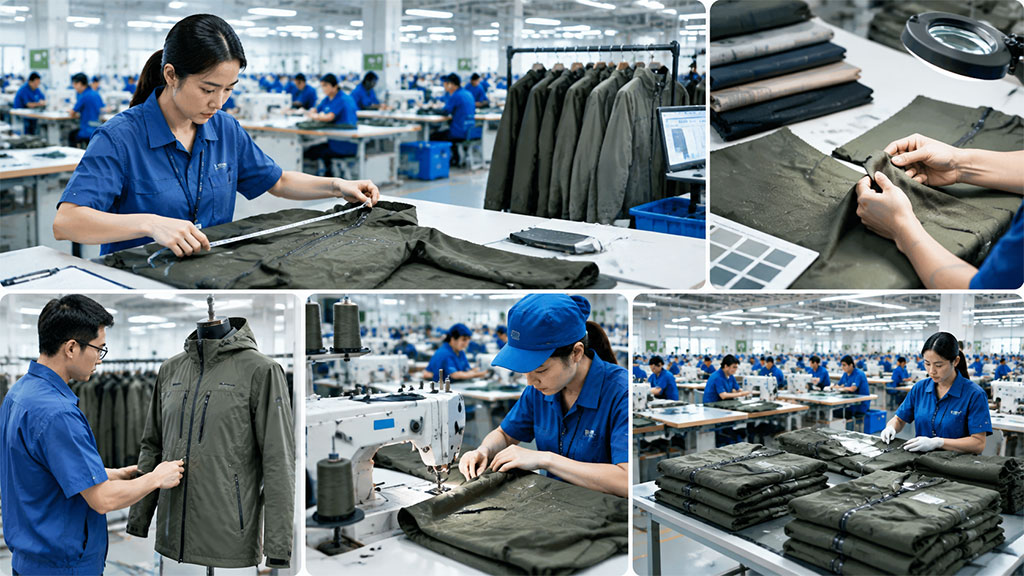
Stage 5: Bulk Production and Quality Management
After approval, the product moves into bulk manufacturing.
A reliable OEM partner supports:
- Production planning
- Material preparation
- Manufacturing control
- Quality inspections
- Delivery management
Quality management during production may include:
- Fabric inspection before cutting
- Inline production checks
- Finished product inspection
- Packaging verification
Strong production control ensures the final products meet the brand’s requirements.
Challenges Brands Face When Moving from ODM to OEM
Although OEM provides greater product ownership, brands should understand the additional responsibilities involved.
Higher Development Investment
OEM requires more resources for:
- Product design
- Sampling
- Material development
- Testing
- Engineering support
However, this investment creates stronger product differentiation and long-term brand value.
More Decision-Making Responsibility
With OEM development, brands need to make decisions regarding:
- Fabrics
- Construction methods
- Measurements
- Performance standards
- Product features
Working with an experienced OEM manufacturer helps brands make better technical decisions and reduce development risks.
Longer Product Development Timeline
ODM products can often launch faster because the design process already exists.
OEM projects usually require:
- Concept development
- Technical preparation
- Fabric sourcing
- Sampling
- Testing
- Production approval
The timeline depends on product complexity, material availability, and sample revisions.
Technical apparel with advanced performance requirements usually requires more development time than basic garments.
How Simmerui Supports OEM Apparel Development
At Simmerui, we help apparel brands transition from ODM concepts to fully customized OEM manufacturing.
Our OEM development services include:
- Product design support
- Fabric sourcing
- Technical development
- Prototype sampling
- Quality control
- Bulk production management
We support brands developing:
From the initial product concept to final production, Simmerui helps brands reduce manufacturing risks, improve product quality, and build reliable long-term manufacturing partnerships.
FAQ: ODM to OEM Apparel Manufacturing
1. What is the difference between ODM and OEM apparel manufacturing?
ODM manufacturing uses existing factory designs with customization options, while OEM manufacturing creates products based on a brand’s original designs, specifications, and technical requirements.2. Why do apparel brands move from ODM to OEM?
Brands usually transition to OEM to gain more control over product design, improve differentiation, protect brand identity, and develop unique apparel collections.3. Is OEM apparel manufacturing more expensive than ODM?
Yes. OEM requires additional investment in design, sampling, testing, and development. However, it provides greater product ownership and long-term brand value.4. How long does OEM apparel development take?
The timeline depends on product complexity, fabric availability, and sample revisions. Simple products may take several weeks, while technical apparel projects may require longer development cycles.5. What documents are needed for OEM clothing production?
Common documents include:- Tech pack
- Design sketches
- Measurement specifications
- Fabric requirements
- Trim details
- Packaging instructions
6. Can small brands start with OEM manufacturing?
Yes. Many emerging brands begin with smaller OEM projects and gradually increase production volume as their products gain market validation.
Written by the Simmerui Apparel Manufacturing Team
Simmerui specializes in OEM and ODM apparel production for global B2B brands, providing integrated solutions across product development, fabric sourcing, sampling, quality control, and scalable manufacturing.
Our experience covers outdoor apparel, performance wear, casual clothing, and private label collections. We help brands reduce production risks, optimize costs, and build reliable long-term manufacturing partnerships.